
Content
- Governor Bound by Cabinet Advice on Remission: Madras HC Judgment
- Hit by West Asia crisis, manufacturing activity slows to 45-month low in March
- India’s 16-Nation Maritime Initiative
- NCERT Declared Deemed-to-be University
- India’s defence exports rose by 62.66% in ’25-26 to reach all-time high of Rs 38,424 cr
- Artemis II Mission Technologies (2026)
- Income-tax Act, 2025: New Direct Tax Regime
Governor Bound by Cabinet Advice on Remission: Madras HC Judgment
Why in News ?
- Madras High Court (Full Bench, 2026) ruled that Governor is bound by State Cabinet’s advice under Article 161 in remission/premature release cases, resolving conflicting HC judgments (2024).
- Reinforces Supreme Court position (Maru Ram, 1980) amid rising Centre–State tensions over Governors delaying or rejecting clemency decisions.
- Significant for federalism and limits of Governor’s discretion, especially in politically sensitive remission cases.
Relevance
GS II (Polity & Constitution)
- Article 161 (Governor’s clemency power) vs Article 163 (aid and advice).
- Limits of discretionary powers of Governor in parliamentary system.
- Judicial doctrines: “aid and advice”, “occupied field”, constitutional morality.
GS II (Federalism)
- Centre–State tensions over role of Governors.
- Reinforces primacy of elected State governments in executive functions.
- Prevents constitutional deadlock in remission/clemency decisions.
Practice Question
Q1.“The Governor is a constitutional head, not an independent authority.”Examine this statement in the context of Article 161 and recent judicial interpretations on remission powers. (250 words)
Static Background
- Article 161 empowers Governor to grant pardons, reprieves, respites, remissions or commutations for offences under State laws.
- Parallel provision: Article 72 empowers President for Union laws, court-martial cases and death sentences.
- Governor is a constitutional head under Articles 153–162; real executive power lies with elected Council of Ministers (Article 163, 164).
- India follows parliamentary system → nominal executive (Governor) bound by aid and advice of real executive (Council of Ministers).
Constitutional and Legal Framework
- Article 161: confers clemency power but does not specify procedure → interpreted through judicial precedents.
- Article 163: Governor acts on aid and advice except in matters where Constitution expressly grants discretion.
- No explicit discretionary power provided under Article 161 → key constitutional issue.
Key Judgment: Madras High Court (2026)
- Governor has no discretion whatsoever under Article 161; must act in accordance with Cabinet advice even if personally disagreeing.
- Clemency power is not personal discretion but part of executive power exercised through elected government.
- Conflicting HC judgments resolved; contrary view declared per incuriam (legally incorrect).
Judicial Precedents (Continuity of Law)
- Maru Ram v. Union of India (1980): Governor is bound by aid and advice; cannot act independently in clemency matters.
- Shamsher Singh v. State of Punjab (1974): Governor is formal head; real power lies with Council of Ministers.
- A.G. Perarivalan case (2022): SC held Governor cannot indefinitely delay decision; must act on Cabinet advice.
- Distinction clarified: M.P. Special Police Establishment case applies to sanction for prosecution (statutory discretion), not Article 161.
Data, Facts and Examples
- Increasing instances of Governors delaying assent/remission decisions (Tamil Nadu, Kerala, Punjab) have triggered judicial scrutiny.
- Perarivalan case: delay of over 2 years by Governor led SC to intervene and order release.
- Present ruling addresses administrative deadlock and legal ambiguity arising from conflicting HC interpretations (2024).
Governance and Federal Implications
- Strengthens cooperative federalism by reaffirming primacy of elected State governments in executive decision-making.
- Prevents constitutional deadlock where Governor withholds or overrides Cabinet decisions in sensitive matters.
- Clarifies institutional boundaries between nominal executive (Governor) and real executive (Council).
Legal and Constitutional Significance
- Reinforces doctrine of “aid and advice” as core to parliamentary democracy.
- Limits misuse of discretionary powers by Governors, ensuring accountability to democratic mandate.
- Upholds rule of law by aligning executive action with judicial precedents and constitutional scheme.
Ethical and Administrative Dimensions
- Prevents arbitrary denial of remission, ensuring fairness and humanitarian justice in criminal justice system.
- Reduces politicisation of clemency decisions, which may otherwise be influenced by Centre–State political conflicts.
- Ensures consistency and predictability in executive decisions affecting prisoners’ rights.
Challenges
- Ambiguity persists regarding timelines for Governor’s action → delays still possible without explicit constitutional deadline.
- Frequent Centre–State conflicts over role of Governors continue to test federal balance.
- Potential misuse of remission power by State governments for political considerations.
Way Forward
- Codify timelines and procedures for Governor’s action on Cabinet advice to prevent delays.
- Clarify scope of discretionary powers of Governor through constitutional amendment or authoritative SC ruling.
- Strengthen conventions of constitutional morality and cooperative federalism.
- Ensure transparency in remission decisions with recorded reasons to balance humanitarian and justice concerns.
Prelims Pointers
- Article 161: Governor’s clemency power for State offences.
- Article 72: President’s clemency power.
- Governor bound by aid and advice except in explicit discretionary areas.
- Maru Ram (1980): clemency powers exercised on Cabinet advice.
Hit by West Asia crisis, manufacturing activity slows to 45-month low in March
Why in News ?
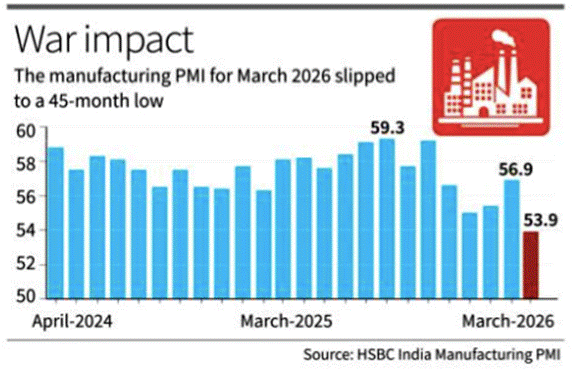
- HSBC India Manufacturing PMI fell sharply to 53.9 in March 2026 (from 56.9 in Feb), marking a 45-month low, signalling slowdown in growth momentum.
- Decline attributed to West Asia conflict, rising input costs and weak global demand, affecting new orders and output expansion.
- Indicates vulnerability of India’s manufacturing sector to external geopolitical shocks despite remaining in expansion zone (>50).
Relevance
GS III (Economy)
- PMI as leading indicator of economic activity.
- Manufacturing sector role in GDP (~16–17%) and employment.
- Cost-push inflation, supply chain disruptions and global demand slowdown.
GS III (External Sector)
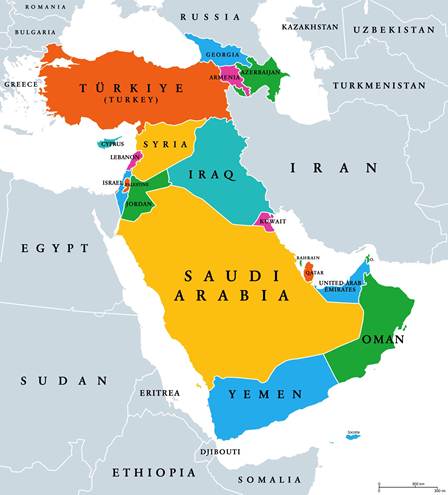
- Impact of geopolitical conflicts (West Asia) on trade routes (Red Sea/Suez).
- Oil price volatility → imported inflation → macroeconomic instability.
- Export competitiveness and logistics costs.
Practice Question
Q1.“India’s manufacturing sector remains vulnerable to global geopolitical shocks.”Analyse the impact of the West Asia crisis on India’s manufacturing performance. (250 words)
Static Background and Basics
- Purchasing Managers’ Index (PMI) is a high-frequency economic indicator based on surveys of firms covering output, new orders, employment, supplier delivery and inventories.
- PMI > 50 indicates expansion; < 50 indicates contraction; acts as leading indicator ahead of IIP and GDP data.
- Manufacturing sector contributes ~16–17% to India’s GDP and is central to Make in India, PLI schemes and export growth strategy.
Key Data and Facts
- PMI declined to 53.9 (45-month low since June 2022), though still above expansion threshold.
- Input cost inflation highest since August 2022, driven by rising prices of aluminium, steel, chemicals, fuel, rubber and textiles.
- Two key PMI components—new orders and output—grew at slowest pace since mid-2022, indicating demand-side and supply-side stress.
Causes: Impact of West Asia Crisis
Supply Chain Disruptions
- Red Sea/Suez route disruptions increase shipping time by ~15–20 days, raising freight costs and delaying raw material imports.
- Example: rerouting via Cape of Good Hope increases logistics costs, impacting export competitiveness.
Imported Inflation
- West Asia is key supplier of crude oil and petrochemicals; geopolitical tensions raise global oil prices → higher fuel and input costs.
- Leads to cost-push inflation, squeezing profit margins of manufacturers.
Demand Compression
- Global uncertainty reduces export orders; domestic demand affected due to rising fuel prices lowering disposable incomes.
- “Fierce competition” prevents firms from passing full cost increases to consumers.
Governance and Policy Dimensions
- Highlights need for resilient supply chains under National Logistics Policy and Gati Shakti framework.
- Reinforces importance of energy security policies (strategic reserves, diversification of imports).
- Aligns with Atmanirbhar Bharat push to reduce import dependence in critical inputs.
Economic Implications
- Slowing manufacturing growth may impact GDP growth, employment and export performance.
- Rising input costs + weak demand may lead to stagflationary pressures (low growth + high inflation).
- Spillover effect: slowdown in manufacturing can affect services (logistics, trade) and MSME sector.
Social Implications
- Manufacturing slowdown affects job creation, particularly in labour-intensive sectors like textiles, leather and MSMEs.
- Rising prices of manufactured goods may impact middle- and lower-income households.
External Sector Linkages
- Demonstrates high sensitivity of Indian economy to global supply chains and geopolitical tensions.
- Export competitiveness impacted due to higher freight costs and delayed deliveries.
- Strengthens case for diversifying trade routes and markets (Act East, IMEC corridor).
Challenges
- Heavy dependence on imported energy and raw materials.
- Limited ability of firms to pass on rising costs due to competitive pressures.
- Weak global demand environment amid geopolitical instability.
- Structural issues: logistics costs (~13–14% of GDP) remain high compared to global benchmarks.
Way Forward
- Diversify energy sources (renewables, strategic reserves) to reduce vulnerability to oil shocks.
- Strengthen domestic manufacturing ecosystem via PLI schemes and local supply chains.
- Improve logistics efficiency through multimodal transport and infrastructure upgrades.
- Expand export markets and trade agreements to reduce dependence on specific regions.
- Monitor inflationary pressures and calibrate monetary-fiscal policies to avoid stagflation.
Prelims Pointers
- PMI is a survey-based leading indicator; threshold = 50.
- HSBC compiles India Manufacturing PMI.
- Input cost inflation reflects wholesale price pressures (linked to WPI trends).
India’s 16-Nation Maritime Initiative
What is the Initiative?
- India has expanded naval deployment through a 16-nation maritime cooperation initiative, involving offshore patrol vessel (OPV) missions to enhance security, surveillance and confidence-building in the Indian Ocean and Indo-Pacific.
- It marks a shift from traditional naval patrolling to multi-nation Confidence-Building Measures (CBMs), addressing both conventional and non-traditional maritime threats.
- Focus areas include protection of sea lanes, undersea infrastructure, fisheries governance and maritime domain awareness (MDA).
Relevance
GS II (International Relations)
- Indo-Pacific strategy; SAGAR doctrine.
- Minilateralism and regional maritime cooperation.
- India as “Net Security Provider” in Indian Ocean Region.
GS III (Security)
- Maritime security: piracy, IUU fishing, undersea cables.
- Protection of Sea Lines of Communication (SLOCs).
- Strategic chokepoints: Hormuz, Malacca.
Practice Question
- Q1. Discuss the significance of India’s emerging maritime initiatives in ensuring security and stability in the Indo-Pacific region. (250 words)
Why has it been Launched?
- Triggered by prolonged West Asia crisis (second year), particularly instability in Strait of Hormuz, disrupting global energy flows and maritime trade routes.
- Rising non-traditional threats: Illegal, Unreported and Unregulated (IUU) fishing, piracy, armed robbery and narco-trafficking affecting regional stability.
- Growing strategic competition in global commons (oceans) including deep-sea mining and data cable security, necessitating cooperative security frameworks.
Where is the Initiative Focused?
- Geographical focus: Indian Ocean Region (IOR) and Indo-Pacific, covering key maritime chokepoints and trade routes.
- Operational route: Mumbai → Colombo → Phuket → Jakarta → Singapore → Male → Kochi, linking South Asia with Southeast Asia maritime network.
- Covers critical sea lanes including approaches to Strait of Hormuz, Malacca Strait and major shipping corridors.
Which Actors and Frameworks are Involved?
- Led by Indian Navy under Ministry of Defence, reflecting India’s role as “Net Security Provider” in the Indian Ocean.
- Involves 16 partner nations across South Asia and Southeast Asia, indicating shift towards minilateral cooperation (like Quad-type frameworks).
- Aligns with India’s Act East Policy, Neighborhood First and SAGAR (Security and Growth for All in the Region) vision.
How does it Function?
- Deployment of Offshore Patrol Vessels (OPVs) conducting joint patrols, port calls, surveillance and coordination with partner navies.
- Builds Maritime Domain Awareness (MDA) through information sharing, tracking vessels and monitoring illegal activities across Exclusive Economic Zones (EEZs).
- Acts as Confidence-Building Measure (CBM) by reassuring merchant shipping, reducing risk perception and stabilising maritime trade flows.
Data and Facts
- Strait of Hormuz handles ~20% of global oil trade, making disruptions critical for India’s energy security.
- Around 95% of global data flows through undersea cables, highlighting importance of maritime infrastructure protection.
- Indian Ocean carries ~80% of global seaborne oil trade, making it central to global economic stability.
Governance and Strategic Significance
- Reinforces India’s role as regional security provider and strengthens cooperative maritime governance.
- Enhances interoperability with partner nations and supports rules-based order in Indo-Pacific.
- Counters influence of rival powers (China’s expanding maritime footprint) through strategic presence and partnerships.
Economic Implications
- Ensures security of Sea Lines of Communication (SLOCs), crucial for India’s trade (over 90% by volume).
- Reduces shipping insurance premiums amid conflict, stabilising logistics costs for exporters and importers.
- Protects energy supply chains, mitigating impact of oil price volatility on domestic economy.
Security Dimensions
- Addresses traditional threats: piracy, armed robbery, narco-trafficking in Indian Ocean.
- Tackles non-traditional threats: IUU fishing, deep-sea resource exploitation and maritime environmental degradation.
- Secures undersea data cables, critical for digital economy and national security.
Challenges
- Coordination complexity among multiple nations with differing strategic priorities.
- Limited naval capacity compared to expanding maritime threats and Chinese naval presence.
- Legal challenges in enforcing maritime laws across international waters and EEZ overlaps.
- Dependence on sustained diplomatic engagement for long-term cooperation.
Way Forward
- Strengthen regional frameworks like IORA and Indo-Pacific Oceans Initiative for institutionalised cooperation.
- Enhance naval capacity, surveillance systems and satellite-based maritime monitoring.
- Promote legal frameworks for regulating IUU fishing and deep-sea mining activities.
- Expand partnerships with ASEAN, Quad and African littoral states for broader maritime security architecture.
- Integrate economic and security strategies to ensure resilience of supply chains and trade routes.
Prelims Pointers
- Strait of Hormuz: key global oil chokepoint (~20% trade).
- SAGAR doctrine: India’s maritime security vision.
- IUU fishing: Illegal, Unreported, Unregulated fishing.
- Maritime Domain Awareness (MDA): monitoring maritime activities.
NCERT Declared Deemed-to-be University
Why in News ?
- Ministry of Education (March 2026) notified NCERT as a deemed-to-be university following UGC approval, enabling it to grant degrees and launch doctoral programmes.
- Marks institutional shift from curriculum body → higher education and research institution aligned with NEP 2020 reforms.
- Comes with strict conditions: non-commercial mandate, UGC compliance and compulsory NAAC/NBA accreditation.
Relevance
GS II (Governance & Education)
- NEP 2020 reforms in teacher education.
- Institutional autonomy vs regulatory oversight (UGC, NAAC, NBA).
- Integration of school education with higher education.
GS II (Social Sector)
- Quality of education and teacher training.
- Public vs private role in education sector.
- Equity and access in education reforms.
Practice Question
- Q1. Evaluate the significance of granting deemed university status to NCERT in the context of NEP 2020. (250 words)
What is the Development?
- NCERT (with 6 Regional Institutes of Education) granted deemed university status under UGC framework, allowing autonomy in designing courses, conducting exams and awarding degrees.
- Enables introduction of B.Ed., M.Ed., PhD and innovative programmes in education, pedagogy and emerging domains.
- Transforms NCERT into integrated hub for curriculum design, teacher training and education research.
Where is its Scope?
- Applies to NCERT headquarters (New Delhi) and its six Regional Institutes of Education (Ajmer, Bhopal, Bhubaneswar, Mysuru, Shillong, etc.).
- Expands reach across national teacher education ecosystem, linking school education with higher education institutions.
- Potential for expansion to off-campus/offshore centres subject to UGC norms.
Why was this Move Needed?
- Addresses disconnect between curriculum design (NCERT) and teacher training (universities/colleges), ensuring better implementation of school reforms.
- Supports NEP 2020 vision of multidisciplinary, research-driven teacher education and institutional integration.
- Strengthens India’s capacity in education research, pedagogy innovation and policy design.
Which Institutional Framework Governs It?
- Approved by University Grants Commission (UGC) under deemed university regulations.
- Must comply with NAAC (institutional accreditation) and National Board of Accreditation (NBA) for programme-level quality assurance.
- Guided by National Education Policy (NEP) 2020 and Ministry of Education directives.
How will it Function?
- NCERT can independently design curriculum, conduct examinations and award degrees without university affiliation.
- Mandated to start doctoral (PhD) programmes and expand into emerging areas (AI in education, digital pedagogy, vocational integration).
- Subject to strict oversight—no commercial/profit-making activities and adherence to UGC norms.
Data and Facts
- NCERT established in 1961 as apex body for school curriculum; operates through 6 Regional Institutes of Education.
- Teacher education remains fragmented—over 90% institutions privately run (NCTE data), highlighting need for quality public institutions.
- NEP 2020 mandates 4-year integrated B.Ed. by 2030, increasing demand for high-quality teacher training institutions.
Governance and Administrative Significance
- Strengthens Centre’s role in standard-setting for education while maintaining oversight through UGC and accreditation bodies.
- Enhances institutional accountability through mandatory NAAC/NBA ratings.
- Creates integrated governance model linking curriculum, teacher training and research.
Economic Implications
- Improves human capital formation by upgrading teacher education → long-term productivity gains.
- Reduces dependence on low-quality private teacher education institutions.
- Supports knowledge economy through research in education technology and pedagogy.
Social and Ethical Dimensions
- Enhances quality of school education through better-trained teachers, improving learning outcomes.
- Promotes equity by strengthening public education institutions and reducing commercialisation.
- Ensures ethical guardrails via prohibition of profit-driven activities.
Educational and Technological Dimensions
- Facilitates research in AI-based learning, EdTech, digital classrooms and competency-based education.
- Bridges gap between theory (curriculum) and practice (classroom teaching).
- Positions NCERT as national hub for innovation in pedagogy and education policy.
Challenges
- Capacity constraints: transition to full-fledged university requires faculty, infrastructure and research ecosystem expansion.
- Risk of bureaucratisation affecting academic autonomy and innovation.
- Ensuring high-quality NAAC/NBA accreditation amid expansion.
- Coordination challenges with existing universities and teacher education institutions.
Way Forward
- Strengthen faculty recruitment, research funding and global collaborations.
- Ensure autonomy with accountability through transparent governance and accreditation.
- Integrate NCERT programmes with school systems for real-time feedback.
- Promote interdisciplinary research in education, psychology and technology.
- Align with NEP 2020 targets (4-year B.Ed., teacher reforms) for systemic transformation.
Prelims Pointers
- NCERT (1961): apex body for school curriculum (NCF, textbooks).
- Deemed university status granted by Centre on UGC advice.
- NAAC: institutional accreditation; NBA: programme accreditation.
- NEP 2020 mandates integrated teacher education reforms.
India’s defence exports rose by 62.66% in ’25-26 to reach all-time high of Rs 38,424 cr
Why in News ?
- India’s defence exports reached ₹38,424 crore in FY 2025–26, registering a sharp 62.66% growth over previous year (₹23,622 crore).
- Driven by surge in DPSU exports (+151%) and steady private sector contribution, signalling structural shift towards indigenous defence manufacturing.
- Reflects policy push under Atmanirbhar Bharat and increasing global acceptance of Indian defence products across 80+ countries.
Relevance
GS III (Economy)
- Defence manufacturing and export-led growth.
- Role of DPSUs and private sector in industrial ecosystem.
- Contribution to GDP, employment and foreign exchange.
GS III (Security)
- Strategic autonomy and reduced import dependence.
- Defence diplomacy and geopolitical influence.
GS III (Science & Tech)
- Indigenous R&D, advanced platforms (Tejas, BrahMos).
- Integration into global defence supply chains.
Practice Mains Question
- Q1. “India’s defence exports reflect a shift from import dependence to strategic self-reliance.” Discuss the factors driving this transformation. (250 words)
What is the Development?
- Defence exports include military platforms, systems, sub-systems, components and services supplied by DPSUs and private firms to foreign countries.
- FY 2025–26 marks transition from import-dependent defence sector → emerging exporter integrated into global supply chains.
- Indicates shift from exporting low-value components → high-value platforms and complete systems.
Where is the Export Footprint?
- India exports defence equipment to 80+ countries, spanning Southeast Asia, Africa, West Asia and Latin America.
- Key markets include Indo-Pacific nations (Philippines, Vietnam), African countries and Global South partners.
- Expanding footprint strengthens India’s strategic presence in Indian Ocean Region and beyond.
Which Actors are Involved?
- Defence Public Sector Undertakings (DPSUs): contributed ₹21,071 crore (54.84%), showing dominant role in high-value exports.
- Private sector: contributed ₹17,353 crore (45.16%), key role in components, innovation and supply chain integration.
- Total exporters increased from 128 → 145 (13.3% growth), indicating widening industrial base.
How has Growth Occurred?
- Policy reforms: simplified export authorisation procedures, revamped online portal and faster approvals by Department of Defence Production.
- Increased domestic procurement: ₹2.28 lakh crore contracts and ₹6.81 lakh crore AoN approvals boosting production capacity.
- Integration with global OEM supply chains (Boeing, Dassault, Lockheed) enabling steady demand for sub-systems.
Data and Facts
- Total exports: ₹38,424 crore (FY 2025–26) vs ₹23,622 crore (FY 2024–25) → +62.66% growth.
- DPSU exports grew from ₹8,389 crore → ₹21,071 crore (+151%).
- Private sector exports grew from ₹15,233 crore → ₹17,353 crore (+14%).
- Defence exports have nearly tripled in last 5 years, indicating sustained upward trend.
Governance and Policy Dimensions
- Reflects success of Defence Production Policy, Atmanirbhar Bharat and Make in India initiatives.
- Ministry of Defence transitioning from regulator → facilitator, improving ease of doing business.
- Strengthens coordination between DPSUs, private sector and global partners.
Economic Implications
- Boosts manufacturing sector, high-value exports and contributes to GDP growth.
- Generates employment in high-skill sectors (aerospace, electronics, shipbuilding).
- Reduces import dependence, improving trade balance and foreign exchange savings.
Strategic and Security Significance
- Enhances strategic autonomy by reducing reliance on foreign defence imports.
- Defence exports act as tool of diplomacy, strengthening ties with partner countries.
- Positions India as alternative supplier amid global geopolitical shifts (Russia-Ukraine, China factor).
Technological Dimensions
- Growth in indigenous platforms (Tejas LCA, BrahMos, ALH Dhruv) indicates rising technological capability.
- Encourages R&D, innovation and advanced defence technologies.
- Integration into global value chains improves quality standards and competitiveness.
Challenges
- Limited scale compared to global leaders (US, Russia, China).
- Dependence on imported components (engines, electronics) persists.
- Export competitiveness affected by pricing, financing and after-sales support issues.
- Regulatory and testing bottlenecks still exist despite reforms.
Way Forward
- Enhance R&D investment and indigenous component manufacturing (engines, semiconductors).
- Expand defence export financing and lines of credit for Global South markets.
- Strengthen private sector participation and MSME integration.
- Improve quality certification, after-sales service and global marketing strategies.
- Align defence exports with foreign policy goals (Indo-Pacific, Africa outreach).
Prelims Pointers
- Defence exports (FY 2025–26): ₹38,424 crore.
- DPSU share: 54.84%; Private sector: 45.16%.
- AoN (Acceptance of Necessity): approval for capital procurement proposals.
- Department of Defence Production regulates exports.
Artemis II Mission Technologies
Why in News ?
- NASA’s Artemis II (1 April 2026) is first crewed deep-space mission since 1972, testing next-generation technologies for sustainable lunar exploration and future Mars missions.
- Focus on advanced systems—SLS rocket, laser communication, organ-on-chip experiments and life-support validation—marks shift from exploration → long-duration habitation.
- Mission serves as critical testbed before Artemis III (lunar landing) and long-term lunar base construction.
Relevance
GS I (Geography / Astronomy)
- Moon’s physical features: Permanently Shadowed Regions (PSRs), lack of atmosphere/ionosphere → observational advantages.
- Origin of Moon (Giant Impact Hypothesis) supported by Apollo samples.
- Cosmic dawn studies → evolution of universe (early structure formation).
GS III (Science & Tech / Space / Economy)
- ISRU (In-Situ Resource Utilisation): water ice → hydrogen fuel.
- Deep-space tech: SLS, Orion, reusable systems.
- Space economy: mining, logistics, habitats → multi-billion industry.
Practice Question
- Q1. “The Moon is no longer just a destination, but a gateway to deep-space exploration.” Examine the strategic and scientific significance of recent lunar missions such as Artemis and PRATUSH. (250 words)
What are the Core Technologies?
- Artemis II integrates SLS, Orion spacecraft, laser communication systems, advanced life-support and biological research payloads.
- Moves beyond Apollo-era capabilities with automation, higher computing power and human-centric deep-space survival technologies.
- Combines propulsion, habitation, communication and biomedical innovations into a single integrated mission architecture.
Where are these Technologies Deployed?
- Launch from Kennedy Space Center → operates beyond Low Earth Orbit into cis-lunar space.
- Exposure to Van Allen radiation belts and lunar environment enables real-world testing under extreme conditions.
- CubeSats deployed in high-Earth orbit for radiation, electronics and space weather experiments.
Which Systems and Components are Involved?
- Space Launch System (SLS Block-1): most powerful rocket with 8.8 million pounds thrust (~15% more than Saturn V).
- Orion Crew Module + European Service Module (ESA): provides life support, propulsion, power and thermal control (~21 days capacity).
- Laser Communication System (O2O): high-speed optical communication replacing radio systems.
- Scientific payloads: organ-on-chip (AVATAR), radiation sensors (M-42 EXT), international CubeSats.
How do these Technologies Work?
Heavy-Lift Launch (SLS)
- Uses solid boosters + RS-25 engines + cryogenic propulsion stage to deliver Orion into translunar trajectory.
- Minimises time in radiation belts, improving crew safety.
Laser Communication (O2O)
- Uses infrared lasers to transmit data at ~260 Mbps, enabling real-time 4K video transmission from deep space.
- More efficient than traditional radio communication (Apollo era).
Life Support Systems (ECLSS)
- Maintains air, water recycling, waste management and thermal control inside Orion.
- Includes radiation “storm shelter” for solar particle events.
Organ-on-Chip Technology (AVATAR)
- Uses astronaut-derived cells in microfluidic chips to simulate human organs.
- Studies real-time effects of radiation and microgravity on human tissue.
Manual Rendezvous Operations
- Astronauts practice manual docking manoeuvres, critical for future lunar lander integration and emergency scenarios.
Data and Facts
- SLS thrust: 8.8 million pounds (greater than Saturn V).
- Laser communication speed: ~260 Mbps (supports multiple 4K streams).
- Mission duration: ~10 days; Orion capability up to ~21 days.
- Radiation sensor (M-42 EXT): 6× higher resolution than previous instruments.
Scientific and Technological Significance
- Enables deep-space human survival capabilities, essential for Moon and Mars missions.
- Organ-on-chip research advances personalised medicine and cancer research.
- High-speed communication revolutionises deep-space data transmission and mission control.
Governance and International Collaboration
- NASA-led mission with contributions from ESA and CubeSats from Germany, Argentina, South Korea, Saudi Arabia.
- Reflects collaborative model under Artemis Accords for peaceful space exploration.
Economic Implications
- Drives innovation in aerospace, biotechnology and communication technologies.
- Spin-offs: medical research, satellite communication, advanced materials.
- High cost (~$90+ billion Artemis programme) balanced by long-term space economy potential.
Strategic Significance
- Reinforces US leadership in space amid competition with China’s lunar programme.
- Establishes foundation for lunar base and deep-space logistics.
- Enhances geopolitical influence through space technology leadership.
Challenges
- Radiation exposure risks in deep space remain significant.
- High mission costs and sustainability concerns.
- Technical complexity in life-support, docking and long-duration missions.
- Space debris and lunar environmental challenges.
Way Forward
- Transition to Artemis III/IV with human landing and lunar infrastructure development.
- Improve radiation shielding and life-support technologies.
- Expand international collaboration for cost-sharing and governance.
- Integrate AI, robotics and ISRU technologies for sustainable exploration.
Prelims Pointers
- SLS: NASA’s heavy-lift rocket with highest thrust.
- Orion: crew capsule with European Service Module.
- O2O: laser communication system (~260 Mbps).
- Organ-on-chip: microfluidic biological experiment simulating human organs.
Income-tax Act, 2025: New Direct Tax Regime
Why in News ?
- Income-tax Act, 2025 came into force from April 1, 2026, replacing the six-decade-old Income-tax Act, 1961, marking a major structural reform in India’s direct tax framework.
- CBDT notified Income-tax Rules, 2026 and new simplified forms, signalling full operationalisation of the new regime.
- Reform aligns with “ease of compliance” and Viksit Bharat vision amid stagnation in direct tax collections (~₹7.99 lakh crore in FY 2025–26).
Relevance
GS II (Governance)
- Tax reforms for ease of compliance and transparency.
- Role of CBDT and digital governance in taxation.
GS III (Economy)
- Direct tax system and fiscal policy.
- Tax base expansion and formalisation of economy.
- Impact on MSMEs and investment climate.
Practice Mains Question
- Q1. Discuss the key features of the Income-tax Act, 2025. How does it aim to improve compliance and reduce litigation? (250 words)
What is the Income-tax Act, 2025?
- A comprehensive legislative overhaul aimed at simplifying tax laws through clearer language, streamlined structure and removal of redundant provisions without major policy changes.
- Retains core tax principles (progressive taxation, slabs, deductions) while modernising administrative and compliance framework.
- Focuses on clarity, digitisation and taxpayer convenience rather than altering tax rates or base.
Where does it Apply?
- Applies across India to individuals, companies and other entities liable to pay income tax.
- Covers all income categories—salary, business, capital gains and emerging digital assets.
- Integrates both domestic and global income taxation rules for residents.
Which Institutions and Frameworks are Involved?
- Central Board of Direct Taxes (CBDT): responsible for rule-making, implementation and administration.
- Ministry of Finance: policy formulation and legislative oversight.
- Supported by digital infrastructure (Income Tax portal, e-filing systems) for compliance and enforcement.
How does the New System Work?
Structural Simplification
- Replaces complex provisions with simplified language and reorganised sections for better readability.
- Introduces unified “Tax Year” replacing Financial Year (FY) and Assessment Year (AY), reducing confusion.
Compliance Reforms
- Introduction of system-generated Form 130 replacing Form 16, improving accuracy and standardisation.
- Simplified, re-engineered forms to reduce filing complexity and compliance burden.
Digital Integration
- Expands scope of undisclosed income to include virtual digital assets (crypto, digital holdings).
- Allows access to “virtual digital spaces” (emails, social media) during search and seizure operations.
Data and Facts
- Replaces Income-tax Act, 1961 (over 60 years old).
- Gross direct tax collection FY 2025–26: ₹7.99 lakh crore (↓1.9% from ₹8.14 lakh crore previous year).
- Reform passed August 2025; notified March 2026; effective April 1, 2026.
Governance and Administrative Significance
- Enhances ease of doing business through simplified compliance and reduced litigation.
- Improves transparency and standardisation via digital processes and automated reporting.
- Strengthens tax administration efficiency and reduces discretion-based interpretation.
Economic Implications
- Expected to improve tax compliance and broaden tax base through simplified processes.
- Reduces compliance costs for individuals and businesses, especially MSMEs.
- Supports formalisation of economy and integration of digital economy into tax net.
Social and Ethical Dimensions
- Simplified system improves taxpayer trust and voluntary compliance.
- Inclusion of digital assets ensures equity in taxation across traditional and new income sources.
- Raises privacy concerns due to expanded search powers in digital spaces.
Technological Dimensions
- Push towards full digitisation of tax ecosystem (e-filing, automated forms, data analytics).
- Enables real-time tracking, better enforcement and reduced human interface.
- Aligns with Digital India and data-driven governance.
Challenges
- Transition challenges for taxpayers and professionals adapting to new structure.
- Privacy and data protection concerns due to expanded digital surveillance powers.
- Limited immediate impact on tax buoyancy if underlying policy remains unchanged.
- Need for capacity building within tax administration.
Way Forward
- Ensure smooth transition through awareness campaigns and taxpayer support systems.
- Strengthen data protection safeguards to balance enforcement with privacy rights.
- Periodic review of tax slabs and exemptions to align with inflation.
- Leverage AI and analytics for efficient administration and fraud detection.
- Expand tax base by integrating informal and digital economy segments.
Prelims Pointers
- Income-tax Act, 2025 replaces 1961 Act.
- CBDT administers direct taxes in India.
- “Tax Year” replaces FY + AY distinction.
- Virtual Digital Assets included under undisclosed income.


