
Content
- Malda Violence & Electoral Integrity Crisis
- LWE Reclassification 2026: Towards a Naxal-Free India
- Plastic Waste Rules 2026: EPR Dilution Debate
- INS Aridhaman: Strengthening India’s Nuclear Triad
- Right to Promotion Consideration: Constitutional Guarantee
- RBI Curbs Offshore Rupee Speculation (NDD Ban)
- Shivaji Maharaj: Model of Ethical & Strategic Governance
Malda Violence Case: Judiciary, Elections & Rule of Law
Why in News?
- On 4 April 2026, West Bengal Police arrested Moffakkerul Islam for allegedly orchestrating the gherao of 7 judicial officers in Malda.
- On 1-2 April 2026, Election Commission directed an NIA probe, after violence linked to Special Intensive Revision (SIR) of electoral rolls (2025–26).
Relevance
- GS II (Polity & Governance)
- Article 324: Limits of ECI powers due to dependence on state machinery
- Judicial independence as part of Basic Structure (intimidation of judicial officers)
- Electoral integrity: challenges in voter roll revision (RPA, 1950)
- GS III (Internal Security)
- Electoral violence as threat to democratic stability
- Intelligence and policing gaps in managing politically sensitive mobilisations
- Border district vulnerability (Malda – cross-border linkages)
Practice Question
- “Electoral processes in India are increasingly vulnerable to coercive pressures and administrative weaknesses.”Analyse the institutional and security challenges in ensuring free and fair elections, with reference to recent incidents. (250 words)
Static Background
Electoral Roll Revision
- Under Section 21(3), Representation of the People Act, 1950, ECI conducts Special Intensive Revision (SIR) to ensure clean, updated voter rolls.
- Latest nationwide SIR (2025) involved door-to-door verification, leading to deletion of duplicate and ineligible voters, triggering disputes.
Role of Judicial Officers
- Judicial officers deployed as Election Registration Officers (EROs) ensure neutral adjudication of voter claims and objections, enhancing electoral credibility.
Key Legal Issues
- Article 324 gives ECI control over elections but enforcement depends on state police, exposing institutional limitations.
- Supreme Court (April 2026) termed the gherao a “brazen attempt” to intimidate judiciary, violating judicial independence (Basic Structure).
- Gherao amounts to criminal contempt under Contempt of Courts Act, 1971, as it obstructs judicial functioning.
- FIRs include Section 105, BNS 2023 (culpable homicide not amounting to murder), indicating seriousness of violence.
Governance Concerns
- Dependence of ECI on state machinery creates vulnerability when administration is perceived as politically influenced.
- Supreme Court flagged failure of Chief Secretary and DGP (April 2026), highlighting breakdown of administrative accountability.
- NIA probe (3 April 2026) under Section 6, NIA Act, 2008 indicates suspicion of organised disruption of democratic processes.
Internal Security Concerns
- Shift from peaceful protest to coercive mob action, targeting constitutional functionaries, undermines democratic order.
- Malda’s border proximity (Indo-Bangladesh) raises concerns of external influence or organised mobilisation networks.
- Incident reflects gaps in intelligence gathering, crowd control, and rapid response mechanisms.
Social & Ethical Issues
- Conflict between Right to protest (Article 19) and rule of law, where violence delegitimises genuine grievances.
- Judicial officers demonstrated fortitude and duty commitment under threat, reflecting core civil service values.
- Allegations of political instigation show erosion of ethical political conduct and democratic responsibility.
Key Challenges
- No independent enforcement arm for ECI, leading to over-reliance on state machinery.
- Increasing trend of mob pressure influencing governance, weakening institutional authority.
- Overlap between agencies (ECI, State Police, NIA) creates coordination and jurisdictional issues.
- Politicisation of administration affects neutral enforcement of electoral processes.
Way Forward
- Create dedicated election security mechanism to reduce ECI’s dependence on state police.
- Develop standard protocols for electoral security, including crowd control and protection of officials.
- Strengthen Centre–State coordination frameworks for handling election-related disturbances.
- Enforce stricter laws against obstruction of public officials and mob violence.
- Improve police training in crowd psychology, intelligence, and conflict de-escalation.
- Ensure strict implementation of Model Code of Conduct (MCC) to prevent political incitement.
Prelims Pointers
- Article 324 → powers of Election Commission of India
- Section 21(3), RPA 1950 → Special Intensive Revision (SIR)
- Contempt of Courts Act, 1971 → criminal contempt
- Section 6, NIA Act, 2008 → Centre can order NIA probe
- Section 105, BNS 2023 → culpable homicide not amounting to murder
Left-Wing Extremism (LWE) District Reclassification, 2026: Shrinking Red Corridor
Why in News?
- On 27 March 2026, Union Home Ministry revised classification of LWE-affected districts, replacing “most affected” with “LWE affected”, “districts of concern”, and “legacy & thrust districts”.
- Statement in Parliament (March 2026) highlighted India nearing “Naxal-free” status, with red corridor shrinking from 200+ districts (2005) to just 2 core districts (2026).
Relevance
- GS III (Internal Security)
- Decline of Maoist insurgency: from widespread to localised pockets
- Role of intelligence-based operations, inter-state coordination, and specialised forces
- Remaining hotspots (Bastar, Jharkhand) and future risks
- GS II (Governance)
- Development-led approach: Aspirational Districts, PESA, FRA implementation
- Rehabilitation and reintegration policies for surrendered cadres
- Targeted resource allocation via SRE scheme
Practice Question
- “The decline of Left-Wing Extremism in India reflects both security success and governance improvement.”Critically examine the factors behind the shrinking Red Corridor and the challenges that remain. (250 words)
Static Background
What is Left-Wing Extremism (LWE)?
- Ideology based on Maoist insurgency, aiming to overthrow state through armed struggle.
- Rooted in:
- Land alienation, tribal exploitation, governance deficit
- Major affected belt historically known as “Red Corridor” across central-eastern India.
New Classification (2026)
- LWE Affected Districts (Core) → 2 districts:
- Bijapur (Chhattisgarh), West Singhbhum (Jharkhand)
- District of Concern → 1 district:
- Kanker (Chhattisgarh)
- Legacy & Thrust Districts → 35 districts across 9 States:
- Include regions in Chhattisgarh, Jharkhand, Odisha, Maharashtra, Bihar, Telangana, Andhra Pradesh, MP, West Bengal
- Total districts under LWE framework remain 38 (same as 2024–25), but severity classification refined.
Key Trend: Decline of LWE
- 2005: LWE spread across 200+ districts
- 2026: Reduced to 2 core districts, indicating ~99% geographical contraction
- Earlier “most affected districts” (e.g., Sukma, Narayanpur) downgraded, showing declining intensity of violence
Governance Significance
- Classification determines allocation under:
- Security Related Expenditure (SRE) Scheme
- Infrastructure, policing, and development interventions
- Periodic revision ensures:
- Resource targeting based on ground realities
- Shift from security-heavy approach → development + rehabilitation focus
Security Insights
- Residual LWE presence now concentrated in:
- Dense forested, tribal-dominated regions (Bastar, Jharkhand belt)
- Indicates transition from:
- Widespread insurgency → localized pockets of resistance
- Improved outcomes due to:
- Better intelligence-based operations
- Inter-state coordination
Development & Rehabilitation Measures
- Establishment of skill and rehabilitation centres (e.g., Dantewada) for surrendered Maoists
- Focus on:
- Livelihood generation, reintegration, and deradicalisation
- Complementary schemes:
- Aspirational Districts Programme
- Infrastructure (roads, telecom, banking access)
Key Drivers Behind Decline
- Enhanced security operations (Greyhounds, CoBRA forces)
- Improved connectivity and governance penetration in remote areas
- Targeted welfare schemes for:
- tribal communities and forest dwellers
- Weakening of Maoist leadership and organisational structure
Challenges Remaining
- Persistence in core forest zones (Bijapur, West Singhbhum)
- Continued issues of:
- tribal displacement, land rights, mining conflicts
- Risk of:
- regrouping or tactical retreat by Maoists
- Need for sustained:
- state presence and trust-building
Way Forward
- Consolidate gains through:
- development-led approach in legacy districts
- Strengthen:
- last-mile governance, PESA Act implementation, forest rights
- Expand:
- rehabilitation and surrender policies
- Use technology for:
- real-time surveillance, drone monitoring, intelligence integration
- Ensure balanced approach:
- security + development + rights-based governance
Prelims Pointers
- LWE districts (2026): 38 total
- Core LWE districts: Bijapur (Chhattisgarh), West Singhbhum (Jharkhand)
- Scheme: Security Related Expenditure (SRE)
- Red Corridor reduced from 200+ districts (2005) to 2 (2026)
- Maoism based on left-wing extremist ideology inspired by Mao Zedong
Plastic Waste Management Rules Amendment, 2026: Flexibility vs Environmental Integrity
Why in News?
- On 31 March 2026, Environment Ministry amended Plastic Waste Management Rules, allowing carry-forward of unmet EPR targets for 3 years, diluting strict annual compliance.
- Introduced tradable EPR certificates, enabling firms to meet obligations via credit purchase, amid concerns over weak enforcement of 100% recycling mandate (2024–25).
Relevance
- GS III (Environment)
- EPR framework and circular economy
- Plastic pollution management and SDG-12, SDG-14 linkages
- Risks of dilution through flexible compliance and credit trading
- GS II (Governance)
- Regulatory design vs implementation gap
- Challenges of monitoring, enforcement, and data transparency
Practice Question
- “Flexibility in environmental regulation can undermine sustainability goals if not backed by strong enforcement.”Critically analyse the recent amendments to Plastic Waste Management Rules in India. (250 words)
Static Background
Plastic Waste Management Rules
- Notified under Environment (Protection) Act, 1986, governing plastic production, usage, and waste management in India.
- Introduced Extended Producer Responsibility (EPR) in 2022, making producers responsible for collection and recycling of plastic waste equivalent to market introduction.
EPR Framework
- Mandates companies to:
- Collect and process 100% of plastic waste introduced (target by 2024–25)
- Ensure recycling, reuse, or safe disposal
- Covers:
- Producers, importers, brand owners (PIBOs)
Key Provisions of 2026 Amendment
Carry-Forward of Targets
- Companies failing 2025–26 targets can carry forward deficits for 3 years (till 2028–29).
- Condition:
- Must fulfil at least one-third of deficit annually, ensuring gradual compliance.
Tradable EPR Certificates
- Firms can meet obligations by:
- Purchasing credits from over-compliant entities
- Introduces market-based compliance mechanism, reducing direct recycling burden.
Exemptions
- Targets do not apply where:
- Food safety or other regulations restrict recycled plastic use, especially in food packaging sector.
Plastic Categories & Targets (Important Data)
- Category I (Rigid plastics):
- 30% recycled content (2025–26) → 60% by 2028–29
- Category II (Flexible plastics):
- 10% (2025–26) → 20% thereafter
- Category III (Multi-layered plastics):
- 5% (2025–26) → 10% later
- Reuse obligations:
- Range from 10% to 70% depending on packaging type, with gradual escalation
Ground Reality
- Despite 100% EPR target (2024–25), there is:
- No credible public dataset confirming full compliance
- Heavy reliance on self-reporting via centralised portal
- Indicates gap between policy design and implementation
Environmental Implications
Positive:
- Encourages recycling ecosystem and circular economy
- Promotes market efficiency via tradable credits
Negative:
- Risk of “paper compliance” without actual recycling
- Weakens urgency of plastic waste reduction efforts
- Multi-layered plastics remain hardest to recycle, posing long-term environmental risk
Economic Implications
- Reduces compliance cost for firms through:
- Flexible timelines
- credit trading mechanisms
- Encourages development of:
- recycling markets and waste management industry
- However, may disincentivise:
- investment in in-house recycling infrastructure
Governance Concerns
- Shift from strict compliance → flexible compliance regime may dilute regulatory intent.
- Lack of:
- independent verification mechanisms
- real-time tracking of recycling outcomes
- Over-reliance on self-declaration increases risk of data manipulation and greenwashing.
Key Challenges
- Implementation deficit: weak monitoring and enforcement capacity
- Data opacity: absence of transparent, verifiable compliance data
- Recycling limitations: multi-layered plastics difficult to process
- Regulatory exemptions: large sectors like food packaging excluded
- Market distortion: credit trading may allow non-performing firms to bypass responsibility
Way Forward
- Strengthen independent audit and verification systems for EPR compliance data
- Develop real-time digital tracking of plastic lifecycle using technology
- Tighten rules for:
- credit trading transparency and accountability
- Promote design for recyclability, especially for multi-layered plastics
- Incentivise:
- domestic recycling infrastructure and innovation
- Gradually reduce exemptions in food-grade plastics with safe alternatives
- Align with SDG 12 (Responsible Consumption) and SDG 14 (Marine Pollution reduction)
Prelims Pointers
- Plastic Waste Management Rules under Environment Protection Act, 1986
- EPR (Extended Producer Responsibility) → producers responsible for plastic waste collection and recycling
- 100% collection target by 2024–25 (implementation gap exists)
- Categories:
- Category I → rigid plastics
- Category II → flexible plastics
- Category III → multi-layered plastics
- Amendment date: 31 March 2026
India’s Third SSBN (INS Aridhaman): Strengthening Sea-Based Nuclear Deterrence
Why in News?
- On 4 April 2026, India inducted its third nuclear-powered ballistic missile submarine (SSBN) – INS Aridhaman (S4) at Visakhapatnam.
- Induction enables three operational SSBNs simultaneously, significantly enhancing credible second-strike capability and nuclear triad strength.
Relevance
- GS III (Security / Defence)
- Nuclear triad and credible minimum deterrence
- Second-strike capability and strategic stability
- Maritime security in Indo-Pacific and Indian Ocean Region
- GS III (Science & Tech)
- Indigenous nuclear propulsion and SLBM development (K-4)
- Advanced Technology Vessel (ATV) programme
Practice Question
- “Sea-based nuclear deterrence is the most survivable leg of the nuclear triad.”Examine the strategic significance of India’s SSBN programme in ensuring credible deterrence. (250 words)
Static Background
Nuclear Triad
- A nuclear triad refers to capability to launch nuclear weapons from:
- Land → Agni series missiles
- Air → aircraft like Rafale, Su-30MKI, Mirage 2000
- Sea → SSBNs (Arihant-class)
- India joined elite group (US, Russia, China, France) with triad after first deterrence patrol of INS Arihant (2018).
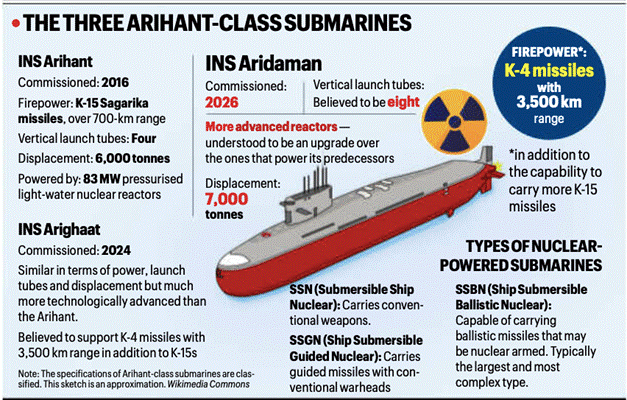
Types of Nuclear Submarines
- SSBN → carries nuclear-tipped ballistic missiles (strategic deterrence)
- SSN → nuclear-powered attack submarines (conventional weapons)
- SSGN → guided missile submarines
Arihant-Class Submarines
INS Arihant
- Commissioned: 2016
- Displacement: ~6,000 tonnes
- Missiles: K-15 (700 km)
- Reactor: 83 MW nuclear reactor
INS Arighaat
- Commissioned: August 2024
- More advanced technology, capable of K-4 SLBM (~3,500 km range)
INS Aridhaman (S4)
- Commissioned: 4 April 2026
- Larger displacement: ~7,000 tonnes
- Higher missile capacity with more vertical launch tubes (~8)
- Enhanced endurance → longer underwater deployment (months)
S4* (under trials)
- Next-generation SSBN with higher payload and range capability
Strategic Significance
Strengthening Second-Strike Capability
- SSBNs ensure survivable nuclear deterrent, as submarines remain:
- Stealthy and undetectable underwater
- Even after enemy’s first nuclear strike, SSBNs can launch retaliatory strike, ensuring credible deterrence.
Sea-Based Deterrence Advantage
- Unlike land/air assets, SSBNs are:
- Less vulnerable to pre-emptive attacks
- Provide continuous deterrence patrol capability
Shift from Minimum Deterrence to Credible Deterrence
- Induction of third SSBN enables:
- Continuous at-sea deterrence (CASD)
- At least one submarine always on patrol
Military Capabilities
- Equipped with:
- K-15 SLBM (700 km range)
- K-4 SLBM (~3,500 km range) → allows targeting deep inland adversary locations
- Larger missile load enhances:
- strike flexibility and deterrence depth
Technological & Strategic Programme
- Developed under Advanced Technology Vessel (ATV) Project, initiated in 1980s–90s, with DRDO + Indian Navy + Russian assistance.
- Built at Ship Building Centre (Visakhapatnam) using:
- Advanced materials
- Indigenous nuclear propulsion technology
India’s Submarine Capability
- Total submarines:
- 16 conventional submarines (Kalvari, Kilo, Shishumar class)
- Operational gaps:
- ~30% under refit at any time, reducing effective strength
- Planned:
- 6 indigenous SSNs + 1 Russian lease (expected 2027–28)
- Project-75I submarines with AIP technology
Geopolitical Context
- China:
- ~12 nuclear submarines (6 SSNs)
- USA:
- 14 Ohio-class SSBNs + 50+ attack submarines
- India’s expansion addresses:
- Chinese naval expansion in Indo-Pacific
- Strategic competition in Indian Ocean Region (IOR)
Challenges / Limitations
- Limited number of SSBNs → still evolving credible continuous deterrence capability
- Technological challenges in:
- quieting technology (stealth)
- long-range SLBMs
- High cost and long gestation of nuclear submarine programme
- Dependence on foreign assistance (Russia) for critical technologies
Way Forward
- Accelerate development of:
- longer-range SLBMs (>5,000 km) for full deterrence coverage
- Fast-track SSN programme to complement SSBN fleet
- Strengthen anti-submarine warfare (ASW) capabilities for defence
- Enhance indigenous R&D in nuclear propulsion and stealth technologies
- Ensure continuous at-sea deterrence (CASD) posture
Prelims Pointers
- INS Aridhaman (S4) commissioned on 4 April 2026
- SSBN → nuclear-powered submarine carrying ballistic missiles
- K-15 range ~700 km; K-4 range ~3,500 km
- ATV Project → India’s indigenous nuclear submarine programme
- Nuclear triad → land + air + sea-based nuclear delivery systems
Right to be Considered for Promotion: Constitutional Position & Recent HC Judgment
Why in News?
- On 27 March 2026, Punjab & Haryana High Court held that denial of consideration for promotion violates fundamental rights under Articles 14 and 16(1).
- Case involved exclusion of Kulwant Singh (Junior Engineer) from DPC, highlighting misuse of service rules and administrative discretion.
Relevance
- GS II (Polity & Governance)
- Articles 14 and 16: equality and fairness in public employment
- Judicial review of administrative discretion
- Service jurisprudence and DPC transparency
Practice Question
- “While promotion is not a fundamental right, fair consideration for promotion is integral to equality in public employment.”Discuss in light of constitutional provisions and judicial interpretation. (250 words)
Static Background
Constitutional Basis
- Article 14 → guarantees equality before law and prohibits arbitrary state action.
- Article 16(1) → ensures equality of opportunity in public employment, covering entire service career including promotion stage.
Evolution of Doctrine
- Supreme Court expanded meaning of “employment” to include career progression, promotions, and service benefits, not just initial appointment.
- Established distinction:
- No fundamental right to promotion
- Fundamental right to be considered for promotion
Key Judicial Principles
1991 Supreme Court Principle
- Court clarified that:
- Promotion is not an enforceable right
- But fair consideration for promotion is mandatory under service rules
Ajit Singh v State of Punjab (1999)
- Five-judge Constitution Bench held:
- Eligible employees have fundamental right to be considered for promotion
- Denial of consideration = violation of Article 16(1)
Present Case (March 2026)
- Petitioner excluded from Departmental Promotion Committee (DPC) despite eligibility.
- State denied consideration citing distance education diploma, misinterpreting rules.
- Court found:
- Existing employees exempted under amended rules
- Administrative action was arbitrary and illegal
- Judgment reaffirmed:
- Right to be considered = enforceable fundamental right
Governance Implications
- Ensures fair, transparent, and rule-based promotion processes in public administration.
- Limits arbitrary discretion of bureaucracy in:
- Interpreting service rules
- Excluding eligible candidates
- Strengthens merit-based career progression and institutional accountability.
Legal Nuances
- Right to promotion ≠ Fundamental Right
- Right to be considered for promotion = Fundamental Right (Art 16(1))
- Applies when:
- Employee meets eligibility criteria
- Falls within zone of consideration (DPC list)
Issues & Challenges
- Frequent misinterpretation of service rules by departments leading to exclusion of eligible candidates.
- Lack of transparency in DPC proceedings and evaluation criteria.
- Delays and arbitrariness result in:
- Litigation burden on courts
- Demotivation among public servants
Way Forward
- Codify clear, uniform promotion guidelines across departments to minimise ambiguity.
- Ensure digitisation and transparency of DPC processes, including reasons for exclusion.
- Strengthen judicial review mechanisms for timely redressal of service grievances.
- Promote capacity building of administrative authorities to correctly interpret service rules.
Prelims Pointers
- Article 14 → equality before law
- Article 16(1) → equality of opportunity in public employment
- No fundamental right to promotion, but right to be considered for promotion exists
- Ajit Singh v State of Punjab (1999) → key judgment on promotion rights
- DPC (Departmental Promotion Committee) → evaluates eligible employees
RBI Ban on NDD (Non-Deliverable Derivatives) in Rupee: Stabilising Forex Amid Global Pressures
Why in News?
- On 2 April 2026, RBI barred banks from engaging in Non-Deliverable Derivative (NDD) contracts in rupee, targeting offshore speculative trading.
- Move led to rupee appreciation from ₹95/$ to ₹93.10/$ (gain of ₹1.73), amid pressures from West Asia conflict (Feb–April 2026), rising oil prices, and capital outflows.
Relevance
- GS III (Economy)
- Forex market regulation and exchange rate stability
- Capital account management and speculative flows
- Offshore vs onshore market dynamics
Practice Question
- “Offshore currency derivatives pose both opportunities and risks for emerging economies.”Analyse the implications of RBI’s recent restrictions on non-deliverable derivatives in rupee. (250 words)
Static Background
What is NDD (Non-Deliverable Derivative)?
- NDD/NDF is a derivative contract where parties agree on a future exchange rate, but settle difference in cash (usually USD), without actual currency delivery.
- Operates mainly in offshore centres like Singapore, Hong Kong, London, Dubai, outside RBI regulatory jurisdiction.
Why NDD Exists?
- India maintains partial capital account convertibility, restricting free rupee trading globally.
- NDD markets allow:
- Foreign investors, hedge funds, global banks to trade rupee exposure
- Firms to hedge currency risks without accessing onshore markets
How NDD Market Works
- Participants bet on rupee appreciation/depreciation without physical exchange of rupee.
- Settlement occurs in foreign currency (USD) based on difference between contracted rate and spot rate.
- Offshore trades often influence price discovery before Indian markets open, impacting domestic forex sentiment.
Key Issues with NDD Market
Speculative Volatility
- Large offshore players take high-leverage positions, especially during crises (e.g., West Asia conflict 2026), amplifying rupee volatility.
- Offshore sentiment may diverge from domestic macro fundamentals, distorting exchange rate.
Regulatory Arbitrage
- Lack of RBI oversight allows:
- Contract cancellation and re-entry strategies
- Transformation of hedging tools into pure speculative instruments
Price Distortion
- Offshore NDD market sometimes drives rupee expectations, undermining onshore market primacy and RBI monetary control.
Intra-group Risk Manipulation
- Transactions between related parties used to:
- Shift risks/profits
- Mask real exposure across jurisdictions
RBI’s Intervention (April 2026)
- Prohibited banks from participating in NDD contracts involving rupee, closing key speculative channels.
- Restricted related-party transactions, aligning with global accounting and risk disclosure standards.
- Objective:
- Strengthen onshore forex market dominance
- Reduce speculative pressure and volatility
- Improve transparency and investor confidence
Economic Implications
Short-Term
- Reduced speculative activity → lower volatility in rupee exchange rate
- Immediate appreciation to ₹93.10/$, reflecting market confidence in regulatory action
Medium-Term
- Strengthens RBI’s control over exchange rate dynamics
- Enhances credibility of domestic forex market for hedging and investment
External Sector Context
- India faces:
- High crude oil import dependence (~85%) → pressure on rupee
- Capital outflows due to global uncertainty (West Asia conflict)
- RBI action acts as stabilisation tool in volatile external environment
Governance & Regulatory Significance
- Reinforces RBI’s role as forex market regulator, ensuring:
- Orderly market conditions
- Prevention of systemic risks from speculative flows
- Aligns with global best practices in derivative regulation and risk transparency
- Signals shift toward tightening offshore-onshore regulatory gaps
Challenges / Criticisms
Impact on Hedging
- Genuine investors using NDD for risk hedging may face constraints, increasing cost of hedging.
Limited Jurisdiction
- RBI cannot directly regulate offshore markets, so complete elimination of NDD speculation is difficult.
Liquidity Concerns
- Reduced participation may lower market liquidity and depth, affecting efficient price discovery.
Global Integration Trade-off
- Excess regulation may conflict with India’s goal of greater financial globalisation and capital account liberalisation.
Way Forward
- Deepen onshore derivative markets to provide alternatives for hedging within regulatory framework.
- Enhance coordination with global financial centres and regulators to monitor offshore rupee trading.
- Gradual move toward capital account liberalisation with safeguards, reducing need for offshore NDD markets.
- Strengthen data analytics and surveillance systems for detecting speculative positions and manipulation.
- Maintain balance between:
- market stability (control)
- financial integration (liberalisation)
Prelims Pointers
- NDD/NDF → cash-settled forex derivative without currency delivery
- Operates in offshore markets (Singapore, London, Hong Kong)
- Exists due to partial capital account convertibility in India
- RBI regulates onshore forex market, not offshore NDD directly
- Rupee appreciated from ₹95/$ to ₹93.10/$ (2 April 2026) after RBI action
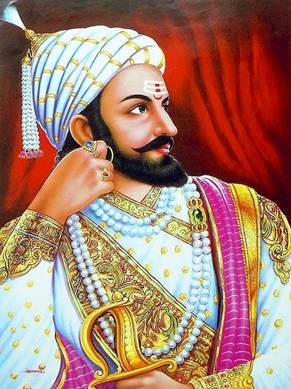
Chhatrapati Shivaji Maharaj: Legacy of Swarajya, Governance & Strategic Vision
Why in News?
- On 3 April 2026, Union Home Minister paid tribute on Punyatithi of Chhatrapati Shivaji Maharaj (died 3 April 1680), highlighting his legacy of Hindavi Swarajya and maritime strength.
- Renewed focus on his contributions to statecraft, naval power, and indigenous governance models, relevant for modern policy discourse.
Relevance
- GS I (History)
- Maratha state formation and resistance to Mughal expansion
- Military innovations (guerrilla warfare)
- GS II (Governance)
- Proto-model of decentralised administration (Ashtapradhan)
- Welfare-oriented governance and accountability
Practice Question
- “Chhatrapati Shivaji Maharaj’s governance model reflects a blend of strategic foresight and ethical statecraft.”Analyse its relevance for contemporary public administration in India. (250 words)
Static Background
Early Life & Vision
- Born on 19 February 1630 at Shivneri Fort (Pune), Shivaji founded the Maratha Empire, challenging Mughal and regional dominance.
- Concept of Hindavi Swarajya emphasised indigenous rule, political autonomy, and ethical governance rooted in local traditions.
Ideological Pillars
- Promoted:
- Swadharma → protection of cultural identity
- Swaraj → self-rule free from external domination
- Swabhasha → use of Marathi and Sanskrit instead of Persian in administration
Military & Strategic Contributions
Guerrilla Warfare (Ganimi Kava)
- Developed asymmetric warfare techniques:
- Surprise attacks, mobility, terrain advantage
- Enabled smaller forces to defeat larger Mughal armies, redefining Indian military strategy.
Major Battles
- Battle of Pratapgad (1659) → defeat of Afzal Khan using Wagh Nakh
- Pavan Khind (1660) → strategic sacrifice securing escape
- Surat Raid (1664) → economic assertion against Mughal wealth centres
- Purandar Treaty (1665) → diplomatic compromise
- Sinhagad (1670) → recapture through strategic assault
- Sangamner (1679) → last major battle
Naval Power & Maritime Vision
- Recognised importance of sea control for trade and security, rare among Indian rulers of the time.
- Built strong navy with coastal forts like Sindhudurg, Vijaydurg, securing Konkan coastline.
- Earned title “Father of the Indian Navy”, laying foundation for maritime security doctrine in India.
Administrative System
Ashtapradhan Mandal
- Council of eight ministers ensured division of power and administrative efficiency:
- Peshwa (Prime Minister), Amatya (Finance), Senapati (Military), etc.
Revenue Administration
- Introduced direct revenue collection from cultivators, reducing exploitation by intermediaries.
- Ensured fair taxation and agrarian stability, strengthening rural economy.
Governance Model
- Emphasised:
- Decentralisation and accountability
- Welfare-oriented governance
- Protection of women, peasants, and local communities
Constitutional / Governance Relevance
- Early model of good governance principles:
- Rule of law
- Accountability of officials
- Welfare state orientation
- His system reflected proto-concepts of:
- Participatory governance
- Administrative decentralisation
Economic Dimension
- Control over coastal trade routes and ports enhanced state revenue and economic autonomy.
- Surat raids demonstrated economic warfare strategy, targeting enemy financial strength.
- Strengthened agrarian economy through fair taxation policies.
Social / Ethical Dimension
- Promoted religious tolerance and inclusivity, despite strong cultural identity assertion.
- Strict codes against:
- Looting of civilians
- Harassment of women
- Balanced cultural pride with ethical governance standards.
Security Perspective
- Integrated land and maritime security, ensuring defence against:
- Mughal expansion
- European naval powers (Portuguese, Siddis)
- Developed fort-based defence system, creating strategic depth across Western Ghats and coast.
Key Challenges / Historical Context
- Constant conflict with Mughal Empire (Aurangzeb) and Deccan Sultanates.
- Limited resources compared to adversaries required innovative military and administrative strategies.
Way Forward
- Apply Shivaji Mahraj’s principles of:
- Decentralised governance and accountability in modern administration
- Strengthen maritime security and blue economy, inspired by his naval foresight
- Promote local language governance and cultural rootedness in policy implementation
- Integrate ethical leadership and welfare orientation in public administration
Prelims Pointers
- Born: 19 February 1630, Shivneri Fort
- Death: 3 April 1680, Raigad Fort
- Founder of Maratha Empire
- Concept: Hindavi Swarajya
- Council: Ashtapradhan Mandal (8 ministers)
- Warfare: Guerrilla tactics (Ganimi Kava)
- Naval legacy: Father of Indian Navy; forts like Sindhudurg
- Weapon: Wagh Nakh (Pratapgad, 1659)


