
Content
- Aluminium alternative emerges to costly catalysts in pharma
- Ghaggar River
- Biomass (Improved Cookstoves) vs LPG: Cleaner & Cheaper?
- Shadow Libraries, Digital Piracy & Access to Knowledge
- Sentinel Species: Concept, Significance & Application
- Exercise DUSTLIK (India–Uzbekistan)
- Oak Forests in the Himalayas: Ecological Significance & Conservation
Aluminium alternative emerges to costly catalysts in pharma
Why in News?
- A 2026 study shows aluminium can mimic transition metal catalysts, offering a potential low-cost alternative for pharmaceutical and industrial chemical processes.
Relevance
- GS Paper III: Science & Technology (Chemical Innovation), Economy (Import Dependence), Industrial Policy
Practice Question
- “The emergence of aluminium-based catalysis challenges the dominance of transition metals in industrial chemistry. Examine its scientific significance and strategic implications for India.” (250 words)
Catalysts: Basic Concept
- Catalysts are substances that increase the rate of chemical reactions without being consumed, widely used in industrial and pharmaceutical manufacturing.
- They function by lowering activation energy, enabling faster formation of desired chemical products.
Role of Transition Metals
- Transition metals like palladium, platinum, and rhodium are widely used due to their ability to switch oxidation states easily.
- This flexibility enables redox catalysis, where electrons are transferred to break and form chemical bonds efficiently.
- They are critical for drug synthesis, petrochemicals, and agrochemical production processes.
Limitations of Transition Metals
- These metals are rare, expensive, and geographically concentrated, increasing supply risks.
- India meets almost entire demand through imports, creating economic and strategic vulnerabilities.
Why Aluminium is Different ?
- Aluminium is abundant but typically exists in a stable +3 oxidation state, limiting its catalytic flexibility.
- It normally cannot participate in redox reactions, restricting its use as an industrial catalyst.
What the Study Achieved ?
- Researchers used a ligand (carbazolyl compound) to modify aluminium’s electronic structure and enable redox-like catalytic behaviour.
- This allowed aluminium to mimic transition metal behaviour, a major conceptual breakthrough in chemistry.
Key Reaction Demonstrated
- The catalyst enabled alkyne cyclotrimerisation, where three alkyne molecules combine to form benzene rings used in pharmaceuticals.
- This reaction is essential for producing complex organic compounds in drug manufacturing.
Performance of Aluminium Catalyst
- The catalyst achieved a turnover number (TON) of ~2,290, meaning one catalyst molecule produces thousands of product molecules.
- Although significant, this is still lower than industrial catalysts achieving hundreds of thousands or millions TON.
Scientific Significance
- Demonstrates that main-group elements like aluminium can perform redox catalysis, previously thought exclusive to transition metals.
- Opens new research field of main-group catalysis and ligand engineering.
Economic and Strategic Importance for India
- Aluminium is abundant and inexpensive in India, unlike imported transition metals.
- Potential to reduce import dependence and production costs in pharmaceuticals and chemicals.
- Supports goals of Atmanirbhar Bharat in critical industrial inputs.
Limitations
- Currently a proof-of-concept, not yet suitable for industrial deployment.
- Catalyst is sensitive to air and moisture, limiting practical usability.
- Works only in specific solvents and limited reaction types so far.
Way Forward
- Expand aluminium catalysis to broader range of chemical reactions and industrial applications.
- Improve stability, efficiency, and scalability for industrial conditions.
- Promote industry–academia collaboration in India for commercialisation pathways.
Prelims Pointers
- Transition metals: variable oxidation states enable catalysis.
- Aluminium: stable +3 oxidation state limits catalytic use.
- TON (Turnover Number): measure of catalyst efficiency (products per catalyst molecule).
Ghaggar River
Why in News?
- Reports of rising cancer cases in Sirsa–Fatehabad belt allegedly linked to pollution in Ghaggar River and groundwater contamination.
Relevance
- GS Paper I: Geography (Drainage systems)
- GS Paper III: Environment (Water pollution), Health
- GS Paper II: Governance (Water management, Public health)
Practice Question
- “Pollution in seasonal rivers like the Ghaggar reflects deeper governance failures in water management. Analyse the ecological and public health implications.” (250 words)
Ghaggar River: Key Notes
- Type: Seasonal (ephemeral) river of north-western India, flowing mainly during monsoon.
- Origin: Shivalik Hills near Dagshai (Himachal Pradesh).
- Course: Flows through Haryana → Punjab → Rajasthan, eventually dissipating in Thar Desert (no sea outlet).
- Important districts: Panchkula, Ambala, Kurukshetra, Fatehabad, Sirsa (Haryana).
- Often identified with the ancient Saraswati River (debated in geography/archaeology).
- Drainage type: Inland drainage (endorheic), does not reach the sea.
- Tributaries: Seasonal streams like Tangri, Markanda.
Hydrology
- Highly dependent on monsoon rainfall.
- Carries water mainly during rainy season, dry otherwise.
Ecological role
- Supports agriculture and groundwater recharge in semi-arid regions.
- Important for local irrigation and rural livelihoods.
Pollution issues
- Receives untreated sewage and industrial effluents along urban stretches.
- Contamination of surface and groundwater reported.
Environmental concerns
- Reduced flow + pollution → degradation of river ecosystem.
- Linked to health risks and declining water quality in surrounding regions.
Prelims Pointers
- Ghaggar = seasonal, inland drainage river.
- Associated with Saraswati (disputed).
- Flows through Haryana–Punjab–Rajasthan, ends in desert.
- Tributaries: Markanda, Tangri.
Biomass (Improved Cookstoves) vs LPG: Cleaner & Cheaper?
Why in News?
- LPG supply/price pressures have led to reversion to firewood in rural areas, reviving debate on Improved Cookstoves (ICS) as alternatives.
Relevance
- GS Paper III: Environment (Clean energy), Economy (Energy access)
- GS Paper II: Welfare schemes (Ujjwala), Social justice
Practice Question
- “Improved Cookstoves (ICS) offer a viable transitional solution for clean cooking in India, but cannot fully replace LPG. Critically examine.” (250 words)
Basics & Static Background
- Traditional chulhas have ~10% thermal efficiency, causing high fuel use, indoor air pollution, and health hazards.
- Improved Cookstoves (ICS) use better airflow and combustion technologies, achieving 38–45% efficiency.
- Key innovation: secondary aeration, which reduces soot, smoke, and harmful emissions.
Performance and Efficiency
- ICS can reduce firewood consumption by over 50–66%, improving fuel efficiency and cost savings.
- Better combustion leads to reduction in particulate matter and indoor air pollution.
- Provides comparable cooking energy output with lower fuel requirement.
Economic Comparison (ICS vs LPG)
- Firewood cost: ~₹10/kg vs LPG >₹100/kg (commercial rates).
- Energy equivalence: ~4 kg firewood ≈ 1 kg LPG (in ICS).
- Results in >60% cost savings in cooking energy for households.
- Upfront cost:
- Household ICS: <₹2,000
- Commercial systems: ₹20,000+
Environmental and Sustainability Aspects
- Biomass is renewable if extraction ≤ regeneration rate.
- ICS reduces deforestation pressure through lower fuel demand.
- Supports use of alternative fuels (pellets, briquettes, agri-waste).
- Reduces black carbon emissions, contributing to climate mitigation.
Social and Health Implications
- Lower smoke exposure reduces respiratory diseases, especially among women and children.
- Reduces drudgery of fuel collection, though not eliminated completely.
- Improves indoor air quality compared to traditional chulhas, but still not as clean as LPG.
Scalability and Supply Chain
- No need for centralised infrastructure, unlike LPG distribution networks.
- Relies on locally available biomass (wood, crop residue, dung).
- Scaling depends on:
- Last-mile distribution
- Awareness and behavioural adoption
- After-sales support systems
Financing and Policy Support
- Carbon emission reductions can generate carbon credits.
- Financing through:
- Microfinance
- CSR initiatives
- Carbon markets
- Aligns with clean cooking and rural energy access goals.
Limitations and Concerns
- Still produces some emissions, not as clean as LPG.
- Risk of unsustainable biomass extraction if poorly regulated.
- Behavioural resistance and user preference for LPG convenience.
- Requires maintenance and proper usage training.
Conclusion
- ICS are cheaper and more efficient than traditional chulhas, offering a viable transitional solution.
- However, they are not a complete substitute for LPG, especially in terms of cleanliness and convenience.
- Best approach: energy mix strategy combining LPG + improved biomass solutions.
Prelims Pointers
- ICS efficiency: 38–45% vs ~10% (traditional chulha).
- Biomass fuels: firewood, crop residue, dung, pellets, briquettes.
- Secondary aeration reduces smoke and soot emissions.
Shadow Libraries, Digital Piracy & Access to Knowledge
Why in News?
- Crackdown on Anna’s Archive in 2026 and allegations of AI firms using pirated datasets highlight evolving conflict over digital piracy, access, and AI training data.
Relevance
- GS Paper II: Governance, Intellectual Property Rights (IPR)
- GS Paper III: Technology, AI ethics, Data governance
Practice Question
- “Shadow libraries raise fundamental questions about access to knowledge versus intellectual property rights, especially in the age of AI. Discuss.” (250 words)
Basics & Static Background
- Shadow libraries are unauthorised digital repositories providing free access to books, journals, and academic content, often violating copyright laws.
- Prominent platforms:
- Sci-Hub → scientific papers
- Library Genesis → books and journals
- Z-Library → general literature
- Operate in a legal grey zone, often hosted across multiple jurisdictions with mirror domains.
- Rise linked to high cost of academic publishing and paywalls (Elsevier, Springer models).
Why Shadow Libraries Exist ?
- High cost of textbooks and journals, especially in developing countries.
- Limited access due to institutional subscriptions and paywalls.
- Weak public library systems and underfunded academic infrastructure.
- Demand for democratisation of knowledge and open access.
Changing Nature of the Issue
- Earlier: Seen as grassroots access movement driven by students, researchers, activists.
- Now: Integrated into global digital economy involving publishers, courts, and AI companies.
- Expansion beyond books → multimedia datasets (music, metadata scraping).
- Emergence as data sources for AI model training, raising new ethical concerns.
AI Dimension
- Allegations against companies like Nvidia for using shadow library datasets to train AI models.
- Raises issues of:
- Copyright violation in training data
- Uncompensated use of authors’ work
- Data monopolisation by Big Tech
- Transforms piracy debate into data governance and AI ethics issue.
Legal and Governance Issues
- Copyright laws protect intellectual property (IPR), but enforcement is difficult in digital, decentralised environments.
- Frequent domain takedowns and court orders, but platforms re-emerge via mirrors.
- Jurisdictional challenges: cross-border nature of internet vs national legal systems.
- Ongoing global debate on fair use vs piracy vs public good.
Economic and Ethical Concerns
- Publishers:
- Loss of revenue and sustainability concerns.
- Threat to academic publishing ecosystem.
- Users (Global South):
- Dependence due to affordability and accessibility gaps.
- Ethical dilemma:
- Access to knowledge vs violation of creators’ rights.
- New concern:
- AI companies profiting from pirated data, unlike individual users.
Open Access Alternatives
- Diamond Open Access (India model):
- No fee for authors or readers.
- Funded by public institutions and research bodies.
- Growth of:
- Preprint repositories (e.g., arXiv-like systems)
- Community-led journals
- Aim: Legal, equitable, and sustainable knowledge sharing.
Challenges
- Persistent access inequality in low- and middle-income countries.
- Lack of global consensus on digital knowledge governance.
- Difficulty in balancing:
- Innovation (AI)
- Access
- Intellectual property rights
- Fragmentation within shadow library ecosystem → no unified ethical framework.
Way Forward
- Expand affordable and inclusive Open Access models globally.
- Reform academic publishing ecosystem (reduce paywalls, subscription costs).
- Develop clear global norms for AI training data and copyright compliance.
- Strengthen digital IPR enforcement with international cooperation.
- Promote public digital libraries and knowledge commons initiatives.
Prelims Pointers
- Sci-Hub: Academic piracy platform providing research papers.
- LibGen/Z-Library: Shadow libraries for books and journals.
- Open Access: Free availability of research outputs.
- Diamond OA: No cost for authors or readers.
Sentinel Species: Concept, Significance & Application
Why in News?
- International Union for Conservation of Nature declared emperor penguin endangered, highlighting its role as a sentinel species for Antarctic climate change.
Relevance
- GS Paper III: Environment, Biodiversity, Climate change
Practice Question
- “Sentinel species play a critical role in environmental monitoring and policy-making. Examine their significance and limitations.” (250 words)
Basics & Static Background
- Sentinel species are organisms whose health status reflects environmental conditions, providing early warning signals of ecosystem stress.
- They are used in ecology, environmental monitoring, and public health to detect pollution, climate change, and disease outbreaks.
- Concept analogous to “canaries in coal mines”, where early biological responses indicate hidden environmental threats.
Key Characteristics
- Occupy specific habitats/territories, making them reliable indicators of localized environmental changes.
- Have long lifespans, allowing accumulation of toxins and pollutants over time.
- Possess high sensitivity (physiological or behavioural) to environmental stressors.
- Exhibit rapid and visible responses, enabling early detection before ecosystem collapse.
Mechanism of Indication
- Environmental stressors (pollution, temperature rise, pathogens) → affect sentinel species first.
- Due to sensitivity, they show decline in population, behavioural changes, or physiological stress.
- Scientists monitor these changes to infer broader ecosystem health.
Examples
- Frog:
- Permeable skin absorbs toxins → sensitive to pesticides, water pollution, pathogens.
- Canaries (historical):
- Used in coal mines to detect carbon monoxide toxicity.
- Honeybees:
- Indicate agrochemical pollution and ecosystem health.
- Polar bears:
- Monitor Arctic contamination and climate change impacts.
- Fish species:
- Detect industrial effluents and water quality degradation.
- Emperor penguins:
- Indicators of Antarctic warming and sea-ice loss.
Ecological and Environmental Significance
- Provide early warning signals, enabling preventive environmental action.
- Help track climate change impacts across ecosystems.
- Support biodiversity conservation and ecosystem management.
- Aid in policy formulation and environmental regulation enforcement.
Applications in Governance
- Used in Environmental Impact Assessment (EIA) for monitoring ecosystem health.
- Integrated into biodiversity monitoring programmes and conservation strategies.
- Support global frameworks like:
- Convention on Biological Diversity (CBD)
- Climate change monitoring systems
Challenges and Limitations
- Species-specific responses may not always represent entire ecosystem dynamics.
- Difficulty in isolating single stressor effects due to multiple environmental variables.
- Requires long-term monitoring and scientific expertise.
Way Forward
- Expand sentinel species monitoring networks across ecosystems (terrestrial, aquatic, polar).
- Integrate with remote sensing and AI-based ecological monitoring systems.
- Strengthen policy linkage between scientific data and environmental governance.
- Promote community-based biodiversity monitoring programmes.
Prelims Pointers
- Sentinel species = early warning indicators of environmental stress.
- Example: Frogs → sensitive to water pollution due to permeable skin.
- Emperor penguin → indicator of Antarctic climate change.
- Used in ecology, pollution monitoring, and climate studies.
Exercise DUSTLIK (India–Uzbekistan)
Why in News?
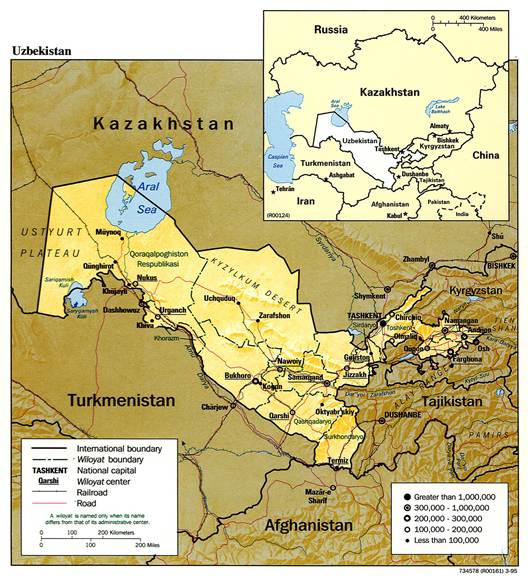
- Indian Army contingent has departed for the 7th edition of Exercise DUSTLIK to be conducted in Uzbekistan.
Relevance
- GS Paper II: International Relations (Central Asia)
- GS Paper III: Internal Security (Counter-terrorism cooperation)
Practice Question
- “India’s military exercises with Central Asian countries reflect evolving strategic priorities. Analyse the significance of Exercise DUSTLIK.” (150 words)
Basics & Key Facts
- Exercise DUSTLIK is an annual bilateral joint military exercise between India and Uzbekistan, conducted alternately in both countries.
- The 2026 edition is being held at Gurumsaray Field Training Area, Uzbekistan, from 12 to 25 April.
- The previous edition (2025) was conducted at Foreign Training Node, Aundh (Pune), India.
- The Indian contingent comprises 60 personnel, including 45 from Army (MAHAR Regiment) and 15 from Air Force.
- The Uzbekistan contingent also comprises around 60 personnel from its Army and Air Force, ensuring balanced participation.
- The exercise focuses on joint counter-terrorism operations in semi-mountainous terrain, simulating realistic operational scenarios.
Objectives
- To enhance bilateral military cooperation and strengthen defence relations between India and Uzbekistan.
- To improve interoperability through joint planning, coordinated command structures, and tactical execution.
- To build combined capability for conducting joint operations in challenging semi-mountain terrain.
- To exchange best practices in Tactics, Techniques and Procedures (TTPs) between both armed forces.
Key Activities
- Conduct of land navigation exercises and reconnaissance drills in semi-mountainous terrain conditions.
- Practice of strike missions targeting enemy bases and strategic positions.
- Training on seizure of enemy-held areas through coordinated joint operations.
- Execution of joint tactical drills, physical conditioning, and special arms training modules.
- Culmination in a 48-hour validation exercise simulating real combat conditions.
- Final phase focuses on joint special operations aimed at neutralising unlawful armed groups.
Significance
- Enhances operational synergy, interoperability, and joint command-and-control mechanisms between participating forces.
- Strengthens India’s defence engagement with Central Asia, a region critical for security and connectivity.
- Improves preparedness for counter-terrorism and asymmetric warfare scenarios.
- Builds mutual trust, camaraderie, and long-term institutional military cooperation.
Prelims Pointers
- Exercise DUSTLIK is a bilateral India–Uzbekistan joint military exercise conducted annually.
- It is held alternately in India and Uzbekistan.
- Focus areas include counter-terrorism operations and semi-mountain warfare training.
- Both Army and Air Force contingents participate from each country.
Oak Forests in the Himalayas: Ecological Significance & Conservation
Why in News?
- Uttarakhand High Court stayed felling of oak trees in Mussoorie due to absence of forest department NOC and concerns over ecological damage from construction.
- Highlights tension between urban expansion in hill towns and fragile Himalayan ecosystems.
Relevance
- GS Paper III: Environment, Biodiversity, Climate change
- GS Paper I: Geography (Himalayan ecology)
Practice Question
- “Degradation of oak forests in the Himalayas has far-reaching ecological and socio-economic consequences. Examine and suggest conservation strategies.” (250 words)
Overview
- Oak forests (genus Quercus) form critical mid-altitude Himalayan ecosystems (800–3000 m) providing water security, biodiversity support, and livelihood sustenance.
- Increasing degradation due to anthropogenic pressures, invasive species, and climate change threatens ecological stability of Himalayas.
Basics & Static Background
- Taxonomy: Oak belongs to genus Quercus under Fagaceae family.
- Distribution: Found in temperate regions, especially Himalayas, Europe, North America.
- Indian Himalayan species:
- Banj oak (Quercus leucotrichophora)
- Moru oak
- Kharsu oak
- Rianj oak
- Phaliath oak
- Altitudinal range: 800–3000 metres, forming broadleaf temperate forests.
- Associated ecosystem: Part of Himalayan temperate forests, distinct from coniferous forests (pine, deodar).
- Comparison with Pine:
- Oak → high water retention, dense canopy, biodiversity-rich
- Pine → low water retention, fire-prone, monoculture tendency
- Legal context:
- Tree felling governed by Forest Conservation Act, 1980 and state forest laws.
- Judicial protection rooted in Article 21 (Right to Life) and environmental jurisprudence.
Ecological Importance of Oak Forests
- Watershed protection: Deep roots enhance groundwater recharge and spring rejuvenation, critical for Himalayan water security.
- Soil conservation: Thick litter layer prevents soil erosion, slope instability, and landslides.
- Carbon sequestration: Higher biomass and carbon storage than pine forests → aids climate change mitigation.
- Microclimate regulation: Maintain cool, moist conditions, stabilising local hydrological cycles.
Biodiversity Significance
- Support multi-layered habitats: lichens, bryophytes, orchids → high niche diversity.
- Bird richness:
- 491 species (Almora)
- 440 (Tehri Garhwal)
- 383 (Chamoli)
- Faunal dependence: Himalayan langur, red giant flying squirrel, Asiatic black bear rely on oak ecosystem.
- Insect diversity: 24 butterfly species recorded in Banj oak forests, supporting pollination networks.
Socio-Economic Importance
- Fuelwood: ~25–30 kg/household/day, preferred for high calorific value.
- Fodder: ~15–22 kg/household/day, essential for livestock economy.
- Supports subsistence agriculture and rural livelihoods.
- Integral to traditional ecological knowledge systems.
Degradation Trends and Drivers
- Forest degradation rate: ~0.36 sq km/year (Himalayan region).
- Chronic disturbances:
- Grazing, lopping, litter removal → continuous ecological stress.
- Development pressures:
- Urbanisation, tourism infrastructure, road expansion.
- Forest fires:
- Oak less fire-adapted; post-fire pathogen vulnerability increases.
- Invasive species:
- Lantana camara, Eupatorium adenophorum outcompete native flora.
- Pine replacement:
- Chir pine expansion leads to higher fire risk and biodiversity loss.
Impact of Oak Forest Degradation
- Hydrological stress: Reduced spring recharge → water scarcity.
- Biodiversity loss: Decline in species richness and ecosystem resilience.
- Soil erosion & landslides: Increased vulnerability in fragile Himalayan terrain.
- Regeneration failure:
- Reduced canopy → low seed production and altered understory.
- Livelihood insecurity: Affects fuel, fodder, and rural economy.
Governance and Legal Dimensions
- Judicial intervention reflects active environmental governance and enforcement gaps.
- Aligns with principles:
- Sustainable development
- Precautionary principle
- Public Trust Doctrine
- Need for stronger local governance (Van Panchayats) and forest department accountability.
Challenges and Critical Issues
- Development vs conservation conflict in hill regions.
- Weak implementation of forest clearance norms.
- Lack of community incentives for conservation.
- Policy tilt towards commercial forestry and monocultures.
- Climate change increasing fire frequency and ecosystem stress.
Way Forward
- Promote oak-based afforestation and ecological restoration.
- Replace pine monocultures with native broadleaf forests.
- Strengthen community-led forest governance (Van Panchayats).
- Reduce fuelwood dependence via clean energy alternatives (LPG, solar).
- Control invasive species spread through scientific management.
- Integrate forest conservation with water security programmes (spring-shed management).
Prelims Pointers
- Oak forests (Quercus) occur in 800–3000 m altitude in Himalayas.
- Banj oak (Quercus leucotrichophora) is a dominant Indian species.
- Oak forests have higher water retention and carbon sequestration than pine forests.
- Inland spring recharge in Himalayas is strongly linked to oak ecosystems.
- Lantana camara is a major invasive species affecting Himalayan forests.


