
- Catch the Rain — Jal Sanchay Jan Bhagidari: Renewed National Call for Water Conservation GS 3
- Index of Core Industries — New Series with Base Year 2022-23 GS 3
- World AI Cooperation Organisation (WAICO) — China's Push for Global AI Governance GS 2 | GS 3
- National Road Safety Board Constituted — Institutional Step with Limits GS 2
- Yashwant Varma Resignation — Constitutional Questions on Judicial Accountability GS 2
- Global Wars Delaying India's FTA Negotiations with GCC, Israel and EAEU GS 2
- White-Bellied Heron and the Lohit Hydropower Project — A Conservation Crisis GS 3
- Tamil Nadu Leads Female Labour Force Participation in Electronics Manufacturing GS 1 | GS 3
- Ken-Betwa River Link Project — Engineering, Ecology and Displacement GS 3
Catch the Rain — Jal Sanchay Jan Bhagidari: Renewed National Call for Water Conservation
GS Paper 3 — Environment & Ecology | Water Conservation | Government SchemesIn the 135th episode of Mann Ki Baat (28 June 2026), the Prime Minister called upon citizens to save every drop of rainwater and sustain water conservation momentum. In response, a focused nationwide Catch the Rain campaign was launched for 4 July to 4 August 2026. Simultaneously, the Jal Sanchay Jan Bhagidari: Catch the Rain (JSJB: CTR) initiative — launched 1 June 2026 — integrates the JSJB programme with the Jal Shakti Abhiyan: Catch the Rain (JSA: CTR) campaign, representing the most comprehensive convergence of water conservation schemes to date.
- Jal Shakti Abhiyan 2019: Implemented in 1,592 water-stressed blocks across 256 districts; promoted rainwater harvesting, groundwater recharge, watershed development, and afforestation through a Jan Andolan approach
- JSA: CTR launched: World Water Day, 22 March 2021; theme — "Catch the Rain, where it falls, when it falls"; annual campaign with evolving themes since then
- 2021: Rainwater harvesting, geo-tagging of water bodies, Jal Shakti Kendras
- 2022: Restoration of traditional water bodies, wetland and river rejuvenation, spring-shed development
- 2023: Source sustainability for drinking water; focus on 150 water-stressed districts
- 2024: "Nari Shakti se Jal Shakti" — women-led water conservation, desilting, borewell revival; outstanding contributions recognised through the Swachh Sujal Shakti Samman
- Launched: 6 September 2024, Surat, Gujarat; guided by the 3Cs — Community, CSR, and Cost
- Focused on low-cost groundwater recharge structures, revival of defunct borewells, and locally appropriate scientific solutions
- Adopted a Whole-of-Government and Whole-of-Society approach
- Implementation period: 1 April 2024 to 31 May 2025
- Achievement: Against a target of 10 lakh recharge structures, over 27 lakh artificial recharge structures were reported — surpassing target by 170%
- Outstanding performers recognised at the 6th National Water Awards, November 2025
- Launched: 1 June 2025; special focus on Over-Exploited and Critical districts through low-cost, hyper-local interventions
- Achievement: Against a target of 1 crore recharge structures by 31 May 2026, more than 1.5 crore structures reported — exceeding target by over 50%
- Reported structures currently undergoing physical verification and field validation
- Launched: 1 June 2026 — first-ever integration of JSJB with JSA: CTR
- Aims to transform every rainfall event into a water conservation opportunity
- Promotes locally appropriate, low-cost interventions; strengthens climate resilience through sustainable water management
- Convergence schemes: VB-G RAM-G; Per Drop More Crop (PDMC) under PMKSY; RRR of Water Bodies under PMKSY; CAMPA funds; Finance Commission Grants; State Government schemes
- Stakeholder mobilisation: Panchayati Raj Institutions (PRIs), Urban Local Bodies (ULBs), women's groups, youth, educational institutions, civil society organisations, and local communities
- District-level institutional hubs established across the country to support local water conservation
- Function as knowledge and facilitation centres disseminating rainwater harvesting techniques
- Provide technical guidance to communities and district administrations; not direct implementing agencies
- Link citizens, institutions, and government departments with practical water-saving solutions
- Rainwater Harvesting (RWH): Rooftop collection and underground storage to conserve runoff
- Groundwater Recharge Systems: Recharge wells, pits, and shafts allowing rainwater to percolate and replenish aquifers
- Surface Water Harvesting: Ponds and reservoirs collecting runoff from land or open fields for irrigation
- Urban Water Harvesting: Capturing rainwater in cities to reduce municipal supply pressure and manage stormwater
- Traditional Structures: Baolis (stepwells), johads, check dams, percolation tanks — many being revived under JSJB: CTR
- India's per capita water availability has declined from ~5,177 cubic metres (1951) to ~1,486 cubic metres — approaching the Falkenmark Water Stress threshold of 1,700 cubic metres per capita per year
- Groundwater accounts for over 60% of India's irrigation needs and ~85% of rural drinking water supply; the Central Ground Water Board (CGWB) classifies 1,114+ blocks as Over-Exploited
- Decentralised water governance: JSJB: CTR empowers PRIs and ULBs to plan and implement water conservation locally — a shift from top-down sectoral programmes to Jan Andolan
- Convergence architecture: Drawing upon multiple Central and State schemes addresses the longstanding challenge of siloed water management
- Women as principal agents: Evidence shows women-led natural resource management yields higher compliance and sustenance rates; aligned with Nari Shakti se Jal Shakti theme
- Ecological value of traditional structures: Johads and baolis are not merely storage systems — they support soil moisture, local biodiversity, and micro-watershed hydrology; their revival aligns with India's UNCCD commitments and Land Degradation Neutrality (LDN) targets
- Verification gap: 1.5 crore structures reported under JSJB 2.0 are still under physical verification — reported numbers must be distinguished from certified, functional assets
- JSJB: CTR launched: 1 June 2026 — integrates Jal Sanchay Jan Bhagidari with Jal Shakti Abhiyan: Catch the Rain for the first time
- Catch the Rain 2026 campaign period: 4 July to 4 August 2026; triggered by Mann Ki Baat Episode 135, 28 June 2026
- JSA: CTR origin: Launched World Water Day (22 March 2021); theme "Catch the Rain, where it falls, when it falls"; built upon JSA 2019 (1,592 blocks, 256 districts)
- JSJB 1.0 — 3Cs: Community, CSR (Corporate Social Responsibility), Cost; launched 6 September 2024, Surat, Gujarat; achieved 27 lakh structures against target of 10 lakh
- JSJB 2.0: Launched 1 June 2025; target 1 crore structures by May 2026; achieved 1.5 crore (50%+ over target; under physical verification)
- 6th National Water Awards: Held November 2025; recognised outstanding JSJB 1.0 contributors
- JSJB: CTR convergence includes: PDMC under PMKSY, RRR of Water Bodies under PMKSY, CAMPA, Finance Commission Grants, VB-G RAM-G
- Jal Shakti Kendras: District-level knowledge and facilitation hubs — guidance role only, not direct implementing agencies
- Over-Exploited blocks: Classified by CGWB (Central Ground Water Board) under Ministry of Jal Shakti — extraction exceeds recharge
- Falkenmark Water Stress Indicator: Below 1,700 cubic metres per capita per year = water-stressed; below 1,000 = water-scarce
- CAMPA: Compensatory Afforestation Fund Management and Planning Authority — funds from compensatory afforestation levied on forest diversion projects
- PMKSY sub-components: PDMC (Per Drop More Crop) for micro-irrigation; RRR (Repair, Renovation, Restoration) of Water Bodies for traditional water body revival
The Jal Sanchay Jan Bhagidari: Catch the Rain (JSJB: CTR) initiative represents a convergence-based approach to water conservation. Critically examine its design features and assess the challenges in translating reported groundwater recharge structures into verified, durable water assets.
Consider the following statements about the Jal Sanchay Jan Bhagidari (JSJB) initiative:
1. JSJB 1.0 was launched in September 2024 guided by the principles of Community, CSR, and Cost, and achieved more than 27 lakh recharge structures against a target of 10 lakh.
2. JSJB 2.0, launched in June 2025, set a target of 1 crore groundwater recharge structures with a special focus on Over-Exploited and Critical districts.
Which of the statements given above is/are correct?
Index of Core Industries — New Series with Base Year 2022-23
GS Paper 3 — Indian Economy | Industrial Production | Economic IndicatorsThe Office of Economic Adviser (OEA), Department for Promotion of Industry and Internal Trade (DPIIT), Ministry of Commerce and Industry, released the first provisional Index of Core Industries (ICI) under a revised series with base year 2022-23 on 20 July 2026. The new series replaces the existing ICI series (base year 2011-12), applied retrospectively from April 2023, with back-series data published on the OEA portal. Simultaneously, provisional ICI data for June 2026 was released, recording 5.0% year-on-year growth.
- Monthly macroeconomic indicator compiled by OEA, DPIIT — measures combined and individual production performance of India's foundational industrial sectors
- Core industries serve as the structural backbone of all other industrial activities — changes in their output have cascading effects across the broader economy
- Provisional ICI for a reference month normally released on the 20th of the following month (or next working day)
- Under the new 2022-23 series, the combined weight of nine core industries in the Index of Industrial Production (IIP) is 32.88% — revised downward from 40.27% under the 2011-12 series, reflecting structural changes in India's industrial composition
- Addition of Iron Ore (9th core industry): Included for the first time, recognising its intensive use in steel manufacturing; number of core industries rises from eight to nine
- Nine core industries now covered: Coal, Crude Oil, Natural Gas, Refinery Products, Fertilizers, Steel, Cement, Electricity, and Iron Ore
- Steel index — Gross vs Net production: Steel index now compiled using Gross Production Data (replacing Net Production Data) for consistency with the revised IIP (2022-23)
- Coal — elimination of double counting: Only Raw Coal retained; Coal Middling and Washed Coal excluded since they are derived from Raw Coal
- Revised sectoral weights (normalised to 100): Derived from IIP (Base Year 2022-23) weights; Electricity highest (30.93%) → Refinery Products (22.57%) → Steel (17.58%) → Crude Oil (7.43%) → Coal (5.59%) → Iron Ore (4.90%) → Cement (4.41%) → Natural Gas (3.84%) → Fertilizers (2.73%)
- Linking Factor = 1.47 for Overall ICI: calculated using the geometric mean of monthly ICI values of both series for 2022-23; ensures historical comparability between old and new series
- Update sectoral weights to reflect the current industrial structure
- Adopt improved compilation methodologies aligned with international standards
- Ensure consistency with other statistical series (IIP, NAS)
- Provide estimates that are more accurate and internationally comparable
- The 2011-12 base had become outdated given India's significant structural industrial transformation over the intervening decade
| Parameter | Index of Core Industries (ICI) | Index of Industrial Production (IIP) |
|---|---|---|
| Compiled by | OEA, DPIIT, Ministry of Commerce & Industry | National Statistical Office (NSO), MoSPI |
| Coverage | Nine core infrastructure industries | Overall industrial production — Manufacturing, Mining, Electricity |
| Role | Leading subset / advance indicator of IIP | Comprehensive measure of industrial output |
| ICI weight in IIP | 32.88% (new 2022-23 series) | N/A (IIP is the broader index) |
| Base Year | 2022-23 (new); replaced 2011-12 | 2011-12 (update to 2022-23 underway) |
| Release frequency | Monthly (20th of following month) | Monthly (with a 6-week lag) |
- Overall ICI growth (June 2026, Provisional): 5.0% Y-o-Y — improvement over 3.2% in May 2026 (Final Estimate)
- Positive Y-o-Y growth sectors: Iron Ore (+43.9%), Electricity (+9.8%), Cement (+9.8%), Steel (+4.6%), Coal (+1.4%)
- Negative Y-o-Y growth sectors: Natural Gas, Crude Oil, Refinery Products, Fertilizers
- Major growth drivers: Iron Ore and Electricity — principal contributors to overall ICI growth in recent months
- Cumulative ICI growth (April–June 2026, Provisional): 3.6% — significantly higher than 1.0% in the corresponding period of 2025
- Iron Ore inclusion reflects structural reality: India is now the world's second-largest steel producer; iron ore output directly determines steel manufacturing capacity — its exclusion from earlier series was a methodological gap
- Reduced ICI weight in IIP (40.27% → 32.88%): Signals that India's industrial base has diversified over the past decade, with manufacturing sub-sectors outside the traditional core gaining ground
- Linking Factor of 1.47 is critical: Enables analysts and policymakers to construct long historical series for trend analysis, cycle identification, and forecasting — without it, time-series continuity breaks
- June 2026 data masks a divergence: Iron Ore's 43.9% growth reflects strong domestic steel and infrastructure demand; negative growth in Crude Oil, Natural Gas, and Refinery Products points to continuing structural challenges in India's upstream hydrocarbon sector
- Cumulative April–June 2026 improvement (1.0% → 3.6%): Suggests a meaningful recovery in core sector momentum, though sustained monitoring required given global demand uncertainty
- Policy use of ICI: Serves as a leading indicator — policymakers use it to detect supply-side bottlenecks in infrastructure industries before full IIP data becomes available
- ICI compiled by: Office of Economic Adviser (OEA), DPIIT, Ministry of Commerce & Industry — not MoSPI (which compiles IIP)
- New base year: 2022-23 (replaces 2011-12); back series available from April 2023
- Nine core industries (new series): Coal, Crude Oil, Natural Gas, Refinery Products, Fertilizers, Steel, Cement, Electricity, Iron Ore — Iron Ore newly added
- ICI weight in IIP: 32.88% (new); previously 40.27% under 2011-12 series
- Highest sectoral weight: Electricity (30.93%) → Refinery Products (22.57%) → Steel (17.58%)
- Linking Factor (Overall ICI): 1.47 — geometric mean formula; ensures historical comparability between old and new series
- Double counting removed: Coal Middling and Washed Coal excluded; only Raw Coal retained
- Steel index change: Gross Production Data now used (previously Net) — for IIP consistency
- ICI June 2026: 5.0% Y-o-Y (Provisional) — up from 3.2% May 2026 (Final)
- Iron Ore Y-o-Y growth, June 2026: 43.9% — highest among all core sectors; Iron Ore and Electricity are major recent ICI growth drivers
- Cumulative ICI growth, April–June 2026: 3.6% (Provisional) vs 1.0% same period 2025
- NSO (MoSPI) vs OEA (DPIIT): NSO compiles IIP; OEA/DPIIT compiles ICI — two separate agencies for two related but distinct indices
The revision of the Index of Core Industries (ICI) to a 2022-23 base year introduces significant methodological changes including the addition of Iron Ore and a revised weight structure. Analyse the implications of these changes for understanding India's industrial performance and for policy formulation.
Consider the following pairs regarding the new ICI series (Base Year 2022-23) and their correct descriptions:
1. Linking Factor — Ensures historical comparability between the old (2011-12) and new (2022-23) ICI series; calculated at 1.47 for the Overall Index
2. Electricity — Carries the highest sectoral weight in the new ICI series at 30.93%
3. Iron Ore — Newly added as the ninth core industry in the revised series
4. Steel Index — Now compiled using Net Production Data for consistency with IIP
How many of the above pairs are correctly matched?
World AI Cooperation Organisation (WAICO) — China's Push for Global AI Governance
GS Paper 2 — International Relations | GS Paper 3 — Science & Technology / Emerging Tech GovernanceAt the World Artificial Intelligence Conference (WAIC) 2026 in Shanghai, China announced the operational launch of the World AI Cooperation Organisation (WAICO), signed by 29 countries. President Xi Jinping inaugurated the conference, also attended by several heads of state and UN Secretary-General António Guterres. The launch marks China's most significant effort to shape global AI governance by establishing an alternative institutional architecture centred on inclusive AI development, Global South participation, and state-led governance principles.
- Nature: Independent intergovernmental organisation headquartered in Shanghai, China
- Proposed: At the 2025 WAIC, Shanghai; subsequently incorporated into China's Five-Year Plan (2026–2030)
- Formally established: 2026 WAIC — agreement signed by 29 countries including China, Russia, Pakistan, Kazakhstan, Indonesia, Laos, Brazil, South Africa — spanning Africa, Asia, Europe, Latin America, and the Middle East
- Core objective: Ensure AI development and its benefits are accessible to all countries, particularly developing nations, through "extensive consultation, joint contribution, and shared benefit"
- Capacity building commitment: China pledged 5,000 AI training opportunities and research projects over five years to developing nations across ASEAN, the African Union, SCO, and BRICS
- Annual conference held in Shanghai since 2018 as a platform for Chinese AI advancements
- The 2026 edition was distinguished by President Xi Jinping's participation — transforming an industry showcase into a platform for advancing China's global AI governance vision
- Xi's keynote framed AI cooperation as a "symphony" of international collaboration, opposing the "solo performance" of any single country and criticising "overstretching" of national security concepts to justify technology restrictions
| Dimension | WAICO / China | Western / US-EU | India's Position |
|---|---|---|---|
| Governance emphasis | State-led; cyber sovereignty; "secure and controllable" AI | Values-based; ethics, safety, responsibility, human rights | Inclusive; balanced regulation; "AI for All" |
| Access & inclusivity | Universal access; capacity building for Global South | Standards-based; conditional on compliance with norms | Digital public infrastructure; open-source emphasis |
| Key institutions | WAICO; Digital Silk Road; BRI technology cooperation | EU AI Act; OECD AI Principles; G7 Hiroshima Process; Bletchley/Seoul/New Delhi Summits | GPAI; New Delhi AI Summit; IndiaAI Mission |
| Stance on security | Opposes "overstretching" national security concept in AI | Export controls on chips and AI systems; national security screening | Advocates multilateral balance; opposed to unilateral tech denial |
| Multilateral analogues | AIIB, NDB as alternatives to IMF/World Bank | IMF, World Bank, WTO — Bretton Woods architecture | Participates in both Western-led and BRICS/SCO frameworks |
- State-centric governance model: China's AI principles emphasise strong government oversight, traceable data, and "secure and controllable" AI — reflecting its domestic Cyber Sovereignty doctrine, which conflicts with open internet norms
- Risk of digital authoritarianism: WAICO could institutionalise state-led digital governance by promoting Chinese AI technologies and surveillance infrastructure through nations linked via the Digital Silk Road (technology-focused component of China's BRI)
- Data and digital dependence: Dependence on Chinese AI infrastructure, cloud services, and data ecosystems could create strategic leverage — analogous to debt-trap concerns raised about BRI infrastructure financing
- Norm-setting influence: WAICO could gradually normalise Chinese AI standards and governance principles through capacity building and institutional networks, shaping global norms even without displacing existing Western-led frameworks
- Early mover advantage at the rule-writing stage: Unlike AIIB/NDB which entered fields dominated by established institutions, WAICO intervenes when AI governance norms, standards, and architectures are still being defined — giving China a formative influence
- Global South appeal is credible, not merely rhetorical: China's open-source AI models (e.g., DeepSeek) and large-scale AI deployment in public services offer a real alternative development pathway — not just diplomatic positioning
- Geopolitical context is favourable: Progressive US/EU tightening of semiconductor and AI export controls has heightened developing-country vulnerability to technology exclusion; WAICO directly addresses this by positioning Chinese AI cooperation as reliably accessible
- India faces a strategic dilemma: Participates in Western-led AI governance forums (GPAI, New Delhi AI Summit) while maintaining deep engagement with BRICS and SCO — several WAICO signatories; India's "AI for All" vision aligns more with WAICO's inclusivity rhetoric, yet Chinese technology dependency concerns remain significant
- Precedent of Chinese multilateralism: AIIB and NDB have had limited success in displacing Western financial institutions; AI is a newer field where China's capabilities are second only to the US — making WAICO potentially more consequential than its financial institution predecessors
- WAICO full form: World AI Cooperation Organisation — independent intergovernmental body headquartered in Shanghai
- WAICO operationalised: 2026 WAIC; first proposed 2025 WAIC; incorporated in China's Five-Year Plan (2026–2030)
- Founding signatories: 29 countries including China, Russia, Pakistan, Kazakhstan, Indonesia, Laos, Brazil, South Africa
- China's capacity building pledge: 5,000 AI training opportunities over five years to ASEAN, African Union, SCO, and BRICS members
- WAIC background: Annual conference in Shanghai since 2018; organised by Chinese government to showcase domestic AI advances
- Digital Silk Road: Technology-focused component of China's Belt and Road Initiative (BRI) — promotes Chinese digital infrastructure, telecom, and AI systems in partner countries
- AIIB and NDB: Asian Infrastructure Investment Bank and New Development Bank (BRICS Bank) — China-led multilateral financial institutions; WAICO is seen as an analogous institution in the AI governance space
- Cyber Sovereignty: China's principle that states have the sovereign right to govern their domestic internet and digital ecosystems — underpins WAICO's state-centric governance model
- GPAI: Global Partnership on AI — India is a founding member; multilateral initiative for responsible AI; India's primary engagement platform in Western-aligned AI governance
- EU AI Act: First comprehensive binding AI regulation globally — risk-based approach enacted by the European Union
- G7 Hiroshima AI Process: Initiated at G7 Hiroshima Summit (2023); produced guiding principles and code of conduct for advanced AI developers
- Xi's "symphony" framing: AI development should be a "symphony of international cooperation" not a "solo performance by a single country" — critique of US-led governance and export controls
The launch of the World AI Cooperation Organisation (WAICO) by China represents a strategic intervention in global AI governance at a formative stage. Analyse the geopolitical motivations behind WAICO, the concerns it raises, and the implications for India's AI governance strategy.
With reference to the World AI Cooperation Organisation (WAICO):
Assertion (A): WAICO has been established primarily to provide developing nations with greater access to AI technologies and capacity building, positioning Chinese AI cooperation as a more inclusive alternative to Western-led governance frameworks.
Reason (R): China's emphasis on "cyber sovereignty" and state-controlled AI systems is fully consistent with the open internet and human rights-based norms that underpin Western AI governance frameworks.
Which one of the following is correct?
National Road Safety Board Constituted — Institutional Step with Advisory Limits
GS Paper 2 — Governance | Statutory Bodies | Road Safety PolicyThe Central Government constituted the National Road Safety Board (NRSB) under Section 215B of the Motor Vehicles Act, 1988, through a notification dated 29 June 2026. The board comprises experts and officials from Union and State governments and is mandated to advise on road safety. Its constitution follows sustained Supreme Court pressure in the PIL case S. Rajaseekaran v. Union of India — the Court noted in May 2026 that while statutory provisions had come into force and rules were notified in September 2021, the board had not been constituted for nearly five years. Road fatalities in India reached a record 1,77,175 in 2024, per the Ministry of Road Transport and Highways' latest Road Accidents in India report.
- Sundar Committee (2007): First formal proposal for a dedicated national road safety regulator — recommended powers to prescribe standards, monitor compliance, conduct safety audits, and coordinate across agencies
- National Road Safety and Traffic Management Board Bill, 2010: Introduced in Parliament but confined largely to highways and mechanically propelled vehicles; Parliamentary Standing Committee on Transport (July 2010 report) concluded it created "yet another institution" without adequate coordination powers
- Motor Vehicles (Amendment) Act, 2019: Inserted Section 215B into the Motor Vehicles Act — the statutory basis for the NRSB; rules notified September 2021
- S. Rajaseekaran v. Union of India (PIL, since 2012): Supreme Court's parallel driver of road safety reform; pressed Centre in May 2026 to operationalise the NRSB
- NRSB constituted: 29 June 2026 — nearly five years after rules were notified
- Constituted under Section 215B, Motor Vehicles Act, 1988
- Comprises experts and officials from Union and State governments
- Mandated advisory functions: Advise the Centre and States on road safety standards, traffic management, safer road engineering, vehicle safety, and related matters
- Key limitation — advisory only: Board under mandatory duty to advise; authorities receiving the advice are not under an equally clear duty to act upon it — no enforcement or standard-setting powers
- Critique (Crashfree India): NRSB falls well short of the regulator envisaged by expert committees — can advise but cannot compel compliance; creates an accountability gap
- Defence (Vidhi Centre for Legal Policy): Advisory structure consistent with India's constitutional scheme — legislative competence over road safety is shared between Union and States; binding powers over States could create federal tensions and jurisdictional disputes
- Constitutional dimension: Motor vehicles — Concurrent List (both Union and States can legislate); intra-state roads — State List; national highways — Union List; this division complicates any central body with binding powers over states
- Road accident fatalities in 2024: 1,77,175 — record high; approximately 485 deaths per day
- India accounts for approximately 11% of global road accident fatalities while having only ~1% of the world's vehicles
- Economic cost of road accidents estimated at 3–5% of GDP annually — accounting for lost productivity, medical expenditure, and property damage
- UN Decade of Action for Road Safety 2021–2030 targets a 50% reduction in road traffic deaths globally; India has committed to this goal
- Key contributory factors: speed, drunk driving, non-use of helmets/seatbelts, poor road design, inadequate emergency trauma care
- Multi-domain coordination challenge: Road safety requires coordinated action across vehicle engineering standards, road design, traffic enforcement, speed regulation, driver licensing, emergency response, and post-crash care — involving multiple ministries, departments, and levels of government; an advisory body without coordination mechanisms may struggle to produce systemic improvements
- Judicial activism as a substitute for executive action: The Supreme Court's sustained engagement in S. Rajaseekaran v. Union of India reflects a pattern where judicial oversight compensates for executive inaction — a necessary safeguard but not a long-term institutional solution
- The institutional design gap: The NRSB's constitution is a milestone, but the gap between Sundar Committee's 2007 vision (regulatory powers) and the 2026 reality (advisory board) reflects decades of institutional compromise driven by federal sensitivities and inter-ministerial turf concerns
- Comparison with successful models: Countries with effective road safety governance — Sweden (Vision Zero), UK (Road Safety Strategy) — have strong central regulatory bodies with standard-setting powers and statutory accountability over implementing agencies
- NRSB constituted: 29 June 2026 under Section 215B, Motor Vehicles Act, 1988; advisory body — not a regulator
- Statutory basis: Section 215B inserted by Motor Vehicles (Amendment) Act, 2019; rules notified September 2021; board constituted only June 2026
- Sundar Committee (2007): First major proposal for a national road safety body with regulatory powers — standard-setting, compliance monitoring, safety audits
- Road accident fatalities (2024): 1,77,175 — record high; source: Ministry of Road Transport and Highways, Road Accidents in India report
- S. Rajaseekaran v. Union of India: Long-running Supreme Court PIL on road safety (since 2012); instrumental in pressuring Centre to constitute NRSB
- Constitutional dimension: Motor vehicles — Concurrent List; intra-state roads — State List; national highways — Union List; this division complicates binding powers for any central road safety body
- UN Decade of Action for Road Safety: 2021–2030; targets 50% reduction in road traffic deaths globally; India is a signatory
- NHAI: National Highways Authority of India — under Ministry of Road Transport and Highways; manages national highway network; distinct from NRSB which is a safety advisory body
- Vision Zero: Sweden's road safety strategy targeting zero road fatalities; widely cited as a global best practice; underpins many WHO road safety recommendations
The constitution of the National Road Safety Board has been welcomed as an institutional milestone, yet experts question whether an advisory role is sufficient to address India's road safety crisis. Critically examine the design limitations of the NRSB and suggest measures to make road safety governance more effective within India's federal structure.
Which of the following statements about the National Road Safety Board (NRSB) is NOT correct?
Answer: CYashwant Varma Resignation — Constitutional Questions on Judicial Accountability
GS Paper 2 — Indian Constitution | Judiciary | Judicial AccountabilityThe upcoming Monsoon Session of Parliament is expected to take up the report of the Inquiry Committee appointed by Lok Sabha Speaker Shri Om Birla under the Judges (Inquiry) Act, 1968, to investigate charges of misbehaviour against Justice Yashwant Varma, former judge of the Allahabad and Delhi High Courts. Justice Varma resigned on 9 April 2026, following the discovery in March 2025 of partially burnt currency notes in an outhouse at his official residence. Despite his resignation, he continued to be listed as a sitting judge on the Allahabad High Court website and the Union Department of Justice's records for over three months — raising significant constitutional questions about the status of judicial resignations and the survival of removal proceedings.
- Judges (Inquiry) Act, 1968: Governs procedure for removal of Supreme Court and High Court judges; requires an Inquiry Committee to investigate charges of misbehaviour or incapacity; report laid before both Houses along with a motion for removal
- Judicial resignation — constitutional position: Under Articles 124(2) (SC judges) and 217(1) (HC judges), judges resign by writing to the President; no acceptance by the President is required — the Supreme Court affirmed this unanimously in Union of India v. Gopal Chandra Misra (1978)
- Ex proprio vigore: Latin — "by its own force"; a legal term meaning an act takes effect automatically without requiring any external act or acceptance; Justice S. Murtaza Fazal Ali used this in Gopal Chandra Misra to describe judicial resignations — "the effectiveness of the resignation does not depend upon the acceptance by the President"
- 13 constitutional functionaries with power to resign at will: President; Vice-President; Deputy Chairman of Rajya Sabha; Speaker and Deputy Speaker of Lok Sabha; Judges of the Supreme Court; Judges of High Courts; Governor; Speaker and Deputy Speaker of State Assemblies; Chairman and Deputy Chairman of State Legislative Councils; Members of Public Service Commissions — no acceptance needed for any of these
- Contrast — MPs and MLAs: Articles 101(3)(b) and 190(3)(b) expressly make resignations of Members of Parliament and State Legislators subject to acceptance by the Speaker/Chairman — unlike judges
- Union of India v. Gopal Chandra Misra (1978): Five-judge Constitution Bench; unanimously affirmed that SC and HC judges have the power to resign at will without presidential acceptance; majority held a resigning judge may specify a future date and withdraw resignation before that date
- Survival of proceedings after resignation: The Inquiry Committee's report pertains to conduct prior to resignation; laying of report before Parliament is not affected by resignation; however, the motion for removal lapses (judge no longer holds office) — so the report cannot be discussed under the Act; this constitutes a significant judicial accountability loophole
- Proposed constitutional fix: Amend the Constitution to make resignation of a judge facing removal proceedings subject to acceptance during pendency; acceptance power should vest in the Chief Justice of India (not the President) to preserve judicial independence; the Judges (Inquiry) Act, 1968 may also need amendment to enable parliamentary discussion of the inquiry report even after resignation
- Yashwant Varma case timeline: March 2025 — burnt currency notes discovered at official residence; Inquiry Committee appointed by Lok Sabha Speaker Shri Om Birla; 9 April 2026 — resignation; bar status changed to "active"; certain dues and benefits as sitting judge reportedly stopped; however, continued to be listed as sitting judge for over three months — described by legal commentators as an error requiring correction
- At least 12 HC judges have resigned since 2017; Justice Dalveer Bhandari (SC) resigned in 2012 to join the International Court of Justice — past resignations handled in compliance with the legal position described above
- Accountability gap: The current framework allows judges to resign at will before Parliament takes up the removal motion, halting the entire accountability process — a loophole best addressed by constitutional amendment rather than executive or judicial interpretation
Global Wars Delaying India's FTA Negotiations with GCC, Israel and EAEU
GS Paper 2 — International Relations | Bilateral and Regional Groupings | Trade DiplomacyOngoing armed conflicts in West Asia and Eastern Europe are causing significant delays to three separate Free Trade Agreement (FTA) negotiations — with the Gulf Cooperation Council (GCC), Israel, and the Eurasian Economic Union (EAEU). Together, these three deals cover countries with which India conducts approximately $243 billion in annual trade, representing around 20% of India's total trade. The delays affect both in-person negotiation rounds and high-level bilateral visits, creating uncertainty over timelines for these strategically significant agreements.
- India-UAE CEPA (2022): India's first-ever Comprehensive Economic Partnership Agreement; signed February 2022
- India-Australia ECTA (2022): Economic Cooperation and Trade Agreement — India's first agreement with a developed country after a decade
- India-UK CETA (concluded May 2025, in force 2026): Comprehensive Economic and Trade Agreement
- India-EU FTA (negotiations concluded January 2026): One of India's most significant trade agreements; legal review underway
- GCC, Israel, and EAEU negotiations represent the next tier of strategic FTA engagements
| FTA | Trade Volume | Launch / ToR Status | Delay Cause | Current Status (July 2026) |
|---|---|---|---|---|
| India–GCC | ~$178.7 billion annually | Terms of Reference launched 24 February 2026 by Union Commerce Minister Shri Piyush Goyal and GCC Secretary-General Shri Jasem Mohamed Albudaiwi | West Asia conflict intensified following US attack on Iran (late February 2026) | First negotiation round yet to take place; Indian team's visit to GCC countries pending |
| India–Israel | ~$3.9 billion annually | ToR signed Tel Aviv, November 2025, by Union Commerce Minister Shri Piyush Goyal and Israeli Economy Minister Shri Nir Barkat; first round held New Delhi, February 2026 | Regional conflict delayed second round (originally May 2026, Tel Aviv); safety concerns for Indian team | Second round resumed in New Delhi; Israeli team present until 23 July 2026 |
| India–EAEU | ~$60.7 billion annually (predominantly Russia) | First round held November 2025; EAEU = Russia, Kyrgyzstan, Kazakhstan, Belarus, Armenia | Ukraine's intensified counteroffensive complicating in-person visits to Moscow; second round held only June 2026 after significant delay | Back-end (technical) talks progressing; in-person visits difficult to coordinate |
- GCC countries — Bahrain, Kuwait, Oman, Qatar, Saudi Arabia, UAE — collectively India's largest trade partner grouping at ~$178.7 billion annually
- An India-GCC FTA would grant Indian exporters access to all GCC member country ports — effectively a single market entry point for the entire Gulf region
- GCC hosts over 8 million members of the Indian diaspora and is the largest source of remittances to India
- India already has a CEPA with the UAE (a GCC member) — but a GCC-level FTA would extend equivalent market access across all six members
- The Eurasian Economic Union (EAEU) is a regional economic bloc comprising Russia, Kazakhstan, Kyrgyzstan, Belarus, and Armenia — established 2015
- India's trade with EAEU nations dominated by Russia (~$60 billion), surged significantly since 2022 primarily driven by discounted Russian crude oil imports
- An India-EAEU FTA would reduce tariff barriers for Indian goods (especially pharmaceuticals, textiles, engineering goods) and create a formal trade architecture alongside bilateral ties
- Scale of impact: $243 billion in affected trade — approximately 20% of India's total trade — makes this not a peripheral diplomatic inconvenience but a core trade policy challenge
- Competitive disadvantage: Indian exporters continue to face tariff disadvantages relative to competitors that already have trade agreements with GCC countries (EU, US) or EAEU members while India's FTAs remain delayed
- Multi-alignment tensions: India's close energy relationship with Russia (EAEU) and deep ties with GCC countries create both opportunities (trusted interlocutor) and constraints (safety concerns, reputational sensitivities)
- Pragmatic adaptation demonstrated: The India-Israel FTA proceeding with venue relocated to New Delhi shows India's capacity to adapt logistics while maintaining political continuity — a model for the GCC and EAEU situations
- Russia FTA complexity: An FTA with Russia/EAEU must be carefully drafted to avoid triggering secondary sanction risks from Western partners — requiring treaty-level legal innovation
- Virtual negotiations as a gap-fill: Back-end talks progressing for EAEU suggests digital/virtual formats can maintain technical momentum even when in-person meetings are not feasible
- Three delayed FTAs: India–GCC, India–Israel, India–EAEU; collectively ~$243 billion annual trade (~20% of India's total trade)
- GCC member countries: Bahrain, Kuwait, Oman, Qatar, Saudi Arabia, United Arab Emirates — headquartered in Riyadh, Saudi Arabia
- India–GCC FTA ToR: Formally launched 24 February 2026; Union Commerce Minister Shri Piyush Goyal and GCC Secretary-General Shri Jasem Mohamed Albudaiwi; first round yet to take place
- India–Israel FTA ToR: Signed November 2025 in Tel Aviv; Union Commerce Minister Shri Piyush Goyal and Israeli Economy Minister Shri Nir Barkat; first round February 2026 (New Delhi); second round ongoing July 2026 (relocated to New Delhi)
- Trade figures: India–GCC ~$178.7 billion; India–EAEU ~$60.7 billion; India–Israel ~$3.9 billion annually
- EAEU members: Russia, Kazakhstan, Kyrgyzstan, Belarus, Armenia — customs union with single external tariff; established 2015; Ukraine is NOT a member
- India's recent FTA milestones: India-UAE CEPA (2022); India-Australia ECTA (2022); India-UK CETA (in force 2026); India-EU FTA (negotiations concluded January 2026)
- Terms of Reference (ToR) in FTA context: Formal document agreed at launch of FTA negotiations — specifies scope, objectives, timeline, and structure; signing ToR marks official commencement of negotiations
- India-UAE CEPA: Comprehensive Economic Partnership Agreement (2022); India's first-ever CEPA; UAE is a GCC member but the CEPA does not automatically extend to other GCC countries
Ongoing geopolitical conflicts are delaying India's Free Trade Agreement negotiations with the GCC, Israel, and the Eurasian Economic Union, together covering about 20% of India's trade. Analyse the strategic and commercial implications of these delays, and suggest how India can sustain trade negotiation momentum in a conflict-affected global environment.
Which of the following is NOT correctly matched regarding India's Free Trade Agreement negotiations?
Answer: CWhite-Bellied Heron and the Lohit Hydropower Project — A Conservation Crisis
GS Paper 3 — Environment & Ecology | Biodiversity | Environmental Impact AssessmentThe Forest Advisory Committee (FAC) under the Union Ministry of Environment, Forest and Climate Change has granted in-principle clearance to a 1,200 MW hydroelectric power project on the Lohit River in Arunachal Pradesh, to be developed by Tehri Hydro Development Corporation India Ltd. (THDC) in partnership with the Arunachal Pradesh government. The project has drawn serious conservation concern because the Lohit River basin harbours approximately 70% of India's entire wild population of the white-bellied heron (Ardea insignis) — a critically endangered species — yet the species was entirely omitted from the project's environmental impact assessment (EIA), drawing sustained criticism from ecologists.
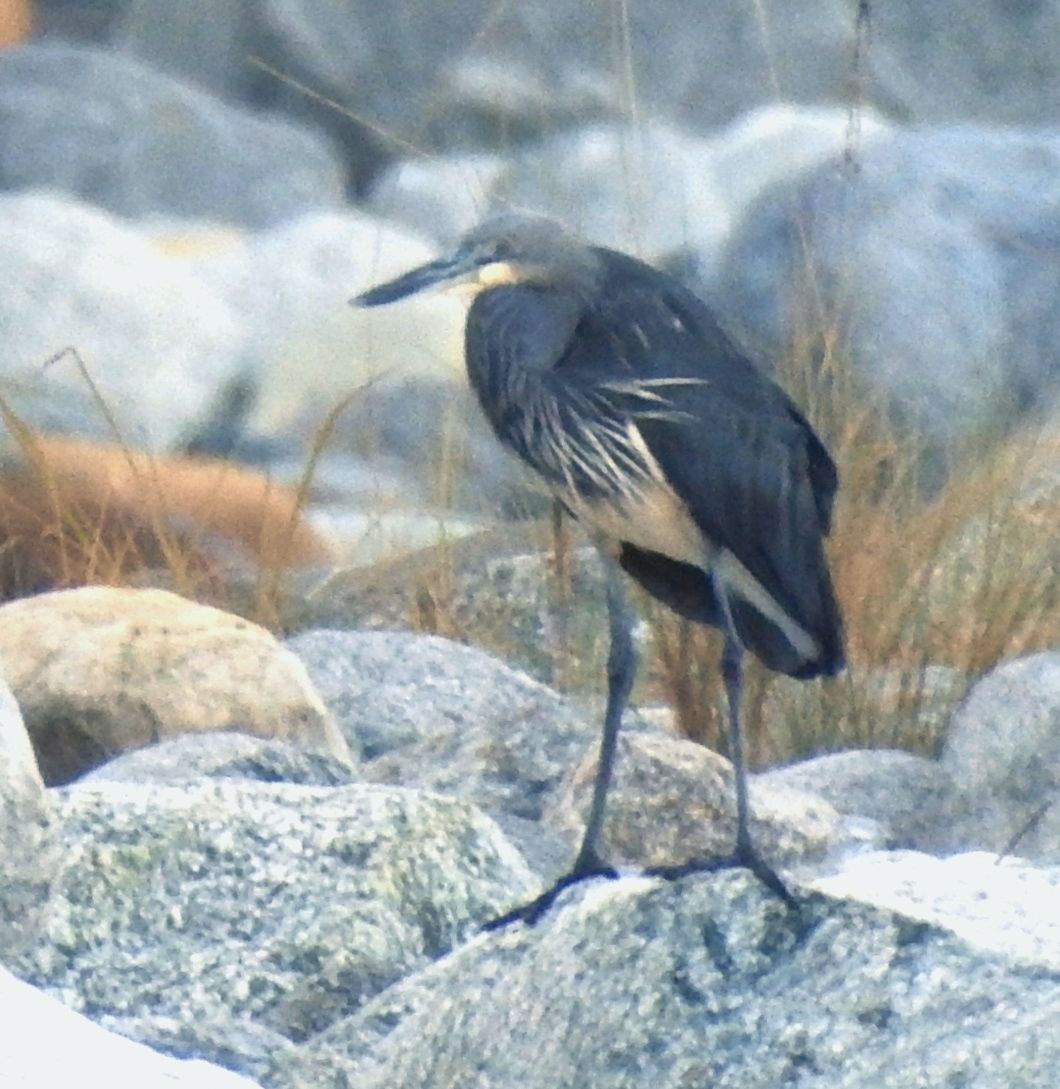
- Conservation status: Critically Endangered (IUCN Red List, since 2007) — most severe category before Extinct in the Wild
- Legal protection: Listed in Schedule I, Wildlife (Protection) Act, 1972 — highest level of legal protection; hunting, capture, or trade is a cognisable offence
- First scientific description: By British ornithologist Allan Octavian Hume in 1878 — based on specimens from the Teesta region; species no longer occurs in the Teesta today
- Current range: Restricted to pockets of Arunachal Pradesh (India), Bhutan, and Myanmar; historically also present in Sikkim, Nepal, and Bangladesh
- India's population: Only 6–9 individuals — distributed across Noa-Dehing River, Lahm River, and Lohit River; Lahm is a tributary of Lohit; Lohit basin (including Lahm) holds 70% of India's population
- Habitat requirements: Fast-flowing Himalayan rivers lined with old-growth riparian forest; elevations up to ~1,500 m above sea level; highly sensitive to anthropogenic disturbance; uses tall trees in undisturbed areas for nesting
- Foraging ecology: Hunts exclusively for fish in shallow water using a stand-and-strike strategy; dependent on clear, low-turbidity water — both water clarity and flow regime would be altered by dam construction
- Developer: Tehri Hydro Development Corporation India Ltd. (THDC) — Central PSE under Ministry of Power; in partnership with Arunachal Pradesh government
- EIA consultant: WAPCOS Ltd. — government consultancy firm under Ministry of Jal Shakti
- Trees to be felled: More than 33,000 trees
- Clearance status: In-principle clearance by FAC at its meeting of 19 December 2025 — in-principle only; final environmental and forest clearance not yet obtained
- Compensatory afforestation: Approved for 51 patches of land in Madhya Pradesh — over 1,000 km from the Lohit River basin
- EIA omission: State officials told FAC that white-bellied herons were not included because they had not been recorded within the project's immediate diversion area — a rationale criticised by ecologists as inadequate for a wide-ranging species with basin-level habitat use
- Community opposition: Residents of Nukung Village opposed the project since it was first proposed in 2008; public hearing (August 2025) raised concerns about reliability of baseline data, exclusion of important flora and fauna, and omission of tribal cultural practices
- EIA mandatory under the Environment (Protection) Act, 1986 for specified project categories; governed by the EIA Notification, 2006
- EIA process: screening → scoping → baseline data collection → impact prediction → Environmental Management Plan → public hearing
- Category A projects (including large hydropower dams) require appraisal by the Expert Appraisal Committee (EAC) and clearance from MoEFCC
- Forest clearance additionally required under the Forest (Conservation) Act, 1980 — assessed by the FAC
- Key critique: EIA conducted at site level rather than basin level — for wide-ranging, mobile species like the white-bellied heron, only a basin-level assessment can capture full habitat impacts (nesting, roosting, feeding areas across the Lohit system)
- EIA omission is a procedural failure: Omitting a Schedule I species from an EIA when the project falls within its primary national habitat is not merely a gap — it represents a breakdown in the mandatory screening and scoping stages of the EIA process
- Dam impacts on foraging ecology: Altered downstream turbidity, temperature, and flow patterns will directly affect the species' fish-hunting ecology; changes could render river stretches unsuitable for the white-bellied heron and lead to local extinction
- Riparian forest loss is irreversible: Old-growth riparian forest provides nesting and roosting sites; its clearance and submergence would directly destroy breeding habitat; natural forests cannot be "recreated" through compensatory plantation
- Compensatory afforestation in MP is ecologically meaningless: Eastern Himalayan ecosystems are shaped by unique topography, climatic variability, and ecological interactions over centuries; planting trees in a different biogeographic zone over 1,000 km away provides zero habitat compensation for the white-bellied heron
- Population size makes any loss catastrophic: With only 6–9 individuals in India, local extinction at the Lohit basin (70% of national population) is effectively a national extinction event for the species in India
- Broader governance failure: The EIA consultant (WAPCOS) is itself under the Ministry of Jal Shakti — the same ministry that oversees hydropower development; raises structural conflict of interest questions in the EIA process
- Kunming-Montreal GBF commitments: India's "30x30" commitment and "no net loss of high-biodiversity ecosystems" obligations are directly tested by this project-level decision
- White-bellied heron (Ardea insignis): Critically Endangered (IUCN, since 2007); Schedule I, WPA 1972; India's population: 6–9 individuals; Lohit basin (including Lahm tributary) holds 70% of India's population
- First described by: Allan Octavian Hume (1878) — from Teesta region specimens; species no longer found in Teesta today
- Current range: Pockets of Arunachal Pradesh, Bhutan, Myanmar; elevation up to ~1,500 m; three rivers: Noa-Dehing, Lahm, and Lohit
- Lohit 1,200 MW project developer: THDC India Ltd. (Tehri Hydro Development Corporation) — Central PSE under Ministry of Power; EIA by WAPCOS Ltd. (under Ministry of Jal Shakti)
- Clearance status: In-principle forest clearance by FAC, December 2025 — not final clearance; final environmental and forest clearances still pending
- Compensatory afforestation: 51 patches in Madhya Pradesh — over 1,000 km from Lohit basin; ecologists argue old-growth Eastern Himalayan forests cannot be recreated in a different biogeographic zone
- EIA Notification, 2006: Issued under Environment (Protection) Act, 1986; mandates EIA for specified project categories; Category A projects require EAC appraisal and MoEFCC approval
- Forest (Conservation) Act, 1980: Requires prior Central Government approval (through FAC) for diversion of forest land for non-forest use
- Eastern Himalayas — Indo-Burma Biodiversity Hotspot: One of 36 global hotspots (Conservation International); characterised by high endemism and species richness; distinct from the Western Ghats hotspot
- Kunming-Montreal GBF (CBD COP15, 2022): "30x30" target — protect 30% of land and water by 2030; India is a signatory to the Convention on Biological Diversity (CBD)
- Allan Octavian Hume: British ornithologist and also founder of the Indian National Congress (1885); his ornithological legacy includes the white-bellied heron description, Hume's Warbler, and Hume's Hawk-Eagle
- THDC India Ltd.: Also developed the Tehri Dam (Uttarakhand) — one of India's largest hydropower projects; a joint venture of the Central Government and Uttarakhand state government
The omission of the white-bellied heron from the environmental impact assessment of the Lohit hydropower project highlights systemic weaknesses in India's biodiversity governance. Critically examine the gaps in India's Environmental Impact Assessment framework with reference to the protection of critically endangered species and biodiversity hotspot ecosystems.
With reference to the white-bellied heron (Ardea insignis), which one of the following statements is correct?
Answer: CTamil Nadu Leads Female Labour Force Participation in Electronics Manufacturing
GS Paper 1 — Social Geography / Population & Settlements | GS Paper 3 — Indian Economy / Industrial SectorNew data released by the Ministry of Statistics and Programme Implementation (MoSPI) covering labour market conditions in India's 46 most populous cities (population exceeding 10 lakh, Census 2011) shows that two Tamil Nadu cities — Coimbatore (41.3%) and Madurai (37%) — rank in the top three for Female Labour Force Participation Rate (FLFPR), well above the urban India average of 27.7%. The data reinforces Tamil Nadu's position as India's leader in women's participation in electronics manufacturing, with the state's share growing from 20% in 2013-14 to 43% in 2023-24 in the manufacture of computers, electronic, and optical products.
- Labour Force Participation Rate (LFPR): Percentage of a population group who are either employed or actively seeking employment — a measure of the degree to which a group is economically active
- FLFPR vs Female Employment Rate: LFPR includes both employed women and those actively seeking work; Employment Rate counts only those actually employed — LFPR is the broader indicator
- Urban India average FLFPR: 27.7% across the 46 cities studied by MoSPI
- MoSPI: Ministry of Statistics and Programme Implementation — nodal ministry for official statistics; publishes Periodic Labour Force Survey (PLFS) and city-level reports
- Annual Survey of Industries (ASI): Conducted by MoSPI; covers factories registered under the Factories Act; provides data on employment, output, wages in organised manufacturing — source of state-level women's employment data in electronics
| State / City | FLFPR (MoSPI, 46-city report) | Share in Women's Electronics Manufacturing (2023-24) | Trend vs 2013-14 |
|---|---|---|---|
| Coimbatore (Tamil Nadu) | 41.3% (Rank 1) | Part of TN's 43% national share | Significant increase (TN: 20% → 43%) |
| Surat (Gujarat) | 40.6% (Rank 2) | Gujarat: ~10% | Stagnant (10% → 10%) |
| Madurai (Tamil Nadu) | 37.0% (Rank 3) | Part of TN's 43% national share | Significant increase |
| Maharashtra | Not in top 3 | ~6% | Steep decline (24% → 6%) |
| Karnataka | Not in top 3 | ~8% | Decline (11% → 8%) |
- In 2023-24, Tamil Nadu accounted for 14,814 of 34,531 women directly employed in computers, electronics, and optical products manufacturing nationally — nearly half the national total
- In August 2024, Tamil Nadu government and Foxconn inaugurated a women-only residential complex at Vallam Vadagal, Sriperumbudur
- Built by SIPCOT (State Industries Promotion Corporation of Tamil Nadu) at a cost of ₹706.5 crore; capacity: 18,720 workers
- SIPCOT: State Industries Promotion Corporation of Tamil Nadu — state nodal agency for industrial infrastructure; manages industrial parks and estates across Tamil Nadu
- MoSPI data covers only cities with population above 10 lakh (Census 2011); emerging hubs — Hosur, Erode, Oragadam — excluded as they fell below this threshold in 2011; actual Tamil Nadu FLFPR in electronics is likely higher
- Recent investment: Tamil Nadu signed a ₹15,000 crore MoU with Vikram Solar for Battery Energy Storage System (BESS) manufacturing at SIPCOT Industrial Park, Tirunelveli
- China's rapid industrialisation in the Pearl River Delta and Yangtze River Delta was substantially driven by large-scale female workforce participation in electronics assembly
- Tamil Nadu is identified as the Indian state closest to replicating this model; other states remain significantly behind on both FLFPR and women's share in electronics manufacturing
- Surat (Gujarat) has high FLFPR (40.6%) but Gujarat's share in women's electronics manufacturing remained stagnant at 10% — demonstrating that high FLFPR does not automatically translate to electronics manufacturing employment; sectoral policy and industrial ecosystem matter
- FLFPR as a development multiplier: Women's labour force participation is closely associated with productivity gains, household income growth, and fertility decline — the "demographic dividend multiplier" in economic literature
- Residential infrastructure as a barrier-breaker: Unavailability of safe, affordable accommodation near industrial zones disproportionately restricts women's geographic mobility for work; the Foxconn-SIPCOT dormitory directly addresses this barrier
- Policy rather than passive industrialisation: Maharashtra and Karnataka saw declines in women's electronics manufacturing shares despite being major industrial states — confirming that FLFPR outcomes in manufacturing require targeted policies, not just industrial growth
- MoSPI methodology limitation: Census 2011 population thresholds may no longer adequately capture India's evolving industrial urban geography; industrial boomtowns like Hosur and Oragadam are excluded — leading to systematic undercounting of Tamil Nadu's actual performance
- Value chain positioning matters: Tamil Nadu's association with Apple's supply chain (through Foxconn, Wistron, Pegatron) has driven women's employment because these global OEMs actively implement gender-inclusive hiring and retention practices — a policy lever other states can pursue through industrial policy and investment attraction
- FLFPR definition: Percentage of women either employed or actively seeking employment — broader than Female Employment Rate (which counts only those employed)
- Top 3 cities by FLFPR (MoSPI, 46-city report): Coimbatore 41.3% (TN), Surat 40.6% (Gujarat), Madurai 37.0% (TN); urban India average: 27.7%
- Tamil Nadu's share in women employed in electronics (2023-24): 43% nationally — up from 20% in 2013-14; 14,814 of 34,531 directly employed women are in Tamil Nadu
- Gujarat contrast: Surat ranks 2nd in FLFPR (40.6%) yet Gujarat's women's share in electronics manufacturing stagnant at ~10% — high FLFPR does not automatically produce electronics employment
- Maharashtra and Karnataka declines: Maharashtra 24% → 6%; Karnataka 11% → 8% in women's electronics manufacturing share (2013-14 to 2023-24)
- Foxconn-SIPCOT residential complex: Inaugurated August 2024, Vallam Vadagal, Sriperumbudur; built by SIPCOT at ₹706.5 crore; capacity 18,720 workers
- SIPCOT: State Industries Promotion Corporation of Tamil Nadu — state nodal agency for industrial infrastructure and parks
- MoSPI study scope: 46 cities with population >10 lakh (Census 2011); emerging hubs Hosur, Erode, Oragadam excluded — actual Tamil Nadu FLFPR in electronics likely higher
- Annual Survey of Industries (ASI): MoSPI survey covering registered factories; source for gender-disaggregated manufacturing employment data by state
- Vikram Solar MoU: ₹15,000 crore for BESS manufacturing at SIPCOT Industrial Park, Tirunelveli — extends Tamil Nadu's green manufacturing ambitions beyond electronics
- Periodic Labour Force Survey (PLFS): Annual MoSPI survey; provides LFPR, employment, and unemployment estimates for rural, urban, and overall India
Tamil Nadu has emerged as India's leader in female labour force participation in electronics manufacturing. Analyse the factors driving this outcome and examine the policy lessons for replicating the Tamil Nadu model in other states with low female labour force participation.
Consider the following statements regarding female labour force participation in India's electronics manufacturing sector:
1. Tamil Nadu's share of women directly employed in the manufacture of computers, electronics, and optical products grew from 20% in 2013-14 to 43% in 2023-24.
2. Maharashtra's share in women employed in electronics manufacturing increased significantly over the same period.
Which of the statements given above is/are correct?
Ken-Betwa River Link Project — Engineering, Ecology and Displacement
GS Paper 3 — Environment & Ecology | Water Resources | Infrastructure | Internal DisplacementIndia's first inter-basin river transfer project — the Ken-Betwa Link Project (KBLP) at a cost of ₹44,605 crore — has entered a decisive construction phase in the forests of Panna National Park, Madhya Pradesh, with hydraulic breakers, excavators, and bulldozers reshaping the landscape. Designed to link the Ken and Betwa rivers to irrigate the water-scarce Bundelkhand region, the project is racing to meet new deadlines amid a deeply contested resettlement process: approximately 2,000 families across 10 villages are being evacuated from the submergence zone, with residents protesting against compensation surveys, eligibility lists, and relocation terms.
- Engineered diversion of water from a water-surplus river basin to a water-deficit basin to address regional water imbalances
- India's river systems are highly uneven — Brahmaputra and Mahanadi carry surplus water; Godavari, Cauvery, and Bundelkhand's rivers experience chronic deficit
- IBWT projects carry significant ecological, social, and political complexities — altered hydrology, biodiversity loss, displacement, and interstate disputes
- Project type: Inter-basin water transfer — diverts water from Ken River (surplus) to Betwa River (deficit); both are left-bank tributaries of the Yamuna
- Total cost: ₹44,605 crore — India's first inter-basin river link to reach construction stage
- Purpose: Irrigation of approximately 10.62 lakh hectares in Bundelkhand (MP and UP); drinking water for ~62 lakh people
- Key structure: Daudhan Dam on the Ken River in Panna National Park — central structure from which water is diverted via link canal to the Betwa
- Panna impact: Significant portions of Panna National Park's core and buffer zones to be submerged — a Project Tiger reserve with one of India's few recovered tiger populations
- Displacement: ~2,000 families across 10 villages in submergence zone; protests over adequacy of compensation, accuracy of eligibility lists, and terms of relocation
- Governance structure: Ken-Betwa Link Project Authority (KBLPA) — Special Purpose Vehicle set up under a tripartite agreement between Central Government, Madhya Pradesh, and Uttar Pradesh
- Spans 13 districts — 7 in MP (Panna, Chhatarpur, Tikamgarh, Damoh, Sagar, Datia, Vidisha) and 6 in UP (Banda, Chitrakoot, Hamirpur, Jhansi, Lalitpur, Mahoba)
- Characterised by low and erratic rainfall, hard rock terrain with poor groundwater potential, and high agricultural distress
- Region experienced severe multi-year droughts, causing large-scale distress migration — among India's most water-stressed regions despite lying within the Yamuna basin
- Ken River: left-bank tributary of Yamuna, flowing through MP and UP; Betwa River: also left-bank Yamuna tributary, flowing primarily through MP and UP
- National Perspective Plan (NPP, 2002): Prepared by National Water Development Agency (NWDA) under Ministry of Jal Shakti; envisages 30 inter-basin links — 14 Himalayan Rivers Component + 16 Peninsular Rivers Component
- NWDA: National Water Development Agency — technical body under Ministry of Jal Shakti responsible for planning and feasibility studies of inter-basin water transfer projects; established 1982
- Ken-Betwa is the first Peninsular Component link to reach construction; also the first IBWT project in India to be implemented
- LARR Act, 2013: Right to Fair Compensation and Transparency in Land Acquisition, Rehabilitation and Resettlement Act — governs displacement from infrastructure projects; mandates Social Impact Assessment, consent requirements, and rehabilitation entitlements
- Panna Tiger Reserve: designated under Project Tiger; celebrated for remarkable tiger recovery — tigers went locally extinct in 2009; successful reintroduction programme restored the population
- Daudhan Dam will submerge portions of Panna's core and buffer zones — affecting the Ken River's in-park stretch, a critical wildlife corridor
- Compensatory afforestation and wildlife management plans are conditions attached to environmental clearance — adequacy widely questioned by conservation ecologists
- Symbolic and precedent-setting: KBLP is the first concrete operationalisation of India's river interlinking vision — its success or failure will shape the prospects for remaining 29 inter-basin transfers in the NPP
- Hydrological rationale is strong: Bundelkhand's chronic water deficit and agricultural distress demand structural solutions beyond groundwater recharge; KBLP is expected to bring 10.62 lakh hectares under irrigation, potentially transforming the agricultural economy
- Ecological trade-offs are severe: Submergence of Panna Tiger Reserve partially fragments a corridor and disrupts prey-predator dynamics; the tiger recovery story at Panna represents years of conservation investment — partially submerging the core zone introduces irreversible ecological risks
- LARR Act implementation gap: Protests over compensation surveys and eligibility lists echo a recurring pattern in Indian large infrastructure projects — the gap between the legal rehabilitation framework and ground-level implementation; rushed deadlines exacerbate this gap
- Climate change risk to hydrological assumptions: The designation of Ken as "surplus" and Betwa as "deficit" is based on historical flow data; changing monsoon patterns and altered river discharge regimes under climate change make long-term surplus/deficit designations increasingly uncertain
- Federal cooperation required: MP and UP must cooperate on water sharing, land acquisition, and resettlement under the tripartite agreement — interstate coordination failures have historically delayed large water projects in India
- Ken-Betwa Link Project (KBLP): India's first inter-basin river transfer project to reach construction; ₹44,605 crore; links Ken River (surplus) to Betwa River (deficit) for Bundelkhand irrigation
- Both Ken and Betwa are: Left-bank tributaries of the Yamuna; Ken source: Vindhyan ranges (MP); Betwa source: Raisen district, MP; both flow through MP and UP before joining Yamuna
- Key dam: Daudhan Dam on Ken River — located within Panna National Park / Tiger Reserve; central structure of the link
- Bundelkhand coverage: 13 districts — 7 in MP (Panna, Chhatarpur, Tikamgarh, Damoh, Sagar, Datia, Vidisha) + 6 in UP (Banda, Chitrakoot, Hamirpur, Jhansi, Lalitpur, Mahoba)
- Project benefits: Irrigation of ~10.62 lakh hectares; drinking water for ~62 lakh people in Bundelkhand
- Displacement: ~2,000 families across 10 villages in submergence zone; protests over compensation and eligibility
- National Perspective Plan (NPP, 2002): Prepared by NWDA (Ministry of Jal Shakti); 30 inter-basin links planned (14 Himalayan + 16 Peninsular); Ken-Betwa is the first Peninsular link implemented
- NWDA: National Water Development Agency — under Ministry of Jal Shakti; responsible for IBWT feasibility studies; established 1982
- Panna Tiger Reserve: Project Tiger reserve in MP; tiger locally extinct by 2009, successfully reintroduced; Daudhan Dam will submerge portions — a major conservation concern
- LARR Act, 2013: Right to Fair Compensation and Transparency in Land Acquisition, Rehabilitation and Resettlement Act — governs displacement and rehabilitation; mandates Social Impact Assessment and rehabilitation entitlements
- KBLPA: Ken-Betwa Link Project Authority — Special Purpose Vehicle under tripartite agreement between Central Government, MP, and UP
- Inter-basin water transfer (IBWT): Diversion from surplus to deficit basin; raises concerns of altered hydrology, loss of aquatic biodiversity, displacement, and interstate water disputes
The Ken-Betwa Link Project, India's first inter-basin river transfer, promises irrigation benefits for drought-prone Bundelkhand but raises serious ecological and social concerns. Critically analyse the trade-offs involved in large-scale river interlinking projects and examine the governance requirements for their just and ecologically responsible implementation.
With reference to the Ken-Betwa Link Project (KBLP):
Assertion (A): The Ken-Betwa Link Project is India's first inter-basin river transfer project to enter the construction stage, aimed at addressing the chronic water deficit of the Bundelkhand region.
Reason (R): Both the Ken and Betwa rivers are tributaries of the Ganga and flow exclusively through the state of Madhya Pradesh.


