
Content
- PM-WANI Gets Major Citizen-Friendly Upgrade to Make Public Wi-Fi Simpler and More Accessible
- Government Notifies National Sports Governance Board Rules and National Sports Tribunal Rules, 2026
- Rare Dragonfly Resurfaces in Arunachal Underscores Need for Habitat Protection
- The Ebola Species With No Vaccine
- High-Level Committee on Demographic Changes (HLCDC)
- Health Expenses Dip as Govt. Spend Rises
PM-WANI Gets Major Citizen-Friendly Upgrade to Make Public Wi-Fi Simpler and More Accessible
Why in News?
- The Department of Telecommunications introduced major reforms under the PM-WANI framework, including QR-based laptop login, flexible short-duration Wi-Fi plans and standardised hotspot identification, to improve public internet accessibility and digital inclusion.
- Simultaneously, the Ministry of Social Justice and Empowerment launched the PM-AJAY Portal and AJAY Mobile App to digitise grassroots implementation and monitoring under the Pradhan Mantri Anusuchit Jaati Abhyuday Yojana (PM-AJAY).
Relevance
GS Paper II
- Governance – Digital Inclusion, Citizen-Centric Service Delivery, E-Governance
- Social Justice – Bridging Digital Divide, Access to Internet Connectivity
- Government Policies – Digital India, PM-WANI, PM-AJAY, Welfare Digitisation
GS Paper III
- Science & Technology – Digital Public Infrastructure (DPI), Public Wi-Fi Ecosystem, QR-based Authentication
- Economy – Digital Economy, Internet Accessibility, Entrepreneurship, Telecom Ecosystem
- Cybersecurity – Public Wi-Fi Security, Data Protection, Digital Authentication
- Infrastructure – Broadband Connectivity, Last-Mile Internet Access
Practice Question
- “Digital Public Infrastructure can strengthen inclusive governance only when supported by affordability, cybersecurity and last-mile digital accessibility.” Examine in the context of PM-WANI and welfare digitisation initiatives in India. (250 words)
PM-WANI: Background & Objectives
What is PM-WANI?
- PM-WANI was launched in 2020 under the Digital India programme to expand affordable public Wi-Fi access through a decentralised and interoperable ecosystem of Public Data Offices (PDOs), aggregators and app providers.
- The initiative seeks to enhance last-mile internet connectivity, especially for students, travellers, small businesses and economically weaker populations lacking affordable broadband access.
- PM-WANI is designed to strengthen India’s Digital Public Infrastructure (DPI) by creating a scalable public Wi-Fi ecosystem without requiring expensive licensing requirements for small hotspot providers.
Key PM-WANI Reforms (2026)
QR-Based Authentication for Laptops
- The Department of Telecommunications now permits QR-code-based authentication for laptops and secondary devices, allowing users to connect by scanning a QR code through an authenticated smartphone application.
- This reform simplifies onboarding, reduces login friction and improves user convenience by eliminating repetitive credential entry and cumbersome authentication procedures for secondary devices.
- QR-based authentication also enhances security by linking device access with authenticated mobile identities, reducing misuse risks while supporting seamless multi-device internet access.
Flexible Short-Duration Wi-Fi Plans
- The government advised operators to introduce 15-minute, 30-minute and 60-minute sachet-style Wi-Fi plans to improve affordability and accessibility for short-term users such as commuters, travellers and students.
- Flexible micro-duration plans are expected to increase public Wi-Fi adoption while improving commercial viability for hotspot operators through higher utilisation and expanded customer reach.
- Such prepaid micro-access models resemble India’s successful low-cost telecom revolution, which significantly expanded mobile internet penetration through affordable data pricing.
Standardised Hotspot Identification
- PM-WANI hotspot names (SSIDs) will now follow standardised “PMWANI” branding, helping users easily identify authentic and secure public Wi-Fi networks while reducing confusion and phishing risks.
- Standardised naming conventions improve trust, interoperability and visibility of public digital infrastructure, especially in crowded public spaces such as railway stations, malls and transit hubs.
Significance of PM-WANI Reforms
Bridging the Digital Divide
- India had over 950 million internet subscribers by 2025, yet large disparities remain in broadband affordability, rural connectivity and public internet access, especially among low-income households.
- Public Wi-Fi infrastructure can significantly improve digital access for populations unable to afford personal broadband or high-volume mobile data plans, particularly in rural and underserved urban regions.
Affordable Connectivity
- Short-duration sachet plans support low-income and transient users who require internet access for specific tasks such as online classes, digital payments, telemedicine or accessing government services.
Support to Digital Economy
- Expanded public Wi-Fi infrastructure strengthens India’s digital economy by supporting:
- E-commerce
- Online education
- Digital payments
- Gig economy services
- Teleworking ecosystems
Strengthening Digital Public Infrastructure (DPI)
- PM-WANI complements other Digital Public Infrastructure platforms such as:
- Aadhaar
- UPI
- DigiLocker
- ONDC
- Together, these systems aim to create interoperable, citizen-centric digital ecosystems supporting inclusive economic participation.
Governance & Administrative Dimensions
Ease of Doing Business
- By eliminating licensing burdens for small Wi-Fi providers, PM-WANI promotes entrepreneurship and decentralised internet delivery through local vendors, shops and public institutions.
Cooperative Digital Governance
- The initiative demonstrates convergence between public policy, telecom operators, technology platforms and local enterprises in expanding digital access infrastructure.
Digital Inclusion as Public Utility
- The government increasingly treats internet connectivity as a public utility essential for education, employment, governance and financial inclusion in the digital economy era.
Challenges in PM-WANI Ecosystem
Limited Adoption
- Despite ambitious objectives, PM-WANI rollout has remained slower than expected due to low commercial incentives, operational uncertainties and inadequate awareness among users and local businesses.
Connectivity & Infrastructure Gaps
- Public Wi-Fi quality often suffers from inconsistent speeds, power outages, weak backhaul infrastructure and poor maintenance, especially in rural and semi-urban regions.
Cybersecurity Risks
- Public Wi-Fi networks remain vulnerable to:
- Data interception
- Identity theft
- Phishing attacks
- Malware distribution
- Strong cybersecurity safeguards and user awareness mechanisms are therefore essential.
Digital Literacy Deficit
- Many citizens still lack awareness regarding secure public Wi-Fi usage, digital authentication and online safety practices, limiting effective utilisation of digital infrastructure.
PM-AJAY Portal & AJAY Mobile App
About PM-AJAY
- Pradhan Mantri Anusuchit Jaati Abhyuday Yojana is a Centrally Sponsored Scheme aimed at improving socio-economic conditions of Scheduled Caste (SC) communities through:
- Employment generation
- Skill development
- Infrastructure support
- Educational assistance
- The scheme focuses on reducing poverty and improving socio-economic indicators in SC-majority villages through targeted interventions and development planning.
Key Features of PM-AJAY Portal
Centralised Digital Database
- The PM-AJAY Portal functions as a unified digital platform integrating all three major scheme components:
- Adarsh Gram
- Grant-in-Aid for skilling and employment
- Hostel infrastructure support
Real-Time Monitoring
- The dashboard monitors development progress across more than 47,000 SC-majority villages and nearly 4 million beneficiaries, enabling national, state and district-level performance tracking.
Digital Village Development Plans
- Traditional paper-based planning under the Adarsh Gram component is being replaced by digital Village Development Plans monitored across:
- 50 socio-economic indicators
- 10 development domains
Geo-Tagged Monitoring
- The platform enables uploading of geo-tagged and time-stamped photographs for hostel construction and infrastructure verification, improving transparency and reducing implementation leakages.
Significance of PM-AJAY Digitisation
Strengthening Social Justice Governance
- Digitisation improves transparency, beneficiary tracking and accountability in welfare delivery targeted toward historically marginalised Scheduled Caste communities.
Data-Driven Policy Making
- Real-time dashboards and digital monitoring systems allow evidence-based policymaking, faster intervention and improved administrative responsiveness.
Reducing Leakages & Corruption
- Digital tracking and geo-tagged verification mechanisms help reduce ghost beneficiaries, fund diversion and implementation irregularities in welfare schemes.
Grassroots Digital Governance
- Mobile-based platforms improve field-level monitoring and citizen access while strengthening convergence between welfare administration and digital governance initiatives.
Constitutional & Social Justice Dimensions
Article 46
- Article 46 directs the State to promote educational and economic interests of Scheduled Castes, Scheduled Tribes and weaker sections while protecting them from social injustice and exploitation.
Digital Inclusion & Equality
- Expanding digital connectivity and welfare digitisation supports substantive equality under Article 14 by improving access to opportunities, information and public services for marginalised communities.
Digital Public Goods
- PM-WANI and PM-AJAY reflect India’s broader transition toward treating digital platforms as public goods essential for inclusive development and governance delivery.
Critical Analysis
Positive Governance Transformation
- Both PM-WANI and PM-AJAY demonstrate India’s shift toward interoperable, technology-driven governance systems aimed at improving accessibility, transparency and citizen-centric service delivery.
Need for Last-Mile Capacity
- Digital platforms alone cannot ensure inclusion unless accompanied by:
- Digital literacy
- Reliable electricity
- Affordable devices
- Local language support
Risks of Digital Exclusion
- Marginalised groups lacking smartphones, digital literacy or internet access may still remain excluded despite expansion of digital governance systems.
Data Privacy Concerns
- Increasing digitisation of welfare databases and public internet access systems raises concerns regarding data protection, cybersecurity and misuse of sensitive beneficiary information.
Way Forward
Strengthen Public Wi-Fi Infrastructure
- India should expand PM-WANI hotspots in rural areas, railway stations, educational institutions and public service centres through viability-gap funding and local entrepreneurship support.
Improve Cybersecurity
- Strong encryption, authentication standards and public awareness campaigns are essential to secure public Wi-Fi ecosystems and protect citizen data.
Promote Digital Literacy
- Digital literacy programmes targeting women, rural populations and vulnerable groups are necessary to ensure meaningful and safe digital participation.
Integrate Welfare Platforms
- PM-AJAY should be integrated with broader Digital Public Infrastructure systems such as Aadhaar, DigiLocker and DBT platforms for seamless beneficiary service delivery.
Ensure Inclusive Design
- Digital governance platforms must incorporate multilingual interfaces, accessibility standards and low-bandwidth compatibility to prevent exclusion of digitally vulnerable populations.
Prelims Pointers
- PM-WANI was launched in 2020.
- PM-WANI operates through PDOs, PDO Aggregators and app providers.
- PM-AJAY is implemented by the Ministry of Social Justice and Empowerment.
- PM-AJAY covers more than 47,000 SC-majority villages.
- Article 46 relates to promotion of educational and economic interests of weaker sections.
Government Notifies National Sports Governance Board Rules and National Sports Tribunal Rules, 2026
Why in News?
- The Union Government notified the National Sports Governance (National Sports Board) Rules, 2026 and the National Sports Governance (National Sports Tribunal) Rules, 2026 under the National Sports Governance Act, 2025.
- The reforms aim to improve sports governance, transparency, accountability and dispute resolution by establishing a statutory National Sports Board and a dedicated National Sports Tribunal for sports-related disputes.
Relevance
GS Paper II
- Governance – Institutional Reforms, Transparency, Accountability, Tribunalisation
- Polity – Sports Governance, Quasi-Judicial Institutions, Natural Justice
- Government Policies – National Sports Governance Act, 2025, Sports Administration Reforms
GS Paper III
- Social Sector – Sports Infrastructure, Athlete Welfare, Professional Sports Ecosystem
- Governance & Ethics – Transparency in Public Institutions, Ethical Administration
- Science & Technology – Digital Governance, Online Dispute Resolution, Virtual Hearings
Practice Question
- “Transparent and athlete-centric governance is essential for transforming India into a global sporting power.” Discuss the significance and challenges of recent sports governance reforms in India. (250 words)
Background: Why Sports Governance Reform was Needed?
- India’s sports governance system has long faced criticism regarding politicisation, opaque functioning, athlete neglect, corruption, election disputes and administrative inefficiency within National Sports Federations (NSFs).
- Frequent litigation involving athlete selection, federation elections, doping issues and governance conflicts often delayed sporting events and adversely affected athletes’ careers due to prolonged judicial proceedings in ordinary civil courts.
- Several Indian sports bodies have faced suspension or warnings from international federations due to governance irregularities, political interference and non-compliance with international sporting norms.
- India’s aspiration to emerge as a major sporting power ahead of events such as the possible 2036 Olympics bid requires transparent, professional and globally credible sports governance institutions.
National Sports Board Rules, 2026
Composition of the Board
- The National Sports Board will consist of a Chairperson and two Members, appointed by the Central Government from a panel recommended by the Search-cum-Selection Committee constituted under separate rules.
- The Rules prescribe provisions relating to tenure, salaries, allowances, service conditions and powers of the Chairperson and Members to ensure institutional clarity and functional autonomy.
Functions of the National Sports Board
Recognition of National Sports Bodies
- The Board will function as the central statutory authority responsible for granting and reviewing recognition of National Sports Bodies (NSBs) and ensuring compliance with governance norms.
Governance Oversight
- It will monitor adherence to prescribed standards relating to:
- Democratic functioning
- Athlete representation
- Ethical conduct
- Transparency
- Financial accountability
Financial & Ethical Compliance
- Sports bodies receiving public funds will be expected to maintain proper audits, disclosures and ethical standards, reducing possibilities of corruption, fund misuse and opaque administrative practices.
Standardisation of Governance
- The Board aims to institutionalise uniform governance standards across sports federations, reducing arbitrary functioning and improving professionalism within Indian sports administration.
National Sports Tribunal Rules, 2026
Dedicated Sports Adjudication Mechanism
- The National Sports Tribunal will serve as a specialised adjudicatory body for disputes relating to:
- Athlete selection
- Federation elections
- Governance conflicts
- Contractual disputes
- Eligibility matters
- Administrative grievances
- The Tribunal seeks to reduce reliance on ordinary civil courts and ensure speedy, independent, specialised and cost-effective resolution of sports-related disputes.
Composition & Powers
- The Rules provide for appointment, reappointment, tenure, salary, allowances, service conditions and powers of the Tribunal’s Chairperson and Members.
- The Tribunal is expected to function as a single-window mechanism for sports disputes, reducing multiplicity of litigation and procedural delays affecting athletes and sports institutions.
Digital Governance Provisions
Techno-Legal Integration
- The Rules incorporate digital governance mechanisms through a dedicated online portal for:
- Filing disputes
- Submission of documents
- Issuance of notices
- Publication of orders
- Record maintenance
Virtual Hearings
- Provision for virtual hearings improves accessibility, reduces litigation costs and allows athletes, coaches and federations from remote regions to participate without extensive travel expenses.
Transparency & Efficiency
- Digitisation of proceedings can improve transparency, reduce procedural delays and strengthen institutional accountability in sports governance administration.
Significance of the Reforms
Professionalisation of Sports Governance
- Statutory oversight mechanisms can reduce arbitrary functioning and promote professional administration, which is critical for improving India’s sporting ecosystem and international competitiveness.
Athlete-Centric Governance
- Faster dispute resolution mechanisms can protect athletes from career disruption caused by prolonged litigation regarding selection disputes, suspensions or federation conflicts.
Alignment with Global Standards
- The reforms aim to align Indian sports governance with international principles of good governance, transparency, athlete welfare and institutional autonomy promoted by global sporting bodies.
Reducing Political Interference
- Independent oversight institutions may reduce excessive political and bureaucratic interference in sports federations, a recurring criticism against Indian sports administration.
Boost to India’s Sporting Ambitions
- Better governance structures are essential if India seeks to improve Olympic performance and position itself as a credible host for major international sporting events.
Constitutional & Legal Dimensions
Entry 33, State List
- Sports primarily fall under Entry 33 of the State List in the Seventh Schedule, though the Union increasingly influences sports governance through funding, international representation and national policy frameworks.
Article 21 & Athlete Rights
- Fair selection procedures, transparent governance and timely dispute resolution increasingly relate to principles of dignity, fairness and equal opportunity under Article 21 and Article 14.
Principle of Natural Justice
- The Tribunal framework institutionalises principles of:
- Fair hearing
- Transparency
- Independent adjudication
- Procedural fairness
Governance Challenges in Indian Sports
Opaque Federation Functioning
- Many sports federations have historically been criticised for lack of internal democracy, concentration of power, irregular elections and inadequate athlete participation in decision-making.
Corruption & Financial Mismanagement
- Weak oversight mechanisms previously allowed allegations of corruption, nepotism and misuse of public funds within certain sports bodies.
Athlete Welfare Deficit
- Athletes often face delayed payments, arbitrary selection procedures, inadequate grievance redressal and poor institutional support systems.
Judicial Delays
- Sports disputes in ordinary courts often take years to resolve, negatively affecting athletes’ competitive careers, training schedules and international participation opportunities.
Critical Analysis
Positive Institutional Reform
- Creation of a specialised sports tribunal reflects movement toward sector-specific governance institutions similar to tribunals in taxation, environment and corporate regulation.
Need for Institutional Independence
- Effectiveness of the Board and Tribunal will depend heavily on operational autonomy, transparency in appointments and insulation from political influence.
Balancing Autonomy & Regulation
- International sports federations generally oppose excessive state interference in sports governance. India must therefore balance statutory oversight with autonomy of sports bodies.
Implementation Capacity
- Institutional reforms alone may not resolve structural issues unless accompanied by professional management, athlete representation and accountability mechanisms at grassroots levels.
International Comparisons
- Countries such as Australia and United Kingdom have specialised governance and dispute-resolution mechanisms supporting athlete welfare and professional sports administration.
- The Court of Arbitration for Sport based in Switzerland functions as the global apex body for adjudicating international sports disputes.
Way Forward
Ensure Athlete Representation
- Athletes, coaches and sportspersons should receive meaningful representation within governance structures to ensure athlete-centric policy formulation and grievance redressal.
Strengthen Institutional Autonomy
- Transparent appointment processes, fixed tenure protection and independent functioning are essential for ensuring credibility of the Sports Board and Tribunal.
Capacity Building
- Sports federations require professional administrators, digital governance systems and financial management reforms to effectively comply with governance standards.
Grassroots Governance Reform
- Governance reforms must extend beyond elite federations to district and state-level sports bodies to improve transparency and talent development at grassroots levels.
International Harmonisation
- India should align domestic sports governance norms with international Olympic and sports federation standards to avoid conflicts and suspensions from global sporting bodies.
Prelims Pointers
- National Sports Governance Act, 2025 provides statutory framework for sports governance reforms.
- The National Sports Board regulates recognition and governance standards of National Sports Bodies.
- The National Sports Tribunal is a specialised adjudicatory body for sports disputes.
- The Court of Arbitration for Sport is headquartered in Switzerland.
- Sports fall under Entry 33 of the State List in the Seventh Schedule.
Rare dragonfly resurfaces in Arunachal underscores need for habitat protection
Why in News?
- A rare dragonfly species, Gynacantha khasiaca — commonly known as the Long-tailed Duskhawker — has been rediscovered in Namdapha National Park and Tiger Reserve after nearly 110 years, highlighting the exceptional biodiversity significance of India’s Northeast.
- The species was recorded in Changlang district of Arunachal Pradesh, nearly 600 km east of the location where it was first scientifically documented in the erstwhile Abor Hills region in 1914.
Relevance
GS Paper III
- Environment – Biodiversity Conservation, Freshwater Ecosystems, Insect Decline
- Ecology – Bioindicators, Wetland Conservation, Ecosystem Stability
- Disaster & Climate – Climate Change Impacts on Fragile Ecosystems
- Science & Technology – Taxonomy, Biodiversity Mapping, Citizen Science
GS Paper I
- Geography – Biodiversity Hotspots, Eastern Himalayas, Indo-Burma Region
Practice Question
- “The rediscovery of rare insect species highlights both the ecological richness of Northeast India and the need to expand conservation beyond charismatic megafauna.” Discuss. (250 words)
About Gynacantha khasiaca
- Gynacantha khasiaca belongs to the order Odonata, which includes dragonflies and damselflies. It is known for its elongated abdomen, powerful flight and ability to hover almost motionlessly while maintaining near-360° vision.
- Dragonflies possess two large compound eyes, each containing thousands of microscopic lenses and photoreceptor units, enabling highly sensitive motion detection and wide-angle visual perception critical for predatory behaviour.
- The species was rediscovered during surveys conducted by four citizen scientists and later confirmed through photographic documentation in the presence of forest officials at Deban within Namdapha National Park.
Ecological Significance of Dragonflies
Bioindicators of Freshwater Ecosystems
- Dragonflies and damselflies are regarded as important bioindicators because their life cycle depends heavily on clean freshwater ecosystems, making them sensitive indicators of environmental degradation and water pollution.
- The presence of rare Odonata species often reflects relatively healthy aquatic habitats, stable microclimatic conditions and intact forest-water interactions within ecologically fragile landscapes.
Role in Food Webs
- Dragonflies function both as predators and prey within freshwater ecosystems. Their larvae consume mosquito larvae and small aquatic organisms, while adults help regulate populations of insects including agricultural pests and disease vectors.
- They also serve as an important food source for birds, amphibians and fish, thereby contributing significantly to ecological balance and trophic stability in wetland ecosystems.
Biodiversity Significance
Global & Indian Diversity
- Globally, the order Odonata comprises nearly 6,442 species across approximately 693 genera, reflecting immense evolutionary diversity and ecological adaptation across freshwater habitats.
- India hosts nearly 504 species and 27 subspecies of dragonflies and damselflies, making the country one of the important biodiversity regions for Odonata diversity in tropical Asia.
- Arunachal Pradesh alone records nearly 110 Odonata species, underlining the ecological richness of the Eastern Himalayas and Indo-Burma biodiversity hotspot.
Importance of Arunachal Pradesh
Biodiversity Hotspot
- Arunachal Pradesh forms part of the globally recognised Indo-Burma Biodiversity Hotspot, characterised by high endemism, fragile mountain ecosystems and exceptional floral and faunal diversity.
- The state’s dense forests, river systems and varied altitudinal gradients create ideal ecological niches for amphibians, insects, birds and endemic species requiring specialised habitats.
Namdapha National Park
- Namdapha National Park and Tiger Reserve is India’s third-largest national park and among the country’s richest biodiversity landscapes, supporting tropical rainforests, alpine meadows and rare wildlife.
- The park is unique for hosting all four major big cats found in India — tiger, leopard, snow leopard and clouded leopard — alongside thousands of lesser-known invertebrate and insect species.
Significance of Rediscovery
Conservation Importance
- Rediscovery after more than a century demonstrates that several species considered extremely rare or possibly locally extinct may still survive in remote and understudied ecosystems of Northeast India.
- Such findings strengthen arguments for long-term biodiversity monitoring, habitat conservation and taxonomic research, particularly in ecologically sensitive but poorly surveyed regions.
Citizen Science Contribution
- The rediscovery highlights the growing role of citizen science in biodiversity documentation, ecological surveys and conservation awareness, especially where institutional scientific capacity remains limited.
- Citizen scientists increasingly contribute to species monitoring through photography, geotagging, digital biodiversity databases and collaboration with forest departments and research institutions.
Importance for Freshwater Conservation
- Since dragonflies are closely associated with freshwater ecosystems, their rediscovery indirectly indicates the ecological importance and relative integrity of local wetland and stream habitats within Namdapha landscapes.
Threats to Dragonflies & Freshwater Biodiversity
Habitat Destruction
- Rapid deforestation, infrastructure expansion, mining and unregulated tourism in ecologically fragile Himalayan landscapes threaten freshwater habitats critical for dragonfly breeding and survival.
Wetland Degradation
- Pollution, river modification, pesticide use and wetland encroachment reduce aquatic biodiversity and negatively affect Odonata populations that depend on clean freshwater ecosystems.
Climate Change
- Changing rainfall patterns, rising temperatures and altered hydrological cycles threaten species with narrow ecological tolerances, particularly insects inhabiting mountain ecosystems and high-rainfall tropical forests.
Data Deficiency
- Many insect species remain poorly documented due to limited taxonomic expertise, inadequate long-term monitoring and low conservation priority compared to charismatic megafauna.
Governance & Conservation Dimensions
Protected Area Network
- India’s protected area network, including national parks, wildlife sanctuaries and tiger reserves, plays a critical role in preserving microhabitats supporting lesser-known biodiversity such as insects, amphibians and freshwater organisms.
National Biodiversity Commitments
- Conservation of insect diversity aligns with India’s commitments under the Convention on Biological Diversity and the Kunming-Montreal Global Biodiversity Framework.
Need for Invertebrate Conservation
- Conservation policies in India remain heavily mammal-centric. Rediscovery of species like Gynacantha khasiaca demonstrates the need for stronger institutional focus on insect conservation and freshwater biodiversity.
Scientific & Ecological Importance of Insects
Pollination & Ecosystem Stability
- Insects collectively contribute to pollination, nutrient cycling, decomposition and pest regulation, making them foundational to ecological resilience and agricultural productivity.
Global Insect Decline
- Studies worldwide increasingly warn about large-scale declines in insect populations due to habitat loss, pesticides and climate change, raising concerns regarding ecosystem collapse and food security.
Way Forward
Strengthen Biodiversity Surveys
- India should expand systematic insect and freshwater biodiversity surveys, especially in biodiversity-rich but understudied regions such as the Northeast and Western Ghats.
Promote Citizen Science
- Encouraging citizen science platforms, local biodiversity mapping and digital ecological databases can improve species documentation and public participation in conservation.
Protect Freshwater Habitats
- Conservation strategies must prioritise protection of wetlands, forest streams and riparian ecosystems critical for dragonflies, amphibians and aquatic biodiversity.
Build Taxonomic Capacity
- India faces a shortage of trained taxonomists and entomologists. Greater investment in taxonomy, ecological research and biodiversity informatics is necessary for effective conservation planning.
Climate-Resilient Conservation
- Protected area management plans should integrate climate adaptation strategies to preserve sensitive freshwater ecosystems vulnerable to changing rainfall and temperature patterns.
Prelims Pointers
- Odonata includes dragonflies and damselflies.
- India hosts nearly 504 species and 27 subspecies of Odonata.
- Namdapha National Park and Tiger Reserve is located in Arunachal Pradesh.
- Dragonflies are important bioindicators of freshwater ecosystem health.
- The Indo-Burma Biodiversity Hotspot includes Northeast India.
The Ebola species with no vaccine
Why in News?
- World Health Organization declared the Bundibugyo ebolavirus (BDBV) outbreak in Democratic Republic of the Congo and Uganda a Public Health Emergency of International Concern (PHEIC) on 17 May 2026.
- The outbreak exposed major global gaps in vaccine preparedness, biosafety infrastructure, neglected tropical disease financing and healthcare surveillance, particularly for diseases affecting poorer tropical countries with weak commercial pharmaceutical incentives.
Relevance
GS Paper II
- Governance – Global Health Governance, Public Health Systems, International Cooperation
- Social Justice – Healthcare Equity, Access to Vaccines, Global Health Inequality
- International Relations – WHO, CEPI, Gavi, Vaccine Diplomacy
GS Paper III
- Science & Technology – Vaccine Development, BSL-4 Laboratories, mRNA Technology
- Health – Neglected Tropical Diseases (NTDs), Epidemic Preparedness, One Health
- Economy – Pharmaceutical R&D, Market Failure in Vaccine Development
- Security – Biosecurity, Pandemic Preparedness, Zoonotic Threats
Practice Question
- “The Bundibugyo Ebola outbreak exposes structural weaknesses in global health preparedness and neglected disease financing.” Critically analyse. (250 words)
What is Bundibugyo Ebolavirus (BDBV)?
- Bundibugyo ebolavirus is one of the species within the Ebolavirus genus, alongside Zaire, Sudan and Taï Forest ebolaviruses. It causes severe viral hemorrhagic fever with mortality rates ranging from nearly 25% to 90% depending on outbreak conditions and healthcare access.
- Unlike influenza or COVID-19, ebolavirus outbreaks are highly sporadic and geographically localised, making long-term vaccine development commercially difficult and scientifically challenging due to unpredictable transmission patterns.
- Different ebolavirus species possess distinct surface proteins, meaning immunity against one species does not necessarily provide sufficient cross-protection against another species, requiring species-specific vaccine research.
Global Vaccine Preparedness Gap
Absence of Licensed Vaccine
- Currently, there is no licensed vaccine specifically targeting the Bundibugyo strain, exposing a major weakness in global preparedness against neglected and low-frequency infectious diseases.
- Existing licensed Ebola vaccines such as Ervebo and the Zabdeno–Mvabea combination are designed only for the Zaire ebolavirus species and provide limited or uncertain protection against Bundibugyo infections.
- WHO and the Oxford Vaccine Group estimate that even accelerated production of Bundibugyo vaccine candidates may require at least six additional months before sufficient doses become available for small-scale clinical trials.
Why Vaccine Development is Difficult?
Requirement of BSL-4 Facilities
- Research involving live ebolavirus requires Biosafety Level-4 (BSL-4) laboratories, the highest category of biological containment facilities designed for highly lethal and transmissible pathogens lacking effective treatment.
- BSL-4 facilities contain specialised infrastructure including negative air pressure systems, airlocks, HEPA filtration, decontamination chambers, sterilised waste systems and positive-pressure suits for researchers handling dangerous pathogens.
- Globally, there are only slightly over 100 BSL-4 laboratories, highlighting limited global capacity for advanced research on highly infectious diseases. India currently possesses two BSL-4 facilities.
Non-Human Primate Trials
- Vaccine candidates must undergo testing in non-human primates, considered the gold standard for assessing safety and efficacy against highly fatal viral diseases due to their physiological similarity to humans.
- Human clinical trials during active Ebola outbreaks become extraordinarily difficult because outbreaks are short-lived, geographically unstable and involve ethical challenges related to emergency conditions and mortality risks.
Economic Realities Behind “Neglected” Diseases
Market Failure in Vaccine Development
- Vaccine development today often costs more than $1 billion, while manufacturing requires hundreds of millions more for specialised facilities, ultra-cold storage chains, regulatory approvals and quality assurance systems.
- Most NTDs disproportionately affect poor populations in tropical regions where purchasing power remains extremely limited, creating weak commercial incentives for multinational pharmaceutical companies to invest heavily in research.
- Diseases such as Ebola lack stable long-term markets unlike influenza or COVID-19 vaccines, making private-sector investment highly dependent on international organisations and government subsidies.
Neglected Tropical Diseases (NTDs)
What are NTDs?
- Neglected Tropical Diseases (NTDs) are a group of infectious diseases primarily affecting poor, rural and politically marginalised populations in tropical and subtropical regions, especially across Africa, Asia and Latin America.
- Historically, global infectious disease funding remained concentrated around HIV/AIDS, Tuberculosis and Malaria, while NTDs received disproportionately low research funding, healthcare attention and pharmaceutical investment.
Scientific Complexity
- Many NTDs are caused by eukaryotic parasites such as worms and protozoa that possess complex multi-stage life cycles across multiple hosts, making vaccine development significantly more difficult than for viral diseases like measles.
- Human immune systems often fail to develop durable immunity against parasitic infections, complicating efforts to identify stable vaccine antigens and long-lasting protective immune responses.
Global Health Governance & International Response
London Declaration (2012)
- The London Declaration on NTDs (2012) brought together WHO, the World Bank, 13 pharmaceutical companies and several governments to commit over $785 million towards eliminating or controlling 10 major neglected tropical diseases by 2020.
Kigali Declaration (2022)
- Sponsored by Rwanda, the Kigali Declaration renewed global commitments toward eliminating NTDs, mobilising nearly $1.5 billion in pledges from governments, NGOs and pharmaceutical firms.
Role of CEPI & Gavi
- Coalition for Epidemic Preparedness Innovations and Gavi increasingly support vaccine development for pathogens lacking strong commercial incentives, including emerging epidemic threats.
African & Global South Initiatives
ACHIEVE Africa Programme
- In February 2026, the African Union launched ACHIEVE Africa, aiming to build indigenous African vaccine research and manufacturing capacity for neglected diseases.
- The African Union aims to domestically manufacture nearly 60% of Africa’s vaccine requirements by 2040, reducing dependence on Western pharmaceutical supply chains and improving regional health sovereignty.
mRNA Vaccine Hubs
- mRNA manufacturing hubs established in South Africa and Senegal during COVID-19 are now being repurposed for experimental NTD vaccines such as leishmaniasis.
Latin American Public Manufacturing
- Countries such as Brazil and Cuba developed public-sector vaccine manufacturing capacities to address diseases neglected by multinational pharmaceutical corporations.
India’s Relevance & Preparedness
BSL-4 Infrastructure
- India possesses two BSL-4 laboratories, including facilities under the National Institute of Virology, strengthening national capability to study highly infectious pathogens such as Nipah virus and Ebola.
Indigenous Vaccine Research
- India recently initiated Phase-I human clinical trials for an indigenous vaccine against Kyasanur Forest Disease (KFD), a tick-borne neglected tropical disease endemic to southern India.
One Health Relevance
- The Ebola outbreak reinforces the importance of the One Health approach, recognising interconnectedness between human health, animal health and environmental changes such as deforestation, climate change and zoonotic spillovers.
Public Health Challenges During the Outbreak
Weak Healthcare Systems
- Healthcare systems in affected regions remain weakened by conflict, poverty, climate change and fragile infrastructure, reducing their ability to conduct rapid surveillance, isolation and outbreak containment.
Importance of Early Detection
- In the absence of effective vaccines, outbreak management currently depends heavily upon early detection, contact tracing, isolation, safe burial practices and community engagement to break transmission chains.
Vaccine Distribution Challenges
- Ebola vaccine deployment requires highly specialised cold-chain infrastructure (-80°C to -60°C), creating major logistical challenges in remote rural regions with weak electricity and transport infrastructure.
Governance & Ethical Dimensions
Global Health Inequality
- The outbreak highlights structural inequities in global healthcare systems where diseases affecting poorer populations receive delayed research attention compared to diseases affecting wealthy countries.
Vaccine Nationalism & Equity
- COVID-19 demonstrated how vaccine access inequalities can deepen during global health emergencies, raising concerns that poorer countries may again face delays in accessing life-saving technologies during future outbreaks.
Ethical Challenges in Trials
- Conducting human trials during active Ebola outbreaks raises ethical issues related to informed consent, emergency use authorisations and balancing scientific urgency with patient protection.
Way Forward
Strengthen Global NTD Financing
- Governments, WHO, CEPI and multilateral institutions must create sustainable financing mechanisms for NTD research instead of relying solely on market-based pharmaceutical incentives.
Expand BSL-4 Infrastructure
- Greater investment in regional BSL-4 laboratories and genomic surveillance systems is essential for faster pathogen sequencing, vaccine development and outbreak response capabilities.
Promote Indigenous Manufacturing
- Developing countries should strengthen domestic vaccine R&D and manufacturing capacities to reduce dependence on global pharmaceutical monopolies during emergencies.
Strengthen One Health Surveillance
- Integrated zoonotic disease surveillance involving wildlife, livestock and human health systems can improve early detection of emerging epidemic threats.
Community-Centric Public Health
- Investments in local healthcare workers, primary healthcare systems, sanitation, public awareness and trust-building are critical for effective outbreak containment in vulnerable regions.
Prelims Pointers
- Bundibugyo ebolavirus (BDBV) is one species within the Ebolavirus genus.
- BSL-4 laboratories handle highly lethal pathogens lacking effective treatment.
- Existing Ebola vaccines such as Ervebo target the Zaire strain.
- CEPI supports vaccine development for epidemic threats.
- One Health integrates human, animal and environmental health approaches.
High-Level Committee on Demographic Changes (HLCDC)
Why in News?
- The Union Ministry of Home Affairs constituted a High-Level Committee on Demographic Changes (HLCDC) to examine demographic shifts caused by illegal immigration, abnormal migration patterns and organised settlement trends, particularly in border and strategically sensitive regions.
- The committee reflects growing concerns regarding national security, electoral integrity, indigenous rights, resource distribution and social cohesion, especially in eastern and northeastern states affected by porous borders and undocumented migration.
Relevance
GS Paper II
- Governance – Migration Governance, Census & Population Data, Federal Coordination
- Polity – Citizenship, Electoral Integrity, Border Governance
- Social Justice – Indigenous Rights, Human Rights, Documentation Challenges
GS Paper III
- Internal Security – Illegal Migration, Border Management, Demographic Security
- Economy – Demographic Dividend, Ageing Population, Labour Migration
- Technology – Smart Border Management, CIBMS, Identity Verification Systems
GS Paper I
- Society – Demographic Transition, Population Trends, Regional Imbalances
Practice Question
- “India’s demographic challenges today involve not only population stabilisation but also migration management, ageing and regional demographic imbalance.” Examine. (250 words)
Composition & Mandate of the Committee
Composition
- The committee is headed by Prakash Prabhakar Naolekar, former Supreme Court judge and ex-Lokayukta of Madhya Pradesh, alongside senior administrators including the Census Commissioner and retired civil and police officials.
- Other members include former Uttar Pradesh Chief Secretary Durga Shanker Mishra, former BPRD Director-General Balaji Srivastava, Census Commissioner Mritunjay Kumar Narayan, and economist Shamika Ravi from the Prime Minister’s Economic Advisory Council.
Timeline
- The committee has been directed to submit its final report within one year (by May 2027), with a provision for an additional six-month extension if necessary.
Terms of Reference (ToR)
- Conduct a scientific and data-driven assessment of demographic changes caused by illegal immigration, abnormal migration and settlement patterns across India.
- Examine structural demographic changes at the level of specific religious and social communities, especially in districts showing statistically abnormal growth trends compared to national demographic averages.
- Recommend a permanent institutional framework for legal, fair and time-bound identification, detention and deportation of undocumented immigrants under relevant statutory mechanisms.
- Suggest measures for improving border management, identity verification systems, inter-state coordination and migration monitoring mechanisms to prevent future demographic irregularities.
Why is the Committee Significant?
National Security Concerns
- The government argues that unchecked infiltration across porous eastern borders constitutes a major challenge to internal security, sovereignty and border stability, especially in strategically sensitive regions adjoining Bangladesh and Myanmar.
- The Supreme Court in Sarbananda Sonowal v. Union of India described large-scale illegal migration into Assam as a form of “external aggression” under Article 355 of the Constitution.
- Illegal migration corridors are often linked with human trafficking, arms smuggling, narcotics networks and infiltration by extremist groups, particularly in vulnerable border corridors such as the Siliguri Corridor.
Electoral Integrity
- Concerns have been raised regarding illegal procurement of identity documents such as Aadhaar cards, ration cards and voter IDs by undocumented migrants, potentially distorting local electoral demographics and representation.
- The debate intensified alongside the Special Intensive Revision (SIR) of electoral rolls undertaken by the Election Commission of India, which the Supreme Court recently upheld as constitutionally valid.
- The government maintains that maintaining accurate electoral rolls is necessary to uphold the constitutional principle of free and fair elections, while critics fear risks of exclusion and citizenship-based discrimination.
Protection of Indigenous & Tribal Communities
- In tribal and border regions such as Santhal Pargana, Assam and Sixth Schedule areas, demographic changes are viewed as threats to indigenous land ownership, political representation and cultural identity.
- Despite legal safeguards such as the Santhal Pargana Tenancy Act, 1876, concerns persist regarding land alienation through benami transactions, forged documents and informal settlement practices.
- The issue has historical roots in the Assam Movement (1979–1985), which culminated in the Assam Accord, recognising concerns regarding undocumented migration and indigenous identity preservation.
Demographic Scenario in India
Declining Fertility Rates
- According to the Sample Registration System (SRS) 2023, India’s Total Fertility Rate (TFR) declined to nearly 1.9, falling below the replacement level of 2.1, signalling long-term population stabilisation and eventual decline.
- TFR < 2.1
TFR<2.1 - The NFHS-5 (2019–21) similarly estimated India’s TFR at 2.0, reflecting significant demographic transition due to rising education levels, urbanisation, delayed marriages and improved healthcare access.
North–South Demographic Divide
- Southern states such as Kerala and Tamil Nadu report TFRs near 1.6–1.7, comparable to developed countries, and are increasingly facing ageing population challenges.
- Northern states such as Bihar and Uttar Pradesh continue to record relatively higher fertility levels above 2.4, contributing substantially to India’s future labour force growth.
- This widening demographic imbalance is expected to increase inter-state labour migration from northern to southern states, potentially generating socio-economic and political tensions if not managed properly.
Demographic Dividend & Ageing
- India currently possesses one of the world’s youngest populations with a median age of nearly 28.4 years, compared to approximately 40 years in China, providing a temporary demographic advantage.
- However, India’s working-age population is projected to peak around 2041, while the elderly population (60+) may rise from nearly 149 million (10.5%) today to around 347 million (20.8%) by 2050.
- Without adequate employment generation, skilling and social protection systems, India’s demographic dividend risks transforming into a demographic liability marked by unemployment, ageing pressures and fiscal stress.
Constitutional & Legal Framework
Article 355
- Article 355 imposes a constitutional duty upon the Union to protect states against external aggression and internal disturbances, forming a major constitutional basis for concerns regarding illegal migration.
Foreigners Act, 1946
- Foreigners Act, 1946 empowers authorities to identify, detain and deport foreigners, while placing the burden of proving citizenship upon the individual concerned.
Citizenship Act, 1955
- Citizenship Act, 1955 governs acquisition and termination of citizenship. Section 6A specifically operationalised citizenship provisions under the Assam Accord framework.
Fifth & Sixth Schedules
- Constitutional protections under the Fifth and Sixth Schedules safeguard tribal autonomy, customary governance systems and indigenous land rights in scheduled and tribal regions.
Important Supreme Court Judgments
Sarbananda Sonowal v. Union of India (2005)
- The Supreme Court struck down the Illegal Migrants (Determination by Tribunals) Act and held that large-scale illegal migration into Assam amounted to “external aggression,” invoking constitutional obligations under Article 355.
Assam Sanmilita Mahasangha Case (2014)
- The Supreme Court directed a time-bound update of the National Register of Citizens (NRC) in Assam to identify undocumented immigrants and verify citizenship records systematically.
Important Committees & Reports
Lt. Gen. S.K. Sinha Report (1998)
- Warned that unchecked demographic changes in border districts of Assam could eventually threaten national integration and strategically isolate the Northeast from mainland India.
Upamanyu Hazarika Commission (2015)
- Reportedly warned that indigenous Assamese populations could become minorities in their own state by 2047 if abnormal demographic trends continued unchecked.
Madhukar Gupta Committee (2016)
- Recommended establishment of the Comprehensive Integrated Border Management System (CIBMS) using thermal imagers, drones, sensors and smart fencing technologies for vulnerable border regions.
Governance & Administrative Concerns
Absence of Updated Census Data
- India’s last Census was conducted in 2011, creating a major data gap regarding migration patterns, urbanisation trends, fertility variations and localised demographic transformations.
Need for Scientific Evidence
- Policymaking regarding migration and demographic change often becomes politically polarised. A scientific and evidence-based assessment can help distinguish legitimate demographic concerns from misinformation or communal narratives.
Inter-State Coordination Challenges
- Migration management involves coordination among border states, police agencies, local administrations, welfare systems and electoral authorities, which currently operate with fragmented institutional mechanisms.
Critical Concerns & Criticism
Absence of Demographers
- Critics, including opposition leaders and academics, questioned the committee’s composition due to the absence of professional demographers, migration scholars and sociologists despite its broad demographic mandate.
Risk of Politicisation
- Concerns exist that demographic debates may deepen communal polarisation or be used selectively against particular communities, migrants or minorities, affecting social harmony and constitutional secularism.
Human Rights Concerns
- Aggressive detention and deportation frameworks may raise concerns regarding due process, statelessness, refugee protection and humanitarian obligations, particularly in cases involving long-settled undocumented populations.
Citizenship & Documentation Challenges
- Large sections of India’s poor population lack proper documentation due to historical administrative weaknesses, raising risks of wrongful exclusion or bureaucratic harassment during identification exercises.
Way Forward
Scientific & Transparent Data Collection
- India should prioritise a timely and scientifically rigorous 2027 Census along with district-level demographic audits to generate reliable migration and population data for evidence-based policymaking.
Smart Border Management
- Accelerate deployment of the Comprehensive Integrated Border Management System (CIBMS) across vulnerable borders using drones, AI surveillance, sensors and riverine monitoring technologies.
Strengthen Electoral Integrity
- Identity verification systems should be modernised while ensuring constitutional safeguards against arbitrary exclusion, discrimination and disenfranchisement during electoral roll revisions.
Balance Security with Human Rights
- Migration governance frameworks must uphold constitutional values, due process protections and humanitarian obligations while addressing legitimate national security concerns.
Promote Cooperative Federalism
- Effective migration governance requires coordination between Union and State governments, border management agencies, local administrations and community institutions through integrated policy frameworks.
Prelims Pointers
- Article 355 obligates the Union to protect states against external aggression and internal disturbance.
- India’s TFR has declined below replacement level to nearly 1.9–2.0.
- The Foreigners Act, 1946 places burden of proof regarding citizenship on the individual.
- The Assam Accord emerged from the Assam Movement (1979–1985).
- CIBMS refers to Comprehensive Integrated Border Management System.
Health expenses dip as govt. spend rises
Why in News?
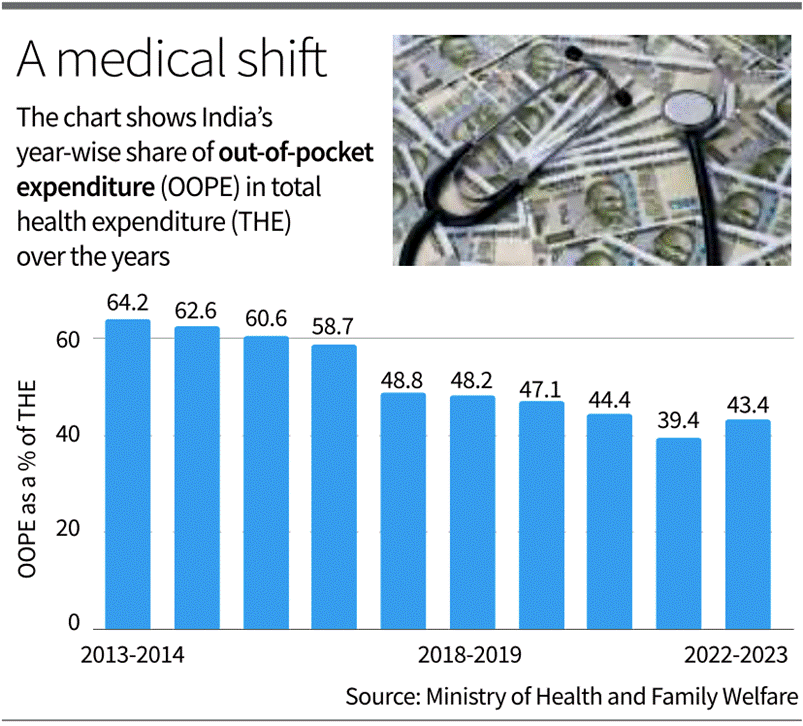
- The Union Health Ministry released the National Health Accounts (NHA) Estimates 2022-23, showing a significant decline in India’s Out-of-Pocket Expenditure (OOPE) on healthcare from 64.2% in 2013-14 to 43.4% in 2022-23, indicating gradual improvement in financial protection and public healthcare access.
- The report also highlighted rising Government Health Expenditure (GHE), expansion of primary healthcare infrastructure through Ayushman Arogya Mandirs, increased health insurance penetration and growing social security spending within India’s healthcare ecosystem.
Relevance
GS Paper II
- Governance – Public Health Policy, Universal Health Coverage, Welfare Delivery
- Social Justice – Affordable Healthcare, Financial Protection, Health Equity
- Government Policies – Ayushman Bharat, PM-JAY, Ayushman Arogya Mandirs
GS Paper III
- Economy – Human Capital Development, Public Expenditure, Poverty Reduction
- Health – Primary Healthcare, Preventive Healthcare, Health Financing
- Infrastructure – Healthcare Infrastructure, Rural Health Systems, Digital Health
Practice Question
- “Declining Out-of-Pocket Expenditure reflects gradual strengthening of India’s public healthcare financing architecture, but major structural gaps still persist.” Critically examine. (250 words)
Key Findings of NHA 2022-23
Decline in Out-of-Pocket Expenditure (OOPE)
- India’s OOPE as a share of Total Health Expenditure (THE) declined sharply from 64.2% in 2013-14 to 43.4% in 2022-23, reflecting improved public provisioning of healthcare services and reduced direct financial burden on households.
- During the COVID-19 period, government health expenditure increased substantially, leading OOPE to temporarily decline further to nearly 39.4% in 2021-22, demonstrating the impact of expanded public health financing during emergencies.
- Despite improvements, OOPE in India remains relatively high compared to many developed welfare states, indicating continued dependence on household spending for medicines, diagnostics and outpatient healthcare services.
Rise in Government Health Expenditure (GHE)
- Government Health Expenditure as a share of GDP increased from 1.15% in 2013-14 to 1.43% in 2022-23, reflecting greater public investment in healthcare infrastructure, insurance schemes and primary healthcare systems.
- Health expenditure as a proportion of total General Government Expenditure (GGE) increased from 3.78% to 4.89% during the same period, indicating improved prioritisation of healthcare within overall fiscal policy.
- In per capita terms, government health expenditure increased nearly 2.7 times, rising from ₹1,042 in 2013-14 to ₹2,786 in 2022-23, highlighting expanded fiscal commitment towards healthcare delivery and health system strengthening.
Growth in Social Security & Insurance Coverage
- The share of Social Security Expenditure (SSE) in health financing increased significantly from nearly 6% in 2013-14 to 9.9% in 2022-23, indicating expansion of publicly financed health protection mechanisms.
- Private health insurance share increased from 3.4% to 9.2% over the same period, reflecting rising health awareness, increased insurance penetration and changing healthcare-seeking behaviour among citizens.
Role of Ayushman Arogya Mandirs
- More than 1.8 lakh Ayushman Arogya Mandirs (AAMs) have been operationalised across the country, strengthening India’s primary healthcare infrastructure through decentralised and community-based healthcare delivery.
- These centres provide free healthcare services across 12 expanded service packages, including maternal and child healthcare, communicable diseases, non-communicable diseases, mental health, elderly care, palliative care and teleconsultation services.
- Availability of free medicines, diagnostics and preventive healthcare closer to communities has reduced disease burden, lowered treatment delays and decreased catastrophic health expenditure among vulnerable populations.
- Preventive healthcare and wellness-based interventions at Ayushman Arogya Mandirs represent a shift from curative-centric healthcare models towards comprehensive primary healthcare and early disease management.
Significance of Declining OOPE
Financial Protection
- High OOPE often pushes vulnerable households into poverty due to catastrophic health expenditure. Declining OOPE indicates gradual strengthening of financial risk protection mechanisms within India’s healthcare system.
- According to previous health expenditure studies, healthcare costs remain one of the leading causes of rural indebtedness and impoverishment, making reduction in direct household spending socially significant.
Progress Towards Universal Health Coverage (UHC)
- Lower OOPE reflects improved progress toward Universal Health Coverage (UHC) by increasing accessibility and affordability of healthcare services, particularly for economically weaker sections.
- The decline aligns with Sustainable Development Goal (SDG) 3, which emphasises universal access to quality healthcare and financial protection against medical expenses.
Strengthening Preventive Healthcare
- Expansion of wellness centres and preventive healthcare services helps reduce long-term disease burden, especially for non-communicable diseases such as diabetes, hypertension and cardiovascular disorders.
Governance & Policy Dimensions
Ayushman Bharat Programme
- Ayushman Bharat combines Pradhan Mantri Jan Arogya Yojana (PM-JAY) with Health and Wellness Centres to strengthen both tertiary healthcare financing and primary healthcare delivery.
- PM-JAY provides annual health insurance coverage of nearly ₹5 lakh per family for secondary and tertiary care hospitalisation to economically vulnerable households.
National Health Accounts Framework
- The NHA estimates are prepared by the National Health Accounts Technical Secretariat (NHATS) under the Ministry of Health and Family Welfare using the globally recognised System of Health Accounts (SHA) 2011 framework.
- NHA serves as an important policy tool for assessing healthcare financing patterns, expenditure priorities and progress toward universal healthcare goals.
Economic Dimensions
Human Capital Development
- Improved public healthcare spending strengthens workforce productivity, labour participation and long-term human capital formation, which are essential for achieving India’s Viksit Bharat 2047 vision.
Reduction in Poverty
- Lower OOPE reduces the probability of households falling into poverty due to medical emergencies, especially among informal-sector workers and economically vulnerable communities lacking savings or insurance.
Health Sector Multiplier Effect
- Increased government health expenditure stimulates demand for healthcare infrastructure, pharmaceuticals, diagnostics, digital health and medical workforce expansion, generating employment and economic activity.
Social Dimensions
Equity in Healthcare Access
- Public financing of healthcare improves access for rural populations, women, elderly citizens and economically weaker sections who are disproportionately affected by high healthcare costs.
Women & Child Health
- Expanded reproductive and child healthcare services through Ayushman Arogya Mandirs improve maternal health outcomes, immunisation coverage and early disease detection among children.
Rural Healthcare Strengthening
- Decentralised wellness centres reduce rural dependence on distant tertiary hospitals and improve healthcare accessibility in underserved and geographically remote regions.
Key Challenges
Public Health Expenditure Still Low
- Despite improvements, India’s public health expenditure at 1.43% of GDP remains significantly below the National Health Policy 2017 target of 2.5% of GDP and lower than several emerging economies.
High Spending on Medicines
- The Ministry acknowledged that purchase of pharmaceuticals, supplements and diagnostics continues to remain a major driver of OOPE, indicating gaps in free medicine availability and outpatient coverage.
Regional Disparities
- Significant interstate disparities persist in healthcare infrastructure, doctor-patient ratios, insurance utilisation and availability of quality public healthcare facilities.
Insurance-Centric Model Limitations
- Excessive focus on hospitalisation insurance without equivalent strengthening of primary and preventive healthcare may increase long-term healthcare costs and treatment inequalities.
Human Resource Deficit
- India continues to face shortages of doctors, nurses, specialists and frontline healthcare workers, especially in rural and tribal regions.
Critical Analysis
Positive Structural Shift
- Declining OOPE and rising government spending indicate gradual transition from a predominantly privately financed healthcare model towards greater public financing and risk pooling mechanisms.
Need for Comprehensive Coverage
- While hospitalisation coverage has expanded, outpatient expenditure, diagnostics and medicine costs continue to burden households, limiting the overall effectiveness of financial protection mechanisms.
Preventive Healthcare Opportunity
- The expansion of Ayushman Arogya Mandirs provides an opportunity to institutionalise preventive and community healthcare, which is more cost-effective and sustainable than tertiary-care-driven models.
Way Forward
- India should progressively increase public health expenditure towards the National Health Policy target of 2.5% of GDP to strengthen healthcare infrastructure, workforce capacity and service quality.
- Expansion of free drug and diagnostic schemes is necessary to further reduce OOPE, especially for chronic diseases requiring long-term medication and outpatient treatment.
- Strengthening primary healthcare through Ayushman Arogya Mandirs, telemedicine and digital health platforms can improve early diagnosis and reduce dependence on costly tertiary care.
- Greater investment in healthcare human resources, especially in rural areas, is necessary to improve service quality, reduce regional disparities and enhance trust in public healthcare systems.
- India should strengthen health data systems, disease surveillance and evidence-based policy planning through digital integration and interoperable healthcare databases.
Prelims Pointers
- OOPE refers to direct household spending on healthcare excluding reimbursements and insurance claims.
- India’s OOPE declined from 64.2% (2013-14) to 43.4% (2022-23).
- Government Health Expenditure increased from 1.15% to 1.43% of GDP between 2013-14 and 2022-23.
- More than 1.8 lakh Ayushman Arogya Mandirs have been operationalised across India.
- National Health Accounts are prepared using the System of Health Accounts (SHA) 2011 methodology.


