
Content
- Protection and Conservation of Monuments in India
Protection and Conservation of Monuments in India
Context: Why in News?
- PIB highlights India’s expanding heritage conservation ecosystem with 3,686 ASI-protected monuments, enhanced digital tools adoption, and rise to 44 UNESCO World Heritage Sites globally.
Relevance
- GS I (Art & Culture)
- Indian heritage conservation → tangible + intangible
- UNESCO World Heritage → cultural diplomacy
Practice Questions
Q1.“India’s heritage conservation approach is shifting from preservation to holistic management.”Examine the drivers, benefits, and challenges of this transition. (250 words)
Static Background
- Cultural Heritage includes tangible assets (monuments, sites, artefacts) and intangible practices (rituals, traditions, performing arts) as defined by UNESCO frameworks and conventions.
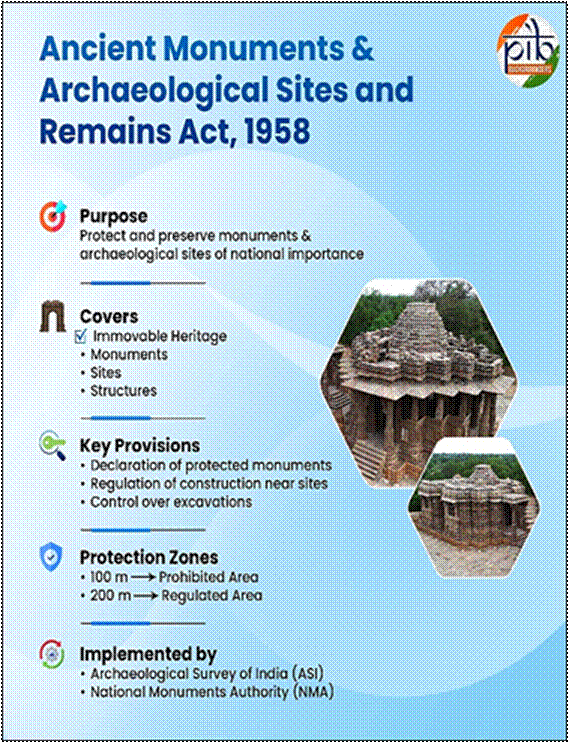
- Tangible heritage protection in India is governed by Ancient Monuments and Archaeological Sites and Remains Act, 1958 enabling declaration, conservation, and regulation of construction activities around protected monuments.
- Intangible cultural heritage (ICH) safeguarded through UNESCO 2003 Convention, supported domestically via Article 29, ensuring protection of cultural diversity and traditional knowledge systems.
- Article 49 of Constitution mandates State obligation to protect monuments of national importance, forming the legal basis for heritage legislation and institutional interventions.
- Article 51A(f) establishes fundamental duty of citizens to preserve India’s composite culture, embedding participatory responsibility in heritage conservation governance.
- Seventh Schedule division assigns Union List Entry 67 (national monuments) and State List Entry 12 (other monuments) ensuring federal distribution of heritage management responsibilities.
- Archaeological Survey of India, established in 1861, acts as nodal agency for archaeological research, excavation, conservation, epigraphy, and museum management under Ministry of Culture.
- National Policy for Conservation (2014) emphasises scientific conservation, minimal intervention, authenticity preservation, integrating traditional craftsmanship with modern conservation technologies and participatory approaches.
Core Issue / Key Findings / Data
- ASI currently safeguards 3,686 centrally protected monuments, supported by ₹374 crore expenditure (2024–25) indicating increased fiscal prioritisation of heritage conservation activities.
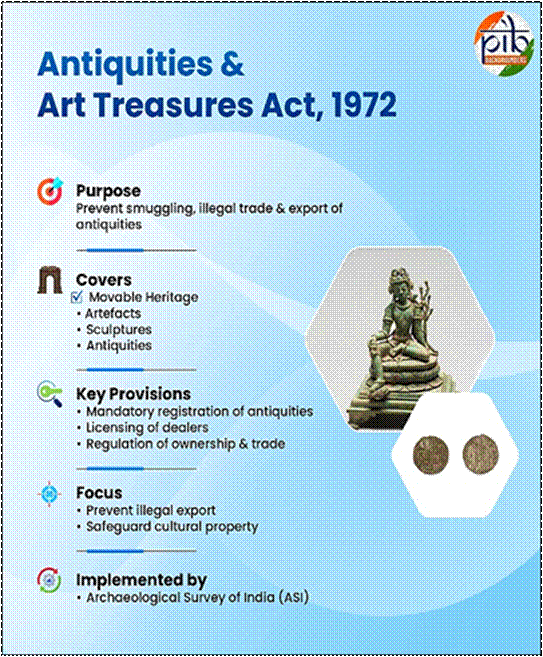
- National Mission on Monuments and Antiquities has documented 11,406 heritage sites and 12.48 lakh antiquities, strengthening national heritage database for planning and monitoring.
- India’s global heritage footprint expanded to 44 UNESCO World Heritage Sites, including Maratha Military Landscapes (2025), enhancing cultural diplomacy and international recognition.
- Increasing deployment of LiDAR, GIS mapping, photogrammetry, drone surveys, and AI tools for accurate documentation, structural analysis, and preventive conservation of monuments.
- Adopt a Heritage 2.0 scheme promotes CSR-based PPP model, where private entities (Monument Mitras) develop visitor amenities while ASI retains conservation authority.
- Integration of heritage with tourism-led development models, including cultural festivals, site infrastructure upgrades, and digital platforms like Indian Culture Portal.
Overview
- Policy shift from passive preservation to active utilisation positions heritage as a driver of economic growth, employment generation, and sustainable tourism ecosystems across regions.
- Constitutional provisions operationalised effectively, combining State responsibility (Article 49) with citizen participation (Article 51A(f)), strengthening democratic ownership of heritage assets.
- Federal structure ensures decentralisation, but also requires strong coordination mechanisms to manage overlaps between central and state-protected monuments efficiently.
- Technological integration transforms conservation paradigm from reactive repairs to preventive, data-driven, and precision-based restoration practices, reducing long-term structural risks.
- Digitisation and AI-driven heritage platforms enhance accessibility, enabling virtual tourism, education, and research, aligning with broader Digital India and knowledge economy objectives.
- PPP-based heritage management introduces efficiency, innovation, and additional funding, but requires strict regulatory oversight to safeguard monument integrity and authenticity.
- Kedarnath restoration case demonstrates science–tradition convergence, where IIT-led geotechnical analysis complemented ASI’s traditional restoration methods ensuring disaster resilience.
- Cultural festivals at heritage sites create local economic multipliers, integrating artisans, tourism services, and cultural industries into broader development framework.
- UNESCO recognition strengthens India’s soft power, projecting civilisational legacy globally while fostering international cooperation in heritage conservation.
- Museum modernisation and digital archiving promote knowledge preservation, public engagement, and intergenerational cultural transmission, expanding role of heritage institutions.
Challenges / Concerns / Gaps
- Inadequate financial allocation relative to scale leads to prioritisation issues, leaving several monuments under-maintained or neglected despite statutory protection.
- Rapid urbanisation and encroachments around heritage sites undermine regulatory frameworks, affecting structural integrity and historical authenticity of monuments.
- Coordination gaps between Centre and States create disparities in conservation standards, especially for state-protected and unprotected heritage assets.
- Commercialisation risks under PPP models may prioritise tourism revenue over conservation ethics, potentially compromising cultural and historical authenticity.
- Shortage of skilled human resources including archaeologists, conservation scientists, and heritage managers limits effective implementation of conservation programmes.
- Climate change impacts such as flooding, erosion, and pollution pose increasing threats, yet integration into conservation planning remains insufficient.
- Incomplete documentation of heritage assets indicates large number of unlisted or undocumented sites, increasing vulnerability to loss and degradation.
- Limited community engagement despite constitutional mandate reduces local ownership, affecting sustainability of conservation efforts in the long run.
Key Takeaways
- Heritage conservation exemplifies integration of constitutional values, governance mechanisms, and economic development strategies in contemporary policy frameworks.
- Reflects transition towards participatory, technology-driven, and economically integrated heritage management models in India’s governance approach.
- Demonstrates role of cultural diplomacy and soft power in enhancing India’s global standing through UNESCO recognitions.
- Highlights importance of policy convergence across tourism, culture, digital governance, and local development frameworks.
Prelims Pointers
- Article 49 mandates State protection of monuments of national importance under constitutional framework.
- ASI (1861) functions under Ministry of Culture and implements provisions of AMASR Act, 1958.
- AMASR Act defines prohibited (100m) and regulated (200m) zones around protected monuments.
- India has 44 UNESCO World Heritage Sites (2024) including cultural, natural, and mixed categories.
- NMMA focuses on documentation, not direct conservation, distinguishing its functional mandate from ASI.
- Adopt a Heritage 2.0 promotes PPP-based development of amenities while conservation remains exclusively with ASI.


