
Why is it in News?
- The rupee breached ₹89/$, closing at ₹89.46 — its lowest ever.
- But unlike previous episodes, the rupee has also depreciated against euro, pound, yen, yuan and not just the dollar.
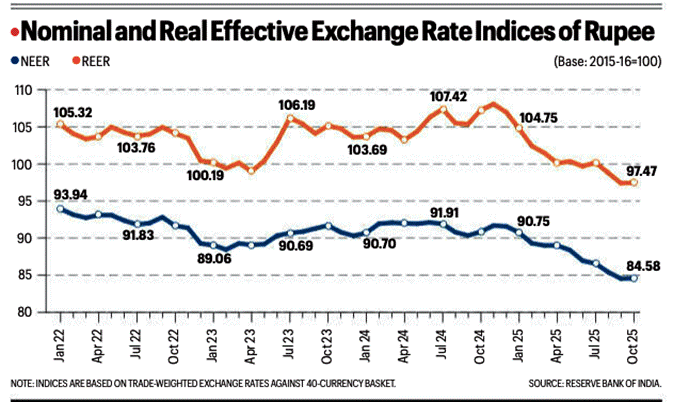
- The Real Effective Exchange Rate (REER) shows “real depreciation”, driven by inflation differentials and global currency movements.
- IMF reclassified India’s exchange-rate regime from “floating” to “stabilised arrangement”—indicating higher RBI intervention.
Relevance
GS 3 – Economy
- Exchange rate concepts: NER, NEER, REER; competitiveness; inflation impact.
- External sector vulnerabilities: trade deficit, capital flows, global currency cycle.
- IMF classification shift → exchange-rate management issues.
- RBI’s role: intervention, reserve use, stabilised arrangement.
GS 3 – Growth & Inflation
- High domestic inflation → real depreciation vs nominal depreciation.
- Impact on imports (fuel, electronics), corporate debt, household inflation.
Key Terms
1. Nominal Exchange Rate (NER)
- Market exchange rate: price of rupee against another currency.
2. Effective Exchange Rates (EERs)
- NEER: Weighted average of rupee against a basket of 40 currencies.
- REER: NEER adjusted for inflation differentials → indicates “true competitiveness”.
3. Appreciation vs. Depreciation
- NEER ↑ → rupee strengthens nominally.
- REER ↑ → rupee overvalued; REER ↓ → rupee undervalued/competitive.
What’s Different This Time?
- Rupee’s fall is broad-based:
- Against USD: 86.84 → 89.46
- Against Euro: 105.74 → 118.27
- Against Pound: 108.61 → 118.17
- Against Yen: 0.56 → 0.57
- Indicates global weakness of INR, not just USD strength.
- Rupee has depreciated across almost all major currencies.
Effective Exchange Rates Reveal the Real Picture ?
NEER
- NEER has declined since 2023, especially post-2024.
- Indicates nominal rupee weakening against the 40-currency basket.
REER
- REER has fallen below 2018–19 levels, meaning:
- Rupee is currently undervalued in real terms.
- Real depreciation exceeds nominal fall because domestic inflation is high.
Why REER Matters More ?
- REER reflects inflation-adjusted competitiveness.
- Even if nominal depreciation is mild, high domestic inflation → real depreciation.
- India’s CPI inflation (~5.4% since May 2025) versus lower inflation in US, EU, Japan etc. widens the gap.
- Thus, REER drop signals genuine loss of purchasing power and export competitiveness shift.
Inflation: Key Driver of “Real” Depreciation
- India’s CPI inflation > trading partners for most of 2024–25.
- Higher inflation domestically → rupee must fall more to maintain competitiveness.
- However, this time depreciation outpaced even inflation impact → structural weakness.
RBI’s Exchange Rate Management
- IMF’s reclassification: India now follows a “stabilised arrangement” →
- RBI intervenes actively to prevent sharp volatility.
- Heavy use of reserves to smooth market movements.
- Implication:
- Rupee’s fall is broader than RBI’s ability to defend.
- After long stability around ₹82–₹83 (2022–2024), structural pressures are showing.
Structural Reasons Behind Rupee Weakness
- Widening trade deficit (oil, electronics, gold imports).
- Weak FPI inflows, outflows from debt and equity.
- Lower export growth, especially in merchandise.
- Strong US dollar due to high US rates until mid-2024.
- China’s yuan depreciation dragging Asian currencies.
- Geopolitical risks and capital flight to safe havens.
Rupee’s Fall Since May 2025
- Sharpest decline among major Asian currencies.
- NEER & REER both dropping together → rare event, reflects deeper weakness.
- Indicates simultaneous nominal and real depreciation, unlike past episodes when RBI absorbed most shocks.
Key Point from Chart
- From June 2022 onward:
- NEER has fallen moderately.
- REER has fallen sharply, especially post-May 2025.
- This combination (nominal fall + high domestic inflation) → rupee now undervalued.
Implications
- Exports: may get a short-term boost, but structural issues limit gains.
- Imports: costlier fuels, electronics, fertilisers → inflationary pressures.
- Corporate debt: higher burden for firms with dollar-denominated loans.
- Government finances: oil subsidies, fertiliser bill may rise.
- Household impact: imported goods and foreign travel more expensive.
Outlook: What Next?
- IMF notes rupee is moving towards greater flexibility.
- If US Fed cuts rates slowly, USD will stay strong → pressure persists.
- RBI likely to intervene only to smoothen volatility, not defend specific levels.
- Structural reforms (exports, manufacturing, energy imports) needed to stabilise rupee long-term.
Conclusion
- Rupee’s depreciation is broad-based and inflation-adjusted, indicating a real loss of value, not just USD strength.
- Both NEER and REER declining together mark a structural weakening, driven by inflation, trade deficit, and soft capital flows.
- Without addressing economic fundamentals, rupee’s slide will continue despite RBI’s stabilisation efforts.


