
Content
- PARLIAMENT QUESTION: DISCRIMINATION IN UPSC INTERVIEWS
- PARLIAMENT QUESTION: STATUS OF RTI
PARLIAMENT QUESTION: DISCRIMINATION IN UPSC INTERVIEWS
Why is this in News?
- A Parliament Question (04 Dec 2025) asked whether discrimination or bias occurs in UPSC Personality Tests.
- Ministry of Personnel informed Parliament that UPSC interviews are structurally designed to prevent any form of bias.
- UPSC conveyed specific institutional safeguards to ensure anonymity, neutrality, and fairness in the Personality Test.
Relevance:
GS2 – Governance & Accountability
• Fairness in recruitment systems; safeguards ensuring neutrality in public institutions.
• Strengthens trust in independent constitutional bodies (UPSC under Art. 315).
• Addresses allegations of bias linked to region, language, socio-economic background.
GS2 – Civil Services Reforms
• Interview randomisation, anonymity, moderation → institutional mechanisms for objective evaluation.
• Debates on subjectivity, standardisation, recorded interviews.
What is the UPSC Personality Test?
- Final stage of the Civil Services Examination: 275 marks (no minimum qualifying marks).
- Objective: test overall suitability for public service—judgement, ethics, leadership, mental alertness, balance of mind, communication clarity.
- Conducted by multiple boards, each chaired by a UPSC Member and comprising eminent experts.
Allegations Often Raised by Aspirants
- Possible variation in marks across Boards.
- Perception of bias based on:
- Optional subjects
- Socio-economic background
- Region, language, or category
- Concerns about transparency and subjectivity in evaluation.
UPSC’s Official Response (As Stated in Parliament)
UPSC denied any discrimination, citing the following systemic safeguards:
a. Randomized Allotment of Candidates
- Candidates are assigned to Boards randomly each day, preventing pre-selection or targeting.
b. Category & Written Marks Not Disclosed
- Boards do not know:
- Category (SC/ST/OBC/EWS/GEN)
- Written exam marks
- Eliminates both positive and negative bias.
c. Board Identity Not Disclosed to Candidates
- Candidates do not know in advance which Board they will face, preventing external influence or pressure.
d. Transparency in Results
- After final selection, UPSC publishes:
- Written marks
- Interview marks
- Total marks
- Ensures public scrutiny, discouraging manipulation.
Why These Safeguards Matter ?
- Randomization breaks any predictable pattern that could favour particular groups.
- Non-disclosure of category and marks ensures the interview panel evaluates only:
- Personality,
- Demeanor,
- Reasoning,
- Ethics,
- Decision-making.
- Board anonymity reduces potential lobbying or intimidation.
- Disclosure of marks provides an audit trail, promoting trust in outcomes.
Structural Strengths of UPSC Interview System
- Standardized evaluation guidelines across Boards.
- Diverse Board composition ensures balanced perspectives.
- Checks on marking outliers (internal moderation).
- India’s CSE interview model is globally considered high-integrity compared to:
- US administrative hiring (heavily subjective)
- UK Civil Service Fast Stream (multiple filters but less anonymity)
Challenges & Criticism
- Perception of variability in marks across boards persists; data shows 25–40 mark spread is common.
- Some argue for:
- Recorded interviews
- Uniform questioning guidelines
- External observers
However, UPSC holds that flexibility is essential for assessing personality, not rote responses.
Implications for Governance & Public Trust
- Reinforces credibility of the world’s largest merit-based civil service exam.
- Counteracts narratives of discrimination.
- Supports government’s stance on transparency and neutrality in recruitment.
- Critical for maintaining aspirant confidence and ensuring social legitimacy of the selection process.
PARLIAMENT QUESTION: STATUS OF RTI
Why is this in News?
- A Parliament Question (04 Dec 2025) sought data on RTI applications filed, rejected, and answered between 2019–20 and 2023–24.
- The Ministry of Personnel placed five-year comparative figures, highlighting trends in RTI usage and transparency.
- The data provides an official snapshot of the health of India’s transparency regime.
Relevance:
GS2 – Transparency, Accountability & Governance
• RTI trends as indicators of institutional openness and citizen trust.
• Rise in filings shows demand for accountability; gaps highlight weak proactive disclosure.
• Low rejection rate reflects proper use of Section 8 exemptions.
GS2 – Statutory Bodies
• CIC/SIC workload, pendency, and need for capacity strengthening.
What is the RTI Act, 2005?
- Empowers citizens to seek information from public authorities.
- Mandates:
- 30-day response timeline
- Mandatory disclosure of many categories of information
- Promotes accountability, transparency, anti-corruption, and participatory governance.
- RTI performance is a key indicator of institutional openness.
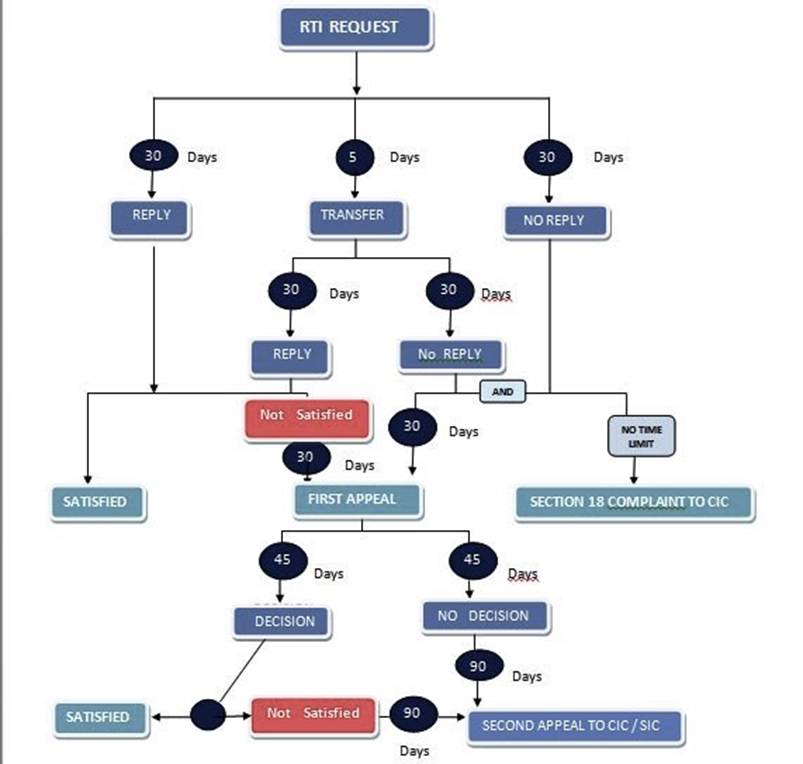
Official Data (As Tabled in Parliament)
(i) RTI Applications Filed
| Year | Applications Filed |
| 2023–24 | 17,50,863 |
| 2022–23 | 16,38,784 |
| 2021–22 | 14,21,226 |
| 2020–21 | 13,33,802 |
| 2019–20 | 13,74,315 |
Trend: Steady rise since 2020–21; approx 31% growth over five years.
(ii) RTI Applications Rejected
| Year | Rejected |
| 2023–24 | 67,615 |
| 2022–23 | 52,662 |
| 2021–22 | 53,733 |
| 2020–21 | 51,390 |
| 2019–20 | 58,634 |
Trend: Rejection numbers remain around 3–4% of total applications; slight increase in 2023–24.
(iii) RTI Applications Answered
| Year | Answered |
| 2023–24 | 14,30,031 |
| 2022–23 | 13,15,222 |
| 2021–22 | 11,31,757 |
| 2020–21 | Not Available |
| 2019–20 | 10,86,657 |
Trend: Response numbers improving; over 13–14 lakh answers annually in recent years.
Overview
a. Increasing Public Reliance on RTI
- Sharp rise from 13.7 lakh (2019–20) to 17.5 lakh (2023–24).
- Indicates growing:
- Awareness
- Demand for accountability
- Digital access (as many RTIs now filed online)
b. Low Rejection Rate
- Rejections remain roughly 3–4%, suggesting:
- Reasonable access
- Lower misuse of Section 8 exemptions
- Improved applicant awareness
But rise in 2023–24 (67k) requires monitoring.
c. Gap Between Filed and Answered
- In 2023–24:
- Filed: 17.5 lakh
- Answered: 14.3 lakh
- Gap partly due to:
- Transfers across departments
- Pendency
- Applications not requiring full answers (withdrawn, invalid, etc.)
d. Administrative Load
- 17.5 lakh RTIs annually reflect significant strain on PIOs, diverting resources from core functions.
- Increasing RTI numbers often signal weak proactive disclosure, as mandated under Section 4.
Governance Significance
- RTI statistics serve as a transparency barometer.
- Higher filings = higher trust in RTI mechanisms but also point to:
- Information hoarding by departments
- Lack of suo motu disclosure
- High answer rates reinforce credibility of the Act.
Issues & Challenges Highlighted
- Rising workload on PIOs.
- Incomplete data reporting (e.g., 2020–21).
- Variability in rejection practices across ministries.
- Backlog at Information Commissions.
- Digital divide affecting RTI access in rural regions.
Implications for Policy
- Strengthening proactive disclosure to reduce filings.
- Standardised rejection guidelines.
- Capacity building for PIOs.
- Improving CIC/SIC staffing to reduce appeals backlog.
- Full digitisation of RTI records for accuracy.


