
Content
- India–Jordan Relations
- India’s Traditional Medicine Systems (AYUSH)
India–Jordan Relations
Why is this in News?
- 15–16 December 2025: PM Narendra Modi’s first full-fledged bilateral visit to Jordan in 37 years.
- 75th anniversary of India–Jordan diplomatic relations (1950–2025).
- Five MoUs signed covering renewable energy, water management, culture, digital solutions, and heritage twinning (Petra–Ellora).
- India proposed bilateral trade target of USD 5 billion in 5 years.
- Visit occurred amid West Asia instability, highlighting Jordan’s moderating role.
Relevance
GS Paper II – International Relations
- India’s engagement with West Asia beyond the Gulf; diversification of regional diplomacy.
- Bilateral relations: Political, economic, defence, cultural dimensions.
- Counter-terrorism cooperation and shared concerns on regional instability (Gaza, West Asia).
- Role of middle powers in stabilising volatile regions.
- Diaspora diplomacy and people-to-people ties.
Basics at a Glance
- Diplomatic relations established: 1950
- Political system: Constitutional monarchy (King Abdullah II)
- Strategic location: Levant–West Asia bridge; regional stability anchor
- Indian diaspora: ~17,500
- Trade status: India is Jordan’s 3rd–4th largest trading partner
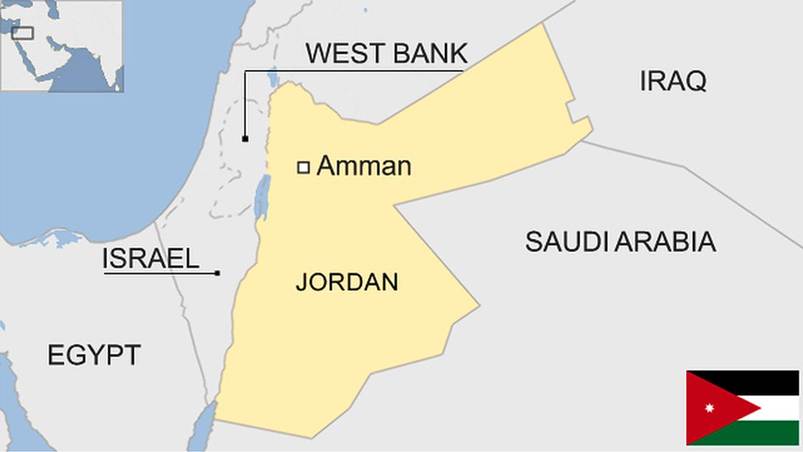
- Countries Surrounding (Bordering) JordanIsrael & Palestine (West Bank) – WestSyria – NorthIraq – EastSaudi Arabia – South and Southeast
Evolution of India–Jordan Relations
Political & Diplomatic Engagement
- Foundational phase (1950–2000): Friendly, low-profile engagement.
- Consolidation phase (2000–2018):
- King Abdullah II’s 2018 India visit: 12 MoUs; C-DAC IT Centre; USD 5 million pharma aid.
- Strategic deepening (2018–2025):
- Regular meetings at UNGA, COP-28, G7 (Apulia).
- Foreign Office Consultations (2025) in Amman.
- Strong convergence on counter-terrorism, Gaza crisis, regional stability.
Middle power diplomacy; West Asia engagement beyond Gulf.
Trade & Economic Cooperation (Core Pillar)
Trade Profile
- Total trade (2023–24): USD 2.875 billion
- India’s exports: Cereals, frozen meat, petroleum products, animal fodder
- India’s imports: Phosphates, potash (fertilizers)
Strategic Fertilizer Linkage
- Jordan India Fertiliser Company (JIFCO)
- IFFCO + JPMC
- Investment: USD 860 million
- Critical for India’s phosphatic fertilizer security
- Arab Potash Company–IPL MoU
- 275,000–325,000 tonnes annually for 5 years
- 2022 fertilizer MoUs: USD 1.5 billion
Manufacturing & Investment
- 15+ Indian garment firms in Jordan’s QIZs
- Investment: ~USD 500 million
- Exports under Jordan–US FTA
Supply-chain security, fertilizer diplomacy, South–South economic integration.
Defence & Security Cooperation
- MoU on Defence Cooperation (2018)
- SOFEX 2024: Indian tri-services delegation participated.
- Naval cooperation: Jordanian Royal Navy visit to Kochi & INA Ezhimala.
- Shared stance on terrorism, radicalisation, regional instability.
Defence diplomacy without alliances; counter-terror cooperation.
Science, Technology & Digital Cooperation
- India–Jordan Centre of Excellence in IT (IJCOEIT)
- Located at Al-Hussein Technical University
- Equipped with PARAM Shavak supercomputer
- Target: 3,000 Jordanian professionals trained
- Training areas:
- Cybersecurity
- AI & ML
- Big Data
- 2025 proposal: Linking Jordan’s digital payment system with UPI.
Digital public infrastructure (DPI) as foreign policy tool.
Education & People-to-People Ties
- ITEC slots: 50 annually
- Graduates from India: 2,500+ Jordanians
- 2024–25:
- 37 civilian ITEC slots
- 5 ICCR scholarships
- Manpower Agreement (2018)
- Visa facilitation:
- Visa on Arrival (since 2009)
- e-Visa (since 2023)
- Direct flight: Amman–Mumbai
Human capital diplomacy; soft power.
Cultural & Civilisational Linkages
- Strong popularity of Indian films and yoga.
- Jerash Festival 2024: Assamese folk dance troupe.
- 2025 MoU:
- Cultural Exchange Programme (2025–29)
- Petra–Ellora twinning: heritage diplomacy.
Culture as instrument of strategic trust.
Outcomes of PM Modi’s 2025 Visit
Strategic Outcomes
- First bilateral visit in 37 years → symbolic reset.
- Clear articulation of USD 5 billion trade vision.
- Expanded agenda:
- Critical minerals
- Renewable energy
- Water security
- Health & pharma
- Digital transformation
MoUs Signed (5)
- Renewable energy cooperation
- Water resource management
- Petra–Ellora twinning
- Cultural Exchange Programme (2025–29)
- Digital public solutions (population-scale)
Strategic Significance for India
- West Asia balancing: Jordan as moderate, stable partner.
- Food & fertilizer security: Critical input supplier.
- Counter-terror convergence: Shared security concerns.
- Digital diplomacy: Exporting India Stack.
- Non-oil West Asia engagement: Diversification beyond Gulf monarchies.
Challenges & Constraints
- Limited trade diversification beyond fertilizers.
- Jordan’s economic constraints and refugee burden.
- Regional volatility (Gaza, Israel–Iran tensions).
Way Forward
- Fast-track CEPA feasibility.
- Long-term fertilizer offtake agreements.
- Scale up UPI-style DPI exports.
- Joint projects in water desalination & renewables.
- Enhanced defence training & counter-terror coordination.
Conclusion
India–Jordan relations exemplify quiet, trust-based diplomacy rooted in economic complementarities, counter-terror cooperation, and people-centric engagement. PM Modi’s 2025 visit marks a strategic upgrade, aligning Jordan firmly within India’s broader West Asia and Global South outreach, while reinforcing India’s image as a reliable economic and technological partner.
India’s Traditional Medicine Systems (AYUSH)
Why is this in News?
- India is hosting the 2nd WHO Global Summit on Traditional Medicine in New Delhi (17–19 December 2025).
- India hosted the 1st WHO Global Summit on Traditional Medicine on 17-18 August 2023 in Gandhinagar, Gujarat, alongside the G20 Health Ministers’ Meeting
- Theme: “Restoring Balance for People and Planet: The Science and Practice of Well-Being.”
- Launch of WHO Traditional Medicine Global Library (TMGL):
- World’s largest digital repository on traditional, complementary and integrative medicine.
- 1.5 million+ records.
- Reinforces India’s leadership following:
- 1st WHO Global Summit (Gandhinagar, 2023).
- Establishment of WHO Global Traditional Medicine Centre (GTMC), Jamnagar.
Relevance
GS II – Governance & Social Justice
- Public health policy and integration of AYUSH with allopathic systems.
- Role of Ministry of AYUSH in health governance.
- Universal Health Coverage (UHC) and primary healthcare strengthening.
- WHO-led global health governance and India’s leadership role.
GS III – Science & Technology
- Scientific validation of traditional knowledge systems.
- Integration of AI, digital health, evidence-based research in AYUSH.
- Pharmacovigilance, drug standardisation, quality control.
What is Traditional Medicine?
- WHO definition: Knowledge, skills and practices based on theories, beliefs and experiences indigenous to different cultures, used for health maintenance and disease prevention.
- Global spread:
- Practised in 170 of 194 WHO member states.
- Integral to primary healthcare in Asia, Africa, Latin America.
India’s Traditional Medicine Systems (AYUSH)
Formally recognised under the Ministry of AYUSH:
Types of Traditional Medicine Systems (AYUSH) – UPSC-Ready
Ayurveda
- India’s ancient holistic medical system.
- Core principle: Balance of Tridosha – Vata, Pitta, Kapha.
- Focus areas:
- Preventive healthcare.
- Lifestyle regulation (Dinacharya, Ritucharya).
- Herbal formulations, Panchakarma.
- Objective: Harmony of body, mind and spirit.
Unani
- Originated from Greco-Arab medicine; developed in India.
- Core concept: Balance of four humours (Akhlat):
- Blood, Phlegm, Yellow bile, Black bile.
- Emphasises:
- Dietotherapy (Ilaj-bil-Ghiza).
- Regimental therapy (Ilaj-bil-Tadbeer).
- Natural drugs (Ilaj-bil-Dawa).
- Strong focus on lifestyle and temperament (Mizaj).
Sowa-Rigpa (Amchi Medicine)
- Traditional Himalayan medical system.
- Practised in Ladakh, Himachal Pradesh, Arunachal Pradesh, Sikkim.
- Philosophical base:
- Buddhist principles.
- Influences from Ayurveda and Tibetan medicine.
- Health based on balance of:
- Lung (wind), Tripa (bile), Beken (phlegm).
- Uses herbal, mineral and animal-based medicines.
Yoga and Naturopathy
Yoga
- Mind–body discipline rooted in Indian philosophy.
- Components:
- Asana, Pranayama, Dhyana, Yama–Niyama.
- Promotes:
- Physical fitness.
- Mental well-being.
- Stress management and preventive health.
Naturopathy
- Drugless healing system.
- Principle: Body’s inherent self-healing capacity.
- Methods include:
- Diet therapy.
- Hydrotherapy.
- Fasting, lifestyle correction.
- Emphasis on natural living and prevention.
Siddha
- One of the oldest medical systems, originating in South India.
- Closely associated with Tamil civilisation.
- Core philosophy:
- Balance of Vata, Pitta, Kapha, with emphasis on minerals.
- Features:
- Highly individualised treatment.
- Use of herbs, metals, minerals.
- Diagnostic tools: pulse, tongue, urine examination.
- Focus on longevity and rejuvenation.
Homoeopathy
- Founded by Samuel Hahnemann.
- Scientific medical system based on:
- Law of Similars (“like cures like”).
- Minimum dose principle.
- Treatment:
- Highly diluted remedies.
- Individualised prescription.
- Aim: Stimulate the body’s natural healing response.
Core philosophy
- Holistic, preventive, person-centred.
- Emphasis on lifestyle, balance, and long-term well-being.
Institutional Ecosystem under Ministry of AYUSH
Scale of Infrastructure (as on 2024)
- AYUSH hospitals: 3,844
- AYUSH dispensaries: 36,848
- Registered practitioners: 7.55 lakh+
- UG colleges: 886
- PG colleges: 251
- Annual intake:
- UG: 59,643 seats
- PG: 7,450 seats
Integration with Public Health System
National AYUSH Mission (NAM) – 2014
- Centrally Sponsored Scheme.
- Objective: Mainstream AYUSH into public healthcare.
Co-location model
- PHCs: 2,375
- CHCs: 713
- District Hospitals: 306
Significance
- Single-window access to allopathic + AYUSH care.
- Strengthens primary healthcare and preventive medicine.
Regulation, Research & Quality Control
Regulatory Focus
- Evidence-based practice.
- Drug safety, pharmacovigilance.
- Standardisation via pharmacopoeias.
Research Ecosystem
- Central Councils conduct:
- Clinical trials.
- Observational studies.
- Drug standardisation research.
- Emphasis on:
- Scientific validation.
- Safety protocols.
- Integrative healthcare models.
Major Schemes for Quality & Credibility
National AYUSH Mission (NAM)
- Infrastructure upgradation.
- Supply of essential drugs.
- Integration with PHCs/CHCs/DHs.
Ayurgyan
- Research & innovation scheme.
- Supports:
- Clinical validation.
- Medicinal plant research.
- Drug standardisation.
- Includes Continuing Medical Education (CME).
Ayurswasthya Yojana
- Public health orientation.
- Components:
- AYUSH Public Health Interventions (PHI).
- Centres of Excellence (CoE).
AOGUSY
(AYUSH Oushadhi Gunvatta evum Uttapadan Samvardhan Yojana)
- Focus: Quality & regulation of AYUSH drugs.
- Supports:
- Drug-testing labs.
- Manufacturing standards.
- Pharmacovigilance systems.
Medicinal Plants Conservation Scheme
- Sustainable cultivation.
- Farmer support.
- Supply-chain strengthening.
- Biodiversity conservation.
Digitisation & Knowledge Protection
- Ayush Grid: Digital backbone for education, research, services.
- Traditional Knowledge Digital Library (TKDL):
- Prevents bio-piracy.
- Used by international patent offices.
- Medical Value Travel (MVT):
- Promotes AYUSH-based wellness tourism.
- International Cooperation (IC):
- Capacity building, global outreach.
WHO Global Summit on Traditional Medicine, 2025
Key Features
- 100+ countries, 170+ speakers.
- 25+ sessions, 21 innovations.
- Representation from 6+ WHO biocultural regions.
Three-Day Focus
- Day 1: Knowledge systems, planetary & human health.
- Day 2: Research, innovation, science of well-being.
- Day 3: Global standards, data systems, AI, implementation.
WHO Traditional Medicine Strategy 2025–2034
Four Core Objectives
- Evidence generation via quality research and digital tools.
- Regulatory frameworks for products & practitioners.
- Integration into health systems, especially primary care.
- Cross-sectoral value:
- Biodiversity.
- One Health.
- SDG 3.8 (Universal Health Coverage).
Alignment with India
- Matches AYUSH priorities:
- Scientific validation.
- Digitisation.
- Sustainability.
- Knowledge protection.
Traditional Medicine Global Library (TMGL)
Significance
- 1.5 million+ records.
- Global evidence maps, policies, standards.
- Integrated with Research4Life for LMICs.
Strategic Value for India
- Positions India as knowledge hub.
- Boosts global confidence in AYUSH systems.
- Supports policymaking and research globally.
Strategic Significance for India
- Health diplomacy: Leadership in global health governance.
- Soft power: Culture-rooted yet science-oriented systems.
- Universal Health Coverage: Affordable, preventive care.
- Economic potential:
- AYUSH drugs.
- Wellness tourism.
- Global markets.
- Environmental synergy: Biodiversity & One Health.
Challenges
- Need for uniform global standards.
- Evidence gaps across systems.
- Risk of over-commercialisation.
- Ensuring ethical sourcing of medicinal plants.
Way Forward
- Scale high-quality clinical research.
- Strengthen global regulatory harmonisation.
- Responsible AI & digital health integration.
- Sustainable medicinal-plant ecosystems.
- Position AYUSH as pillar of Viksit Bharat@2047.
Conclusion
India’s traditional medicine systems represent a unique convergence of ancient wisdom and modern science. By institutionalising quality, integrating AYUSH into public health, digitising knowledge, and shaping WHO-led global frameworks, India is redefining traditional medicine as a credible, evidence-based pillar of global healthcare. The 2nd WHO Global Summit marks a decisive step in transforming traditional medicine from cultural heritage into mainstream global health architecture.


