
Why in News ?
- 6th cycle of the All India Tiger Estimation (AITE) launched.
- Union Environment Minister emphasised that India’s tiger conservation model must remain science-based, not driven by political or symbolic targets.
- Context: Rising human–wildlife conflict, elephant deaths, and pressure on protected areas.
Relevance
GS III – Environment & Biodiversity
- Wildlife conservation.
- Project Tiger.
- Carrying capacity & habitat management.
- Human–wildlife conflict.
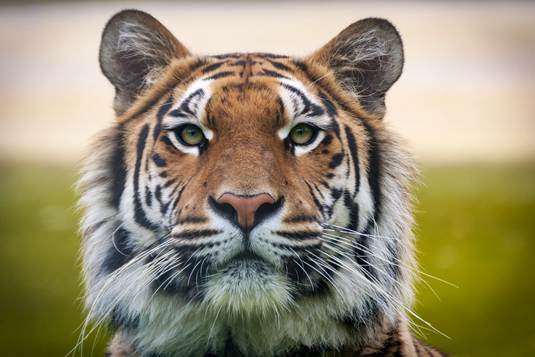
All India Tiger Estimation (AITE): Core Facts
- Conducted once every 4 years.
- World’s largest wildlife monitoring exercise.
- Coordinated by National Tiger Conservation Authority (NTCA) with Wildlife Institute of India (WII).
- Covers:
- Tiger population estimation
- Prey base
- Habitat quality
- Human pressure indicators
India’s Tiger Numbers: Data Snapshot
- 2006: 1,411 tigers (baseline).
- 2010: 1,706
- 2014: 2,226
- 2018: 2,967
- 2022 (5th cycle): 3,167 tigers
- India hosts ~75% of the world’s wild tigers.
Inference: Quantitative success, but quality of coexistence now the key challenge.
Why “Science-Based” Conservation Is Stressed ?
Limits of Headline Targets
- Artificial pressure to increase numbers can lead to:
- Overstocking of reserves.
- Increased dispersal into human landscapes.
- Spike in human–wildlife conflict.
Ecological Carrying Capacity
- Each tiger requires:
- ~20–60 sq km (female)
- ~60–100 sq km (male)
- Ignoring carrying capacity risks:
- Intra-species conflict.
- Ecological stress.
Human–Wildlife Conflict: Rising Trend
- Minister flagged conflict as the biggest emerging threat.
- Examples:
- Tiger dispersal outside reserves.
- Elephant–train collisions (Assam hotspots).
- India has:
- ~53 tiger reserves.
- But ~70% tiger landscapes lie outside protected areas.
Implication: Conservation success spills into shared human spaces.
New Scientific Interventions Highlighted
Niger Delta–Inspired Programme
- Adaptation of conflict-mitigation strategies used internationally.
- Focus on:
- Landscape-level planning.
- Early warning systems.
- Community engagement.
“Management of Tiger–Human Interface”
- New specialised project.
- Emphasises:
- Predictive analytics.
- Conflict hotspot mapping.
- Behavioural ecology of dispersing tigers.
Institutional Framework
- National Tiger Conservation Authority:
- Statutory body under Wildlife Protection Act, 1972 (amended 2006).
- Project Tiger (1973):
- One of the world’s longest-running species conservation programmes.
- Federal structure:
- States implement; Centre funds & monitors.
Governance & Policy Challenges
- Fragmented landscapes outside reserves.
- Inadequate compensation & delayed payouts.
- Railways, highways cutting across corridors.
- Limited integration of:
- Transport planning
- Mining approvals
- Urban expansion with wildlife data.
Way Forward
Ecological
- Corridor-based conservation beyond reserves.
- Dynamic carrying capacity assessment.
Technological
- AI-based early warning systems.
- Satellite collars for dispersing tigers.
Social
- Faster, transparent compensation.
- Community stewardship incentives.
Governance
- Wildlife-sensitive infrastructure clearances.
- Inter-ministerial coordination (Environment, Railways, Roads).
Tiger (Panthera tigris)
- Scientific name: Panthera tigris
- National animal of India
- Distribution (India):
- Western Ghats
- Central India
- Terai Arc
- Northeast India
- Sundarbans (mangrove ecosystem)
- Population (India):
- 3,167 tigers (2022) → ~75% of global wild tiger population
- Legal status (India):
- Wildlife Protection Act, 1972: Schedule I
- Flagship species under Project Tiger (launched 1973)
- Tiger: Endangered (EN)


