
Why in News ?
- Advocacy groups demand mandatory NAAT testing for blood screening.
- Concerns raised that reliance on ELISA-only testing exposes thalassaemia and other multi-transfused patients to HIV and hepatitis risk.
- Context of the proposed National Blood Transfusion Services Commission Bill, 2025.
Relevance
GS II – Governance & Social Justice
- Public health governance.
- Regulatory oversight of health services.
- Patient safety & rights.
GS II – Constitution
- Article 21: Right to health.
- State obligation to ensure safe medical care.
GS III – Science & Technology
- Diagnostic technologies (NAAT vs ELISA).
- Health infrastructure capacity.
- Cost–benefit of preventive technologies.
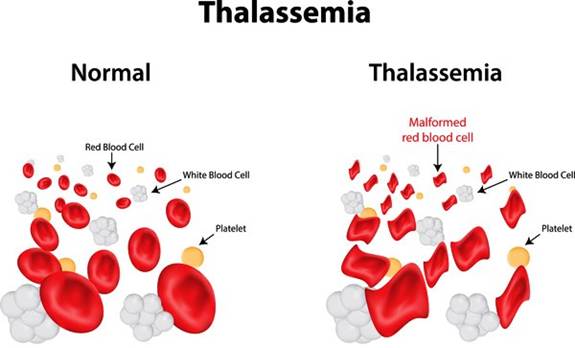
Why Thalassaemia Patients Are High-Risk ?
- Thalassaemia patients require lifelong, regular blood transfusions (often every 2–4 weeks).
- Cumulative exposure → higher probability of transfusion-transmitted infections (TTIs).
- Even a single unsafe transfusion can cause:
- HIV
- Hepatitis B
- Hepatitis C
Screening Methods: ELISA vs NAAT
ELISA (Most Common in India)
- Detects antibodies, not viral genetic material.
- Window period risk:
- HIV: ~3–6 weeks
- Hepatitis C: ~6–8 weeks
- Lower cost, widely used in public blood banks.
NAAT (Nucleic Acid Amplification Test)
- Detects viral DNA/RNA directly.
- Reduces window period:
- HIV: to ~7–10 days
- Hepatitis C: to ~10–14 days
- Globally considered gold standard for transfusion safety.
Key Gap: Most Indian blood banks do not routinely use NAAT.
Scale of the Public Health Risk (Indicative)
- India has:
- ~1–1.2 lakh thalassaemia major patients.
- ~10,000–15,000 new thalassaemia births annually.
- Blood transfusions annually: millions across India.
- Even a tiny failure rate translates into large absolute numbers of infections.
Case Evidence Highlighted
- HIV infection detected in a thalassaemia patient after repeated transfusions, despite prior negative tests.
- Indicates:
- Infection likely occurred during diagnostic window period.
- ELISA screening failed to detect early infection.
Regulatory & Legal Context
National Blood Transfusion Services Commission Bill, 2025
- Proposes:
- Centralised regulation of blood services.
- National standards for screening & quality.
- Limitation:
- Does not mandate NAAT testing.
- Leaves screening standards largely to existing practice.
Current Framework
- Blood safety governed by:
- Drugs & Cosmetics Act
- National Blood Policy
- NAAT mandatory only for certain private hospitals, not uniformly across public system.
Equity & Ethics Dimension
- Blood safety framed as:
- Patient safety issue, not donor inconvenience.
- Ethical concern:
- Vulnerable patients (thalassaemia, haemophilia, cancer) bear disproportionate risk.
- Informed consent paradox:
- Patients assume blood is safe.
- Actual screening standards vary widely.
Governance & Capacity Constraints
- NAAT challenges:
- Higher cost per test.
- Requires advanced labs, trained personnel.
- Structural issues:
- Fragmented blood bank system.
- Quality variation between states and facilities.
- Result:
- Two-tier blood safety system (private vs public).
International Best Practices
- Many high-income countries mandate:
- Universal NAAT screening.
- Centralised blood services.
- Result:
- Near-elimination of transfusion-related HIV/HCV transmission.
Policy Trade-Off: Cost vs Safety
- NAAT increases per-unit blood cost.
- But long-term:
- Prevents lifelong HIV treatment costs.
- Reduces litigation & compensation.
- Enhances public trust in health system.
Inference: Preventive screening is economically rational, not just ethically necessary.
Way Forward
Legal
- Amend Bill to mandate NAAT for all blood banks, phased implementation.
Institutional
- Centralised procurement of NAAT kits to reduce cost.
- Regional NAAT labs serving district blood banks.
Financial
- Public funding support for NAAT under NHM.
- Cross-subsidisation model.
Governance
- National transfusion safety audit.
- Real-time TTI surveillance registry.


