
Why in News ?
- World Anti-Doping Agency (WADA) released its 2024 Anti-Doping Testing Figures Report.
- India recorded the highest number of doping offenders globally for the third consecutive year.
- Contextually sensitive as India:
- Is preparing to host the 2030 Commonwealth Games
- Aspires to host the 2036 Olympic Games
Relevance
GS II (Governance)
- Institutional accountability
- Global regulatory compliance
GS III (Sports )
- Integrity in sports
- Public policy and youth development
What is Doping?
- Doping: Use of prohibited substances or methods to artificially enhance athletic performance.
- Governed globally by:
- World Anti-Doping Code
- Prohibited List (updated annually)
- Violations include:
- Presence of banned substances
- Refusal to submit samples
- Tampering
- Trafficking or administration
India’s Doping Numbers: Key Data (2024)
A. Absolute Numbers
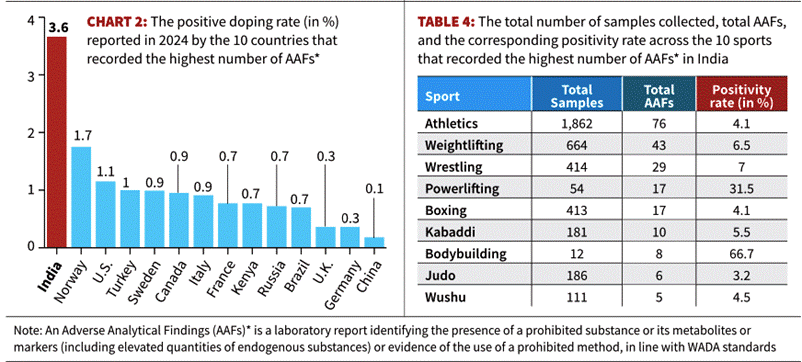
- Samples tested: 7,113
- Positive cases: 260
- Global rank: 1st (highest absolute violations)
B. Positivity Rate
- India: 3.6%
- Global comparison:
- Norway: 1.75%
- USA: 1.15%
- No other country crossed 1.75%
India’s positivity rate is more than double the next highest country.
Global Comparison: Why India Stands Out ?
A. Absolute Violations (2024)
- India: 260
- France: 91
- Italy: 85
- USA: 76
- Russia: 76
- Germany: 54
- China: 43
India exceeds the second-highest country by nearly 3 times.
B. Testing Volume vs Violations
- China:
- Tests conducted: >24,000
- Violations: 43
- India:
- Tests conducted: 7,113
- Violations: 260
Despite 3× fewer tests, India reports 6× more violations than China
Inference:
India’s problem is not under-testing alone, but high prevalence of doping.
Sport-wise Distribution in India (2024)
| Sport | Positive Cases |
| Athletics | 76 |
| Weightlifting | 43 |
| Wrestling | 29 |
| Boxing | 17 |
| Powerlifting | 17 |
| Kabaddi | 10 |
Pattern
- Endurance & strength-based sports dominate
- Long-standing trend across multiple years
- Indicates:
- Performance pressure
- Inadequate medical supervision
- Normalisation of substance use at lower levels
Elite & Grassroots Signals
A. Elite Level
- Reetika Hooda:
- Under-23 world champion
- Paris Olympics quarter-finalist
- Tested positive; provisionally suspended (July 2025)
- Signals that doping is not confined to fringe athletes.
B. Grassroots Level
- University Games 2025:
- Athletes reportedly withdrew from events after anti-doping officials arrived.
- Suggests:
- Fear of testing
- Low deterrence credibility
- Poor awareness of banned substances
Institutional Response: India’s Defence
A. National Anti-Doping Agency (NADA)
- National Anti-Doping Agency argues:
- Higher numbers reflect better detection, not higher drug use.
- Claims strengthened testing, intelligence, and enforcement.
B. Critical Assessment
- Argument partially valid, but:
- Countries with higher testing volumes show lower positivity
- Indicates a structural doping culture, not merely detection bias
International Pressure
A. International Olympic Committee (IOC)
- International Olympic Committee:
- Expressed concern over widespread doping in India
- Urged authorities to “set their house in order”
B. Indian Olympic Association (IOA)
- Indian Olympic Association:
- Constituted a new anti-doping panel (August 2025)
Legal & Policy Response
National Anti-Doping (Amendment) Bill, 2025
- Recently passed by Parliament.
- Aligns Indian law with WADA compliance requirements.
- Key provisions:
- Explicit prohibition of doping
- Institutionalised testing & enforcement
- Clear adjudication and appeal mechanisms
- Objective:
- Restore international credibility
- Prevent sanctions or compliance downgrades
Structural Causes Behind India’s Doping Crisis
- Early specialisation & medal pressure
- Low sports science penetration
- Poor supplement regulation
- Coaches as informal medical advisors
- Weak athlete education, especially at state & university levels
- Reward-heavy incentive structures without ethical safeguards
Implications for India
A. Sporting Credibility
- Threatens India’s image as a clean sporting nation
- Risk to hosting ambitions (CWG 2030, Olympics 2036)
B. Athletes
- Career-ending bans
- Loss of sponsorships
- Psychological stress and stigma
C. Governance
- Potential WADA non-compliance scrutiny
- Increased international monitoring
Way Forward
- Mandatory anti-doping education from junior level
- Coach certification linked to doping compliance
- Regulation of supplements & gym culture
- Independent testing at state & university events
- Shift from medal-centric to athlete-welfare-centric model
Conclusion
India’s doping crisis is not a detection anomaly but a systemic integrity failure—posing a direct challenge to its sporting credibility and global ambitions unless structural reform follows legal tightening.


