
Why is it in News?
- A peer-reviewed study published in Science reports that rhino dehorning led to a near-elimination of poaching in African wildlife reserves.
- The study analysed 7 years of data (2017–2023) from 11 reserves in South Africa’s Greater Kruger ecosystem, home to the world’s largest rhino population.
- Findings challenge the dominance of technology-heavy anti-poaching strategies and reframe conservation economics.
Relevance
- GS III – Environment & Conservation
- Wildlife protection strategies
- Anti-poaching models
- Biodiversity conservation
- GS II – Governance
- Evidence-based policymaking
- Institutional capacity vs incentives
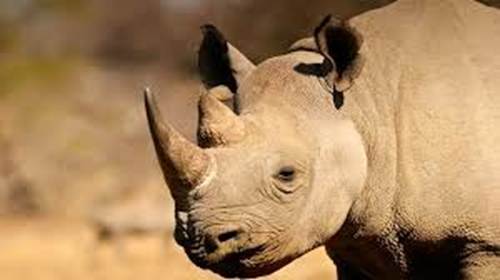
Global Rhino Status:
- Global rhino population (2024): < 28,000 (all five species combined).
- Major threat: Poaching for horns, driven by illicit international demand.
- Greater Kruger losses:
- 1,985 black & white rhinos killed (2017–2023).
- ~6.5% population loss per year, despite heavy surveillance.
- Anti-poaching expenditure:
- ~$74 million spent on:
- Armed patrols
- Tracking dogs
- AI cameras
- Aerial surveillance.
- ~$74 million spent on:
Core Findings of the Study
Impact of Dehorning
- 2,284 rhinos dehorned across 8 reserves.
- Poaching outcomes:
- 75% reduction compared to pre-dehorning levels.
- 78% drop where dehorning was implemented rapidly (1–2 months).
- 95% lower poaching risk for dehorned rhinos vs horned rhinos.
- Cost efficiency:
- Achieved using only 1.2% of total anti-poaching budgets.
Methodology
- Data type: Quarterly poaching records (2017–2023).
- Analytical method:
- Hierarchical Bayesian regression modelling.
- Comparison:
- Dehorned vs non-dehorned reserves.
- Before–after intervention analysis.
- Outcome:
- Strong causal inference rather than correlation.
Why Dehorning Works ?
Economics of Poaching
- Rhino horn:
- Composed of keratin (same as hair & nails).
- No proven medicinal value.
- Illicit market value:
- $874 million – $1.13 billion (2012–2022), per Wildlife Justice Commission.
- Removing horns:
- Eliminates primary incentive, not the animal.
Behavioural Reality of Poachers
- Killing the rhino allows:
- Faster removal
- No resistance
- Dehorned rhinos:
- Offer minimal reward
- Increase risk–reward imbalance for poachers.
Limits of Enforcement-Only Models
- Arrests and patrols showed limited deterrence due to:
- Corruption
- Weak prosecution
- Cross-border trafficking loopholes
- Surveillance ≠ prevention when incentives remain intact.
How Dehorning Is Done (Animal Welfare) ?
- Conducted by veterinarians:
- Sedation, blindfolding, earplugs.
- 90–93% of horn removed, above the germinal layer.
- Horn regrows naturally.
- Stump sealed to prevent infection.
- Considered non-lethal and reversible.
India–Africa Contrast
African Context
- Large landscapes.
- High-value illicit trade routes.
- Enforcement stretched thin.
Indian & Nepali Model
- India & Nepal do not dehorn.
- Losses:
- 1–2 rhinos in last 3 years.
- Kaziranga National Park success drivers:
- Smart patrolling
- Community participation
- Local intelligence
Role of Local Communities & Rangers
- Research involved:
- 1,000+ hours of workshops with rangers.
- Rangers:
- Often local residents.
- Hold critical ecological knowledge.
- Study highlights:
- Ranger welfare (pay, safety, training) is as vital as technology.
Conservation Economics:
- Dehorning shifts strategy from:
- Policing supply → collapsing incentive.
- Represents preventive conservation, not reactive enforcement.
- More cost-effective than high-tech surveillance alone.
Conclusion
- Rhino dehorning is not a silver bullet, but it is:
- Highly effective
- Cost-efficient
- Data-validated
- The study redefines conservation success:
- Remove incentives, not just criminals.
- Policy lesson:
- Conservation outcomes improve when economics, ecology, and local capacity align.
Rhinoceros
- Species & Distribution
- Five species globally: White, Black (Africa); Greater one-horned, Javan, Sumatran (Asia).
- India hosts the Greater one-horned rhinoceros, mainly in Assam (Kaziranga, Pobitora).
- Conservation Status
- IUCN:
- Javan & Sumatran – Critically Endangered
- Black – Critically Endangered
- Greater one-horned – Vulnerable
- White – Near Threatened
- Global population (2024): < 28,000.
- IUCN:
- Major Threats
- Poaching for horn (illegal trade worth ~$0.9–1.1 billion, 2012–22).
- Habitat loss, fragmentation, and human–wildlife conflict.
- Biology & Horn
- Rhino horn is made of keratin (same as hair and nails); no proven medicinal value.
- Used for digging, defence, and mating displays.


