
Content
- Venezuela V-P to Take Over as Maduro Held in U.S. Jail
- Delhi Government to Declare Rabies a Notifiable Disease
- Ghost SIM Cards and Internal Security Risks
- Wolf Supermoon — First Full Moon of the Year
- Somnath Swabhiman Parva — Civilisational Significance of Somnath Temple
- Nanobots in Targeted Cancer Treatment
- Saudi-Backed Forces Regain Control of Hadramout Province (Yemen)
Venezuela V-P to take over as Maduro held in U.S. jail
Why in News ?
- Venezuela’s Supreme Court appointed Vice-President Delcy Rodríguez as Acting President after President Nicolás Maduro was detained by U.S. authorities in New York during a covert night-time operation.
- The U.S. move — conducted without Congressional approval — led Venezuela to term it an “imperialist intervention.”
- India expressed concern for the well-being of Venezuelan people and called for dialogue and regional stability.
Relevance
GS-II | International Relations, Global Politics, India’s Foreign Policy
- Power transition, legitimacy & constitutional processes in foreign states
- U.S. interventionism vs sovereignty debate
- Political instability, sanctions, oil geopolitics, migration crisis
- India’s energy stakes & strategic neutrality
Basics — Political Context of Venezuela
- System: Presidential Republic under the Bolivarian Constitution.
- Ruling establishment: United Socialist Party of Venezuela (PSUV).
- Maduro Presidency: Since 2013, succeeding Hugo Chávez.
- Venezuela faces:
- hyperinflation
- economic sanctions
- oil-sector collapse
- mass outward migration (~7.7 million people since 2015, per UNHCR)
Economic & Security Context
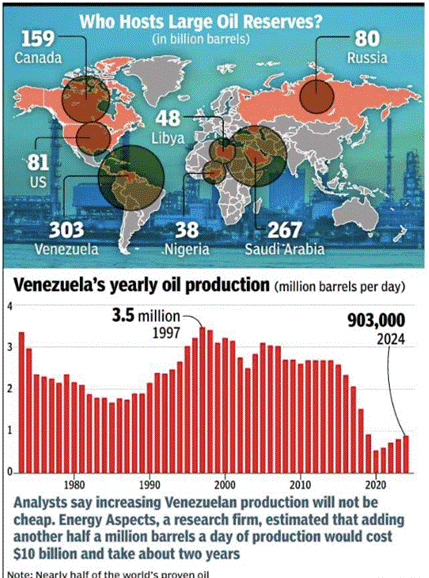
- Venezuela holds the world’s largest proven oil reserves (~303 billion barrels, OPEC).
- Oil output fell from ~3.2 million bpd (1998) to ~0.8–0.9 million bpd (2024, OPEC estimates) due to sanctions + infrastructure decline.
- Political instability worsens:
- currency collapse
- food & fuel shortages
- social protection stress
India’s Position
- India called for:
- peace, dialogue, and stability
- protection of Venezuelan people’s interests
- India has energy-economic stakes:
- historic crude imports & investments by ONGC Videsh in Venezuelan fields (affected by sanctions).
Global Reactions — Likely Trajectories
- Supportive Western blocs may justify action under anti-narcotics/security framing.
- Russia, China, and regional allies likely to condemn U.S. intervention as sovereignty violation.
- Risk of:
- internal political uncertainty
- elite realignments
- street-level mobilisation or repression
Venezuela
- Location & Region
- Located in northern South America; coastline along the Caribbean Sea & Atlantic Ocean.
- Lies north of the Equator; part of the Tropical zone.
- Neighbouring Countries (Clockwise)
- Colombia (W & SW)
- Brazil (S & SE)
- Guyana (E) — includes the disputed Essequibo region.
- Strategic Geography
- Access to Caribbean maritime routes and Atlantic oil-shipping lanes.
- Close proximity to Panama Canal trade corridor (regional relevance).
- Major Physical Features
- Orinoco River Basin (one of South America’s largest river systems).
- Guiana Highlands & tepui plateaus in the southeast.
- Llanos grasslands in central Venezuela.
- Andes extensions in the west (Merida Andes).
- Natural Resources
- Orinoco Belt → among the world’s largest heavy-oil reserves.
- Mineral resources concentrated in Guiana Shield region.
- Geopolitical Hotspots
- Guyana–Essequibo territorial dispute (east).
- Migration corridors toward Colombia & Brazil (west/south crossings).
Delhi govt. to declare rabies a notifiable disease to prevent deaths, improve surveillance
Why in News ?
- The Delhi Government is set to declare rabies a notifiable disease to improve surveillance, mandatory case reporting, early detection, and death prevention, as announced by Health Minister Pankaj Kumar Singh.
- The move follows Supreme Court directions on stray-dog management and rabies deaths, including the death of a six-year-old child taken up suo motu.
- Aim: Zero human deaths from rabies in Delhi through strengthened public-health response.
Relevance
GS-II | Welfare, Health Systems, Governance & Public Policy
- Disease surveillance, mandatory reporting, One-Health coordination
- Urban governance, judicial-policy linkage (Supreme Court context)
GS-III | Public Health, Disaster & Social Sector
- Zoonotic diseases, preventive care, epidemiology, vaccination ecosystem
Basics — What is a “Notifiable Disease”?
- A disease that must be mandatorily reported by:
- government & private hospitals
- medical colleges & clinics
- individual practitioners
- Reporting supports:
- real-time surveillance
- trend mapping
- outbreak response
- resource allocation
(Comparable examples: TB, measles, dengue — notified under various state/national frameworks.)
Rabies — Public Health Basics
- Cause: Viral zoonotic disease transmitted mostly via dog bites.
- Fatality: ~100% fatal once symptoms appear.
- Prevention: Completely preventable through timely PEP (post-exposure prophylaxis) — wound wash, anti-rabies vaccine, and rabies immunoglobulin when indicated.
- WHO Target: Zero human deaths from dog-mediated rabies by 2030.
What the Delhi Notification Will Do ?
- Mandatory reporting of suspected, probable, and confirmed human rabies cases.
- Coverage includes all government and private health facilities.
- Enables:
- case tracking & disease mapping
- coordination between human & animal health systems (One Health approach)
- targeted preventive action in high-risk localities
India — Key Facts & Data on Rabies
- India’s global share
- Accounts for ~36% of global rabies deaths (WHO estimates).
- Global deaths ≈ 59,000/year → India contributes ~18,000–20,000 deaths annually, mostly dog-mediated.
- Burden profile
- >90% human rabies cases follow dog bites.
- Children & rural poor are the most affected groups.
- Under-reporting remains high due to weak surveillance and deaths occurring outside hospitals.
- Bite incidence
- National bite-case load estimated at 15–17 million dog-bite cases/year (IDSP & State surveillance compilations).
Global Context
- India contributes a significant share of global rabies deaths, largely dog-mediated.
- Notification aligns with:
- National Action Plan for Rabies Elimination (NAPRE)
- WHO “Zero by 2030” goal
- Ayushman Bharat–public health surveillance strengthening
Way Forward
- Scale-up PEP access & supply chains (ARV + RIG).
- Mass dog vaccination & sterilisation with reliable enumeration.
- Time-bound reporting protocols & digital case registry.
- Community awareness on:
- immediate wound-washing
- early hospital reporting
- Inter-departmental joint action under One-Health framework.
Ghost SIM Cards
Why in News ?
- Investigations into the Red Fort blast module (Nov 2025) revealed that the accused allegedly used “ghost SIM cards” and encrypted apps to communicate with handlers in Pakistan .
- These SIMs were issued using misused Aadhaar identities and remained active on messaging apps even without being physically present in the device — creating a serious traceability gap.
- Following this, the Centre issued a directive (28 Nov 2025) requiring app-based communication services to remain linked to an active physical SIM to curb such misuse.
Relevance
GS-III | Internal Security, Cybersecurity & Terror Networks
- Identity theft, encryption misuse, traceability loopholes
- Tech-enabled radicalisation & cross-border communication
- Regulation of telecom-KYC and digital governance
What is a Ghost SIM Card?
- A SIM obtained or operated without verifiable, lawful user identity, or one that continues to enable communication after decoupling from the device/SIM holder.
- Typically created through:
- Aadhaar/KYC identity theft or forgery
- SIM mule networks issuing connections in others’ names
- Decoupled messaging logins (apps running without a live SIM)
Purpose: anonymity, evasion of lawful interception, cross-border covert communication.
How Ghost SIMs Work ? — Operational Mechanisms
- Dual-phone / dual-identity protocol
- Clean phone → in real name, normal activity
- Terror / crime phone → ghost SIM + encrypted apps only
- App–SIM Decoupling
- WhatsApp/Telegram accounts continue after SIM removal
- Handlers can retain control from outside India
- Cross-border persistence
- SIM registered in India → account active across PoK
- KYC Exploitation
- SIMs issued using stolen Aadhaar details of unsuspecting civilians
Why Ghost SIMs Are a Security Risk ?
- Breaks subscriber traceability
- Enables anonymous cross-border direction
- Shields operatives using professional cover (“white-collar modules”)
- Exploits encryption + identity fraud + telecom loopholes
- Complicates forensics, metadata mapping, & legal intercept
Way Forward
- Stronger KYC accountability
- periodic audits, retailer licensing, strict penalties
- Device-binding & anomaly detection
- auto-logout on SIM removal / geo-anomaly
- SIM lifecycle risk scoring
- flag multi-state / multi-device behaviour
- Cross-platform traceability protocols
- lawful metadata-sharing timelines
- Public awareness
- protection of Aadhaar credentials, reporting misuse
- Capacity building
- ATS/SIT cyber-forensics & telecom-analytics units
The Wolf Supermoon
Why in News ?
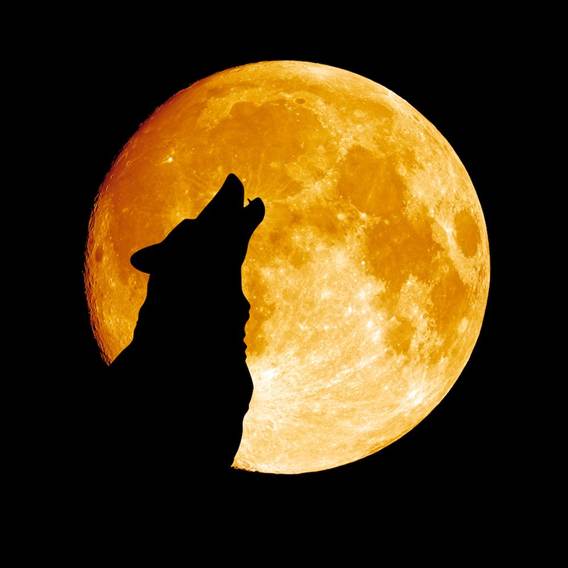
- The first full moon of 2026 — popularly called the Wolf Moon — coincided with the Moon being close to perigee, producing what is popularly termed a “Wolf Supermoon.”
- It reached peak brightness on January 2, 2026 (IST) and appeared slightly larger and brighter than an average full moon.
Relevance
GS-I | Geography — Earth–Moon System & Natural Phenomena
- Perigee–apogee, orbital mechanics, tides, perception vs physical reality
Basics — What is a “Wolf Moon”?
- Traditional name for the first full moon of January.
- Origin traced to seasonal folklore and almanacs in northern cultures, where:
- winter camps reported wolves howling more frequently in harsh winters.
- Important: The name is cultural, not scientific — the Moon itself does not change behaviour.
What is a “Supermoon”?
- The Moon’s orbit is elliptical (oval), not circular.
- Two key orbital positions:
- Perigee → Moon is closest to Earth
- Apogee → Moon is farthest from Earth
- When a full moon occurs near perigee, it is popularly called a Supermoon.
Observable Effects
- Appears ~7–14% larger and ~15–30% brighter than a micromoon (at apogee).
- Difference is subtle to the naked eye, clearer in side-by-side photographs.
(Term “supermoon” is popular rather than official; astronomers call it a Perigee-Syzygy full moon.)
Wolf Supermoon — What People Actually See ?
- Slight increase in:
- apparent angular size
- surface brightness
- Moon Illusion Effect
The Moon appears larger near the horizon due to human visual-perception bias, not astronomy.
Scientific Concepts Linked
- Kepler’s Laws & Tides
- Perigee moons slightly enhance ocean tides (perigean spring tides) — but changes are modest.
- Earth–Moon Distance Range
- Perigee ≈ ~356,500 km
- Apogee ≈ ~406,700 km
- Lunar Phase + Orbit Interaction
Supermoon requires phase alignment + orbital position.
Comparative Terms
- Micromoon → full moon near apogee (smaller & dimmer).
- Blue Moon → second full moon in a month (calendar term).
- Harvest Moon → full moon closest to autumn equinox (seasonal term).
Why These Names Matter ?
- Reflects interaction of culture, nature observation, and early time-keeping.
- Demonstrates how popular astronomy terms differ from scientific terminology — important for science communication.
Somnath Swabhiman Parva
Why in News ?
- The article reflects on the civilisational and cultural significance of the Somnath Temple in Gujarat, particularly in the context of:
- 1,000 years since the first major attack on the temple (1026 CE by Mahmud of Ghazni).
- The temple’s repeated destruction and reconstruction across centuries, symbolising resilience of faith, culture, and national spirit.
- Contemporary relevance — Somnath as a symbol of civilisational continuity, unity, and cultural revival in modern India.
Relevance
GS-I | Indian Culture, Heritage & Architecture
- Jyotirlinga tradition, temple architecture, historical continuity
GS-I / GS-II | Nation-building & Post-Independence Consolidation
- Cultural resilience, identity revival, leadership roles (Patel–Munshi)

Basics — About the Somnath Temple
- Location: Prabhas Patan, Gir Somnath district, Gujarat (Western coast of India).
- One of the 12 Jyotirlingas of Lord Shiva.
- Ancient coastal pilgrimage and trade hub.
- Architecture: Rebuilt in Chaulukya (Solanki) style using pink sandstone.
- Governance: Managed by Shree Somnath Trust.
Historical Timeline — Destruction & Reconstruction
- 1026 CE — Mahmud of Ghazni invades; temple looted and destroyed.
- Subsequent medieval periods — Multiple attacks by foreign invaders; repeated rebuilding by local rulers and devotees.
- Late 19th century — Swami Vivekananda visits ruins; emphasises spiritual-civilisational strength.
- Post-Independence reconstruction
- Leadership of Sardar Vallabhbhai Patel (1947 onwards).
- Supported by K.M. Munshi and others.
- Re-consecrated and reopened in 1951.
- Seen as a symbol of national resurgence and cultural self-assertion.
Civilisational Themes
- Somnath as a symbol of resilience
- Represents faith surviving conquest, plunder, and colonial suppression.
- Cultural continuity
- Despite repeated destruction, the temple was rebuilt again and again — reflecting collective civilisational memory.
- Nation-building symbolism
- Reconstruction linked to:
- self-confidence after independence
- reclaiming heritage and identity
- restoring dignity after centuries of subjugation
- Reconstruction linked to:
Nanobots in targeted cancer treatment
Why in News ?
- Researchers at IISc Bengaluru, led by Dr. Ambarish Ghosh, are developing medical nanobots capable of navigating through blood, tissues, and cells to deliver high-precision, minimally invasive cancer therapy.
- The work recently received the 2025 Tata Transformation Prize, highlighting its translational potential in next-generation cancer care.
Relevance
GS-III | Science & Technology, Biotechnology & Robotics
- Medical nanorobotics, precision oncology, translational research
GS-II | Health & Innovation Policy
- Affordable care, regulatory approval, ethical-safety considerations
What are Medical Nanobots?
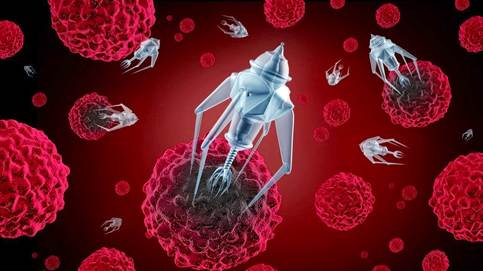
- Microscopic robotic devices engineered at the nano/micro-scale.
- Designed to swim or move inside the body, guided by magnetic fields or other stimuli.
- Can be functionalised with drugs, biomolecules, or nano-heaters to perform targeted therapeutic actions.
How These Nanobots Work?
- Inspired by bacterial flagella / helical propellers → move through tissue and fluids.
- Controlled externally via magnetic navigation systems.
- Can:
- Deliver drugs directly to tumour sites
- Generate localised heat (hyperthermia) to kill cancer cells
- Act as MRI-visible beacons for precision tracking
- Aim: Maximum tumour kill with minimal damage to healthy tissue.
Why They Matter ?
- Targeted therapy → reduces side-effects vs systemic chemotherapy.
- Minimally invasive → avoids large incisions or radiation spread.
- Precision medicine enabler → integrates imaging + navigation + therapy.
- Potentially lower long-term treatment costs and better survival outcomes.
Challenges & Risks
- Biocompatibility and immune response
- Safety clearance & regulatory approval
- Scalability, cost, and clinician adoption
- Need for long-term toxicity and clearance data.
Saudi-backed forces regain control of Hadramout province (Yemen)
Why in News ?
- Saudi-backed National Shield Forces retook the port city of Mukalla and regained control of Hadramout province in Yemen after it was seized earlier by southern separatists.
- The development follows Saudi airstrikes and the withdrawal of forces aligned with the Emirati-backed Southern Transitional Council (STC).
- Significance: reflects shifting power dynamics in Yemen’s civil war and the Saudi–UAE rivalry within the anti-Houthi bloc.
Relevance
GS-II | International Relations & West Asia Geopolitics
- Yemen civil war dynamics, Saudi-UAE divergence, proxy actors
- Security of Arabian Sea–Gulf of Aden region
GS-I | World Geography / Places in News
- Hadramout province, Mukalla port city, Arabian Sea littoral geography
Places in News
Hadramout (Hadhramaut) Province
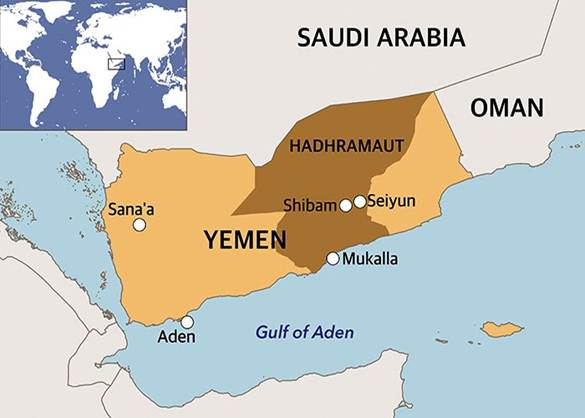
- Largest governorate of Yemen (by area), located in the eastern part of the country.
- Borders: Saudi Arabia (N), Oman (E), Arabian Sea (S), Yemeni governorates to the west.
- Known for desert plateaus (Hadramawt valley) and historic trading towns.
Mukalla
- Capital of Hadramout province and a strategic port city on the Arabian Sea.
- Major coastal hub for trade, fishing, and logistics.
- Has previously been a stronghold for Al-Qaeda in the Arabian Peninsula (AQAP) (2015–16 period — prelims-relevant).


