
Content
- Private Property Disputes ≠ Human Rights Violation
- NASA’s First Medical Evacuation from ISS – Ailing Astronaut Returns Early
- Tiger Global Tax Case & Treaty Abuse
- Spy Satellites: Next Frontier for India’s Spacetech Startups
- Why Deepfakes Will Get Harder to Spot
- 2025: Third Warmest Year on Record & Breach of 1.5°C Threshold (Copernicus Data)
Private Property Disputes ≠ Human Rights Violation
Why in News ?
- High Court held that private property disputes between family members cannot be treated as human rights violations.
- Human Rights Commissions (HRCs) lack jurisdiction over purely private civil disputes.
- Reinforces the jurisdictional boundaries of quasi-judicial bodies vis-à-vis civil courts.
Relevance
GS II – Polity & Governance
- Role, powers and limits of Human Rights Commissions
- Quasi-judicial bodies vs civil courts
- Doctrine of limited jurisdiction
- Separation of powers & institutional accountability
- Judicial oversight over statutory authorities
GS II – Constitution
- Article 12: State-centric enforceability of rights
- Article 300A: Right to Property (constitutional, not fundamental)
- Enforcement of Fundamental Rights vs private wrongs
Core Holding of the Court
- Human Rights Commissions Act, 1993:
- Empowers HRCs to address violations involving State action or negligence.
- Private disputes:
- Do not fall within the definition of “human rights violation” unless State involvement is established.
- HRCs:
- Cannot exercise civil court–like powers over inheritance, property, or family disputes.
- Should not be used to bypass regular civil remedies.
Constitutional & Legal Analysis
Nature of Human Rights
- Rooted in:
- Part III of the Constitution (Fundamental Rights)
- International Covenants incorporated through law
- Generally enforceable:
- Against the State (Article 12 doctrine)
- Private wrongs → civil law domain, not human rights law.
Statutory Interpretation
- Protection of Human Rights Act, 1993
- “Human rights” relate to:
- Life, liberty, equality, dignity
- Violations by public servants or State agencies
- “Human rights” relate to:
- HC reaffirmed:
- Jurisdictional restraint for statutory commissions.
Governance & Institutional Dimension
Problem Identified
- Increasing trend of:
- Using HRCs to litigate private civil disputes
- Overburdening commissions
- Diluting focus on genuine rights violations
Institutional Risk
- Forum shopping
- Weakening:
- Credibility of human rights institutions
- Separation of powers between courts and commissions
Recent & Broader Relevance
1. Judicial Pushback Against Jurisdictional Overreach
- Courts increasingly:
- Restrict quasi-judicial bodies (HRCs, consumer fora, tribunals) from exceeding statutory mandates.
- Aligns with:
- Doctrine of limited jurisdiction
- Rule of law and legal certainty
2. Property Rights Jurisprudence (Recent Trend)
- Post 44th Constitutional Amendment:
- Right to Property → Article 300A (constitutional, not fundamental)
- Courts emphasize:
- Property disputes → due process via civil courts
- Not rights commissions or writ misuse
3. Human Rights Inflation Problem
- Expanding “human rights” to:
- All forms of private disputes
- Risk:
- Trivialisation of serious violations (custodial deaths, illegal detention, police excesses).
Comparative Perspective
- Globally:
- Human rights law focuses on vertical violations (State vs individual).
- Horizontal application (private vs private):
- Limited
- Requires clear legislative backing.
Implications
Positive
- Clarifies legal pathways for citizens.
- Protects:
- Autonomy of civil courts
- Core mandate of HRCs
- Reduces administrative misuse.
Concerns
- Low awareness among citizens about:
- Proper forum for grievance redressal
- Civil courts:
- Slow disposal remains a structural issue.
Way Forward
Legal & Institutional
- Clear SOPs for HRCs on maintainability checks.
- Mandatory screening of complaints for State involvement.
- Training for commission staff on jurisdictional limits.
Governance
- Public legal awareness campaigns:
- “Which forum for which grievance”
- Strengthen civil justice delivery:
- Case management
- Digitisation
- ADR mechanisms
Prelims Pointers
- Human Rights Commissions Act, 1993:
- Focus on State-related violations.
- Right to Property:
- Article 300A (not a Fundamental Right).
- HRCs ≠ Civil Courts.
NASA’s First Medical Evacuation from ISS – Ailing Astronaut Returns Early
Why in News ?
- NASA, in coordination with SpaceX, conducted its first-ever medical evacuation from the International Space Station (ISS).
- An astronaut returned to Earth over a month earlier than scheduled due to a serious medical condition.
- Capsule executed a middle-of-the-night splashdown in the Pacific near San Diego.
- Mission managed under strict medical privacy protocols.
Relevance
GS III – Science & Technology
- Human spaceflight
- Space medicine & long-duration mission risks
- Space technology risk management
- Commercial Crew Programme (PPP in space)

Key Facts
- First medical evacuation from ISS in NASA history.
- Return vehicle: SpaceX Crew capsule.
- Astronaut condition: undisclosed (medical confidentiality).
- Recovery & evacuation:
- Astronaut extracted from capsule within ~1 hour of splashdown.
- Airlifted to a San Diego-area hospital.
- Mission impact:
- Crew rotation adjusted.
- ISS operations continued normally.
Technological & Operational Analysis
1. Human Spaceflight Risk Management
- ISS missions planned with:
- Redundancy
- Contingency return options
- This event demonstrates:
- Maturity of emergency return protocols
- Readiness for off-nominal scenarios
Signals transition from experimental to operational reliability in long-duration missions.
2. Role of SpaceX (PPP Model)
- SpaceX enabled:
- Rapid capsule availability
- Flexible mission rescheduling
- Reflects:
- Deepened Public–Private Partnership (PPP) in space.
- NASA shifting from operator → mission manager.
3. ISS as a Living Laboratory
- Long-duration spaceflight risks:
- Bone density loss
- Muscle atrophy
- Cardiovascular stress
- Immune dysregulation
- Medical evacuation underscores:
- Physiological limits of humans in microgravity
- Importance of space medicine.
Governance & Institutional Dimension
Inter-Agency Coordination
- NASA Mission Control
- SpaceX operations team
- US Coast Guard & recovery teams
- Civil aviation & medical services
Example of whole-of-system crisis response.
Ethical & Legal Dimensions
Medical Privacy in Space
- NASA withheld details citing:
- Ethical obligation
- Medical confidentiality
- Highlights:
- Even astronauts retain right to privacy
- Ethical governance beyond Earth.
Duty of Care
- Agencies have moral responsibility to:
- Prioritise astronaut health over mission timelines
- Reinforces:
- Human-centric approach to space exploration.
Global & Strategic Significance
1. Implications for Future Missions
- Moon (Artemis) & Mars missions:
- Much longer evacuation timelines
- No rapid return option
- Raises questions:
- How to handle medical emergencies beyond LEO?
2. Comparison with Past Practice
- Earlier:
- ISS missions relied mainly on Russian Soyuz for emergency return.
- Now:
- Multiple redundant systems (Crew Dragon, Soyuz).
Enhances resilience and autonomy of ISS operations.
Relevance for India
Gaganyaan Programme
- Human spaceflight readiness must include:
- In-orbit medical diagnostics
- Emergency abort & evacuation systems
- Lessons:
- Crew health monitoring
- Contingency planning
- Ethical protocols
Challenges Highlighted
- Medical uncertainty in microgravity.
- Limited evacuation options beyond LEO.
- High cost of emergency missions.
- Dependence on private providers for crew transport.
Way Forward
Technological
- Advanced in-space diagnostics using AI.
- Telemedicine & autonomous medical intervention.
- Improved life-support & monitoring systems.
Institutional
- International protocols for:
- Medical emergencies in space
- Clear SOPs for private–public coordination.
Ethical & Legal
- Codification of:
- Medical privacy rights in space
- Duty of care standards for astronauts
Tiger Global Tax Case & Treaty Abuse
Why in News ?
- The Supreme Court of India dismissed the tax plea of Tiger Global, holding its gains taxable in India.
- Court signalled closer scrutiny of treaty-based tax exemption claims, especially via Mauritius/Singapore routes.
- Potential ripple effects for pending cases and M&A structures relying on DTAA benefits.
Relevance
GS III – Economy
- International taxation
- Capital gains tax
- FDI/FPI regulation
- GAAR & treaty shopping
- Investment climate vs tax fairness
GS II – Polity & Governance
- Role of judiciary in economic governance
- Authority for Advance Rulings (AAR)
- Judicial review of quasi-judicial bodies
Case Snapshot
- Transaction: Sale of Indian e-commerce shares (Flipkart) routed via Mauritius/Singapore entities.
- Claim: Capital gains exempt under Double Taxation Avoidance Agreement.
- Tax Dept View: Impermissible tax avoidance—entities lacked commercial substance.
- Outcome: SC upheld taxability; overturned reliance on favourable Authority for Advance Rulings findings.
Legal Principles Clarified
- Substance over Form: Legal structure cannot defeat economic reality.
- Treaty Abuse Doctrine: DTAA benefits denied where arrangement is colourable/sham.
- GAAR Alignment: Reinforces General Anti-Avoidance Rule ethos—tests of commercial substance, principal purpose, round-tripping.
Constitutional & Jurisprudential Angle
- Separation of Powers: Courts checking quasi-judicial overreach (AAR).
- Judicial Consistency: Builds on Vodafone-era jurisprudence while distinguishing bona fide investment from conduit entities.
- International Law Interface: Treaties are not shields for abuse; domestic anti-avoidance applies.
Economic & Investment Implications
Positive
- Enhances tax certainty via clarity (what qualifies for DTAA).
- Strengthens tax base; deters aggressive arbitrage.
- Signals policy credibility to long-term investors.
Concerns
- Short-term investor caution; re-pricing of exits.
- Compliance costs; need for restructuring.
Who Is Affected ?
- Private Equity / FPIs using treaty routes.
- Cross-border M&A and exit planning.
- Pending and future treaty-based exemption claims.
Global Context
- Aligns with OECD-BEPS norms: anti-treaty shopping, Principal Purpose Test (PPT).
- Mirrors global shift from tax competition to tax cooperation.
Way Forward
- Clarity: Issue CBDT guidance on commercial substance thresholds.
- Certainty: Fast-track safe harbours for genuine PE/VC operations.
- Capacity: Strengthen AAR with consistency checks; timelines.
- Treaty Updates: Continue PPT/LOB clauses; periodic review.
- Ease of Doing Business: Advance rulings with binding certainty for bona fide investors.
Spy Satellites: Next Frontier for India’s Spacetech Startups
Why in News ?
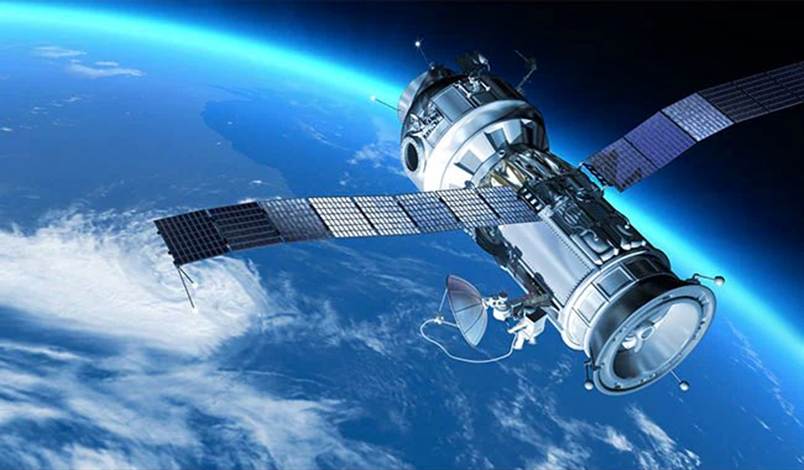
- Indian spacetech startups are pivoting from civilian EO (agri–climate data) to defence surveillance (“spy satellites”).
- Triggered by:
- Opening of space sector to private players (post-2020 reforms)
- Rising defence demand for ISR (Intelligence, Surveillance, Reconnaissance)
- Slower-than-expected commercial EO revenues.
Relevance
GS III – Science & Technology
- Space technology
- Small satellites & SAR
- Dual-use technologies
- Role of startups in high-tech sectors
GS III – Internal Security
- Intelligence, Surveillance & Reconnaissance (ISR)
- Border & maritime security
- Network-centric warfare
Key Data & Facts
India’s Space Economy
- Current size (2024): ~$8–9 billion
- Projected by 2033:
- $44 billion (IN-SPACe estimates)
- 5× growth over next decade
- Expected CAGR: ~23%
Private Space Revenue
- Private sector revenue (2024): ~$8.5 billion
- Projected (2033): ~$44 billion
- Defence & security satellites expected to be a major revenue driver.
Global Context
- Global space economy: ~$550 billion
- Defence & intelligence satellites account for:
- ~30–35% of government space spending globally
- US, China, Russia dominate military space assets.
Why Spy Satellites Are Attractive to Startups ?
1. Assured Demand (Defence Contracts)
- Defence ISR demand:
- Border surveillance (LAC, LoC, IOR)
- Maritime domain awareness
- Unlike civilian EO:
- Defence contracts are long-term & predictable
- Less price-sensitive.
2. Faster Revenue Realisation
- Civil EO:
- Fragmented buyers
- Low willingness to pay
- Defence EO:
- High-value contracts
- Government-backed payments
Key shift: from “data-selling” to “service contracts”
3. Technological Readiness
- Startups already strong in:
- Small satellites
- High-resolution EO
- SAR (Synthetic Aperture Radar)
- Defence requires:
- Higher revisit rates
- Secure data links
- Night & all-weather imaging
Key Indian Startups
- Pixxel – hyperspectral EO, now defence interest
- Skyroot Aerospace – launch vehicles (Vikram series)
- Agnikul Cosmos – small launch vehicles
- Dhruva Space – satellite platforms
(Startups increasingly integrating defence customers into business models)
Strategic & Security Dimension
Benefits for India
- Reduces dependence on:
- Foreign commercial satellite data
- Enhances:
- Real-time surveillance
- Military situational awareness
- Supports Atmanirbhar Bharat in defence.
Force Multiplier Effect
- Satellite-based ISR enables:
- Precision strikes
- Faster decision-making
- Network-centric warfare
Governance & Institutional Ecosystem
Key Enablers
- IN-SPACe
- Single-window clearance
- PPP facilitation
- ISRO
- Technology transfer
- Launch infrastructure
Challenges & Risks
1. Regulatory & Security Concerns
- Sensitive defence data handling
- Need for:
- Clear data-sharing protocols
- Cybersecurity safeguards
2. Capital Intensity
- Satellite manufacturing + launch:
- High upfront costs
- Defence payment cycles can strain startup cash flows.
3. Space Militarisation Risks
- Arms race in outer space
- Debris generation
- Dual-use ambiguity (civil + military).
Ethical & Legal Dimension
- Compliance with:
- Outer Space Treaty, 1967 (peaceful use)
- Surveillance vs privacy concerns.
- Accountability in private defence data usage.
Way Forward
Policy
- Clear Defence Space Procurement Policy for startups.
- Long-term contracts to ensure viability.
Technology
- Encourage SAR, AI-based image analytics.
- Secure encrypted data pipelines.
Institutional
- Stronger coordination between:
- ISRO
- IN-SPACe
- Defence Space Agency (DSA)
Strategic
- Balance:
- Commercialisation
- National security
- Global space norms
Why Deepfakes Will Get Harder to Spot ?
Why in News ?
- Rapid advances in generative AI have made deepfakes more realistic, scalable, and real-time.
- Shift from:
- Obvious visual artefacts → indistinguishable synthetic humans
- Deepfakes increasingly used for:
- Election interference
- Financial fraud
- Cybercrime
- Disinformation warfare
Relevance
GS II – Polity & Governance
- Electoral integrity
- Role of media in democracy
- Free speech vs democratic order
GS III – Internal Security
- Cybercrime
- Information warfare
- Psychological operations
- AI-enabled security threats

Key Data & Facts
Scale of the Problem
- Number of deepfake videos online:
- ~500,000 in 2023
- Growing at exponential rates (cybersecurity estimates)
- Deepfake generation cost:
- Reduced from thousands of dollars (2018) → near-zero (2024).
- Voice cloning:
- Requires <5 seconds of audio for high-fidelity replication.
Technological Capability
- Real-time deepfake generation:
- Enabled by large language models + diffusion models
- Identity consistency:
- New models maintain:
- Facial micro-expressions
- Voice modulation
- Emotional cues
- New models maintain:
Why Detection Is Becoming Harder ?
1. Model-Level Improvements
- AI now generates:
- Stable facial structures
- Consistent eye movement
- Natural blinking & expressions
- Earlier detection relied on:
- Pixel artefacts
- Facial inconsistencies
These cues are disappearing.
2. Shift to Real-Time Synthesis
- Deepfakes no longer post-produced.
- Live video & audio manipulation:
- Evades forensic analysis
- Defeats after-the-fact verification
3. Convergence of AI Systems
- Integration of:
- LLMs (speech & logic)
- Vision models (face & motion)
- Voice synthesis
- Result:
- End-to-end synthetic personalities
Governance & Democratic Impact
Elections
- Deepfakes can:
- Fabricate speeches
- Manipulate voter sentiment
- Trigger last-minute misinformation
- Weakens:
- Informed consent
- Free & fair elections
Institutions
- Erosion of:
- Trust in media
- Trust in public figures
- Rise of “liar’s dividend”:
- Genuine evidence dismissed as fake
Cybersecurity & Internal Security
New Threat Vectors
- CEO fraud via voice cloning
- Diplomatic misinformation
- Military deception & psychological ops
Detection Arms Race
- AI vs AI:
- Detection models lag generation models
- Fragmented platforms:
- Faster spread than verification
Ethical Dimension
Ethical Failures
- Profit-driven platforms amplify synthetic content.
- Creators lack accountability.
- Users lose epistemic agency.
Values at Stake
- Truth
- Consent
- Dignity
- Democratic responsibility
Indian Context
- High social media penetration
- Low digital & media literacy
- Linguistic diversity complicates moderation
- Weak forensic capacity at local law enforcement level
- Regulatory gap between:
- IT Act, 2000
- Emerging AI realities
Why “Spotting with the Eye” Will Fail ?
- Deepfakes now:
- Match human perceptual limits
- Exploit cognitive biases
- Visual inspection ≠ reliable verification.
Paradigm shift:
From content-based detection → infrastructure & provenance-based trust.
Way Forward
Technological
- Content provenance tools:
- Digital watermarking
- Cryptographic signatures
- AI-generated content labelling by default.
- Real-time detection APIs integrated into platforms.
Regulatory
- Mandatory disclosure of synthetic media.
- Platform liability for unchecked spread.
- Election-period emergency powers to EC.
Institutional
- National Deepfake Response Framework.
- Capacity-building for police & courts.
- Coordination between:
- MeitY
- Election Commission
- CERT-In
Societal
- Media literacy as civic skill.
- Public awareness campaigns:
- “Verify before you trust”.
2025: Third Warmest Year on Record & Breach of 1.5°C Threshold (Copernicus Data)
Why in News ?
- Copernicus Climate Change Service data confirms:
- 2025 = 3rd warmest year globally
- 2023–2025 is the first three-year period averaging above 1.5°C over pre-industrial levels.
- Signals imminent long-term breach of the Paris Agreement goal, possibly by 2030.
Relevance
GS III – Environment
- Climate change & global warming
- Cryosphere & polar amplification
- Ocean warming
- Extreme weather & wildfires
GS II – International Relations
- Paris Agreement
- Global climate governance
- Climate finance & equity
Key Data & Facts
Global Temperature Benchmarks
- 2025 anomaly: +1.47°C (pre-industrial baseline 1850–1900)
- 2023: +1.48°C
- 2024 (record): +1.60°C
- Last 11 years = warmest on record.
1.5°C Threshold (Paris Agreement)
- Target: limit long-term warming to well below 2°C, preferably 1.5°C.
- Scientific warning:
- Sustained exceedance likely a decade earlier than projected in 2015.
Important nuance:
Temporary breach ≠ legal failure, but signals dangerous proximity to irreversible tipping points.
Regional & Systemic Impacts
Polar Amplification
- Antarctica: Warmest year on record (2025)
- Arctic: 2nd warmest year
- Sea ice
- Record-low extent in Jan–Mar & Dec 2025
- Lowest combined Arctic–Antarctic ice in Feb 2025 since satellite era (1970s).
Oceans
- Global average SST (2025): 20.73°C (3rd highest)
- Ocean heat acts as:
- Climate amplifier
- Driver of extreme weather
- Threat to marine ecosystems
Heat Stress & Human Health
- ~50% of global land area experienced more days of:
- Strong heat stress (feels-like ≥32°C)
- WHO: Heat stress = leading cause of weather-related deaths globally.
Wildfires
- Europe: Highest wildfire emissions on record (2025).
- Fires release:
- CO₂ (positive feedback loop)
- Particulate matter & ozone (air quality degradation).
Drivers of Record Warming
1. Structural (Long-term)
- Rising GHG concentrations from human activity.
- Reduced efficiency of natural carbon sinks (forests, oceans).
2. Short-term Amplifiers
- High sea-surface temperatures
- El Niño influence (2023–24), followed by:
- ENSO-neutral / weak La Niña in 2025
- Changes in:
- Aerosols
- Low cloud cover
- Atmospheric circulation
Explains why warming persisted even without strong El Niño in 2025.
India-Specific Observation
- India cooler than global average in 2025.
- Possible role of:
- Aerosol pollution masking warming.
- Risk:
- As air quality improves, latent warming may surface rapidly.
Climate mitigation + clean air policies must be co-designed, not sequential.
- As air quality improves, latent warming may surface rapidly.
Human Fingerprint (Attribution Science)
- C3S reiterates:
- Human activity = dominant driver of long-term warming.
- Quote (high exam value):
“The last eleven years being the warmest on record is unmistakable evidence of a hotter climate.” — Carlo Buontempo, C3S
Governance & Global Climate Politics
Paris Agreement Challenge
- Moving from:
- Mitigation optimism → Overshoot realism
- Core policy dilemma:
- How to manage temporary overshoot without crossing irreversible tipping points.
Challenges
- Insufficient emissions reductions.
- Over-reliance on future negative emissions technologies.
- Weak climate finance & adaptation funding for Global South.
- Fragmented global response amid geopolitics.
Way Forward
Global
- Accelerate deep emissions cuts before 2030.
- Scale up loss & damage finance.
- Integrate overshoot management into IPCC pathways.
India
- Climate-resilient infrastructure.
- Heat Action Plans with health focus.
- Accelerate energy transition without aerosol masking dependency.
Scientific
- Improve monitoring of:
- Cryosphere
- Ocean heat
- Carbon sink weakening


