
Content
- Board of Peace
- Trump’s Greenland Push, Arctic Geopolitics and the Future of NATO
- World Malaria Report 2025
- Social Media Ban for Under-16 Users
- Vehicle-to-Vehicle (V2V) Technology
Board of Peace
Why in News?
Launch of a New Peace Architecture
- Donald Trump inaugurated the “Board of Peace” at the World Economic Forum, Davos (2026) to oversee ceasefire management in Israel–Gaza, projecting it as a potential alternative to existing global institutions.
Relevance
- GS Paper 1: Post–Cold War world order, changing nature of global institutions, geopolitical realignments in West Asia.
- GS Paper 2: UN reforms, multilateral institutions, India’s foreign policy, international peace and security, role of global governance mechanisms.
Key Features of the Board of Peace
Composition and Participation
- The U.S. claims 59 countries have signed on, but representatives from only 19 countries attended the launch, indicating a significant credibility and participation gap.
Countries Participating and Absent
- Pakistan, Türkiye, Saudi Arabia, UAE accepted the invitation.
- India, despite an invite to Narendra Modi, was not present and is yet to take a formal decision.
Immediate Geopolitical Context
Israel–Gaza Ceasefire Management
- The Board’s first mandate is overseeing the ceasefire in Gaza, with a U.S.-supervised Palestinian governance committee announced for the territory.
Rafah Border Development
- Announcement of Rafah border crossing reopening between Gaza and Egypt next week signals U.S. intent to directly manage humanitarian and political transitions.
Strategic Intent Behind the Initiative
Parallel Multilateralism
- Trump projected the Board as “for the world, not the U.S.”, explicitly suggesting it could rival the United Nations if successful.
Erosion of UN-Centric Conflict Resolution
- The initiative reflects dissatisfaction with UN-led mechanisms, particularly on Middle East conflicts, and signals a shift towards U.S.-centric, coalition-based peace enforcement.
Structural and Legitimacy Concerns
Absence of Universal Representation
- Limited physical participation undermines claims of global legitimacy, especially when major democracies and UN stakeholders remain cautious or absent.
Lack of Legal Mandate
- Unlike the UN Security Council, the Board lacks:
- Treaty-based authority
- Universal membership
- Clearly defined enforcement or accountability mechanisms
Implications for Global Governance
Fragmentation of Multilateral Order
- Creation of ad-hoc bodies outside established frameworks risks weakening international norms, encouraging forum-shopping and selective multilateralism.
Precedent for Power-Based Peace Architecture
- Peacekeeping risks shifting from rule-based internationalism to power-driven arrangements, privileging geopolitical alignment over neutrality.
India’s Strategic Calculus
Reasons for Indian Caution
- India’s absence reflects:
- Commitment to UN-centric multilateralism
- Strategic autonomy and avoidance of polarising blocs
- Concerns over legitimacy, mandate, and precedent
Alignment with India’s Global Posture
- India has consistently argued for UN reforms, not parallel institutions, and supports inclusive, rules-based global governance rather than personality-driven initiatives.
Regional and Middle East Dynamics
Arab Participation Signals
- Acceptance by Saudi Arabia and UAE suggests regional pragmatism, prioritising stability and humanitarian access over institutional purity.
Risks of Externalised Governance
- U.S.-supervised political arrangements in Gaza raise concerns over sovereignty, local legitimacy, and long-term conflict resolution sustainability.
Comparison with Existing Global Institutions
UN vs Board of Peace
- UN: Universal membership, legal mandate, peacekeeping experience, normative legitimacy.
- Board of Peace: Limited participation, no treaty base, executive-driven, politically selective.
Way Forward and Global Implications
Need for Institutional Clarity
- For credibility, the Board would require:
- Clear legal basis
- Transparent decision-making
- Complementarity with UN processes rather than substitution
India’s Likely Approach
- India may engage selectively and issue-based, while continuing to emphasise reform and strengthening of existing multilateral institutions.
Core Takeaway
- The Board of Peace reflects growing stress on post-war multilateralism, but without legitimacy, inclusiveness, and rule-based authority, it risks deepening fragmentation rather than delivering durable peace.
Trump’s Greenland Push, Arctic Geopolitics and the Future of NATO
Why in News?
Renewed U.S. Assertiveness in the Arctic
- Days after a U.S. military strike on Venezuela and capture of President Nicolás Maduro, Donald Trump intensified calls to acquire Greenland, calling it an “absolute necessity” for U.S. national security, triggering global debate on NATO’s future.
Relevance
- GS Paper 1: Arctic geography, strategic significance of polar regions, impact of climate change on geopolitical spaces.
- GS Paper 2: International relations, NATO, collective security, U.S. foreign policy shifts, alliance politics, India’s strategic autonomy lessons.
Greenland Proposal and NATO’s Core Contradiction
Challenge to NATO’s Foundational Principle
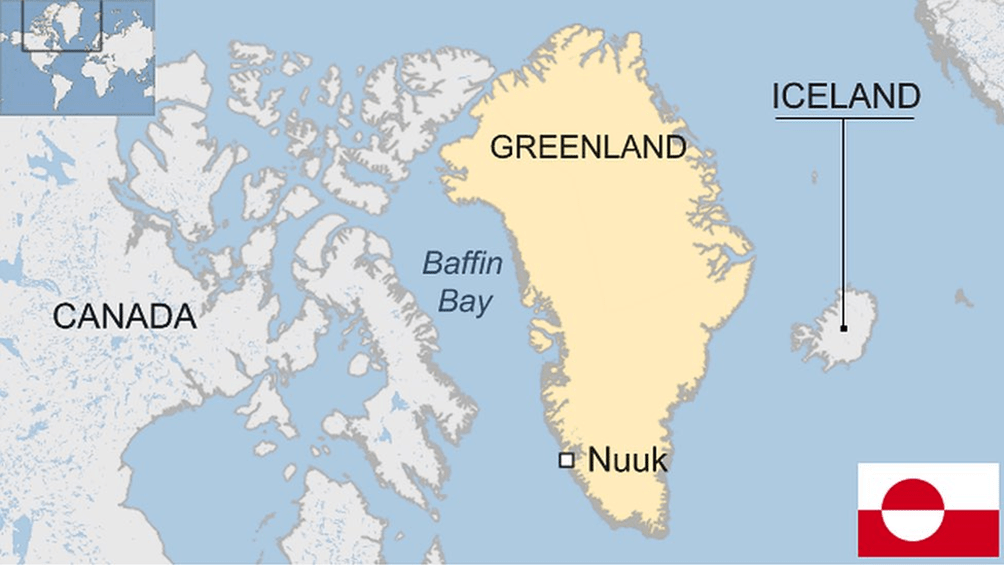
- Greenland is an autonomous territory of Denmark, a member of North Atlantic Treaty Organization, whose Article 5 treats an attack on one member as an attack on all.
Unilateralism vs Alliance Commitments
- Trump’s proposal signals a shift from alliance-based security to unconstrained unilateralism, undermining the credibility of NATO’s collective defence pledge.
Strategic Drivers Behind U.S. Interest in Greenland
Security and Strategic Geography
- Greenland’s location offers dominance over Arctic air and maritime approaches, critical for missile defence, early-warning systems, and control of emerging polar sea lanes.
Shipping Routes and Arctic Sea Lanes
- Two key routes define Arctic geopolitics:
- Northern Sea Route (NSR) along Russia’s Siberian coast
- Northwest Passage through the Canadian Arctic Archipelago
- Control over Greenland does not directly govern the Northwest Passage, raising questions about the strategic logic of sovereignty acquisition.
Resource Competition
- Greenland is rich in rare earth elements, hydrocarbons, and minerals, intensifying interest amid global energy transition and resource nationalism.
Arctic Governance and Existing Institutional Order
Established Arctic Frameworks
- The Arctic is already governed by well-developed political and institutional arrangements, involving Arctic states such as Russia, Denmark, Canada, and Norway.
Limited U.S. Long-Term Investment
- Unlike Russia, which operates extensive Arctic ports and nuclear-powered icebreaker fleets, the U.S. has invested minimally in Arctic infrastructure and energy development.
Russia’s Strategic Calculus
Russia as the Dominant Arctic Power
- Russia is the most entrenched Arctic actor, with centuries of presence, logistics networks, and military capabilities across the Arctic Sea.
The Russian Dilemma
- A weakened NATO suits Moscow strategically, but a stronger U.S. Arctic presence via Greenland would intensify long-term U.S.–Russia competition in the polar region.
Linkages with Ukraine Negotiations
- Arctic cooperation is reportedly part of broader U.S.–Russia discussions on Ukraine, making Greenland a bargaining chip in wider geopolitical negotiations.
Implications for NATO and European Security
Erosion of Trust in U.S. Security Guarantees
- Trump’s willingness to threaten a NATO member’s sovereignty sends a destabilising signal to smaller NATO states already wary of Russian assertiveness.
Europe’s Defence Dependency
- Europe has underinvested in defence for decades, relying heavily on U.S. military power; even with increased defence spending, capability gaps will persist in the medium term.
MAGA Worldview and Alliance Fatigue
- Trump’s second term reflects the rise of MAGA ideology, which views alliances as burdens and rejects the U.S. role as global security guarantor.
Greenland and the Western Hemisphere Doctrine
Strategic Consolidation of U.S. Influence
- Trump’s Greenland push aligns with a broader worldview that U.S. interests lie primarily in securing the Western Hemisphere, rather than sustaining global alliance networks.
Sovereignty, Not Influence
- Unlike traditional U.S. security partnerships, Trump seeks outright sovereign control, marking a departure from post-World War II norms.
Resource Coercion and Foreign Policy Style
From Venezuela to Greenland
- U.S. actions—from oil politics in Venezuela to rare earth interests in Greenland—suggest a pattern of coercive bargaining linked to resource access.
Deal-Making over Occupation
- Trump prefers quick, transactional deals and avoids prolonged military occupation, reflecting a cost-minimisation approach rather than imperial overstretch.
Can NATO Survive a Second Trump Term?
Protector Turning Tormentor
- European leaders increasingly view Trump’s posture as one where their traditional protector becomes a source of strategic uncertainty.
Likely European Response
- Europe may seek accommodation—pressuring Denmark to offer face-saving arrangements—to keep the U.S. within NATO and avoid alliance collapse.
Structural Vulnerability of NATO
- NATO’s survival rests not only on military capacity but on U.S. political commitment; erosion of this commitment risks deepening European divisions and weakening collective security.
Core Takeaways
Arctic as the New Geopolitical Frontier
- The Arctic is emerging as a zone of strategic rivalry driven by climate change, resource access, and new shipping routes.
End of Assumed U.S. Benevolence
- Trump’s Greenland proposal signals a potential end to the assumption that the U.S. will always act as a benign guarantor of allied security.
NATO at an Inflection Point
- The episode is a wake-up call for Europe: without strategic autonomy and defence self-reliance, NATO’s future remains hostage to domestic politics in Washington.
World Malaria Report 2025
Why in News?
Release of World Malaria Report 2025
- The World Health Organization released the World Malaria Report 2025 (December), reviewing global progress five years ahead of the 2030 malaria elimination deadline, highlighting regional gains but serious systemic risks.
Relevance
- GS Paper 2: Public health policy, role of WHO, global health governance, India’s health targets, cooperative federalism in health delivery.
- GS Paper 3: Human capital, economic cost of disease, science & technology in healthcare, antimicrobial resistance.
Global Malaria Status — Mixed Signals
Positive Trends in Asia-Pacific
- The Asia-Pacific region reported a decline in estimated malaria cases from 9.6 million (2023) to ~8.9 million (2024), driven by progress in 10 of 17 malaria-endemic countries.
Countries Showing Major Gains
- Pakistan recorded the largest absolute reduction, while Cambodia, Lao PDR, and Vietnam achieved historic lows for the second consecutive year, demonstrating feasibility of elimination with sustained interventions.
Drug Resistance — The Emerging Global Threat
Artemisinin Resistance
- Rising resistance to artemisinin-based combination therapies (ACTs), the global frontline malaria treatment, is identified as a critical threat to elimination efforts.
Greater Mekong Subregion Success
- The Greater Mekong Subregion is cited as a success story in containing antimalarial drug resistance through early detection, strict treatment protocols, and regional coordination.
Asia Pacific Leaders Malaria Alliance (APLMA)
Regional Political Platform
- The Asia Pacific Leaders Malaria Alliance (APLMA) brings together 22 governments committed to malaria elimination by 2030, strengthening political ownership and cross-border coordination.
Uneven Progress Warning
- Despite two decades of progress, APLMA notes that the region is not fully on track due to resurgence in complex settings and plateauing gains in high-burden areas.
Financing Crisis in Malaria Control
Global Funding Gap
- Only ~42% of global malaria financing needs were met in 2024, and funding cuts in 2025 have widened the shortfall further, undermining elimination-phase interventions.
Impact of Underinvestment
- Funding constraints are forcing countries to scale back proven interventions, increasing the risk of resurgence, emergency responses, and avoidable deaths.
India’s Malaria Elimination Trajectory
National Targets
- India aims to achieve zero indigenous malaria cases by 2027, three years ahead of the global 2030 target.
Progress Since 2015
- India has recorded steep reductions in cases and deaths, with many districts sustaining zero transmission for multiple years, demonstrating proof-of-concept for elimination.
Recent Warning Signs
- Recent data shows plateauing progress and localised rebounds, indicating India is currently off the elimination trajectory required to meet the 2027 milestone.
Key Shifts Required for India
Surveillance as the Core Intervention
- Transition from passive control to real-time, case-based surveillance, including mandatory reporting from private sector, defence services, railways, and urban health systems.
Targeting Residual Hotspots
- Five States and the North-East account for nearly 80% of India’s malaria burden, requiring project-mode execution, while near-elimination States must prevent resurgence.
Financing and Accountability
- Malaria elimination must be treated as a time-bound national mission, with assured funding, operational discipline, and outcome-based accountability through the last mile.
Artemisinin Resistance — India’s Position
Preventive Strategy
- Artemisinin resistance is not yet established in India, due to:
- Universal parasitological diagnosis
- Strict use of combination therapy
- Ban on oral artemisinin monotherapy
- Routine therapeutic efficacy studies and pharmacovigilance
Need for Regional Cooperation
- Drug resistance cannot be managed country-by-country; cross-border coordination is essential to prevent spread.
Vaccines — A New Tool in the Arsenal
RTS,S and R21 Vaccines
- RTS,S has reduced severe malaria and child mortality in large-scale African pilots.
- R21 has shown comparable or higher efficacy in controlled trials.
Asia-Pacific Strategy
- Vaccines are prioritised for Africa, but Asia-Pacific countries are evaluating targeted deployment to complement surveillance and vector control.
Economic Case for Elimination
Returns on Investment
- Evidence shows every dollar invested in malaria elimination yields multiple dollars through reduced healthcare costs, higher productivity, and stronger community resilience.
Cost of Delay
- Underinvestment during the elimination phase is more expensive, leading to resurgence cycles, repeated emergencies, and long-term fiscal burdens.
Core Takeaways
Elimination Is Achievable but Fragile
- The Asia-Pacific experience confirms malaria elimination is technically feasible, but success depends on financing continuity, last-mile execution, and resistance management.
Strategic Imperative
Protecting artemisinin efficacy and closing the financing gap are strategic imperatives, without which the 2030 global and 2027 Indian targets risk slipping out of reach
Social Media Ban for Under-16 Users
Why in News?
Andhra Pradesh as First Mover
- Andhra Pradesh became the first Indian State to constitute a ministerial committee to examine banning social media access for children below 16 years, citing rising child harm and international precedents.
Relevance
- GS Paper 1: Social change, impact of technology on children and youth, behavioural shifts in society.
- GS Paper 2: Governance, federalism, Centre–State relations, child rights, freedom of expression vs state regulation, digital governance.
- GS Paper 3: Cyber security, data protection, regulation of digital platforms, technology and social risks.
Background and Rationale
Rising Child Vulnerability on Digital Platforms
- State authorities highlighted growing cases where children are victims or accused in crimes linked to social media exposure, including cyberbullying, grooming, misinformation, and behavioural risks.
International Precedents
- Australia recently legislated a nationwide ban on social media for children below 16, backed by strict age-verification mandates, prompting Indian policymakers to explore similar safeguards.
Andhra Pradesh Government’s Initiative
Constitution of Ministers’ Panel
- The Andhra Pradesh government has set up a high-level ministerial panel to:
- Study global best practices
- Analyse crime and child safety data
- Examine legal, technological, and constitutional feasibility
Scope of the Study
- The panel will assess:
- Cases involving minors as victims or offenders
- Impact of digital platforms on mental health, behaviour, and crime
- Administrative enforceability across districts
Legal and Constitutional Dimensions
Age Threshold and Rights Framework
- In India, a child is legally defined as a person below 18 years, raising questions on:
- Compatibility of a below-16 ban with existing child rights laws
- Balance between child protection and freedom of expression (Article 19)
Central–State Jurisdiction Issues
- Digital platforms are regulated under central laws such as:
- Information Technology Act
- Digital Personal Data Protection Act (2023)
- This limits States’ ability to independently enforce platform-level restrictions.
Technology and Enforcement Challenges
Age Verification Complexity
- Effective enforcement would require robust age-verification systems, raising concerns about:
- Privacy intrusions
- Data collection risks
- Exclusion errors and false positives
Platform Compliance Issues
- Social media companies often lack India-specific age authentication mechanisms, making compliance dependent on Central Government coordination and regulatory backing.
Comparison with the Australian Model
Features of Australia’s Approach
- Australia’s ban is supported by:
- Mandatory platform responsibility for age checks
- Heavy penalties for non-compliance
- Centralised enforcement architecture
Limits of Policy Transfer
- India’s larger population, digital divide, informal device sharing, and weaker age-document penetration complicate direct replication of the Australian model.
Child Protection vs Digital Inclusion
Arguments Supporting the Ban
- Protects children from:
- Harmful content and online exploitation
- Psychological stress and addiction
- Premature exposure to misinformation and hate speech
Arguments Against a Blanket Ban
- Risks:
- Digital exclusion and loss of learning opportunities
- Pushing children to unregulated or underground platforms
- Over-reliance on prohibition rather than digital literacy
Policy Coherence with Existing Laws
Digital Personal Data Protection Act, 2023
- The Act requires verifiable parental consent for processing children’s data but does not mandate a social media ban, creating regulatory overlap and ambiguity.
Child Protection Frameworks
- Existing laws focus on:
- Harm prevention
- Parental oversight
- Platform accountability
rather than outright prohibition.
Governance and Federalism Concerns
State-Level Innovation vs National Uniformity
- Andhra Pradesh’s move reflects policy experimentation, but fragmented State-level bans could create:
- Regulatory inconsistency
- Compliance confusion for platforms
- Enforcement gaps across State borders
Need for Central Policy Direction
- Any effective restriction would likely require:
- Central legislation or rules under IT Act
- Uniform national standards
- Clear allocation of regulatory responsibility
Way Forward
Graduated Regulatory Approach
- Instead of blanket bans:
- Age-appropriate access tiers
- Strong parental control tools
- Algorithmic safeguards for minors
Strengthening Digital Literacy
- Invest in:
- School-based digital safety education
- Parental awareness programmes
- Child-friendly grievance redress mechanisms
Core Takeaway
Protection Without Overreach
- Andhra Pradesh’s initiative highlights a genuine child safety concern, but effective regulation must balance protection, constitutional rights, technological feasibility, and cooperative federalism, rather than rely solely on prohibition.
Vehicle-to-Vehicle (V2V) Technology
Why in News?
Rising Highway Accidents and Tech-Based Solutions
- In January 2026, multiple fatal accidents on Indian highways due to fog, low visibility, and high-speed collisions renewed attention on Vehicle-to-Vehicle (V2V) technology as a preventive road-safety intervention.
Relevance
- GS Paper 2: Public policy for road safety, role of state in preventing accidents, regulatory frameworks for emerging technologies.
- GS Paper 3: Science and technology, Intelligent Transport Systems, infrastructure safety, innovation in public service delivery.
India’s Road Safety Context
Scale of the Problem
- India records over 1.5 lakh road deaths annually (MoRTH data), with highways accounting for a disproportionate share due to overspeeding, poor visibility, and delayed driver reaction times.
Visibility-Related Risks
- Dense fog zones in north India significantly reduce stopping distance and reaction time, making traditional safety tools like headlights, reflectors, and road signage insufficient.
What is Vehicle-to-Vehicle (V2V) Technology?
Core Concept
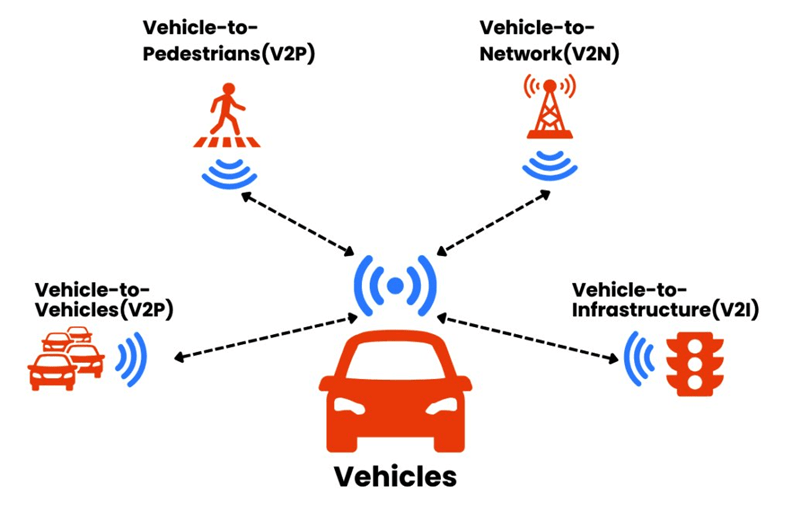
- V2V is a wireless communication system that allows vehicles to exchange real-time data such as speed, position, braking, and direction to prevent crashes before drivers can visually react.
Communication Range
- Vehicles communicate within approximately 200 metres, creating a digital safety bubble beyond the driver’s line of sight.
How V2V Technology Works
Onboard Communication Units
- Each vehicle is fitted with an Onboard Unit (OBU) that continuously broadcasts and receives safety messages from nearby vehicles.
Data Exchanged
- Shared data includes:
- Sudden braking events
- Speed changes
- Vehicle position and direction
- Loss of traction or unsafe distance
Driver Alerts and Safety Outcomes
Real-Time Warnings
- Drivers receive alerts for:
- Sudden braking ahead
- Vehicles stopped beyond visibility range
- Slow or wrong-way vehicles
- Cars approaching from blind spots
: Crash Prevention Mechanism
- Unlike cameras or radars, V2V works even without visual contact, making it particularly effective in fog, curves, and night driving.
Technology Stack Behind V2V
Communication Protocols
- V2V uses Dedicated Short-Range Communications (DSRC) or Cellular V2X (C-V2X), enabling low-latency, high-reliability message exchange.
Privacy-by-Design
- Messages are anonymous and non-trackable, designed only for safety alerts, not surveillance or driver profiling.
Global Experience with V2V
International Adoption
- Advanced economies have tested V2V as part of ADAS (Advanced Driver Assistance Systems), showing significant reductions in rear-end and chain collisions.
Limits of Partial Adoption
- Safety benefits rise sharply only when a large proportion of vehicles are V2V-enabled, creating a network effect.
Cost and Implementation Challenges
Cost Barrier
- Estimated cost is around ₹5,000 per vehicle, affordable at scale but challenging for India’s vast fleet of legacy vehicles.
Mixed Traffic Conditions
- India’s roads host cars, trucks, buses, two-wheelers, tractors, and pedestrians, complicating uniform deployment and standardisation.
Infrastructure and Regulatory Gaps
Absence of Mandates
- Unlike seat belts or airbags, V2V is not yet mandated under Indian vehicle safety regulations.
Spectrum and Standards
- Allocation of spectrum, interoperability standards, and certification frameworks remain underdeveloped for large-scale rollout.
V2V vs Other Road Safety Measures
Complement, Not Replacement
- V2V cannot replace:
- Speed regulation
- Road engineering improvements
- Enforcement and driver behaviour change
- It acts as a preventive overlay, enhancing reaction time.
Limitations
- V2V does not prevent:
- Pedestrian accidents
- Non-connected vehicles
- Deliberate reckless driving
India-Specific Use Cases
High-Impact Zones
- V2V offers maximum benefits in:
- Fog-prone highway corridors
- Accident black spots
- Mountain roads and sharp curves
- Long-haul freight routes
Freight and Commercial Fleets
- Early adoption in trucks and buses could deliver outsized safety gains due to vehicle size, braking distance, and long driving hours.
Way Forward
Phased Adoption Strategy
- Begin with:
- Mandatory V2V in new commercial vehicles
- Pilot corridors on high-risk highways
- Incentives for OEM integration
Policy and Ecosystem Support
- Develop:
- National V2X standards
- Spectrum allocation policy
- Integration with Intelligent Transport Systems (ITS)


