
Content
- Indians give to save each other from free fall
- A West Asia security rethink amid America’s role
Indians give to save each other from free fall
Why in News ?
- Study “How India Gives” reveals household-level philanthropy (~$6 billion annually) despite low incomes; challenges notion of elite-driven charity.
- Highlights emergence of “informal welfare system” driven by social networks amid gaps in formal state provisioning.
Relevance
- GS I (Society): Social capital, community networks, caste/kinship-based support systems.
- GS II (Governance): Welfare state, Directive Principles, gaps in service delivery.
- GS III (Economy): Informal economy, savings, credit systems, inequality.
Practice Question
Q1.“Informal welfare systems in India act as both safety nets and signals of state failure.”Critically analyse. (15M)
Static Background
- Philanthropy in India rooted in civilisational ethos—daan, seva, zakat, langar traditions across religions.
- Welfare state envisaged under Directive Principles (Articles 38, 39, 41, 47) ensuring social and economic justice.
- India’s welfare architecture includes PDS, MGNREGA, DBT, NFSA, but gaps persist in coverage and quality.
- Informal institutions: chit funds, kinship networks, caste/community associations act as parallel support systems.
Core Insight: Informal Welfare Provision
- Giving in India is not discretionary charity but survival-driven reciprocity embedded in social structures.
- Functions as a decentralised safety net, compensating for inadequacies in formal welfare delivery.
- Based on mutual interdependence—individual well-being tied to community survival.
Governance & Administrative Dimension
- Reflects state capacity gaps in universal welfare provisioning (health, education, social security).
- Informal systems reduce pressure on state but mask structural governance failures.
- Weak last-mile delivery, leakages, and exclusion errors necessitate community-level support.
- Indicates need for stronger institutional welfare architecture and accountability mechanisms.
Economic Dimension
- Despite low incomes (90% earning < ₹10,000/month), significant resource redistribution occurs informally.
- Poor contribute higher proportion of income (regressive burden) compared to wealthy donors.
- Informal credit systems (chit funds, borrowing networks) enable liquidity during shocks.
- Limits capital accumulation and savings, potentially perpetuating poverty cycles.
Social Dimension
- Rooted in kinship, caste, neighbourhood, and occupational networks ensuring social cohesion.
- Promotes trust, reciprocity, and social capital formation (Robert Putnam framework).
- Acts as shock absorber during crises—health emergencies, migration, unemployment.
- However, may reinforce exclusionary networks (caste/community-based access).
Ethical Dimension
- Reflects Indian moral philosophy—dharma and duty over rights-based entitlement.
- Giving driven by empathy and shared vulnerability, not surplus wealth.
- Raises ethical concern: should survival depend on charity rather than rights?
- Tension between compassion-driven society vs rights-based welfare state.
Data & Evidence
- ~$6 billion annual giving by households (study estimate).
- ~90% Indians earn < ₹10,000/month, yet widespread participation in giving.
- Only ~1% population pays income tax, indicating limited direct fiscal capacity.
- High reliance on indirect taxes → regressive burden on poor.
Challenges / Criticisms
- Substitution effect: Informal welfare may reduce urgency for systemic state reforms.
- Inequality reinforcement: Access depends on social networks, excluding marginalized groups.
- Lack of scalability and predictability compared to formal welfare systems.
- Debt cycles: Informal borrowing to support others may deepen financial vulnerability.
- Scholars argue this reflects “everyday state failure” rather than cultural virtue alone.
Way Forward
- Strengthening Formal Welfare State : Expand universal basic services (health, education, social security) to reduce dependence on informal support.
- Reducing Regressive Tax Burden : Rationalise indirect taxes and widen direct tax base to ensure equitable fiscal capacity.
- Leveraging Community Networks : Integrate self-help groups, cooperatives, and community institutions into formal welfare delivery.
- Financial Inclusion & Social Security : Promote micro-insurance, pension schemes, and accessible credit systems to reduce vulnerability.
- Ethical Governance Approach : Shift from charity-based survival → rights-based dignity framework aligned with constitutional values.
Prelims Pointers
- Directive Principles (Art 38, 39, 41, 47) relate to welfare state.
- Informal institutions include chit funds, SHGs, kinship networks.
- India’s tax system has high indirect tax component (regressive nature).
A West Asia security rethink amid America’s role
Why in News ?
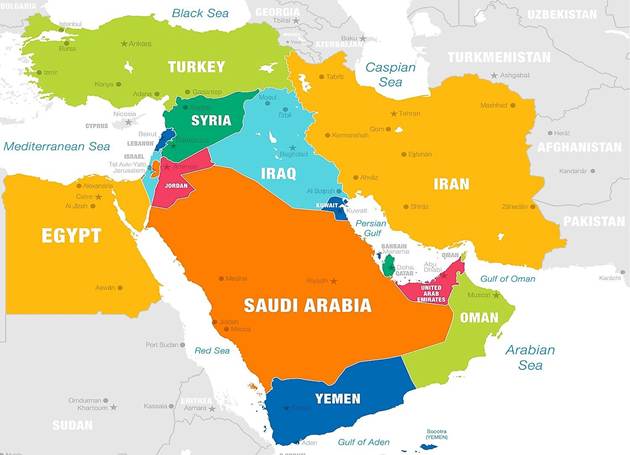
- Ongoing U.S.–Israel conflict with Iran escalates into second month, triggering Strait of Hormuz disruption and regional insecurity.
- Gulf countries reconsider dependence on U.S. security umbrella, exploring regional and Islamic security frameworks.
- Implications for global energy markets, India’s energy security, and Indo-Pacific geopolitics.
Relevance
- GS II (International Relations): West Asia geopolitics, U.S. role, India’s foreign policy.
- GS III (Economy): Energy security, oil price volatility, trade disruptions.
- GS III (Internal Security): Maritime security, chokepoints, regional instability.
Practice Question
Q1.“Declining U.S. dominance is reshaping West Asia’s security architecture.”Analyse its implications for regional stability and India. (15M)
Static Background
- West Asia’s security architecture historically shaped by U.S. hegemony post-World War II, ensuring oil flow stability.
- Strait of Hormuz: Strategic chokepoint carrying ~20% global oil and ~25% LNG trade.
- Long-standing Iran–U.S.–Israel tensions, rooted in nuclear issue, regime security, and regional influence.
- Gulf Cooperation Council (GCC) states rely on external security guarantees (primarily U.S.).
Changing Nature of Conflict
- Iran adopts “regional escalation doctrine”—targeting Gulf states and global shipping in retaliation.
- Israel demonstrates long-range air dominance, expanding conflict geography (Red Sea → Persian Gulf).
- War shifts from bilateral confrontation → regional systemic crisis affecting multiple actors.
Governance & Strategic Dimension
Declining U.S. Security Credibility
- U.S. unable to fully prevent attacks on Gulf infrastructure (2019, 2026), eroding trust.
- Increasing burden-sharing demands on Gulf states reflect strategic retrenchment.
- Energy self-sufficiency reduces U.S. incentive to act as sole security guarantor.
Emergence of Regional Security Thinking
- Gulf states exploring autonomous and collective security mechanisms beyond U.S. dependence.
- Attempts to revive intra-Gulf cooperation (Saudi–Qatar rapprochement) despite past conflicts.
- China-mediated Iran–Saudi détente (2023) shows diversification of security partnerships.
Role of Key Actors
Iran
- Uses asymmetric warfare (drones, proxies, maritime disruption) to offset conventional disadvantages.
- Strategy: Raise cost of war globally (energy shock) → deter regime-change attempts.
Israel
- Pursues pre-emptive, extra-territorial strikes, reshaping deterrence norms.
- Creates anxiety among Gulf states despite shared anti-Iran stance.
Pakistan
- Attempts strategic re-entry into West Asia via mediation and Islamic identity politics.
- Leverages position as only nuclear Muslim-majority country and ties with U.S. leadership.
- Risks friction with India due to geopolitical signalling and alignment shifts.
Gulf States (GCC)
- Moving toward strategic hedging—balancing U.S., China, regional actors.
- Seeking security autonomy + economic diversification (Vision 2030 models).
Economic Dimension
- Strait of Hormuz disruption causes global oil price volatility and supply shocks.
- Increased shipping insurance and freight costs, affecting global trade (including India).
- Gulf economies face dual risk—security instability and revenue uncertainty.
- India responds via RoDTEP extension to support exporters amid rising logistics costs.
Security Dimension
- Risk of regional war spillover involving non-state actors (Houthis, militias).
- Maritime insecurity threatens global commons and energy supply chains.
- Nuclear dimension: Pakistan’s positioning raises concerns of strategic proliferation dynamics.
- Weak regional institutions (e.g., Arab League) limit collective crisis response capacity.
Social & Political Dimension
- Rising instability may trigger migration, refugee flows, and humanitarian crises.
- Intensifies Sunni–Shia geopolitical faultlines, despite recent détente attempts.
- Domestic legitimacy pressures on Gulf regimes to ensure security and economic stability.
Data & Facts
- ~20% global oil and 25% LNG transit through Strait of Hormuz.
- Iran’s Kharg Island handles ~90% of its oil exports—critical vulnerability point.
- U.S. deployed A-10 and Apache systems to secure maritime routes (March 2026).
- India imports ~60% of crude oil from West Asia, highlighting vulnerability.
Challenges
- Absence of inclusive security framework—Iran excluded from many regional arrangements.
- Deep intra-Gulf divisions undermine collective security efforts.
- Over-reliance on external powers (U.S., China) limits regional autonomy.
- Energy market volatility impacts global economy and developing countries disproportionately.
- Lack of institutionalised conflict resolution mechanisms in West Asia.
Way Forward
- Inclusive Regional Security Architecture : Develop multi-stakeholder framework including Iran, GCC, and external powers for sustainable stability.
- Reducing Overdependence on U.S. : Gulf states to pursue strategic autonomy with diversified partnerships (India, China, EU).
- Strengthening Maritime Security : Enhance multilateral naval cooperation to secure sea lanes and global energy flows.
- Energy Diversification : Accelerate shift to renewables and diversified supply chains to reduce chokepoint vulnerability.
- Institutional Reform : Revitalise regional bodies (GCC, Arab League) for effective conflict management and cooperation.
Prelims Pointers
- Strait of Hormuz connects Persian Gulf to Gulf of Oman.
- Kharg Island = Iran’s major oil export terminal.
- GCC includes Saudi Arabia, UAE, Qatar, Kuwait, Oman, Bahrain.
- Act East Policy linked to West Asia via energy and diaspora connections.


