
- India’s Essential Medicine List Lags WHO Benchmark — NLEM Unrevised in Four Years GS2
- Why Tanks Still Matter in Modern Warfare GS3
- EC Can Hold Bypolls Any Time Within Six Months of a Vacancy GS2
- Assam Releases Booklet on Bodoland Forests’ Butterfly Diversity GS1
- Why Are There Concerns Over WhatsApp Usernames? GS2
- The Real Crisis in India’s Fisheries GS3
- Syama Prasad Mookerjee Remembered on His 125th Birth Anniversary GS1
- Climate Change and the Decline of Milk Production in the Gangetic Plains GS3
- AI Is Reshaping Warfare — How India Can Keep Pace GS3
- Himalayan Pangolin Confirmed as a Distinct Species GS3
The Working Group on Access to Medicines and Treatments — a civil society collective of patient advocates, academics, lawyers and journalists — has written to the Union government demanding an urgent revision of the National List of Essential Medicines (NLEM), which has not been updated since 2022, even as the WHO Model List of Essential Medicines has been revised twice in the same period (2023 and 2025).
- NLEM is a curated list of medicines compiled by the Ministry of Health and Family Welfare that prioritises drugs meeting the critical healthcare needs of India’s population; medicines on it are dispensed free at government hospitals.
- The government uses the NLEM to direct the National Pharmaceutical Pricing Authority (NPPA) to enforce a price ceiling on listed drugs under the Drug Price Control Order (DPCO), 2013.
- The WHO Model List of Essential Medicines was first published in 1977 and is revised biennially by an independent expert committee; it currently contains 523 medicines after its 2023 and 2025 revisions.
- India’s NLEM currently lists 384 medicines, and was last overhauled in 2022 (previous revisions in 2003, 2011 and 2015).
- Cancer care gap: 17 active cancer-treating agents and 4 supportive cancer-care medicines that feature on the WHO list are missing from the NLEM.
- Monoclonal antibodies: None of nine monoclonal antibodies — targeted biologic drugs increasingly central to modern cancer treatment — currently appear on India’s list.
- The Working Group has urged a “transparent, time-bound, and conflict of interest-free” revision process, linking timely access to essential medicines with the constitutional guarantee of the Right to Life (Article 21).
- NLEM = list of essential medicines compiled by the Ministry of Health & Family Welfare; currently 384 medicines; last revised 2022.
- NPPA = National Pharmaceutical Pricing Authority; enforces price ceilings on NLEM drugs under the DPCO, 2013.
- WHO Model List of Essential Medicines = first published 1977; revised biennially; currently has 523 medicines (as of the 2025 revision).
- Monoclonal antibodies = lab-engineered antibodies designed to bind a specific target (e.g., a cancer cell marker); a class of biologic, targeted cancer therapy — distinct from conventional chemotherapy.
- Flag: this is a civil-society demand, not yet an enacted or announced government revision.
“Periodic revision of the National List of Essential Medicines is central to affordable healthcare access in India.” Discuss the significance of the NLEM, the mechanism by which it controls drug prices, and the concerns raised over its delayed revision relative to the WHO Model List of Essential Medicines.
Which of the following statements regarding the National List of Essential Medicines (NLEM) is correct?
Correct Answer: (c)With drones, precision-guided missiles and AI-enabled surveillance transforming modern battlefields, military experts are debating whether tanks remain relevant. The debate has sharpened as India develops the indigenous Zorawar light tank for high-altitude operations along the Line of Actual Control (LAC), and as Prime Minister Narendra Modi reviewed the platform at Larsen & Toubro’s Hazira facility in Gujarat in June 2026.
- Tanks dominated land warfare from the Second World War through the end of the Cold War; their battlefield primacy has since been challenged by anti-tank missiles, drones and precision-guided munitions.
- India’s current armoured fleet is anchored by the T-72 Ajeya (approximately 2,400–2,500 tanks, many over four decades old) and the more capable T-90S Bhishma (over 1,200 tanks), which forms the backbone of the armoured corps.
- India faces a dual strategic requirement: conventional armoured warfare against Pakistan in the plains and deserts of the western theatre, and high-altitude operations against China along the LAC in the northern theatre — a terrain most Western militaries do not need to plan for.
- Jointly developed by the Defence Research and Development Organisation (DRDO) and L&T Defence, the Zorawar is a 25-tonne, air-transportable light tank designed specifically for rapid deployment in high-altitude regions with narrow valleys, weak bridges and steep gradients.
- The Army plans to induct 354 Zorawar tanks under a programme estimated to cost around ₹17,500 crore, with induction expected between 2028 and 2029.
- It is designed to counter China’s deployment of Type-15 light tanks along the LAC and to narrow the operational gap in mountainous terrain.
- Critics’ view: The Russia-Ukraine war has shown low-cost drones destroying multi-million-dollar armoured vehicles within seconds; a 35-km stretch of the front, nicknamed the “death zone,” has seen tanks and artillery pushed back by drone saturation.
- Supporters’ view: Air strikes and missiles can inflict damage but cannot occupy or hold territory; ultimately, enforcing surrender and establishing political control requires ground forces, of which tanks remain a critical component in a combined-arms operation involving infantry, artillery, air defence, electronic warfare and drones.
- At high altitudes, thin air reduces tank engine power and increases fuel consumption, while recovering disabled vehicles is extremely difficult — issues the Zorawar programme is addressing through design refinements and integrated anti-drone and active protection systems.
- Zorawar = indigenous 25-tonne air-transportable light tank; DRDO & L&T; 354 units planned; cost ~₹17,500 crore; induction 2028–29; built for LAC high-altitude terrain.
- T-72 Ajeya = India’s largest tank fleet (~2,400–2,500 units, many over 40 years old); T-90S Bhishma = more capable, 1,200+ units, backbone of the armoured corps.
- LAC (Line of Actual Control, India-China) is distinct from the LoC (Line of Control, India-Pakistan in Jammu & Kashmir).
- Recent development: Gen. Dhiraj Seth took over as the 31st Chief of the Army Staff on 30 June 2026, succeeding Gen. Upendra Dwivedi; Lt Gen NS Raja Subramani has been named Chief of Defence Staff, succeeding Gen. Anil Chauhan.
Drones and precision-guided munitions have transformed the modern battlefield, yet armies continue to invest in armoured platforms. Critically examine the continuing relevance of tanks in contemporary warfare with reference to India’s strategic requirements along the LAC and the western front.
Assertion (A): India is developing the Zorawar light tank specifically for deployment along the Line of Actual Control.
Reason (R): Conventional main battle tanks such as the T-90S Bhishma suffer a significant loss of engine power and mobility at high altitudes due to thin air.
Which one of the following is correct?
The Election Commission announced byelections to only three Assembly seats — in Bihar, Madhya Pradesh and Gujarat — even as at least 14 Assembly seats and six Parliamentary seats (three each in the Lok Sabha and Rajya Sabha) remain vacant across the country, reviving debate over the EC’s discretion in timing bypolls.
- The Election Commission of India derives its authority from Article 324 of the Constitution and currently comprises CEC Gyanesh Kumar along with Election Commissioners Sukhbir Singh Sandhu and Vivek Joshi.
- The Representation of the People Act (RPA), 1951 mandates that a bypoll be held within six months of a seat falling vacant, but leaves the EC discretion over exactly when within that window to conduct it.
- The RPA Act carves out two express exceptions to the six-month rule: (i) where the remainder of the term is less than one year, or (ii) where the EC, in consultation with the Union government, certifies that holding the bypoll within the period is difficult.
- A third exception has been recognised through judicial interpretation — where a pending election petition concerning that very vacant seat is before a court, the EC may await the outcome before scheduling a bypoll, since the court could ultimately declare another candidate duly elected.
| Case | Nature of Delay/Speed | Reason |
|---|---|---|
| Datia (Madhya Pradesh) | Bypoll scheduled only in Feb 2025 | Awaited withdrawal of a pending election petition in the Allahabad High Court |
| Milkipur (Uttar Pradesh) | Delay criticised by Opposition | Seat vacated after Samajwadi Party’s Awadesh Prasad was elected to the Lok Sabha |
- Opposition parties have repeatedly alleged both undue “hurry” and undue “delay” in the EC’s bypoll announcements, depending on the seat in question.
- Courts have generally shown deference to the EC’s scheduling decisions, and will not interfere with a bypoll timeline unless a specific stay is granted by a court in a pending case.
- Article 324 = constitutional basis for the Election Commission’s superintendence, direction and control of elections.
- RPA, 1951 = mandates bypolls within 6 months of a vacancy; three recognised exceptions — remaining term <1 year, EC-Centre certification of difficulty, and a pending election petition on that seat.
- Election petition = a legal challenge to the validity of an election result, filed before a High Court.
- Current ECI composition: CEC Gyanesh Kumar; ECs Sukhbir Singh Sandhu and Vivek Joshi.
Examine the statutory and judicially-evolved framework governing the timing of byelections in India. Discuss why courts have generally deferred to the Election Commission’s discretion in this regard.
Match List-I (Circumstance) with List-II (Consequence for EC bypoll scheduling) and select the correct answer using the codes given below:
List-I
A. Remainder of term is less than one year
B. EC-Centre jointly certify difficulty in holding the poll
C. A pending election petition concerns the very seat
List-II
1. EC may await the court’s verdict before scheduling a bypoll
2. Bypoll need not be held under the RPA, 1951, six-month mandate
3. Bypoll can be deferred beyond six months by joint certification
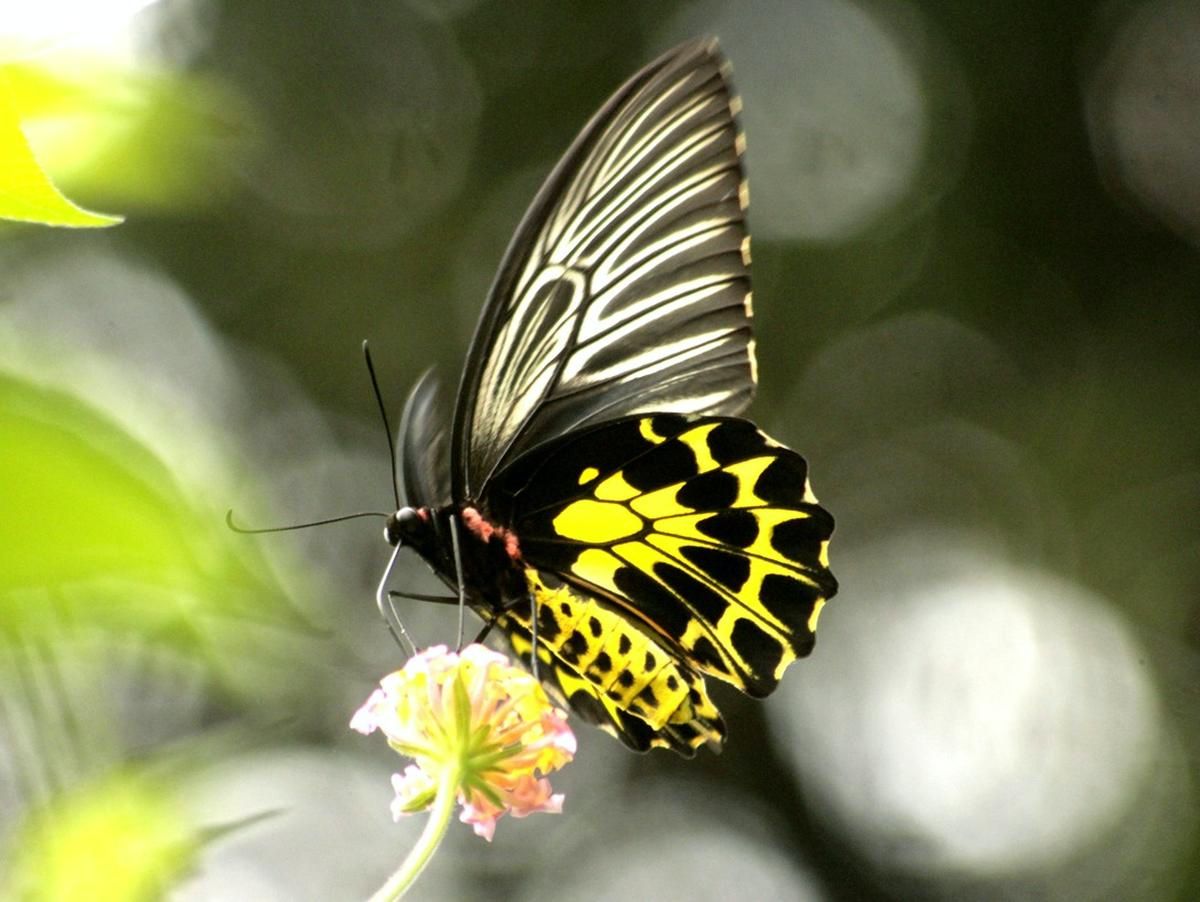
The Assam Forest Department released a special booklet on the butterflies of the Bodoland Territorial Region (BTR), unveiled by Hagrama Mohilary, Chief Executive Member (CEM) of the Bodoland Territorial Council (BTC), in Kokrajhar.
- The BTC is an autonomous council under the Sixth Schedule of the Constitution, governing the Bodoland Territorial Region across five districts — Kokrajhar, Chirang, Baksa, Udalguri and Tamulpur — established following the 2003 Bodo Peace Accord and upgraded to a “Region” under the 2020 accord.
- Spread across 3,653 sq. km, the Bodoland forest landscape sits at the confluence of the Indo-Malayan and Indo-Gangetic biogeographic zones, comprising tropical evergreen, semi-evergreen, moist mixed-deciduous forests and alluvial grasslands.
- The landscape supports 346 of Assam’s 620 recorded butterfly species, making BTR one of the richest butterfly habitats in Northeast India, and the region’s only ecological corridor where Eastern Himalayan, Indo-Malayan and Indo-Gangetic butterfly species occur together.
- Endemic/rare: yellow-crested spangle (Papilio elephenor), Swinhoe’s flat (Celaenorrhinus zea).
- Eastern Himalayan species: great windmill (Byasa dasarada), Moore’s cupid (Shijimia moorei), Mussoorie bush bob (Pedesta masuriensis), green awlet (Burara vasutana).
- Indo-Malayan species: the witch (Araotes lapithis).
- Rarely found elsewhere in the Northeast: Indian cupid (Everes lacturnus assamica), white-line bushbrown (Mycalesis malsara).
The BTR represents not only a biodiversity hotspot but also a unique cultural landscape: the Bagurumba, popularly known as the “butterfly dance” of the Bodo community, is believed to have been inspired by the colourful mud-puddling congregations of butterflies witnessed across the forests during the monsoon.
- BTC = Bodoland Territorial Council, an autonomous body under the Sixth Schedule; governs the Bodoland Territorial Region (BTR), comprising five Assam districts.
- Sixth Schedule = provides for administration of tribal areas in Assam, Meghalaya, Tripura and Mizoram through Autonomous District/Regional Councils.
- BTR biodiversity: 346 of Assam’s 620 butterfly species; located at the confluence of Indo-Malayan and Indo-Gangetic biogeographic zones.
- Bagurumba = the “butterfly dance” of the Bodo community, inspired by monsoon mud-puddling congregations of butterflies.
Discuss the significance of India’s Northeast as a biodiversity corridor linking distinct biogeographic zones. How can documentation initiatives such as species booklets aid community-linked conservation?
Consider the following statement: “The Bodoland Territorial Region is the only ecological corridor in Northeast India where butterfly species of the Eastern Himalayas, the Indo-Malayan region and the Indo-Gangetic plains occur together.”
Is this statement correct or incorrect?
On 1 July 2026, the Ministry of Electronics and Information Technology (MeitY), under Union Minister Ashwini Vaishnaw, sent a notice to Meta asking it to halt the rollout of WhatsApp’s new username feature, warning it could increase online fraud, phishing, digital-arrest scams and impersonation. Similar notices were subsequently sent to Telegram, Signal and Arattai.
- The feature lets users chat via a chosen username instead of sharing a phone number; there is no in-app search directory, so a contact must know the exact username. Users can additionally set a PIN to prevent contact even by those who know their username.
- WhatsApp is classified as a “significant social media intermediary” (SSMI) under the IT Rules, 2021 — a threshold that applies to platforms with more than 50 lakh registered users in India (WhatsApp has an estimated 80 crore Indian users), attracting enhanced due-diligence obligations.
- MeitY’s notice invoked Sections 66C (identity theft), 66D (cheating by personation) and 79 (intermediary liability/safe harbour) of the Information Technology Act, 2000.
| Stakeholder | Position |
|---|---|
| MeitY | Feature could enable impersonation of individuals, financial institutions and government agencies; may increase fraud, phishing and digital-arrest scams |
| WhatsApp/Meta | Has “reserved” usernames of prominent personalities to pre-empt imposters; will display sender country of origin and phonebook status; safeguards to be rolled out over coming months |
| Internet Freedom Foundation (IFF) | Argues Section 79 is a liability safe harbour, not a power for MeitY to pre-approve or veto a product feature |
- It remains unsettled whether the government can direct a privately-owned platform to withdraw or delay a lawful product feature; the IFF has termed the notice’s approach as treating a feature launch as “a wrong the company must justify.”
- WhatsApp officials met MeitY on 3 July 2026, with a written response due 4 July; the government has previously sought explanations from WhatsApp, including after the platform’s global outage in October 2022.
- Significant Social Media Intermediary (SSMI) = under IT Rules 2021, a platform with more than 50 lakh registered users in India; attracts enhanced due-diligence obligations.
- Section 66C, IT Act 2000 = identity theft; Section 66D = cheating by personation using computer resources; Section 79 = conditional safe harbour/liability exemption for intermediaries.
- “Safe harbour” = legal shield protecting an intermediary from liability for user-generated content, subject to observing due diligence — distinct from a power to pre-approve features.
- MeitY headed by Ashwini Vaishnaw (also holds Railways and Information & Broadcasting portfolios).
Examine the scope and limits of the Indian government’s regulatory authority over significant social media intermediaries under the Information Technology Act, 2000 and IT Rules, 2021, with reference to the recent controversy over WhatsApp’s username feature.
Which one of the following statements about the WhatsApp username controversy is NOT correct?
Correct Answer: (c)The Government of India’s February 2026 release stating that 91.1% of 135 marine fish stocks evaluated (2022 data) are “sustainable” is contested by this opinion piece, which argues the more urgent problem is the unregulated degradation of India’s inshore fishing grounds by an oversized mechanised trawling fleet, and that India’s stock assessment method is weaker than international best practice.
- Exclusive Economic Zone (EEZ) = sea area extending up to 200 nautical miles (371 km) from the coast, within which a state has sovereign rights over marine resources.
- Territorial waters = extend 12 nautical miles (22 km) from shore; largely overlap with the continental shelf, the most biologically productive fishing zone.
- CMFRI (Central Marine Fisheries Research Institute) relies primarily on landing data (what is caught) rather than at-sea stock assessments used by many other fishing nations — a key methodological critique in the piece.
- Government figure cited: 64,414 mechanised fishing vessels currently operate in India, a number growing with practically no restriction on new entries.
- A 5 nautical mile inshore zone is legally reserved for small-scale fishers (mechanised trawling prohibited), but the author says this restriction is weakly enforced; mechanised boat fishing is separately closed for two months annually for stock rejuvenation.
- The FAO’s country assessment is more cautious than the Indian government’s, stating major stocks are already “fully exploited” and that deep-sea fishing (the government’s proposed alternative) offers only a “marginal increase” in potential.
- The Palk Bay dispute (India-Sri Lanka) is cited as an example of mechanised-trawling conflict spilling across a maritime boundary, independent of the Katchatheevu ownership question.
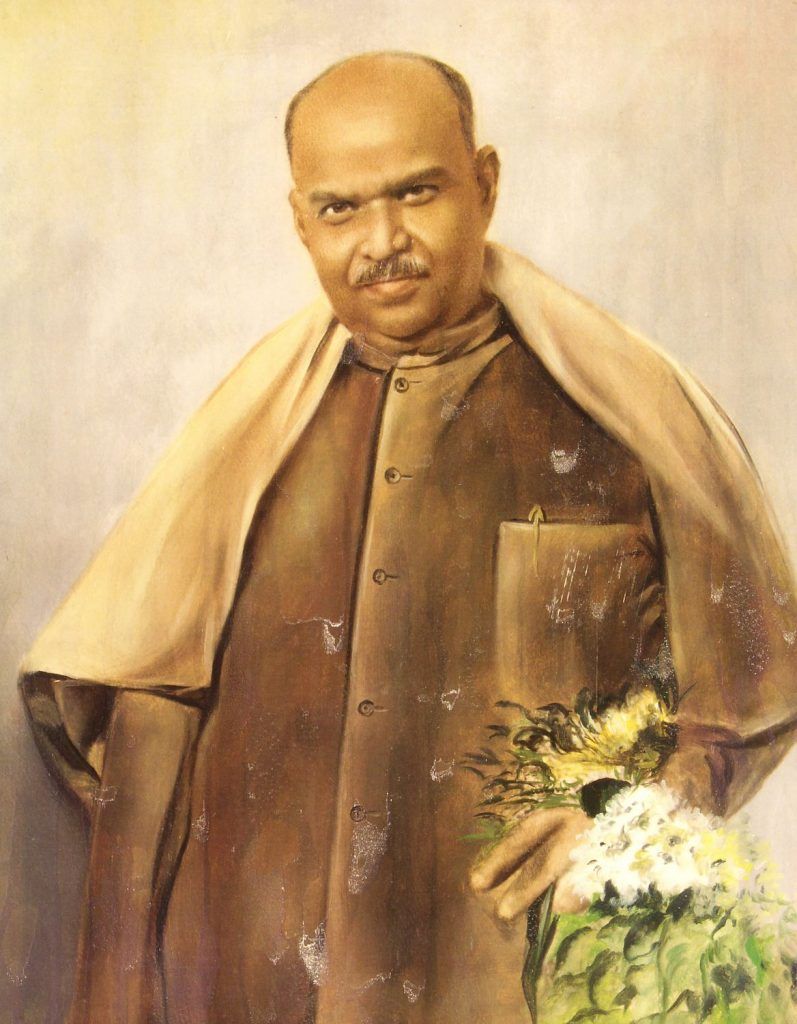
6 July 2026 marks the 125th birth anniversary of Syama Prasad Mookerjee (b. 6 July 1901), founder of the Bharatiya Jana Sangh, prompting tributes including an op-ed by Prime Minister Narendra Modi describing him as embodying nationalism, public service and commitment to India’s unity.
- Born in Calcutta to Sir Ashutosh Mukherjee, a prominent educationist and jurist; Syama Prasad became the youngest Vice-Chancellor of the University of Calcutta, serving from 1934, and introduced a number of academic reforms during his tenure.
- He served as independent India’s first Minister for Industry and Supply in Jawaharlal Nehru’s cabinet (1947–1950), overseeing early industrialisation projects including the Damodar Valley Corporation and the Sindri Fertilizer Plant — India’s first large-scale fertiliser plant — while also emphasising traditional sectors such as handlooms, cottage industries and artisanal textiles.
- He resigned from the Nehru cabinet in 1950, and in 1951 founded the Bharatiya Jana Sangh, positioning it as an alternative political voice at a time of Congress dominance; the Jana Sangh is regarded as an ideological forerunner of the present-day Bharatiya Janata Party.
- He was a vocal opponent of the special constitutional provisions for Jammu & Kashmir under Article 370, and campaigned for the state’s fuller integration with the Indian Union.
- He died in 1953 while in detention in Srinagar, having entered Jammu & Kashmir without the then-mandatory permit to protest the state’s special status — a death that remains a significant and debated episode in his political legacy.
- Modern Indian history: role in early post-Independence politics and the origins of Hindu nationalist political organisation in India.
- Industrial policy history: his tenure as Industry Minister is a reference point for India’s early public-sector-led industrialisation strategy under the mixed-economy model.
- Polity linkage: his opposition to Article 370 connects to a recurring GS2 theme on the historical debate over Jammu & Kashmir’s constitutional status, which was later altered by the reorganisation of the state in 2019.
- Born 6 July 1901, Calcutta; son of Sir Ashutosh Mukherjee; died 1953 in detention in Srinagar.
- Youngest Vice-Chancellor of the University of Calcutta (from 1934).
- India’s first Minister for Industry and Supply (1947–1950); associated with the Damodar Valley Corporation and the Sindri Fertilizer Plant.
- Founded the Bharatiya Jana Sangh in 1951; opposed Article 370.
- Flag: characterisations of his political legacy (e.g., relative to later constitutional amendments) vary by source and are presented here only as attributed tribute content, not as settled historical consensus.
Assess the contribution of Syama Prasad Mookerjee to India’s early industrial policy and political history, with reference to his tenure as Minister for Industry and Supply and the founding of the Bharatiya Jana Sangh.
With reference to Syama Prasad Mookerjee, consider the following statements:
1. He served as the first Minister for Industry and Supply in independent India.
2. He founded the Bharatiya Jana Sangh in 1951.
3. He supported the special constitutional status granted to Jammu & Kashmir under Article 370.
Which of the statements given above is/are correct?
A study published in Scientific Reports has attributed a significant decline in bovine milk production — especially among buffaloes — in the trans-Gangetic plains of northwestern India, particularly Haryana, to climate change-induced heat stress.
- India is the world’s largest milk producer; the study analysed livestock across 1,148 villages in Haryana (2004–2019), covering 4.66 million cross-bred cattle, 2.86 million indigenous cattle and 35.56 million buffaloes.
- Key climatic variables assessed: minimum/maximum/mean temperature, heavy rainfall, the Temperature-Humidity Index (THI), and potential evapotranspiration.
- Temperatures above 38°C combined with humidity above 70% during July-August “significantly reduce milk production”; winter temperatures had negligible effect.
- Each unit rise in potential evapotranspiration reduces milk yield by around 1.4 litres per buffalo per day; buffaloes are especially vulnerable due to their dark hue, bare skin and fewer sweat glands.
- Cross-bred cattle show significant productivity decline during heatwaves; indigenous breeds such as Sahiwal and Hariana are comparatively heat-tolerant due to loose skin, efficient sweating and lower metabolic heat production.
- Estimated national loss: 3.2 million tonnes of milk (worth ₹2,661 crore), projected to rise to 15 million tonnes by the 2050s; a separate Lancet estimate projects a 25% decline in Indian milk production by 2085 due to climate-driven temperature rise.
- Heat stress triggers panting, sweating and reduced feed intake, raising cortisol levels that impair milk ejection and, in severe cases, cause mortality.
- Beyond direct physiological impact, rising temperatures reduce fodder availability, worsen water scarcity, and increase pest/disease attacks — compounding risk for India’s 80 million smallholder dairy farmers, who contribute 85% of national milk production.
- Haryana farmers have already adopted adaptive practices — wallowing ponds for buffalo, agroforestry, sheds, sprinklers/foggers/mist systems and adjusted feeding schedules during summer.
- The study recommends integrating THI and evapotranspiration data into regional early-warning systems, and prioritising thermo-tolerant breeding programmes leveraging Bos indicus (indigenous) traits.
- The National Bureau of Animal Genetic Resources (NBAGR) has already identified heat-tolerance traits (heat shock proteins, coat colour, hair characteristics) in indigenous cattle for use in breeding programmes.
- Temperature-Humidity Index (THI) = a composite measure combining temperature and humidity to assess heat stress risk in livestock.
- Bos indicus (zebu/indigenous cattle, e.g. Sahiwal, Hariana) vs Bos taurus (typically cross-bred/exotic) — indigenous breeds show greater heat tolerance.
- NBAGR = National Bureau of Animal Genetic Resources; identifies and catalogues livestock genetic traits, including heat-tolerance markers.
- India’s smallholder dairy farmers: ~80 million, contributing 85% of national milk production.
Examine the impact of climate change-induced heat stress on India’s dairy sector. Suggest measures for building climate resilience in India’s livestock economy, with particular reference to smallholder farmers.
With reference to the recent Scientific Reports study on Haryana’s dairy sector, which of the following statements is correct?
Correct Answer: (c)An opinion column argues that a “trinity” of artificial intelligence, military autonomy and algorithmic warfare is redefining combat, citing Ukraine’s AI-enabled battlefield platform, the February 2026 US-Israel strikes on Iran, and the January 2026 US operation that captured former Venezuelan president Nicolás Maduro, and calls on India to build sovereign AI-military capabilities.
- Delta = Ukraine’s AI-enabled battlefield management platform that fuses radar, imagery and other data into a single stream to compress detection-to-engagement times.
- YFQ-44A Fury = an AI-powered autonomous fighter aircraft developed by U.S. defence-tech firm Anduril under the Collaborative Combat Aircraft programme; began flight testing in October 2025.
- Media reports (Wall Street Journal, Axios, Fox News) stated that Anthropic’s Claude was used, via a partnership with Palantir, in aspects of the U.S. operation that captured Nicolás Maduro in January 2026; this has been reported by multiple outlets citing anonymous sources but has not been confirmed by Anthropic, which stated it does not comment on specific operations.
- Separately, on 28 February 2026, US-Israeli strikes killed a large share of Iran’s senior political and military leadership, including Supreme Leader Ali Khamenei — a confirmed real-world event cited in the column as an example of AI-assisted “decapitation” targeting.
- Policy recommendations in the column include: a sovereign AI data-analytics platform; software for autonomous drone-swarm coordination; a target of 5 million drones by 2028; counter-drone laser/microwave systems; and greater use of low-Earth orbit (LEO) satellites for persistent surveillance.
An international team of researchers, publishing in Communications Biology, has revalidated the Himalayan pangolin (Manis aurita) as a distinct extant species, separate from the Chinese pangolin (Manis pentadactyla) of which it was long treated as a subspecies.
- Pangolins are among the world’s most heavily trafficked mammals; all eight previously recognised pangolin species are listed under CITES Appendix I, prohibiting international commercial trade.
- Historically, three subspecies of M. pentadactyla were recognised: the nominate M. p. pentadactyla (Taiwan), M. p. pusilla (Hainan Island), and M. p. aurita (central Nepal) — described in 1836 but taxonomically understudied compared to the other two.
- Researchers sequenced the original 1836 lectotype specimen and compared it with modern genomic and morphological data to reach the revalidation.
- The ancestral lineages of M. aurita and M. pentadactyla diverged around 1.8 million years ago in the early Pleistocene, when climatic cooling separated a western Himalayan refugium from an eastern China/Southeast Asia refugium.
- M. aurita is physically distinct: larger body and skull (average 95.2 cm vs 71.2 cm for the Chinese pangolin), but with markedly smaller ears and a shorter, broader nasal bone.
- The species underwent a further demographic contraction around the 14th century, coinciding with the onset of the Little Ice Age in the Himalayan region.
- Its distribution is restricted to the southern Himalayan foothills — confirmed in Nepal, South Tibet and Northeast India (including Assam) — with the Brahmaputra drainage and Arakan Mountains acting as long-term evolutionary barriers isolating it from the Chinese pangolin.
- Researchers found evidence that products from M. aurita have infiltrated regulated traditional medicine markets, indicating that illegally sourced material is being laundered through formal supply chains.
- Beyond poaching, populations around the Kathmandu Valley show “exceptionally high” inbreeding levels, suggesting possible inbreeding depression, even though the species overall has lower inbreeding than the Chinese pangolin.
The study calls for timely coordination between taxonomic updates and regulatory instruments — specifically, incorporating Manis aurita into standard nomenclatural references used by CITES and explicitly listing it under CITES Appendix I, since its new species status currently leaves an enforcement gap for a taxon otherwise identical in vulnerability to already-listed pangolins.
- Manis aurita (Himalayan pangolin) is now a distinct species, separate from Manis pentadactyla (Chinese pangolin); found in Nepal, South Tibet and Northeast India (Assam).
- All pangolin species are listed under CITES Appendix I; M. aurita’s new species status requires a fresh, explicit CITES listing.
- Divergence driven by early Pleistocene climatic cooling (~1.8 million years ago); further population contraction during the 14th-century Little Ice Age.
- Geographic isolating barriers: Brahmaputra drainage and Arakan Mountains.
- Pangolins are highly olfactory-reliant mammals (enlarged olfactory bulb) used to forage for ants and termites.
Discuss the significance of taxonomic revalidation of endangered species, such as the recently recognised Himalayan pangolin, for wildlife conservation and international trade regulation under CITES.
Assertion (A): The Himalayan pangolin (Manis aurita) has recently been revalidated as a species distinct from the Chinese pangolin.
Reason (R): Genomic and morphological analysis showed the two lineages diverged only after the onset of the 14th-century Little Ice Age.
Which one of the following is correct?


