The Hindu — UPSC Analysis
Monday, 23 November 2026
Delhi City Edition · Vol. 16, No. 276 · Curated for Prelims & Mains | GS I · II · III · IV
📋 Today's Topics
- COP31 in Antalya ends without consensus on fossil fuelsGS3 · GS2
- Paper tiger: the Green India Mission's shortfallGS3
- Core accountability: why oil and gas output keeps fallingGS3
- Domesticating international criminal law in IndiaGS2 · GS4
- India-France: over 60 years of space partnershipGS2 · GS3
- Nepal PM Balendra Shah's first official visit to IndiaGS2
- India-China Corps Commander talks on the eastern LACGS2 · GS3
- Vibrant Villages and reverse migration in ArunachalGS3 · GS2
- CAQM report card: Delhi ahead on monitoring, behind on landfillsGS3
- SCO forum adopts a charter on cultural diversityGS2 · GS1
- Quick Prelims Revision (MCQ Bank)Prelims
- FAQsRevision
COP31 in Antalya ends without consensus on fossil fuels
Context
COP31 in Antalya, Türkiye, ended without a consensus decision after running a record 48 hours into overtime. Over 130 parties rejected a cover text that did not explicitly mention moving away from fossil fuels.
Background & Key Facts
- The split: The EU led the objections, backed by about 130 countries. India, China and Saudi Arabia supported the text.
- India's position: Environment Minister Bhupender Yadav said climate ambition must go hand in hand with the means of implementation, meaning finance and technology.
- Panama's objection: The text repeated old commitments, leaned too heavily on carbon capture (CCUS) and weakened earlier language.
- Overshoot: This was the first COP since the UN confirmed warming is set to overshoot 1.5°C.
- Outcome: COP31 President Murat Kurum said he would not advance a new text.
Critical Analysis
Equity vs ambition: Developing countries argue that phase-out demands without finance are unfair. Vulnerable states and the EU argue the science demands urgency.
India's dilemma: India's rising energy demand and reliance on coal shape its stance, but it is also highly vulnerable to climate impacts.
Process fatigue: Consensus rules let deep divisions block any agreed outcome.
Way Forward
- Link transition timelines to finance delivered under the NCQG.
- Push just-transition partnerships for coal-dependent economies.
- Strengthen India's NDCs while seeking technology transfer.
Exam Relevance
"Climate ambition must go hand in hand with means of implementation." Examine India's position at COP31 in the light of climate justice. (GS3, 15 marks, 250 words)
The principle of "Common But Differentiated Responsibilities and Respective Capabilities" (CBDR-RC) originates from:
(a) Kyoto Protocol, 1997 (b) UNFCCC, 1992 (c) Paris Agreement, 2015 (d) Montreal Protocol, 1987
Paper tiger: the Green India Mission's shortfall
Context
After a CAG report, Parliament's Public Accounts Committee criticised the Environment Ministry for the Green India Mission's (GIM) "virtual failure", and for not yet issuing guidelines for the revised Mission. The editorial "Paper tiger" argues the Mission was built on funds the Ministry did not control.
Background & Key Facts
- Origin: Announced in 2008 as one of the NAPCC missions, and approved by the Cabinet in 2014.
- Original vision: Increase forest and tree cover by 5 mha, improve another 5 mha, and support livelihoods for 3 million households.
- 2014 design: ₹13,000 crore, of which 81.5% was to come from CAMPA, NAP and MGNREGS funds that never materialised.
- Shortfall: Forest quality and forest cover targets fell short by 91.8% and 97.5% respectively.
- 2025 revision: ₹12,190 crore for 25 mha by 2030, of which only 1 mha is the Mission's own responsibility.
Critical Analysis
Borrowed funds: Schemes that depend on other schemes' money compete with those schemes' own obligations.
Recurring pattern: The editorial cites the Jal Shakti Abhiyan and the Dharti Aaba Janjatiya Gram Utkarsh Abhiyan as similar cases.
Accountability: The PAC's demand for a timetable is needed, but the editorial says it is not enough without dedicated funding.
Way Forward
- Give the Mission a dedicated budget and clear division of responsibilities.
- Issue implementation guidelines promptly.
- Monitor outcomes independently, through forest surveys and remote sensing.
Exam Relevance
"Ambitious climate missions often fail due to dependence on borrowed funds." Discuss with reference to the Green India Mission. (GS3, 10 marks, 150 words)
The Public Accounts Committee of Parliament is chaired, by convention, by a member of:
(a) The ruling party (b) The Rajya Sabha (c) The Opposition (d) The CAG's office
Core accountability: why oil and gas output keeps falling
Context
The editorial "Core accountability" says October's record 10.9% core sector growth came mostly from a low base. It argues that the falling output of crude oil and natural gas needs an explanation from the Petroleum Ministry.
Background & Key Facts
- Base effect: The core index grew only 0.8% in October 2025. Coal and electricity had contracted that month.
- Genuine growth: Infrastructure-linked sectors grew strongly. The editorial gives iron ore growth as 26.4%, while Saturday's news report gave 23.4%. Cement grew 15.4%.
- Crude oil: It shrank 4.1%, its 22nd consecutive month of contraction.
- Natural gas: It contracted 7.6%, its worst in the series and 28th straight month of decline.
Critical Analysis
Inflation link: Weak domestic oil and gas output increases dependence on imported fuel and feeds inflation.
Two possible causes: The editorial says the decline could reflect depleting reserves or poor performance by public sector oil companies, and wants clarity on which.
Growth model: Dependence on government infrastructure spending may grow as costs squeeze corporate margins.
Way Forward
- Have the Petroleum Ministry explain the decline to Parliament.
- Speed up exploration under HELP and the Open Acreage Licensing Policy (OALP).
- Use enhanced oil recovery in ageing fields.
Exam Relevance
Why has India's domestic crude oil and natural gas production been declining? Suggest measures to reverse the trend. (GS3, 10 marks, 150 words)
The Hydrocarbon Exploration and Licensing Policy (HELP) replaced which earlier regime?
(a) Production Linked Incentive (b) Coal Bed Methane Policy (c) City Gas Distribution Policy (d) New Exploration Licensing Policy (NELP)
Domesticating international criminal law in India
Context
After Judge Navi Pillay was named the 2026 Nobel Peace Prize laureate, international lawyer Rohit Gupta argues that India must write genocide, crimes against humanity and war crimes into its domestic law.
Background & Key Facts
- Treaties: India has ratified the 1948 Genocide Convention and the 1949 Geneva Conventions.
- Gap: Neither "genocide" nor "crimes against humanity" exists in Indian criminal law. The author cites Justice S. Muralidhar's observation in State vs Sajjan Kumar (2018).
- War crimes: Of 24 humanitarian law conventions India has ratified, only three have implementing laws. The Geneva Conventions Act, 1960 covers only grave breaches in international conflicts.
- Prosecution bar: Only the Centre can start prosecutions under the 1960 Act. The author says it has produced no prosecutions in 66 years.
- Fair labelling: Charging such acts as ordinary murder or hurt fails to reflect how serious they are.
Critical Analysis
The author's argument: Accountability is not an "internal affair". Rejecting the ICC should not mean rejecting the law itself.
Contested claim: The author argues some internal conflicts, such as with the CPI (Maoist), may have crossed the threshold of armed conflict. The government's long-standing position is that India faces only internal disturbances.
Sovereignty concerns: The state worries that such frameworks could be misused against security forces and to internationalise internal matters.
Way Forward
- Consider a comprehensive law on atrocity crimes.
- Strengthen training in humanitarian law and accountability in the armed forces.
- Review the bar on private prosecution under the Geneva Conventions Act.
Exam Relevance
Should India incorporate international crimes such as genocide and crimes against humanity into its domestic law? Discuss. (GS2, 15 marks, 250 words)
Which international criminal justice landmark is associated with Courtroom 600?
(a) Nuremberg trials (b) Tokyo trials (c) ICTY, The Hague (d) ICTR, Arusha
India-France: over 60 years of space partnership
Context
French Ambassador Thierry Mathou writes that the India-France space partnership, from Thumba to Kourou, is entering a phase of joint missions and industrial collaboration.
Background & Key Facts
- Beginnings: Cooperation began in 1964. Centaure sounding rockets helped India master solid propulsion, leading to the Rohini rockets.
- Launches: Ariane has launched over 20 Indian communication satellites, and PSLV has launched French SPOT satellites.
- Joint missions: Megha-Tropiques (2011) for climate studies and SARAL-AltiKa (2013) for oceanography.
- TRISHNA: A thermal infrared Earth-observation mission. CNES provides the thermal instrument, and ISRO provides the platform and optical sensor.
- Indian ecosystem: Over 400 space start-ups. India's first privately developed orbital launch vehicle reached orbit in July 2026.
Critical Analysis
Shared strategic autonomy: Both countries build their own capabilities while remaining reliable partners.
From institutions to industry: "Make in India, together with France" aims at joint production.
Space governance: Debris and the protection of critical space infrastructure are common concerns.
Way Forward
- Launch TRISHNA and share its data for water management.
- Build joint ventures between Indian and French space companies.
- Coordinate on space traffic management and norms.
Exam Relevance
Discuss how India-France space cooperation has evolved and its importance for India's space ambitions. (GS3, 10 marks, 150 words)
The India-France TRISHNA mission is mainly intended for:
(a) Lunar exploration (b) Thermal infrared observation of the Earth's surface (c) Satellite navigation (d) Solar studies
Nepal PM Balendra Shah's first official visit to India
Context
Nepal's Prime Minister Balendra Shah arrived in New Delhi on his first official visit to India, with talks with PM Modi expected to set the "political direction" of relations.
Background & Key Facts
- Agenda: Development partnership, energy and hydropower.
- Projects: The leaders are expected to inaugurate several projects, including the Dharchula Bridge and a train link between Janakpur and Gorakhpur.
- Treaty framework: The 1950 Treaty of Peace and Friendship allows open borders, which is general background.
Critical Analysis
Connectivity and energy: Cross-border rail and hydropower trade bind the two economies more closely.
Irritants: Past disputes over boundary maps and the treaty need careful handling.
China factor: Nepal balances its ties with India and China.
Way Forward
- Speed up hydropower and transmission projects.
- Resolve boundary questions through dialogue.
- Expand people-to-people and cultural links.
Exam Relevance
"India-Nepal relations are rooted in geography and culture but tested by politics." Discuss. (GS2, 10 marks, 150 words)
The India-Nepal Treaty of Peace and Friendship was signed in:
(a) 1947 (b) 1962 (c) 1950 (d) 1972
India-China Corps Commander talks on the eastern LAC
Context
India and China concluded a second round of Corps Commander-level talks on easing tensions along the LAC in Arunachal Pradesh before winter.
Background & Key Facts
- Duration: The talks began on November 8 and ran for nearly 10 days. They were described as cordial.
- Delegation: Lt. Gen. Girish Kalia, GOC of III Corps (Spear Corps, headquartered at Rangapahar), led the Indian side. An MEA official was also present.
- Focus: Engagement protocols, preventing face-offs and keeping communication channels open.
- Earlier round: The first round was on September 6-7.
Critical Analysis
Winter risk: Severe conditions complicate logistics and raise the risk of friction.
Implementation unclear: It is uncertain whether the measures will be in place before winter.
Broader thaw: The talks fit wider efforts to stabilise ties after Galwan.
Way Forward
- Set up hotlines and patrolling protocols.
- Keep infrastructure and readiness strong on India's side.
- Move towards clarifying the LAC through the WMCC and Special Representatives talks.
Exam Relevance
Discuss the mechanisms for managing the India-China border and their effectiveness in preventing conflict. (GS2, 10 marks, 150 words)
The LAC in Arunachal Pradesh falls in which sector of the India-China boundary?
(a) Western (b) Middle (c) Northern (d) Eastern
Vibrant Villages and reverse migration in Arunachal
Context
Home Minister Amit Shah said development of border villages in Arunachal Pradesh under the Vibrant Villages Programme (VVP) is bringing people back. He launched initiatives worth more than ₹5,610 crore.
Background & Key Facts
- Framing: Border villages are called the country's "first villages", not its last.
- Services: The programme provides health care, electricity, education and drinking water.
- Local economy: The Army and ITBP buy produce grown locally.
- NDRF: He inaugurated the 12th battalion campus at Hollongi and stressed a "zero-casualty" approach to disasters.
- Problem: Lack of jobs had driven migration from villages near the Bhutan, China and Myanmar borders.
Critical Analysis
Security link: Populated border villages act as a first line of defence.
Sustainability: Jobs and connectivity will decide whether people stay.
Ecology and culture: Development must respect fragile Himalayan ecosystems and tribal customs.
Way Forward
- Promote tourism, local crafts and agriculture value chains.
- Improve road, telecom and digital links.
- Monitor outcomes through regular migration data.
Exam Relevance
How does development of border villages contribute to national security? Evaluate the Vibrant Villages Programme. (GS3, 10 marks, 150 words)
The Indo-Tibetan Border Police (ITBP) works under the:
(a) Ministry of Home Affairs (b) Ministry of Defence (c) Ministry of External Affairs (d) Cabinet Secretariat
CAQM report card: Delhi ahead on monitoring, behind on landfills
Context
The Commission for Air Quality Management (CAQM) assessed Delhi and neighbouring States against this year's action plan targets, using data up to October 31.
Background & Key Facts
- Targets met: 19 continuous monitoring stations installed, and 1,609 industrial inspections against a target of 979. EV charging targets were also met.
- Landfills: Okhla is 67% cleared, Bhalswa 57% and Ghazipur 42%. 52.7 lakh tonnes of legacy waste remain.
- Buses: 1,703 added against a target of 2,395, or 71%.
- Parking: Only 15 of 266 parking lots completed. Delhi also lags on green crematoria and mechanical road sweepers.
Critical Analysis
Easy vs hard: Inspections and monitoring are easier than structural fixes such as landfill clearance and transport.
Landfill fires: Legacy waste adds to emissions and to health risks.
Ranking States: Publishing targets and results improves accountability.
Way Forward
- Speed up biomining with dedicated funds.
- Expand public transport and parking management.
- Link CAQM targets to measured improvements in air quality.
Exam Relevance
Evaluate the role of the Commission for Air Quality Management in tackling air pollution in the NCR. (GS3, 10 marks, 150 words)
The Commission for Air Quality Management in NCR and Adjoining Areas was set up under an Act of:
(a) 2019 (b) 2015 (c) 2023 (d) 2021
SCO forum adopts a charter on cultural diversity
Context
The first SCO Civilisational Dialogue Forum in New Delhi concluded by adopting a charter affirming cultural diversity.
Background & Key Facts
- Venue: Purana Qila, New Delhi, from November 20 to 22.
- Participation: SCO culture ministers and dialogue partners, with Pakistan attending for the first time since May 2025.
- India's proposal: Digitising and translating ancient texts across SCO countries.
Critical Analysis
Soft power: The forum gives India a flagship initiative within the SCO.
Pluralism: Affirming diversity supports India's case for an inclusive idea of civilisation.
Limits: Charters matter only if followed by concrete cultural programmes.
Way Forward
- Set up joint digitisation and translation projects.
- Expand heritage tourism circuits with Central Asia.
- Hold the forum regularly.
Exam Relevance
Assess India's role and interests in the Shanghai Cooperation Organisation. (GS2, 10 marks, 150 words)
India became a full member of the SCO in:
(a) 2017 (b) 2001 (c) 2005 (d) 2023
Quick Prelims Revision (MCQ Bank)
Q1. The FSSAI declared a packaged drinking water sample unsafe because it exceeded the limit for:
(a) Arsenic (b) Bromate
(c) Fluoride (d) Lead
Answer: (b) — The sample did not meet the prescribed bromate limits under the FSS Act, 2006. Bromate can form when water is disinfected with ozone.
Q2. Judge Navi Pillay, named the 2026 Nobel Peace Prize laureate, is from:
(a) Kenya (b) India
(c) South Africa (d) Malaysia
Answer: (c) — Navanethem Pillay is a South African jurist and former UN High Commissioner for Human Rights. This is general knowledge; the paper does not state her nationality.
Q3. Kourou, mentioned in India-France space cooperation, is the site of:
(a) Guiana Space Centre (b) CNES headquarters
(c) An ESA tracking station in Africa (d) A French naval base
Answer: (a) — The Guiana Space Centre in French Guiana launches Ariane rockets, including many Indian satellites.
Q4. The Thumba Equatorial Rocket Launching Station is located in:
(a) Andhra Pradesh (b) Odisha
(c) Tamil Nadu (d) Keralam
Answer: (d) — Thumba, near Thiruvananthapuram, launched India's first sounding rocket in 1963. It lies close to the magnetic equator.
Q5. Among Delhi's three landfills, which had the lowest share of legacy waste cleared, according to the CAQM report?
(a) Okhla (b) Ghazipur
(c) Bhalswa (d) Narela-Bawana
Answer: (b) — Ghazipur cleared only 42%, about 16.53 lakh tonnes against a target of 39.12 lakh tonnes.
Q6. The Army's III Corps, which led the Indian delegation in the LAC talks, is also known as:
(a) Fire and Fury Corps (b) Trishakti Corps
(c) Spear Corps (d) Gajraj Corps
Answer: (c) — III Corps (Spear Corps) is headquartered at Rangapahar near Dimapur, Nagaland.
Q7. Under the Geneva Conventions Act, 1960, who can initiate prosecutions?
(a) Any aggrieved person (b) State governments
(c) The NHRC (d) Only the Central government
Answer: (d) — The Act bars prosecutions not initiated by the Centre, as noted in Rev. Monteiro vs Goa (1969).
Q8. Which Indo-French satellite was launched in 2013 for ocean studies?
(a) SARAL-AltiKa (b) Megha-Tropiques
(c) Oceansat-3 (d) TRISHNA
Answer: (a) — SARAL-AltiKa (2013) measures sea surface height. Megha-Tropiques (2011) studies the water cycle in the tropical atmosphere.
Frequently Asked Questions
Why did COP31 fail to reach a consensus?
About 130 parties, led by the EU, rejected a cover text that did not explicitly mention moving away from fossil fuels. India, China and Saudi Arabia supported the text, with India stressing that ambition must be matched by finance and technology.
Why did the Green India Mission fall short?
Most of its funding was to come from CAMPA, NAP and MGNREGS, which never materialised. Targets for forest quality and cover were missed by over 90%.
What does the editorial ask of the Petroleum Ministry?
To explain why crude oil and natural gas output has fallen for 22 and 28 straight months respectively, and whether the cause is depleting reserves or poor performance by public sector companies.
What gap in Indian law does the international criminal law op-ed identify?
Indian law has no offences called genocide or crimes against humanity. War crimes are covered only partly by the Geneva Conventions Act, 1960, and only the Central government can start prosecutions.
What is the Vibrant Villages Programme?
It is a central programme to develop villages along the northern border with infrastructure, services and livelihoods. The Home Minister says it is bringing people back to these villages in Arunachal Pradesh.
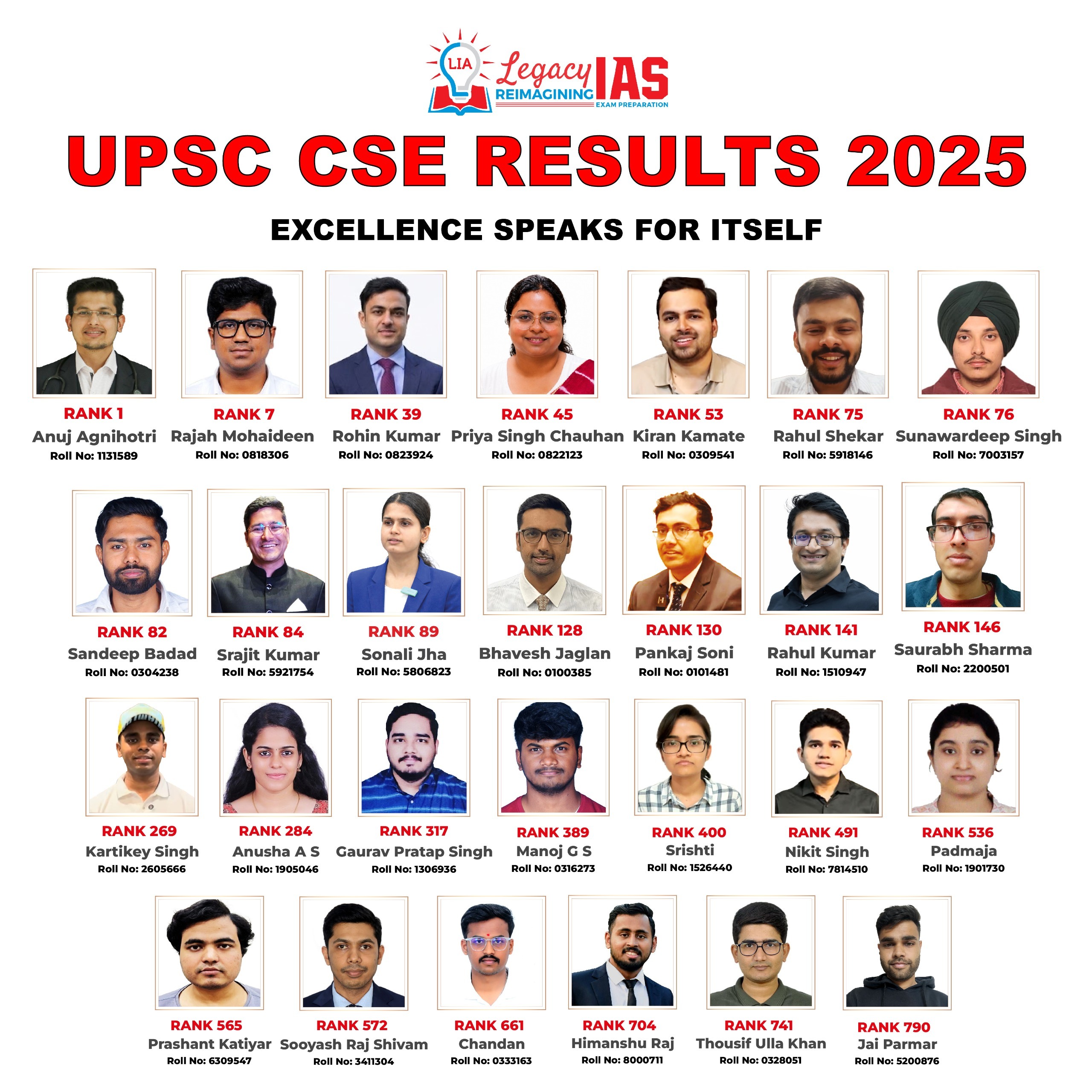
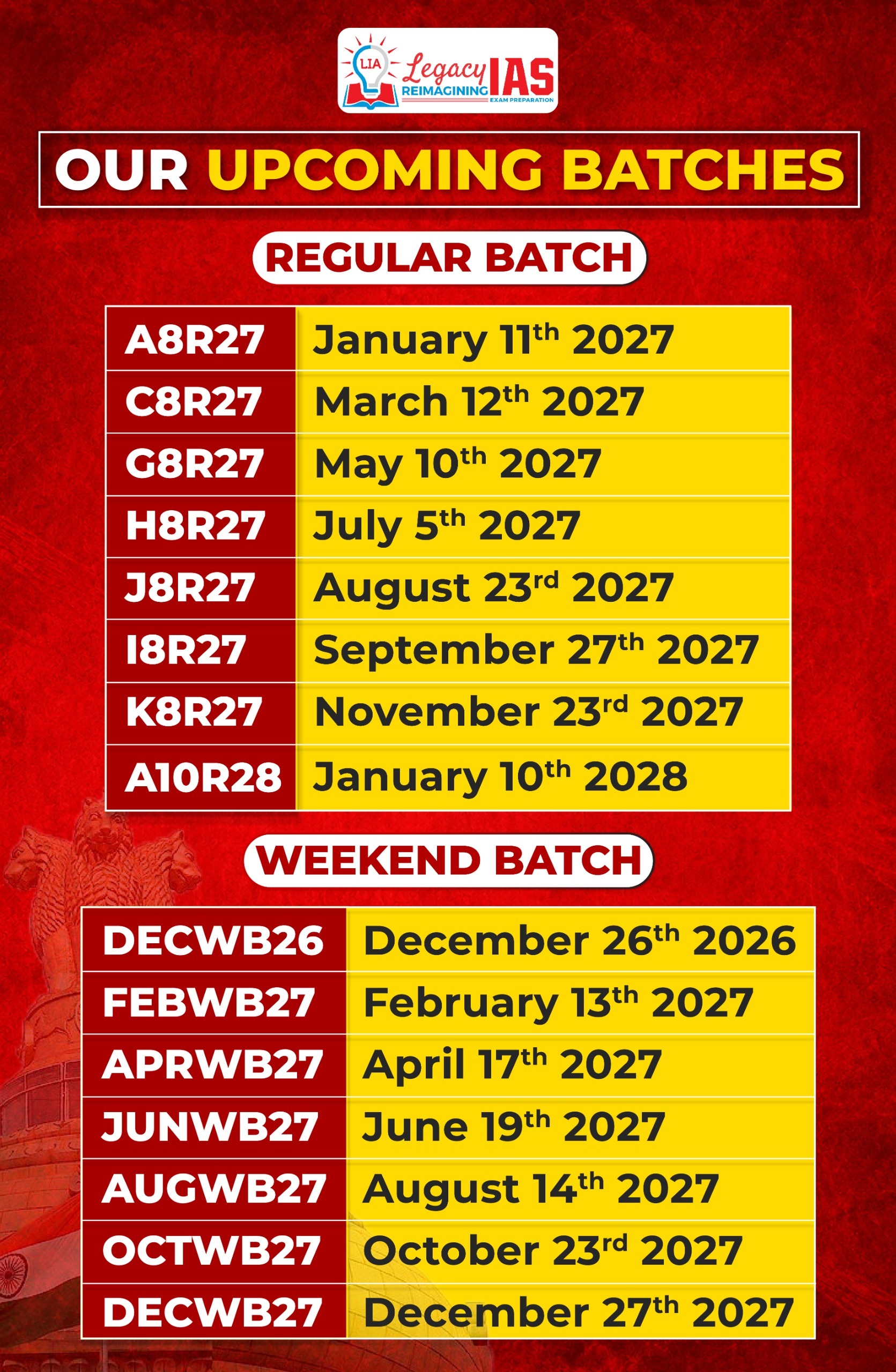
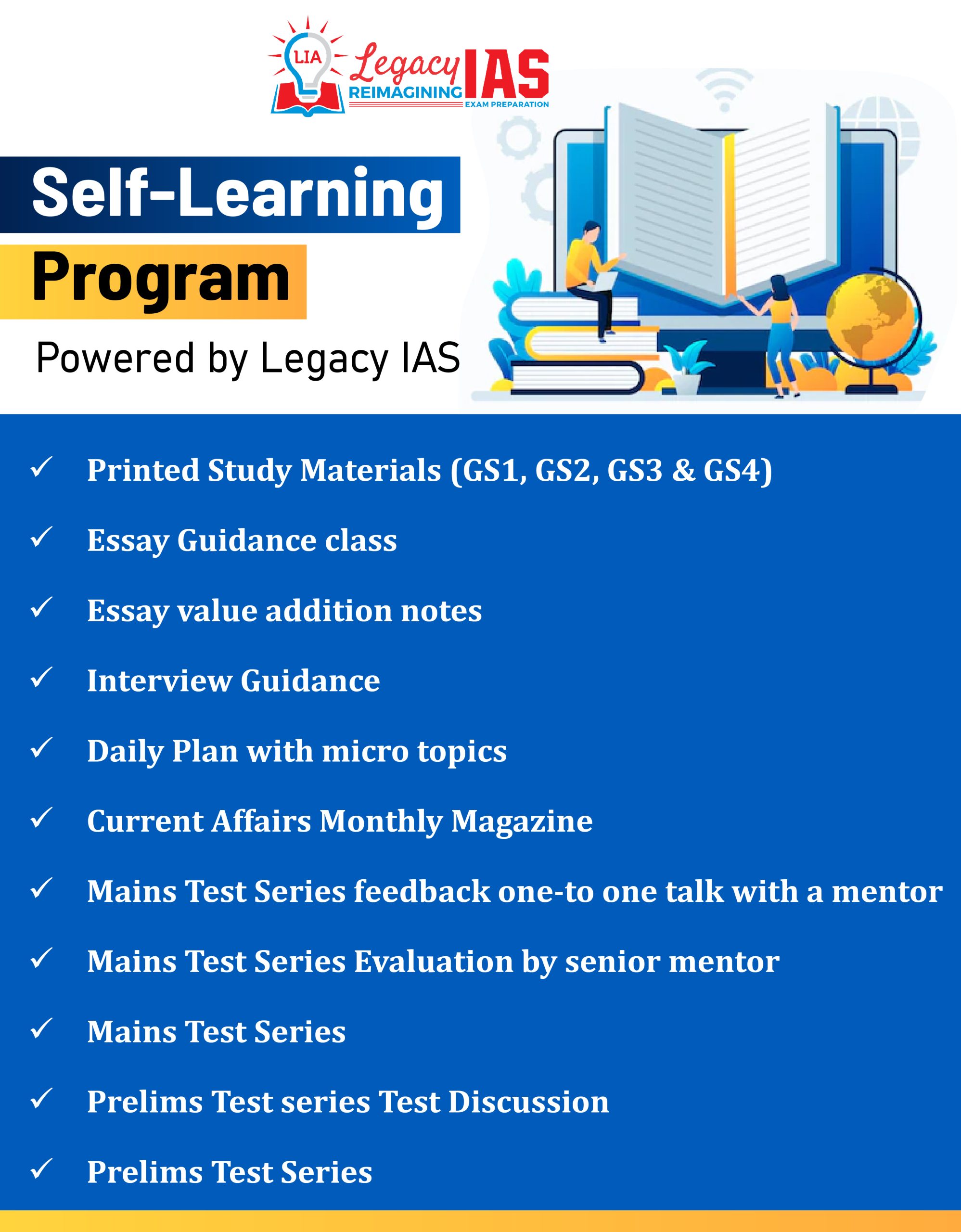
Serious about cracking UPSC CSE?
Join Legacy IAS Academy's structured Prelims + Mains programs, or get personalised mentorship from experienced faculty and toppers.
Legacy IAS Academy — Bengaluru
#1, 2nd Floor, KHB Colony, 5th Block, Koramangala, Bengaluru, Karnataka
Source: The Hindu, Delhi City Edition, 23 November 2026. Static background and frameworks have been added for exam preparation. Original article text has been paraphrased, not reproduced; this analysis is prepared independently for UPSC Civil Services exam preparation.