Why in News?
- Bhairav Battalions will debut in the Army Day Parade (15 January, Jaipur).
- Two units participating:
- 2 Bhairav Battalion (Southern Command) – “Desert Falcons”.
- 4 Bhairav Battalion (South Western Command).
- Marks India Army’s visible shift towards modern, technology-driven warfare.
Relevance
GS III – Internal Security
- Modernisation of armed forces.
- Emerging warfare domains (drones, hybrid warfare).
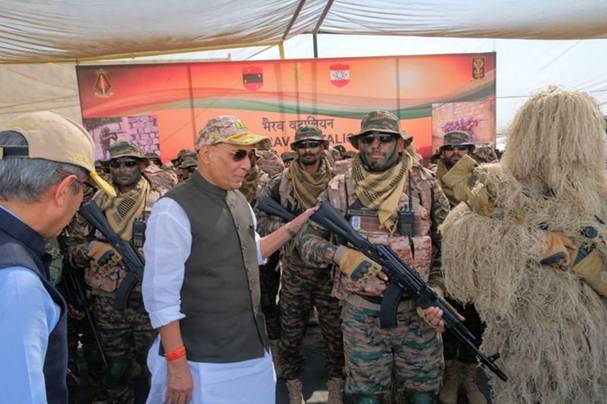
Basics: What are Bhairav Battalions?
- Newly raised, high-speed offensive units of the Indian Army.
- Designed to:
- Execute Special Forces–like tasks.
- Operate from tactical to operational depth.
- Intended to bridge the gap between:
- Para Special Forces (elite, limited numbers).
- Regular infantry (large but less specialised).
Why Were Bhairav Battalions Raised?
Changing Nature of Warfare
- Modern conflicts are:
- Hybrid (conventional + irregular + cyber + drones).
- Technology-intensive.
- Lessons drawn from:
- Global conflicts (Ukraine, West Asia).
- India’s operational experience, including Operation Sindoor.
Operational Gaps Identified
- Need for:
- Faster, more lethal units than regular infantry.
- Wider availability of special-operations capability without overstretching Para SF.
Key Features of Bhairav Battalions
- High-speed offensive orientation.
- Capable of:
- Precision strikes.
- Deep penetration missions.
- Disruption of enemy bases and formations.
- Flexible employment:
- Tactical raids.
- Operational-level missions.
Technology & Drone Warfare Focus
- Integral to Army’s unmanned warfare push.
- Indian Army creating:
- Pool of over 1 lakh drone operatives.
- Bhairav units trained to:
- Operate UAVs.
- Conduct drone-based reconnaissance, targeting, and strikes.
- Reflects shift from:
- Man-centric → man–machine teaming.
Force Restructuring Context
Bhairav Battalions
- 15 battalions raised so far.
- Target: ~25 battalions in near future.
- Deployed across border formations.
Rudra Brigades (Parallel Reform)
- Integrated all-arms formations.
- Combine:
- Infantry.
- Mechanised units.
- Tanks.
- Artillery.
- Special Forces.
- Unmanned systems.
- Dedicated logistics and combat support.
- Aim:
- Faster mobilisation.
- Higher lethality.
- Integrated battlefield response.
Place in India’s Military Doctrine
- Aligns with:
- Theatre-level readiness.
- Integrated Battle Groups (IBGs) concept.
- Enhances:
- Offensive deterrence.
- Rapid response along borders.
- Reduces dependence on:
- Limited Para SF units for routine special operations.
Strategic Significance
- Signals:
- Transition to next-generation land warfare.
- Improves India’s:
- Offensive capability without escalation dominance.
- Ability to respond swiftly in grey-zone conflicts.
- Supports:
- Credible deterrence against both western and northern adversaries.
Challenges & Cautions
- High training and technology costs.
- Command and control integration with:
- Infantry.
- Special Forces.
- Air and drone assets.
- Avoiding dilution of Para SF’s elite role.
Takeaway
- Bhairav Battalions represent the Indian Army’s shift towards agile, technology-enabled offensive forces, bridging the gap between conventional infantry and Special Forces in an era of hybrid warfare.