
Why in News?
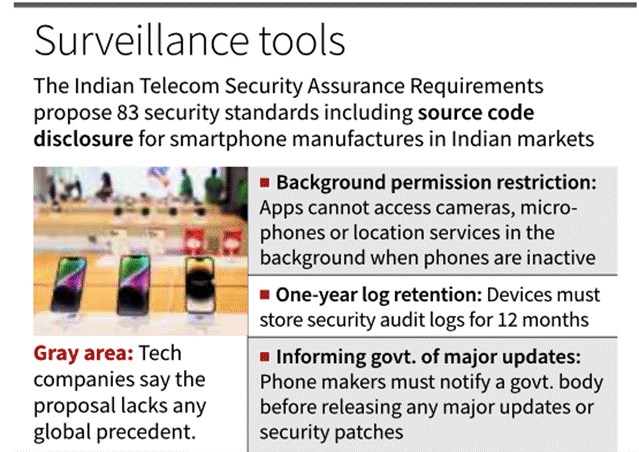
- Government is considering legally mandating security requirements for smartphones sold in India.
- Draft framework: Indian Telecom Security Assurance Requirements (ITSAR), 2023.
- Most contentious proposal:
- Access to smartphone source code for vulnerability analysis.
- Strong behind-the-scenes resistance from global manufacturers like Apple and Samsung.
- Ongoing consultations between IT Ministry and tech companies.
Relevance
GS II – Governance & Polity
- State regulation vs individual privacy.
- Role of executive rule-making.
- Digital sovereignty.
GS III – Internal Security & Science & Tech
- Cybersecurity.
- Supply-chain security.
- Technology regulation.
Basics: What is Source Code?
- Source code:
- Human-readable programming instructions that define how software functions.
- Considered:
- Core intellectual property (IP).
- Central to:
- Security architecture.
- Commercial competitiveness.
- Access risks:
- IP leakage.
- Reverse engineering.
- Loss of proprietary advantage.
What Are the Proposed Security Measures?
Under ITSAR (Drafted 2023):
1. Source Code Access
- Smartphone makers must:
- Share source code (or parts) with designated Indian testing labs.
- Purpose:
- Vulnerability analysis
- Detection of hidden backdoors or security flaws.
2. Mandatory Malware Scanning
- Automatic and periodic malware scans on devices.
- Applies even after sale to consumers.
3. Data & Activity Logs
- Smartphones must:
- Store device activity records for at least one year.
- Raises concerns on:
- User privacy.
- Surveillance architecture.
Government’s Rationale
- Smartphones now:
- Handle critical personal, financial, and strategic data.
- Rising concerns:
- Cyber espionage.
- Supply-chain vulnerabilities.
- Embedded malware or backdoors.
- India’s position:
- Large digital population.
- Increasing reliance on foreign hardware/software.
- Seen as:
- National security and cyber sovereignty measure.
Industry Concerns
- IP Protection:
- Source code disclosure risks trade secrets.
- Global Precedent:
- Fear India becoming a high-compliance market.
- Trust Deficit:
- Storage and handling of code by government labs.
- Privacy Risks:
- Mandatory logging could violate:
- Data minimisation principles.
- User consent norms.
- Mandatory logging could violate:
Legal & Policy Dimensions
Cybersecurity
- Aligns with:
- National Cyber Security Strategy (proposed).
- Moves India towards:
- Pre-market security certification for devices.
Data Protection
- Potential conflict with:
- Digital Personal Data Protection Act, 2023:
- Purpose limitation.
- Storage limitation.
- Digital Personal Data Protection Act, 2023:
- Malware scanning and logging raise:
- State vs individual privacy tension.
Trade & WTO Issues
- Possible violation of:
- TRIPS Agreement (IP protection).
- Non-tariff trade barriers.
- Risk of:
- Retaliatory measures.
Global Comparison
- China:
- Extensive source-code audits for foreign tech.
- EU / US:
- Prefer:
- Security certification.
- Independent third-party audits.
- Do not routinely demand source code access.
- Prefer:
- India’s approach:
- More state-centric and interventionist.
Strategic Implications
- Positives:
- Enhanced device-level cybersecurity.
- Reduced dependence on opaque foreign systems.
- Risks:
- Reduced investor confidence.
- Higher device costs.
- Slower tech diffusion.
- Key question:
- Can security be ensured without intrusive code access?
Takeaway
- India’s proposal to seek smartphone source code reflects a shift towards assertive digital sovereignty, raising complex trade-offs between cybersecurity, privacy, and intellectual property rights.


