Content
- Is the Supreme Court Doing Enough to Tackle Hate Speech?
- The Legality of U.S.–Israel Strikes on Iran
- Rising Metabolic Disease Burden in Asia-Pacific: India and China Leading the Trend
- Ports See 60,000 Tonne Basmati Rice Stuck Due to War; Exporters Seek Government Support
- Legal Framework Governing Maritime Conflict: Laws, Conventions and Strategic Implications
- India’s Rice Production and Export Strategy: Why It Requires a Rethink
- Shift from Standoff Missiles to Gravity Bombs: Strategic and Military Implications
- India Submits 7th Biodiversity Report — Can It Meet the 2030 Targets?
Is the Supreme Court doing enough to tackle hate speech?
Source : The Hindu
Why in News ?
- The Gauhati High Court issued a notice to Assam Chief Minister Himanta Biswa Sarma over petitions seeking criminal prosecution for alleged communal and divisive speeches.
- Petitioners initially approached the Supreme Court of India, but the Court directed them to pursue remedies before the High Court.
- The case has revived debate over whether India’s judiciary and legal framework are effectively addressing hate speech and protecting vulnerable communities.
Relevance
- GS Paper II – Polity & Governance
- Fundamental Rights: Freedom of Speech vs Reasonable Restrictions.
- Role of judiciary in protecting constitutional morality, fraternity and equality.
- Functioning of criminal justice system, Election Commission and law enforcement in regulating hate speech.
Practice Question
Q. Hate speech poses a serious challenge to India’s constitutional values of equality and fraternity. Examine the role of the judiciary and existing legal framework in addressing hate speech in India. (250 words)
What is Hate Speech?
Definition
- Hate speech refers to expressions that incite discrimination, hostility, or violence against individuals or groups based on identity markers such as religion, caste, ethnicity, gender, or nationality.
Characteristics
- Often appears as prejudicial discourse targeting marginalized communities.
- May not always involve direct incitement to violence, but can reinforce social exclusion and systemic discrimination.
Constitutional Framework Governing Speech
Freedom of Speech
- Article 19(1)(a) guarantees freedom of speech and expression.
Reasonable Restrictions
- Article 19(2) allows restrictions in the interests of:
- Public order
- Decency and morality
- Sovereignty and integrity of India
- Security of the state
- Incitement to an offence
- Hate speech regulation must balance free expression with protection of vulnerable groups.
Existing Legal Provisions Against Hate Speech
India does not have a single comprehensive hate speech law; instead, various provisions address it indirectly.
Indian Penal Code (IPC)
- Section 153A – Promoting enmity between groups on grounds of religion, race, language, etc.
- Section 295A – Deliberate acts intended to outrage religious feelings.
- Section 505(2) – Statements creating or promoting enmity between communities.
Representation of the People Act
- The Representation of the People Act 1951 prohibits candidates from promoting enmity or hatred during elections.
Information Technology Laws
- Online hate speech may be regulated through provisions of the Information Technology Act 2000.
Supreme Court’s Role in Addressing Hate Speech
Tehseen Poonawalla vs Union of India
- The Supreme Court issued guidelines to curb mob lynching and hate crimes.
- Directed states to:
- Appoint nodal officers for monitoring hate crimes.
- Take preventive and punitive measures.
2023 Directions
- The Court directed state governments to register FIRs suo motu in cases of hate speech without waiting for formal complaints.
Criticism
- Critics argue that compliance with Supreme Court directives has been weak, with many cases of hate speech going unpunished.
Challenges in Criminalising Hate Speech
- Ambiguity in Definition – Hate speech often uses indirect or coded language, making legal interpretation difficult.
- Balancing Free Speech – Overly broad laws may chill legitimate political speech and dissent.
- Power and Social Hierarchies – Hate speech often emerges within unequal power structures, where dominant groups target marginalized communities.
- Selective Enforcement – Law enforcement agencies sometimes fail to act promptly or consistently.
Institutional Failures and Governance Issues
- Weak Law Enforcement : Police frequently fail to register cases or take timely action.
- Political Incentives : Communal rhetoric may be used for electoral mobilisation, reducing political will to curb hate speech.
- Regulatory Bodies : Institutions like the Election Commission of India possess powers to regulate election campaigns but often fail to enforce penalties consistently.
Definition
- A constitutional tort arises when state failure to protect fundamental rights leads to harm.
Implication for Hate Speech
- If authorities repeatedly fail to prevent or punish hate speech, victims could claim state accountability and compensation.
Legal Basis
- Courts may award compensation for violation of fundamental rights under Articles 32 and 226.
Law Commission Recommendations
- The Law Commission of India has recommended specific criminal provisions on hate speech.
Proposed additions to IPC:
- Section 153C – Prohibiting incitement to hatred.
- Section 505A – Penalising speech causing fear, alarm, or violence against communities.
However, implementation has remained limited.
State-Level Legislative Initiatives
Karnataka Hate Speech and Hate Crimes Bill, 2025
Key objectives:
- Define hate speech and hate crimes.
- Provide stricter penalties and investigation mechanisms.
Concerns raised:
- Definitions may be overly broad.
- Focus on law-and-order consequences rather than structural discrimination.
Democratic and Social Impact of Hate Speech
- Erosion of Social Harmony: Hate speech deepens communal polarization and social distrust.
- Marginalisation of Vulnerable Communities : It reinforces existing social hierarchies and exclusion.
- Threat to Democratic Values : Hate speech undermines constitutional ideals of equality, dignity, and fraternity.
Way Forward
- Clear Legal Definitions : Develop precise statutory definitions of hate speech to reduce ambiguity.
- Strengthen Institutional Enforcement: Ensure police and election authorities act promptly and impartially.
- Judicial Monitoring : Courts could adopt continuing mandamus mechanisms to monitor compliance.
- Political Accountability : Political parties must adopt internal codes of conduct against communal rhetoric.
- Public Awareness : Promote social campaigns promoting constitutional values of tolerance and fraternity.
Important Keywords
- Hate Speech
- Freedom of Speech
- Reasonable Restrictions
- Communal Polarization
- Constitutional Tort
- Dog Whistle Politics
- Electoral Rhetoric
Prelims Pointers
- Article 19(1)(a) guarantees freedom of speech and expression.
- Article 19(2) allows reasonable restrictions including public order and incitement to offence.
- Section 153A IPC criminalises promotion of enmity between groups.
- The Tehseen Poonawalla case (2018) addressed mob lynching and hate crimes.
The legality of U.S.-Israel strikes on Iran
Source : The Hindu
Why in News ?
- Reports indicate that a missile strike hit a girls’ primary school in Minab, Iran, during coordinated U.S.–Israel military operations against Iran, reportedly killing around 150 people and injuring nearly 100, many of them children.
- The incident has been condemned by UNESCO as a potential violation of International Humanitarian Law (IHL).
- The event has reignited debate on the legality of the use of force under the UN Charter and the protection of civilians during armed conflict under IHL.
Relevance
- GS Paper II – International Relations
- International law, UN Charter, and global governance institutions.
- Legality of use of force and self-defence in international relations.
- GS Paper III – Security
- Impact of regional conflicts on global security and strategic stability.
Practice Question
Q. International Humanitarian Law aims to regulate the conduct of war and protect civilians during armed conflicts. Discuss the legal principles governing the use of force under international law in the context of recent military strikes in West Asia. (250 words)
Static Background: International Humanitarian Law (IHL)
Definition
- International Humanitarian Law (IHL), also known as the “laws of war”, regulates the conduct of armed conflict and aims to limit human suffering during war.
- It establishes rules governing how wars are fought, including restrictions on weapons, targets, and military tactics.
Historical Foundations
- Ethical norms governing warfare existed in ancient civilizations such as Greek, Roman, Indian, and Chinese traditions.
- Modern codification occurred through the Geneva Conventions, which form the foundation of contemporary humanitarian law.
Objectives
- Protect civilians, prisoners of war, wounded soldiers, and humanitarian workers.
- Restrict methods and means of warfare.
UN Charter and Legality of War (Jus ad Bellum)
Prohibition on Use of Force
- The United Nations Charter establishes rules on the legality of initiating war.
Article 2(4)
- Prohibits states from using force against the territorial integrity or political independence of another state.
UN Security Council Authorization
- Only the United Nations Security Council may authorize military action to maintain international peace and security.
Article 51 – Right to Self-Defence
- Allows states to use force only in response to an actual armed attack.
- Self-defence must satisfy conditions of necessity and proportionality.
Debate on “Anticipatory Self-Defence”
Concept
- Some states justify military action by claiming anticipatory self-defence, which allows pre-emptive strikes against an imminent threat.
Legal Controversy
- Many international law scholars argue that international law does not recognize the right to attack another state solely to prevent a hypothetical future attack.
Conditions for Justification
For anticipatory self-defence to be valid:
- The adversary must intend to launch an attack.
- The adversary must possess the capability to carry out the attack.
- The use of force must be necessary immediately to prevent that attack.
Without these conditions, the use of force may be considered unlawful under international law.
Distinction Between Jus ad Bellum and Jus in Bello
| Concept | Meaning | Legal Framework |
| Jus ad Bellum | Legality of starting a war | UN Charter |
| Jus in Bello | Rules governing conduct during war | International Humanitarian Law |
Even if the legality of war itself is disputed, IHL applies equally to all parties involved in the conflict.
Core Principles of International Humanitarian Law
Principle of Distinction
- Parties must distinguish between combatants and civilians, as well as military objectives and civilian objects.
- Civilian infrastructure such as:
- Schools
- Hospitals
- Places of worship
- Public transport
are protected under IHL.
Principle of Proportionality
- Attacks are prohibited if expected civilian harm is excessive compared to the anticipated military advantage.
Principle of Military Necessity
- Force may be used only when necessary to achieve a legitimate military objective.
Principle of Precaution
- Parties must take all feasible precautions to minimize civilian harm, including:
- verifying targets
- choosing precise weapons
- timing attacks to reduce civilian presence
Protection of Children in Armed Conflict
Convention on the Rights of the Child
- The Convention on the Rights of the Child mandates states to protect children during armed conflicts.
- Article 38(4) requires states to take all feasible measures to protect and care for children affected by armed conflict.
War Crimes under International Criminal Law
- The Rome Statute of the International Criminal Court classifies:
- intentional attacks on civilians
- attacks on educational institutions
as war crimes.
Civilian Infrastructure and Military Targets
- Civilian structures may lose protected status if they are used for military purposes.
Examples:
- School used as military base
- Building used as command centre or weapons depot
However, in the absence of such evidence, attacking civilian infrastructure violates IHL.
Collateral Damage and Legal Evaluation
If a civilian object is unintentionally damaged during an attack on a nearby military target:
The legality depends on:
- Whether civilian harm was foreseeable.
- Whether the harm was proportionate to military advantage.
- Whether precautions were taken to avoid civilian casualties.
Role of International Law in Armed Conflicts
- Critics often argue that repeated violations weaken international law.
- However, international law continues to shape global governance by regulating:
- diplomacy
- international trade
- aviation
- maritime navigation
- arms control
- environmental agreements
- Its strength lies in creating norms of accountability and requiring states to justify their actions before the global community.
Challenges in Enforcing International Law
- Geopolitical Power Politics : Powerful states may evade accountability due to political influence in international institutions.
- Weak Enforcement Mechanisms : International courts rely on state cooperation for enforcement.
- Selective Compliance : States sometimes interpret international law selectively to justify strategic interests.
Way Forward
- Strengthen International Accountability : Improve cooperation with international courts such as the International Criminal Court.
- Enhance Protection of Civilians : Promote strict adherence to IHL principles during military operations.
- Diplomatic Conflict Resolution : Encourage peaceful dispute resolution through multilateral institutions and diplomacy.
- Strengthen Global Norms : Increase international pressure against violations of humanitarian law.
Important Keywords
- International Humanitarian Law (IHL)
- Geneva Conventions
- Jus ad Bellum
- Jus in Bello
- Principle of Distinction
- Proportionality
- Anticipatory Self-Defence
- War Crimes
Prelims Pointers
- Geneva Conventions (1949) form the foundation of modern humanitarian law.
- Article 2(4) of the UN Charter prohibits the use of force against another state.
- Article 51 allows self-defence only after an armed attack occurs.
- The Rome Statute defines attacks on civilians and schools as war crimes.
Rising Metabolic Disease Burden in Asia-Pacific: India and China Leading the Trend
Source : The Hindu
Why in News ?
- A recent analysis based on data from the Global Burden of Disease Study (GBD) 1990–2023 shows that India and China account for the highest absolute metabolic disease burden in the Asia-Pacific region.
- The study, published in the journal Metabolism, highlights the growing prevalence of metabolic disorders and projects the regional burden up to 2030.
- India reported about 21 million Disability-Adjusted Life Years (DALYs) in 2023 due to metabolic diseases, indicating a significant public health challenge.
Relevance
- GS Paper II – Social Sector / Health
- Public health challenges and rising burden of Non-Communicable Diseases (NCDs).
- Government policies addressing lifestyle diseases.
- GS Paper I – Society
- Lifestyle transitions due to urbanisation and demographic change.
Practice Question
Q. India is witnessing a rapid rise in metabolic and lifestyle diseases. Examine the socio-economic causes and public health implications of this trend and suggest policy measures to address it. (250 words)
Understanding Metabolic Diseases
Definition
- Metabolic diseases refer to disorders that disrupt the body’s ability to process, store, or utilize energy from food, leading to systemic health complications.
Major Metabolic Disorders
Key conditions examined in the study include:
- Type 2 Diabetes
- Hypertension
- Obesity
- High LDL Cholesterol
- Metabolic dysfunction-associated steatotic liver disease
These conditions significantly increase the risk of cardiovascular diseases, kidney failure, and premature mortality.
Key Findings of the Study
High Disease Burden in India
- In 2023, India recorded approximately:
- 21 million DALYs linked to metabolic diseases.
- Around 5.8 lakh deaths due to Type 2 diabetes.
Hypertension Impact
- High systolic blood pressure caused nearly 3.8 crore DALYs and about 15.7 lakh deaths in India.
Regional Ranking
- India and China rank highest in the Asia-Pacific region for absolute metabolic disease burden due to their large populations and rising lifestyle risk factors.
- India has narrowed the gap with China, indicating a rapidly increasing disease burden.
Understanding DALYs
Definition
- Disability-Adjusted Life Years (DALYs) measure the overall burden of disease, combining:
- Years of Life Lost (YLL) due to premature mortality
- Years Lived with Disability (YLD)
Interpretation
- One DALY represents one lost year of healthy life.
- High DALYs indicate greater health burden on society and healthcare systems.
Major Risk Factors Driving Metabolic Diseases
Lifestyle Changes
- Increasing sedentary lifestyles and reduced physical activity.
- Rising consumption of ultra-processed foods, high sugar diets, and unhealthy fats.
Urbanization
- Rapid urban growth has contributed to less active lifestyles and unhealthy dietary patterns.
Obesity Epidemic
- India is witnessing rising rates of high Body Mass Index (BMI), particularly among urban populations.
Ageing Population
- Increased life expectancy contributes to higher prevalence of chronic metabolic diseases.
Economic and Social Impact
- Healthcare Costs : Metabolic diseases significantly increase public and private healthcare expenditure.
- Productivity Loss : Chronic illnesses lead to reduced workforce productivity and economic losses.
- Double Burden of Disease : India faces both communicable diseases and non-communicable diseases (NCDs) simultaneously.
Government Initiatives in India
- National Programme for Prevention and Control of Cancer Diabetes Cardiovascular Diseases and Stroke : Focuses on early detection and management of NCDs.
- Fit India Movement : Promotes physical fitness and active lifestyles.
- Ayushman Bharat : Expands healthcare access through Health and Wellness Centres and insurance coverage.
- Food Regulation : Efforts by Food Safety and Standards Authority of India to introduce front-of-pack nutrition labelling and regulate unhealthy food consumption.
Prevention Strategies Suggested by Experts
- Dietary Regulation : Implement stronger regulations on ultra-processed foods, sugar, salt, and unhealthy fats.
- Nutrition Labelling : Introduce clear front-of-pack labelling to inform consumers about unhealthy ingredients.
- Urban Planning : Redesign cities to encourage walking, cycling, and public physical activity.
- Institutional Exercise Programs : Promote exercise initiatives in schools, workplaces, and community centres.
Governance and Public Health Challenges
- Weak Preventive Healthcare : Healthcare systems remain treatment-oriented rather than prevention-focused.
- Urban Lifestyle Risks : Increasing sedentary behaviour and dietary changes accelerate metabolic disease trends.
- Healthcare Inequality : Rural populations face limited access to diagnostic and treatment facilities.
Way Forward
- Strengthen Preventive Healthcare : Expand screening programmes for diabetes, hypertension, and obesity.
- Food System Reforms : Regulate marketing of high-sugar and ultra-processed foods, especially targeting children.
- Promote Active Living : Develop walkable cities, cycling infrastructure, and public recreational spaces.
- Community Health Awareness : Launch large-scale campaigns promoting healthy diets, regular exercise, and lifestyle changes.
Important Keywords
- Metabolic Diseases
- Type 2 Diabetes
- DALYs (Disability-Adjusted Life Years)
- High BMI
- Non-Communicable Diseases (NCDs)
- Lifestyle Diseases
- Preventive Healthcare
Prelims Pointers
- DALY combines years lost due to premature death and years lived with disability.
- Type 2 diabetes is one of the most significant metabolic diseases globally.
- NPCDCS focuses on prevention and control of major non-communicable diseases in India.
- India recorded around 21 million DALYs due to metabolic diseases in 2023.
Ports see 60,000 tonne basmati rice stuck on war, exporters call for help
Source : The Hindu
Why in News ?
- Around 3,000 containers carrying nearly 60,000 metric tonnes of basmati rice are currently stuck at Indian ports due to severe shipping disruptions caused by the ongoing West Asia conflict.
- Rice exporters have urged the Government of India to declare the situation as a “force majeure–type exceptional circumstance” to address contractual and logistics challenges.
- The crisis has disrupted shipping routes to West Asian markets, which account for a major share of India’s rice exports, raising concerns about trade continuity, freight costs, and export earnings.
Relevance
- GS Paper III – Economy
- India’s agricultural exports and global trade disruptions.
- Supply chain vulnerabilities in global trade.
Practice Question
Q. Geopolitical conflicts in West Asia can significantly affect India’s trade and economic interests. Discuss the implications of maritime disruptions on India’s agricultural exports and supply chains. (250 words)
Importance of Rice Exports for India
- India is the largest rice exporter in the world, accounting for roughly 40% of global rice exports.
- In 2023–24, India exported about 21–22 million tonnes of rice, including both basmati and non-basmati varieties.
- Rice exports generate over $10 billion annually, making rice one of the largest agricultural export commodities from India.
- Major export destinations include West Asia, Africa, and Southeast Asia.
Strategic Importance of West Asia and Africa Markets
- West Asia and Africa together account for nearly 50% of India’s total rice exports, making them critical for India’s agricultural trade.
- Approximately 90% of rice exports to West Asia are basmati rice, which is a high-value premium product.
- The basmati export market to West Asia alone is estimated to be worth about ₹25,000 crore annually.
- Major importing countries include:
- Saudi Arabia
- United Arab Emirates
- Iran
- Iraq
- Yemen
- Oman
Logistics Disruptions Due to West Asia Conflict
Shipping Route Disruptions
- Ships are reportedly avoiding certain eastern ports in West Asian countries due to regional instability.
- The conflict has affected major maritime trade routes linking India with Gulf countries, increasing shipping delays.
Freight Cost Escalation
- Exporters report a 20% increase in bulk shipping rates.
- Container freight costs have risen by around 40%, significantly raising export logistics expenses.
Export Decline
- According to exporters, rice shipments to West Asia are currently around 30% lower than the same period last year.
Concept of Force Majeure in Trade Contracts
Definition
- Force majeure refers to unforeseeable circumstances beyond the control of contracting parties that prevent fulfilment of contractual obligations.
Examples
- War or armed conflict
- Natural disasters
- Government restrictions
- Major logistical disruptions
Importance for Exporters
If declared:
- Exporters may avoid penalties or cancellation charges.
- It protects exporters from forced price reductions or contractual disputes.
- Helps negotiations with buyers, banks, insurance companies, and logistics partners.
Economic Impact on India’s Export Sector
- Export Revenue Risk : Delays in shipments could disrupt exports worth thousands of crores of rupees, particularly in the premium basmati rice segment.
- Supply Chain Uncertainty : Shipping disruptions increase inventory holding costs, storage pressures, and payment delays.
- Market Competition : Prolonged disruption may allow competing exporters such as Pakistan, Thailand, and Vietnam to capture market share in West Asia.
- Foreign Exchange Earnings : Reduced rice exports may affect India’s agricultural export earnings and trade balance.
Maritime Trade Context
- Around 90% of India’s international trade by volume is transported via sea routes.
- West Asian shipping routes pass through critical maritime chokepoints such as:
- Strait of Hormuz
- Bab-el-Mandeb Strait
- Regional conflict increases risks of shipping delays, higher insurance premiums, and rerouting of vessels.
Governance and Institutional Role
APEDA
- The Agricultural and Processed Food Products Export Development Authority is responsible for promoting agricultural exports, including basmati rice.
- Exporters have requested APEDA to issue an official advisory recognising the logistics crisis as force majeure.
Government Role
Possible actions include:
- Issuing official trade advisories
- Facilitating logistics coordination with shipping companies
- Supporting exporters through policy flexibility and financial support
Structural Vulnerabilities in India’s Rice Export System
- High Dependence on Specific Markets : Heavy reliance on West Asia and Africa increases vulnerability to geopolitical shocks.
- Maritime Route Dependence : India’s export system is highly dependent on maritime trade routes, making it sensitive to regional conflicts.
- Limited Export Diversification : Concentration of basmati exports in a few markets limits trade resilience during geopolitical crises.
Way Forward
- Market Diversification : Expand basmati exports to Europe, North America, and Southeast Asia to reduce dependence on West Asian markets.
- Strengthening Maritime Logistics : Improve port infrastructure and shipping partnerships to reduce disruptions.
- Risk Mitigation Mechanisms : Develop export insurance and contingency frameworks to address geopolitical risks.
- Trade Diplomacy : Strengthen economic and maritime diplomacy to secure trade routes during regional conflicts.
- Digital Supply Chain Monitoring : Use real-time logistics tracking systems to improve supply chain resilience.
Important Keywords
- Basmati Rice Exports
- Force Majeure
- Maritime Trade Routes
- Export Supply Chain Disruption
- Freight Rate Inflation
- West Asia Trade Corridor
- APEDA
Prelims Pointers
- India accounts for around 40% of global rice exports.
- Basmati rice exports are mainly directed toward West Asian markets.
- APEDA promotes agricultural and processed food exports from India.
- Force majeure clauses protect parties from liability during unforeseeable disruptions such as wars or natural disasters.
Legal Framework Governing Maritime Conflict: Laws, Conventions and Strategic Implications
Source : Indian Express
Why in News ?
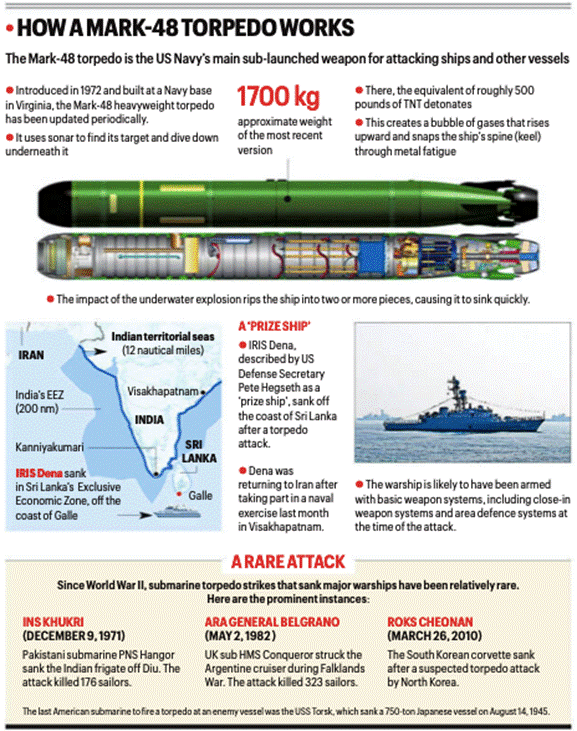
- A U.S. submarine torpedo attack reportedly sank the Iranian frigate IRIS Dena near Sri Lanka, widening the theatre of conflict between Iran, Israel and the United States into the Indian Ocean region.
- The incident triggered debate on whether attacks on warships in international waters violate international maritime law and what legal norms govern naval warfare.
- It has also raised concerns regarding India’s maritime security environment, as the event occurred near the Indian Ocean sea lanes close to Sri Lanka and India’s eastern coast.
Relevance
- GS Paper II – International Relations
- International maritime law and UNCLOS.
- Global governance and conflict regulation mechanisms.
- GS Paper III – Security
- Maritime security and protection of Sea Lines of Communication (SLOCs).
- Strategic importance of the Indian Ocean region.
Practice Question
Q. Maritime conflicts are governed by a complex framework of international laws and conventions. Discuss the legal and strategic implications of naval warfare in international waters. (250 words)
Static Background: Legal Framework Governing Maritime Warfare
International maritime conflict is governed by a combination of customary international law, treaties, and UN Charter provisions.
Key Legal Frameworks
- United Nations Convention on the Law of the Sea
- United Nations Charter
- San Remo Manual on International Law Applicable to Armed Conflicts at Sea (1994)
- Geneva Conventions and customary humanitarian law
These frameworks regulate naval warfare, maritime sovereignty, and permissible use of force at sea.
United Nations Convention on the Law of the Sea (UNCLOS)
Overview
- The United Nations Convention on the Law of the Sea establishes rules governing maritime zones, navigation rights, resource use, and maritime jurisdiction.
- Adopted in 1982 and entered into force in 1994, it is often described as the “constitution of the oceans.”
Key Maritime Zones under UNCLOS
| Maritime Zone | Distance from Coast | Rights of Coastal State |
| Territorial Sea | Up to 12 nautical miles | Full sovereignty |
| Contiguous Zone | Up to 24 nautical miles | Enforcement rights |
| Exclusive Economic Zone (EEZ) | Up to 200 nautical miles | Rights over resources |
| High Seas | Beyond EEZ | Open to all states |
Limitations
- UNCLOS primarily governs peacetime maritime activities and does not comprehensively regulate naval warfare during armed conflicts.
UN Charter and Use of Force at Sea
Article 2(4)
- Prohibits the use of force against the territorial integrity or political independence of any state.
Article 51
- Recognizes the inherent right of self-defence if an armed attack occurs.
- A state may use military force, including naval operations, if justified under self-defence.
UN Security Council Authorization
- Military action may also be authorized under Chapter VII of the UN Charter to maintain international peace and security.
San Remo Manual (1994)
The San Remo Manual provides guidelines on naval warfare.
Key principles include:
- Distinction: Combatants must distinguish between military and civilian targets.
- Proportionality: Military operations should avoid excessive civilian damage.
- Neutrality: Neutral states and vessels must not be targeted unless they assist belligerents.
Warships as Legitimate Targets
- Under international humanitarian law, warships are legitimate military targets during armed conflict.
- If a naval vessel belongs to a country engaged in conflict, it may be attacked even in international waters.
- The legal justification depends on:
- Existence of armed conflict
- Compliance with self-defence provisions
- Observance of proportionality and distinction principles
Strategic Geography of the Incident
Indian Ocean Context
- The reported sinking occurred near Sri Lanka’s Exclusive Economic Zone (EEZ).
- The region lies along major global sea lanes connecting the Persian Gulf, East Asia and Europe.
Importance for India
- India conducts nearly 90% of its trade by volume through maritime routes.
- The Indian Ocean carries nearly 80% of global seaborne oil trade, making regional stability critical.
- Any military escalation near these sea lanes could disrupt energy supply chains and commercial shipping.
Weapon Used: Mark-48 Torpedo
Overview
- The Mark 48 torpedo is the primary torpedo used by the U.S. Navy.
Key Features
- Introduced in 1972 and continuously upgraded.
- Weight: approximately 1,700 kg.
- Designed to attack enemy ships and submarines underwater.
- Uses active and passive sonar guidance systems to track targets.
Destructive Mechanism
- The torpedo detonates beneath a ship, creating a gas bubble that breaks the vessel’s keel, causing it to split and sink rapidly.
Historical Precedents of Naval Torpedo Attacks
Although rare in modern warfare, submarine torpedo attacks have occurred historically.
Examples
| Incident | Year | Description |
| INS Khukri | 1971 | Indian frigate sunk by Pakistani submarine during Indo-Pak war |
| ARA General Belgrano | 1982 | Argentine cruiser sunk by UK submarine during Falklands War |
| ROKS Cheonan | 2010 | South Korean naval ship sunk in suspected North Korean torpedo attack |
These incidents demonstrate the strategic lethality of submarine warfare.
Legal and Strategic Debate
Legality
- If the Iranian warship was part of a belligerent force in an ongoing conflict, it may be considered a lawful military target.
- However, the legality depends on whether the attack qualifies as self-defence under Article 51 of the UN Charter.
Neutral Waters Issue
- If the attack occurred in neutral or non-conflict zones, it may raise concerns regarding violation of maritime neutrality principles.
Escalation Risks
- Expansion of conflict into the Indian Ocean region could escalate tensions and disrupt global trade routes.
Implications for India
Maritime Security
- The Indian Ocean is central to India’s strategic maritime doctrine and economic security.
Naval Preparedness
- India must strengthen maritime domain awareness and naval surveillance in the region.
Energy Security
- Escalation could threaten oil shipments passing through the Indian Ocean and Strait of Hormuz.
Diplomatic Balancing
- India must balance relations with Iran, Israel, and the United States while promoting regional stability.
Important Keywords
- UNCLOS
- Maritime Warfare Law
- San Remo Manual
- Exclusive Economic Zone (EEZ)
- Article 51 Self-Defence
- Submarine Warfare
- Mark-48 Torpedo
Prelims Pointers
- UNCLOS defines maritime zones such as territorial sea, contiguous zone and EEZ.
- EEZ extends up to 200 nautical miles from a coastal state’s baseline.
- The Mark-48 torpedo is a submarine-launched anti-ship and anti-submarine weapon.
- Warships are considered legitimate targets during armed conflict under international humanitarian law.
India’s Rice Production and Export Strategy: Why It Requires a Rethink ?
Source : Indian Express
Why in News ?
- Concerns are rising about the sustainability of India’s rice production and export strategy due to high water consumption, environmental stress, and changing global demand patterns.
- India exported about 21.69 million tonnes of rice in 2023-24, accounting for around 40% of global rice exports, making it the world’s largest rice exporter.
- However, rice cultivation is highly water-intensive and environmentally costly, especially in regions with declining groundwater levels such as Punjab, Haryana, and western Uttar Pradesh.
- Experts argue that continuing to expand rice exports may strain natural resources, distort agricultural incentives, and undermine long-term sustainability.
Relevance
- GS Paper III – Agriculture
- Cropping patterns and sustainability of agricultural practices.
- Water-intensive crops and groundwater depletion.
- GS Paper III – Economy
- Agricultural exports and trade policy implications.
Practice Question
Q. India’s rice export success has raised concerns about environmental sustainability and distorted cropping patterns. Examine the challenges associated with India’s rice production strategy and suggest reforms. (250 words)
India’s Position in Global Rice Trade
- India has been the largest global rice exporter since 2012, surpassing Thailand and Vietnam.
- Major export destinations include Benin, Saudi Arabia, Iran, Iraq, the UAE, and several African countries.
- In 2023-24, India exported:
- ~5.65 million tonnes of basmati rice
- ~17.92 million tonnes of non-basmati rice
- Rice exports generated over $10 billion in foreign exchange earnings, making rice one of India’s most important agricultural export commodities.
Rice Production in India
- India produced around 145.28 million tonnes of rice in 2023-24, making it the largest rice producer globally after China.
- Rice accounts for more than 40% of India’s total food grain production and is the staple food for over half of the Indian population.
- Major rice-producing states include:
- West Bengal
- Uttar Pradesh
- Punjab
- Andhra Pradesh
- Chhattisgarh
- Odisha
- Telangana
Environmental Concerns of Rice Cultivation
Water Consumption
- Rice is among the most water-intensive crops, requiring about 3,000–5,000 litres of water to produce 1 kg of rice.
- Paddy fields require continuous flooding, which leads to high groundwater extraction in irrigated regions.
- According to agricultural estimates, paddy cultivation consumes about 5 million litres of water per acre during a season.
Groundwater Depletion
- In states like Punjab and Haryana, rice cultivation has contributed significantly to declining groundwater tables.
- Nearly 80% of Punjab’s groundwater blocks are classified as over-exploited.
Methane Emissions
- Flooded paddy fields produce methane (CH₄) through anaerobic decomposition.
- Rice cultivation contributes roughly 10–12% of global agricultural methane emissions, making it a significant climate concern.
Soil Degradation
- Excessive irrigation and fertilizer use can lead to soil nutrient imbalance, salinization, and declining soil health.
Economic Dimension of Rice Exports
Foreign Exchange Earnings
- Rice exports are a major contributor to India’s agricultural export basket, generating over $10 billion annually.
Farmer Income
- Large procurement under the Minimum Support Price (MSP) system incentivizes farmers to cultivate rice, especially in northern states.
Export Composition
| Type of Rice | Share in Exports | Key Markets |
| Basmati rice | High-value premium segment | Middle East, Europe |
| Non-basmati rice | Bulk commodity exports | Africa, Asia |
- Basmati rice fetches significantly higher prices, while non-basmati exports rely on volume-driven trade.
Structural Issues in India’s Rice Strategy
Cropping Pattern Distortion
- Government procurement policies encourage rice-wheat monoculture, particularly in Punjab and Haryana.
- This reduces crop diversification and increases ecological stress.
Water Subsidies
- Free or highly subsidized electricity for irrigation leads to over-extraction of groundwater.
Low Productivity in Some Regions
- Yield levels in eastern India remain lower due to infrastructure gaps and limited irrigation efficiency.
Export Policy Volatility
- Frequent export bans and restrictions create uncertainty for global markets and domestic farmers.
Regional Imbalance in Rice Cultivation
- Rice cultivation is heavily concentrated in northwestern states with limited water availability, rather than in water-abundant eastern states.
Example
- Punjab and Haryana produce large surpluses despite groundwater stress.
- Eastern states like Bihar, Odisha, West Bengal, and Assam have higher rainfall but remain underutilized in rice export supply chains.
Climate Change and Food Security Risks
- Rising temperatures and irregular monsoons may reduce rice yields in tropical regions.
- Floods, droughts, and heat stress increasingly affect paddy productivity and cropping cycles.
- Climate change may intensify pest outbreaks and crop disease risks.
Policy and Governance Dimension
Several government initiatives aim to address sustainability concerns:
National Food Security Mission (NFSM)
- Focuses on improving productivity of rice, wheat, and pulses through improved seed varieties and farming practices.
Pradhan Mantri Krishi Sinchai Yojana (PMKSY)
- Promotes efficient irrigation practices such as drip and sprinkler irrigation.
Sub-Mission on Agricultural Mechanization
- Encourages mechanized paddy transplanting and direct seeding technologies.
Direct Seeded Rice (DSR)
- A water-saving technique that reduces irrigation requirements and methane emissions.
Way Forward
Crop Diversification
- Encourage farmers in water-stressed regions to shift toward pulses, oilseeds, and millets, which require less water.
Regional Rebalancing
- Expand rice production in eastern India, where rainfall and water availability are higher.
Water-Saving Technologies
- Promote Direct Seeded Rice (DSR) and alternate wetting and drying irrigation techniques.
Rationalizing Subsidies
- Reform electricity and irrigation subsidies to reduce groundwater over-extraction.
Export Strategy Reform
- Focus more on high-value basmati rice exports rather than bulk low-value non-basmati exports.
Important Keywords
- Rice-Wheat Cropping System
- Groundwater Depletion
- Methane Emissions
- Direct Seeded Rice (DSR)
- Minimum Support Price (MSP)
- Agricultural Sustainability
- Crop Diversification
Prelims Pointers
- India accounts for around 40% of global rice exports.
- Rice cultivation requires about 3,000–5,000 litres of water per kilogram of rice.
- Basmati rice is mainly exported to Middle Eastern markets.
- Rice cultivation contributes significantly to agricultural methane emissions.
Shift from Standoff Missiles to Gravity Bombs: Strategic and Military Implications
Source : Indian Express
Why in News ?
- The United States Department of Defense recently announced deployment of 500-lb, 1,000-lb and 2,000-lb precision gravity bombs in operations targeting Iranian military infrastructure.
- The decision indicates a shift from long-range “standoff” missiles to direct bombardment, suggesting that the U.S. believes Iranian air-defence systems have been significantly degraded.
- This operational change signals a transition from low-risk remote strikes to high-volume aerial bombing, which becomes feasible only after a military gains air superiority over the battlefield.
- The development is significant for global strategic stability, highlighting changing battlefield tactics, escalation dynamics, and technological competition in modern warfare.
Relevance
- GS Paper III – Security
- Evolution of modern warfare technologies and aerial combat tactics.
- Strategic implications of air superiority and precision-guided munitions.
- GS Paper II – International Relations
- Escalation dynamics in regional conflicts and global security implications.
Practice Question
Q. Technological advancements are transforming modern warfare strategies. Examine the strategic implications of the shift from standoff missile systems to gravity bombs in contemporary conflicts. (250 words)
Static Background: Evolution of Modern Air Warfare
Early Aerial Bombing
- During World War I and World War II, aircraft primarily dropped unguided “free-fall” bombs, which relied entirely on gravity and pilot accuracy.
- These weapons caused widespread destruction but lacked precision, often resulting in high civilian casualties and collateral damage.
Shift to Precision Warfare
- Since the 1991 Gulf War, modern warfare has increasingly relied on precision-guided munitions (PGMs), enabling accurate targeting of military infrastructure.
- Advances in GPS navigation, satellite guidance, and laser targeting systems have significantly improved strike accuracy while reducing unintended damage.
What is a Gravity Bomb?
- A gravity bomb, historically called a “free-fall bomb,” is an aerial munition that lacks a propulsion system and falls toward its target purely under the force of gravity after being released from an aircraft.
- The trajectory of the bomb is determined by aircraft speed, altitude, atmospheric conditions, and gravity, requiring pilots to release the weapon at precise coordinates.
- Modern gravity bombs are often upgraded with precision guidance kits, allowing them to function as precision-guided munitions despite lacking internal engines.
- These weapons have been extensively used by the U.S. Air Force and allied militaries in conflicts such as Iraq, Afghanistan, and Syria.
Precision Upgrade: Joint Direct Attack Munition (JDAM)
- Modern gravity bombs are converted into precision weapons using Joint Direct Attack Munition kits.
- JDAM kits include GPS guidance systems and steerable tail fins, enabling bombs to glide accurately toward specific coordinates.
- With these upgrades, gravity bombs can achieve accuracy within approximately 5–10 metres of the target, significantly improving strike precision.
- JDAM kits are relatively inexpensive, costing approximately $25,000–$30,000 per unit, compared with much higher costs for cruise missiles.
Types of Conventional U.S. Gravity Bombs (Mark-80 Series)
500-lb Bomb – Mk-82
- The Mark 82 bomb is designed for soft or lightly protected targets, including vehicles, radar installations, and exposed troop positions.
- It is widely used due to its versatility, relatively limited blast radius, and ability to be deployed in large numbers.
1,000-lb Bomb – Mk-83
- The Mark 83 bomb is a medium-yield munition used against reinforced structures, command centres, and logistical facilities.
- It balances explosive power with manageable blast effects, making it effective for tactical battlefield operations.
2,000-lb Bomb – Mk-84
- The Mark 84 bomb is a high-yield bunker-buster type weapon capable of destroying hardened structures such as military bunkers, underground facilities, and fortified installations.
- The blast can create craters up to 15 metres (50 feet) wide and over 10 metres deep, depending on soil conditions.
Platforms Used to Deploy Gravity Bombs
- The U.S. Air Force and Navy deploy gravity bombs using various aircraft platforms, including:
Fighter Aircraft
- F‑15E Strike Eagle
- F‑35 Lightning II
These aircraft can deliver precision strikes with high manoeuvrability.
Strategic Bombers
- B‑52 Stratofortress
The B-52 can carry large payloads of conventional bombs, enabling sustained high-volume bombing campaigns.
Standoff Weapons vs Gravity Bombs
| Feature | Standoff Missiles | Gravity Bombs |
| Launch distance | Fired from outside enemy air defence range | Released directly above target |
| Cost | Very expensive (millions of dollars) | Much cheaper |
| Risk to pilots | Low | Higher |
| Volume of attack | Limited | Can be deployed in large numbers |
| Accuracy | Very high | High with JDAM kits |
Strategic Reason for the Tactical Shift
Cost Efficiency
- Cruise missiles such as the Tomahawk cruise missile cost $1–2 million per unit, making sustained large-scale use expensive.
- Gravity bombs with JDAM kits cost less than $30,000, enabling high-volume bombardment operations.
Air Superiority
- Gravity bombs require direct aircraft access to target airspace, which is possible only if enemy air defences have been neutralised.
- The shift therefore indicates that U.S. forces believe Iranian air defence systems have been significantly weakened.
Operational Flexibility
- Bombers and fighter aircraft can carry multiple gravity bombs per sortie, increasing operational efficiency during sustained military campaigns.
Conventional vs Nuclear Gravity Bombs
Conventional Bombs
- Contain hundreds of pounds of chemical explosives.
- Used for tactical battlefield operations and infrastructure strikes.
Nuclear Gravity Bombs
- Nuclear versions such as the B61 nuclear bomb produce yields measured in kilotons of TNT equivalent.
- Their use requires explicit authorization from the U.S. President, as deployment would signal global nuclear escalation.
Global Security Implications
Escalation of Conflict
- The shift to gravity bombs suggests escalation from limited strikes toward sustained bombing operations, potentially intensifying regional conflicts.
Air Dominance Doctrine
- The development reflects the continued importance of air superiority as a prerequisite for conventional warfare success.
Technological Evolution
- Modern warfare increasingly combines traditional weapons platforms with advanced guidance systems, enhancing both precision and operational efficiency.
Humanitarian Concerns
- High-volume bombing campaigns may increase the risk of civilian casualties and infrastructure destruction, raising concerns under international humanitarian law.
Important Keywords
- Gravity Bomb (Free-Fall Bomb)
- Precision-Guided Munitions (PGMs)
- Joint Direct Attack Munition (JDAM)
- Mark-80 Bomb Series
- Air Superiority
- Standoff Weapons
- Cruise Missiles
Prelims Pointers
- Gravity bombs rely on gravity for trajectory and lack internal propulsion systems.
- The Mark-80 series (Mk-82, Mk-83, Mk-84) are standard U.S. conventional gravity bombs.
- JDAM kits convert unguided bombs into precision-guided munitions using GPS guidance.
- Tomahawk missiles are long-range cruise missiles used as standoff weapons.
India submits 7th biodiversity report, but will it meet its 2030 targets?
Source : Down to Earth
Why in News ?
- India submitted its 7th National Report (NR7) to the Convention on Biological Diversity, presenting an official assessment of national progress toward global biodiversity targets for 2030.
- The report evaluates India’s alignment with the Kunming–Montreal Global Biodiversity Framework, which sets 23 global biodiversity targets to be achieved by 2030.
- Despite policy progress, the report concludes that only two of India’s 23 national biodiversity targets are clearly on track, highlighting implementation gaps in conservation, monitoring, and ecosystem protection.
- The report gains importance as India is one of the 17 mega-diverse countries, hosting nearly 7–8% of the world’s recorded species across diverse ecosystems such as Himalayan forests, Western Ghats, mangroves, deserts, and coral reefs.
Relevance
- GS Paper III – Environment & Biodiversity
- Biodiversity conservation and ecosystem restoration.
- Global environmental governance frameworks such as Convention on Biological Diversity (CBD).
- GS Paper III – Climate Change
- Linkages between biodiversity loss, land degradation and climate change.
Practice Question
Q. Despite policy initiatives, achieving biodiversity conservation targets remains a challenge for India. Analyse the key findings of India’s 7th National Report to the Convention on Biological Diversity and discuss the gaps in achieving the 2030 biodiversity targets. (250 words)
Static Background: Convention on Biological Diversity
About the Convention
- The Convention on Biological Diversity was adopted at the Rio Earth Summit 1992.
- It is a legally binding international treaty with 196 Parties, aiming to ensure the conservation and sustainable use of biological diversity.
Three Core Objectives
- Conservation of biological diversity
- Sustainable use of biodiversity components
- Fair and equitable sharing of benefits from genetic resources
Reporting Mechanism
- Member countries must submit National Reports periodically to assess:
- Policy actions
- Conservation outcomes
- Implementation challenges
Kunming–Montreal Global Biodiversity Framework (KMGBF)
- Adopted in 2022 at COP-15 of the CBD, the framework provides the global roadmap to halt biodiversity loss.
Key Targets (2030)
- Protect 30% of the planet’s land and oceans (“30×30” target)
- Restore 30% of degraded ecosystems
- Reduce pollution and pesticide risks by at least 50%
- Eliminate harmful subsidies affecting biodiversity
- Prevent human-induced species extinction
India’s National Biodiversity Strategy and Action Plan (NBSAP) has now been revised to align with these global commitments.
Preparation of India’s 7th National Report
- Prepared by the Ministry of Environment, Forest and Climate Change with coordination from 33 central ministries and departments.
- Technical support was provided by:
- National Biodiversity Authority
- United Nations Development Programme
- Wildlife Institute of India
Monitoring Framework
- India created a digital NR7 portal to track progress using 142 biodiversity indicators.
- The process involved consultations with:
- Indigenous communities
- women’s groups
- local governments
- NGOs
- private sector stakeholders
Key Findings of the Report
Forest and Tree Cover
- India’s forest and tree cover now stands at 827,357 sq km, representing 25.17% of the country’s geographical area.
- Between 2021 and 2023, forest and tree cover increased by 1,445.81 sq km.
- The country’s forest carbon stock reached 7,285.5 million tonnes, reflecting an increase of 81.5 million tonnes compared with the previous assessment.
Land Degradation and Restoration
- According to the Desertification and Land Degradation Atlas, about 29.77% of India’s geographical area (around 97 million hectares) is currently undergoing degradation.
- Under the Bonn Challenge, India pledged to restore 26 million hectares of degraded land by 2030.
- The report indicates 24.1 million hectares have already been restored or are under restoration, suggesting significant progress toward the commitment.
Protected Areas and Conservation Coverage
- India’s protected area network covers slightly above 5% of its geographical area, including national parks, wildlife sanctuaries, conservation reserves, and community reserves.
- Marine protected areas are gradually expanding, and the government is identifying Other Effective Area-Based Conservation Measures (OECMs) outside formal protected areas.
- However, achieving the global “30×30” conservation target would require a substantial expansion of protected or conserved ecosystems.
Species Recovery
The report highlights progress in flagship species conservation.
- Tiger population: 3,167 individuals according to the latest national census.
- Asiatic lions: Population continues to increase in Gir landscape.
- One-horned rhinoceros: Numbers remain stable or increasing in Assam and other protected areas.
- Snow leopard: First national population assessment conducted.
- Vulture conservation breeding programmes are underway to recover critically endangered species.
However, the report acknowledges limited data on lesser-known taxa, including amphibians, insects, marine organisms, and plants.
Agriculture and Biodiversity Integration
- Trees Outside Forests (TOF) now contribute significantly to India’s overall tree cover.
- Agroforestry covers about 8.65% of India’s geographical area, indicating growing integration of biodiversity within agricultural landscapes.
- Mangrove cover has increased modestly, while bamboo area expanded by about 1,540 sq km.
Major Challenges Identified
Land Degradation
- Despite restoration efforts, nearly one-third of India’s land remains degraded, indicating that new degradation may be occurring alongside restoration activities.
Biodiversity Monitoring Gaps
- Biodiversity data is fragmented across multiple ministries and agencies, making it difficult to build consistent datasets.
- Many biodiversity indicators still lack standardized measurement protocols.
Limited Conservation Coverage
- Protected areas cover only about 5% of India’s land, far below the 30% global conservation target.
Climate Change Impacts
- Increasing floods, droughts, forest fires, and temperature rise are intensifying ecosystem stress across India.
Species Data Deficit
- Most conservation assessments focus on charismatic flagship species, leaving large knowledge gaps regarding lesser-known species.
Target-Wise Progress Assessment
- Of the 23 National Biodiversity Targets, only two are clearly on track:
NBT1 – Biodiversity-inclusive land and sea-use planning
- Progress includes:
- National wetland inventory
- Coastal zone management plans
- Eco-sensitive zones around protected areas
NBT2 – Ecosystem restoration
- Large-scale restoration under:
- Bonn Challenge
- Afforestation programmes
- Landscape restoration initiatives
For most other targets, the report identifies policy initiatives but insufficient evidence of measurable outcomes.
Governance and Institutional Dimensions
- India has strengthened its biodiversity governance through:
- Updated National Biodiversity Strategy and Action Plan (NBSAP).
- Digital environmental clearance system PARIVESH 2.0.
- Expanded monitoring systems and inter-ministerial coordination.
- However, implementation capacity, financial resources, and data systems remain key constraints.
Environmental Significance
- India’s biodiversity is globally significant due to its presence in four biodiversity hotspots:
- Western Ghats
- Eastern Himalaya
- Indo‑Burma Region
- Sundaland
- The country hosts:
- over 91,000 animal species
- about 45,000 plant species
Thus, India’s biodiversity performance significantly influences global biodiversity outcomes.
Way Forward
- Expand protected area coverage and OECMs to move closer to the 30×30 global conservation goal.
- Develop standardized biodiversity monitoring systems using remote sensing, AI, and ecological surveys.
- Increase community-based conservation involving indigenous communities and local forest dwellers.
- Strengthen financial support through biodiversity funds, green finance, and ecosystem service payments.
- Address drivers of biodiversity loss, including:
- land degradation
- pollution
- invasive species
- climate change impacts
Important Keywords
- Convention on Biological Diversity (CBD)
- Kunming–Montreal Global Biodiversity Framework
- National Biodiversity Strategy and Action Plan (NBSAP)
- 30×30 Conservation Target
- Other Effective Area-Based Conservation Measures (OECMs)
- Bonn Challenge
- Biodiversity Monitoring Indicators
Prelims Pointers
- CBD was adopted at the Rio Earth Summit in 1992.
- The Kunming–Montreal Global Biodiversity Framework (2022) sets 23 global biodiversity targets for 2030.
- India has pledged to restore 26 million hectares of degraded land under the Bonn Challenge.
- India’s forest and tree cover stands at 25.17% of geographical area.
- India hosts four global biodiversity hotspots.