
Content
- 518 of 697 lakes in J&K either vanished or shrunk: CAG
- Are students ready for CBSE’s AI push?
- Kalpakkam Fast Breeder Reactor (PFBR) Attains Criticality
- Artemis II Mission: Farthest Human Travel Beyond Earth
- Election Petitions & Supreme Court Ruling (2026)
- Arab League Secretary-General Appointment (Nabil Fahmy, 2026)
- RBI Guidelines on Mis-selling & Insurance Commission Reforms
518 of 697 lakes in J&K either vanished or shrunk: CAG
Why in News?
- CAG Report (till March 2022) reveals massive loss of lake ecosystems in J&K, raising concerns over flood vulnerability, ecological imbalance, and governance failure.
- Highlights link between wetland degradation and 2014 floods, bringing climate resilience and water governance into focus.
Relevance
- GS Paper III (Environment & Disaster Management)
- Wetlands conservation, climate resilience, floods
- GS Paper I (Geography)
- Himalayan ecosystems, hydrology
Practice Questions
Q1.“Wetlands are critical ecological infrastructure for climate resilience and disaster mitigation.”Examine in the context of shrinking lake ecosystems in Jammu & Kashmir.(250 Words)
Static Background
Role of Lakes/Wetlands
- Lakes act as natural flood buffers, groundwater recharge zones, biodiversity hotspots, and carbon sinks, critical for hydrological stability and climate resilience.
- Protected under Wetlands (Conservation and Management) Rules, 2017, aligned with Ramsar Convention obligations.
J&K Context
- Region hosts high-altitude, glacial-fed, and urban lakes (Dal, Wular), forming fragile Himalayan ecosystems.
- Increasing urbanisation, tourism, and land-use change threaten lake sustainability.
Data & Facts
- 518 out of 697 lakes (74%) have disappeared or shrunk, indicating systemic ecological degradation.
- 315 lakes (45%) vanished, covering 1,537.07 hectares, reflecting irreversible ecosystem loss.
- 203 lakes (29%) shrunk by 1,314.19 hectares, while 63 lakes lost ≥50% water area, facing extinction risk.
- Only 6 lakes (Dal, Wular, Hokarsar, Mansabal, Surinsar, Mansar) have formal conservation programmes.
Dimensions
1. Environmental / Ecological Dimension
- Shrinking lakes disrupt hydrological cycles, biodiversity habitatss, and nutrient balance, leading to ecosystem collapse in fragile Himalayan regions.
- Increased aquatic vegetation and siltation indicate eutrophication and declining water quality, reducing ecological productivity.
- High-altitude lakes face climate-induced siltation and glacial changes, despite minimal anthropogenic pressure.
2. Disaster Management Dimension
- Lakes function as natural flood buffers, absorbing excess water during extreme rainfall events.
- Shrinkage contributed to J&K floods (2014) by weakening flood regulation capacity of basin ecosystems.
- Loss of wetlands increases flash flood risks and urban waterlogging, especially in Kashmir valley.
3. Governance / Administrative Dimension
- Absence of lake-specific management plans across multiple departments (Forest, Revenue, Agriculture) reflects institutional fragmentation.
- Failure to survey 697 lakes resulted in lack of baseline data (physical, chemical, biological) for planning.
- Only 6 lakes covered under conservation, indicating policy neglect and selective prioritisation.
4. Economic Dimension
- Loss of lakes affects tourism (Dal, Wular), fisheries, and local livelihoods, reducing regional economic potential.
- Increased flood damages and restoration costs impose fiscal burden on state resources.
- Degradation undermines ecosystem services valuation, often unaccounted in GDP calculations.
5. Social Dimension
- Local communities dependent on lakes for water, livelihood, and cultural identity face resource insecurity and displacement risks.
- Encroachments and land-use changes reflect conflict between development pressures and ecological sustainability.
- Loss of lakes weakens traditional water management systems and indigenous practices.
6. Legal / Institutional Dimension
- Non-compliance with Wetlands Rules, 2017 and Ramsar commitments indicates implementation deficit.
- Lack of inter-departmental coordination violates principles of integrated water resource management (IWRM).
- Weak enforcement allows encroachment, construction, and land-use change in lake areas.
7. Climate Change Dimension
- Climate variability accelerates glacial melt, erratic rainfall, and sedimentation, compounding lake shrinkage trends.
- Loss of lakes reduces climate resilience capacity, increasing regional vulnerability to extreme events.
Challenges / Gaps
- Data deficiency due to absence of comprehensive lake surveys and monitoring systems.
- Institutional fragmentation across departments leading to accountability gaps.
- Encroachments and unregulated urbanisation driving land-use changes in lake areas.
- Limited financial and technical capacity for restoration and conservation projects.
- Neglect of smaller and high-altitude lakes, despite ecological importance.
Way Forward
- Develop integrated lake basin management plans using GIS mapping and remote sensing technologies.
- Strengthen Wetland Authority of J&K with clear mandates and inter-departmental coordination.
- Implement strict anti-encroachment measures and land-use zoning regulations.
- Promote community-based conservation models involving local stakeholders and traditional knowledge.
- Expand conservation coverage beyond 6 lakes to all critical wetlands, prioritising endangered lakes.
- Align restoration with climate adaptation strategies and disaster risk reduction frameworks.
Prelims Pointers
- Wetlands Rules, 2017 regulate conservation and management of wetlands in India.
- Lakes act as natural flood buffers and carbon sinks.
- Ramsar Convention: international treaty for wetland conservation.
- Wular Lake: one of the largest freshwater lakes in Asia.
Are students ready for CBSE’s AI push?
Why in News?
- Launched on April 1, 2026 by Ministry of Education, introducing CT & AI curriculum for Classes 3–8, marking early-stage digital skilling reform under NEP 2020.
- Raises concerns about learning readiness gap (ASER, PARAKH), questioning implementation feasibility and equity.
Relevance
- GS Paper II (Governance & Education)
- Education reforms, NEP 2020, learning outcomes
- GS Paper III (Science & Technology)
- AI, digital economy, skill development
Practice Questions
Q1.“Integration of Artificial Intelligence in school education must be aligned with foundational learning outcomes.”Critically examine in the context of recent CBSE reforms.(250 Words)
Static Background
Policy Context
- NEP 2020 emphasises 21st-century skills: critical thinking, problem-solving, digital literacy.
- AI integration in education aligned with India’s National AI Strategy (NITI Aayog) and Digital India vision.
Conceptual Foundations
- Computational Thinking (CT): problem-solving approach involving pattern recognition, abstraction, decomposition, algorithms.
- AI Literacy: understanding data, automation, fairness, and real-world AI applications.
Key Features
- Classes 3–5: Focus on CT only (no AI) integrated into Maths, Science, Language, TWAU, with 50 hours annually.
- Classes 6–8: Introduction of AI concepts + advanced CT, with 100 hours annually, covering AI lifecycle and data ethics.
- Emphasis on “unplugged learning”, reducing dependence on devices/infrastructure, ensuring inclusivity across schools.
Data & Evidence
- ASER 2024: Over 50% Class 5 students cannot read Class 2-level text, indicating severe foundational literacy deficit.
- PARAKH Survey 2024: Shows learning gaps across urban and private schools, challenging assumption of urban advantage.
- Suggests mismatch between curriculum ambition and student preparedness.
Dimensions
1. Educational / Pedagogical Dimension
- CT develops logical reasoning, analytical thinking, and problem-solving, essential for future-ready workforce.
- Integration across subjects promotes interdisciplinary learning, avoiding curriculum overload.
- Activity-based and experiential pedagogy aligns with NEP’s competency-based education model.
2. Cognitive / Learning Dimension
- CT tasks require strong LSRW skills (Listening, Speaking, Reading, Writing) as foundational cognitive infrastructure.
- Students with weak reading ability may perceive CT as literacy barrier rather than thinking exercise.
- Early-stage learning gaps can lead to pipeline failure by Class 6 when AI concepts are introduced.
3. Governance / Implementation Dimension
- Requires teacher capacity building for rubric-based assessments, project evaluation, and interdisciplinary teaching.
- Lack of uniform readiness across states and school types may widen learning inequalities.
- Monitoring and evaluation depend on effective institutional frameworks like PARAKH.
4. Technological Dimension
- Early exposure to AI builds digital literacy, data awareness, and algorithmic understanding.
- Focus on AI lifecycle and data fairness introduces ethical AI awareness at school level.
- “Unplugged learning” ensures low-tech inclusivity, addressing digital divide concerns.
5. Economic Dimension
- Builds future workforce aligned with AI-driven economy, supporting India’s digital economy ambitions (~$1 trillion target).
- Enhances innovation capacity, entrepreneurship, and employability in emerging tech sectors.
- However, poor implementation may lead to inefficient public spending and low learning outcomes.
6. Social / Equity Dimension
- Potential to democratise AI education across socio-economic groups through curriculum integration.
- However, learning poverty (ASER) may exacerbate digital divide in outcomes, not access.
- Risk of elite capture, where only high-performing schools benefit effectively.
7. Ethical Dimension
- Early focus on data fairness and responsible AI use promotes ethical digital citizenship.
- Ensures awareness about bias, privacy, and algorithmic accountability from school level.
Challenges / Gaps
- Foundational literacy crisis (ASER) undermines effectiveness of CT-based learning.
- Insufficient teacher training and pedagogical readiness for interdisciplinary CT teaching.
- Assessment complexity (projects, journals, rubrics) may lead to subjectivity and inconsistency.
- Risk of curriculum overload without adequate scaffolding mechanisms.
- Weak infrastructure and digital access disparities across schools.
Way Forward
- Prioritise Foundational Literacy & Numeracy (FLN) under NIPUN Bharat Mission before scaling CT/AI learning.
- Invest in teacher training (continuous professional development) for CT pedagogy and AI basics.
- Develop graded learning pathways aligning CT complexity with student cognitive readiness.
- Strengthen assessment frameworks via PARAKH for standardisation and outcome measurement.
- Promote blended learning models (digital + unplugged) ensuring equitable access and outcomes.
Prelims Pointers
- CT includes: pattern recognition, abstraction, decomposition, algorithms.
- AI introduced from Class 6 onwards in CBSE curriculum.
- ASER by Pratham assesses foundational learning levels in India.
- PARAKH: National assessment regulator under NCERT.
Kalpakkam Fast Breeder Reactor (PFBR) Attains Criticality
Why in News?
- India’s Prototype Fast Breeder Reactor (PFBR), 500 MWe at Kalpakkam, achieved criticality (April 2026)—a self-sustaining nuclear fission reaction milestone.
- Marks entry into second stage of India’s three-stage nuclear programme, positioning India as 2nd country after Russia with commercial FBR capability.
Relevance
- GS Paper III (Science & Technology)
- Nuclear technology, energy security
- GS Paper III (Environment)
- Clean energy transition
Practice Questions
Q1.Discuss the significance of Fast Breeder Reactor (FBR) technology in India’s three-stage nuclear programme.(250 Words)
Static Background
India’s Three-Stage Nuclear Programme (Homi Bhabha Vision)
- Stage 1: Pressurised Heavy Water Reactors (PHWRs) using natural uranium → plutonium generation.
- Stage 2: Fast Breeder Reactors (FBRs) use plutonium-based fuel → breed more fissile material (U-233/Pu).
- Stage 3: Thorium-based reactors, utilising India’s vast thorium reserves (~25% of world reserves).
Key Features of PFBR
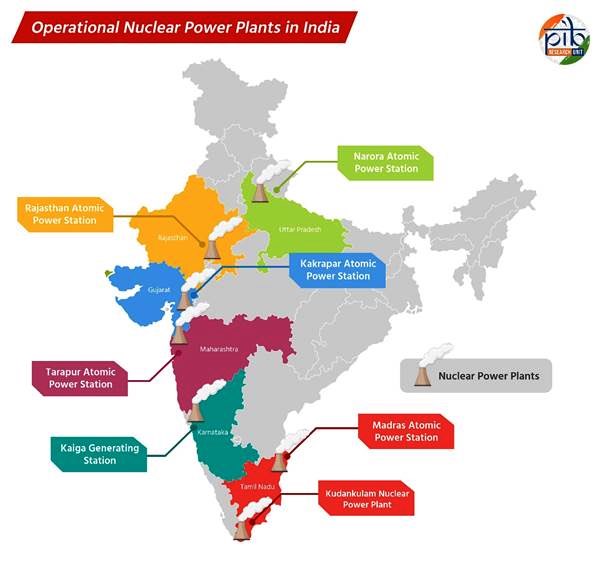
- Capacity: 500 MWe, located at Kalpakkam (Tamil Nadu) under DAE/IGCAR.
- Uses mixed oxide (MOX) fuel (Pu-239 + U-238) and liquid sodium coolant.
- Breeding ratio >1, meaning produces more fissile material than it consumes.
- Achieved criticality → precursor to full power generation and grid integration.
Scientific Concept
- Criticality: Each fission releases sufficient neutrons to sustain chain reaction without external input.
- Fast neutrons (no moderator) enable breeding of fissile material from fertile isotopes (U-238 → Pu-239).
- Enhances fuel efficiency and long-term energy sustainability.
Dimensions
1. Strategic / Energy Security Dimension
- Reduces dependence on imported uranium, enhancing strategic autonomy in nuclear fuel cycle.
- Enables utilisation of abundant thorium reserves, ensuring long-term energy security for centuries.
- Supports India’s clean energy transition and net-zero commitments (2070 target).
2. Scientific & Technological Dimension
- Demonstrates indigenous capability in advanced nuclear reactor design and engineering.
- Mastery over sodium-cooled fast reactor technology, among most complex nuclear systems globally.
- Strengthens India’s position in next-generation nuclear technologies (Gen-IV reactors).
3. Economic Dimension
- Enhances fuel efficiency (breeding capability) reducing long-term cost of nuclear energy generation.
- Promotes high-technology manufacturing ecosystem and skilled employment generation.
- Potential to position India as exporter of advanced nuclear technologies in future.
4. Environmental Dimension
- Nuclear energy provides low-carbon, baseload power, reducing reliance on fossil fuels.
- Supports energy transition alongside renewables, ensuring grid stability.
- However, concerns remain regarding radioactive waste management and thermal pollution.
5. Governance / Institutional Dimension
- Developed under Department of Atomic Energy (DAE) and Indira Gandhi Centre for Atomic Research (IGCAR).
- Reflects success of closed fuel cycle policy and long-term strategic planning.
- Requires robust regulatory oversight by AERB (Atomic Energy Regulatory Board) for safety compliance.
6. Security Dimension
- Dual-use nature of nuclear technology necessitates strict safeguards under IAEA and India-specific agreements.
- Enhances strategic deterrence capabilities indirectly via plutonium handling expertise.
- Raises concerns regarding nuclear safety, proliferation risks, and sabotage vulnerabilities.
Challenges / Risks
- High capital cost and long gestation period of FBR projects affect economic viability.
- Sodium coolant risks: highly reactive with air/water → safety concerns.
- Technological complexity leading to delays (PFBR faced significant delays).
- Issues in nuclear waste disposal and public acceptance.
- Limited global commercial success of FBRs compared to conventional reactors.
Way Forward
- Accelerate commissioning and scaling of FBR fleet to operationalise second stage effectively.
- Invest in thorium reactor R&D (AHWR) to realise third stage potential.
- Strengthen nuclear safety architecture and emergency response systems.
- Promote public awareness and stakeholder engagement to address trust deficit.
- Integrate nuclear with renewable energy mix for stable, clean energy grid.
Prelims Pointers
- Criticality: self-sustaining nuclear chain reaction.
- FBR: produces more fuel than it consumes (breeder reactor).
- India’s thorium reserves located in coastal sands (Kerala, TN, Odisha, etc.).
- PFBR uses liquid sodium coolant and MOX fuel.
Artemis II Mission: Farthest Human Travel Beyond Earth
Why in News?
- Artemis II surpassed Apollo-era distance record, crossing 400,171 km set by Apollo 13, marking deep-space human exploration milestone.
- Signals transition from “flags and footprints” → sustained lunar presence, aligning with Artemis III lunar landing ambitions (South Pole).
Relevance
- GS Paper III (Science & Technology)
- Space technology, deep-space missions
- GS Paper II (IR)
- Space diplomacy, global cooperation
Practice Question
Q1.“Human space exploration is transitioning from symbolic missions to sustained presence beyond Earth.”Analyse in the context of Artemis programme.(250 Words)
Static Background
Apollo vs Artemis Programme
- Apollo Program focused on short-term lunar landings, driven by Cold War geopolitics.
- Artemis Program aims at long-term lunar habitation, Gateway station, Mars pathway.
Free-Return Trajectory
- A gravity-assisted path where spacecraft loops around Moon and returns to Earth without propulsion, ensuring fail-safe mission design.
Data & Facts
- Artemis II exceeded 400,171 km (Apollo 13 record) by ~6,600 km, becoming farthest human mission.
- Closest lunar approach: ~6,550 km, velocity ~5,052 km/h at flyby.
- Crew: 4 astronauts (3 USA + 1 Canada) → reflects international collaboration in deep space missions.
Dimensions
1. Scientific / Technological Dimension
- Use of free-return trajectory + gravitational slingshot enables fuel-efficient deep-space travel, critical for long-duration missions.
- Demonstrates Orion spacecraft capability for human-rated deep-space missions beyond Low Earth Orbit (LEO).
- Validates navigation, communication blackout handling (~30 min LOS), and life-support systems in deep space.
2. Strategic / Space Geopolitics Dimension
- Reinforces US leadership in lunar exploration amid China’s ILRS (International Lunar Research Station) ambitions.
- Artemis Accords promote rules-based order in outer space, shaping global space governance norms.
- Encourages international partnerships (e.g., Canada astronaut Jeremy Hansen) in deep-space missions.
3. Economic Dimension
- Artemis programme expected to drive space economy expansion (~$1 trillion global projection by 2040).
- Promotes private sector participation (SpaceX, Lockheed Martin), accelerating innovation and cost efficiency.
- Lunar exploration opens prospects for resource extraction (helium-3, water ice) and space tourism.
4. Human Physiology & Space Medicine Dimension
- Deep-space missions expose astronauts to cosmic radiation, microgravity, and psychological isolation.
- Loss of Signal (LOS) phase highlights extreme isolation → critical for Mars mission preparedness.
- Generates data for long-duration human survival beyond Earth’s magnetosphere.
5. Environmental / Planetary Science Dimension
- Enables detailed observation of lunar far side, previously unexplored by humans, enhancing geological understanding.
- Supports future missions targeting lunar south pole (water ice reserves → life support + fuel production).
- Advances planetary resource utilisation (ISRU) essential for sustainable space exploration.
6. Socio-Political / Symbolic Dimension
- Represents diversification of astronaut corps:
- Victor Glover: first person of colour beyond Earth orbit.
- Christina Koch: longest female spaceflight record holder.
- Jeremy Hansen: first non-American deep-space astronaut.
- Reflects inclusive global narrative in space exploration beyond Cold War nationalism.
Challenges / Risks
- High mission costs (~$90+ billion Artemis program) raise concerns on economic sustainability.
- Exposure to deep-space radiation beyond Van Allen belts poses health risks.
- Technological complexity increases probability of mission failure and safety risks.
- Geopolitical tensions may lead to space race militarisation and resource competition.
Way Forward
- Develop radiation shielding and long-duration life-support systems for Mars missions.
- Strengthen international cooperation frameworks (Artemis Accords, UN COPUOS).
- Promote cost-effective reusable launch systems and private sector participation.
- Focus on lunar infrastructure (Gateway, surface habitats) for sustained presence.
- Integrate space exploration with scientific research and economic viability models.
Prelims Pointers
- Free-return trajectory uses gravity of Moon to return spacecraft without propulsion.
- Orion spacecraft is NASA’s deep-space crew vehicle.
- Apollo 13 holds previous record due to abort trajectory around Moon.
- Lunar far side cannot be seen from Earth due to tidal locking.
Election Petitions & Supreme Court Ruling
Why in News?
- Supreme Court (April 2026) held that election petitions must be decided on existing record, disallowing fresh evidence or remand for new inquiries.
- Reinforces speedy adjudication and finality in electoral disputes, crucial for democratic stability.
Relevance
- GS Paper II (Polity)
- Elections, judiciary, Representation of People Act
- GS Paper IV (Ethics)
- Fairness, procedural justice
Practice Question
Q1.“Timely resolution of election disputes is essential for democratic stability.”Examine in light of recent Supreme Court ruling on election petitions.(250 Words)
Static Background
Constitutional Framework
- Article 329(b): Elections can be challenged only through election petitions, ensuring judicial exclusivity and electoral finality.
- Article 71: Disputes relating to President/Vice-President elections decided by Supreme Court.
Statutory Framework
- Governed by Representation of the People Act, 1951 (RPA) for Parliament/Assembly elections.
- Local body elections governed by State laws under 73rd & 74th Constitutional Amendments.
Key Judgment Highlights
- Courts must decide election disputes based on “material on record”, not on future or speculative evidence.
- Appellate courts cannot remand cases for fresh evidence unless issues were raised earlier before tribunal.
- Prevents delays and procedural abuse, ensuring time-bound resolution of electoral disputes.
Election Petition: Key Features
- Filed by candidate or elector within 45 days of result declaration.
- Grounds under Section 100, RPA 1951 include:
- Corrupt practices (bribery, undue influence)
- Improper nomination acceptance/rejection
- Disqualification of candidate
- Outcomes: Election void, substitution of winner, or dismissal of petition.
Dimensions
1. Constitutional / Legal Dimension
- Upholds principle of electoral finality, preventing endless litigation affecting governance continuity.
- Aligns with basic structure doctrine (free & fair elections) by ensuring timely dispute resolution.
- Limits judicial overreach by restricting courts to adjudication, not investigation.
2. Governance / Administrative Dimension
- Prevents prolonged uncertainty in elected offices (e.g., Panchayat, Assembly) affecting local governance delivery.
- Ensures efficient functioning of Election Tribunals, discouraging procedural delays and remands.
- Reduces burden on judiciary, promoting judicial efficiency and case disposal rates.
3. Democratic / Political Dimension
- Strengthens credibility of electoral process, ensuring quick resolution of disputes.
- Avoids post-election manipulation through delayed evidence creation or fishing inquiries.
- Balances right to challenge elections with need for political stability.
4. Judicial Process Dimension
- Reinforces adversarial system principle: parties must present complete evidence at trial stage.
- Discourages “fishing expeditions” and misuse of appellate jurisdiction.
- Ensures procedural discipline and certainty in election law jurisprudence.
5. Ethical Dimension
- Promotes fairness and transparency, preventing strategic delays to harass elected representatives.
- Ensures integrity of judicial process, discouraging manufactured evidence post facto.
Challenges / Criticisms
- Strict reliance on existing record may disadvantage weaker parties lacking resources at initial stage.
- Possibility of genuine evidence being excluded if not presented earlier due to capacity constraints.
- Election tribunals’ quality and capacity issues may affect initial evidence recording.
Way Forward
- Strengthen Election Tribunal capacity with trained judicial officers and digital evidence systems.
- Introduce time-bound disposal mechanisms (e.g., 6-month limit) for election petitions.
- Ensure legal aid and support for weaker candidates, improving access to justice.
- Promote digitisation of election records and evidence for transparency and efficiency.
Prelims Pointers
- Article 329(b) bars judicial interference except via election petition.
- Section 100, RPA 1951: grounds for declaring election void.
- Election petition filed within 45 days, appeal to SC within 30 days.
- SC ruling (2026): No fresh evidence at appellate stage unless earlier raised.
Arab League Secretary-General Appointment
Why in News?
- Nabil Fahmy approved as next Secretary-General of Arab League (term starting July 1, 2026).
- Marks leadership transition from Ahmed Aboul Gheit amid West Asia conflicts, regional fragmentation, and declining multilateralism.
Relevance
- GS Paper II (International Relations)
- Regional organisations, West Asia geopolitics
- GS Paper I (World History/Regions)
- West Asia regional dynamics
Practice Question
Q1.Discuss the role and limitations of the Arab League in addressing conflicts in West Asia.(250 Words)
Static Background
About Arab League
- Founded in 1945 (Cairo) following Alexandria Protocol (1944) to promote Arab unity and cooperation.
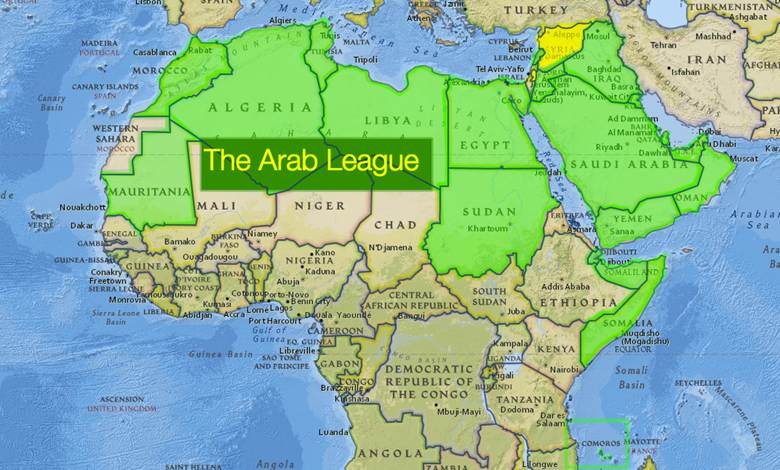
- Comprises 22 member states across West Asia and North Africa (WANA region).
- Works on political, economic, cultural coordination and dispute resolution.
Institutional Framework
- Council of Arab League: principal decision-making body (consensus-driven).
- 1950 Joint Defence Pact: envisages collective security cooperation.
- Operates as intergovernmental organisation (not supranational) → limited enforcement powers.
Key Facts
- Tenure: 5 years, traditionally Egyptian nominee holds Secretary-General post.
- Decision taken in 165th Council meeting (2026) chaired by Bahrain.
- Formal approval pending at Arab Summit (Saudi Arabia).
Prelims Pointers
- Arab League founded in 1945 (Cairo).
- Comprises 22 member states in West Asia & North Africa.
- 1950 Joint Defence Pact for collective security.
- Secretary-General traditionally from Egypt.
RBI Guidelines on Mis-selling & Insurance Commission Reforms
Why in News?
- Reserve Bank of India to issue ‘Responsible Business Conduct’ guidelines (July 2026) to curb mis-selling of third-party products by banks.
- Rising concern as life insurance commissions reached ₹60,800 crore (FY25, +18% YoY) while premium growth remained in single digits, indicating distorted incentive structures.
Relevance
- GS Paper III (Economy)
- Banking, insurance, financial sector reforms
- GS Paper II (Governance)
- Regulatory institutions, consumer protection
Practice Question
Q1.“Mis-selling of financial products undermines both consumer protection and financial sector stability.”Critically examine in the context of India’s insurance sector.(250 Words)
Static Background
Regulatory Architecture
- RBI regulates banks and their distribution practices.
- Insurance Regulatory and Development Authority of India regulates insurance sector, including commissions and product design.
- Insurance distribution via banks (bancassurance model) is a key financial inclusion channel.
Concept: Mis-selling
- Sale of unsuitable financial products driven by information asymmetry and incentive distortions, undermining consumer protection and trust.
Data & Evidence
- ₹60,800 crore commissions (FY25) in life insurance → 18% growth vs single-digit premium growth.
- First-year commissions ↑ >20%, single-premium payouts ↑ ~37%, reflecting aggressive customer acquisition strategies.
- Rising consumer complaints and anecdotal evidence (FD liquidation for policies) indicate systemic mis-selling risks.
Dimensions
1. Economic / Financial Sector Dimension
- High commissions distort efficient allocation of savings, diverting funds into sub-optimal insurance products.
- Undermines financial deepening and long-term capital formation, critical for insurance penetration goals.
- Leads to high customer acquisition costs, reducing insurer profitability and sector sustainability.
2. Governance / Regulatory Dimension
- Dual regulation (RBI + IRDAI) creates coordination challenges in bancassurance oversight.
- Existing Expense of Management (EOM) caps allow internal cost adjustments without addressing commission distortions.
- RBI guidelines aim to enforce fair conduct, transparency, and accountability in distribution practices.
3. Consumer Protection / Ethical Dimension
- Mis-selling exploits information asymmetry, especially among elderly and financially illiterate customers.
- Violates principles of fair disclosure, suitability, and fiduciary responsibility.
- Erodes trust in financial institutions and insurance as a social security instrument.
4. Institutional / Corporate Governance Dimension
- Proposal to make insurance company boards responsible for commission policies enhances top-level accountability.
- Board-approved frameworks ensure alignment with EOM limits and regulatory disclosures.
- Strengthens internal governance over external regulatory micromanagement.
5. Financial Inclusion Dimension
- Insurance is a risk-mitigation tool for vulnerable households, critical for inclusive growth.
- Mis-selling discourages first-time users, leading to financial exclusion and distrust.
- Need to balance access expansion with consumer protection safeguards.
6. Behavioural / Market Dynamics Dimension
- Front-loaded commissions incentivise short-term sales rather than long-term servicing.
- Leads to policy lapses, poor persistency ratios, and customer dissatisfaction.
- Transition to trail-based commissions aligns agent incentives with policyholder welfare.
Challenges / Gaps
- Difficulty in balancing regulation vs market flexibility in commission structures.
- Resistance from industry stakeholders dependent on high upfront commissions.
- Weak financial literacy among consumers, limiting informed decision-making.
- Monitoring challenges in large, decentralised bancassurance networks.
Way Forward
- Implement trail-based commission model, ensuring long-term agent accountability and customer servicing.
- Strengthen RBI–IRDAI coordination framework for unified regulation of bancassurance practices.
- Enhance financial literacy campaigns (RBI, SEBI, IRDAI initiatives) targeting vulnerable groups.
- Introduce mandatory suitability assessments and disclosure norms before product sale.
- Leverage technology (AI-based monitoring) to detect mis-selling patterns and anomalies.
Prelims Pointers
- IRDAI regulates insurance sector, including commissions and product approval.
- RBI regulates banks, including third-party product distribution.
- EOM (Expense of Management) caps total insurer expenses, not specific commissions.
- Trail-based commission = staggered payments over policy life.


