
Content
- Aditya-L1 AO Data Call — ISRO Opens Solar Mission Data to Indian Scientists
- Indigenous Biomaterials — A Pathway to Cut Fossil-Based Imports and Build a Bio-Economy
- Classical Language Heritage — Govt Releases 55 Volumes of Indian Literary Works
- Grasslands in Climate Policy — Recognising Rangelands as Carbon Sinks Beyond Forests
- FTA Impact — India’s Trade Deficit with Partner Countries Widens Despite Export Gains
Aditya-L1 AO Data Call — ISRO Opens Solar Mission Data to Indian Scientists
Why is it in news?
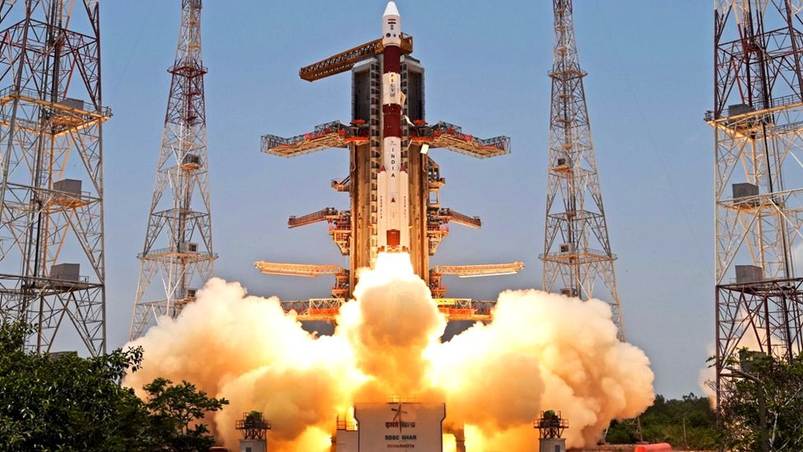
- On the 2nd anniversary of India’s Aditya-L1 solar mission, ISRO has issued an Announcement of Opportunity (AO) inviting Indian scientists and researchers to analyse the mission’s first AO-cycle data for solar science research.
- The Aditya-L1 spacecraft reached Lagrange Point-1 (L1) on 6 January 2024 (127 days after launch on 2 September 2023) and has since been carrying out continuous observations of the Sun; ISRO has now placed >23 TB of mission data in the public domain for global scientific utilisation.
Relevance
- GS-3 | Science & Technology — Space Research, Heliophysics, Space-based Observations
Facts & Data — Mission Status and Scientific Output
- Mission Objective: First Indian dedicated mission to study the Sun from L1 (≈1.5 million km from Earth) enabling continuous, eclipse-free observations.
- Orbit Position: Halo orbit around L1 → uninterrupted monitoring of solar corona, solar wind, CMEs, magnetic fields, and solar radiation.
- Data Generated:
- >23 terabytes (TB) of solar observation data already released
- Multiple peer-reviewed scientific papers published using mission data
- Instruments Studied (examples):
- VELC, SUIT, ASPEX, PAPA, SoLEXS, HEL1OS, MAG → spectrometry, coronagraphy, particle and magnetic-field measurements.
What ISRO’s AO Call Involves ?
- Open to: Indian scientists/researchers in universities, institutes, and colleges working in solar & space sciences.
- Role Invited: Apply as Principal Investigators (PIs) with proposals for
- scientific justification,
- data-analysis methodology, and
- clear research outcomes.
- Goal: Maximise scientific return from mission data through wider community participation and collaborative research.
Why this matters ?
- Strengthens India’s solar physics ecosystem by democratising access to high-value space-science data.
- Enhances space-weather forecasting capability (impact on satellites, power grids, communications, aviation).
- Positions India as a front-line contributor to heliophysics research alongside global missions (SOHO, Parker Solar Probe, Solar Orbiter).
- Encourages domestic research capacity, publications, and innovation in astrophysics and instrumentation science.
Indigenous Biomaterials — A Pathway to Cut Fossil-Based Imports and Build a Bio-Economy
Why is it in news?
- The article highlights India’s growing focus on indigenous biomaterials and biomanufacturing as a strategic pathway to reduce dependence on fossil-based imports, strengthen industrial competitiveness, and support environmental sustainability and farmer incomes.
- With global markets shifting toward low-carbon, circular and bio-based materials, India’s biomaterials sector is emerging as a $500-million (2024) opportunity in bioplastics, biopolymers and bio-derived materials, but requires scaling infrastructure, feedstocks, waste systems, and policy coordination to stay globally competitive.
Relevance
- GS-3 | Economy, Environment, Science & Technology — bio-economy, circular economy, import substitution, sustainable materials, industrial policy, farmer value-chains.
Facts & Data — What are Biomaterials?
- Definition: Materials derived wholly/partly from biological sources or engineered through biological processes, designed to replace, complement, or interact with conventional petroleum-based materials.
- Application sectors: Packaging, textiles, construction, healthcare, composites, consumer products.
- Three categories
- Drop-in biomaterials — chemically identical to petro-materials; compatible with existing manufacturing (e.g., bio-PET).
- Drop-out biomaterials — chemically different; need new processing or end-of-life systems (e.g., PLA – polylactic acid).
- Novel biomaterials — new properties (e.g., self-healing materials, bioactive implants, advanced biocomposites).
Why Biomaterials Matter for India ?
- Strategic import substitution
- Cuts reliance on fossil-based imports in plastics, chemicals, materials.
- Economic & industrial growth
- Expands bio-manufacturing value chains → boosts domestic industry.
- Farmer livelihood diversification
- Creates new revenue streams from agricultural residues & feedstocks.
- Climate & sustainability alignment
- Supports single-use plastic bans, circular economy norms, climate action.
- Export competitiveness
- Aligns Indian products with global low-carbon regulations & consumer demand.
Where India Stands — Sector Snapshot?
- Bioplastics market value (India, 2024): ~USD 500 million with strong growth outlook.
- Key domestic initiatives
- Balrampur Chini Mills — PLA plant (Uttar Pradesh) → among India’s largest planned biomaterials investments.
- Praj Industries — demonstration-scale bioplastics facility.
- Start-ups: Phool.co (temple-waste-to-biomaterials) and others building circular bio-economy models.
- Capability gap
- Dependence on foreign technologies for conversion of biomass feedstocks into market-ready biomaterials persists in some segments.
Risks & Constraints ?
- Feedstock competition with food crops if scaling is unmanaged.
- Resource stress from intensive cultivation → water & soil degradation risks.
- Weak waste & composting systems may negate environmental benefits.
- Fragmented policy silos across agriculture–industry–environment.
- Global race risk — slower action may leave India dependent on imported biomaterials as others scale faster.
Way Forward — Action Priorities
- Scale biomanufacturing capacity: fermentation, polymerisation, pilot plants, shared R&D facilities.
- Improve feedstock productivity: sugarcane, maize, agri-residues using advanced agritech & bio-process innovations.
- Invest in R&D & standards: promote drop-in + novel biomaterials for high-value applications.
- Regulatory clarity: definitions, labelling norms, recycling/composting pathways.
- Market-shaping tools: government procurement, time-bound incentives, de-risking early investments.
Classical Language Heritage — Govt Releases 55 Volumes of Indian Literary Works
Why is it in news?
- The Union Education Minister has released 55 volumes of literary works in classical Indian languages — including Kannada, Odia, Telugu, Malayalam, and Tamil — along with a sign-language series of the Tirukkural by Tamil poet Thiruvalluvar.
- The release is part of a national initiative to promote India’s linguistic heritage, led by the Centres of Excellence for Classical Languages under the Central Institute of Indian Languages (CIIL) and the Central Institute of Classical Tamil.
Relevance
- GS-1 | Indian Heritage & Culture — Classical Languages, Literature, Civilisational Legacy
- GS-2 | Governance — NEP 2020, Cultural Policy, Inclusion & Accessibility
Facts & Data — What was released?
- Total works released: 55 volumes
- 41 works developed by CIIL Centres of Excellence
- 13 books + sign-language Tirukkural series from the Central Institute of Classical Tamil
- Languages covered: Kannada, Odia, Telugu, Malayalam, Tamil
- Formats included:
- Literary texts, translations, and scholarly works
- Indian Sign-Language Tirukkural series to expand accessibility
Key Literary Works & Highlights
- Tamil: Tirukkural (including sign-language edition), Silappathikaram, Nannool translations and classical commentaries
- Malayalam: Works such as Purananooru, Pathuppattu
- Odia: Classical literature including Charyapada and Madalapanji
- Kannada & Telugu: Classical and medieval texts, translations, linguistic documentation
- Focus on revival, preservation, and wider access to ancient and medieval Indian literature
Purpose & Policy Linkages
- Aligns with National Education Policy (NEP) 2020 emphasis on
- Indian languages, knowledge systems, cultural heritage
- Inclusion of classical texts, translations, and linguistic diversity
- Promotes languages as a “unifying force” and bridge for dialogue and harmony
- Strengthens research, translation, and public accessibility to classical literature
Why this matters ?
- Cultural preservation: Institutional support for classical and regional literary traditions
- Academic value: Expands research resources for linguistics, literature, and history
- Inclusive access: Sign-language editions promote linguistic accessibility
- Soft power & identity: Reinforces India’s civilisational heritage and linguistic diversity
11 Classical Languages Recognised by the Government of India
- Tamil
- Sanskrit
- Telugu
- Kannada
- Malayalam
- Odia
- Marathi
- Pali
- Prakrit
- Assamese
- Bengali
Grasslands in Climate Policy — Recognising Rangelands as Carbon Sinks Beyond Forests
Why is it in news?
- With the UN declaring 2026 as the International Year for Rangelands and Pastoralists, the article highlights the growing global demand to recognise grasslands and savannahs in climate policy, especially after repeated UNFCCC climate summits (including COP30 in Belém, Brazil) continued to prioritise forests over grasslands in climate action and financing.
- Scientists, indigenous communities, and policy groups warn that grasslands are among the world’s most threatened biomes, facing rapid loss from agriculture, invasive species, mining, fire suppression, and policy neglect — despite their major role in carbon storage, water systems, biodiversity, and livelihoods.
Relevance
- GS-3 | Environment, Climate Change, Conservation, Land Use
- GS-2 | Multilateralism, Indigenous Rights, Governance of Natural Resources
Facts & Data — Why Grasslands Matter
- Biome significance
- Grasslands and savannahs cover ~40% of the Earth’s land surface globally.
- They support pastoralist communities, biodiversity, and hydrological systems (e.g., Brazil’s cerrado houses 8 of 12 major river systems).
- Carbon & ecosystem services
- Grasslands store a large share of carbon underground in soils, making them stable long-term carbon sinks (often more resilient than forests to fires & droughts).
- Suppression of indigenous land management (e.g., controlled burns, regulated grazing) increases wildfire intensity and carbon release.
Current Threats
- Australia — desert grasslands
- Facing climate-induced dry spells & flash floods and spread of buffel grass (Cenchrus ciliaris) → burns hotter, displaces native grasses.
- Indigenous Desert Alliance (IDA) uses cultural burning, invasive-species control, and ranger monitoring — but funding remains inadequate.
- Brazil — Cerrado savannah
- Losing habitat at nearly twice the rate of the Amazon due to agriculture, mining, and land-use change.
- 70% of Brazil’s agricultural toxic waste is dumped in the cerrado → ecological and health risks.
- Grasslands are ecologically linked to the Amazon — “No cerrado, no Amazon”.
Policy & Multilateral Context
- UNFCCC climate focus remains forest-centric (e.g., Tropical Forest Forever Facility at COP30).
- Grasslands better recognised under CBD & UNCCD:
- UNCCD COP16 — Resolution L15: calls rangelands complex socio-ecological systems, urges tenure security & investment.
- WWF & IUCN report at COP30: “Protecting the Overlooked Carbon Sink”
- Recommends integrating grasslands across all three Rio Conventions and into country NDCs.
India-Specific Insights
- Grasslands in India fall under 18 different Ministries → fragmented policy and conflicting classifications
- E.g., Environment Ministry treats grasslands as afforestation areas
- Rural Development Ministry categorises them as “wastelands” → open to conversion.
- India’s NDC currently targets 2.5–3 billion tonnes CO₂ sink via forests/tree cover by 2030
- Including grasslands as carbon sinks would strengthen mitigation and correct forest-bias.
What Needs to Change ?
- Recognise grasslands as independent ecosystems, not “empty land” or wasteland.
- Integrate grasslands into:
- Nationally Determined Contributions (NDCs)
- Land-degradation neutrality & biodiversity frameworks
- Ensure:
- Indigenous & community land rights + co-management
- Ecosystem-based approaches (fires, grazing, rangeland stewardship)
- Build cross-convention coordination — UNFCCC-CBD-UNCCD → break institutional silos.
FTA Impact — India’s Trade Deficit with Partner Countries Widens Despite Export Gains
Why is it in news?
- NITI Aayog’s ‘Trade Watch Quarterly’ report (Jan 2026) finds that India’s trade deficit with FTA partner countries has widened sharply, rising 59.2% between April–June 2025 compared to the previous year — even as electronics exports grew strongly.
- The report comes at a time when India is expanding FTA negotiations with the EU, U.S., Australia, EAEU, GCC, Canada, SACU, and exploring new PTAs with Brazil and Israel, raising questions about trade imbalances and sectoral competitiveness under FTAs.
Relevance
- GS-3 | Economy — External Sector, FTAs, Trade Balance, Manufacturing Competitiveness
Facts & Data — Trade Deficit with FTA Partners
- Trade deficit growth (Apr–Jun 2025): +59.2% YoY
- Drivers of widening deficit
- Petroleum imports up, due to higher crude prices and volumes
- Weak export growth in several sectors
- Stronger import demand from FTA partners
- Countries contributing to deficit trends
- ASEAN, South Korea, Japan, Thailand, UAE — rising import bills
- Some FTA partners saw export declines (e.g., Singapore −13.3%, Australia −8.7%, Saudi Arabia −8.5%)
Sectoral Performance
- Electronics — strong export surge
- Became 2nd-largest export sector
- 47% YoY growth in Apr–Jun 2025
- Export gains driven by:
- Mobile phones, electronic circuits, components
- Petroleum & commodities — deficit pressure
- Gold imports from UAE increased sharply
- Petroleum oils & bituminous minerals up
- Iraq and Russia remain key crude suppliers; import values rose
Geography-wise Trends
- Rising imports from
- UAE (+28.7%)
- China (+16.8%)
- USA (+16.9%)
- Export growth markets
- South Korea (+15.6%)
- Japan (+2.8%)
- Thailand (+2.9%)
- Bhutan (+10.2%)
- Declining export markets
- Singapore, Australia, Saudi Arabia — contraction noted
Policy Context
- India signed FTAs with UAE & Australia (2022), UK & EFTA under discussion, ASEAN review pending
- Report flags:
- Structural export weakness outside electronics
- High import dependence in fuels, gold, intermediates
- Need for sector-specific competitiveness & supply-chain depth
Significance
- Highlights a pattern seen in past FTAs — imports rise faster than exports unless domestic industry upgrades capacity & value-addition.
- Suggests that electronics PLI-led gains are promising but broad-based export strength is still lacking.
- Signals the need to align FTA strategy with industrial policy, RoO enforcement, and trade-deficit risk management.


