
Content
- Removal of the Speaker of Lok Sabha
- 41%’ Illusion: A Quiet Re-engineering of India’s Fiscal Federal Landscape
- A Landmark Year for Indian Women’s Sports
- Asteroid 2024 YR4: No Longer a Threat
- LNG Supply Disruptions and India’s Energy Security Challenge
- Calibrated Easing of FDI Restrictions from Neighbouring Countries
- National Highways Green Cover Index (NH-GCI) for Sustainable Highway Infrastructure
- Global Commitment to Dismantle Legal Inequality for Women (CSW70 Agreement)
Removal of the Speaker of Lok Sabha
Why in News?
- The Lok Sabha took up a resolution seeking removal of the Speaker, following a motion moved by the Opposition.
- The debate triggered discussion on the neutrality of the Speaker and the constitutional process for removing the presiding officer of the House.
Relevance
GS Paper II – Polity / Parliament
- Constitutional provisions governing the office of the Speaker under
- Article 93 of the Constitution of India
- Article 94 of the Constitution of India.
- Speaker’s powers in certifying Money Bills under
- Article 110 of the Constitution of India.
- Adjudication of defection cases under
- Tenth Schedule of the Constitution of India.
Practice Question
- The Speaker of the Lok Sabha occupies a central position in India’s parliamentary system. Examine the constitutional provisions governing the removal of the Speaker and discuss why neutrality of the office is critical for parliamentary democracy. (250 words)
Constitutional Position of the Speaker
Constitutional Basis
- The office of the Speaker is established under Article 93 of the Constitution, which mandates that the Lok Sabha elect a Speaker and Deputy Speaker.
Role in Parliamentary Democracy
- The Speaker acts as the presiding officer of the Lok Sabha and ensures orderly conduct of proceedings.
Key Functions
- Presides over House proceedings and maintains discipline.
- Interprets rules of procedure and parliamentary conventions.
- Certifies Money Bills under Article 110.
- Adjudicates disqualification under the Tenth Schedule (Anti-Defection Law).
Procedure for Removal of the Speaker
Constitutional Provision
- Governed by Article 94(c) of the Constitution.
Key Conditions
- Notice Requirement
- A minimum 14-day notice must be given before moving the resolution.
- Majority Requirement
- The resolution must be passed by a majority of members present and voting in the Lok Sabha.
- Presiding Officer During Debate
- When a motion for removal of the Speaker is under consideration, the Speaker does not preside over the sitting.
- The Deputy Speaker or another member of the panel of chairpersons presides.
- Right to Participate
- The Speaker has the right to speak and participate in the debate, but cannot preside over the proceedings.
Importance of Speaker’s Neutrality
Institutional Authority
- The Speaker’s authority derives from the confidence of the House and acceptance across political parties.
Parliamentary Stability
- Neutral conduct ensures smooth functioning of legislative debates and decision-making processes.
Safeguarding Democracy
- A non-partisan Speaker strengthens parliamentary accountability and checks political misuse of procedural powers.
Challenges to the Neutrality of the Speaker
Political Allegations
- In recent years, decisions related to anti-defection rulings, scheduling of debates, and recognition of parties have often attracted political criticism.
Perception of Partisanship
- Since the Speaker is usually elected from the ruling party, accusations of bias sometimes arise.
Increasing Political Polarisation
- Rising political competition has intensified disputes regarding procedural decisions of the Chair.
Significance of Removal Motions
Rare Parliamentary Event
- Motions to remove the Speaker are extremely rare in India’s parliamentary history.
Institutional Safeguard
- The procedure ensures accountability of the presiding officer while preserving institutional dignity.
Democratic Oversight
- It allows the House to express lack of confidence in the Speaker’s impartiality if necessary.
Way Forward
Strengthening Institutional Neutrality
- The Speaker should function in a strictly non-partisan manner, maintaining equal distance from both Treasury and Opposition benches.
Reforming Parliamentary Conventions
- Some experts suggest adopting the British convention, where the Speaker resigns from their party upon election.
Enhancing Transparency
- Clear explanations for procedural decisions can improve public confidence in parliamentary functioning.
Political Consensus
- Political parties must respect the dignity of the Chair and avoid politicising institutional positions.
Conclusion
- The Speaker of the Lok Sabha occupies one of the most critical positions in India’s parliamentary democracy.
- While the Constitution provides a mechanism for removal, the credibility of the institution ultimately depends on the perception of impartiality, procedural fairness, and respect for parliamentary conventions.
‘41%’ illusion: a quiet re-engineering of India’s fiscal federal landscape
Why in News?
- The Union Government’s Explanatory Memorandum (February 1, 2026) responding to the Sixteenth Finance Commission (FC16) recommendations has sparked debate on the evolving nature of fiscal federalism in India.
- While the Centre accepted several fiscal transfer recommendations—such as 41% tax devolution to States and grants for local bodies—it deferred structural reforms related to fiscal rules, subsidies, and off-budget borrowings.
Relevance
GS Paper II – Polity / Federalism
- Constitutional role of the Finance Commission of India in Centre–State fiscal relations.
- Constitutional provisions governing fiscal transfers under
- Article 280 of the Constitution of India
- Article 275 of the Constitution of India.
- Debate over cooperative vs fiscal centralisation in India’s federal structure.
GS Paper III – Economy / Public Finance
- Vertical tax devolution: 41% share of divisible pool for States.
- Impact of cesses and surcharges shrinking the divisible pool of central taxes.
- Issues related to State debt levels, off-budget borrowings, and fiscal responsibility frameworks.
Practice Question
- The recommendations of the Sixteenth Finance Commission have renewed debate on the evolving nature of fiscal federalism in India. Examine the key issues affecting Centre–State fiscal relations and suggest reforms to strengthen cooperative fiscal federalism. (250 words)
What is the Finance Commission?
Constitutional Basis
- The Finance Commission is a constitutional body established under Article 280 of the Constitution, responsible for recommending the distribution of financial resources between the Union and the States.
Core Functions
- Recommend the vertical devolution of taxes between the Centre and States.
- Determine horizontal distribution among States based on formula-based criteria.
- Recommend grants-in-aid to States under Article 275.
- Advise on local body funding and disaster management funds.
Tenure
- A Finance Commission is appointed every five years by the President of India.
Key Decisions Accepted by the Union Government
Retention of 41% Tax Devolution
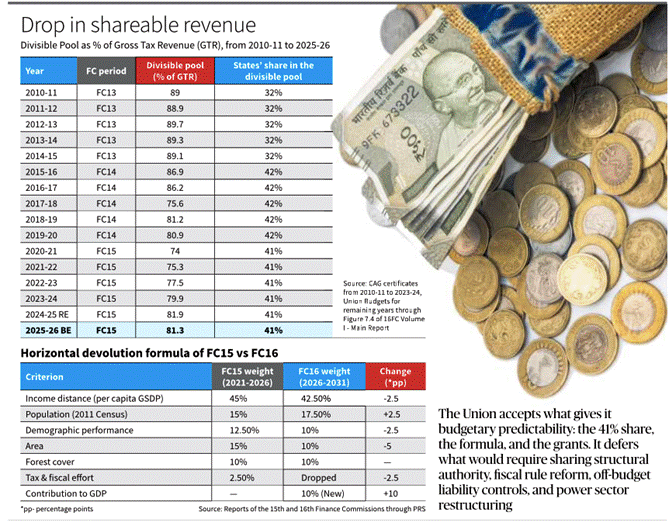
- The Union Government accepted the recommendation that States continue to receive 41% of the divisible pool of central taxes, maintaining the share introduced by the 15th Finance Commission.
- This share was originally 42% under the 14th Finance Commission, reduced to 41% after the creation of Union Territories of Jammu & Kashmir and Ladakh.
Acceptance of Horizontal Devolution Formula
- The Centre accepted the formula for distributing tax revenues among States, which determines how the 41% share is divided across States.
- This formula considers factors such as population, income distance, forest cover, and economic contribution.
Local Body Grants
- The Commission recommended ₹7,91,493 crore for rural and urban local bodies, aimed at strengthening decentralised governance and improving service delivery.
- These grants include basic grants and performance-based grants, linked to governance reforms and financial accountability.
Disaster Management Funds
- The Union Government also accepted the Finance Commission’s recommendations regarding State Disaster Response Funds and National Disaster Response Fund allocations.
Structural Issues Deferred by the Union Government
Fiscal Responsibility Legislation Reform
- The Commission recommended reforms to Fiscal Responsibility Legislation (FRL) to strengthen fiscal discipline among States.
- The government acknowledged the recommendation but deferred decisions on amending fiscal rules and borrowing limits.
Control of Off-Budget Borrowings
- Many States borrow through government-controlled public sector entities, which allows them to keep these liabilities outside official fiscal deficit calculations.
- FC16 recommended tighter monitoring of such borrowings, but the government postponed reforms.
Power Sector Reforms
- State electricity distribution companies (DISCOMs) continue to generate large financial losses due to subsidised tariffs, operational inefficiencies, and high transmission losses.
- Although the Commission highlighted the need for structural reforms, the Explanatory Memorandum deferred action.
The Issue of Shrinking Divisible Pool
Rising Cesses and Surcharges
- Cesses and surcharges are taxes levied by the Union Government that are not shared with States, as they fall outside the divisible pool.
Declining Share of Divisible Pool
Data from Finance Commission reports shows:
- FC13 period: Divisible pool averaged 89.2% of gross tax revenue
- FC14 period: Declined to 82.1%
- FC15 period: Declined further to 78.3%
Implication
- Although States receive 41% of the divisible pool, the actual share of total central tax revenue transferred to States is lower because the pool itself is shrinking.
Discontinuation of Certain Grants
FC16 discontinued several grants previously used to support States:
- Revenue deficit grants
- Sector-specific grants
- State-specific grants
These instruments had provided targeted fiscal relief to financially weaker States.
Fiscal Stress in States
Rising Debt Levels
Several States face high debt burdens:
- Punjab: Debt at 42.9% of GSDP in 2023–24
- Rajasthan: Debt at 37.9% of GSDP
- West Bengal: Debt at 38.3% of GSDP
- Andhra Pradesh: Debt at 34.6% of GSDP
Revenue Deficits
- Punjab recorded a revenue deficit of 3.7% of GSDP, indicating borrowing primarily to meet recurring expenditure rather than capital investment.
GST Compensation Issue
Background
- Under the GST compensation mechanism (2017–2022), States were guaranteed 14% annual growth in GST revenues.
End of Compensation
- The compensation scheme ended in June 2022, leaving several States facing revenue shortfalls.
Example
- Tamil Nadu estimated a revenue gap of nearly ₹20,000 crore in FY 2024–25 due to the loss of compensation.
Change in Horizontal Devolution Criteria
Previous Criterion (FC15)
- Tax and Fiscal Effort – 2.5% weight
- Rewarded States that mobilised higher tax revenues relative to their economic capacity.
New Criterion (FC16)
- Contribution to GDP – 10% weight
- Allocates resources based on each State’s share in national GDP.
Implication
- Economically stronger States such as Maharashtra, Gujarat, and Karnataka benefit from this change.
- Lower-income States such as Bihar, Jharkhand, and Uttar Pradesh gain relatively less.
Conditional Local Body Grants
Grant Structure
The ₹7.91 lakh crore local body grant includes:
- Basic Grants
- Performance Grants
Conditions
States must satisfy entry conditions such as:
- Constituted local bodies
- Audited accounts
- Timely State Finance Commission reports
Implementation Issue
- During the 15th Finance Commission period, only 62.6% of recommended urban local body grants were actually released, showing difficulties in meeting conditions.
Implications for Fiscal Federalism
Increasing Centre Dominance
- Growing reliance on cesses and surcharges increases the fiscal power of the Union Government.
Reduced Equalisation
- Shifting from fiscal effort criteria to GDP contribution criteria changes the equalisation philosophy of fiscal transfers.
Structural Fiscal Stress
- States face rising debt burdens and shrinking fiscal space due to GST reforms and declining revenue flexibility.
Asymmetry in Federal Finance
- The pattern suggests increasing fiscal centralisation, which may alter the balance of India’s cooperative federal structure.
Way Forward
Reforming the Divisible Pool Structure
- Limit excessive use of cesses and surcharges to ensure that a larger share of tax revenues is available for States.
Strengthening Fiscal Responsibility Framework
- Update FRBM/FRL laws to ensure transparent fiscal reporting and regulate off-budget borrowings.
GST Reform
- Consider revisiting GST compensation mechanisms or revenue stabilisation measures for States.
Strengthening Equalisation
- Finance Commission formulas should prioritise fiscal need, income distance, and development gaps to support poorer States.
Improving State Fiscal Governance
- States must improve tax mobilisation, public expenditure efficiency, and subsidy rationalisation.
Conclusion
- The Sixteenth Finance Commission’s recommendations reflect continuity in tax devolution but also reveal deeper structural tensions within India’s fiscal federal system.
- While headline transfers remain stable, the shrinking divisible pool, rising State debt, and shifting devolution criteria highlight evolving challenges in balancing economic efficiency, fiscal discipline, and cooperative federalism.
A landmark year for Indian women’s sports
Why in News?
- Indian women athletes achieved significant global success in 2025, with national teams winning world titles in cricket and kabaddi and individual athletes achieving historic milestones.
- These achievements highlight the growing strength of women’s sports in India, supported by improved training infrastructure, policy support, and increasing societal acceptance.
Relevance
GS Paper I – Society / Women Empowerment
- Achievements of women athletes promoting gender equality and social transformation.
- Role models encouraging greater participation of girls in sports and challenging patriarchal stereotypes.
GS Paper II – Governance / Social Policy
- Government initiatives supporting women athletes such as
- Khelo India Programme
- Target Olympic Podium Scheme.
- Role of institutional reforms and sports governance in strengthening women’s participation.
Practice Question
- The recent success of Indian women athletes reflects deeper structural changes in India’s sporting ecosystem. Examine the factors responsible for the rise of women’s sports in India and discuss the challenges that still remain. (250 words)
Major Achievements of Indian Women Athletes in 2025
Women’s Cricket World Cup Victory
- The Indian women’s cricket team won the World Cup, marking a historic achievement that strengthened India’s position as a dominant force in international women’s cricket.
Women’s Kabaddi World Cup Title
- India’s women’s kabaddi team secured the Kabaddi World Cup title, reflecting the country’s traditional strength in the sport and the growing competitiveness of women athletes.
Blind Women’s T20 World Cup
- The Indian blind women’s cricket team won the inaugural Blind Women’s T20 World Cup, highlighting the expansion of inclusive sports opportunities for athletes with disabilities.
Divya Deshmukh – Chess
- 19-year-old Divya Deshmukh became the first Indian woman to win the FIDE Women’s Chess World Cup, marking a landmark moment for Indian chess on the global stage.
Jaismine Lamboria – Boxing
- Indian boxer Jaismine Lamboria won the gold medal at the Women’s World Boxing Championships, strengthening India’s reputation in international boxing.
Minakshi Hooda – Boxing
- Boxer Minakshi Hooda also secured a gold medal at the World Boxing Championships, showcasing India’s rising dominance in women’s boxing.
Mirabai Chanu – Weightlifting
- Olympic medallist Mirabai Chanu won a silver medal at the World Weightlifting Championships, marking her third podium finish at the global event.
Tanvi Sharma – Badminton
- Rising badminton star Tanvi Sharma became only the fifth Indian to reach the final of the BWF World Junior Championships, joining elite players such as Saina Nehwal and Aparna Popat.
Role of Pioneering Women in Indian Sports
Shantha Rangaswamy
- Former Indian women’s cricket captain Shantha Rangaswamy played a key role in developing women’s cricket and later contributed as a sports administrator.
Diana Edulji
- Former captain Diana Edulji, who later became a member of the BCCI’s Committee of Administrators, significantly contributed to institutional reforms and promotion of women’s cricket.
Legacy of Early Athletes
- Early pioneers created opportunities for future generations by challenging gender stereotypes and advocating equal recognition for women athletes.
Structural Factors Behind the Rise of Women’s Sports
Government Support
- Programmes such as Khelo India, Target Olympic Podium Scheme (TOPS), and National Sports Development initiatives have improved training facilities and financial support for athletes.
Improved Infrastructure
- Expansion of sports academies, international-standard training centres, and sports science facilities has improved athlete performance and competitiveness.
Corporate Sponsorship
- Growing participation of private sponsors and sports leagues has increased financial support and visibility for women’s sports.
Media Visibility
- Greater media coverage and digital broadcasting have helped increase public interest and recognition of women athletes.
Importance of Women’s Sports Development
Gender Empowerment
- Women’s participation in sports promotes gender equality, confidence building, and leadership development.
National Prestige
- International sporting success enhances India’s global image and national pride.
Social Transformation
- Successful women athletes serve as role models for young girls, encouraging greater participation in sports and physical activities.
Olympic Aspirations
- Strong performances by women athletes strengthen India’s prospects of winning medals in future Olympic Games and global sporting events.
Challenges in Women’s Sports
Gender Disparity
- Women athletes often face unequal pay, fewer sponsorship opportunities, and limited media coverage compared to male athletes.
Infrastructure Gaps
- In many regions, especially rural areas, lack of sports infrastructure and training facilities limits participation by girls.
Social Barriers
- Cultural norms and societal expectations sometimes discourage girls from pursuing professional sports careers.
Safety and Support Systems
- Women athletes require better safety mechanisms, support systems, and career security after retirement.
Way Forward
Strengthening Grassroots Sports
- Expand school-level and community sports programmes to increase participation of girls in athletics and competitive sports.
Equal Opportunities
- Ensure equal prize money, sponsorship opportunities, and media coverage for women athletes across sporting disciplines.
Institutional Reforms
- Strengthen sports governance and ensure greater representation of women in sports administration and decision-making bodies.
Talent Identification
- Develop nationwide talent scouting and training programmes to identify promising athletes from rural and underrepresented regions.
Long-Term Athlete Development
- Provide sustained support through sports scholarships, training programmes, and post-career opportunities for women athletes.
Conclusion
- The remarkable achievements of Indian women athletes in 2025 reflect the growing strength and global competitiveness of women’s sports in India.
- With continued policy support, infrastructure development, and societal encouragement, women athletes can play a transformative role in advancing gender equality, national pride, and India’s international sporting success.
Asteroid YR4: no longer a threat
Why in News?
- NASA scientists confirmed that asteroid 2024 YR4 will not collide with the Moon in 2032, ending earlier concerns regarding a potential lunar impact.
- Early orbital models had suggested a 3.8%–4.3% probability of lunar collision on 22 December 2032, based on limited observational data following the asteroid’s discovery in late 2024.
- New observations from the James Webb Space Telescope enabled scientists to refine the asteroid’s trajectory with higher precision.
Relevance
GS Paper III – Science & Technology / Space
- Monitoring of Near-Earth Objects through agencies such as
- NASA
- Center for Near-Earth Object Studies
- Planetary Defense Coordination Office.
- Role of advanced space observatories like the
- James Webb Space Telescope
in refining asteroid trajectories and reducing orbital uncertainty.
- James Webb Space Telescope
Practice Question
- Near-Earth Objects pose potential risks to Earth but also provide valuable scientific insights into the solar system. Discuss the importance of planetary defence systems and international cooperation in monitoring asteroid threats. (250 words)
What are Near-Earth Objects (NEOs)?
Definition
- Near-Earth Objects are asteroids or comets whose orbits bring them within 1.3 astronomical units (AU) of the Sun, meaning they come relatively close to Earth’s orbit.
Classification
NEOs are broadly divided into:
- Near-Earth Asteroids (NEAs) – rocky bodies orbiting close to Earth
- Near-Earth Comets (NECs) – icy bodies that release gas and dust when approaching the Sun
Potentially Hazardous Objects
- Objects larger than 140 meters in diameter that come within 7.5 million kilometres of Earth’s orbit are classified as Potentially Hazardous Asteroids (PHAs).
Asteroid 2024 YR4
Physical Characteristics
- Estimated size: approximately 65 metres in diameter, comparable to a medium-sized building.
Discovery
- The asteroid was discovered in late 2024 during routine monitoring of near-Earth objects.
Initial Risk Assessment
- Early orbital simulations suggested a 3.8%–4.3% probability of collision with the Moon on 22 December 2032.
Updated Assessment
- New calculations confirm that the asteroid will pass the Moon at a distance of approximately 21,200 km, eliminating the risk of impact.
Earth Impact Risk
- NASA’s latest modelling shows no probability of impact with Earth for at least the next 100 years.
Role of the James Webb Space Telescope
Observation Capability
- The James Webb Space Telescope (JWST) possesses extremely sensitive infrared instruments capable of detecting very faint objects in deep space.
Key Contribution
- In February 2026, JWST successfully captured two crucial observations of asteroid 2024 YR4 when the object was extremely faint.
Impact of New Data
- These observations allowed scientists to refine orbital calculations, significantly reducing uncertainty about the asteroid’s future trajectory.
Understanding Orbital Uncertainty
Initial Detection Challenges
- When a new asteroid is discovered, scientists initially have very limited observational data, resulting in wide uncertainties in trajectory predictions.
Probabilistic Modelling
- Early calculations generate multiple possible orbital paths, which may include potential impact scenarios.
Refinement Process
- As more observations are collected over time, scientists can narrow the range of possible trajectories, improving prediction accuracy.
Planetary Defence Systems
Objective
- Planetary defence refers to global efforts to detect, track, and potentially deflect asteroids or comets that could threaten Earth.
NASA Monitoring Programs
- NASA operates several asteroid detection programmes, including:
- Center for Near-Earth Object Studies (CNEOS)
- Planetary Defense Coordination Office (PDCO)
- NEOWISE asteroid survey mission
Global Monitoring Networks
- Observatories and space agencies worldwide collaborate through international asteroid tracking networks.
Importance of Asteroid Monitoring
Early Warning System
- Continuous monitoring of near-Earth objects allows scientists to identify potential threats decades in advance, enabling mitigation planning.
Scientific Research
- Studying asteroids provides insights into the early formation of the solar system, as these objects are remnants from planetary formation.
Disaster Prevention
- Asteroid monitoring is critical to prevent large-scale natural disasters caused by potential impacts.
Example: Planetary Defence Test Mission
NASA’s DART Mission (2022)
- The Double Asteroid Redirection Test (DART) successfully altered the orbit of asteroid moonlet Dimorphos, demonstrating the feasibility of asteroid deflection techniques.
- The mission marked the first successful planetary defence experiment, proving that humanity can potentially alter the trajectory of hazardous asteroids.
Challenges in Planetary Defence
Detection Limitations
- Smaller asteroids, especially those approaching from sunward directions, are difficult to detect using ground-based telescopes.
Limited Observation Windows
- Some objects become visible only for short periods, making accurate trajectory calculations difficult.
International Coordination
- Planetary defence requires global cooperation among space agencies, observatories, and governments.
Way Forward
Strengthening Global Monitoring Systems
- Expand global networks of ground-based telescopes and space-based observatories to improve asteroid detection capability.
Advanced Space Missions
- Launch dedicated missions to study, track, and potentially deflect hazardous asteroids.
International Cooperation
- Strengthen coordination through international frameworks such as UN-led planetary defence initiatives and space agencies collaboration.
Public Awareness and Preparedness
- Improve public communication about asteroid monitoring to avoid unnecessary panic while ensuring preparedness.
Conclusion
- The case of asteroid 2024 YR4 demonstrates how modern space technology and continuous observation allow scientists to accurately predict asteroid trajectories and rule out potential threats.
- Advances in planetary defence systems, satellite monitoring, and international cooperation are crucial for protecting Earth from future asteroid hazards while expanding humanity’s understanding of the solar system.
LNG Supply Disruptions and India’s Energy Security Challenge
Why in News?
- The conflict in West Asia disrupted LNG shipments passing through the Strait of Hormuz, affecting India’s gas imports and raising concerns about energy supply stability.
- The Government invoked provisions under the Essential Commodities Act to prioritise natural gas allocation for critical sectors such as household cooking gas and transport fuels.
- Gas allocation has been prioritised for Piped Natural Gas (PNG), Compressed Natural Gas (CNG), and Liquefied Petroleum Gas (LPG) production to safeguard essential consumer needs.
Relevance
GS Paper III – Energy Security / Economy
- Impact of LNG supply disruptions on India’s energy system due to tensions in West Asia.
- Government intervention using the Essential Commodities Act, 1955 to regulate natural gas allocation.
- Implications for industrial production, inflation, and energy-dependent sectors.
GS Paper III – Infrastructure / Energy
- Importance of LNG for City Gas Distribution (CNG and PNG) and LPG production.
- Dependence on imported LNG for nearly 45–50% of India’s natural gas consumption.
Practice Question
- Geopolitical disruptions in energy transit routes can significantly affect India’s energy security. Examine the implications of LNG supply disruptions for India’s economy and discuss measures required to strengthen energy resilience. (250 words)
What is Liquefied Natural Gas (LNG)?
Definition
- LNG is natural gas cooled to approximately –162°C, converting it into liquid form, which reduces its volume by nearly 600 times, enabling efficient long-distance transport.
Major Uses
- Power generation
- Industrial fuel for sectors such as steel, fertilisers, and petrochemicals
- City Gas Distribution (PNG and CNG)
- Household cooking gas supply
India’s LNG Dependence
- India imports around 45–50% of its natural gas consumption through LNG, making supply stability critical for the economy.
Importance of the Strait of Hormuz
Strategic Energy Chokepoint
- The Strait of Hormuz connects the Persian Gulf to the Gulf of Oman and the Arabian Sea, serving as one of the world’s most critical oil and gas transit routes.
Global Energy Flows
- Nearly 20% of global oil trade and a significant portion of LNG shipments pass through the Strait of Hormuz, making it highly sensitive to geopolitical disruptions.
Impact on India
- Many of India’s energy imports originate from West Asian countries such as Qatar, UAE, and Saudi Arabia, which rely on the Strait of Hormuz for export routes.
Government Response to the LNG Supply Disruption
Invocation of the Essential Commodities Act
- The government invoked the Essential Commodities Act, 1955, enabling authorities to regulate production, supply, and distribution of critical resources to prevent shortages during crises.
- This intervention ensures that essential consumer sectors receive priority access to limited gas supplies.
Priority Allocation of Natural Gas
The government has prioritised natural gas supply for:
Household Cooking Gas
- Piped Natural Gas (PNG) supplied to residential households has been given priority to ensure uninterrupted cooking gas availability.
Transport Sector
- Compressed Natural Gas (CNG) used in public transport and private vehicles has been prioritised to maintain urban mobility and prevent fuel shortages.
LPG Production
- Natural gas used in LPG production units has also been prioritised to sustain cooking gas supply chains across the country.
Curtailment for Non-Priority Sectors
- Gas supply to industrial sectors such as textiles, steel manufacturing, mining, and petrochemicals may face partial curtailment during the crisis.
- Industries dependent on natural gas feedstock may need to shift temporarily to alternative fuels or adjust production schedules.
Economic Ripple Effects
Impact on Manufacturing
- Industries such as steel, textiles, fertilisers, and petrochemicals, which rely heavily on natural gas as fuel or feedstock, may face increased production costs.
Supply Chain Disruptions
- Gas shortages could disrupt chemical manufacturing and industrial supply chains, affecting downstream sectors.
Inflationary Pressures
- Energy price increases may contribute to higher production costs and inflation in energy-intensive sectors.
Broader Implications for India’s Energy Security
Import Dependence
- India imports more than 85% of its crude oil and nearly half of its natural gas requirements, exposing the country to global energy supply shocks.
Vulnerability to Geopolitical Conflicts
- Energy supply routes through strategic chokepoints such as the Strait of Hormuz make India vulnerable to geopolitical conflicts in West Asia.
Need for Energy Diversification
- Diversifying import sources and expanding domestic energy production are essential to reduce supply risks.
Challenges in India’s Energy Security
High Import Dependency
- Heavy reliance on imported energy exposes India to price volatility and supply disruptions in global markets.
Limited Strategic Gas Reserves
- India currently maintains limited strategic reserves for natural gas, reducing its ability to absorb supply shocks.
Infrastructure Constraints
- Gas pipeline infrastructure and LNG regasification capacity remain unevenly distributed across regions.
Industrial Dependence
- Several industries depend heavily on natural gas for feedstock and fuel, making them vulnerable during supply disruptions.
Way Forward
Diversifying Energy Imports
- India should diversify LNG import sources beyond West Asia by strengthening partnerships with Australia, the United States, Russia, and Africa.
Expanding Strategic Energy Reserves
- Developing strategic gas reserves similar to crude oil reserves can improve resilience against supply disruptions.
Increasing Domestic Gas Production
- Boosting domestic gas exploration under initiatives such as Hydrocarbon Exploration and Licensing Policy (HELP) can reduce import dependence.
Strengthening Renewable Energy
- Accelerating investment in renewable energy and green hydrogen can reduce reliance on fossil fuels over the long term.
Energy Infrastructure Development
- Expanding national gas pipeline networks, LNG terminals, and storage facilities will improve supply flexibility and energy security.
Conclusion
- The disruption of LNG imports due to geopolitical tensions in West Asia highlights the vulnerability of India’s energy supply chains to global conflicts.
- Government intervention through the Essential Commodities Act and prioritised gas allocation demonstrates the importance of crisis management mechanisms in ensuring energy access for essential sectors.
- However, long-term energy security will require diversification of energy sources, expansion of domestic production, and accelerated transition toward renewable energy systems.
Calibrated Easing of FDI Restrictions from Neighbouring Countries
Why in News?
- The Union Cabinet has eased certain restrictions on Foreign Direct Investment (FDI) from countries sharing land borders with India, including China, while retaining safeguards for strategic sectors.
- The revised policy allows limited investments in key manufacturing sectors such as electronics components, capital goods, and solar supply chains, subject to government approval and ownership safeguards.
- The government has also introduced a 60-day timeline for processing investment proposals, improving regulatory clarity and investor confidence.
Relevance
GS Paper III – Economy / Investment Policy
- Revision of FDI norms related to investments from neighbouring countries under Press Note 3 (2020).
- Implications for manufacturing supply chains, technology transfer, and capital inflows in sectors like electronics and solar manufacturing.
- Strengthening domestic industry under Make in India and Atmanirbhar Bharat.
GS Paper III – Infrastructure / Energy
- Investment in solar supply chains, polysilicon production, and electronics manufacturing supporting renewable energy expansion.
Practice Question
- India’s revised FDI framework allows limited investments from neighbouring countries while retaining strategic safeguards. Examine the economic rationale behind this policy shift and analyse the national security concerns associated with foreign investments in critical sectors. (250 words)
Background: Press Note 3 (2020)
Context
- Press Note 3 was issued in April 2020 during the COVID-19 pandemic, when global markets were unstable and concerns arose regarding potential opportunistic takeovers of Indian companies.
Key Provision
- It mandated that any investment from countries sharing land borders with India must receive prior government approval.
Countries Covered
India shares land borders with:
- China
- Pakistan
- Bangladesh
- Nepal
- Myanmar
- Bhutan
- Afghanistan
Policy Objective
- The policy was designed to protect Indian companies from hostile acquisitions and safeguard strategic sectors from foreign influence.
Key Features of the Revised FDI Policy
Limited Opening for Manufacturing Investments
- The revised policy allows restricted FDI from neighbouring countries in selected manufacturing sectors, particularly those linked to high-technology supply chains such as electronics and renewable energy components.
- Sectors identified include capital goods manufacturing, electronic components, polysilicon production, and ingot-wafer manufacturing for solar cells.
Threshold for Automatic Approval
- Investments up to 10% equity in certain sectors may receive automatic clearance, while larger investments continue to require government scrutiny.
- This threshold aims to encourage minority investments without compromising national control over strategic industries.
Ownership and Control Safeguards
- The revised framework requires that majority ownership and management control remain with Indian citizens or Indian-controlled entities.
- This ensures that strategic sectors remain under domestic decision-making authority and regulatory oversight.
Government Approval for Strategic Sectors
- Investments in sensitive sectors such as semiconductors, telecommunications infrastructure, and defence-related technologies will continue to require detailed government approval.
- Security agencies and relevant ministries will review proposals before approval is granted.
Time-bound Clearance Mechanism
- The government has introduced a 60-day timeline for processing investment proposals, improving predictability and efficiency in investment approvals.
- This reform aims to reduce bureaucratic delays and enhance India’s attractiveness as a manufacturing investment destination.
Economic Rationale Behind the Policy Change
Strengthening Manufacturing Supply Chains
- India seeks to strengthen domestic supply chains in sectors such as electronics, semiconductors, and solar manufacturing, which require large capital investments and advanced technological capabilities.
Supporting “Make in India”
- Foreign investment can provide technology transfer, capital inflows, and global market access, supporting India’s manufacturing ambitions under the Make in India and Atmanirbhar Bharat initiatives.
Competing with Global Manufacturing Hubs
- India faces competition from Vietnam, Indonesia, and Thailand, which actively attract global manufacturing investment through liberal FDI policies.
Boosting Renewable Energy Manufacturing
- Investments in solar manufacturing components such as polysilicon and wafers are critical for achieving India’s target of 500 GW of non-fossil fuel capacity by 2030.
Strategic and Security Concerns
National Security Risks
- Investments from geopolitical rivals may create strategic vulnerabilities in critical infrastructure sectors, including telecommunications, data infrastructure, and defence technologies.
Technology and Data Security
- Advanced manufacturing sectors often involve sensitive technologies and digital infrastructure, which require careful regulatory scrutiny.
Economic Dependence
- Excessive reliance on foreign capital from a single country may increase economic dependence and supply chain risks.
Broader Implications for India–China Economic Relations
Economic Interdependence
- Despite geopolitical tensions, China remains one of India’s largest trading partners, with bilateral trade exceeding USD 118 billion in FY 2023-24.
Investment Opportunities
- Chinese firms have expertise in sectors such as electronics manufacturing, solar equipment, and battery supply chains, which are critical for India’s industrial transition.
Strategic Balancing
- India’s policy reflects a balanced approach between economic pragmatism and national security considerations.
Challenges and Criticisms
Regulatory Complexity
- Multi-layered approval mechanisms can increase bureaucratic delays and uncertainty for investors.
Political Sensitivity
- Allowing investment from geopolitical competitors may face political criticism and national security concerns.
Monitoring and Enforcement
- Ensuring compliance with ownership and control restrictions requires strong regulatory monitoring mechanisms.
Way Forward
Transparent Investment Screening
- Establish a clear national security screening framework for foreign investments, similar to mechanisms such as CFIUS in the United States.
Diversifying Investment Sources
- India should encourage investment from multiple partner countries, reducing dependence on any single foreign economy.
Strengthening Domestic Capabilities
- Alongside foreign investment, India must strengthen domestic manufacturing capacity, R&D, and industrial ecosystems.
Strategic Sector Protection
- Maintain stricter regulatory oversight for critical sectors such as semiconductors, defence manufacturing, and digital infrastructure.
Conclusion
- India’s decision to cautiously ease certain FDI restrictions reflects a pragmatic attempt to balance economic growth, supply chain development, and national security concerns.
- By allowing limited investments in strategic manufacturing sectors while retaining ownership safeguards, India aims to attract global capital and technology while protecting its strategic economic interests.
NHAI Releases First Annual Report on National Highways – Green Cover Index (NH-GCI) for 2025-26
Why in News?
- The National Highways Authority of India (NHAI) released the first Annual Report on the National Highways Green Cover Index (NH-GCI) 2025–26, introducing a technology-based system to assess vegetation along national highways.
- The index uses satellite-based remote sensing data from the National Remote Sensing Centre (NRSC) of ISRO to scientifically measure green cover along highways within the Right of Way (RoW) area.
What is the National Highways Green Cover Index (NH-GCI)?
Definition
- The National Highways Green Cover Index is a satellite-based indicator that measures the proportion of vegetation cover along National Highways within the designated Right of Way corridor.
Objective
- The index aims to provide a scientific, data-driven evaluation of green cover along highways, enabling policymakers to monitor environmental sustainability in infrastructure development.
Institutional Framework
- The initiative is implemented by NHAI in collaboration with the National Remote Sensing Centre (NRSC) of ISRO, under a three-year Memorandum of Understanding signed in January 2024.
Relevance
GS Paper III – Environment / Infrastructure
- Environmental sustainability in highway infrastructure through the National Highways Green Cover Index.
- Monitoring plantation and ecological restoration under the Green Highways Policy.
- Role of roadside plantations in carbon sequestration, pollution reduction, and biodiversity support.
GS Paper III – Science & Technology
- Use of satellite-based remote sensing by the National Remote Sensing Centre for environmental monitoring.
- Application of geospatial technology, chlorophyll detection, and high-resolution satellite imagery for ecological governance.
Practice Question
- Sustainable infrastructure development requires integrating environmental monitoring with large transport networks. Examine the significance of the National Highways Green Cover Index (NH-GCI) in promoting environmentally sustainable highway development in India. (250 words)
Methodology of NH-GCI
Satellite-Based Remote Sensing
- The index uses high-resolution satellite sensors to detect chlorophyll content and vegetation density, enabling accurate identification of plant cover along both sides of national highways.
Measurement Approach
- NH-GCI is calculated as a percentage representing green cover within the Right of Way (RoW) along highways, providing a standardised indicator for ecological monitoring.
Spatial Resolution
- Green cover measurements are conducted at 1-kilometre intervals along the highway network, allowing granular assessment and targeted environmental interventions.
Time Series Monitoring
- The index will be updated annually to track year-on-year changes in highway green cover, helping evaluate the effectiveness of plantation drives and ecological restoration initiatives.
Coverage of the First NH-GCI Assessment
Geographic Coverage
- The first assessment cycle covered approximately 30,000 kilometres of National Highways across 24 states, providing the first national-level baseline estimate of highway green cover.
Time Period
- The assessment analysed satellite data for the period July–December 2024, establishing a reference benchmark for future comparisons.
Future Expansion
- Subsequent annual cycles are expected to expand coverage to the entire National Highway network, which spans over 1.46 lakh kilometres in India.
Role of Technology in the Initiative
Remote Sensing Applications
- Satellite imagery allows large-scale environmental monitoring across extensive infrastructure networks, enabling efficient and cost-effective ecological assessments.
Objective Measurement
- Unlike manual field surveys, satellite monitoring provides objective, standardised, and replicable measurement of vegetation cover, reducing data bias and improving policy accuracy.
Data-Driven Governance
- Technology integration allows policymakers to compare states, identify gaps in plantation efforts, and design targeted environmental interventions.
Importance of the NH-GCI Initiative
Sustainable Infrastructure Development
- Monitoring green cover along highways helps integrate environmental sustainability into large infrastructure projects, balancing development with ecological protection.
Climate Mitigation
- Roadside plantations contribute to carbon sequestration, air pollution reduction, and micro-climate regulation, improving environmental quality along transport corridors.
Biodiversity Enhancement
- Vegetation along highways supports habitat connectivity for birds, insects, and small fauna, reducing ecological fragmentation caused by transport infrastructure.
Evidence-Based Policy
- NH-GCI provides a scientific baseline for evaluating the effectiveness of government plantation programmes along highways.
Link with India’s Green Highways Initiatives
Green Highways Policy (2015)
- India launched the Green Highways Policy in 2015, mandating that 1% of highway project costs be allocated for roadside plantation and environmental management.
Large-Scale Plantation Drives
- NHAI and other agencies have undertaken plantation programmes along thousands of kilometres of highways to improve ecological resilience and aesthetic value of transport corridors.
Environmental Monitoring
- NH-GCI strengthens these efforts by providing quantitative environmental monitoring using satellite technology.
Challenges in Highway Green Cover Management
Land Constraints
- Limited space within the Right of Way corridor restricts large-scale plantation in some highway sections, particularly in densely populated urban areas.
Maintenance Issues
- Many roadside plantations suffer from poor survival rates due to lack of irrigation, maintenance, and monitoring.
Ecological Fragmentation
- Highways often fragment natural habitats, requiring careful ecological planning to prevent wildlife movement disruptions and biodiversity loss.
Data Integration Challenges
- Integrating satellite data with ground-level plantation monitoring requires robust data management systems and inter-agency coordination.
Way Forward
Integrated Ecological Planning
- Future highway projects should incorporate ecological design principles such as green corridors, wildlife crossings, and climate-resilient plantations.
Strengthening Monitoring Systems
- Combining satellite monitoring with ground-based verification systems can improve accuracy of green cover assessment.
Community Participation
- Local communities, NGOs, and state forest departments should be involved in plantation maintenance and ecological restoration along highways.
Climate-Resilient Plantations
- Plantation programmes should prioritize native species, drought-resistant trees, and biodiversity-supporting vegetation suited to regional ecological conditions.
Conclusion
- The National Highways Green Cover Index represents a significant step toward integrating technology-driven environmental monitoring into infrastructure governance.
- By leveraging satellite remote sensing and data analytics, India can ensure that its expanding highway network aligns with sustainable development, climate resilience, and ecological conservation goals.
Big win for justice! World leaders commit to dismantling legal inequality for all women
Why in News?
- Governments adopted a global framework to strengthen access to justice for women and girls during the 70th Session of the Commission on the Status of Women (CSW70) held in New York from 9–19 March 2026.
- The agreement, known as the “Agreed Conclusions,” calls on countries to repeal discriminatory laws, expand legal aid, strengthen protection against violence, and create gender-responsive justice systems.
- The framework responds to findings that no country in the world has yet achieved full legal equality between women and men, highlighting persistent structural gender inequalities globally.
Relevance
GS Paper II – International Relations / Global Governance
- Outcomes of the Commission on the Status of Women during its 70th session.
- Global norm-setting through UN “Agreed Conclusions” influencing national gender policies.
- Role of international conventions like Convention on the Elimination of All Forms of Discrimination Against Women and Beijing Platform for Action.
GS Paper II – Governance / Social Justice
- Strengthening gender-responsive justice systems, legal aid, and institutional reforms for women’s rights.
- Reform of discriminatory laws related to inheritance, property rights, family law, and child marriage.
Practice Question
- Despite global commitments to gender equality, women continue to face major barriers in accessing justice. Discuss the significance of international frameworks such as the Commission on the Status of Women in promoting gender-responsive justice systems. (250 words)
What is the Commission on the Status of Women (CSW)?
Establishment
- The Commission on the Status of Women (CSW) was established in 1946 by the UN Economic and Social Council (ECOSOC) to promote gender equality and women’s empowerment globally.
Role
- CSW is the principal global intergovernmental body dedicated exclusively to promoting gender equality, women’s rights, and empowerment of women worldwide.
Annual Meeting
- The commission meets annually at the United Nations Headquarters in New York, bringing together governments, civil society organisations, UN agencies, and global experts.
Policy Output
- CSW meetings culminate in “Agreed Conclusions,” which provide policy guidance for governments and international institutions on advancing gender equality.
Key Findings Highlighted in the CSW70 Agreement
Persistent Legal Inequality
- According to a recent UN Secretary-General report, no country has yet achieved complete legal equality between women and men across all legal domains.
Violence Against Women
- According to WHO and UN data, nearly 1 in 3 women globally (around 30%) have experienced intimate partner violence or sexual violence during their lifetime.
Discriminatory Legal Systems
- Nearly 70% of countries still maintain discriminatory legal frameworks that restrict women’s rights in areas such as family law, inheritance, employment, and property ownership.
Key Features of the CSW70 Global Framework
Legal Reforms and Equality
- The framework urges governments to review, repeal, and amend discriminatory laws, particularly those affecting marriage, inheritance rights, custody laws, and property ownership.
- It emphasises aligning national laws with international human rights commitments, including CEDAW and the Beijing Platform for Action.
Strengthening Access to Justice
- Governments are encouraged to expand free or subsidised legal aid services to ensure that women, particularly from vulnerable communities, can access justice without financial barriers.
- The framework also recommends waiving legal fees in certain cases involving survivors of gender-based violence, improving accessibility to courts.
Survivor-Centred Justice Systems
- The agreement promotes survivor-centred legal processes that prioritise dignity, safety, confidentiality, and psychological support for victims of gender-based violence.
- It emphasises faster investigation and prosecution of crimes against women to reduce impunity and strengthen trust in justice systems.
Whole-of-Government Approach
- The framework calls for integrated institutional responses involving police, judiciary, healthcare systems, social services, and legal aid institutions to provide coordinated support for survivors.
- Such approaches improve service delivery and reduce procedural barriers that often discourage women from seeking justice.
Recognition of Community Justice Workers
- The agreement highlights the importance of paralegals, community justice workers, and grassroots legal networks, especially in rural and marginalized communities.
- These actors can help bridge the gap between formal justice systems and vulnerable populations.
Digital Justice and Artificial Intelligence
- The framework introduces new provisions on digital justice systems and governance of artificial intelligence, ensuring that technological innovations do not reproduce gender biases.
- Governments are encouraged to adopt gender-sensitive digital justice mechanisms, improving access to courts through technology.
Protection in Conflict and Crisis Situations
- The agreement emphasises gender-responsive justice systems in conflict and humanitarian crises, where women and girls face heightened risks of violence and exploitation.
- It calls for stronger accountability for conflict-related sexual violence and human rights violations.
Role of Civil Society
- The framework recognises women’s rights organisations and feminist movements as critical partners in promoting gender equality and monitoring implementation of justice reforms.
- It encourages governments to ensure safe civic space and provide sustainable funding for civil society organisations working on women’s rights.
Importance of the Agreement
Advancing SDG Commitments
- The framework supports Sustainable Development Goal 5 (Gender Equality) and SDG 16 (Peace, Justice and Strong Institutions) by strengthening legal equality and institutional accountability.
Strengthening Rule of Law
- Gender-responsive justice systems contribute to greater public trust in institutions and stronger rule of law frameworks.
Reducing Gender-Based Violence
- Improved legal protection and accountability mechanisms can significantly reduce violence against women and systemic discrimination.
Global Norm Setting
- Although not legally binding, such UN frameworks shape global policy norms, national legislation, and international development programmes.
Challenges in Achieving Legal Equality
Persistent Patriarchal Norms
- Deeply entrenched patriarchal social norms continue to influence laws, institutional practices, and access to justice in many countries.
Weak Justice Institutions
- Many countries lack adequate legal aid systems, gender-sensitive police units, and specialised courts to effectively handle cases involving violence against women.
Resource Constraints
- Limited financial resources often prevent governments from establishing gender-responsive justice systems and survivor support services.
Digital Gender Divide
- Emerging digital justice systems may reproduce gender inequalities due to limited digital access and literacy among women in developing countries.
Way Forward
Strengthening Legal Reforms
- Governments must undertake systematic legal reviews to eliminate discriminatory provisions in family law, inheritance law, labour law, and criminal justice frameworks.
Expanding Legal Aid Systems
- Establish accessible, affordable, and gender-sensitive legal aid systems that reach marginalized communities and rural populations.
Institutional Capacity Building
- Invest in training judges, prosecutors, police officers, and social workers to respond effectively to gender-based violence cases.
Digital Justice Inclusion
- Ensure that digital justice systems are inclusive, accessible, and gender-sensitive, preventing technological systems from reproducing social biases.
Strengthening Civil Society Partnerships
- Governments should collaborate with women’s rights organisations and community networks, recognising their role in awareness building, monitoring, and survivor support.
Conclusion
- The CSW70 agreement represents an important global commitment to strengthening legal equality and access to justice for women and girls.
- Although no country has yet achieved full legal equality, coordinated reforms in law, institutions, and social norms can significantly reduce gender-based discrimination.
- Transforming these commitments into concrete policy action will be essential to ensuring that women and girls live safely, access justice equally, and participate fully in social, economic, and political life.


