
Content
- Women’s Political Participation in India
- Electrification of Industrial Heat and India’s Thermal Independence
- Deepfakes and Cross-Border Misinformation
- Women’s Political Representation Globally: Persistent Gender Gap in Leadership
- Jhelum River at Historic Low in Kashmir
- High-Energy Proton Accelerator for India’s Thorium Programme (Visakhapatnam)
- Dandi March (Salt Satyagraha), 1930
Women’s Political Participation in India
Why in News ?
- Recent analyses based on Lokniti-CSDS and electoral data highlight a paradox in India: women now vote at nearly the same rate as men, yet remain significantly underrepresented in legislatures and political leadership.
- The issue gains policy relevance after the passage of the Constitution (106th Amendment) Act, which provides for 33% reservation for women in the Lok Sabha and State Assemblies after delimitation.
Relevance
GS Paper II – Polity & Governance
- Political representation and electoral reforms.
- Constitution (106th Amendment) Act, 2023 – reservation for women in legislatures.
- Functioning of political parties and candidate nomination processes.
GS Paper I – Society
- Gender inequality, patriarchy and women’s empowerment.
- Social barriers affecting women’s participation in public life.
Practice Question
Q. Despite near parity in voter turnout between men and women, women remain significantly underrepresented in legislative institutions in India. Analyse the structural causes of this paradox and examine how recent constitutional reforms seek to address it. (250 words)
Evolution of Women’s Political Participation in India
Early Post-Independence Phase (1950s–1970s)
- Although women were formally granted universal adult franchise at Independence, their electoral participation remained significantly lower due to low literacy, mobility restrictions, domestic responsibilities, and limited political outreach.
- In the 1967 Lok Sabha election, male turnout was 66.7% while female turnout was 55.5%, reflecting a gender gap of 11.2 percentage points in electoral participation.
Gradual Convergence (1980s–2000s)
- From the 1980s onward, improved literacy, political mobilisation, and welfare programmes targeting women gradually reduced the gender turnout gap in national elections.
- By 2009 Lok Sabha elections, the turnout gap between men and women had narrowed to about 4.4 percentage points, indicating significant progress in electoral inclusion.
Near Parity Phase (2010s–Present)
- The most dramatic shift occurred in the last decade, when women’s voter turnout nearly equalled men’s in 2019 and 2024 Lok Sabha elections, signalling a transformation in gendered electoral behaviour.
- In several State Assembly elections since 2011, women’s turnout has slightly exceeded men’s, with a positive turnout gap averaging 1.6 percentage points between 2020–2025.
Electoral Participation Beyond Voting
Participation in Campaign Activities
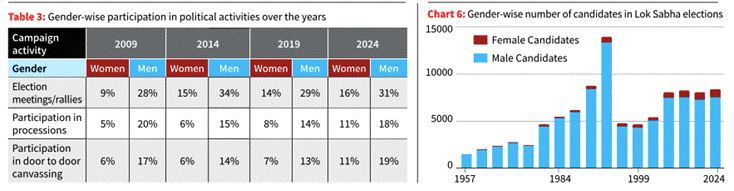
- Despite voting parity, women remain significantly less active in campaign-level political activities such as attending rallies, processions, or door-to-door canvassing.
- Participation of women in election meetings increased from 9% in 2009 to around 16% in recent elections, yet men’s participation remains roughly twice as high.
Role of Social Norms
- Surveys by Lokniti-CSDS show that many women require family permission to attend political meetings or campaign activities, limiting their public political visibility and engagement.
- Such constraints indicate that political participation is influenced not only by individual choice but also by patriarchal social norms and household decision-making structures.
Representation Gap in Legislatures
Women in Lok Sabha
- In the first Lok Sabha (1952), only 22 women MPs were elected, highlighting the historically limited representation of women in national politics.
- Representation improved gradually, reaching 78 women MPs in 2019, before slightly declining to 74 in 2024, representing roughly 14% of the Lok Sabha membership.
Persistent Representation Gap
- Even at its highest level, women’s representation remains far below their nearly 50% share of India’s electorate, indicating structural barriers in political institutions.
- This gap reflects limited party nominations, financial constraints, and social barriers that discourage women from entering electoral politics.
The Nomination Bottleneck
Female Candidates in Elections
- The number of women contesting elections has increased significantly—from 45 candidates in the 1957 Lok Sabha elections to 800 women candidates in the 2024 elections.
- Despite this increase, male candidates still number in the thousands, indicating that women remain a minority among total electoral contestants.
Success Rates of Women Candidates
- Electoral data shows that women candidates often have equal or higher success rates than men when given party tickets, challenging the argument that women are less electable.
- In the 2019 Lok Sabha elections, 11% of women candidates won compared to 6% of men, demonstrating that nomination barriers rather than voter bias limit representation.
Autonomy and Political Socialisation
Voting Autonomy
- Surveys indicate that women’s voting decisions are not always fully autonomous, with around half of women reporting voting independently without advice from family members.
- A majority of women also consider shared political preferences within families important, reflecting the influence of family networks on political choices.
Perceptions of Political Opportunity
- Data from Lokniti-CSDS indicates that 58% of women believe political entry is easier for women from political families, highlighting dynastic advantages in Indian politics.
- About 44% of women believe political parties prefer male candidates when distributing election tickets, pointing to institutional biases within party structures.
Structural and Social Barriers
Patriarchal Norms
- Patriarchal social structures remain the single largest obstacle to women’s political participation, cited by about 22% of women respondents in surveys.
- Cultural expectations regarding gender roles often restrict women’s mobility, public engagement, and leadership opportunities in political spaces.
Domestic Responsibilities
- Household responsibilities and unpaid care work significantly reduce women’s time and ability to engage in political campaigning, networking, and party organisational activities.
Economic and Institutional Barriers
- Limited access to financial resources, political networks, and organisational support within parties reduces the likelihood of women contesting elections.
- Electoral politics in India is resource-intensive, making it difficult for first-generation women candidates to compete effectively.
Constitutional and Policy Framework
Constitutional Provisions
- Constitution of India guarantees universal adult franchise and equality before law under Articles 14, 15, and 16, providing the foundation for political participation of women.
Reservation in Local Governance
- The 73rd and 74th Constitutional Amendments (1992) introduced one-third reservation for women in Panchayats and Urban Local Bodies, significantly increasing women’s representation at the grassroots level.
- Many states have further increased this quota to 50% reservation, creating millions of women representatives in local governance.
Women’s Reservation Act (2023)
- The Constitution (106th Amendment) Act, 2023 provides 33% reservation for women in the Lok Sabha and State Assemblies, though implementation is linked to future delimitation exercises.
Governance and Democratic Significance
Inclusive Democracy
- Greater representation of women enhances democratic legitimacy, inclusive governance, and policy responsiveness to gender-sensitive issues such as health, education, and social welfare.
Policy Outcomes
- Research shows that women representatives often prioritise public goods provision, social development programmes, and community welfare initiatives, improving governance outcomes.
Critical Analysis
Electoral Inclusion without Power
- India demonstrates a paradox where women participate actively as voters but remain underrepresented in positions of political power, reflecting structural inequalities within political institutions.
Party-Centric Barrier
- Political parties act as the primary gatekeepers of representation, and reluctance to nominate women candidates remains the single biggest institutional barrier to women’s political empowerment.
Way Forward
Implement Women’s Reservation Act
- Expedite delimitation and operationalisation of the 33% reservation for women in Parliament and State Assemblies to address the structural representation gap.
Reform Party Structures
- Encourage political parties to adopt internal gender quotas, transparent candidate selection processes, and leadership training programmes for women.
Capacity Building
- Expand leadership training, campaign financing support, and mentorship networks to enable first-generation women leaders to enter electoral politics.
Address Social Barriers
- Promote social awareness campaigns and gender-sensitive political education to challenge patriarchal norms restricting women’s public participation.
Prelims Pointers
- Women’s turnout in 2019 and 2024 Lok Sabha elections nearly equalled men’s turnout.
- 78 women MPs were elected in 2019, the highest in history.
- Constitution (106th Amendment) Act, 2023 provides 33% reservation for women in Parliament and State Assemblies.
- 73rd and 74th Amendments introduced reservation for women in local bodies.
Electrification of Industrial Heat and India’s Thermal Independence
Why in News ?
- Industrial clusters such as Morbi and Ludhiana are facing production disruptions due to reduced natural gas supplies amid geopolitical tensions affecting global energy routes.
- The crisis has renewed focus on electrification of industrial heat and concentrated solar thermal (CST) technologies as pathways for India to achieve “thermal independence” and reduce reliance on imported fossil fuels.
Relevance
GS Paper III – Economy
- Industrial energy consumption and energy security in manufacturing sectors.
- Role of clean technologies in industrial competitiveness.
GS Paper III – Environment & Climate Change
- Industrial decarbonisation and climate mitigation strategies.
- Renewable energy technologies such as Concentrated Solar Thermal (CST).
Practice Question
Q. Electrification of industrial heat is emerging as a critical pathway for India’s energy security and industrial decarbonisation. Examine the opportunities and challenges associated with this transition. (250 words)
Industrial Heat: Static Background
What is Industrial Heat?
- Industrial heat refers to thermal energy used in manufacturing processes such as steel production, textiles, ceramics, chemicals, and food processing, often requiring temperatures from 100°C to over 1,000°C.
- Globally and in India, industrial heat is primarily generated by burning fossil fuels such as coal, natural gas, or oil, making it one of the largest sources of industrial emissions and energy consumption.
Industrial Energy Consumption in India
- Industrial heat accounts for approximately 25% of India’s total energy consumption, making it a critical component of the country’s energy transition and decarbonisation strategies.
- India imports around half of its natural gas requirements, exposing industries to geopolitical disruptions, price volatility, and supply risks.
Concept of Thermal Independence
Meaning
- Thermal independence refers to a country’s ability to generate industrial heat domestically through renewable or electrified technologies rather than relying on imported hydrocarbons.
- Unlike conventional energy security that focuses on electricity generation, thermal independence emphasises secure and sustainable heat supply for manufacturing sectors.
Technologies Enabling Electrification of Industrial Heat
Concentrated Solar Thermal (CST)
- CST uses mirrors or parabolic troughs to concentrate sunlight onto a receiver, generating high temperatures that can heat fluids such as water or molten salts to produce industrial steam.
- According to the Ministry of New and Renewable Energy, India has an estimated CST potential of about 15 GW for industrial heat applications.
- CST systems can generate temperatures of up to 400°C, sufficient for processes such as textile dyeing, bleaching, and food processing.
Electrified Heating Technologies
Induction Heating
- Induction heating generates heat using electromagnetic fields that directly heat conductive materials, eliminating intermediary processes such as combustion or steam generation.
- These systems can achieve efficiency levels above 90%, compared to conventional gas boilers that lose 20–30% of energy through exhaust gases.
Plasma Torches
- Plasma torches ionise gas to produce extremely high-temperature plasma, capable of heating industrial kilns and furnaces with precise temperature control.
- This technology is being tested in ceramic manufacturing kilns in Morbi, where temperatures exceeding 1,000°C are required.
Economic and Industrial Dimensions
Industrial Competitiveness
- Rising natural gas prices due to geopolitical tensions have significantly increased production costs for energy-intensive industries such as ceramics and textiles.
- With fuel prices rising, the payback period for CST installations has fallen from about seven years to less than three years, making renewable industrial heat economically attractive.
Innovation and Industrial Transition
- Adoption of solar thermal and electrified heat technologies can stimulate domestic manufacturing of mirrors, thermal storage systems, induction equipment, and industrial heating technologies.
- This transition aligns with India’s broader initiatives promoting clean manufacturing and industrial decarbonisation.
Environmental and Climate Dimensions
Decarbonising Industrial Heat
- Industrial heat generation from fossil fuels is a major contributor to industrial greenhouse gas emissions, particularly in sectors like steel, cement, and chemicals.
- Electrification and solar thermal technologies enable industries to reduce carbon emissions while maintaining high-temperature production processes.
Climate Commitments
- Decarbonising industrial heat supports India’s commitments under the Paris Agreement and its target of achieving net-zero emissions by 2070.
Infrastructure and Governance Challenges
Power Grid Constraints
- Large-scale electrification of industrial heat could place heavy pressure on India’s power grid, as factories switching from gas to electricity would significantly increase electricity demand.
- Many industrial clusters operate on ageing electricity distribution networks, with distribution transformers already experiencing critical load levels during peak demand.
Renewable Energy Intermittency
- Renewable energy sources such as solar and wind are intermittent, whereas industrial processes require continuous 24/7 heat supply, creating reliability challenges.
- This necessitates large-scale deployment of energy storage technologies such as battery systems and pumped hydro storage.
Technology Adoption Barriers
- High upfront capital costs for CST systems and electric furnaces discourage small and medium industries from adopting these technologies.
- Lack of dedicated policy incentives for direct heat technologies, compared with solar photovoltaic electricity systems, slows adoption.
Global Policy Examples
Oman – Miraah Project
- The Miraah solar thermal project in Oman integrates a large CST system with gas-fired industrial facilities, reducing natural gas consumption by about 80% during daytime operations.
Spain – Solar Heat for Industrial Processes
- Spain has implemented plug-and-play solar thermal systems, allowing factories to install modular mirror arrays connected directly to existing steam networks with minimal infrastructure modification.
Denmark – Heat Purchase Agreements
- Denmark introduced heat purchase agreements, where private providers install heating systems and industries purchase thermal energy at fixed prices, lowering capital barriers for industrial adoption.
Critical Analysis
Strategic Opportunity
- Electrification of industrial heat offers India a pathway toward energy security, industrial decarbonisation, and technological leadership in emerging clean heat technologies.
- Industrial heat transition can complement India’s rapid growth in renewable electricity generation.
Structural Constraints
- Grid infrastructure limitations, lack of large-scale energy storage, and policy gaps in thermal energy incentives remain major barriers to scaling clean industrial heat technologies.
- Small and medium enterprises dominate many industrial clusters and often lack financial capacity to invest in advanced energy systems.
Way Forward
National Thermal Policy
- Develop a comprehensive National Thermal Policy focusing on electrification of industrial heat, renewable thermal technologies, and domestic manufacturing of thermal equipment.
Incentivising Solar Thermal Technologies
- Extend production-linked incentives (PLI) to manufacturers of CST mirrors, thermal receivers, and heat storage systems to accelerate domestic technology development.
Grid Modernisation
- Upgrade distribution networks in major industrial clusters and expand high-capacity substations, transmission lines, and smart grid infrastructure.
Carbon Market Integration
- Integrate industrial heat decarbonisation into the Carbon Credit Trading Scheme, enabling industries to monetise emissions reductions through carbon credits.
Prelims Pointers
- Concentrated Solar Thermal (CST) uses mirrors to generate high-temperature heat.
- Industrial heat accounts for about 25% of India’s total energy consumption.
- CST systems can generate temperatures up to around 400°C.
- Induction heating uses electromagnetic fields to generate heat directly in materials.
Deepfakes and Cross-Border Misinformation
Why in News ?
- The Press Information Bureau Fact Check Unit flagged over 50 deepfakes and manipulated videos circulating on social media, many allegedly originating from Pakistani propaganda handles targeting Indian institutions and leaders.
- The cases involved AI-generated videos, fabricated statements of top officials, and misinformation related to defence, foreign policy, and economic announcements, raising concerns about digital information warfare and national security.
Relevance
GS Paper III – Internal Security
- Information warfare and hybrid threats.
- Cross-border digital propaganda targeting national institutions.
GS Paper III – Science & Technology
- Artificial intelligence technologies such as Generative Adversarial Networks (GANs).
- Risks of synthetic media and deepfakes.
Practice Question
Q. Deepfake technologies are emerging as a new tool of hybrid warfare capable of undermining democratic institutions and national security. Discuss the challenges posed by deepfakes and suggest policy measures to counter AI-driven misinformation. (250 words)
Deepfakes: Static Background
What are Deepfakes?
- Deepfakes are AI-generated or manipulated audio, video, or images created using deep learning techniques, particularly Generative Adversarial Networks (GANs), which can realistically imitate real individuals’ faces, voices, or actions.
- These technologies allow the creation of synthetic media capable of altering speeches, fabricating events, or impersonating public figures, making misinformation extremely convincing and difficult to detect.
Nature of the Misinformation Campaign
Targeting Political Leadership
- Fabricated announcements included fake welfare schemes, defence-related statements, and manipulated speeches, exploiting public trust in authoritative figures to spread misinformation rapidly across digital platforms.
Military and Strategic Disinformation
- Manipulated videos falsely suggested that Pakistan had destroyed India’s Rafale fighter jets, aiming to undermine public confidence in India’s defence capabilities and create psychological influence operations.
International Disinformation Spillover
- A Turkish media outlet reportedly amplified a manipulated video claiming India had shared an Iranian ship’s location with Israel, demonstrating how misinformation can spread internationally through secondary media amplification.
- Such incidents illustrate how digital propaganda can distort diplomatic narratives and damage international perceptions of a country’s foreign policy stance.
Institutional Mechanism: PIB Fact Check Unit
Role and Functions
- The PIB Fact Check Unit was established to identify and counter misinformation related to the Government of India on digital platforms, including social media and messaging applications.
- It verifies viral claims, labels misleading content, and issues public advisories to prevent the spread of fake news affecting governance, national security, and public policy communication.
Technology and Security Dimensions
Rise of AI-Driven Disinformation
- Advances in artificial intelligence, voice cloning, and facial synthesis technologies have significantly increased the sophistication of misinformation campaigns, making deepfakes more difficult for ordinary users to detect.
- These technologies enable malicious actors to conduct large-scale influence operations, political propaganda, and cyber-enabled psychological warfare at relatively low cost.
Information Warfare and Hybrid Conflict
- Deepfake-based propaganda represents a form of hybrid warfare, where adversaries use digital misinformation to influence public opinion, create confusion, and undermine trust in democratic institutions.
- Information warfare is increasingly recognised as a non-kinetic security threat alongside cyberattacks and psychological operations.
Governance and Legal Framework in India
IT Act and Digital Regulation
- Online misinformation and manipulated media are governed under the Information Technology Act, particularly provisions addressing cybercrime, identity theft, and online fraud.
- The Information Technology Rules require social media platforms to remove harmful content and ensure greater accountability of digital intermediaries.
Emerging Policy Challenges
- Existing legal frameworks struggle to keep pace with rapidly evolving AI-generated content technologies, which blur the boundaries between legitimate digital expression and malicious manipulation.
- Jurisdictional challenges arise when misinformation campaigns originate from foreign actors operating outside India’s regulatory reach.
Social and Democratic Implications
Erosion of Public Trust
- Deepfake misinformation can erode public trust in government institutions, electoral processes, and media credibility, particularly when fabricated statements appear to come from authoritative figures.
- Large-scale misinformation campaigns can distort democratic discourse by manipulating voter perceptions and amplifying social polarisation.
Critical Analysis
Emerging Security Threat
- Deepfakes represent a new generation of digital security challenges, combining artificial intelligence with psychological influence operations to destabilise public narratives and create information asymmetry.
- Cross-border misinformation campaigns highlight the growing role of digital propaganda in geopolitical competition and hybrid warfare strategies.
Institutional and Technological Gaps
- Fact-checking mechanisms often act reactively after misinformation spreads, whereas deepfakes can reach millions before verification occurs.
- Detection technologies and regulatory frameworks remain underdeveloped compared with the speed of AI-driven disinformation innovation.
Way Forward
Strengthening AI Detection Systems
- Develop advanced AI-based deepfake detection tools using machine learning algorithms capable of identifying manipulated media in real time across digital platforms.
Regulatory Framework for AI Content
- Establish clear legal definitions and accountability mechanisms for synthetic media, including mandatory watermarking or disclosure requirements for AI-generated content.
International Cooperation
- Promote global cooperation through forums such as the United Nations to combat cross-border misinformation and establish shared digital governance standards.
Digital Literacy and Public Awareness
- Strengthen media literacy programmes and digital awareness campaigns, enabling citizens to critically evaluate online information and identify misinformation.
Prelims Pointers
- Deepfakes are created using deep learning algorithms and GANs.
- The PIB Fact Check Unit verifies misinformation related to government policies.
- Deepfake content can include AI-generated audio, video, and images impersonating real individuals.
- Misinformation campaigns can be part of hybrid warfare and information operations.
Women’s Political Representation Globally: Persistent Gender Gap in Leadership
Why in News ?
- New data released by UN Women and the Inter-Parliamentary Union shows women remain significantly underrepresented in political leadership worldwide.
- The figures were presented during the Commission on the Status of Women session (CSW70) in March 2026, highlighting stagnation in global progress on women’s political empowerment.
Relevance
GS Paper II – International Relations
- Global governance institutions such as UN Women and the Inter-Parliamentary Union.
GS Paper I – Society
- Global gender inequality in political leadership.
Practice Question
Q. Despite global commitments to gender equality, women remain underrepresented in political leadership worldwide. Examine the structural barriers to women’s political empowerment and evaluate the role of institutional reforms such as gender quotas. (250 words)
Global Status of Women in Political Leadership
Heads of State and Government
- Only 28 countries globally are currently led by women, while 101 countries have never had a female head of state or government, revealing persistent structural barriers to women’s political leadership worldwide.
- Even where women have reached top leadership roles, their representation remains sporadic and regionally concentrated, indicating limited structural transformation in global political institutions.
Parliamentary Representation
- Women currently hold 27.5% of parliamentary seats globally, representing only marginal progress from 27.2% in 2025, reflecting slow and uneven gains in legislative representation.
- Despite decades of advocacy since the 1995 Beijing Platform for Action, the pace of change suggests that gender parity in parliaments could take several decades without stronger policy interventions.
Representation in Cabinets
- Women occupy only 22.4% of cabinet positions globally, declining from 23.3% in 2024, marking a rare regression in executive-level representation after years of gradual improvement.
- Female ministers remain disproportionately concentrated in social-sector portfolios such as gender equality, family affairs, and social welfare, while men dominate defence, finance, interior, and justice ministries.
Parliamentary Leadership
- As of January 2026, only 54 women serve as parliamentary speakers worldwide, representing 19.9% of total speakers, reflecting a decline of nearly four percentage points compared to the previous year.
- This decline marks the first global drop in women parliamentary speakers in over two decades, signalling institutional stagnation in leadership representation within legislatures.
Social and Ethical Dimensions
Structural Gender Barriers
- Women face structural obstacles such as patriarchal political cultures, limited access to campaign financing, and gender stereotypes, which collectively restrict their participation in electoral politics and decision-making institutions.
- Political parties often remain male-dominated, limiting women’s opportunities to secure winnable seats, leadership positions, and nomination support during elections.
Violence and Intimidation in Politics
- According to the survey, 76% of women parliamentarians reported experiencing intimidation or harassment, compared with 68% of men, demonstrating gendered political violence that discourages women from seeking public office.
- Online abuse, threats, and targeted harassment have become increasingly common, especially against women leaders advocating gender equality and social reforms.
Governance and Institutional Dimensions
Democratic Representation
- Gender-balanced political institutions enhance policy legitimacy, democratic accountability, and inclusive governance, ensuring that political decision-making reflects the interests and experiences of diverse social groups.
- Studies by international organisations show that legislatures with higher female representation often prioritise social welfare, healthcare, education, and gender-sensitive legislation.
Role of Quotas and Electoral Systems
- Countries that adopted legislated gender quotas or reserved seats have achieved faster improvements in women’s political participation compared with countries relying solely on voluntary party commitments.
- Proportional representation electoral systems tend to produce higher female representation than majoritarian electoral systems, due to greater flexibility in candidate selection and party lists.
Global Policy Frameworks
International Commitments
- Gender equality in political participation is embedded in United Nations frameworks such as the Sustainable Development Goals (SDG-5), which seeks to ensure women’s full and effective participation in leadership at all levels.
- The Beijing Platform for Action (1995) remains the most comprehensive global policy framework promoting women’s participation in political and public life.
Economic and Development Implications
- Increased women’s representation in governance correlates with better social development outcomes, improved education and health spending, and stronger anti-corruption measures, according to multiple governance studies.
- Political inclusion of women contributes to more equitable economic policies, addressing gender wage gaps, labour participation, and social protection measures.
Critical Analysis
Slow Progress in Political Empowerment
- Despite global commitments, political institutions remain structurally male-dominated due to entrenched socio-cultural norms, unequal resource access, and institutional biases in candidate selection processes.
- Gains in women’s political participation have been uneven across regions, with some countries witnessing regression or stagnation due to democratic backsliding and backlash against gender equality movements.
Limitations of Current Approaches
- Voluntary political party commitments and soft policy frameworks often lack enforcement mechanisms, limiting their effectiveness in achieving gender parity in leadership positions.
- Representation gains in legislatures do not always translate into substantive influence in decision-making, particularly when women remain excluded from key ministries such as finance or defence.
Way Forward
Institutional Reforms
- Introduce or strengthen legislated gender quotas in parliaments and political parties, ensuring minimum representation thresholds and equitable candidate nomination practices.
Safe Political Environment
- Establish stronger legal frameworks to prevent violence against women in politics, including online harassment monitoring, electoral safeguards, and institutional support systems.
Leadership Development
- Promote capacity-building programmes, campaign financing support, and leadership training for women candidates to overcome structural barriers to electoral participation.
Inclusive Governance
- Encourage political parties and governments to ensure gender-balanced cabinet appointments across strategic ministries, moving beyond traditional social-sector portfolios.
Prelims Pointers
- Women hold 27.5% of parliamentary seats globally.
- Women occupy 22.4% of cabinet positions worldwide.
- Only 28 countries are currently led by women.
- Data released by UN Women and the Inter-Parliamentary Union during the Commission on the Status of Women (CSW70).
Jhelum River at Historic Low in Kashmir
Why in News ?
- The Jhelum River has fallen below the zero-gauge level at Sangam (-0.86 feet) in early March 2026 due to an unusually dry winter and rising temperatures in the Kashmir Valley.
- The region recorded ~65–66% precipitation deficit during winter (Dec–Feb), raising concerns about water availability, agriculture, hydrology, and climate change impacts in the Himalayan ecosystem.
Relevance
GS Paper I – Geography
- Himalayan river systems and cryosphere changes.
GS Paper III – Environment
- Climate change impacts on Himalayan hydrology and glacier retreat.
Practice Question
Q. Declining river flows in Himalayan river systems reflect the growing impact of climate change on cryosphere dynamics. Analyse the implications of reduced snowfall and glacier retreat for water security in the Himalayan region. (250 words)
Jhelum River: Static Background
Origin and Course
- The Jhelum River originates from Verinag Spring in the Pir Panjal foothills and flows through Srinagar and Wular Lake before entering Pakistan and joining the Chenab River.
- It is one of the five rivers of the Indus system, eventually draining into the Indus River, which sustains agriculture and water systems across India and Pakistan.
Hydrological Importance
- The Jhelum is the primary lifeline of the Kashmir Valley, supporting irrigation, drinking water supply, wetlands, and hydroelectric projects while regulating seasonal flooding through natural lakes like Wular Lake.
Climate and Hydrological Changes in Kashmir
Unusual Temperature Rise
- Srinagar recorded 24.7°C in early March 2026, about 11.7°C above normal, while Gulmarg reached 17.2°C, the highest temperature recorded there during early March.
- Rising winter temperatures reduce snowfall accumulation, which historically acted as the primary water reservoir feeding rivers during spring and summer in the Himalayan region.
Precipitation Deficit
- Kashmir experienced its seventh consecutive rainfall-deficient winter, receiving 100.6 mm precipitation against a normal 284.9 mm, representing a deficit of nearly 65%, indicating persistent climate anomalies.
- February 2026 recorded only 5.3 mm rainfall in Srinagar, making it one of the driest Februaries in over a century and weakening the seasonal snowpack that feeds the Jhelum basin.
Environmental and Climate Dimensions
Declining Snowfall and Glacier Recharge
- Snowfall historically functioned as a natural water storage system, gradually releasing meltwater into rivers during warmer months, stabilising flows in Himalayan river systems like the Jhelum.
- Reduced snowfall means glaciers receive insufficient recharge, weakening long-term river discharge and threatening downstream ecosystems and water security across the Kashmir Valley.
Glacier Retreat
- Long-term studies show that nine benchmark glaciers in Kashmir lost about 5.2 sq km of area (around 18%) between 1980 and 2013, reflecting sustained warming trends in the Himalayan cryosphere.
- Glacier retreat and rising temperatures accelerate evaporation and sublimation, reducing the volume of meltwater that eventually reaches rivers and groundwater systems.
Agricultural and Economic Impacts
Threat to Paddy Cultivation
- Paddy is a highly water-intensive crop cultivated widely in Kashmir’s irrigated fields; reduced river discharge threatens irrigation systems that depend on canals linked to the Jhelum River.
- Experts from Sher-e-Kashmir University of Agricultural Sciences and Technology recommend shifting gradually toward less water-intensive crops such as maize and pulses in vulnerable areas.
Farmer Vulnerability
- Farmers dependent on irrigation pumps and canals face crop losses when river levels fall below operational thresholds, affecting livelihoods and food security in rural districts like Pulwama.
- Erratic weather patterns are also increasing climate risks such as delayed rains, heatwaves, and unseasonal floods, destabilising agricultural planning in the valley.
Governance and Institutional Response
Meteorological Monitoring
- The India Meteorological Department reported a 66% precipitation deficit in January–February, highlighting the increasing variability of Himalayan precipitation patterns.
- Scientists note a shift from snowfall to rainfall during winter, indicating broader climate-driven changes in Himalayan hydrology and seasonal precipitation regimes.
Agricultural Advisory Measures
- SKUAST Kashmir has advised farmers to adopt soil moisture conservation techniques such as organic mulching, efficient irrigation practices, and reduced fertiliser use under water-scarce conditions.
- Farmers are also encouraged to irrigate crops during cooler hours and use shade nets or straw coverings to reduce evaporation losses in vegetable cultivation.
Additional Anthropogenic Pressures
Sand Mining and River Morphology
- Local farmers report that excessive sand mining along sections of the Jhelum has deepened the riverbed and damaged embankments, reducing the efficiency of irrigation canals drawing water from the river.
- Riverbed alterations can disrupt natural flow regimes, groundwater recharge, and canal connectivity, worsening water shortages in agricultural landscapes.
Wider Himalayan Context
- The Himalayan region is often described as the “Third Pole”, containing the largest concentration of glaciers outside polar regions and serving as the water source for major Asian river systems.
- Climate studies warn that Himalayan warming is occurring faster than the global average, threatening long-term water security for nearly 1.3 billion people dependent on Himalayan rivers.
Critical Analysis
Key Concerns
- Persistent precipitation deficits indicate changing monsoon–winter precipitation dynamics in the western Himalayas, which could destabilise long-established hydrological cycles.
- Reduced snowpack weakens river flow during crucial agricultural seasons, increasing vulnerability of food systems, hydropower production, and urban water supply in Kashmir.
- Climate change impacts combined with unsustainable local practices like sand mining amplify ecological stress in already fragile Himalayan river systems.
Way Forward
Climate Adaptation
- Promote climate-resilient agriculture, including drought-resistant crop varieties, crop diversification, and water-efficient irrigation systems such as drip and sprinkler technologies.
River Basin Management
- Implement integrated river basin management for the Jhelum, regulating sand mining, restoring wetlands like Wular Lake, and improving irrigation infrastructure.
Cryosphere Monitoring
- Expand glacier and snowpack monitoring using remote sensing and hydrological modelling, enabling early warning systems for water scarcity and climate risks.
Policy Integration
- Align regional adaptation strategies with national frameworks such as the National Action Plan on Climate Change (NAPCC) and National Mission for Sustaining the Himalayan Ecosystem.
Prelims Pointers
- Jhelum originates from Verinag Spring in Jammu and Kashmir.
- It flows through Wular Lake and Srinagar before entering Pakistan.
- It is one of the five rivers of the Indus basin.
- The Indus Waters Treaty (1960) allocates the Jhelum primarily to Pakistan with limited use rights for India.
High-Energy Proton Accelerator for Thorium Programme (Visakhapatnam)
Why in News ?
- India plans to establish a high-energy proton accelerator facility in Visakhapatnam, forming a key component of the accelerator-driven system (ADS) under the Department of Atomic Energy’s long-term thorium-based nuclear programme.
- The development was highlighted during a media interaction at the Raja Ramanna Centre for Advanced Technology, which leads India’s research on particle accelerators and advanced laser technologies.
Relevance
GS Paper III – Science & Technology
- Nuclear technology and accelerator-driven systems (ADS).
- Advanced nuclear fuel cycles.
GS Paper III – Energy Security
- India’s three-stage nuclear power programme and thorium utilisation.
Practice Question
Q. India’s thorium-based nuclear programme represents a long-term strategy for energy security and technological self-reliance. Explain the role of accelerator-driven systems in advancing India’s nuclear energy programme. (250 words)
India’s Thorium-Based Nuclear Programme: Static Background
India’s Three-Stage Nuclear Power Programme
- Conceptualised by Homi J. Bhabha, India’s nuclear strategy aims to utilise limited uranium but abundant thorium resources through a three-stage programme ensuring long-term energy security and technological self-reliance.
Stage-1: Pressurised Heavy Water Reactors (PHWR)
- Uses natural uranium (U-238) as fuel and heavy water as moderator to produce energy and generate plutonium-239, which becomes the fuel for second-stage fast breeder reactors.
Stage-2: Fast Breeder Reactors (FBR)
- Plutonium from PHWRs fuels fast breeder reactors, which generate more fissile material than consumed and convert thorium into uranium-233, enabling transition to thorium-based reactors.
Stage-3: Thorium-Based Reactors
- Utilises U-233 derived from thorium-232 as nuclear fuel, enabling long-term sustainable nuclear energy production using India’s vast thorium reserves, primarily found in monazite sands along coastal regions.
High-Energy Proton Accelerator and Accelerator-Driven Systems (ADS)
Concept and Working
- A high-energy proton accelerator produces intense proton beams that strike a heavy metal target such as lead or tungsten, triggering spallation reactions that release high-energy neutrons.
- These neutrons convert thorium-232 into uranium-233, which can be used as fissile fuel in nuclear reactors, thus enabling India to exploit its abundant thorium reserves efficiently.
- Accelerator-driven systems are subcritical reactors, meaning the nuclear chain reaction cannot sustain itself without external neutron input, significantly enhancing safety compared to conventional reactors.
Why Visakhapatnam Was Chosen ?
- Visakhapatnam offers a strong technological ecosystem with research institutions, defence industries, and port infrastructure, supporting advanced nuclear research and industrial collaboration.
- Proximity to the sea ensures abundant cooling water, essential for managing heat generated by high-energy accelerator systems and associated nuclear research facilities.
Institutional Role: Raja Ramanna Centre for Advanced Technology
- Established in 1984 under the Department of Atomic Energy, the RRCAT develops particle accelerators, synchrotron radiation sources, and laser technologies for nuclear science, defence, healthcare, and industrial applications.
- RRCAT’s linear accelerator-based electron beam facilities sterilise medical devices exported to over 35 countries, demonstrating India’s technological capability in accelerator applications.
Governance / Strategic Significance
- The accelerator project aligns with India’s Department of Atomic Energy roadmap to reduce dependence on imported uranium and develop indigenous nuclear technologies for long-term energy security.
- Accelerator-driven systems are considered strategically significant because they enhance nuclear fuel efficiency, reactor safety, and waste management, addressing key limitations of conventional nuclear reactors.
Economic Dimensions
- India possesses around 25–30% of global thorium reserves, primarily in monazite sands along the Kerala, Tamil Nadu, Andhra Pradesh, and Odisha coasts, providing a major strategic advantage for nuclear energy.
- According to the International Atomic Energy Agency, nuclear power contributes about 3% of India’s electricity generation, with plans to increase capacity to 100 GW by 2047 under long-term energy transition strategies.
Science & Technology Significance
- Accelerator-driven systems represent a next-generation nuclear technology, enabling efficient utilisation of thorium while reducing long-lived radioactive waste and improving reactor safety.
- Such accelerators also support multidisciplinary research in particle physics, materials science, semiconductor development, radiation medicine, and isotope production for healthcare.
Industrial and Innovation Ecosystem
- RRCAT’s incubation centre AIC-RRCAT Pi-Hub has signed 32 agreements with industries and startups, fostering indigenous innovation in advanced manufacturing, lasers, and particle accelerator technologies.
- Emerging technologies such as metal 3D printing, fibre-optic sensors, and cryogenic cooling systems for MRI machines may create a ₹1,000-crore technology market by 2028.
Social and Developmental Impact
- Accelerator technologies enable medical isotope production, radiation therapy equipment, and sterilisation technologies, strengthening healthcare infrastructure and reducing dependence on imported medical technology.
- Development of indigenous nuclear technologies promotes high-skill employment, research capacity, and advanced manufacturing ecosystems, supporting India’s transition to a knowledge-based economy.
Environmental and Energy Security Dimensions
- Thorium-based nuclear energy offers a low-carbon energy source, supporting India’s commitments under the Paris Agreement and long-term net-zero targets.
- Thorium reactors generate less long-lived radioactive waste compared to conventional uranium reactors, improving sustainability and environmental safety in nuclear power generation.
Challenges and Limitations
- Accelerator-driven systems require extremely high-energy proton accelerators, making them technologically complex and capital-intensive, with operational timelines extending over two decades.
- Thorium fuel cycle technologies remain largely experimental globally, requiring sustained research, infrastructure investment, and advanced nuclear engineering capabilities.
- Nuclear infrastructure development often faces public perception challenges, environmental concerns, and regulatory complexities, especially in coastal and ecologically sensitive regions.
Way Forward
- Strengthen investment in advanced nuclear R&D, accelerator technologies, and fuel-cycle innovation through sustained Department of Atomic Energy funding and public-private partnerships.
- Integrate thorium technology development with India’s clean energy transition strategy, complementing renewables to ensure reliable baseload power and long-term energy security.
- Enhance international collaboration with institutions working on accelerator-driven systems and advanced reactor technologies while maintaining India’s strategic autonomy in nuclear research.
Prelims Pointers
- India’s nuclear programme follows a three-stage strategy designed by Homi Bhabha.
- Thorium-232 converts into Uranium-233, a fissile nuclear fuel.
- Accelerator-driven systems (ADS) use external neutron sources from proton accelerators.
- India holds one of the world’s largest thorium reserves in monazite sands along coastal regions.
Dandi March (Salt Satyagraha), 1930
Why in News ?
- The Vice President of India C. P. Radhakrishnan paid tribute to Mahatma Gandhi and participants of the historic Dandi March on its anniversary, recalling its role in inspiring national self-reliance and non-violent resistance.
- The event highlighted the continuing relevance of Gandhian ideals of Satya (truth), Ahimsa (non-violence), and Swadeshi, linking them with contemporary national goals such as Atmanirbhar Bharat and Viksit Bharat.
Relevance
GS Paper I – Modern Indian History
- Civil Disobedience Movement and Gandhian mass mobilisation strategies.
Practice Question
Q. The Dandi March transformed the Indian freedom struggle into a mass movement and demonstrated the power of non-violent civil resistance. Analyse its political and socio-economic significance. (250 words)
Historical Context and Background
- The Salt Satyagraha emerged from growing nationalist dissatisfaction after the Simon Commission (1927) exclusion of Indians and failure of constitutional negotiations following the Nehru Report (1928) and rejection of dominion status demands.
- At the Lahore Session of the Indian National Congress, presided by Jawaharlal Nehru, the Congress adopted the historic Purna Swaraj (Complete Independence) resolution and announced civil disobedience against unjust colonial laws.
- Gandhi strategically chose the salt tax, imposed by the British colonial administration, because salt was an essential commodity used by every Indian, making resistance inclusive and capable of mobilising masses across caste, class, and gender.
The Dandi March: Key Facts and Chronology
- On 12 March 1930, Mahatma Gandhi began the march from Sabarmati Ashram with 78 carefully selected volunteers, symbolising disciplined satyagraha and moral protest against colonial authority.
- The march covered approximately 390 km over 24 days, passing through several villages of Gujarat, enabling Gandhi to mobilise peasants, workers, and women through speeches emphasising civil disobedience and economic self-reliance.
- On 6 April 1930, Gandhi reached Dandi Beach and ceremonially produced salt by evaporating seawater, directly violating the colonial salt law and launching the nationwide Civil Disobedience Movement.
Constitutional / Political Dimensions
- The Salt Satyagraha marked the formal launch of the Civil Disobedience Movement, shifting the nationalist movement from constitutional agitation to mass defiance of unjust colonial laws.
- Gandhi’s strategy reflected the principle that unjust laws lack moral legitimacy, anticipating later constitutional values embedded in Article 19 freedoms and civil liberties within independent India’s democratic framework.
- The movement demonstrated how non-violent civil resistance could delegitimise imperial authority globally, influencing later civil rights movements led by Martin Luther King Jr. and Nelson Mandela.
Governance / Administrative Impact
- The colonial government responded with widespread repression, arresting over 60,000 freedom fighters, including Gandhi, illustrating the limits of imperial administrative legitimacy in the face of mass moral resistance.
- The movement forced the British government to open negotiations, culminating in the Gandhi–Irwin Pact, which temporarily suspended civil disobedience and allowed Indian participation in the Round Table Conference.
Economic Dimensions
- The British salt tax represented exploitative colonial extraction, generating significant revenue while burdening poor Indians, particularly peasants and labourers who depended on salt as a daily dietary necessity.
- Gandhi’s emphasis on Swadeshi and economic self-reliance during the march highlighted the link between political freedom and economic independence, a principle echoed in modern policies promoting domestic manufacturing and Atmanirbhar Bharat.
Social and Ethical Dimensions
- The Salt Satyagraha transformed the nationalist struggle into a mass movement, mobilising women, peasants, tribal communities, and urban middle classes, thereby democratizing participation in the freedom struggle.
- Women leaders like Sarojini Naidu played a prominent role, particularly during the Dharasana Salt Works protest, signalling the growing role of women in political activism.
- Gandhian satyagraha emphasised ethical politics, advocating moral persuasion rather than violence, strengthening the normative foundation of India’s later democratic political culture.
International Impact
- The Dandi March attracted global media attention, especially through reports in newspapers like The New York Times, projecting India’s freedom struggle as a moral confrontation between colonial oppression and non-violent resistance.
- American journalist Webb Miller reported brutal British repression during the Dharasana protest, significantly shaping global public opinion against colonial rule.
Significance in India’s Freedom Struggle
- The Dandi March marked the first truly mass-based national movement, integrating rural India into the independence struggle and transforming the Congress from an elite organisation into a mass political force.
- It demonstrated the effectiveness of symbolic protest, where a simple act—making salt—became a powerful political weapon against imperial authority and a catalyst for nationwide resistance.
Critical Analysis
Strengths
- Demonstrated the power of non-violent mass mobilisation in challenging colonial authority.
- Successfully internationalised the Indian freedom struggle and exposed British repression.
- Unified diverse social groups under a shared political and moral cause.
Limitations
- Civil disobedience remained largely urban-rural mobilisation without fully integrating industrial workers in sustained organised protest.
- The Gandhi–Irwin Pact did not achieve major constitutional concessions or independence.
Contemporary Relevance
- The ideals of self-reliance (Swadeshi) resonate with present initiatives such as Atmanirbhar Bharat, encouraging domestic production, technological independence, and resilient economic systems.
- Gandhian philosophy of non-violent protest continues to influence democratic movements worldwide, highlighting ethical leadership and moral legitimacy in governance.
Prelims Pointers
- Dandi March began 12 March 1930 from Sabarmati Ashram and ended 6 April 1930 at Dandi, Gujarat.
- Led by Mahatma Gandhi with 78 volunteers.
- Triggered the Civil Disobedience Movement (1930–34).
- Protested against the British salt tax and monopoly over salt production.


