Content
- Gynandromorph Crab in Silent Valley
- India’s First National Report on the Nagoya Protocol (NR1)
- NavIC Setback: Atomic Clock Failure & India’s GPS Challenge
- Strait of Hormuz & “Revenge of Geography”
- Defence Vision 2047
- Supreme Court & Chambal Gharial Conservation
- 60th Jnanpith Award
- India’s Manuscript Mapping Drive
Gynandromorph Crab in Silent Valley
Context
- A rare gynandromorphic freshwater crab (Vela carli) was discovered in Silent Valley National Park (Kerala), showing both male and female biological traits in the same individual.
- This is the first recorded instance in the family Gecarcinucidae, marking a significant finding in evolutionary biology and biodiversity studies.
Relevance
- GS Paper III: Environment & Ecology (biodiversity, Western Ghats, species diversity), Science & Tech (genetics, developmental biology)
Practice Question
Q.“Rare biological anomalies like gynandromorphy provide critical insights into evolutionary biology and biodiversity conservation.” Discuss with reference to recent discoveries in India. (250 words)
About the Discovery
- The species Vela carli is an endemic freshwater crab found only in the Central Western Ghats, indicating high regional endemism and ecological specificity.
- The condition observed is gynandromorphy, where an organism exhibits both male and female reproductive structures, such as male organs alongside female gonopores.
- The discovery was based on three specimens found in tree holes, suggesting a possible habitat-linked biological phenomenon.
Silent Valley National Park
- Silent Valley National Park is located in Kerala (Nilgiri Hills, Western Ghats) and is part of the Nilgiri Biosphere Reserve, a UNESCO-recognised biodiversity hotspot region.
- It protects one of the last remaining tracts of tropical evergreen rainforest in India, with high levels of endemism and species richness.
- The park is drained by the Kunthipuzha River (tributary of Bharathapuzha), which remains undammed, preserving pristine ecological conditions.
- Known for flagship species such as Lion-tailed macaque (endemic and endangered), it represents a success of grassroots environmental movements (Silent Valley Movement, 1970s–80s).
- Declared a National Park in 1984, it is a critical site for in-situ conservation and ecological research in peninsular India.
Scientific Significance
- Gynandromorphy is a rare biological anomaly, more commonly observed in insects and some crustaceans, but not previously reported in Gecarcinucidae family.
- It provides insights into sex determination mechanisms, genetic mosaicism, and developmental biology, contributing to advanced research in evolutionary genetics.
- Such findings help in understanding mutation, chromosomal anomalies, and environmental influences on reproduction.
Ecological Significance
- The discovery highlights the ecological richness of the Western Ghats (a UNESCO Biodiversity Hotspot), known for high endemism and species diversity.
- Freshwater crabs like Vela carli play key roles in nutrient cycling, detritus processing, and maintaining aquatic ecosystem balance.
- Presence of such rare phenomena indicates healthy yet complex ecosystems, sensitive to environmental changes.
Multi-Dimensional Analysis
Environmental Dimension
- Reinforces importance of conserving fragile ecosystems like Silent Valley, which harbour unique and endemic species with unexplored biological traits.
Scientific / Technological Dimension
- Opens avenues for genetic and developmental research, especially in sex differentiation, chromosomal behaviour, and evolutionary adaptation in crustaceans.
Governance Dimension
- Highlights role of institutions like Zoological Survey of India (ZSI) and academic collaborations in advancing biodiversity documentation and conservation science.
Ethical Dimension
- Raises considerations regarding conservation of rare genetic traits and responsible scientific study without disturbing fragile habitats.
Data & Facts
- Species: Vela carli (endemic to Western Ghats)
- Location: Silent Valley National Park (Kerala)
- Phenomenon: Gynandromorphy (dual-sex traits)
- First recorded instance in Gecarcinucidae family
- Study published in international journal Crustaceana
Challenges
- Limited scientific understanding of rare genetic anomalies like gynandromorphy restricts comprehensive ecological and evolutionary interpretation.
- Fragile habitats like Western Ghats ecosystems face threats from climate change, habitat fragmentation, and human interference.
- Lack of extensive long-term monitoring of lesser-known taxa such as freshwater crabs.
Way Forward
- Strengthen biodiversity research and taxonomic studies focusing on lesser-known species and rare biological phenomena.
- Enhance conservation of Western Ghats ecosystems through stricter protection and community participation.
- Promote interdisciplinary research integrating genetics, ecology, and environmental science to study such anomalies.
- Expand role of institutions like ZSI and academic collaborations for systematic biodiversity documentation.
Conclusion
- The discovery of a gynandromorphic crab in Silent Valley underscores the hidden complexity of biodiversity, reinforcing the need for scientific exploration and ecological conservation in safeguarding India’s unique natural heritage.
India’s First National Report on the Nagoya Protocol (NR1)
Context
- India submitted its 1st National Report (NR1) on Nagoya Protocol (2017–2025), highlighting progress in Access and Benefit Sharing (ABS) under the Convention on Biological Diversity (CBD).
- The report reflects India’s efforts in biodiversity governance, community participation, and equitable sharing of genetic resource benefits, positioning India as a global leader in ABS implementation.
Relevance
- GS Paper II: International Relations (multilateral environmental agreements, global governance)
- GS Paper III: Environment (biodiversity, ABS), Economy (bioeconomy), Governance (decentralisation)
Practice Questions
Q.“India has emerged as a global leader in Access and Benefit Sharing (ABS) under the Nagoya Protocol.” Examine the institutional and legal factors behind this success. (250 words)
Institutional Framework
- India has designated National Focal Point (MoEFCC) and Competent National Authority – National Biodiversity Authority (NBA) for implementation of the Protocol.
- A three-tier structure operates:
- NBA (National level)
- State Biodiversity Boards (SBBs/UTBCs)
- Biodiversity Management Committees (BMCs)
- Over 2.76 lakh BMCs established, ensuring decentralised and participatory biodiversity governance.
Legal & Policy Framework
- Core legislation: Biological Diversity Act, 2002 (amended 2023), BD Rules 2024, and ABS Regulations 2025 operationalise Nagoya Protocol in India.
- Framework mandates Prior Informed Consent (PIC) and Mutually Agreed Terms (MAT) for access to genetic resources and associated traditional knowledge.
- India ensures transparent procedures, permits, and compliance mechanisms aligned with international ABS standards.
Access & Compliance Mechanism
- Access to genetic resources is subject to mandatory PIC in all cases, with approvals issued as agreements equivalent to permits.
- India issued 12,830 approvals and generated 3,556 IRCCs, accounting for ~60.24% of global IRCCs, indicating strong compliance leadership.
- Monitoring is enabled through Section 36A (BD Act) and digital ABS e-filing systems, enhancing traceability.
Benefit Sharing (ABS Outcomes)
- Monetary benefits collected: ~USD 34.6 million, with USD 16.83 million disbursed to local communities, BMCs, and stakeholders.
- Benefit-sharing rates range between 0.2%–0.6% of ex-factory sale price, ensuring equitable distribution.
- Over 210 individual benefit claimers and 10,414 BMCs benefited, strengthening community-based conservation models.
Community Participation & Equity
- Local communities recognised as “benefit claimers” under law, ensuring inclusion of traditional knowledge holders and conservers.
- BMCs and People’s Biodiversity Registers (PBRs) enable identification of resources and knowledge holders, enhancing grassroots governance and equity.
- Customary rights and practices are protected under Sections 7, 36, and 41 of BD Act, ensuring social justice dimension.
Digital Governance & Innovation
- Implementation supported by ABS e-filing portal, ABS Clearing-House (ABS-CH), and digital traceability systems for transparency.
- India issued the world’s first IRCC (2015), demonstrating early adoption of global compliance tools.
- Ongoing development of end-to-end ABS digital platforms aims to streamline procedures and improve monitoring.
Global Leadership & Cooperation
- India contributes significantly to global ABS governance with highest share (~60%) of IRCCs and active participation in CBD frameworks.
- Collaborations include ASEAN-India projects, GEF, UNDP BIOFIN, Indo-German ABS initiatives, strengthening international cooperation.
- Engagement in treaties like ITPGRFA and BBNJ Agreement (signed 2024) enhances India’s role in global biodiversity governance.
Multi-Dimensional Analysis
Environmental Dimension
- ABS framework promotes in-situ conservation, sustainable use of biodiversity, and reduces biopiracy risks, strengthening ecological resilience.
Economic Dimension
- Monetisation of genetic resources creates bio-economy opportunities, supports livelihoods, and incentivises conservation through benefit-sharing mechanisms.
Governance Dimension
- India’s decentralised, participatory model with BMCs ensures bottom-up governance, transparency, and accountability in biodiversity management.
Social / Ethical Dimension
- Ensures equity and justice by recognising rights of local communities and traditional knowledge holders, aligning with principles of environmental justice.
Legal Dimension
- Strong statutory backing through BD Act, Rules, and Regulations, with enforcement mechanisms including NGT appeal provisions, ensures legal robustness.
Challenges
- Difficulty in tracing origin of biological resources due to market intermediaries weakens benefit-sharing linkages.
- Limited awareness among users and local communities, along with language barriers, affects effective implementation of PIC and MAT processes.
- Lack of designated checkpoints and complexity in IRCC documentation slows compliance and monitoring.
- Emerging issues like Digital Sequence Information (DSI) pose regulatory and governance challenges.
Way Forward
- Strengthen digital traceability systems and designate formal checkpoints for effective monitoring of genetic resource utilisation.
- Enhance capacity-building and awareness programmes for communities, industries, and researchers to improve compliance.
- Simplify ABS procedures through integrated digital platforms and standardised documentation formats.
- Develop clear frameworks for DSI governance and strengthen international cooperation for harmonised ABS implementation.
Conclusion
- India’s NR1 demonstrates a globally leading, community-centric ABS framework, but achieving full effectiveness requires addressing traceability, awareness, and emerging technological challenges, ensuring sustainable and equitable biodiversity governance.
NavIC Setback: Atomic Clock Failure & India’s GPS Challenge
Context
- ISRO reported failure of the atomic clock onboard IRNSS-1F (13 March 2026), reducing operational efficiency of NavIC (Navigation with Indian Constellation), India’s regional satellite navigation system.
- The satellite completed its 10-year design life, but clock failure highlights persistent technical and reliability challenges in achieving independent navigation capability.
Relevance
- GS Paper III: Science & Technology (space tech, navigation systems), Security (strategic autonomy), Economy (logistics, digital infra)
- GS Paper II: Governance (Digital India, public infrastructure, policy coordination)
- Interview: Tech sovereignty vs global interdependence
Practice Question
Q.“Failures in critical components like atomic clocks highlight the technological challenges in achieving space-based strategic autonomy.” Examine with reference to NavIC. (250 words)
About NavIC (IRNSS)
- NavIC (Indian Regional Navigation Satellite System) is India’s indigenous navigation system providing coverage over India and ~1500 km beyond, designed for accurate positioning, timing, and navigation services.
- It requires a 7-satellite constellation for optimal functioning, offering better signal availability in difficult terrains compared to GPS due to overhead satellite positioning.
Role of Atomic Clocks
- Atomic clocks are critical for precise time measurement, enabling accurate calculation of position, velocity, and timing (PVT) for navigation systems.
- Failure of onboard clocks directly impacts accuracy, reliability, and continuity of navigation services, affecting sectors like transport, defence, surveying, and infrastructure planning.
Key Issues Highlighted
- The failure of IRNSS-1F atomic clock adds to earlier failures in first-generation satellites, indicating systemic reliability concerns in space hardware.
- Earlier mission IRNSS-1H (2017) failed to reach orbit, further weakening constellation strength and delaying full operational capability of NavIC.
Global Navigation Systems (Comparative Context)
- Major global systems include GPS (USA), GLONASS (Russia), Galileo (EU), and BeiDou (China), all providing global coverage with robust constellations.
- NavIC remains regional, limiting its competitiveness, though it offers higher accuracy in Indian region and strategic autonomy advantages.
Technological Advancements (Next-Gen NavIC)
- New-generation satellites (NVS-series) incorporate indigenously developed atomic clocks, reducing dependence on foreign components and improving reliability.
- Introduction of dual-frequency signals (L1, L5, S-band) enhances interoperability with global systems and enables use in consumer devices like smartphones and wearables.
Multi-Dimensional Analysis
Strategic / Security Dimension
- NavIC is critical for strategic autonomy, ensuring independent navigation for military operations, missile guidance, and secure communications, reducing reliance on foreign systems like GPS.
Technological Dimension
- Challenges in atomic clock reliability, satellite longevity, and launch failures highlight gaps in high-end space technology and precision engineering capabilities.
Economic Dimension
- Reliable navigation systems support sectors like transport, logistics, agriculture, disaster management, and infrastructure, contributing to economic efficiency and digital economy growth.
Governance Dimension
- Integration with Digital India, smart cities, and disaster management frameworks depends on robust NavIC infrastructure, requiring policy coordination and sustained investment.
Global / Geopolitical Dimension
- Dependence on foreign systems poses risks during conflicts, as access to GPS signals can be restricted, making NavIC essential for sovereignty in critical technologies.
Data & Evidence
- Coverage: India + ~1500 km beyond
- Required constellation: 7 satellites
- Current issue: Failure of IRNSS-1F atomic clock
- Mission life: 10 years (old), 12 years (new NVS satellites)
Challenges
- Persistent atomic clock failures and satellite degradation reduce system reliability and accuracy.
- Delays in launching replacement satellites hinder achieving full constellation strength.
- Limited global coverage and ecosystem adoption compared to established systems like GPS and BeiDou.
Way Forward
- Accelerate deployment of NVS-series satellites with indigenous atomic clocks to ensure reliability and continuity of services.
- Promote NavIC integration in smartphones, vehicles, and public systems through regulatory mandates and incentives.
- Enhance R&D in precision timing technologies and strengthen collaboration between ISRO, academia, and private sector.
- Expand towards global or extended regional coverage and strengthen international partnerships for wider adoption.
Strait of Hormuz & “Revenge of Geography”
Context
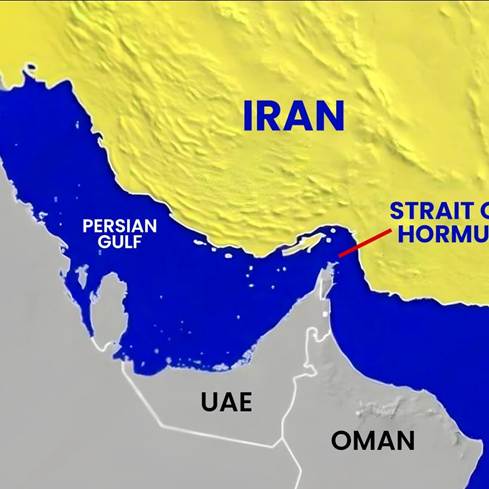
- The Strait of Hormuz crisis, triggered by Iran blocking a ~20 nautical miles wide chokepoint, has disrupted global oil and gas supplies, highlighting the enduring relevance of geography in geopolitics.
- The episode reinforces the concept of “revenge of geography”, where physical features continue to constrain human and technological advancements despite globalisation and modern capabilities.
Relevance
- GS Paper I: Geography (physical features, human–environment interaction)
- GS Paper II: International Relations (West Asia, maritime geopolitics)
Practice Questions
Q.“The Strait of Hormuz crisis highlights the enduring relevance of geography in geopolitics.” Discuss in the light of the concept of ‘revenge of geography’. (250 words)
Core Concept: Revenge of Geography
- The idea implies that geographical features such as straits, mountains, and rivers continue to shape politics, economy, and security, limiting human ability to completely overcome natural constraints.
- Despite technological progress, strategic chokepoints and terrain still determine trade routes, conflict outcomes, and power projection, reaffirming geography’s enduring influence.
About Strait of Hormuz
- The Strait of Hormuz is a narrow maritime passage (~20 nautical miles wide) connecting the Persian Gulf to the Gulf of Oman, serving as a critical global energy chokepoint.
- A significant share of global oil and gas trade passes through it, making disruptions highly consequential for energy security, global markets, and geopolitical stability.
Maritime Chokepoints & Global Examples
- Strategic straits like Malacca, Bab-el-Mandeb, Gibraltar, Bosporus, and Bering Strait function as critical nodes of global trade and military movement, often becoming sites of geopolitical contestation.
- For instance, Malacca Strait (~82,000 vessels annually) and Bab-el-Mandeb demonstrate how narrow waterways can influence global supply chains and conflict dynamics.
Geography–History Linkages
- Historical events such as the Battle of Tsushima (1905), Umayyad conquest via Gibraltar (711 CE), and control of Bosporus during Ukraine conflict show geography shaping military and political outcomes.
- Maritime features have historically determined trade dominance, colonial expansion, and strategic advantage, reinforcing geography’s role in shaping civilisation trajectories.
Multi-Dimensional Analysis
Environmental / Geographical Dimension
- Physical features like straits, isthmuses, peninsulas, rivers, and plains define resource distribution, connectivity, and ecological systems, shaping human settlement and economic activity patterns.
Economic Dimension
- Global trade remains heavily dependent on maritime chokepoints, with disruptions causing energy crises, inflation, and supply chain shocks, as seen in the Hormuz blockade affecting oil flows.
Security / Strategic Dimension
- Chokepoints act as strategic vulnerabilities, where states can exercise control, coercion, or denial, making them focal points of naval strategy and geopolitical tensions.
Governance / Political Dimension
- Control over strategic geography influences state power, diplomacy, and alliances, with countries investing in naval capabilities and maritime security frameworks to secure trade routes.
Social / Civilisational Dimension
- Early civilisations developed along river valleys (Nile, Indus, Yellow River) and fertile plains, demonstrating geography’s role in shaping human settlement, agriculture, and societal evolution.
Human Agency vs Geography
- Human interventions such as Suez Canal and Panama Canal demonstrate the ability to modify geography, reducing distances and enhancing connectivity for trade and military movement.
- However, such interventions remain limited and context-specific, as natural constraints like terrain, climate, and chokepoints continue to impose strategic limitations.
Key Insights for India
- India’s energy security is vulnerable due to dependence on West Asian oil passing through Hormuz, necessitating diversification and strategic reserves.
- Strategic focus on Indian Ocean Region (IOR), including Andaman & Nicobar (near Malacca Strait), enhances India’s ability to leverage geographical advantage in maritime geopolitics.
Challenges
- Overdependence on critical chokepoints creates systemic vulnerabilities in global trade and energy supply chains.
- Rising geopolitical tensions can lead to weaponisation of geography, disrupting international norms of freedom of navigation.
- Limited alternatives to maritime routes constrain global resilience against such disruptions.
Way Forward
- Diversify energy sources and strengthen strategic petroleum reserves to mitigate risks from chokepoint disruptions.
- Enhance maritime domain awareness, naval capabilities, and international cooperation to secure sea lanes and ensure freedom of navigation.
- Develop alternative trade routes such as International North-South Transport Corridor (INSTC) and multimodal logistics networks to reduce dependency on single chokepoints.
Conclusion
- The Strait of Hormuz crisis reaffirms that while technology enhances human capacity, geography remains a decisive factor in global affairs, necessitating strategies that align national power with geographical realities.
Defence Vision 2047
Context
- Defence Forces Vision 2047, articulated by the Defence Minister, outlines India’s roadmap to build technologically advanced, integrated, multi-domain armed forces, aligning military transformation with the goal of Viksit Bharat by 2047.
- The vision emerges amid changing nature of warfare—prolonged, technology-driven, and industrial-scale conflicts—as seen in Ukraine, West Asia, and Nagorno-Karabakh, necessitating structural transformation of defence ecosystem.
Relevance
- GS Paper II: Governance (defence reforms, institutional integration), IR (defence partnerships)
- GS Paper III: Security (military modernisation, emerging warfare), Economy (defence industry), S&T (AI, drones, cyber)
Practice Question
Q.“Defence Forces Vision 2047 marks a shift from military modernisation to comprehensive national power strategy.” Analyse. (250 words)
Core Vision & Pillars
- The strategy envisages armed forces that are technologically advanced, fully integrated across services, and capable of multi-domain operations including cyber, space, underwater, and electronic warfare domains.
- It expands beyond military capability to include industrial capacity, technological ecosystems, and economic strength, recognising that national power in the 21st century is multidimensional.
Evolution of Defence Reforms
- The vision builds on earlier reforms such as Defence Acquisition Procedure (DAP) 2020, creation of Chief of Defence Staff (CDS), push for theatre commands, and defence industrial corridors.
- Emphasis on Atmanirbhar Bharat in defence manufacturing and increased private sector participation marks a shift from import dependence to domestic capability building.
Strategic Rationale
- Modern conflicts are protracted, technology-intensive, and industrially sustained, requiring not just precision but mass production of weapons, drones, and electronic systems.
- Emphasis on cybersecurity, data networks, and information warfare highlights the growing importance of non-kinetic domains in determining conflict outcomes.
Economic & Industrial Dimension
- Defence Vision 2047 integrates security with economic growth, promoting a defence-industrial ecosystem that generates jobs, innovation, and exports.
- The defence budget (~₹7.85 lakh crore) reflects prioritisation of military modernisation and recognition that industrial base underpins military capability.
Self-Reliance vs Import Dependence
- Despite policy push, India remains the world’s second-largest arms importer, accounting for ~8.2% of global imports (SIPRI 2026), indicating structural dependency.
- Challenges arise from legacy procurement patterns, long gestation periods, and gaps in high-end manufacturing capabilities such as aerospace and advanced electronics.
Technology & R&D Dimension
- India’s defence R&D spending remains low at around $2.8 billion (~3.35% of defence budget) compared to China (~$44.4 billion, ~15%), indicating a significant capability gap.
- Overall R&D expenditure <0.7% of GDP is far below major powers, necessitating stronger innovation ecosystems and academia–industry–military collaboration.
Global Partnerships & Diplomacy
- India is diversifying defence cooperation beyond traditional partners like USA, France, Russia, Israel, to include Australia, Japan, Brazil, Indonesia, Gulf countries, for co-production and exports.
- Strategic partnerships and technology transfers are essential to accelerate domestic capability while integrating into global defence supply chains.
Defence Exports & MSME Ecosystem
- Expanding defence exports requires diplomatic outreach, defence exhibitions, and global marketing, particularly targeting Global South countries seeking affordable and reliable defence partners.
- MSMEs form the backbone of defence supply chains but require predictable demand, financing, and export opportunities to scale up effectively.
Emerging Technologies Focus
- Increasing focus on drones, artificial intelligence, geospatial systems, and electronic warfare reflects adaptation to future warfare trends where unmanned systems act as force multipliers.
- Collaborations like General Atomics–L&T drone manufacturing highlight growing public-private and international industrial partnerships.
Maritime & Indo-Pacific Dimension
- With the Indo-Pacific emerging as a strategic hotspot, India must strengthen naval capabilities, underwater warfare, and maritime surveillance to secure sea lanes of communication (SLOCs).
- The Indian Ocean Region (IOR) is central to India’s strategic interests, requiring sustained focus on maritime infrastructure and naval modernisation.
Institutional Integration
- Push towards theatre commands and joint operational planning reflects the need for integrated military operations across land, air, sea, cyber, and space domains.
- Enhancing jointness and interoperability is critical for efficient resource utilisation and effective response in multi-domain conflicts.
Challenges
- Persistent import dependence and limited domestic capabilities in high-end technologies hinder full realisation of Atmanirbharta in defence.
- Low R&D investment, bureaucratic delays, and lack of policy stability constrain innovation and industrial growth in defence sector.
- Weak industry–academia collaboration and limited scaling of MSMEs affect supply chain resilience and technological advancement.
Way Forward
- Increase defence R&D spending and promote innovation ecosystems involving DRDO, academia, startups, and private sector for advanced technology development.
- Accelerate theatre command reforms, streamline procurement processes, and reduce bureaucratic bottlenecks to improve operational efficiency.
- Strengthen defence exports strategy, integrate MSMEs into global supply chains, and leverage strategic partnerships for co-development and co-production.
- Align defence manufacturing with industrial policy and skilling initiatives, ensuring sustainable growth of defence-industrial ecosystem.
Conclusion
- Defence Vision 2047 represents a shift from military modernisation to comprehensive national power strategy, integrating security, economy, and technology, crucial for India’s aspiration to emerge as a leading global power by 2047.
Supreme Court & Chambal Gharial Conservation
Context
- The Supreme Court took suo motu cognisance of rampant illegal sand mining threatening the National Chambal Sanctuary, a critical habitat for critically endangered gharials, highlighting judicial intervention in environmental governance.
- Despite earlier actions by the National Green Tribunal (NGT), continued mining by organised sand mafias has worsened ecological degradation, even affecting relocated gharial habitats.
Relevance
- GS Paper II: Governance (judicial activism, federal coordination), Polity (Article 21, NGT)
- GS Paper III: Environment (river ecology, biodiversity conservation), Security (environmental crime), Economy (resource extraction)
Practice Question
Q.“Illegal sand mining represents a major threat to riverine ecosystems and governance.” Examine with reference to the National Chambal Sanctuary. (250 words)
About National Chambal Sanctuary
- The National Chambal Sanctuary is a tri-state riverine protected area spanning Rajasthan, Madhya Pradesh, and Uttar Pradesh, covering nearly 1800 km of the Chambal river system.
- Around 600 km stretch (out of 960 km) is officially notified as sanctuary, making it India’s only tri-state riverine sanctuary with high ecological and conservation significance.
- It hosts rich biodiversity including Gharial, Gangetic Dolphin, Indian Skimmer, Red-Crowned Roof Turtle, Smooth-coated Otter, and several endangered aquatic and avian species.
About Gharial
- The Gharial (Gavialis gangeticus) is a critically endangered species (IUCN Red List), endemic to the Indian subcontinent, dependent on clean, flowing river ecosystems (lotic systems).
- It is highly sensitive to habitat disturbance, particularly sandbank nesting sites, making it a key indicator species for river ecosystem health.
Key Issues Highlighted
- Illegal sand mining has emerged as the biggest threat to the sanctuary, degrading sandbanks, altering river morphology, and reducing water retention capacity.
- Mining activities are organised, aggressive, and continuous, aided by favourable terrain and weak enforcement, allowing operations even in eco-sensitive zones.
- The relocation of gharials due to habitat loss, followed by mining even in new areas, indicates systemic governance failure and ecological collapse risks.
Multi-Dimensional Analysis
Environmental Dimension
- Sand mining disrupts riverine ecology, destroys breeding habitats, and affects species dependent on sandbanks and water flow dynamics, leading to biodiversity loss and ecosystem imbalance.
Governance Dimension
- Weak enforcement, lack of inter-state coordination, and limited capacity of local authorities enable sand mafia dominance, reflecting governance deficits in environmental regulation and compliance.
Legal / Constitutional Dimension
- The case invokes Article 21 (Right to Life) including environmental protection, and demonstrates the role of judiciary through suo motu action and continuing mandamus in ecological conservation.
Social / Ethical Dimension
- Illegal mining networks create lawlessness, violence against officials, and undermine rule of law, raising ethical concerns regarding resource exploitation versus ecological sustainability.
Economic Dimension
- While sand mining supports construction industry demand, unregulated extraction leads to long-term ecological costs, threatening livelihoods dependent on river ecosystems such as fishing and eco-tourism.
Security Dimension
- Presence of organised sand mafias with aggressive tactics highlights a form of environmental crime, posing challenges to local law enforcement and governance stability.
Data & Evidence
- Sanctuary spans ~1800 km, with 600 km notified protected stretch across three states.
- Habitat supports critically endangered gharials and multiple endangered species including Gangetic dolphins and Indian skimmers.
- Reports identify sand mining as the single largest threat to Chambal ecosystem.
Challenges
- Lack of effective monitoring mechanisms and technological surveillance enables continuous illegal mining activities across remote river stretches.
- Poor inter-state coordination complicates enforcement in a tri-junction geography, allowing offenders to exploit jurisdictional gaps.
- Limited deterrence due to weak penalties and political–administrative nexus with mining mafias undermines conservation efforts.
Way Forward
- Establish court-monitored enforcement mechanisms with real-time surveillance using drones, GIS mapping, and satellite monitoring to curb illegal mining effectively.
- Strengthen inter-state coordination frameworks with joint task forces and unified regulatory mechanisms for riverine ecosystem protection.
- Enhance penalties and ensure strict criminal prosecution of sand mafias, treating illegal mining as a serious environmental and economic offence.
- Promote sustainable sand alternatives and regulate legal mining through scientific assessments to balance development needs with ecological conservation.
Conclusion
- The Chambal case underscores the need for integrated river ecosystem governance, where judicial intervention, technological enforcement, and cooperative federalism converge to protect fragile biodiversity and uphold environmental rule of law.
60th Jnanpith Award
Context
- R. Vairamuthu, noted Tamil lyricist and author, has been selected for the 60th Jnanpith Award, India’s highest literary honour, marking a major recognition of Tamil literary contributions.
- He becomes the third Tamil recipient, after a gap of 24 years, following Akilan and Jayakanthan, highlighting regional literary representation trends.
Relevance
- GS Paper I: Indian Culture (literature, regional diversity)
- GS Paper II: Governance (cultural policy, national integration)
Practice Question
Q.“Literature reflects society while also shaping it.” Examine in the context of contemporary Indian literary recognition such as the Jnanpith Award. (250 words)
About Jnanpith Award
- Instituted in 1961 by the Bharatiya Jnanpith organisation, it is India’s highest literary award, recognising outstanding contributions to Indian literature across languages listed in the Eighth Schedule.
- The award carries a citation, cash prize, and bronze replica of Goddess Saraswati, symbolising knowledge, wisdom, and literary excellence in Indian cultural tradition.
About Vairamuthu
- R. Vairamuthu is a prominent Tamil poet, novelist, and lyricist, known for blending classical Tamil literary traditions with contemporary themes in poetry and film lyrics.
- He received the Sahitya Akademi Award (2003) for “Kallikattu Ithikasam”, a novel depicting agrarian distress and displacement, reflecting strong social realism in literature.
Significance of the Award
Cultural Dimension
- Recognition of Tamil literature, one of the world’s oldest literary traditions, strengthens India’s linguistic diversity and cultural plurality, reinforcing constitutional ideals under Article 29 (cultural rights).
Social Dimension
- Vairamuthu’s works highlight rural distress, migration, and marginalised voices, showcasing literature as a medium for social critique and reform, aligning with ethical dimensions of governance.
Political / Governance Dimension
- National awards like Jnanpith promote inclusive cultural representation, strengthening national integration while respecting regional identities, a key feature of India’s federal cultural framework.
Economic / Soft Power Dimension
- Literary recognition enhances India’s cultural diplomacy and soft power, promoting Indian languages globally and contributing to creative economy sectors such as publishing, cinema, and translation industries.
Data & Facts
- Jnanpith Award instituted: 1961
- First recipient: G. Sankara Kurup (Malayalam)
- Language eligibility: Eighth Schedule languages
- Tamil recipients: 3 (including Vairamuthu)
- Gap since last Tamil award: 24 years
Challenges / Criticism
- Perceived regional imbalance in award distribution across languages and literary traditions raises concerns about equitable representation.
- Limited public engagement with literary works due to language barriers and declining reading culture reduces the broader societal impact of such recognitions.
- Need for greater translation and accessibility efforts to ensure wider dissemination of regional literary excellence.
Way Forward
- Promote systematic translation initiatives through institutions like Sahitya Akademi to enhance cross-cultural literary exchange and accessibility.
- Integrate literary works into education and digital platforms such as National Digital Library to revive reading culture and awareness.
- Strengthen regional literary ecosystems through funding, awards, and global promotion to ensure balanced representation across Indian languages.
India’s Manuscript Mapping Drive
Context
- The Ministry of Culture launched a first-ever nationwide manuscript mapping survey of three months duration, aiming to document India’s vast manuscript wealth and create a unified repository under Gyan Bharatam Mission.
- The initiative is rooted in the Budget 2025–26 announcement and reflects a strategic shift towards digitisation of cultural heritage and protection against intellectual piracy.
Relevance
- GS Paper I: Indian Culture (manuscripts, knowledge systems, heritage conservation)
- GS Paper II: Governance (digital governance, cooperative federalism, cultural policy)
Practice Question
Q.“Digitisation of manuscripts is essential for preserving India’s civilisational heritage while enabling knowledge democratisation.” Examine in the context of the Manuscript Mapping Survey. (250 words)
Core Initiative & Features
- The Manuscript Mapping Survey aims to identify, catalogue, and digitise manuscripts across institutions, private collections, and individual custodians, creating a centralised national database for heritage management.
- It adopts a bottom-up administrative model, starting from district level surveys and aggregating data at state and national levels, ensuring comprehensive and decentralised coverage of manuscript resources.
- The initiative also integrates previously digitised manuscripts, estimated at over 10 lakh, into a unified platform, enabling consolidation of scattered cultural data.
Objectives
- The mission seeks to preserve fragile manuscripts, promote standardised digitisation, and enhance research accessibility, thereby strengthening India’s knowledge systems and civilisational continuity.
- It also aims to curb intellectual piracy, protect traditional knowledge, and position India as a global knowledge hub through systematic documentation and dissemination.
Technology Integration
- Use of geotagging technology enables precise location mapping of manuscripts, facilitating targeted conservation and preservation strategies across regions with varying climatic and infrastructural conditions.
- The Gyan Bharatam App allows real-time data upload by survey teams, ensuring standardisation, transparency, and efficiency in data collection and digital documentation processes.
- Adoption of uniform digitisation protocols ensures interoperability and long-term usability of manuscripts within a national digital ecosystem.
Policy & Governance Framework
- The initiative aligns with the New Delhi Declaration (Gyan Bharatam Conference, 2025), which envisions projecting India’s culture, literature, and consciousness globally.
- Institutional framework includes state-level committees chaired by Chief Secretaries and district-level committees led by District Magistrates, ensuring cooperative federalism and administrative accountability.
- It reflects a model of data-driven governance, integrating culture with Digital India infrastructure and public policy frameworks.
Data & Significance
- India possesses approximately 1 crore manuscripts, the largest manuscript collection globally, spanning diverse domains such as philosophy, medicine, astronomy, literature, and arts.
- With only about 10 lakh manuscripts digitised so far, the initiative addresses a significant gap in documentation, accessibility, and preservation of heritage resources.
Multi-Dimensional Significance
Cultural
- The initiative safeguards civilisational knowledge systems, preserving intellectual traditions embedded in manuscripts and reinforcing India’s cultural identity and heritage continuity in a rapidly globalising world.
Governance
- It exemplifies digital governance in culture, enabling better policy planning, monitoring, and resource allocation through a comprehensive and standardised national database of manuscripts.
Economic
- Digitised manuscripts can fuel research, innovation, and cultural industries, promoting cultural tourism and contributing to India’s emerging knowledge-based economy.
Social / Ethical
- Promotes democratisation of knowledge access, while addressing ethical concerns related to ownership rights, custodianship, and equitable sharing of traditional knowledge systems.
Technology / Security
- Digital archiving reduces risks of physical degradation, but raises concerns regarding cybersecurity, data protection, and safeguarding of intellectual property rights in digital repositories.
Challenges
- Acute shortage of trained manuscript conservators and experts in ancient scripts and languages hampers effective documentation and digitisation efforts.
- Linguistic diversity and script variations create challenges in standardisation and digital processing, especially for rare and region-specific manuscripts.
- Issues of ownership disputes and reluctance of private custodians may limit comprehensive coverage and data sharing.
- Infrastructural gaps in remote and rural areas and coordination challenges across multiple administrative levels affect effective implementation.
Way Forward
- Establish a comprehensive legal and policy framework for manuscript conservation, clearly defining ownership rights, access protocols, and intellectual property safeguards.
- Leverage AI and machine learning for script recognition, translation, and metadata generation, enhancing usability and accessibility of digitised manuscripts.
- Integrate the initiative with platforms like National Digital Library and Bhashini, ensuring multilingual access and wider dissemination of knowledge.
- Encourage public–private partnerships and incentivise custodians through financial support, recognition, and tax benefits to ensure broader participation.