
Content
- Dangerous paradigm
- The right to disconnect in an ‘always-on’ economy
Dangerous paradigm
Context
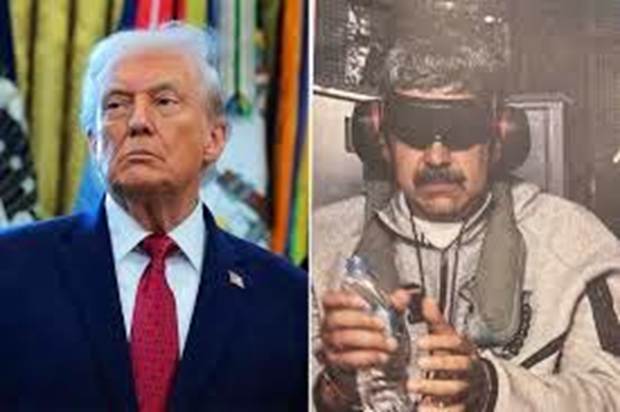
- The United States, under President Donald Trump, conducted a military operation in Venezuela on 3 rd of January, resulting in the capture and transfer of Venezuelan President Nicolás Maduro to the United States to face federal drug-related charges, provoking global diplomatic controversy and legal debate.
- The action has triggered widespread international condemnation, emergency United Nations discussions about violations of sovereignty and international law, and concerns over potential new geopolitical crises and erosion of global norms on use of force.
Relevance
GS-2 International Relations
- Sovereignty, non-interference, and the UN Charter’s principles on use of force.
- Shifts in U.S. foreign policy and implications for global governance.
GS-3 Security & Diplomacy
- Military intervention norms, extraterritorial jurisdiction, and global strategic balances.
- Influence of resource security (oil) and counter-narcotics policy in geopolitics.
Practice Question
- “The unilateral U.S. operation in Venezuela marks a dangerous erosion of international legal norms.” Examine in the context of sovereignty, extraterritorial jurisdiction, and the UN Charter’s prohibition on the use of force..(250 Words)
Operation Details and Aftermath
- Maduro capture: Venezuelan President Nicolás Maduro and his wife were seized by U.S. forces in Caracas and flown to New York, where they pleaded not guilty to narcotics and weapons charges in federal court.
- Military engagement: The operation involved U.S. military action in Venezuelan territory, including reported strikes and casualties among Venezuelan and allied forces.
- Political transition attempt: Venezuelan Vice President Delcy Rodríguez was sworn in as interim president, opposed by Maduro loyalists and facing internal turmoil.
- Security escalation: Armed militias and paramilitary groups increased their presence within Venezuela to assert control amid national chaos.
Global Reaction
- United Nations: The United Nations Security Council held an emergency session, with many members condemning the U.S. action as a violation of international law and Venezuelan sovereignty.
- International law concerns: Experts and several countries cited concerns over violations of the UN Charter and the legal principles governing sovereign equality and non-use of force.
- Mixed diplomatic response: While some U.S. allies expressed caution, major powers like Russia, China, Brazil, Cuba, and Colombia publicly denounced the intervention.
U.S. Government Position
- The Trump administration described the operation as part of a law enforcement action to hold Maduro accountable for alleged narcotics trafficking, arguing that extradition and domestic legal claims justify the intervention even without explicit international authorization.
- Despite internal U.S. debates, the White House asserted that the goal includes stabilising Venezuela, potentially overseeing a transition, and addressing oil infrastructure and national security interests.
Why this matters?
1. Erosion of International Norms
- The operation signifies a sharp departure from conventional restraint in international relations, bypassing established frameworks for military intervention and extradition, thus risking the weakening of sovereignty norms and the UN Charter’s prohibition on unilateral force.
- It raises the spectre of a precedent where powerful states may justify extraterritorial military actions under broad or ambiguous pretexts, increasing global instability.
2. Geopolitical Ramifications
- The intervention intensifies U.S.–Latin America tensions, with implications for hemispheric relations and alliances, and may accelerate foreign policy realignments in the region.
- It has the potential to exacerbate proxy dynamics involving Russia and China, who are strategic partners of Venezuela, thereby impacting broader geopolitical competition.
3. Rule of Law and Precedent
- The legal basis for arresting and trying a sitting president abroad without host nation consent or UN mandate is contested, stimulating debate on the limits of international law and extraterritorial jurisdiction.
- Legal scholars argue such actions risk undermining legal protections for heads of state and could encourage reciprocal actions by other countries.
4. Regional Security and Conflict Risk
- Military actions of this scale in sovereign territory risk escalation into wider conflict, as seen in historical parallels (e.g., U.S. invasion of Panama in 1989) where unilateral interventions have had long-term regional impacts.
Conclusion
- The U.S. military capture and transfer of Venezuelan President Nicolás Maduro in January 2026 represents a dramatic shift in international conduct, sparking wide debate over legality, sovereignty, and the norms governing the use of force.
- The episode underscores rising geopolitical tensions and highlights the potential erosion of global rules designed to prevent unilateral intervention by powerful states.
The right to disconnect in an ‘always-on’ economy
Why is it in news?
- A Private Member’s Bill proposing a statutory “Right to Disconnect” has been introduced to amend the Occupational Safety, Health and Working Conditions Code (2020), aiming to legally protect workers from employer-mandated digital availability beyond working hours.
- The proposal comes amid rising evidence of over-work, burnout, and mental-health stress in India’s workforce, and aligns India with countries such as France, Portugal, Italy, Ireland, and Australia, which have already legislated similar protections.
Relevance
- GS-2: Governance & Labour Rights — regulatory frameworks, social justice, welfare of workers.
- GS-3: Economy & Human Capital — productivity, mental health, sustainable workforce, gig economy regulation.
Practice Question
- “The Right to Disconnect is not merely a labour reform but a public-health and productivity imperative.” Critically examine in the Indian context, citing evidence.(250 Words)
Issues Highlighted
- Long working hours
- 51% of India’s workforce works >49 hours/week — 2nd highest globally (ILO).
- Burnout prevalence
- 78% of Indian employees report job burnout → physical fatigue, emotional exhaustion, productivity decline.
- Health burden
- Over-work linked to hypertension, diabetes, anxiety, depression, and lifestyle disorders.
- Work-related stress accounts for ~10–12% of mental-health cases (National Mental Health Survey).
- Work culture risks
- 24×7 digital availability → fear of penalty for ignoring after-hours calls/emails → power imbalance favoring employers.
- Tragic over-work incidents (e.g., 2024 corporate exhaustion fatality) highlight systemic risks.
Legal & Institutional Gaps
- The OSHWC Code 2020 regulates hours mainly for traditional “workers” —
- Contractual, gig, freelance, platform economy employees remain weakly protected.
- No statutory safeguard against
- After-hours digital work demands
- Retaliatory action for non-response
- Absence of structured grievance redressal mechanisms.
What the Proposed Law Seeks to Do ?
- Define & limit working hours for all employees, including gig/contractual workforce.
- Right to Disconnect — employees cannot be penalised for declining after-hours digital communication.
- Mandatory grievance redressal for violations.
- Integrates mental-health and well-being as part of occupational safety norms.
- Complements emerging State-level initiatives (e.g., Kerala) → seeks uniform national framework.
Global Context
- Countries with legislated “Right to Disconnect”:
- France (2017) → organisational protocols on after-hours email/calls
- Portugal, Italy, Ireland, Australia → codified rest-time protections
- Empirical takeaway: Protected downtime improves productivity, retention, and health outcomes rather than harming growth.
Policy Rationale — Data-Driven Analysis
- Economic productivity
- Chronic fatigue → higher error rates, lower creativity, rising attrition costs.
- Quality-based work output outperforms time-duration-driven cultures.
- Public-health imperative
- Prevents lifestyle-disease escalation & mental-health burden on healthcare systems.
- Social stability & workforce sustainability
- Protects India’s youth demographic dividend from burnout risks.
- Future-of-work alignment
- Essential for digital economy, remote work, platform labour.
Conclusion
- The Right to Disconnect legislation seeks to correct the structural imbalance created by 24×7 digital work culture, protecting worker health while improving sustainable productivity.
- By extending safeguards to all categories of employees — including gig and contractual workers — it reframes work-life balance as a public-health, economic, and social-stability priority for India.


