Why in News ?
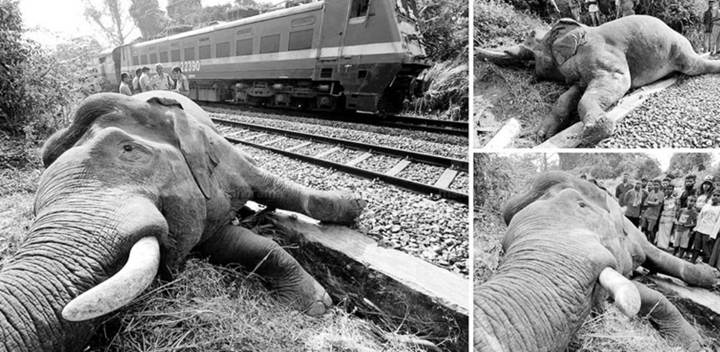
- 4th elephant death on railway tracks in 2025; toll 94 since 2019.
- Dec 20, 2025: 7-8 elephants killed in Hojai/Nagaon, Assam (Rajdhani Express).
- Recent incident in Assam (Hojai–Lumding section) despite prior warnings and mitigation measures.
- Raises concerns on human–wildlife conflict, infrastructure planning, and governance failures.
Relevance
GS I – Geography
- Human–environment interaction.
- Ecological corridors and landscape fragmentation.
- Impact of infrastructure on ecosystems.
GS III – Environment, Internal Security
- Biodiversity conservation (elephants – Schedule I species).
- Human–wildlife conflict.
- Non-traditional security threats (train derailments, passenger safety).
- Sustainable infrastructure development.
Scale of the Problem
- 94 elephant deaths (2019–2025) due to train hits (average ≈ 13–14/year).
- India hosts ~60% of Asia’s elephants (~27,000; Project Elephant estimates).
- High-risk states:
- Assam, Odisha, West Bengal, Jharkhand, Kerala, Tamil Nadu
- Rail–elephant collision hotspots:
- Lumding–Badarpur (Assam)
- Siliguri–Alipurduar (WB)
- Chakradharpur division (Jharkhand–Odisha belt)
Structural Causes
A. Infrastructure–Ecology Mismatch
- Rail lines cut across traditional elephant corridors (not mapped during colonial-era alignments).
- Fragmentation of habitats due to:
- Railways
- Highways
- Mining belts
- Linear infrastructure without wildlife sensitivity
B. Governance & Planning Gaps
- Environmental Impact Assessments (EIA) often:
- Corridor-insensitive
- Static, not updated with elephant movement data
- Poor inter-agency coordination:
- Railways vs Forest Departments
- Mitigation often reactive, not preventive.
C. Operational Failures
- Speed restrictions not consistently enforced, especially at night.
- Dependence on human vigilance instead of automated systems.
- Dense fog + curves + embankments reduce driver visibility.
Existing Mitigation Measures
A. Technological
- Intrusion Detection Systems (IDS):
- Thermal cameras + AI analytics
- Alerts loco pilots & stations in real time
- Piloted in Assam, WB
- Limitation: Partial coverage, maintenance issues
B. Administrative
- Speed restrictions (30–50 km/h) in notified zones.
- Elephant watchers & patrolling.
- GPS-based tracking of elephant herds (limited scale).
C. Ecological
- Underpasses/overpasses (few & expensive).
- Habitat improvement away from tracks (slow progress).
Inference: Measures exist, but scale, enforcement, and integration are weak.
Constitutional & Legal Dimensions
- Article 48A: State’s duty to protect wildlife.
- Article 51A(g): Citizen duty towards environment.
- Wildlife Protection Act, 1972:
- Elephants listed under Schedule I (highest protection).
- Project Elephant (1992):
- Focus on habitat, corridors, conflict mitigation.
- Rail safety still peripheral, not core.
Governance Lens (GS II)
- Illustrates policy silos:
- Transport efficiency vs ecological sustainability.
- Reflects weak anticipatory governance.
- Example of implementation deficit, not policy absence.
- Need for evidence-based, spatial governance (GIS + wildlife data).
Internal Security & Disaster Angle
- Train hits to elephants cause:
- Derailment risks
- Passenger casualties
- Economic losses
- Wildlife accidents as non-traditional security threats.
Best Practices
- Canada / USA:
- Wildlife overpasses + fencing (Banff model).
- Sri Lanka:
- Electric fencing integrated with rail alerts.
- Key takeaway: Structural solutions outperform vigilance-based ones.
Way Forward
Planning & Regulation
- Mandatory Wildlife Corridor Impact Assessment for all rail projects.
- Dynamic corridor mapping using satellite + GPS collar data.
- Corridor zones to be declared “Eco-Sensitive Rail Sections”.
Technology Scaling
- 100% IDS coverage in high-risk sections.
- Automated train braking integration with IDS alerts.
- Night-time speed governors in corridor stretches.
Ecological Engineering
- Standardised wildlife underpasses in all new lines.
- Retrofitting old tracks with funnel fencing + crossings.
Institutional Reform
- Permanent Rail–Forest Joint Command Centres.
- Dedicated funding window under CAMPA / Green Railways Policy.
Indian Elephant (Asian Elephant – Elephas maximus indicus)
- Scientific name: Elephas maximus (Indian subspecies: E. m. indicus)
- Distribution in India: Western Ghats, Northeast India, Eastern India, parts of Central India
- Population (India): ~27,000 (≈ 60% of Asia’s elephants)
- Legal status (India):
- Wildlife Protection Act, 1972: Schedule I
- Flagship species under Project Elephant (1992)
- Ecological role:
- Keystone species
- Seed dispersal
- Forest–grassland ecosystem maintenance
Asian Elephant: Endangered (EN)