Current Event
- Global attention on Uganda’s mountain gorilla conservation due to recognition of Dr. Gladys Kalema-Zikusoka’s One Health model linking wildlife health, community health, and conservation success.
- Her decades-long work through Conservation Through Public Health (CTPH) is highlighted as a model for integrating conservation with livelihoods and disease prevention in biodiversity-rich developing countries.
Relevance
GS III — Environment
- Biodiversity conservation, flagship species, eco-tourism.
- One Health approach (human–animal–ecosystem link).
GS II — Governance
- Community participation in conservation.
- Public health–environment interface.
Why is it in News?
Policy & Conservation Relevance
- Uganda’s mountain gorilla recovery showcases how community-based conservation, eco-tourism, and public health integration can revive critically endangered species even after political instability and poaching-driven collapse.
- Growing global focus on One Health, zoonotic disease risks, and human-wildlife coexistence makes Uganda’s gorilla model relevant for biodiversity policy and conservation governance debates.
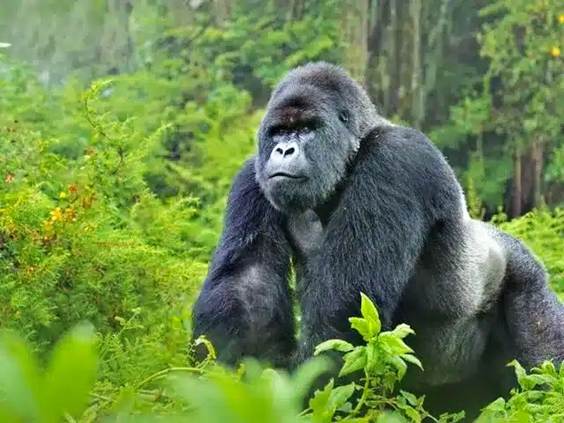
Mountain Gorillas
Species Basics
- Mountain gorilla (Gorilla beringei beringei) is a critically endangered great ape found only in Central Africa’s Bwindi and Virunga forests at elevations of 2,200–4,300 metres.
- Global population approximately ~1,000 individuals, making them among the rarest primates, with slow recovery due to low reproduction and high sensitivity to disturbance.
Ecology & Behaviour
- Occupy dense montane and bamboo forests; primarily herbivorous, feeding on leaves, shoots, and stems, playing ecological roles in seed dispersal and forest regeneration.
- Long birth interval of 4–5 years limits rapid population growth, increasing vulnerability to poaching, habitat loss, and disease.
Threats
- Major threats include habitat encroachment, poaching, civil conflict spillovers, and human-borne respiratory diseases due to close genetic similarity with humans.
- Historical poaching reduced Virunga population from 400–500 (1960s) to ~260–290 during political turmoil in the 1970s–80s.
Conservation Significance
- Gorilla tourism generates revenue and incentives for protection, similar to tiger tourism in India, linking conservation with local livelihoods.
- Considered a flagship species for biodiversity conservation, eco-tourism, and One Health approaches.