
Content
- PRADHAN MANTRI FORMALISATION OF MICRO FOOD PROCESSING ENTERPRISES (PMFME) SCHEME
- THE HEALTH SECURITY SE NATIONAL SECURITY CESS BILL, 2025
PRADHAN MANTRI FORMALISATION OF MICRO FOOD PROCESSING ENTERPRISES (PMFME) SCHEME
WHAT IS PMFME?
- Centrally Sponsored Scheme under MoFPI.
- Launch year: 2020 (part of Atmanirbhar Bharat).
- Objective: Formalisation + Competitiveness + Modernisation of India’s unorganised micro food processing sector (~25 lakh units, 74% unregistered).
- Implementation model: One District One Product (ODOP) approach.
- Target beneficiaries: Individual micro-enterprises, FPOs, SHGs, Cooperatives.
Relevance
- GS-III | Economy – MSMEs & Food Processing: Formalises unorganised micro units, strengthens value addition, ODOP clusters, supply chains, and rural non-farm growth.
- GS-III | Inclusive Growth: Empowers women-led SHGs, expands credit access, reduces rural vulnerability, supports micro-entrepreneurship.
- GS-II | Governance & Implementation: Demonstrates convergence (PMKSY, PLISFPI, NRLM), highlights gaps in capacity building, digital literacy, market linkages.
WHY IS THIS IN NEWS?
- MoFPI reported the latest progress up to 31 October 2025 on PMFME scheme performance.
- Multiple PIB releases (food processing, renewable technologies, MSME support, PLISFPI linkages) highlight policy push for micro-enterprise formalisation + green technologies + rural employment.
- Parliamentary replies confirm high uptake, massive SHG participation, and integration with PMKSY + PLISFPI.
KEY PERFORMANCE HIGHLIGHTS
A. Loans & Subsidies
- 1,62,744 loans sanctioned under credit-linked subsidy.
- Total loan amount sanctioned: ₹13,234.90 crore.
B. SHG Empowerment
- 3,65,935 SHG members approved for seed capital.
C. Infrastructure Creation
- 101 Common Infrastructure Facilities (CIFs) sanctioned.
- 76 Incubation centres approved.
D. Market Access
- 27 Branding & Marketing proposals approved.
E. Central Share Released to States/UTs
- Steady fund release over last 5 years (exact annual figures not disclosed in PIB).
SCHEME COMPONENTS
Support to Individual / Group Micro Enterprises
- 35% credit-linked capital subsidy, max ₹10 lakh.
- Covers new units + upgradation.
Support to SHGs
- ₹40,000 per SHG member as seed capital for tools and working capital.
- Max ₹4 lakh per SHG federation.
Common Infrastructure Support
- 35% subsidy, cap ₹3 crore.
- For FPOs/SHGs/Cooperatives/Govt agencies.
- Facilities open for public use on hiring basis → reduces cost barriers.
Branding & Marketing Support
- Up to 50% grant to FPOs/SHGs/Cooperatives/SPVs.
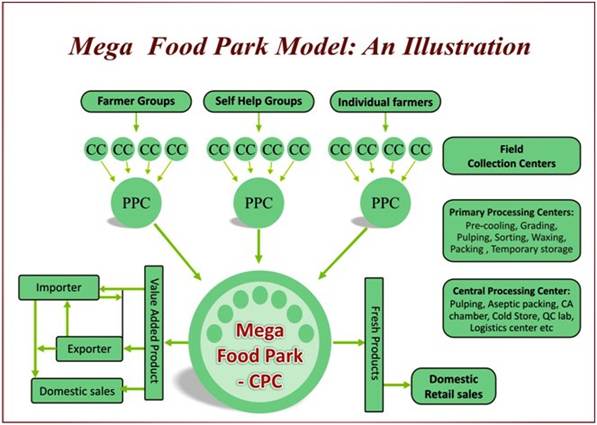
- Essential for ODOP value chain integration.
Capacity Building
- Entrepreneurship Development Program (EDP+)
- Product-specific skilling
- Training of trainers, DRPs, incubation support.
PROGRESS & PERFORMANCE NATIONWIDE
Formalisation Momentum
- SHG seed capital uptake (3.66 lakh members) shows deep penetration in rural areas.
- High loan sanction numbers reflect strong credit linkage via banks/NBFCs.
ODOP Integration improving clusters
- Establishment of CIFs + incubation centres strengthens local value chains.
- Reduces entry barriers for first-time entrepreneurs.
Employment & Income Growth
- Micro food processing units generate off-farm rural employment → stabilises incomes, reduces distress migration.
Women-led Enterprise Growth
- SHG-driven participation is a major success → aligns with Lakhpati Didi, NRLM, Aatmanirbhar Bharat goals.
Convergence with PMKSY & PLISFPI
- PMFME upgrading micro-units, while PLISFPI scales large/medium units → integrated value chain development.
CAPACITY BUILDING & ECOSYSTEM SUPPORT
MoFPI Interventions
- National & State campaigns: newspapers, radio, expos, fairs, buyer-seller meets.
- Awareness drives targeting women collectives & SHGs.
NIFTEM-K & NIFTEM-T Support
- Handholding, mentoring.
- Pilot plants, incubation services, NABL labs.
- Access to R&D, market linkages, packaging technology.
Green Technology Push (related PIB note)
- Incentives for solar, biomass, wind energy → up to ₹35 lakh per project (PMKSY).
- Mandatory CTO (Water & Air) for grant release.
- Promotion of Non-ODS, low-GWP refrigerants for cold chain.
Sustainable Packaging Innovation
- Biopolymers: PLA, starch, nanofibers.
- Low-waste packaging systems → crucial for export competitiveness.
FINANCIAL SUPPORT STRUCTURE
| Component | Support | Target Group |
| Capital Subsidy | 35% (max ₹10 lakh) | Individual/Group MFPEs |
| SHG Seed Capital | ₹40,000 per member (max 4 lakh per federation) | SHGs |
| Common Infrastructure | 35% (max ₹3 crore) | FPOs/SHGs/Coops/Govt agencies |
| Branding & Marketing | Up to 50% | FPOs/SHGs/Coops/SPVs |
| Capacity Building | EDP+, Skilling, ToT, DRPs | Entrepreneurs, SHGs, FPOs |
STRENGTHS OF PMFME
- Modernises the unorganised food processing sector (~74% unregistered units).
- Reduces credit constraints through capital subsidies.
- Empowers women SHGs → major socio-economic impact.
- ODOP creates specialisation, branding and export potential.
- Facilitates common facilities, reducing costs for small entrepreneurs.
- Strong convergence with NRLM, PMKSY, PLISFPI.
CHALLENGES & GAPS
- Slow pace of on-ground utilisation of CIFs relative to sanction numbers.
- Need for stronger market linkages beyond local markets.
- Limited digital literacy among micro-entrepreneurs → affects compliance & formalisation.
- Fragmented value chains in certain ODOP regions.
- Credit access still depends heavily on bank willingness.
THE HEALTH SECURITY SE NATIONAL SECURITY CESS BILL, 2025
WHAT IS THIS BILL?
- A new capacity-based excise cess introduced via a dedicated legislation.
- Purpose: Create a predictable, rule-based revenue stream for
- National Security, and
- Public Health expenditure.
- The cess is levied on machinery or processes used for manufacturing specified goods.
- Initially applies to pan masala, but Government may extend it to other notified goods.
Relevance
- GS-III | Economy – Taxation & Fiscal Policy: Introduces rule-based, capacity-based excise system to ensure predictable revenue for national priorities.
- GS-II & GS-III | Public Health: Uses corrective taxation on harmful products; channels revenue to strengthen health security systems.
- GS-II | Governance: Establishes structured compliance, audit, enforcement, and multi-tier appeals—enhances transparency and accountability.
WHY IS THIS IN NEWS?
- Government introduced a new statutory framework for a special excise cess to strengthen funding for two critical national priorities—health security and national security.
- Bill formalises a capacity-based taxation system for high-risk/ high-revenue products.
- Seeks to improve compliance, monitoring, enforcement and stable revenue mobilisation.
OBJECTIVES OF THE BILL
A. Fiscal Stability
- Create predictable and reliable revenues for national security & public health.
B. Administrative Clarity
- Provide a structured, transparent, rule-based framework for levy, assessment, monitoring, enforcement, and appeal.
C. Corrective Taxation
- Ensure certain products (starting with pan masala) contribute fairly to socio-economic needs.
D. Plug Revenue Leakages
- Prevent evasion common in high-margin goods produced on semi-automatic/hybrid machines.
WHAT GOODS ARE COVERED?
- Pan Masala (initial coverage).
- Government empowered to add any other goods to Schedule I.
WHO IS LIABLE TO PAY THE CESS?
- Any person who owns / operates / controls machines or processes used for manufacturing the notified goods.
- Liability independent of income tax/GST status.
NATURE OF LEVY
- Capacity-based monthly excise cess.
- Levied in addition to existing taxes/duties.
- Applied on:
- Machines installed, or
- Manual processes undertaken.
BASIS OF CALCULATION
A. Machine-Based Production
- Computed using:
- Maximum rated speed (pouches/tins/containers per minute).
- Weight per pack.
- Example rate:
- ₹101 lakh per month for machines up to 500 packs/min (up to 2.5 g pack weight).
B. Manual Process
- ₹11 lakh per month flat cess.
ABATEMENT RULE
- If operations remain shut for 15+ continuous days, prorated abatement applies.
- Ensures fairness and prevents liability during genuine downtime.
FLOW OF FUNDS
- Cess proceeds credited to Consolidated Fund of India (CFI).
- To be used specifically for:
- National Security,
- Public Health Systems.
REGISTRATION, RETURNS & COMPLIANCE ROADMAP
Step 1: Registration
- Mandatory for any person possessing machines/processes for notified goods.
Step 2: Self-Declaration of Machinery
- Maximum speed, weight per pouch, number of machines, type of process.
Step 3: Verification
- Officers may verify/calibrate parameters.
- Opportunity of being heard before final determination.
Step 4: Cess Computation
- Based on declared/verified capacity.
Step 5: Monthly Payment
- Pay cess by 7th of each month (pre-payment model).
Step 6: Monthly Return Filing
- Mandatory return with details of machines, operations, cess paid.
Step 7: Audit & Scrutiny
- Audit of returns, records, declarations.
ENFORCEMENT ARCHITECTURE
A. Monitoring Tools
- Scrutiny of returns
- Inspection
- Search
- Seizure
- Real-time monitoring of machinery/process
B. Offences
- Non-declaration of machines
- Undeclared operations
- Falsification of records
- Evasion or short payment
- Obstruction of officers
- Fraudulent refund claims
C. Penalties
- Monetary fines
- Confiscation of goods/machinery
- Graded imprisonment depending on severity
- Arrest for serious contraventions
D. Inter-Agency Coordination
- Collaboration with police, customs, railways, revenue departments.
APPEALS MECHANISM
Multi-tier appeal structure:
- Appellate Authority
- Appellate Tribunal
- High Court
- Supreme Court
Ensures due process, fairness, and judicial review.
GOVERNMENT POWERS UNDER THE BILL
- Increase cess up to 2× in public interest.
- Exempt specific persons/units under prescribed conditions.
- Notify additional goods for inclusion under the cess system.
- Set rules and procedures for all aspects of levy & administration.
POLICY SIGNIFICANCE
A. Strengthening Health Security & National Security Financing
- Dedicated revenue channel ensures non-disruptive funding for critical sectors.
B. Capacity-Based Taxation = Anti-Evasion Tool
- Pan masala, gutkha, tobacco products often evade tax via under-reporting.
- Machine-capacity levy bypasses quantity reporting manipulation.
C. Rule-Based, Transparent Framework
- Reduces discretionary power and increases administrative predictability.
D. Aligns with Public Health Priorities
- Sin-goods/product categories that impose public health costs help fund health systems.
E. Fiscal Federalism Neutrality
- Cess → goes to CFI, not divisible pool → strengthens Union fiscal space.
CHALLENGES & RISKS
- Industry may shift to undeclared/illegal production to avoid cess.
- Monitoring capacity at ground level (especially for semi-automatic units) is crucial.
- Risk of litigation due to capacity assessment disputes.
- Potential for regressive impact if extended to essential goods (unlikely but permitted by law).


