
Content
- Deepavali Inscribed on UNESCO’s Representative List of Intangible Cultural Heritage
- Crimes Against Women & Children
Deepavali Inscribed on UNESCO’s Representative List of Intangible Cultural Heritage
What is Intangible Cultural Heritage (ICH)?
- UNESCO defines ICH as living traditions, expressions, knowledge, and skills passed across generations.
- Includes: oral traditions, performing arts, festive events, rituals, craftsmanship, and traditional knowledge systems.
- Objective: Safeguarding, not freezing traditions; ensuring community participation and intergenerational transmission.
Representative List
- Showcases cultural practices demonstrating cultural diversity and human creativity.
- Offers global visibility but no legal protection.
Relevance
GS 1: Indian Culture
- Demonstrates India’s cultural continuity, diversity, and living traditions.
- Illustrates the role of festivals, rituals, crafts, and oral traditions in India’s cultural ecosystem.
- Highlights diaspora cultural practices and the global transmission of Indian culture.
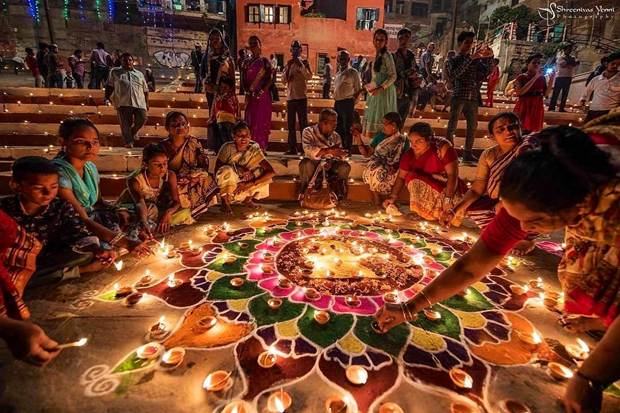
Why is Deepavali in News?
- At the 20th Session of UNESCO’s Intergovernmental Committee (10 Dec 2025, Red Fort, New Delhi), Deepavali was officially inscribed on the Representative List of the Intangible Cultural Heritage of Humanity.
- Inscription attended by delegates from 194 Member States, Union Minister of Culture, and UNESCO officials.
What is Deepavali and Why is it Significant as ICH?
- A multi-regional, multi-faith, multi-layered living tradition, celebrated widely in India and by the global Indian diaspora.
- Embodies the philosophical message “Tamso Ma Jyotirgamaya” (from darkness to light).
- Practised through:
- Lighting of diyas
- Rangoli making
- Traditional crafts and decorations
- Rituals, prayers, community gatherings
- Exchange of sweets and intergenerational storytelling
- Recognised as a people’s festival sustained by potters, artisans, farmers, sweet-makers, florists, priests, and households.
Why Did UNESCO Recognise Deepavali? Core Criteria Fulfilled ?
Community participation
- Nomination involved practitioners, artisans, agrarian groups, diaspora communities, persons with disabilities, and transgender groups.
- Showed Deepavali’s inclusive and community-driven continuity.
Social cohesion
- Strengthens unity, harmony, generosity, and wellbeing across castes, regions, religions, and continents.
Cultural diversity & adaptability
- Deepavali takes diverse forms across India and global diaspora:
- North India: Victory of Rama (Ramayana tradition)
- South India: Worship of Lakshmi, Kali; return of Bali (Onam-linked narratives)
- Jain: Nirvana of Mahavira
- Sikh: Bandi Chhor Divas
- Reflects ability to adapt across time and geography.
Contribution to Sustainable Development Goals (SDGs)
- SDG 5: Gender equality (women-led rituals, craft traditions)
- SDG 8: Livelihoods for artisans, potters, craftspeople
- SDG 11: Safeguarding cultural heritage
- SDG 4: Cultural education through intergenerational learning
Why is the 2025 Inscription Important for India?
- Strengthens India’s soft power and civilizational diplomacy.
- Highlights India’s living traditions, not just monuments (earlier: Yoga, Kumbh Mela, Durga Puja, Kolam, Garba).
- Builds global awareness of India’s cultural ecosystems and traditional craftsmanship.
- Enhances India’s role as a leader in heritage conservation.
Government’s Role in the Nomination
- Prepared by Sangeet Natak Akademi (nodal body for ICH).
- Included extensive documentation of:
- Ritual practices
- Craft ecosystems
- Cultural livelihoods
- Diaspora traditions
- Inclusion of marginalised groups
- Submission aligned with UNESCO’s 2003 Convention on Safeguarding ICH.
Significance for the Indian Diaspora
- Deepavali now recognised as a global cultural festival.
- Celebrated in Southeast Asia, Africa, Gulf, Europe, Caribbean, reinforcing cultural bridges.
- Diaspora celebrations played a crucial role in the nomination’s strong case.
Broader Implications for Cultural Policy
- Reinforces a shift toward people-centric heritage, not monument-centric.
- Places responsibility on:
- Communities to continue traditions
- State bodies to support artisans and cultural livelihoods
- Educational institutions to integrate ICH knowledge
- Encourages safeguarding plans: documentation, transmission, craft revivals, sustainable materials (eco-friendly diyas, natural colors for rangoli).
Representative List of the Intangible Cultural Heritage of Humanity (RL)
Traditional Performing Arts
- Kutiyattam (Kerala) – 2008
- Ramlila (North India) – 2008
- Kalbelia Folk Songs & Dance (Rajasthan) – 2010
- Mudiyettu (Kerala) – 2010
- Chhau Dance (Odisha, West Bengal, Jharkhand) – 2010
- Buddhist Chanting (Ladakh) – 2012
- Sankirtana (Manipur) – 2013
- Garba of Gujarat – 2023
Social Practices, Rituals & Festive Events
- Yoga – 2016
- Nawrouz (multinational; India included) – 2016
- Kumbh Mela – 2017
- Durga Puja (Kolkata) – 2021
- Kolam (Tamil Nadu) – 2024
- Deepavali (India-wide) – 2025
Traditional Craftsmanship
- Vedic Chanting – 2008
- Ramman Festival (Uttarakhand) – 2009
- Thatheras of Jandiala Guru (Punjab) – Brass & Copper Craft – 2014
Crimes Against Women & Children
Constitutional & Legal Framework
- ‘Police’ and ‘Public Order’ fall under State List (List II), Seventh Schedule.
- Primary responsibility for law & order, protection of women & children, investigation, prosecution = State Governments / UT Administrations.
- Union Government acts through:
- Policy support
- Legislative reforms
- Funding mechanisms
- Technology-enabled tools
- Capacity-building programmes
- Advisories and coordination
Relevance
GS 2: Governance, Constitution, Welfare Schemes
- Federal structure: Police & Public Order under State List; Centre supports via law, funding, advisories.
- Legislative reforms under BNS–BNSS–BSA 2023 modernising criminal law.
- Strengthens institutional mechanisms:
- Women Help Desks
- One Stop Centres
- Mission Shakti
- Victim Compensation Scheme
- Enhances transparency in investigation: AV recording, forensic guidelines, DNA labs.
GS 2: Social Justice
- Addresses vulnerability of women and children.
- Schemes for protection, rehabilitation, legal aid (OSC, 181 helpline, 1098).
- Issues of underreporting, patriarchy, stigma, lack of awareness.
Why is this in News?
- MoS Home Affairs gave a comprehensive written reply in Rajya Sabha outlining India’s multi-layered strategy to combat crimes against women & children.
- Response summarised central initiatives, legal reforms (especially BNS/BNSS/BSA 2023), institutional mechanisms, and progress under key schemes.
Major Central Interventions
A. Police Station–Level Support
- Women Help Desks (WHDs) in every police station (centrally funded).
- Objective: accessibility, sensitivity, trust-building.
B. Emergency Response
- 112 – ERSS: pan-India emergency number; GPS-enabled dispatch of field units.
C. Safe City Projects
- Implemented in 8 cities under Nirbhaya Fund.
- Integrates surveillance, analytics, panic systems, smart policing.
D. National Databases & Tracking Systems
- NDSO – National Database on Sexual Offenders: real-time investigative support.
- ITSSO – Investigation Tracking System for Sexual Offences: monitors time-bound investigations under Criminal Law (Amendment), 2018.
E. Forensic Strengthening
- State-of-the-art DNA units in Central & State FSLs.
- Financial support via Nirbhaya Fund.
- Standardised Sexual Assault Evidence Collection (SAEC) kits and guidelines.
- Over 18,020 kits distributed for training.
F. Capacity Building
- 35,377 police/prosecution/medical officers trained by BPR&D and NFSU (Delhi Campus).
- Focus on victim sensitivity, forensic protocols, POCSO procedures.
Transformational Legal Reforms: BNS–BNSS–BSA (2024 Onwards)
Structural Changes
- Chapter V of BNS:
- First substantive chapter devoted exclusively to offences against women & children.
- Gives precedence and special focus.
Key New Offences & Revisions
- Sexual intercourse under false promise (marriage, employment, promotion, or concealment of identity) criminalised.
- Uniform punishment for gangrape of minor girls (below 18):
- Life imprisonment or death (removes earlier 12/16-year differentiation).
- Mandatory audio-video recording of victim statements.
- Victim statements to be recorded preferably by a woman Magistrate.
- Medical report of rape victim must be sent within 7 days.
- Hiring/engaging a child to commit an offence added as a new offence.
- Enhanced penalty for buying a child for prostitution → max 14 years.
Anti-Trafficking Enhancements
- Section 143, BNS:
- Minimum 10 years RI, extendable to life, for child trafficking.
- Beggary included as an exploitive purpose for trafficking.
- Section 144(1):
- Sexual exploitation of trafficked child → 5–10 years RI + fine.
Victim-Centric Provisions
- Free first-aid/medical treatment for all victims of crimes against women & children at all hospitals.
- Reinforces rights under BNSS for time-bound, transparent investigation.
Fast-Track Justice System
Fast Track Special Courts (FTSCs)
- Operational since 2019.
- Total functional as of Sept 2025: 773 FTSCs (includes 400 e-POCSO courts).
- Cases disposed since inception: 3,50,685.
- Aim: reduce pendency, ensure speedy trial for rape & POCSO offences.
Victim Support Schemes
A. Central Victim Compensation Fund (CVCF)
- ₹200 crore released in 2016–17 as one-time grant.
- Strengthens State Victim Compensation Schemes under Section 357A CrPC / Section 396 BNSS.
- Covers rape, acid attack, trafficking, child abuse.
B. One Stop Centres (OSCs)
- Integrated, single-window support for women:
- Police facilitation
- Medical aid
- Legal support
- Shelter
- Counselling
- 864 OSCs operational.
- 12.67 lakh women assisted till Sept 2025.
C. Women Helpline (181)
- 24/7 referral and emergency support.
- Operational in 35 States/UTs.
D. Child Helpline (1098)
- 24/7 protection for missing, trafficked, or distressed children.
- Railway Childlines operational at major stations.
E. Mission Shakti
- Samarthya component and Shakti Sadan:
- Rehabilitation for women in difficult circumstances.
- Mission Shakti Portal (2025 launch):
- Consolidates schemes
- Enhances accessibility
- Supports rescue–rehabilitation workflows
- Strengthens accountability of duty-holders
Awareness, Monitoring & Coordination
- National Commission for Women (NCW):
- Awareness campaigns, seminars, media outreach.
- Tracks complaints and coordinates with police for resolution.
- Advisories from MHA & MWCD issued frequently on:
- Cyber-crimes
- Trafficking
- POCSO compliance
- Forensic protocols
- Women safety guidelines
Strengths of India’s Approach
- Multi-dimensional: legal, technological, infrastructural, forensic, social.
- Focus on victim-centricity, speedy justice, digital tracking, capacity building.
- Legal reforms under BNS modernise the framework after 160+ years.
Systemic Challenges
- Understaffed police forces; low women representation.
- FSL bottlenecks despite capacity expansion.
- High pendency despite FTSCs.
- Uneven implementation across states (federal–state capacity gap).
- Social stigma, underreporting, patriarchal norms.
Way Forward
- Expand Safe City Project beyond the first 8 cities.
- Increase FSL manpower & decentralised DNA labs.
- Mandatory gender-sensitivity modules in police training schools.
- Integrate ERSS–112 with real-time predictive policing.
- Strengthen community-based prevention, school education modules on child safety.


