
Content
- Ol Chiki Script – 100 Years of Linguistic Empowerment
- India-AI Impact Summit 2026 – Welfare for All, Happiness of All
Ol Chiki Script – 100 Years of Linguistic Empowerment
A. Issue in Brief
- Ol Chiki script completes 100 years (1925–2025/26); centenary formally commemorated by Government of India in 2026.
- Developed in 1925 by Pandit Raghunath Murmu to provide a scientific, phonetic script for Santhali language.
- Santhali included in Eighth Schedule (2003, 92nd CAA) → constitutional recognition.
- Constitution of India translated into Santhali in Ol Chiki (2025) → milestone in linguistic justice & democratic access.
Relevance
GS I (Indian Society & Culture)
- Tribal culture, language preservation, cultural diversity.
- Case study of indigenous knowledge systems & identity assertion.
GS II (Polity & Governance)
- Eighth Schedule, linguistic rights, Art. 29–30, 350A.
- Inclusive governance & access to justice via mother-tongue.
- Link with Fifth & Sixth Schedule areas.
- Issuance of ₹100 commemorative coin and postage stamp → national cultural recognition.
B. Static Background
1. About Santhali Language
- Belongs to Austroasiatic family (Munda branch).
- Spoken across Jharkhand, Odisha, West Bengal, Assam, Bihar.
- One of the largest tribal languages in India.
- Historically sustained through oral traditions (songs, folklore, rituals).
2. Script Situation Before Ol Chiki
- Written using Roman, Bengali, Odia, Devanagari.
- These scripts failed to capture glottal stops, nasalisation, vowel length.
- Result: distortion in pronunciation, weak standardisation, poor literacy transmission.
3. Pandit Raghunath Murmu – Architect of Ol Chiki
- Born 1905, Mayurbhanj (Odisha).
- Revered as “Guru Gomke” (Great Teacher) in Santhal society.
- Created Ol Chiki in 1925 to give Santhali its own script.
- Authored “High Serena” (1936) – first Ol Chiki book.
- Other works: Bidu-Chandan, Kherwal Bir.
- Promoted literacy and cultural awareness among Santhals.
- Received honorary doctorate (Ranchi University) and Odisha Sahitya Akademi honours.
4. Features of Ol Chiki Script
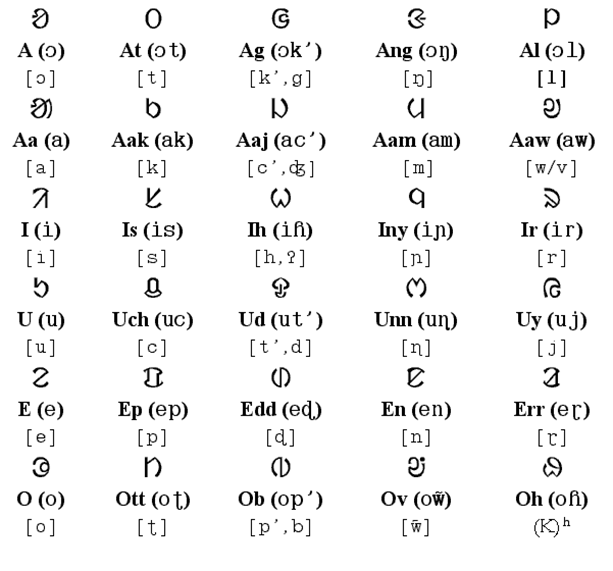
- 30 letters (vowels + consonants).
- One symbol = one sound (pure phonetic design).
- Specifically captures Santhali phonology.
- Not derived from Brahmi → independent script creation.
- Easy for mother-tongue literacy.
C. Constitutional / Legal Dimension
- Article 29 & 30 → Protect linguistic minorities.
- Article 350A → Mother-tongue education at primary stage.
- Article 351 → Promotion of linguistic diversity.
- Eighth Schedule (22 languages) → Santhali added via 92nd CAA, 2003.
- Fifth & Sixth Schedules → Tribal self-governance; language improves access.
D. Governance / Administrative Dimension
- Eighth Schedule status enables:
- Sahitya Akademi recognition.
- Government support in education & publications.
- Santhali Constitution version (2025) → improves constitutional literacy.
- Strengthens participatory democracy in tribal belts.
E. Social / Ethical Dimension
- Script as symbol of identity, dignity, cultural resilience.
- Counters linguistic marginalisation of tribal groups.
- Promotes self-determination & cultural pride.
- Aligns with substantive equality (Art. 14) and social justice.
F. Economic Dimension
- Language access → better uptake of welfare schemes.
- Promotes tribal publishing, local media, cultural industries.
- Supports human capital formation via literacy.
G. Tech / Digital Dimension
- Need for:
- Unicode standardisation
- Ol Chiki keyboards & fonts
- AI datasets & NLP tools
- Risk: Digital language divide if under-integrated.
H. Data & Evidence Value-Add
- UNESCO: ~40% global languages endangered.
- Tribal communities form ~8.6% of India’s population (Census 2011) → linguistic inclusion critical.
- Research shows mother-tongue education improves early learning outcomes.
I. Challenges / Gaps
- Symbolic recognition > ground implementation.
- Shortage of trained Santhali teachers.
- Limited textbooks & academic resources.
- Youth shift toward dominant languages for employment.
- Weak digital ecosystem.
J. Way Forward
- Dedicated tribal language teacher training institutes.
- Digital push: OCR, AI models, language corpora.
- Use Ol Chiki in local governance communication.
- Establish National Tribal Language Archive.
- Promote tribal literature, cinema, cultural economy.
- Align with:
- SDG 4 (Education)
- SDG 10 (Reduced Inequalities)
- SDG 16 (Inclusive Institutions)
K. Exam Orientation
Prelims Pointers
- Santhali = Austroasiatic (Munda).
- Added via 92nd CAA, 2003.
- Ol Chiki created in 1925 by Raghunath Murmu.
- 30 letters; phonetic script.
- Art. 350A → mother-tongue education.
Mains Practice Question (15 Marks)
- “Promotion of tribal scripts and languages is essential for inclusive governance but requires sustained institutional support.” Discuss with reference to Ol Chiki and Santhali language.
India-AI Impact Summit 2026 – Welfare for All, Happiness of All
A. Issue in Brief
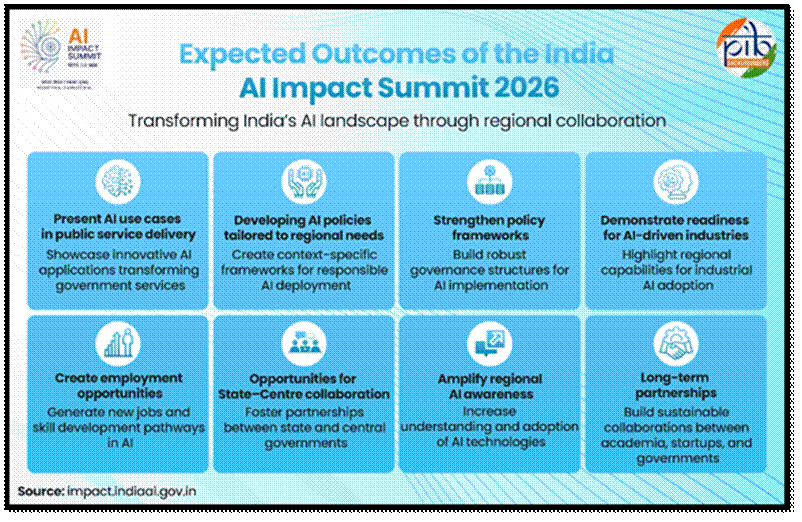
- India–AI Impact Summit 2026 inaugurated on 16 Feb 2026 at Bharat Mandapam, New Delhi.
- Participation: 20+ Heads of State, 60 Ministers, 500+ global AI leaders .
- First global AI summit hosted in the Global South → geopolitical and technological significance.
- Anchored on 3 Sutras: People, Planet, Progress and 7 Chakras of cooperation.
- Linked with IndiaAI Mission and Digital India → AI for development model.
- Focus on responsible, inclusive, development-oriented AI.
Relevance
GS II (Governance & IR)
- Digital governance, AI regulation, data protection (DPDP Act 2023).
- India as norm-shaper in global AI governance (GPAI, Global South leadership).
GS III (Economy, S&T, Environment)
- AI as growth driver (productivity, startups, GDP impact).
- AI in agriculture, health, education.
- Green AI, energy use of data centres → environment link.
- Indigenous AI, compute sovereignty.

B. Static Background
1. Policy & Institutional Context
- IndiaAI Mission (2024 onwards) → national AI ecosystem (compute, datasets, skilling, startups).
- Digital India → digital public infrastructure base for AI deployment.
- GPAI (Global Partnership on AI) → India active member; promotes responsible AI.
- NITI Aayog (Responsible AI for All, 2021) → ethical AI roadmap.
C. Constitutional / Legal Dimension
- Article 21 → Privacy, dignity (AI surveillance concerns).
- DPDP Act 2023 → personal data protection in AI systems.
- IT Act 2000 → intermediary liability & digital governance.
- Need for AI-specific regulatory framework (risk-based approach).
D. Governance / Administrative Dimension
- AI in governance:
- Translation of court judgments → access to justice.
- Smart cities → traffic, waste, safety optimisation.
- DBT & scheme targeting → efficiency gains.
- Summit promotes policy coherence and inter-ministerial coordination.
- Strengthens India’s role as norm-shaper in global AI governance.
E. Economic Dimension
- AI could add ~$500 billion to India’s GDP by 2025–30 (industry estimates).
- Supports startup ecosystem & MSMEs via democratized AI resources.
- AI-led productivity in agriculture, logistics, finance, health.
- Expo scale: 70,000+ sq. m; 300+ exhibitors; 30+ countries (tentative).
- Enhances India’s ambition to be global AI hub.
F. Social / Ethical Dimension
- AI for healthcare, education, financial inclusion.
- AI by HER Challenge → women-led innovation.
- YUVAi Challenge (13–21 yrs) → youth innovation.
- Ethical concerns:
- Bias & exclusion
- Digital divide
- Job displacement
- Aligns with principle of “AI for All”.
G. Environmental Dimension (Planet Sutra)
- AI in precision agriculture, crop forecasting, drone monitoring.
- Environmental risks:
- High energy use of data centres
- Carbon footprint of large AI models
- Focus on Green AI & sustainable compute.
H. Science & Tech Dimension
- AI in drug discovery, diagnostics, outbreak prediction.
- Satellite & AI for weather and climate analytics.
- Push for indigenous AI models & datasets.
- Need for compute sovereignty to reduce Big Tech dependence.
I. Data & Evidence Value-Add
- AI for ALL / AI by HER / YUVAi → 4,650+ applications from 60+ countries.
- 70 finalists selected.
- Awards:
- Up to ₹2.5 crore (AI for ALL / AI by HER)
- ₹85 lakh (YUVAi).
- 250 research submissions from Africa, Asia, Latin America.
J. Challenges / Gaps
- Regulatory lag vs rapid AI growth.
- Skill gap in AI workforce.
- Dependence on foreign AI chips & cloud.
- Risk of data colonialism.
- Urban–rural AI access divide.
- Ethical risks in surveillance & misinformation.
K. Way Forward
- Risk-based AI regulation (like EU model but contextualised).
- Public investment in AI compute infrastructure.
- AI skilling mission for workforce transition.
- Promote open-source & sovereign AI models.
- Green AI standards for energy-efficient AI.
- Strengthen Global South AI coalition.
- Align with:
- SDG 9 (Innovation)
- SDG 16 (Institutions)
L. Exam Orientation
Prelims Pointers
- IndiaAI Mission → national AI ecosystem programme.
- DPDP Act 2023 relevant for AI data use.
- GPAI → international AI governance platform.
- AI energy use → emerging climate concern.
Mains Practice Question (15 Marks)
- “Artificial Intelligence can accelerate inclusive development but also raises governance and ethical challenges.” Examine in the context of India’s AI policy push and the India–AI Impact Summit 2026.


