
Content
- M.A.N.A.V. – Human-Centric AI Governance Framework (2026)
- India–France National Centre of Excellence (NCoE) in Aeronautics under PM-SETU (Kanpur, 2026)
M.A.N.A.V. – Human-Centric AI Governance Framework (2026)
A. Issue in Brief
- At the India AI Impact Summit 2026 (Feb 16–20, Bharat Mandapam, New Delhi), PM Narendra Modi unveiled M.A.N.A.V., positioning India as a Global South norm-shaper in AI governance architecture.
- India hosts ~17% of global population, over 65% population below 35 years, and a 1.5+ million technology workforce, strengthening its legitimacy in global AI rule-making.
- Framework reframes AI from competitive “AI arms race” to responsible, ethical and inclusive innovation, embedding constitutional morality, sovereignty, and democratic accountability within AI policy design.
Relevance
GS 3 (Economy / S&T / Security / Environment)
- IndiaAI Mission ₹10,372 crore; compute infrastructure & Safe AI pillar.
- Semiconductor dependency (>90% advanced chip imports).
- Cybersecurity: 13 lakh+ incidents (CERT-In 2023); AI-enabled threats.
- Startup ecosystem (1 lakh+ DPI-enabled startups).
- Energy-intensive AI vs 50% non-fossil target by 2030; Green AI standards.
B. Static Background
- IndiaAI Mission (2024) approved with ₹10,372 crore outlay, covering 7 pillars including compute infrastructure, datasets, startups, skilling, and Safe & Trusted AI governance mechanisms.
- Digital Personal Data Protection Act, 2023 establishes data fiduciary obligations, consent architecture, and cross-border data transfer rules, directly influencing AI training datasets and algorithmic accountability.
- IT (Intermediary Guidelines) Amendment Rules, 2026 mandate labelling of synthetic content and enhanced due diligence, addressing deepfakes, misinformation, and electoral manipulation risks.
- National Education Policy 2020 integrates AI literacy and computational thinking across school levels, impacting 26 crore+ students, building long-term ethical and technical AI capacity.
C. Pillar-Wise Analysis
1. Moral & Ethical Systems
- AI Governance Guidelines (2025) emphasise fairness, transparency, explainability and human oversight, aligning with Article 14 (equality) and Article 21 (privacy & dignity) jurisprudence.
- Public mobilisation witnessed through 250,946 AI responsibility pledges in 24 hours, converting abstract ethics into participatory accountability within digital society.
- Global evidence shows facial recognition error rates up to 30% higher for darker-skinned women, underscoring urgency of bias mitigation and inclusive dataset design.
2. Accountable Governance
- IndiaAI Mission embeds structured oversight, funding regulatory sandboxes, audit tools, and risk assessment frameworks to institutionalise accountability in public-sector AI deployment.
- Currently, oversight fragmented across MeitY, CERT-In and sectoral regulators, highlighting need for statutory AI regulator with adjudicatory authority.
- Compared to the EU AI Act (2024) risk-based compliance model, India signals proportionate regulation, protecting innovation ecosystem of 1 lakh+ DPI-enabled startups.
3. National Sovereignty
- AI sovereignty extends to data, algorithms, semiconductors and compute clusters; India imports over 90% advanced semiconductor chips, indicating strategic hardware vulnerability.
- India Semiconductor Mission provides $10 billion incentive package, aiming fabrication, packaging and design ecosystem resilience within national territory.
- Securing Digital Public Infrastructure (DPI) reduces hyperscaler dependency, while enabling scalable AI services for 1.4 billion citizens without digital isolation.
4. Accessible & Inclusive AI
- IndiaAI Compute Portal democratises access to GPUs and TPUs, reducing capital barriers for startups, research institutions and Tier-2/3 innovation hubs.
- IndiaAI Kosh datasets enable sectoral AI innovation across agriculture, health and governance, leveraging India’s population-scale digital public goods architecture.
- National Supercomputing Mission deploying 70+ supercomputers strengthens indigenous high-performance computing capacity and frontier research competitiveness.
5. Valid & Legitimate Systems (Trust & Safety)
- IT Rules 2026 formally define and regulate synthetically generated content, strengthening traceability and accountability within digital ecosystem.
- Under Safe & Trusted AI pillar, funding supports privacy-preserving computation, federated learning, bias audits and risk assessment tools, translating ethics into enforceable standards.
- India recorded 13 lakh+ cyber incidents in 2023 (CERT-In data), highlighting security risks amplified by AI-enabled phishing, deepfakes and misinformation automation.
D. Critical Evaluation
- Compute asymmetry persists; frontier AI training requires thousands of high-end GPUs, often restricted by export controls, constraining indigenous foundation model development.
- Regulatory capacity gaps at state and district levels may impede implementation in high-risk sectors such as predictive policing, healthcare diagnostics and welfare delivery.
- AI training is energy-intensive, with large models consuming megawatt-scale power, potentially conflicting with India’s 50% non-fossil electricity target by 2030.
- Without systematic investment in 22 scheduled language datasets, AI may exacerbate digital inequality between English-dominant urban users and vernacular rural populations.
E. Way Forward
- Enact comprehensive AI Act establishing independent statutory AI regulator, harmonising DPDP Act, IT Rules and sectoral regulatory mandates.
- Promote Green AI standards, mandating renewable-powered data centres aligned with Net Zero 2070 commitment and sustainable compute infrastructure expansion.
- Introduce mandatory Algorithmic Impact Assessments for high-risk AI systems in finance, health, law enforcement and welfare distribution.
- Lead Global South AI Coalition under G20/UN frameworks, advocating shared compute pools, open datasets and interoperable governance norms anchored in UNESCO AI Ethics (2021).
F. Exam Orientation
Prelims Pointers
- M.A.N.A.V. framework – 5 pillars – 2026 announcement.
- IndiaAI Mission – ₹10,372 crore – 7 pillars including Safe & Trusted AI.
- DPDP Act 2023 – Data fiduciary concept.
- IT Rules 2026 – Regulation of synthetic/deepfake content.
- National Supercomputing Mission – 70+ supercomputers.
Practice Question (15 Marks)
- “AI governance must reconcile innovation, sovereignty and constitutional morality.”
Examine in light of India’s M.A.N.A.V. framework, highlighting structural challenges and global geopolitical implications.
India–France National Centre of Excellence (NCoE) in Aeronautics under PM-SETU (Kanpur, 2026)
A. Issue in Brief
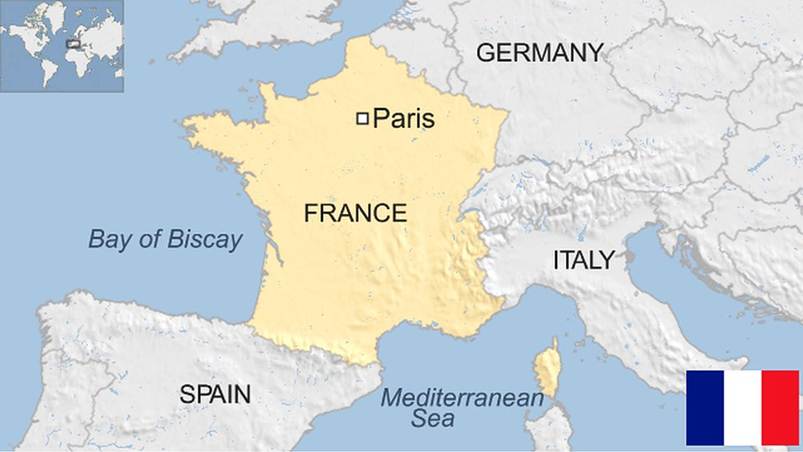
- PM Narendra Modi announced establishment of India–France National Centre of Excellence (NCoE) in Aeronautics & Defence at NSTI Kanpur under PM-SETU scheme.
- Announcement coincided with inauguration of India–France Year of Innovation 2026, reinforcing strategic technology and skill partnership between India and the France.
- Centre will focus on Aeronautics, MRO (Maintenance, Repair & Overhaul), airport operations, defence manufacturing and space-linked domains, supporting India’s expanding aerospace ecosystem.
Relevance
GS 2 (Governance / IR)
- PM-SETU ₹60,000 crore; modernization of 1000 ITIs.
- Concurrent List – Centre–State coordination in technical education.
- Treaty-based cooperation under Article 253.
- India–France Strategic Partnership (defence, Indo-Pacific, tech).
B. Static Background
- PM-SETU (Pradhan Mantri Skilling and Employability Transformation through Upgraded ITIs) has an overall ₹60,000 crore outlay, targeting modernization of 1000 ITIs nationwide.
- India’s aviation market projected to become 3rd largest globally by 2030 (IATA estimates); fleet expansion beyond 1,500 aircraft orders creates acute skilled manpower demand.
- India–France Strategic Partnership (since 1998) spans defence (Rafale), space cooperation (ISRO–CNES), nuclear energy, and Indo-Pacific security architecture.
- MoU on Skill Development and Vocational Education (2025) laid foundation for curriculum co-design, trainer exchange and mobility pathways in high-tech sectors.
C. Key Dimensions
1. Constitutional / Legal Dimension
- Skilling aligns with Article 41 (Right to Work) under DPSP and advances Article 21 dignity principle through employability enhancement.
- Falls under Concurrent List (Education & Technical Training), requiring Centre–State coordination for curriculum integration and regulatory compliance (NCVT/SCVT framework).
- LoI between MSDE and Government of France strengthens treaty-based cooperation under Article 253 enabling Parliament to legislate for international obligations.
2. Governance / Administrative Dimension
- Located at National Skill Training Institute (NSTI), Kanpur, integrating with existing ITI ecosystem and reducing greenfield infrastructure costs.
- Envisages co-designed curricula, training-of-trainers (ToT), language modules and joint programme reviews, ensuring industry-aligned and globally benchmarked skill standards.
- PM-SETU modernisation aims outcome-based skilling with digital labs, simulation-based aviation training and structured certification frameworks aligned to global norms.
3. Economic Dimension
- India’s civil aviation sector contributes ~2.5% to GDP (direct + indirect impact) and supports over 70 lakh jobs, projected to grow exponentially by 2030.
- MRO market in India estimated at $2 billion (2024) and expected to reach $4–5 billion by 2030, reducing foreign exchange outflow currently spent abroad.
- Aerospace and defence manufacturing targeted at $25 billion turnover by 2025, under Atmanirbhar Bharat and defence export push (crossed ₹21,000 crore exports in 2023–24).
4. Social / Ethical Dimension
- Aviation skilling enhances high-value employment mobility, addressing youth unemployment where over 65% population below 35 years seeks aspirational careers.
- Structured mobility pathways and French collaboration enable international certification equivalence, supporting safe labour migration under ethical recruitment norms.
- Regional diversification through centres at Ludhiana, Hyderabad, Chennai, Bhubaneswar ensures geographically balanced skill ecosystem linked to regional industrial strengths.
5. Security / Strategic / Tech Dimension
- Strengthens domestic capability in defence manufacturing and aerospace MRO, reducing strategic dependency in critical aviation maintenance.
- France remains key defence partner (Rafale jets, submarine collaboration), making aeronautics skilling strategically aligned with Indo-Pacific defence preparedness.
- Supports dual-use technologies in aerospace and space sectors, reinforcing India’s ambition for resilient supply chains amid global geopolitical disruptions.
D. Critical Analysis
- Skill–industry mismatch persists; periodic National Skill Development Corporation (NSDC) reports show placement rates often below projected targets in advanced sectors.
- Aviation training requires high-cost simulators and regulatory approvals (DGCA norms); sustained funding and quality assurance essential to avoid infrastructure obsolescence.
- Global certification alignment must ensure recognition under EASA (European Aviation Safety Agency) standards for genuine international employability.
- Risk of regional concentration if ancillary ecosystem (suppliers, OEMs, MRO hubs) does not develop around Kanpur cluster.
E. Way Forward
- Integrate NCoE with UDAN airport expansion network (150+ operational airports) to create live training pipelines linked to operational aviation ecosystem.
- Establish statutory accreditation aligned with DGCA and EASA equivalence, ensuring international portability of Indian aeronautics certifications.
- Promote PPP-based simulation labs and renewable-powered training infrastructure, aligning with Net Zero 2070 sustainability objectives.
- Embed apprenticeship mandates with aerospace PSUs and private OEMs under National Apprenticeship Promotion Scheme (NAPS) for assured employability outcomes.
F. Exam Orientation
Prelims Pointers
- PM-SETU outlay: ₹60,000 crore; 1000 ITIs modernization target.
- NCoE in Aeronautics at NSTI Kanpur – India–France collaboration (2026).
- Focus areas: MRO, airport operations, defence manufacturing, space domains.
- Defence exports crossed ₹21,000 crore (2023–24).
Practice Question (15 Marks)
- “Skill diplomacy is emerging as a pillar of India’s strategic partnerships.”
Discuss with reference to the India–France National Centre of Excellence in Aeronautics, examining its economic and security implications.


