
Why in News ?
- The article reflects on the civilisational and cultural significance of the Somnath Temple in Gujarat, particularly in the context of:
- 1,000 years since the first major attack on the temple (1026 CE by Mahmud of Ghazni).
- The temple’s repeated destruction and reconstruction across centuries, symbolising resilience of faith, culture, and national spirit.
- Contemporary relevance — Somnath as a symbol of civilisational continuity, unity, and cultural revival in modern India.
Relevance
GS-I | Indian Culture, Heritage & Architecture
- Jyotirlinga tradition, temple architecture, historical continuity
GS-I / GS-II | Nation-building & Post-Independence Consolidation
- Cultural resilience, identity revival, leadership roles (Patel–Munshi)
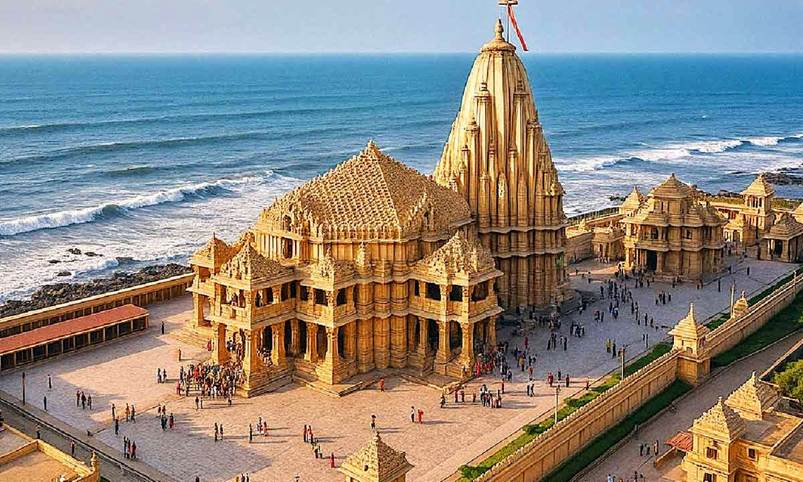
Basics — About the Somnath Temple
- Location: Prabhas Patan, Gir Somnath district, Gujarat (Western coast of India).
- One of the 12 Jyotirlingas of Lord Shiva.
- Ancient coastal pilgrimage and trade hub.
- Architecture: Rebuilt in Chaulukya (Solanki) style using pink sandstone.
- Governance: Managed by Shree Somnath Trust.
Historical Timeline — Destruction & Reconstruction
- 1026 CE — Mahmud of Ghazni invades; temple looted and destroyed.
- Subsequent medieval periods — Multiple attacks by foreign invaders; repeated rebuilding by local rulers and devotees.
- Late 19th century — Swami Vivekananda visits ruins; emphasises spiritual-civilisational strength.
- Post-Independence reconstruction
- Leadership of Sardar Vallabhbhai Patel (1947 onwards).
- Supported by K.M. Munshi and others.
- Re-consecrated and reopened in 1951.
- Seen as a symbol of national resurgence and cultural self-assertion.
Civilisational Themes
- Somnath as a symbol of resilience
- Represents faith surviving conquest, plunder, and colonial suppression.
- Cultural continuity
- Despite repeated destruction, the temple was rebuilt again and again — reflecting collective civilisational memory.
- Nation-building symbolism
- Reconstruction linked to:
- self-confidence after independence
- reclaiming heritage and identity
- restoring dignity after centuries of subjugation
- Reconstruction linked to:


