The Hindu — UPSC Analysis
Wednesday, 25 November 2026
Delhi City Edition · Vol. 16, No. 278 · Curated for Prelims & Mains | GS I · II · III · IV
📋 Today's Topics
- Beyond generosity: India-Nepal reset and Nepal's grievancesGS2
- Who pays for climate change is a federal questionGS2 · GS3
- SAMPADA survey reports a drop in anaemiaGS2
- Revisiting the monthly frequency of PLFSGS3
- Spinning wheels: bike taxis and urban mobility in KarnatakaGS2 · GS3
- Maharashtra panel proposes tough penalties for exam paper leaksGS2
- A changing Washington and a shift in U.S.-Israel tiesGS2
- Sheikh Hasina's planned return and India-Bangladesh tiesGS2
- Karnataka seeks to restrain Tamil Nadu's Cauvery link projectGS2 · GS1
- AI-written scholarship and judgments: the scourge of 'AI slop'GS4 · GS3
- Quick Prelims Revision (MCQ Bank)Prelims
- FAQsRevision
Beyond generosity: India-Nepal reset and Nepal's grievances
Context
The editorial "Beyond generosity" welcomes the outcomes of Nepal PM Balendra Shah's state visit, but warns India must keep an eye on Nepal's grievances.
Background & Key Facts
- Joint statement: Titled "Viksit Bharat and Samunnat Nepal: Re-imagining the Partnership".
- Package: ₹15,000 crore (about $1.6 billion) for reconstruction and development.
- Ports: Nepal gets access to Indian ports in Gujarat and Odisha, which matters given memories of the 2015 blockade.
- Projects: Bridges, roads, trains, energy and fuel lines, an Integrated Check Post, and an IIT campus, which will be its third offshore campus.
- Unresolved: The boundary dispute and Nepal's request for air routes to two new airports were only covered by a reference to "all outstanding matters".
- EPG report: India's view that the Eminent Persons Group report on the 1950 treaty is "not relevant" may upset Kathmandu.
Critical Analysis
Personal rapport: Ties with the Gen-Z-led government warmed after the August flood response.
Quiet diplomacy: Handling differences privately avoids public friction, but can leave grievances to build up.
Treaty review: Nepal has long wanted the 1950 treaty updated, and dismissing the EPG may hurt trust.
Way Forward
- Engage on treaty review in a structured, time-bound way.
- Address air-route requests through technical talks.
- Track and complete the announced projects on schedule.
Exam Relevance
"Generosity alone cannot sustain neighbourhood relationships." Discuss in the context of India-Nepal ties. (GS2, 10 marks, 150 words)
Integrated Check Posts (ICPs) on India's land borders are developed by:
(a) Land Ports Authority of India (b) Border Roads Organisation (c) NHAI (d) Airports Authority of India
Who pays for climate change is a federal question
Context
Advocate Mukund P. Unny draws on a U.S. Supreme Court case brought by Boulder, Colorado, against oil companies. He argues that Indian States bear the costs of climate disasters but lack the powers and resources to respond.
Background & Key Facts
- Disaster relief examples: After the 2024 Wayanad landslides, aid came as a ₹529.50-crore, 50-year interest-free loan. After Himachal's 2023 floods, the State's ₹9,042-crore loss estimate got ₹2,006.40 crore for recovery. After the 2025 floods, Punjab's ₹20,000-crore demand got ₹1,600 crore.
- Central legislation: Article 253 lets Parliament legislate to implement treaties, even on State subjects. The Air Act, 1981 and the Environment (Protection) Act, 1986 drew on it.
- Disaster: It is not in any list of the Seventh Schedule. The DM Act, 2005 relies on Concurrent List entries.
- Cess: The Clean Environment Cess on coal (₹400 a tonne from 2016) was not shared with States, since Article 270(1) excludes cesses from the divisible pool.
- Courts: M.K. Ranjitsinh (2024) recognised a right against the adverse effects of climate change under Articles 14 and 21. The Sikkim HC has started a suo motu climate PIL.
Critical Analysis
Centralised policy: The Centre controls climate law and revenue, while States face the damage.
Loans vs grants: Relief given as loans adds to the debt of States already under strain.
Centre's view: National funds such as the NDRF and SDRF follow Finance Commission norms meant to treat all States consistently.
Way Forward
- Make climate vulnerability a criterion for Finance Commission devolution.
- Give time-bound disaster relief as grants.
- Share fossil-fuel levies with the States that bear climate costs.
Exam Relevance
"States bear climate costs but lack the powers and resources to respond." Examine the case for decentralising climate governance in India. (GS2, 15 marks, 250 words)
The "polluter pays" principle was recognised as part of Indian environmental law in:
(a) M.C. Mehta (1987) (b) Vellore Citizens Welfare Forum (1996) (c) T.N. Godavarman (1996) (d) M.K. Ranjitsinh (2024)
SAMPADA survey reports a drop in anaemia
Context
The Health Ministry released SAMPADA 2023-25 data showing lower anaemia prevalence across groups. It is the first national anaemia data since the measure was withdrawn from the NFHS.
Background & Key Facts
- SAMPADA: Survey for Assessment of Markers of Population Health, Activity, Diet and Anthropometry.
- Children: 41.8%, against 64% in NFHS-5.
- Pregnant women: 44%, down from 52%.
- Other groups: Adolescent girls 46%, adult women up to 59 years 55%, and lactating women 58%.
- Severity: About half of anaemic women and children have only mild anaemia.
- Method: The survey used venous blood samples.
Critical Analysis
Comparability: NFHS used capillary blood, so part of the change may reflect the change in method. This is general background, not from today's report.
Still high: More than half of adult women remain anaemic, and experts say India must aim lower.
Policy impact: Better data can sharpen Anaemia Mukt Bharat interventions.
Way Forward
- Publish the methods and unit-level data for independent review.
- Expand iron-folic acid, deworming and food fortification programmes.
- Address dietary diversity and the causes of anaemia beyond iron deficiency.
Exam Relevance
Discuss the challenges of measuring and tackling anaemia in India. How can survey methods affect policy? (GS2, 10 marks, 150 words)
Anaemia Mukt Bharat uses which strategy?
(a) 4×4×4 (b) 5×5 (c) 6×6×6 (d) 3×3
Revisiting the monthly frequency of PLFS
Context
Former CSO and NSSO Director General G.C. Manna argues that the monthly PLFS estimates of unemployment and worker participation barely differ from month to month. He suggests releasing only quarterly and annual estimates.
Background & Key Facts
- PLFS: Launched by MoSPI in 2017-18. Monthly estimates since January 2025 cover both rural and urban areas.
- Sample: About 2.7 lakh households in PLFS-2025, compared with about one lakh earlier.
- Unemployment rate, January to October 2026: Between 4.9% and 5.5%.
- Worker population ratio: Between 51.4% and 53.2% over the same period.
- Measure: Current Weekly Status, with a reference period of one week.
Critical Analysis
Statistical noise: Small month-to-month changes are mostly within sampling error.
Cost: A larger sample uses a lot of resources without producing meaningful monthly signals.
Other view: Supporters say monthly data helps track shocks quickly and builds a longer time series.
Way Forward
- Publish confidence intervals with every estimate.
- Redesign sampling if monthly precision is needed.
- Consider releasing only quarterly and annual estimates.
Exam Relevance
Examine the merits and limitations of high-frequency labour statistics in India, with reference to the monthly PLFS. (GS3, 10 marks, 150 words)
Under the "Current Weekly Status" approach, a person's activity status is determined using a reference period of:
(a) One day (b) One month (c) 365 days (d) Seven days preceding the survey
Spinning wheels: bike taxis and urban mobility in Karnataka
Context
The Supreme Court dismissed Karnataka's appeal, allowing motorcycles to be registered as transport vehicles. The editorial "Spinning wheels" says the State needs a coherent urban mobility policy.
Background & Key Facts
- Bus shortfall: CSE estimates urban bus fleets are 70% short of the MoHUA benchmark. About 400 cities with populations of one lakh to 10 lakh have no organised bus service.
- Bengaluru: BMTC has about 7,000 buses, against 13,000 envisaged by 2025.
- Policy swings: An expert committee advised against bike taxis in 2019. The State launched an e-bike-taxi scheme in 2021 and withdrew it in 2024.
- Safety: Two-wheeler users were involved in 46.2% of road deaths.
- Rules: The Motor Vehicle Aggregator Guidelines, 2025 let States authorise private motorcycles through aggregators.
Critical Analysis
Demand gap: Weak public transport pushes people towards informal options.
Safety data: The relative risk of bike taxis per trip and per kilometre is unclear.
Platform power: Large aggregators may exploit drivers and distort fares.
Way Forward
- Require aggregators to report injuries and fatalities.
- Expand buses and last-mile links to Metro stations.
- Create a national programme to fund public transport.
Exam Relevance
"India's urban mobility crisis is a public transport crisis." Discuss with reference to the debate on bike taxis. (GS2, 10 marks, 150 words)
The Motor Vehicle Aggregator Guidelines are issued by the Centre under the:
(a) Information Technology Act, 2000 (b) Motor Vehicles Act, 1988 (c) Consumer Protection Act, 2019 (d) Competition Act, 2002
Maharashtra panel proposes tough penalties for exam paper leaks
Context
A Maharashtra committee headed by the TISS Director recommended a ₹10-crore fine and seven to 10 years in jail for those who leak recruitment exam papers.
Background & Key Facts
- Trigger: An MPSC exam on March 22 for 954 pharmacist and drug inspector posts leaked on WhatsApp. The recruitment was cancelled on August 25.
- Proposals: A task force, special courts, a body to manage exam venues, third-party audits, a cyber cell, CCTV and signal blockers.
- Transparency: Publish data on vacancies and set up a portal for candidates' grievances.
- Relief: A fee refund for affected candidates and more posts.
Critical Analysis
Deterrence: Heavy penalties may deter leaks, but certainty of punishment matters more.
Systems: Outsourced venues and digital channels are key weak points.
Candidates' trust: Repeated leaks erode faith in public recruitment.
Way Forward
- Align State law with the Centre's Public Examinations Act, 2024.
- Use secure computer-based testing.
- Hold officials accountable for securing venues.
Exam Relevance
Paper leaks have become a governance crisis. Suggest institutional reforms to ensure the integrity of public examinations. (GS2, 10 marks, 150 words)
State Public Service Commissions are provided for under which Article of the Constitution?
(a) Article 315 (b) Article 312 (c) Article 324 (d) Article 338
A changing Washington and a shift in U.S.-Israel ties
Context
Former Ambassador R. Swaminathan argues that after the U.S. midterms, in which the Democrats won both Houses, U.S.-Israel ties are "strained but not broken".
Background & Key Facts
- Aid announcement: On election day, President Trump said the U.S. would stop giving Israel about $4 billion a year.
- Public opinion: Nearly half of U.S. voters now think the U.S. is too supportive of Israel, three times as many as in 2017.
- Congress: 40 of 47 Democratic senators voted against selling bulldozers to Israel.
- Democratic camps: An INSS study divides them into left progressives, mainstream progressives who favour conditional aid, and a pro-Israel establishment.
- Continuity: Aid may simply be rerouted through Pentagon budgets.
Critical Analysis
Label vs substance: The military relationship may continue even if "foreign aid" ends.
Longer horizon: The real shift may come after 2028, if a Democrat wins the White House.
Inside Israel: Government formation under Gadi Eisenkot will shape relations with Washington.
Way Forward (for India)
- Keep balanced ties with Israel and Arab partners.
- Support a two-state solution and humanitarian access.
- Track U.S. policy shifts that affect IMEC and West Asian stability.
Exam Relevance
How might changing U.S. domestic politics affect U.S.-Israel relations, and what are the implications for India's West Asia policy? (GS2, 10 marks, 150 words)
The India-Middle East-Europe Economic Corridor (IMEC) was announced at the:
(a) G7 summit, 2022 (b) G20 summit in New Delhi, 2023 (c) BRICS summit, 2024 (d) Quad summit, 2021
Sheikh Hasina's planned return and India-Bangladesh ties
Context
Awami League sources told the paper that Bangladesh's former PM Sheikh Hasina, in India since August 2024, wants to return to Dhaka on December 16. Dhaka says it is in talks with New Delhi about this.
Background & Key Facts
- Plan: She has asked for a Biman Bangladesh aircraft, and party members have also assessed the Benapole-Petrapole land crossing.
- Dhaka's view: Information Adviser Zahed ur Rahman said how she returns is a matter for India and Bangladesh to discuss.
- Indian concern: New Delhi expects disturbances in Bangladesh if she returns.
- Engagement: India says it invited PM Tarique Rahman twice and tried to engage his government.
- Border: Bangladesh has stepped up patrolling.
Critical Analysis
Diplomatic dilemma: India must balance an old relationship with Hasina against its ties with Dhaka's elected government.
Security spillover: Unrest in Bangladesh could affect border States and minorities.
Legal questions: Bangladesh has proceedings against her, which complicates her return.
Way Forward
- Coordinate closely with Dhaka to prevent violence.
- Keep strong border management and humanitarian readiness.
- Engage all political actors in Bangladesh.
Exam Relevance
Examine the challenges for India's Bangladesh policy since the political transition of 2024. (GS2, 10 marks, 150 words)
Petrapole, India's busiest land port for trade with Bangladesh, is located in:
(a) Tripura (b) Meghalaya (c) West Bengal (d) Assam
Karnataka seeks to restrain Tamil Nadu's Cauvery link project
Context
Karnataka has asked the Supreme Court for an interim injunction against Tamil Nadu and the Centre over the Cauvery (Kattalai)-South Vellar-Vaigai-Gundar (CVG) Link Project, which aims to use surplus Cauvery water.
Background & Key Facts
- Suit: The application was filed in Karnataka's original suit challenging the legality of the CVG Link.
- Project: It would divert surplus floodwaters to dry southern districts of Tamil Nadu.
- Karnataka's concern: "Surplus" water should be shared in line with the tribunal award, not appropriated by one State.
- Earlier ruling: Last week, the SC dismissed Tamil Nadu's plea on the distress-year shortfall.
Critical Analysis
Surplus is disputed: States define surplus differently, especially when monsoons vary.
Original suits: Under Article 131, the SC hears disputes between States directly.
River linking: Projects within a State can still affect the rights of other States in the basin.
Way Forward
- Clarify how surplus is accounted for through the CWMA.
- Carry out basin-level planning with all riparian States.
- Pursue negotiated agreements instead of litigation.
Exam Relevance
Discuss the federal challenges posed by river-linking projects in inter-State basins, with reference to the Cauvery. (GS2, 10 marks, 150 words)
Disputes between the Union and States, or between States, fall under the Supreme Court's original jurisdiction under:
(a) Article 32 (b) Article 136 (c) Article 143 (d) Article 131
AI-written scholarship and judgments: the scourge of 'AI slop'
Context
Senior Advocate Srinath Sridevan argues that legal academia is being flooded with AI-written articles, and that judges using AI for core reasoning is even more troubling.
Background & Key Facts
- Experiment: He cites an experiment in which humans retelling a passage drifted towards more individual versions, while AI models drifted towards a bland "mean".
- Patterns: AI-written articles repeat the same structures, bullet points and sentence forms.
- Authorship: Wholesale outsourcing makes the writer a "co-author" at best.
- Other view: AI helps people with good ideas but weak English, and opposing it can be a form of snobbery.
Critical Analysis
Intellectual integrity: Scholarship exists to show one's own thinking for public debate.
Judicial accountability: Reasoning that decides a case must come from the judge.
Balance: AI can help with research and drafting if it is disclosed and checked.
Way Forward
- Require disclosure of AI use in journals and courts.
- Issue judicial guidelines on how AI may be used.
- Teach students critical writing and AI literacy.
Exam Relevance
"Using AI to write is not wrong; abdicating thought is." Discuss the ethical issues in using AI in academic writing and judicial decision-making. (GS4, 10 marks, 150 words)
SUPACE, an AI tool introduced by the Supreme Court of India, is meant to:
(a) Decide cases automatically (b) Assist judges with legal research and case information (c) Translate judgments only (d) Allocate cases to Benches
Quick Prelims Revision (MCQ Bank)
Q1. The suo motu PIL "In Re: Climatic Justice in the State of Sikkim" was initiated by the Sikkim HC after:
(a) A Teesta dam breach (b) Flash floods in neighbouring Nepal
(c) A landslide in Gangtok (d) An earthquake in North Sikkim
Answer: (b) — The September 2026 PIL followed the Nepal flash floods and calls for climate-risk assessments in all six districts.
Q2. The glacial lake outburst flood in Sikkim's Teesta valley occurred in:
(a) June 2013 (b) August 2018
(c) October 2023 (d) July 2024
Answer: (c) — The October 2023 flood from South Lhonak lake damaged the Chungthang dam.
Q3. The Clean Environment Cess on coal was raised in 2016 to:
(a) ₹400 per tonne (b) ₹100 per tonne
(c) ₹200 per tonne (d) ₹50 per tonne
Answer: (a) — The Union collected it in full. It was later subsumed into the GST compensation cess.
Q4. Which Article empowers Parliament to make laws for any part of India to implement international treaties, even on State List subjects?
(a) Article 249 (b) Article 252
(c) Article 256 (d) Article 253
Answer: (d) — Article 253 was used for the Air Act and the Environment (Protection) Act after the 1972 Stockholm Conference.
Q5. The IIT campus to be set up in Nepal will be IIT's offshore campus number:
(a) First (b) Third
(c) Second (d) Fifth
Answer: (b) — It will be the third. IIT Madras in Zanzibar and IIT Delhi in Abu Dhabi are earlier ones, which is general background.
Q6. Guru Nanak Dev's 557th birth anniversary was marked in November, which coincides with the festival of:
(a) Vaisakhi (b) Hola Mohalla
(c) Gurpurab (Kartik Purnima) (d) Lohri
Answer: (c) — Guru Nanak Jayanti, or Gurpurab, falls on Kartik Purnima.
Q7. Under the Passports Act, 1967, a passport may be impounded if it was obtained by suppressing material facts, under which section?
(a) Section 10(3)(b) (b) Section 6(2)
(c) Section 12 (d) Section 3
Answer: (a) — This section was cited in a show-cause notice reported in today's paper.
Q8. In the World Chess Championship, D. Gukesh drew Game 1 against:
(a) Magnus Carlsen (b) Ding Liren
(c) Fabiano Caruana (d) Javokhir Sindarov
Answer: (d) — Gukesh drew with Uzbekistan's Javokhir Sindarov in Game 1. That the match is the World Championship and Sindarov is from Uzbekistan is general background.
Frequently Asked Questions
What were the main outcomes of the Nepal PM's visit?
A ₹15,000-crore package, access to Indian ports in Gujarat and Odisha, an IIT campus, and inaugurations of connectivity and energy projects. Boundary and treaty issues were left to dialogue.
Why does the climate federalism op-ed say States are disadvantaged?
The Centre controls climate law through Article 253 and keeps revenue such as the coal cess, while States bear disaster costs. Relief has often been small or given as loans.
What does SAMPADA show on anaemia?
Lower prevalence than NFHS-5: 41.8% among children and 44% among pregnant women. But 55% of adult women remain anaemic, and the change in blood-sampling method affects comparison.
Why question monthly PLFS estimates?
Unemployment and worker participation estimates barely changed from January to October 2026, staying within sampling error. The author suggests releasing only quarterly and annual figures.
What did the Maharashtra panel recommend on paper leaks?
A ₹10-crore fine and seven to 10 years in jail for those involved, plus a task force, special courts, a body to manage venues, audits and technological safeguards.
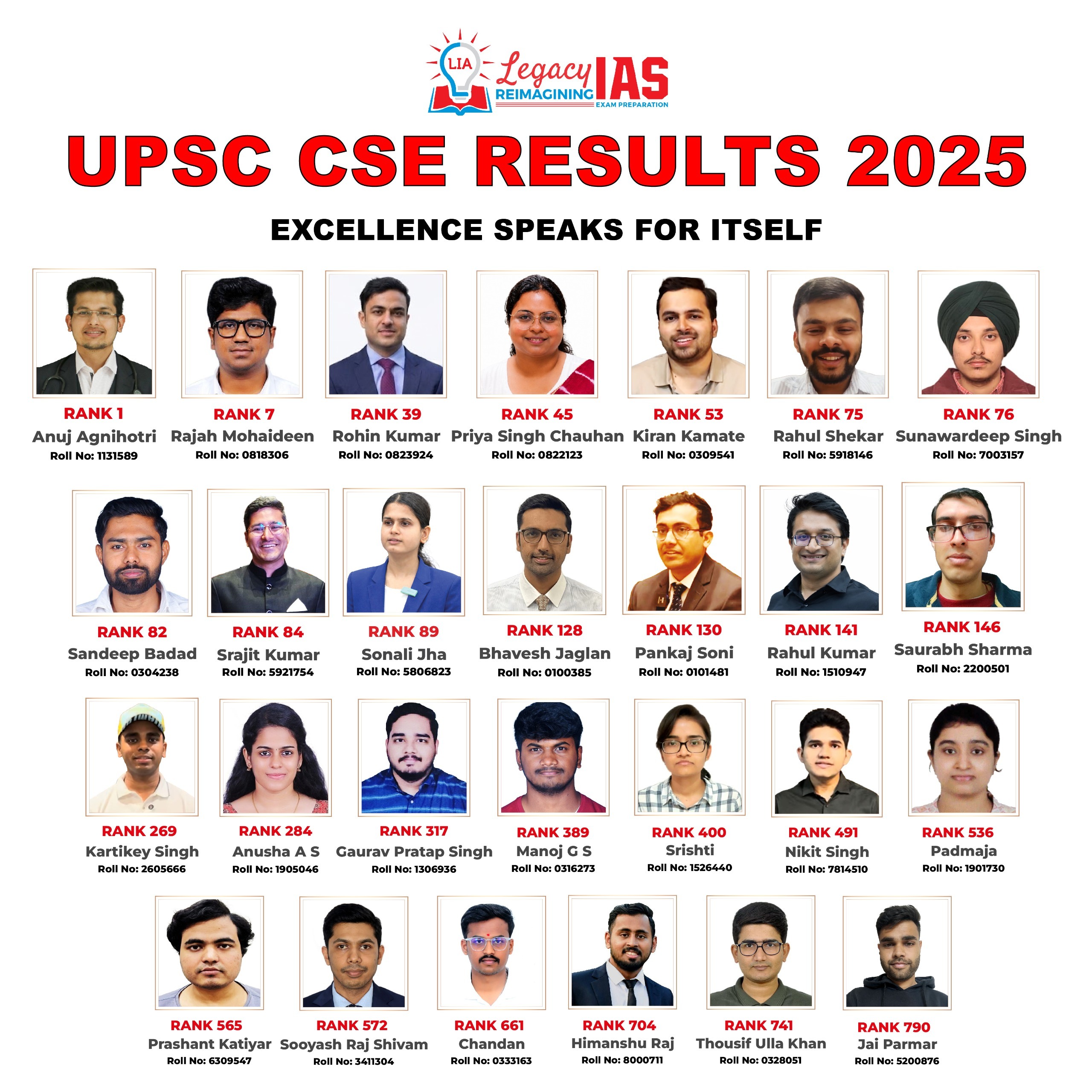
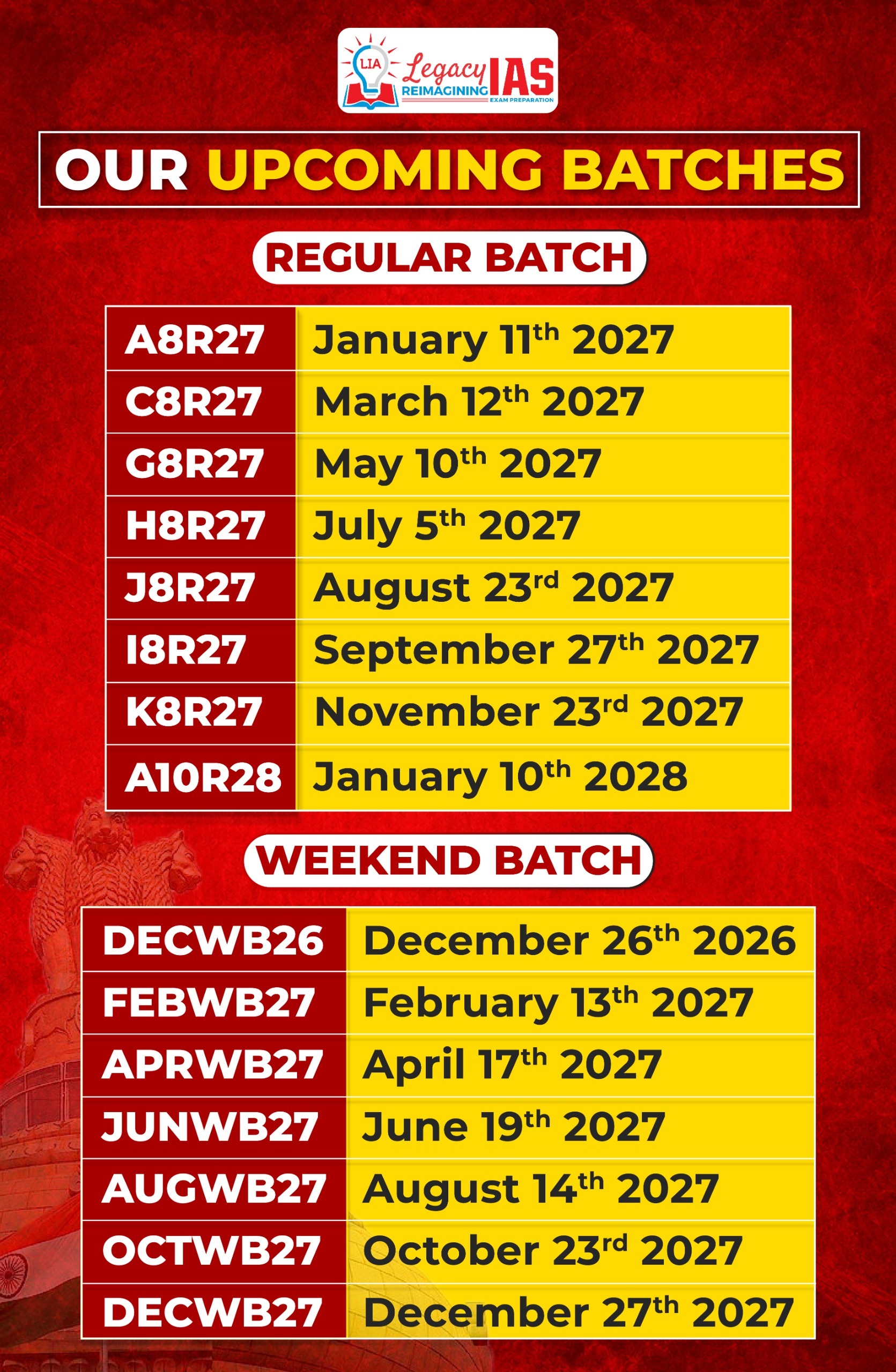
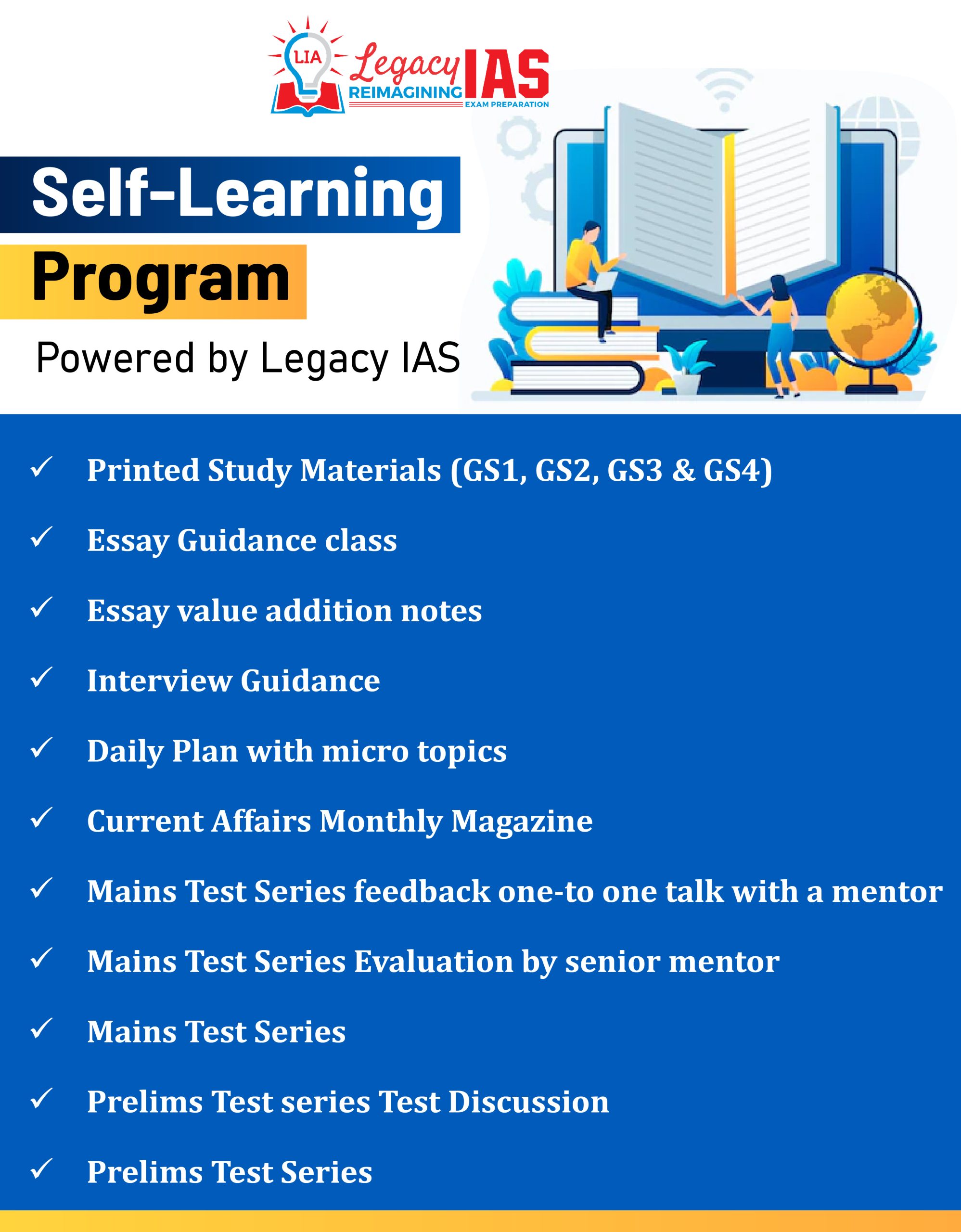
Serious about cracking UPSC CSE?
Join Legacy IAS Academy's structured Prelims + Mains programs, or get personalised mentorship from experienced faculty and toppers.
Legacy IAS Academy — Bengaluru
#1, 2nd Floor, KHB Colony, 5th Block, Koramangala, Bengaluru, Karnataka
Source: The Hindu, Delhi City Edition, 25 November 2026. Static background and frameworks have been added for exam preparation. Original article text has been paraphrased, not reproduced; this analysis is prepared independently for UPSC Civil Services exam preparation.