
Why in News ?
- The first full moon of 2026 — popularly called the Wolf Moon — coincided with the Moon being close to perigee, producing what is popularly termed a “Wolf Supermoon.”
- It reached peak brightness on January 2, 2026 (IST) and appeared slightly larger and brighter than an average full moon.
Relevance
GS-I | Geography — Earth–Moon System & Natural Phenomena
- Perigee–apogee, orbital mechanics, tides, perception vs physical reality
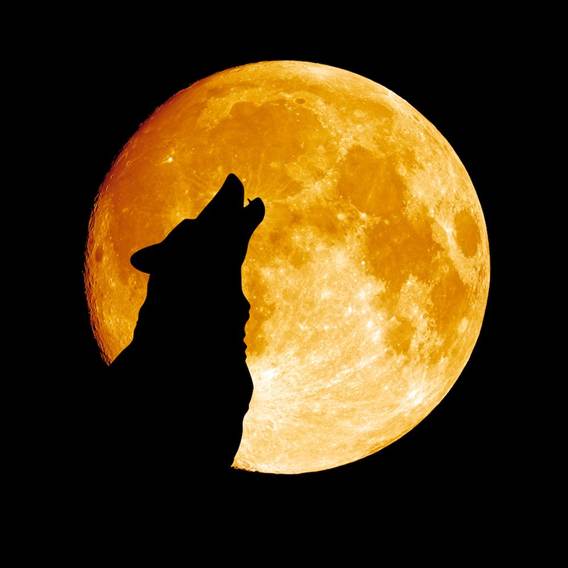
Basics — What is a “Wolf Moon”?
- Traditional name for the first full moon of January.
- Origin traced to seasonal folklore and almanacs in northern cultures, where:
- winter camps reported wolves howling more frequently in harsh winters.
- Important: The name is cultural, not scientific — the Moon itself does not change behaviour.
What is a “Supermoon”?
- The Moon’s orbit is elliptical (oval), not circular.
- Two key orbital positions:
- Perigee → Moon is closest to Earth
- Apogee → Moon is farthest from Earth
- When a full moon occurs near perigee, it is popularly called a Supermoon.
Observable Effects
- Appears ~7–14% larger and ~15–30% brighter than a micromoon (at apogee).
- Difference is subtle to the naked eye, clearer in side-by-side photographs.
(Term “supermoon” is popular rather than official; astronomers call it a Perigee-Syzygy full moon.)
Wolf Supermoon — What People Actually See ?
- Slight increase in:
- apparent angular size
- surface brightness
- Moon Illusion Effect
The Moon appears larger near the horizon due to human visual-perception bias, not astronomy.
Scientific Concepts Linked
- Kepler’s Laws & Tides
- Perigee moons slightly enhance ocean tides (perigean spring tides) — but changes are modest.
- Earth–Moon Distance Range
- Perigee ≈ ~356,500 km
- Apogee ≈ ~406,700 km
- Lunar Phase + Orbit Interaction
Supermoon requires phase alignment + orbital position.
Comparative Terms
- Micromoon → full moon near apogee (smaller & dimmer).
- Blue Moon → second full moon in a month (calendar term).
- Harvest Moon → full moon closest to autumn equinox (seasonal term).
Why These Names Matter ?
- Reflects interaction of culture, nature observation, and early time-keeping.
- Demonstrates how popular astronomy terms differ from scientific terminology — important for science communication.


