Context
- Article explains divergent historical trajectories of Buddhism and Jainism, despite:
- Common origin in Śramaṇa tradition
- Similar period of emergence (6th century BCE)
- Shared opposition to Vedic ritualism
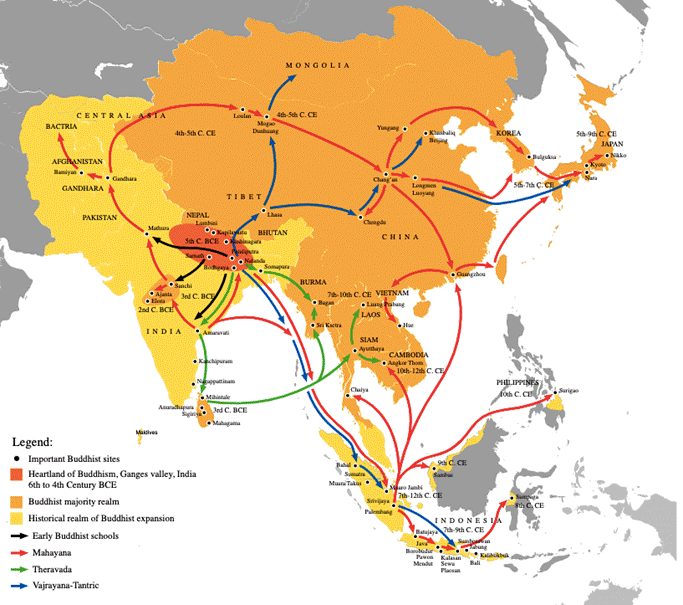
- Core question: Why did Buddhism become a world religion, while Jainism remained largely India-centric?
Relevance
- GS I (Ancient History & Culture)
- Śramaṇa tradition, heterodox philosophies
- Role of doctrine, patronage, trade routes
Indian Thought: Two Broad Traditions
- Brahmanical tradition
- Authority of Vedas
- Emphasis on ritual, sacrifice, social order
- Śramaṇa tradition
- Rejection of Vedic authority
- Emphasis on renunciation (tyāga), moksha
- Included Buddhism, Jainism, Ajivikas
Both Buddhism and Jainism belong to the Śramaṇa stream
Buddhism (Middle Path)
- Rejects extremes of:
- Self-indulgence
- Severe asceticism
- Key doctrines:
- Four Noble Truths
- Eightfold Path
- Impermanence (anicca), non-self (anatta)
- Flexible ethics → adaptable across cultures
Jainism (Ascetic Rigour)
- Core doctrines:
- Ahimsa (absolute non-violence)
- Anekantavada (multiplicity of truths)
- Aparigraha (non-possession)
- Strict code:
- Mahavratas for monks
- Extreme ascetic practices
Doctrinal rigidity vs flexibility is central to divergent spread
Role of Royal Patronage
Buddhism
- Received imperial backing from:
- Ashoka
- Kanishka
- Effects:
- State-sponsored missions
- Monasteries (viharas) along trade routes
- Diplomatic-cum-religious outreach to:
- Central Asia
- Sri Lanka
- Southeast Asia
Jainism
- Patronage from:
- Chandragupta Maurya
- Kharavela
- Later regional rulers
- Limitations:
- Patronage remained regional
- No organised missionary state support
Empire-backed Buddhism vs regionally-supported Jainism
Approach
Buddhism
- Actively proselytising
- Monks:
- Travelled widely
- Interacted with local cultures
- Adapted practices without diluting core tenets
- Monastic code (Vinaya) allowed:
- Flexibility in food
- Cultural accommodation
Jainism
- Non-proselytising
- Jain monks:
- Travel on foot only
- Avoid interaction with other belief systems
- Strong inward focus → community preservation, not expansion
Outreach vs inward preservation
Social Accessibility
Buddhism
- Simple ethical code
- Use of local languages (Pali, Prakrit)
- Open to:
- Women (bhikkhunis)
- Lower social groups
- Compatible with urbanisation & trade networks
Jainism
- Highly demanding ascetic ideals
- Monastic life difficult to replicate outside Indian socio-cultural context
- Better suited to:
- Mercantile communities
- Urban elites within India
Historical Turning Point (~1200 CE)
Buddhism in India
- Decline due to:
- Loss of royal patronage
- Revival of Brahmanism
- Turkish invasions (monastic destruction)
- But: Buddhism already global → survived abroad
Jainism in India
- Continued to flourish within India
- Strong community institutions
- No equivalent global footprint
Geographical diversification ensured Buddhism’s survival
Ethical Philosophy & Global Reception
Buddhism
- Universal ethics:
- Compassion
- Moderation
- Mindfulness
- Easily integrated with foreign belief systems
Jainism
- Anekantavada promotes tolerance
- But doctrinal position:
- Truth is multi-faceted
- No need to convert others
- Mahavira’s teaching (Sutrakritanga):
- Respect other ideologies, do not impose
Ethical universalism vs ethical exclusivity
Summary
| Dimension | Buddhism | Jainism |
| Asceticism | Moderate | Extreme |
| Patronage | Imperial | Regional |
| Missionary zeal | Strong | Absent |
| Cultural adaptability | High | Low |
| Global spread | Extensive | Limited |
| Survival outside India | Yes | No |