
Why in News
- ISRO’s LVM3-M6 mission scheduled for 24 December to launch BlueBird Block-2 satellite.
- Mission executed under a commercial launch agreement with AST SpaceMobile.
- Satellite aims to deliver direct-to-smartphone cellular broadband from space.
Relevance
GS III – Science & Technology
- Space technology applications.
- Satellite communication.
- LEO constellations & direct-to-device broadband.
- Commercialisation of space sector.
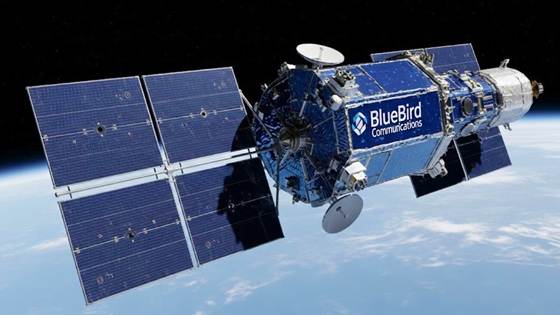
Mission at a Glance
- Launch Vehicle: LVM3 (India’s heavy-lift Gaganyaan-class rocket).
- Payload: BlueBird Block-2.
- Orbit: Low Earth Orbit (LEO).
- Client: AST SpaceMobile.
- Nature: Commercial launch by Indian Space Research Organisation.
What is BlueBird Block-2?
- Largest commercial communication satellite planned for LEO.
- Designed for space-based cellular broadband:
- Direct connectivity to ordinary smartphones.
- No need for specialised satellite phones.
- Part of AST SpaceMobile’s global satellite-cellular constellation.
AST SpaceMobile Network: Key Facts
- Objective: Bridge global digital connectivity gaps.
- BlueBird 1–5 satellites:
- Launched in September 2024.
- Enabled continuous internet coverage over:
- United States
- Select other regions.
- Partnerships:
- 50+ mobile network operators globally.
- End-users:
- Commercial consumers.
- Government & emergency services.
Strategic Significance for India
Space Commercialisation
- Demonstrates ISRO’s shift from captive launches to global launch service provider.
- Strengthens NSIL-led commercial space ecosystem.
- Enhances India’s share in the $10+ billion global launch market.
Heavy-Lift Credibility
- Reaffirms reliability of LVM3 beyond human spaceflight.
- Positions India competitively against:
- SpaceX Falcon 9
- Ariane 6
- Long March series
Digital & Developmental Implications
- Addresses last-mile connectivity:
- Remote rural areas
- Maritime zones
- Disaster-hit regions
- Supports:
- Digital governance
- Financial inclusion
- Tele-medicine & e-education
- Complements India’s Digital Public Infrastructure (DPI) vision.
Geopolitical & Strategic Dimensions
- Space-based broadband increasingly seen as:
- Strategic infrastructure
- Dual-use (civil + security)
- India emerges as:
- Trusted, non-aligned launch partner.
- Enhances India-US tech-commercial cooperation, without data sovereignty entanglement.
Regulatory & Policy Context
- Aligns with:
- Indian Space Policy, 2023
- Promotion of private & foreign participation.
- Raises future policy questions:
- Spectrum coordination (satellite vs terrestrial).
- Cybersecurity & cross-border data flows.
- Space traffic management in congested LEO.
Challenges & Concerns
- LEO congestion and space debris risks.
- Spectrum interference with terrestrial telecom networks.
- Dependence on foreign constellations for critical connectivity.
- Need for robust international space governance norms.
Way Forward
- Strengthen:
- Space situational awareness (SSA).
- Debris mitigation protocols.
- Encourage Indian private players in:
- Satellite manufacturing
- Direct-to-device technologies.
- Develop clear satellite-telecom regulatory convergence framework.


