
Why in News ?
- India and New Zealand concluded negotiations on a Free Trade Agreement on Monday.
- Negotiations completed in ~9 months (March–December 2025) — among India’s fastest FTAs.
- FTA expected to:
- Provide tariff-free access for Indian goods to New Zealand.
- Bring USD 20 billion investments over 15 years.
- Double bilateral trade to USD 5 billion within 5 years.
- Formal signing targeted in first half of 2026.
Relevance
- GS II (International Relations):
- Bilateral relations, Indo-Pacific strategy
- GS III (Economy):
- Trade policy, FTAs, agriculture protection
- Investment flows and services exports
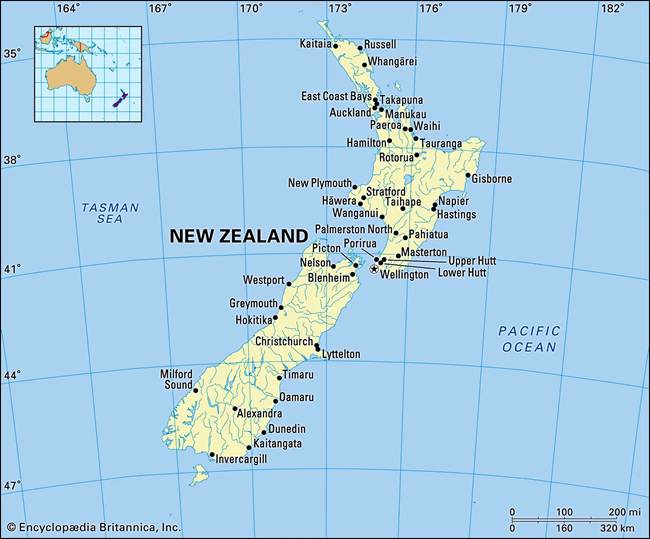
India–New Zealand Economic Context
- New Zealand economy:
- GDP (nominal): ~USD 250 bn
- Per capita income: ~USD 49,000
- Highly export-oriented, agriculture-heavy
- India–NZ trade (pre-FTA):
- Bilateral trade: ~USD 2.5–2.7 bn
- Trade balance: broadly balanced
- Indian diaspora in NZ:
- ~300,000 persons of Indian origin
- ~5% of NZ population → strong socio-economic bridge
Core Trade Architecture of the FTA
A. Tariff Liberalisation
- 95% of New Zealand exports to India:
- Tariffs removed or reduced
- Includes: timber, apples, kiwifruit, wine, wool, forestry products
- India’s export gains:
- Tariff-free access for:
- Pharmaceuticals
- Textiles & apparel
- Engineering goods
- IT & business services
- Generic medicines
- Tariff-free access for:
B. Sensitive Sector Protection (India’s Red Lines)
- No market access conceded in politically and livelihood-sensitive sectors:
- Dairy products
- Rice & wheat
- Sugar
- Onions
- Spices
- Edible oils
- Rubber
- Soya products
- Reflects calibrated trade liberalisation, not blanket opening.
Union Commerce Minister Piyush Goyal explicitly stated that farmer and dairy interests were fully protected.
Mobility & Services: A Strategic Gain for India
- Temporary employment visas for Indian professionals:
- Quota: 5,000 annually
- Duration: Up to 3 years
- Coverage: Skilled occupations
- Significance:
- Boosts India’s Mode-4 (movement of natural persons) interests.
- Reinforces India’s strength in human capital exports.
- Supports remittance flows and skill upgrading.
Investment Dimension: USD 20 Billion Over 15 Years
- Expected inflows into:
- Renewable energy
- Agri-processing & food logistics
- Dairy technology (without product import liberalisation)
- Education and vocational training
- Digital services and fintech
- Strategic value:
- Long-term, patient capital, not volatile portfolio flows.
- Supports India’s manufacturing + services ecosystem.
Strategic & Geoeconomic Significance
A. Indo-Pacific & Oceania Pivot
- Strengthens India’s economic footprint in the Pacific–Oceania region.
- Complements India’s:
- Act East Policy
- Indo-Pacific Oceans Initiative (IPOI)
- Counters excessive trade dependence on:
- China-centric supply chains
- Traditional Western markets
B. Continuity in India’s Trade Diplomacy
- Part of a sequence:
- India–EFTA TEPA (2024)
- India–UK CETA (2025)
- India–Oman CEPA (2025)
- Signals:
- Shift from defensive trade posture to selective openness.
- Emphasis on speed + safeguards.
Risks & Challenges
- Implementation risks:
- Non-tariff barriers (SPS standards, quality norms)
- Mutual recognition of standards
- Domestic adjustment:
- Competition for select agri-exports (fruits, timber)
- Global uncertainty:
- Commodity price volatility
- Shipping & logistics disruptions
Overall Assessment
- The India–New Zealand FTA is:
- Trade-expanding but politically prudent
- Investment-oriented, not just tariff-centric
- Strong on services and mobility
- Represents India’s evolving FTA template:
- Protect core livelihoods
- Leverage market access + talent mobility
- Anchor long-term strategic partnerships
Conclusion
A fast, calibrated FTA that deepens India’s Pacific engagement while ring-fencing farmers and leveraging India’s core strengths — services, skills, and scale.


