
Content
- Denotified, Nomadic & Semi-Nomadic Tribes (DNTs/NTs/SNTs) and Census Recognition
- Bharat Taxi: Cooperative-Based Ride-Hailing Platform
- Rewilding Asiatic Cheetah in Saudi Arabia
- NDMA Guidelines for Identification of Disaster Victims (DVI)
- Carbon Capture, Utilisation and Storage (CCUS) & India’s Net-Zero Pathway
- Amphibians Reach 9,000 Described Species
Denotified, Nomadic & Semi-Nomadic Tribes (DNTs/NTs/SNTs) and Census Recognition
Historical & Conceptual Foundations
Colonial Origins of Stigmatisation
- Criminal Tribes Act, 1871 labelled entire communities as “hereditary criminals,” enabling registration, surveillance, and movement restrictions, institutionalising stigma and disrupting traditional nomadic livelihoods across British India.
- Act amended 1924, repealed 31 August 1952; communities were “denotified,” but stigma persisted socially and administratively, producing intergenerational exclusion from land, education, and formal employment.
Post-Independence Classification Trajectory
- After 1952 repeal, many DNTs/NTs/SNTs were absorbed into SC/ST/OBC lists, often inconsistently across States, creating identity fragmentation and uneven access to reservations and welfare entitlements.
- Government of India (Scheduled Castes) Order, 1936 historically shaped caste listing; modern demands seek a dedicated Schedule paralleling SC/ST/OBC for coherent recognition and targeting.
Relevance
- GS-1 (Society): Covers caste, tribe, marginalisation, and historical injustice from Criminal Tribes Act legacy, linking to social exclusion, stigma, and identity politics.
- GS-2 (Polity & Governance): Involves Articles 14–16, 341–342, affirmative action design, sub-classification, and debates on new Schedules.
Demography, Enumeration & Data Deficits
Census & Caste Enumeration Context
- Caste enumeration in 2027—first since 1931—is a critical window to generate credible data on DNTs/NTs/SNTs, enabling evidence-based policy, budget allocation, and outcome monitoring.
- Demand for a separate Census column/code aims to prevent statistical invisibility, misclassification, and dilution within broader SC/ST/OBC categories, improving programmatic targeting and accountability.
Scale of the Issue
- Idate Commission (2017) identified about 1,200 DNT/NT/SNT communities; 267 remained unclassified, indicating significant gaps in formal recognition and welfare coverage.
- Nomadic/semi-nomadic lifestyles complicate enumeration due to mobility, seasonal migration, and lack of fixed addresses, increasing risks of undercounting and service exclusion.
Constitutional, Legal & Institutional Dimensions
Equality & Affirmative Action Framework
- Articles 14–16 permit reasonable classification and reservations to remedy historical disadvantage; a distinct Schedule could be argued as a rational classification addressing unique stigma and mobility-linked deprivation.
- Articles 341–342 empower the President to notify SC/ST lists; creating a new Schedule would require constitutional and legislative design ensuring federal consultation and clarity on benefits.
Sub-classification Jurisprudence
- Supreme Court (Aug 2024) permitted sub-classification within SC/STs to address “graded backwardness,” strengthening the case for internal prioritisation among DNTs/NTs/SNTs to reach the most deprived.
Socio-Economic Profile & Exclusion
Livelihood Insecurity
- Traditional occupations—pastoralism, itinerant trades, performing arts—face regulatory barriers and market decline, pushing many into informal work with volatile incomes and weak social protection coverage.
Documentation & Access Gaps
- Lack of caste/community certificates, domicile proof, and IDs restricts access to reservations, scholarships, and housing; mobility and stigma deter bureaucratic recognition at local levels.
Welfare Architecture & Implementation Gaps
SEED Scheme Performance
- SEED outlay under-utilised: ₹69.3 crore spent vs ₹200 crore planned (till Dec 2025), indicating design-implementation gaps, low enrolment, and weak last-mile delivery.
Federal Coordination Issues
- States’ reluctance to issue DNT certificates and inconsistent categorisation hinder portability of benefits, data standardisation, and convergence across education, skilling, and housing schemes.
Governance Challenges
Misclassification & Politics
- Allegations of “misclassification” reflect political economy dynamics around quota shares; amalgamation into larger categories can crowd out the most marginalised DNT households.
Enumeration Methodology Risks
- Without clear codes, training, and protocols, Census risks proxy reporting errors, duplication, or omission; mobility requires adaptive listing and verification strategies.
Policy Options & Way Forward
Data & Identification
- Introduce separate Census codes, mobile-friendly enumeration, and post-enumeration surveys; integrate with civil registration and targeted socio-economic surveys for triangulated datasets.
Legal-Institutional Design
- Consider a dedicated Schedule or robust sub-classification, with sunset reviews, creamy-layer principles where appropriate, and safeguards against inter-group inequities.
Delivery Reforms
- Standardise certificate issuance, ensure portability via digital registries, and converge SEED with skilling, housing, and education schemes; prioritise hostels, transit housing, and mobile schools.
Social Justice Lens
- Anti-stigma campaigns, legal aid, and community-led institutions can address discrimination, improve trust in administration, and enhance uptake of entitlements.
Conclusion
- DNTs/NTs/SNTs face historical stigma, mobility-linked exclusion, and data invisibility; credible enumeration and tailored affirmative action are prerequisites for substantive equality.
- A calibrated mix of recognition, sub-classification, and delivery reform can align constitutional morality with effective inclusion, ensuring benefits reach the most deprived.
Bharat Taxi: Cooperative-Based Ride-Hailing Platform
Cooperative Model Basics
- Cooperatives are member-owned, democratically governed enterprises based on one-member-one-vote, aiming at mutual benefit rather than profit maximisation, recognised under 97th Constitutional Amendment promoting cooperative autonomy.
- Platform cooperatives adapt this model to the digital economy, where workers collectively own and govern digital platforms, countering monopolistic tendencies of investor-driven aggregators.
Policy Context
- Launch aligns with push for cooperative federalism and “Sahakar se Samriddhi”, positioning cooperatives as instruments for inclusive growth, formalisation, and social security in service sectors.
Relevance
- GS-2 (Governance): Links to 97th Constitutional Amendment, cooperative federalism, and regulation of aggregators under MV Act.
- GS-3 (Economy): Relevant for gig economy, platform markets, labour formalisation, and digital economy models.
- GS-3 (Employment): Addresses social security for gig workers under Code on Social Security 2020.
Economic Rationale
Correcting Platform Market Failures
- Ride-hailing markets exhibit network effects and data monopolies, enabling high commissions and surge pricing; cooperative platforms can rebalance value distribution towards drivers.
- Driver-owners internalise platform gains, potentially increasing net earnings stability, reducing intermediation costs, and improving bargaining power in fare-setting and policies.
Livelihood & Formalisation
- India’s gig workforce is expanding (NITI Aayog estimates ~77 lakh in 2020–21, rising trajectory), necessitating models ensuring income security, dispute resolution, and predictable work conditions.
Labour & Social Security Dimensions
Welfare Provisions
- Announced ₹5 lakh personal accident and ₹5 lakh family health insurance for top sarathis signal movement toward portable social protection for gig workers lacking employer-linked benefits.
- Cooperative structure can facilitate pooled insurance, credit access, and grievance redressal through collective institutions rather than individual contracts.
Legal Framework
- Code on Social Security, 2020 recognises gig and platform workers; cooperative platforms can operationalise contributions and enrolment through member registries and digital payroll trails.
Governance & Regulatory Aspects
Federal & Urban Regulation
- Ride-hailing is regulated via State Motor Vehicle Aggregator Guidelines (under MV Act 1988); cooperative compliance requires state-level licensing, fare norms, and safety protocols.
- MoUs with public/private stakeholders indicate multi-actor governance for payments, insurance, and technology, reducing entry barriers for a national rollout.
Data Governance
- Cooperative ownership can enable data fiduciary practices, where trip and earnings data serve member interests, aligning with emerging data protection and consent principles.
Technology & Platform Design
Digital Infrastructure Needs
- Scalable app architecture, interoperable payments (UPI), real-time matching, and safety features are essential to compete with incumbent platforms on reliability and user experience.
- Open-network approaches can reduce vendor lock-in and encourage ecosystem innovation by startups and cooperative tech partners.
Opportunities
Inclusive Growth
- Driver-centric ownership can improve income share retention, reduce predatory commissions, and foster local entrepreneurship across cities and smaller towns.
Consumer Trust
- Transparent pricing and accountable governance can enhance rider trust, especially where grievances on surge pricing and cancellations are common.
Challenges
Scale & Capital
- Competing with entrenched platforms requires capital for tech, incentives, and marketing; cooperatives may face resource constraints and slower decision-making.
Governance Risks
- Collective governance can suffer from free-rider problems, politicisation, and managerial capacity gaps, affecting service quality and responsiveness.
Way Forward
Institutional Strengthening
- Professional management, audited governance, and member education can balance democratic control with operational efficiency.
Policy Support
- Facilitate access to credit, viability-gap support in early stages, and integration with urban mobility plans and EV transitions for cost efficiency.
Conclusion
- Bharat Taxi represents a platform-cooperative experiment to align gig economy growth with social justice and worker ownership.
- Its success depends on scalable technology, credible governance, and supportive regulation, potentially offering a replicable model for inclusive digital markets.
Rewilding Asiatic Cheetah in Saudi Arabia
Biological & Ecological Profile
- Cheetah (Acinonyx jubatus) is the fastest land mammal, a cursorial predator adapted to open habitats, relying on speed, vision, and daylight hunting, requiring expansive territories and abundant prey base.
- Ecologically, cheetahs function as meso-to-apex predators, regulating herbivore populations and indicating healthy savanna–semi-desert ecosystems with low human disturbance and connected landscapes.
Global Conservation Status
- Cheetahs have disappeared from ~91% of historical range, reflecting severe contraction due to hunting, habitat loss, prey decline, and human–wildlife conflict across Afro-Asian landscapes.
- Asiatic cheetah (A. j. venaticus) is Critically Endangered (IUCN) with ~50 individuals in Iran, representing one of the smallest large-carnivore populations globally.
Relevance
- GS-3 (Environment): Covers species conservation, IUCN norms, reintroduction biology, and trophic rewilding.
- GS-3 (Biodiversity): Links to apex predator role, habitat connectivity, and genetic viability.
- GS-2 (IR): Cross-border conservation ethics and regional biodiversity cooperation.
Historical Distribution & Extirpation
Former Asian Range
- Historically ranged from Arabian Peninsula to India, occupying arid and semi-arid grasslands; India declared cheetah extinct in 1952 due to overhunting and habitat transformation.
- Arabian Peninsula extirpation linked to prey depletion, unregulated hunting, and pet trade, compounded by desert land-use change and fragmentation.
Saudi Cave Discoveries
- Lauga cave network (northern Saudi Arabia) yielded 7 mummified and 54 skeletal remains, dated up to 4,223 years, evidencing long-term historical presence and denning behaviour.
- Methods included palaeo-chronology, genomic sequencing, and radiography, strengthening historical biogeography reconstructions for species distribution.

Genetics & Subspecies Insights
Genomic Findings
- DNA indicates presence of A. j. venaticus and A. j. hecki, neither currently surviving in Arabia, but showing phylogenetic affinity of Arabian cheetahs to northwest African lineages.
- Genetic evidence informs donor selection logic but does not override ecological suitability, founder population size, and long-term viability considerations.
Rewilding: Ecological Principles
Habitat Requirements
- Viable cheetah populations need ~1 lakh sq km connected habitat, low road density, minimal human presence, and stable prey densities in semi-desert ecosystems.
- Cheetahs avoid dense forests and high predator densities; open landscapes with gazelles and antelopes are optimal for survival and reproduction.
Metapopulation Dynamics
- Long-term survival depends on genetic diversity, connectivity, and demographic stability, avoiding inbreeding depression common in small, isolated carnivore populations.
Threat Landscape
Human–Wildlife Conflict
- Cheetahs often prey on livestock in daylight, leading to retaliatory killing; majority live outside protected areas, increasing exposure to conflict.
- Competition from lions, leopards, and hyenas suppresses cheetah survival and cub recruitment.
Donor Population Risks
- Removing individuals from tiny populations (Iran, NW Africa) risks genetic bottlenecks and demographic collapse; donor-pool sustainability is a core conservation ethic.
Comparative Lessons
Translocation Logic
- India sourced African cheetahs due to Asiatic cheetah scarcity, following IUCN reintroduction guidelines on ecological replacement and functional restoration.
- Reintroductions are long-term, high-cost, high-risk requiring adaptive management, monitoring, and community engagement.
Policy & Governance Context
Saudi Conservation Strategy
- Saudi Arabia’s biodiversity policy includes restoring species to former biogeographic ranges, with successes in Arabian oryx, gazelles, and Nubian ibex.
- Apex predator restoration follows trophic-rewilding logic once prey bases recover.
International Norms
- IUCN guidelines stress scientific feasibility, ethical sourcing, habitat readiness, and stakeholder acceptance before carnivore reintroductions.
Role of Caves in Biodiversity Science
Natural Archives
- Arid caves act as taphonomic repositories, preserving natural mummies via desiccation and reduced microbial decay, offering long-term ecological records.
- Such records refine palaeoecology, extinction timelines, and genetic baselines for restoration planning.
Conclusion
- Rewilding cheetahs in Saudi Arabia is scientifically intriguing but ecologically demanding, requiring vast habitats, prey recovery, and conflict mitigation.
- Conservation prudence favours data-driven feasibility, ethical sourcing, and regional cooperation, ensuring rewilding strengthens—not weakens—global cheetah survival.
NDMA Guidelines for Identification of Disaster Victims (DVI)
What is Disaster Victim Identification (DVI)?
- Disaster Victim Identification (DVI) is a scientific process to establish the identity of deceased persons in mass-fatality incidents using forensic, medical, and legal protocols ensuring accuracy and dignity.
- DVI follows internationally accepted protocols (e.g., INTERPOL DVI standards) involving systematic recovery, documentation, ante-mortem and post-mortem data comparison, and formal certification of identity.
Relevance
- GS-2 (Polity/Governance): NDMA’s statutory role under Disaster Management Act 2005.
- GS-3 (Disaster Management): Strengthens response and recovery frameworks in mass-fatality events.
Institutional & Legal Context in India
NDMA’s Mandate
- NDMA, established under the Disaster Management Act, 2005, frames policies, guidelines, and best practices for disaster preparedness, response, and recovery across Union and States.
- First-ever dedicated DVI guidelines standardise procedures nationwide, addressing earlier ad-hoc approaches during train accidents, industrial disasters, floods, and aviation crashes.
Rights-Based Perspective
- Identification upholds Article 21 (Right to life and dignity), extending dignity to the dead and enabling closure, inheritance claims, and lawful death certification for families.
Need for DVI Guidelines
Lessons from Recent Disasters
- Multiple high-casualty events (aviation crashes, bridge collapses, floods, industrial blasts) exposed gaps in coordinated victim identification and family communication systems.
- Past challenges included burnt or fragmented remains, missing documentation, and data mismatches, delaying identification and compensation processes.
Complexity of Modern Disasters
- Urban density, infrastructure failures, and climate-linked disasters increase probability of mass-casualty events requiring scalable forensic and administrative capacity.
Core Components of DVI Process
Scientific Identification Methods
- Primary identifiers include DNA profiling, fingerprints, and dental records, considered highly reliable when remains are decomposed, burnt, or fragmented.
- Secondary identifiers include personal effects, medical implants, scars, and anthropological features, supporting triangulation when primary data are limited.
Data Management
- Structured collection of ante-mortem data (family records, biometrics) and post-mortem findings enables systematic reconciliation and reduces false matches.
Operational Framework
Multi-Agency Coordination
- DVI requires coordination among police, forensic labs, medical officers, disaster response forces, and civil administration under a unified incident command system.
- Clear role allocation prevents duplication, contamination of evidence, and procedural delays in high-pressure environments.
Forensic Capacity
- Emphasis on trained forensic personnel, mortuary preparedness, and standard documentation improves reliability and speed of identification.
Ethical & Psychosocial Dimensions
Dignity and Cultural Sensitivity
- Protocols stress respectful handling, religious and cultural considerations, and transparent communication with families to maintain trust and social legitimacy.
Family Assistance
- Structured family liaison systems support grief counselling, legal guidance, and compensation processes, reducing trauma and misinformation.
Governance Significance
Standardisation & Accountability
- National guidelines create uniform standards, aiding inter-state coordination and legal defensibility of identification outcomes.
Disaster Risk Governance
- DVI strengthens the response and recovery pillars of disaster management, complementing mitigation and preparedness strategies.
Way Forward
Capacity Building
- Regular training, mock drills, and investment in forensic infrastructure enhance readiness for rare but high-impact disasters.
Technology Integration
- Digital databases, biometric systems, and interoperable records improve speed and accuracy of identification.
Conclusion
- NDMA’s DVI guidelines institutionalise a scientific, humane, and legally robust framework for managing mass fatalities.
- Effective implementation advances dignity, rule of law, and citizen trust, making disaster response more accountable and compassionate.
Carbon Capture, Utilisation and Storage (CCUS) & India’s Net-Zero Pathway
What is CCUS?
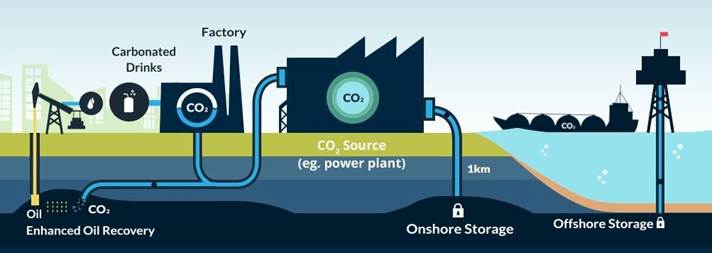
- Carbon Capture, Utilisation and Storage (CCUS) involves capturing CO₂ from point sources or air, then utilising it industrially or storing it in geological formations to prevent atmospheric emissions.
- CCUS addresses hard-to-abate sectors where electrification or renewables alone cannot eliminate process emissions, making it a complement—not substitute—to decarbonisation.
Relevance
- GS-3 (Environment/Climate): Directly relevant to net-zero strategy, mitigation technologies, and decarbonisation pathways.
- GS-3 (Economy): Industrial competitiveness under carbon border taxes (CBAM).
Global Context & Scale
Current Deployment
- Around 45 commercial CCUS facilities operate globally, capturing roughly 50 million tonnes CO₂ annually, a small fraction of global emissions exceeding 36 billion tonnes per year.
- IEA scenarios project ~1 billion tonnes CO₂ capture annually by 2030 to remain aligned with global net-zero pathways.
Climate Imperative
- IPCC mitigation pathways show net-zero by mid-century requires negative-emission or carbon-removal technologies alongside rapid renewable deployment and energy efficiency.
Why CCUS Matters for India ?
Emissions Profile
- India is the third-largest CO₂ emitter, with coal-heavy power and industrial sectors (steel, cement, chemicals) contributing significant process emissions difficult to abate.
- Cement production emits CO₂ from calcination chemistry, making CCUS one of few viable mitigation tools for deep decarbonisation.
Development–Climate Balance
- India’s infrastructure expansion and urbanisation imply continued industrial output; CCUS can moderate emissions while sustaining growth and energy security.
Budgetary & Policy Push
Public Investment Signal
- Budgetary allocation of ₹20,000 crore for CCUS over five years signals state support for pilot projects, scale-up, and domestic technology ecosystems.
- Public finance helps de-risk early-stage projects facing high capital costs and uncertain carbon-pricing signals.
Institutional Ecosystem
- Indian PSUs and research institutions are piloting CCUS; technology adaptation is needed for Indian coal quality, industrial clusters, and cost constraints.
Technology Pathways
Capture Routes
- Post-combustion capture, pre-combustion capture, and oxy-fuel combustion are major approaches, with solvent-based systems most commercially mature.
- Direct Air Capture (DAC) removes CO₂ from ambient air but remains energy-intensive and costly at present scales.
Utilisation & Storage
- CO₂ can be used in enhanced oil recovery, chemicals, fuels, and building materials, or stored in depleted oil/gas fields and saline aquifers for long-term sequestration.
Economic & Operational Challenges
Cost & Energy Penalty
- CCUS entails high capture, transport, and storage costs, plus energy penalties that raise fuel consumption and operating expenses for plants.
- Viability often depends on carbon pricing, subsidies, or compliance markets.
Infrastructure Needs
- Pipeline networks, storage site mapping, and monitoring systems require coordinated planning, regulatory clarity, and long-term liability frameworks.
Environmental & Governance Risks
Storage Integrity
- Risks include CO₂ leakage, induced seismicity, and groundwater impacts, necessitating strict site selection, monitoring, and verification protocols.
Moral Hazard Debate
- Over-reliance on CCUS may delay renewable transitions; policy must prioritise avoid–reduce–remove hierarchy to prevent lock-in of fossil infrastructure.
Strategic Opportunities for India
Industrial Competitiveness
- CCUS can help exporters comply with carbon border measures (e.g., CBAM-type regimes) by lowering embedded emissions in steel and cement.
Innovation & Jobs
- Domestic CCUS value chains can spur R&D, manufacturing, and skilled employment, aligning with clean-tech industrial policy.
Way Forward
Phased Scale-Up
- Start with industrial clusters, shared CO₂ hubs, and pilots in cement/steel before nationwide scale-up.
Policy Mix
- Combine CCUS with renewables, efficiency, green hydrogen, and afforestation, ensuring portfolio-based decarbonisation.
Conclusion
- CCUS is a critical enabler for hard-to-abate sectors in India’s net-zero journey but cannot replace rapid clean-energy transitions.
- Prudent deployment, strong regulation, and cost reductions will determine whether CCUS becomes a bridge to deep decarbonisation.
Amphibians Reach 9,000 Described Species
What are Amphibians?
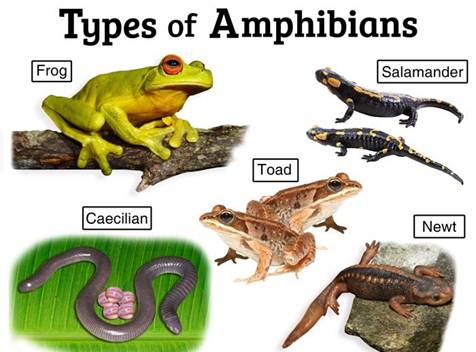
- Amphibians are ectothermic vertebrates (frogs, salamanders, caecilians) with biphasic life cycles linking aquatic and terrestrial ecosystems, making them sensitive bioindicators of environmental quality and ecosystem change.
- Their permeable skin and complex life histories make them highly vulnerable to pollution, climate variability, pathogens, and habitat alteration, positioning them as early-warning taxa in conservation biology.
Relevance
- GS-3 (Environment): Biodiversity loss, extinction crisis, and conservation biology.
Taxonomy & Species Discovery
Milestone in Described Diversity
- Global amphibian diversity has reached 9,000 described species, a major taxonomic milestone reflecting cumulative scientific effort and advances in molecular systematics and field surveys.
- Recognised amphibian species have more than doubled in 40 years, with annual descriptions peaking near 180 species (2017–2020), indicating active biodiscovery.
Undescribed Diversity
- Estimates suggest ~6,000–7,000 species remain undescribed, implying current knowledge may represent only about half of extant amphibian diversity, especially in understudied tropical regions.
- Projections indicate 15,000–16,000 total species by 2100, based on species accumulation models and sustained discovery rates.
Order-wise Biodiversity Patterns
Anurans (Frogs & Toads)
- ~88% of known amphibians are anurans, historically the most speciose group due to adaptive radiation across microhabitats and diverse reproductive strategies.
- Description rates surged in late 20th century with molecular tools revealing cryptic species complexes.
Salamanders
- Represent ~9% of amphibians, with diversity concentrated in temperate and montane regions; discovery patterns mirror frogs with recent spikes due to DNA-based taxonomy.
Caecilians
- Comprise only ~3%, but true diversity likely underestimated because fossorial habits require labor-intensive excavation and specialised surveys.
Biogeographic Distribution
Continental Richness
- South America (~37%) holds the largest share of amphibians, followed by Asia (~23%), North America (~17%), Africa (~15%), Oceania (~9%), and Europe (~1%).
- Tropical climates, stable rainfall, and habitat heterogeneity drive higher amphibian speciation in the Neotropics.
Area-Corrected Diversity
- When adjusted for land area, South America shows highest amphibian density (~2.8x expected), while Europe ranks lowest (~0.2), reflecting historical glaciation and habitat simplification.
Conservation Status & Threats
Most Threatened Vertebrates
- Amphibians are considered the most threatened vertebrate group, facing high extinction risks from habitat loss, climate change, invasive species, pollution, and diseases like chytridiomycosis.
- Many species occur outside protected areas, increasing vulnerability to land-use change.
Funding Mismatch
- Amphibians receive <2.8% of global conservation funding despite disproportionate threat levels, indicating a resource allocation gap in global biodiversity finance.
Scientific & Policy Challenges
Taxonomy Crisis
- Global taxonomic capacity is declining due to limited funding, ageing expertise, and insufficient training pipelines, slowing species description and Red List assessments.
Data Deficiency
- Newly described species often lack ecological data, delaying conservation action and policy integration into protected-area planning.
Ecological Significance
Ecosystem Services
- Amphibians regulate insect populations, contribute to nutrient cycling, and form key prey for higher trophic levels, stabilising food webs.
Bioindicator Role
- Population declines signal water quality degradation, pesticide impacts, and climate stress, aiding environmental monitoring and adaptive management.
Way Forward
Strengthen Taxonomy & Research
- Invest in molecular labs, regional expertise, and citizen science to accelerate species discovery and ecological documentation.
Targeted Conservation
- Prioritise biodiversity hotspots, integrate amphibians into land-use planning, and scale disease surveillance and habitat restoration.
Finance Alignment
- Increase biodiversity funding proportional to threat levels, leveraging GBF (Kunming–Montreal) targets for species protection.
Conclusion
- The 9,000-species milestone highlights both scientific progress and conservation urgency, as discovery outpaces protection.
- Safeguarding amphibians requires closing funding and knowledge gaps to prevent silent extinctions in the world’s most sensitive vertebrate group.


