
Content
- India–Canada Uranium Deal: Strategic Reset in Bilateral Relations
- Indian Warships on Standby for Humanitarian Operations
- Supreme Court to Examine Feasibility of Nucleic Acid Test (NAT) for Blood Transfusion
- How Landscapes’ ‘Memories’ Shape the Way Indian Cities Flood
- World Wildlife Day 2026: Meet the Species That Demand Conservation Attention
- First Food Under Threat: Breast Milk & Environmental Contaminants – Emerging Public Health Concern
- Nine Botswana Cheetahs Released into Kuno National Park
India–Canada Uranium Deal: Strategic Reset in Bilateral Relations
Why in News?
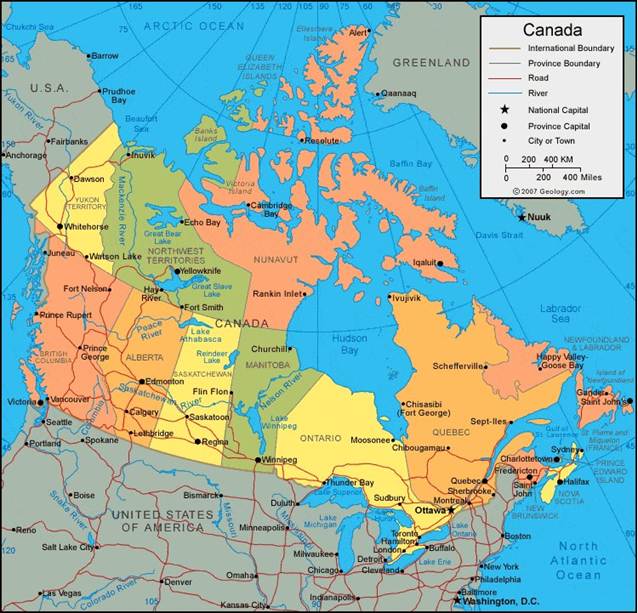
- India and Canada signed a $1.9 billion, 10-year uranium supply agreement for Indian nuclear power reactors during the visit of Canadian Prime Minister Mark Carney to New Delhi.
- The leaders agreed to conclude the Comprehensive Economic Partnership Agreement (CEPA) within the year, signalling revival of trade negotiations.
- The meeting aimed at restoring “strategic trust” after diplomatic tensions triggered by allegations linked to the killing of Khalistan activist Hardeep Singh Nijjar.
- Both sides announced a Strategic Energy Partnership, expanding cooperation in renewables, LNG, uranium, and emerging technologies.
Relevance
GS II – International Relations
- Revival of bilateral ties after diplomatic strain.
- Civil nuclear cooperation post-NSG waiver (2008).
- CEPA negotiations & trade diversification.
- Strategic energy partnerships among middle powers.
GS III – Energy Security & Economy
- Long-term uranium fuel security for PHWRs.
- Nuclear power in India’s net-zero (2070) roadmap.
- Diversification of nuclear fuel sources.
- Clean baseload energy & energy transition stability
Practice Question
- “Civil nuclear cooperation is increasingly shaping India’s strategic partnerships.” Examine with reference to India–Canada relations. (250 Words)
Static Background
1. India–Canada Civil Nuclear Cooperation
- India and Canada signed a Civil Nuclear Cooperation Agreement in 2010, following India’s 2008 waiver from the Nuclear Suppliers Group (NSG).
- Canada is among the world’s largest uranium producers, holding significant reserves in Saskatchewan.
- India operates Pressurised Heavy Water Reactors (PHWRs) requiring natural uranium fuel, making Canada a key potential supplier.
- India aims to increase nuclear power capacity from ~7 GW to 22.5 GW by 2031, enhancing clean baseload generation.
2. Bilateral Trade Context
- India–Canada bilateral trade crossed approximately $8 billion in recent years, with potential expansion under CEPA negotiations.
- Canada hosts a large Indian diaspora (~1.6 million people of Indian origin), forming a key socio-economic linkage.
- Diplomatic ties deteriorated in 2023–24 following allegations regarding Indian involvement in domestic Canadian political incidents.
Strategic Significance of the Uranium Deal
- The $1.9 billion uranium contract ensures long-term fuel security for India’s expanding nuclear reactor fleet.
- Stable uranium supply reduces dependence on volatile spot markets and strengthens India’s clean energy transition strategy.
- The agreement symbolises diplomatic normalisation and restoration of economic engagement after bilateral strain.
- It reinforces India’s strategy of diversifying nuclear fuel sources across Kazakhstan, Canada, Australia, and Russia.
Energy & Climate Dimensions
- Nuclear energy contributes to India’s net-zero target by 2070, providing low-carbon baseload electricity.
- Uranium imports support expansion of domestic PHWR capacity while India continues developing indigenous Fast Breeder Reactor (FBR) technology.
- Collaboration with Canada enhances prospects for cooperation in Small Modular Reactors (SMRs) and advanced nuclear technologies.
- The Strategic Energy Partnership includes renewables and LNG, broadening clean and transitional energy cooperation.
Economic Implications
- CEPA negotiations aim to boost bilateral trade to higher thresholds by reducing tariffs and enhancing market access.
- Uranium imports stabilise fuel input costs, improving financial viability of nuclear power projects.
- Strategic energy cooperation strengthens investor confidence and enhances long-term economic predictability.
- Canada joining the International Solar Alliance (ISA) signals alignment with India’s renewable leadership diplomacy.
Geopolitical & Diplomatic Significance
- The deal reflects pragmatic diplomacy, separating economic cooperation from contentious political disputes.
- Canada’s re-engagement supports India’s diversification of Western partnerships amid evolving global alignments.
- The reset demonstrates India’s ability to manage tensions without derailing long-term strategic interests.
- Cooperation in critical minerals and emerging technologies aligns with supply chain resilience strategies among like-minded democracies.
Constitutional & Legal Dimensions
- Civil nuclear cooperation remains consistent with India’s commitments under the IAEA safeguards framework.
- India remains outside the NPT, but operates under specific safeguards arrangements for civilian nuclear facilities.
- CEPA negotiations must align with WTO-compatible tariff reductions and trade facilitation norms.
- Energy cooperation supports Directive Principles under Article 48A, promoting environmental protection and sustainable development.
Challenges
- Political sensitivities linked to diaspora issues and domestic investigations may periodically strain bilateral relations.
- Nuclear power expansion faces challenges of high capital costs, land acquisition, and public safety perceptions.
- Canada’s internal political dynamics may influence pace of trade negotiations and strategic engagement.
- Global uranium price volatility and supply chain constraints remain structural risks.
Way Forward
- Accelerate CEPA negotiations with clear timelines to institutionalise economic interdependence.
- Expand cooperation into critical minerals, clean hydrogen, and SMRs, deepening strategic energy alignment.
- Strengthen diaspora engagement frameworks to prevent political friction from overshadowing strategic cooperation.
- Enhance nuclear safety transparency and public communication to improve domestic acceptance of nuclear expansion.
Prelims Pointers
- India signed Civil Nuclear Cooperation Agreement with Canada in 2010.
- India received an NSG waiver in 2008, enabling global nuclear trade.
- Nuclear power is a low-carbon baseload energy source.
- India targets 22.5 GW nuclear capacity by 2031.
Indian Warships on Standby for Humanitarian Operations
Why in News?
- Amid escalating tensions in West Asia, the Indian Navy has placed warships under Operation Sankalp on standby for potential Humanitarian Assistance and Disaster Relief (HADR) operations.
- Indian naval assets already deployed in the Gulf of Aden and Gulf of Oman for anti-piracy missions may be redirected for evacuation or relief if required.
- INS Surat is currently deployed in Bahrain as part of a regional maritime security engagement, reflecting India’s forward naval posture.
- The deployment aims to safeguard Indian-flagged merchant vessels and ensure maritime security amid rising threats to commercial shipping.
Relevance
GS II – International Relations
- Strategic autonomy in West Asia.
- Maritime diplomacy & net security provider role.
- Diaspora protection diplomacy.
GS III – Security
- Operation Sankalp.
- Protection of Sea Lanes of Communication (SLOCs).
- HADR as soft-power instrument.
- Maritime domain awareness.
Practice Question
- Examine the strategic importance of Operation Sankalp in India’s maritime security doctrine. (250 Words)
Static Background
1. Operation Sankalp
- Operation Sankalp (launched in 2019) was initiated to ensure safe passage of Indian merchant vessels in the Persian Gulf following tanker attacks.
- It involves deployment of Indian Navy ships in the Gulf of Oman, Strait of Hormuz, and Gulf of Aden.
- The mission focuses on maritime domain awareness, escort operations, and protection of energy supply routes critical to India.
- Over the years, it has evolved into a sustained maritime security operation in the Western Indian Ocean region.
2. India’s HADR Doctrine
- India has institutionalised Humanitarian Assistance and Disaster Relief (HADR) as a core element of its maritime strategy.
- Past operations include Operation Rahat (Yemen, 2015) and Operation Ganga (Ukraine, 2022) for evacuation of Indian nationals.
- The Indian Navy is often termed a “net security provider” in the Indian Ocean Region (IOR).
- HADR missions enhance India’s soft power and regional credibility.
Strategic Significance
- Deployment signals India’s proactive monitoring of regional instability without direct military involvement.
- Forward positioning enhances rapid evacuation capability for the 8–9 million Indians residing in Gulf countries.
- Ensures continuity of maritime trade through energy corridors critical to India’s economic stability.
- Demonstrates India’s commitment to maritime security under the doctrine of Security and Growth for All in the Region (SAGAR).
Security & Maritime Dimensions
- The Strait of Hormuz handles nearly 20–30% of global oil trade, making naval presence crucial during conflict escalation.
- Anti-piracy deployments since 2008 in the Gulf of Aden have built operational experience in escorting merchant vessels.
- Naval assets such as frigates and destroyers provide surveillance, missile defence, and rapid response capability.
- Sustained presence strengthens maritime domain awareness and deterrence against non-state threats.
Economic Implications
- India imports over 80% of its crude oil, much of which transits through the Persian Gulf.
- Protection of sea lanes prevents supply disruptions that could trigger inflation and widen the current account deficit.
- Ensuring merchant vessel safety reduces insurance premiums and freight costs for Indian trade.
- Stable maritime logistics support uninterrupted exports to Europe via the Red Sea–Suez route.
Diplomatic & Geopolitical Dimensions
- India’s calibrated deployment reflects strategic autonomy, balancing relations with the U.S., Iran, and Gulf monarchies.
- Non-combat positioning avoids entanglement while reinforcing India’s image as a responsible maritime stakeholder.
- Naval readiness strengthens bilateral ties with Gulf countries through cooperative security engagements.
- Maritime diplomacy complements India’s broader Indo-Pacific and Western Indian Ocean outreach.
Constitutional & Institutional Context
- External security and naval deployment fall under Union List (Seventh Schedule), granting the Union exclusive authority over defence.
- HADR missions align with India’s commitment to international humanitarian principles and disaster response norms.
- Protection of overseas citizens reflects the State’s duty to safeguard life and dignity consistent with Article 21.
Challenges
- Escalation into a full-scale regional war may stretch naval resources and complicate evacuation logistics.
- Missile and drone warfare in the Gulf region increases operational risks to deployed naval assets.
- Prolonged instability may require sustained deployment, raising operational and financial costs.
- Coordination with host nations during evacuation scenarios requires complex diplomatic clearances.
Way Forward
- Strengthen maritime domain awareness systems integrating satellite, radar, and allied intelligence inputs.
- Expand strategic petroleum reserves to cushion energy supply disruptions during maritime crises.
- Conduct regular evacuation preparedness drills with diaspora communities in Gulf countries.
- Enhance multilateral maritime cooperation under IONS and Combined Maritime Forces frameworks.
Prelims Pointers
- Operation Sankalp launched in 2019 to protect Indian merchant shipping in the Persian Gulf.
- Strait of Hormuz is a key oil transit chokepoint.
- The Indian Navy conducts anti-piracy patrols in the Gulf of Aden since 2008.
- HADR forms a core element of India’s maritime security strategy
Supreme Court to Examine Feasibility of Nucleic Acid Test (NAT) for Blood Transfusion
Why in News?
- The Supreme Court of India has agreed to examine whether blood banks should compulsorily conduct Nucleic Acid Testing (NAT) to detect transfusion-transmitted infections.
- The petition argues that safe blood transfusion is integral to Article 21 (Right to Life), demanding uniform national standards for blood screening.
- The Bench sought data on whether State government hospitals currently use NAT, and the comparative costs versus conventional testing methods.
- The issue gained urgency after reported cases of HIV-positive transfusions in Madhya Pradesh and Jharkhand, raising systemic safety concerns.
Relevance
GS II – Governance & Judiciary
- Article 21: Right to health.
- Judicial activism in public health standards.
- Uniform national medical protocols.
GS III – Science & Tech / Health
- NAT vs ELISA technology.
- Diagnostic window period reduction.
- Public health cost-benefit analysis.
Practice Question
- “Right to health is an integral component of Article 21.” Examine in the context of blood safety standards. (GS II)
Static Background
1. What is NAT?
- Nucleic Acid Testing (NAT) is a highly sensitive molecular technique detecting viral genetic material (RNA/DNA) of pathogens such as HIV, Hepatitis B, and Hepatitis C.
- NAT significantly reduces the “window period”, the time between infection and detectability, compared to traditional antibody-based tests.
- Conventional screening in India largely relies on ELISA (Enzyme-Linked Immunosorbent Assay), which may miss early-stage infections.
- NAT adoption varies across India, with higher uptake in private and urban tertiary hospitals due to cost considerations.
2. Regulatory Framework
- Blood transfusion services in India are regulated under the Drugs and Cosmetics Act, 1940, and monitored by the National Blood Transfusion Council (NBTC).
- The National AIDS Control Organisation (NACO) oversees blood safety protocols and testing standards.
- India collects approximately 12–13 million units of blood annually, with varying infrastructure quality across states.
- Screening for HIV, HBV, HCV, malaria, and syphilis is mandatory, though NAT is not uniformly required nationwide.
Constitutional & Legal Dimensions
- The petitioner argues that Article 21 (Right to Life) encompasses the right to safe medical treatment, including infection-free blood transfusion.
- The Supreme Court has previously expanded Article 21 to include right to health and medical care under welfare jurisprudence.
- Unequal access to NAT may raise concerns under Article 14 (Equality before Law), particularly if safety standards differ across states.
- Judicial intervention may lead to formulation of uniform national guidelines balancing safety and financial feasibility.
Public Health Significance
- India has one of the largest populations of thalassemia patients, many requiring frequent transfusions and thus highly vulnerable to infected blood.
- NAT reduces residual risk of transfusion-transmitted infections, especially in high-prevalence settings.
- Preventing even a single HIV transmission avoids lifelong antiretroviral therapy costs and psychological trauma.
- Standardised screening enhances public trust in blood banking systems.
Economic Considerations
- NAT testing costs are higher than ELISA, increasing per-unit screening expenditure.
- Mandatory nationwide NAT implementation could impose financial burdens on resource-constrained State hospitals.
- However, long-term cost-benefit analysis may favour NAT due to avoided treatment costs for chronic viral infections.
- Differential pricing models or centralised procurement could reduce cost disparities across states.
Governance & Administrative Dimensions
- Data gaps regarding NAT usage in State hospitals highlight uneven healthcare infrastructure.
- Uniform adoption would require capacity building, trained technicians, and upgraded laboratory infrastructure.
- Integration of NAT into public blood banks demands coordinated action between Union Health Ministry, NACO, and State health departments.
- Digital blood bank monitoring systems could enhance traceability and accountability.
Ethical & Social Dimensions
- Ensuring safe blood reflects the ethical principle of non-maleficence (do no harm) in medical practice.
- Vulnerable groups such as thalassemia patients and haemophiliacs face disproportionate risks from contaminated blood.
- Failure to ensure safe screening undermines public confidence in public healthcare institutions.
- Universal safety standards promote dignity and equity in healthcare access.
Challenges
- Financial constraints in economically weaker states may delay NAT adoption.
- Variations in laboratory infrastructure and trained manpower create implementation disparities.
- Central–State coordination challenges may affect uniform policy rollout.
- Risk of increased blood processing costs potentially affecting affordability for patients.
Way Forward
- Conduct nationwide cost-benefit analysis comparing NAT versus ELISA, factoring long-term treatment savings.
- Adopt phased implementation prioritising high-burden and high-volume blood banks.
- Explore central financial assistance or pooled procurement to reduce per-unit NAT costs.
- Strengthen oversight mechanisms under NBTC and digital blood tracking systems to ensure compliance.
Prelims Pointers
- NAT detects viral genetic material, reducing diagnostic window period.
- ELISA is an antibody-based detection method.
- Blood transfusion services regulated under Drugs and Cosmetics Act, 1940.
- Screening for HIV, HBV, HCV, malaria, and syphilis is mandatory in India.
How landscapes’ ‘memories’ shape the way Indian cities flood
Why in News?
- Recurrent urban flooding in Indian cities such as Bengaluru (October 2024 – lakes overflow) has highlighted that rainfall intensity alone does not explain flood persistence.
- The phenomenon of hydrological hysteresis explains why floods often persist even after rainfall subsides, due to the landscape’s memory of prior moisture conditions.
- Climate change–induced extreme rainfall events are increasing the frequency of such path-dependent flood responses in urban basins.
Relevance
GS I – Geography
- Hydrological hysteresis.
- Rainfall–runoff dynamics.
- Floodplain geomorphology.
GS III – Disaster Management
- Urban flooding patterns.
- Climate change & extreme rainfall.
- Basin-level planning.
Practice Question
- Explain the concept of hydrological hysteresis and its relevance to urban flooding in India. (GS I/III)
Static Background
1. What is Hydrological Hysteresis?
- Hydrological hysteresis refers to the non-linear, path-dependent relationship between rainfall and river discharge, where response depends on both current and antecedent rainfall conditions.
- A saturated catchment behaves differently from a dry one, even if both receive identical rainfall amounts on a given day.
- The phenomenon arises because water storage in soils, aquifers, wetlands, and floodplains occurs over time and releases at varying rates.
- As saturation increases, infiltration declines and additional rainfall converts disproportionately into surface runoff, increasing flood risk.
2. Catchment Hydrology Basics
- During early monsoon, dry soils absorb rainfall, increasing soil moisture storage capacity.
- With continuous rainfall, soils approach saturation and infiltration capacity drops sharply.
- Once field capacity is exceeded, incremental rainfall rapidly translates into overland flow.
- This leads to flooding even without a corresponding increase in rainfall intensity.
River Dynamics & Floodplain Interaction
- When rainfall intensifies, river channels initially remain confined, directing energy downstream.
- Once discharge exceeds bankfull capacity, water spills laterally into floodplains, wetlands, and abandoned channels.
- Flow velocity reduces in floodplains, sediment deposition increases, and hydraulic gradients flatten.
- Even after rainfall declines, stored water drains slowly, prolonging inundation.
Urban Hydrological Hysteresis
- In Bengaluru (October 2024), lakes overflowed after sustained rainfall, breaching roads including the Outer Ring Road.
- At identical lake levels, flooding receded slower during the falling limb than it rose during the rising limb.
- Water remained trapped due to saturated soils, submerged drains, flattened gradients, and clogged stormwater channels.
- The system’s behaviour changed irreversibly once a critical storage threshold was crossed.
Historical Landscape Alterations
- Bengaluru’s 16th-century lake system under Kempegowda consisted of interconnected tanks linked by natural wetlands and channels.
- Urbanisation replaced permeable floodplains with concrete surfaces and straightened natural drainage into engineered canals.
- This reduced distributed storage and increased rapid surface runoff.
- Result: systems that fill quickly, spill abruptly, and drain slowly, amplifying flood duration.
Climate Change Dimension
- The IPCC Sixth Assessment Report highlights increasing intensity and frequency of extreme precipitation events in South Asia.
- Higher rainfall intensity accelerates saturation thresholds, increasing hysteresis-driven flood persistence.
- Urban heat islands may further intensify convective rainfall events.
- Climate change amplifies both hydrological memory effects and infrastructure vulnerability.
Economic & Governance Implications
- Rainfall totals alone are unreliable flood predictors; antecedent moisture conditions must be integrated into forecasting models.
- Urban lakes and wetlands function as natural infrastructure, storing monsoon water and releasing it gradually.
- Reactive flood control through pumping and desilting ignores basin-scale storage dynamics.
- Integrated urban watershed planning is necessary to manage cumulative runoff and saturation effects.
Environmental & Ecological Dimensions
- Wetlands act as hydrological buffers, absorbing peak flows and reducing downstream flood risk.
- Encroachment of floodplains reduces landscape resilience and intensifies hysteresis loops.
- Saturated soils may also mobilise pollutants, worsening urban water quality.
- Protecting freshwater swamps and wetlands in regions like the Western Ghats strengthens regional hydrological stability.
Challenges
- Urban planning often ignores natural drainage networks and floodplain zoning regulations.
- Lack of real-time soil moisture and groundwater monitoring weakens flood prediction accuracy.
- Infrastructure-centric solutions overlook distributed storage systems.
- Coordination gaps between urban local bodies and watershed authorities hinder basin-scale management.
Way Forward
- Integrate antecedent soil moisture indices and catchment saturation metrics into urban flood forecasting systems.
- Restore and legally protect urban wetlands, floodplains, and lake interconnectivity networks.
- Adopt basin-scale planning rather than project-based stormwater engineering solutions.
- Promote permeable surfaces, green infrastructure, and decentralised drainage systems.
- Align urban flood management with climate adaptation strategies under the National Action Plan on Climate Change (NAPCC).
Prelims Pointers
- Hydrological hysteresis describes non-linear rainfall–runoff relationships.
- Floodplains reduce peak discharge by storing excess flow.
- Saturated soils reduce infiltration and increase surface runoff.
- Wetlands function as natural water storage systems.
World Wildlife Day 2026: Meet the species that demand conservation attention
Why in News?
- The Living Planet Report 2024 by WWF and Zoological Society of London highlights severe biodiversity decline, urging a shift beyond species-centric conservation toward ecosystem-based approaches.
- Global wildlife populations have declined by an average of 73% in the last 50 years, signalling accelerating ecological instability.
- The crisis underscores that focusing only on charismatic megafauna (tigers, elephants, pandas) risks neglecting less visible but ecologically critical species.
- With climate change intensifying pressures, biodiversity conservation requires systemic reform aligned with global targets such as the Kunming-Montreal Global Biodiversity Framework (2022).
Relevance
GS III – Environment
- 73% wildlife decline (1970–2020).
- Sixth mass extinction.
- Freshwater biodiversity crisis (85% decline).
Practice Question
- “Species-centric conservation is insufficient to address biodiversity loss.” Discuss. (250 Words)
Static Background
1. Sixth Mass Extinction
- Ecologists warn of a human-driven Sixth Mass Extinction, distinct because it is caused by a single species: Homo sapiens.
- Since 1500 CE, at least 680 vertebrate species have gone extinct due to anthropogenic pressures.
- Major drivers include climate change, habitat destruction, overexploitation, pollution, invasive species, and disease.
- Biodiversity underpins ecosystem services such as pollination, soil fertility, water purification, and climate regulation.
2. Key Data – Living Planet Report 2024
- Average global wildlife population decline: 73% (1970–2020).
- Terrestrial species declined by 69%.
- Marine species declined by 56%.
- Freshwater species declined by 85%, making freshwater ecosystems the most vulnerable.
- Habitat loss and degradation linked to global food systems remain the primary threat.
Why Focusing Only on Charismatic Megafauna is Problematic ?
- Conservation funding and media attention disproportionately favour large mammals and iconic species.
- Many invertebrates, amphibians, plants, fungi, and microorganisms receive minimal research and protection.
- Ecosystem functioning depends heavily on keystone species, pollinators, decomposers, and soil biota, not only large predators.
- Overemphasis on flagship species may lead to fragmented conservation strategies neglecting habitat-level integrity.
Ecological Dimensions
- Biodiversity loss weakens ecosystem resilience, reducing adaptive capacity to climate change.
- Freshwater biodiversity decline of 85% signals collapse risks in riverine and wetland systems.
- Food systems drive deforestation, monocultures, and chemical inputs, intensifying habitat degradation.
- Loss of species accelerates trophic cascades, destabilising entire ecological networks.
Economic & Developmental Implications
- The World Economic Forum estimates over 50% of global GDP moderately or highly dependent on nature.
- Pollinator decline threatens agricultural productivity and food security.
- Degraded ecosystems increase disaster vulnerability, including floods, droughts, and zoonotic disease emergence.
- Biodiversity loss imposes long-term economic costs exceeding short-term gains from resource exploitation.
Governance & Policy Dimensions
- India is a signatory to the Convention on Biological Diversity (CBD) and committed to protecting 30% of land and sea by 2030 (“30×30” target).
- The Biological Diversity Act, 2002 provides legal framework for conservation and benefit-sharing.
- Conservation policy often prioritises Protected Areas while neglecting biodiversity in agricultural and urban landscapes.
- Integration of biodiversity into sectoral policies such as agriculture, infrastructure, and climate adaptation remains weak.
Climate Change Linkages
- Climate change intensifies biodiversity stress through temperature rise, altered rainfall patterns, and extreme events.
- Species unable to migrate or adapt face heightened extinction risk.
- Ecosystem degradation reduces carbon sequestration potential, creating feedback loops worsening climate change.
- Protecting wetlands, forests, and oceans supports both biodiversity and climate mitigation goals.
Challenges
- Data gaps persist for lesser-known taxa, particularly insects and freshwater organisms.
- Conservation funding remains skewed toward visible species and tourism-linked landscapes.
- Habitat fragmentation due to infrastructure expansion weakens ecological connectivity.
- Weak enforcement of environmental regulations undermines biodiversity protection efforts.
Way Forward
- Shift from species-centric to ecosystem-based conservation, protecting habitats and ecological processes.
- Integrate biodiversity concerns into food systems reform, promoting sustainable agriculture and reducing land conversion.
- Expand community-based conservation models recognising indigenous and local ecological knowledge.
- Strengthen biodiversity monitoring systems, especially for freshwater and invertebrate species.
- Align national policies with the Kunming-Montreal Global Biodiversity Framework and Sustainable Development Goals (SDGs 14 & 15).
Prelims Pointers
- Living Planet Report 2024 reports 73% average wildlife population decline since 1970.
- At least 680 vertebrate species extinct since 1500.
- Freshwater species decline stands at 85%, highest among ecosystems.
- India enacted the Biological Diversity Act, 2002.
First food under threat
Why in News?
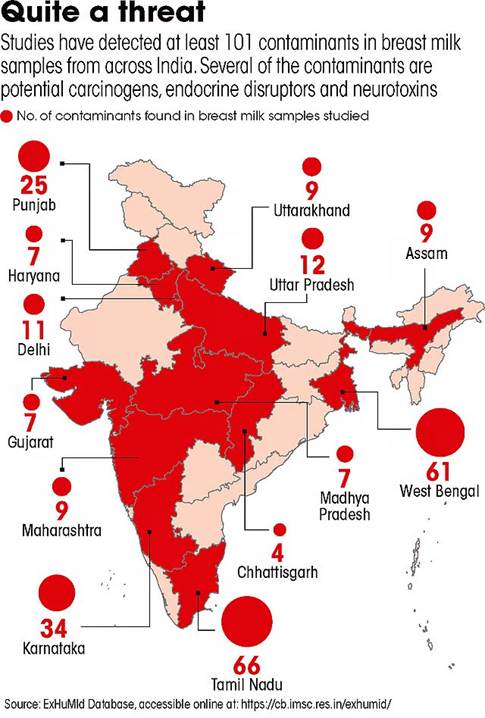
- Recent studies (2021–2024) have detected uranium-238 (U-238) traces in breast milk samples in parts of rural India, raising concerns over early-life exposure to environmental contaminants.
- The findings follow a 2019–20 Duke University–CGWB report, which found uranium contamination in groundwater across 151 districts in 18 states.
- WHO’s provisional guideline for uranium in drinking water is 30 micrograms per litre (µg/L), with several Indian wells exceeding this limit.
- The issue forms part of the broader debate on toxic burden transfer from environment to infants via lactation.
Relevance
GS II – Health & Social Sector
- Article 21 & safe water.
- Maternal and child health.
- Public risk communication.
GS III – Environment
- Groundwater uranium contamination.
- Toxic exposure pathways.
- Environmental governance failures.
Practice Question
- Discuss the link between environmental contamination and maternal–child health in India. (250 Words)
Static Background
1. Breast Milk as First Nutrition & Immunity
- The World Health Organization (WHO) recommends exclusive breastfeeding for the first six months, calling it the safest and most complete infant nutrition.
- Breast milk contains macronutrients, micronutrients, bioactive molecules, antibodies, stem cells, and immunoglobulins, tailored to infant developmental needs.
- It shapes the gut microbiome, enhances immune maturation, reduces inflammation, and protects against respiratory and metabolic diseases.
- A 2015 study in The Lancet Global Health linked longer breastfeeding duration with higher adult intelligence, education levels, and income.
2. Environmental Contaminants in India
- India faces widespread groundwater contamination from heavy metals (arsenic, uranium, fluoride), pesticides, and industrial effluents.
- Uranium contamination is often geogenic but can be aggravated by groundwater over-extraction and agricultural practices.
- According to the Duke–CGWB report, Punjab (24.2%) and Haryana (19.6%) had the highest proportion of wells exceeding WHO uranium limits.
- Other affected states include Telangana (10.1%), Delhi (11.7%), Rajasthan (7.2%), Andhra Pradesh (4.9%), Uttar Pradesh (4.4%), among others.
Uranium Exposure & Health Risks
- Uranium-238 is a naturally occurring radioactive isotope with chemical toxicity affecting primarily the kidneys and skeletal system.
- Chronic exposure through drinking water can increase risk of renal damage and potential carcinogenic effects, though evidence in infants remains limited.
- Current findings in breast milk are largely model-based risk projections, not confirmed clinical harm cases.
- Infants are more vulnerable due to developing organs and higher absorption rates relative to body weight.
Public Health Dimensions
- Early-life exposure to contaminants may influence long-term health trajectories under the Developmental Origins of Health and Disease (DOHaD) hypothesis.
- Contaminants entering maternal bloodstream through water and food may bioaccumulate and transfer via lactation.
- Even low-dose chronic exposure during infancy could have cumulative effects.
- However, health authorities emphasise that breastfeeding benefits overwhelmingly outweigh contamination risks.
Environmental & Governance Dimensions
- Groundwater contamination reflects systemic challenges in water governance, agricultural inputs, and industrial regulation.
- The Central Ground Water Board (CGWB) monitors groundwater quality, but mitigation implementation varies across states.
- The issue intersects with Jal Jeevan Mission, which aims to provide safe tap water to rural households.
- Monitoring toxic elements requires integration between health surveillance and environmental regulation agencies.
Constitutional & Legal Context
- Access to safe drinking water is recognised under Article 21 (Right to Life) by judicial interpretation.
- Article 47 (Directive Principles) obligates the State to improve public health standards.
- Environmental protection falls under Article 48A and citizen duty under Article 51A(g).
- The issue also engages provisions under the Environment Protection Act, 1986 and water quality norms.
Socio-Economic Implications
- Rural populations dependent on groundwater face disproportionate exposure risks.
- Health burdens from toxic exposure increase healthcare costs and reduce productivity.
- Fear of contamination may undermine breastfeeding rates, potentially worsening infant malnutrition.
- Addressing contamination requires balancing risk communication with maternal confidence in breastfeeding.
Challenges
- Limited longitudinal data on infant uranium exposure impacts create uncertainty in policymaking.
- Rural water testing infrastructure remains uneven across districts.
- Remediation of contaminated aquifers is technically complex and financially demanding.
- Public messaging must avoid panic while ensuring precautionary measures.
Way Forward
- Expand nationwide groundwater uranium monitoring with district-level public dashboards.
- Strengthen water purification systems under Jal Jeevan Mission, including community-level filtration technologies.
- Integrate maternal and child health surveillance with environmental exposure mapping.
- Promote research on contaminant transfer through breast milk to guide evidence-based risk assessment.
- Adopt a precautionary principle approach while reaffirming WHO guidance on breastfeeding benefits.
Prelims Pointers
- WHO provisional uranium limit in drinking water: 30 µg/L.
- Duke–CGWB report identified contamination in 151 districts across 18 states.
- Uranium-238 is a naturally occurring radioactive isotope.
- WHO recommends exclusive breastfeeding for first six months.
Nine Botswana Cheetahs Released into Kuno National Park
Why in News?
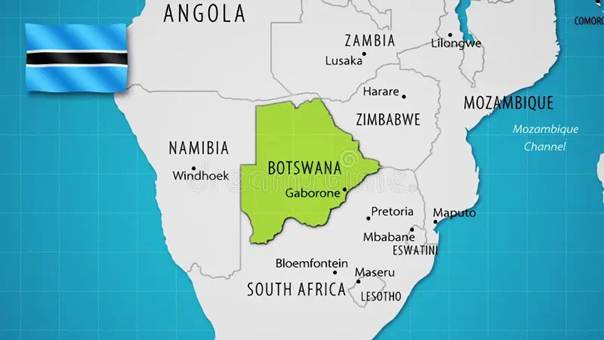
- Nine cheetahs from Botswana (six females, three males) were released into Kuno National Park (Madhya Pradesh) under Project Cheetah, raising India’s total cheetah population to 48.
- This marks the third African batch, following earlier translocations from Namibia (2022) and South Africa (2023).
- Since inception, 21 cheetahs (9 translocated adults + 12 Indian-born cubs) have died due to various causes.
- The release aims to revive India’s extinct Asiatic cheetah lineage, declared extinct in 1952.
Relevance
GS III – Environment & Biodiversity
- Reintroduction biology.
- Grassland ecosystem restoration.
- Metapopulation management.
Practice Question
- Critically evaluate the ecological and scientific basis of Project Cheetah. (250 Words)
Static Background
1. Extinction & Reintroduction Context
- The Asiatic cheetah (Acinonyx jubatus venaticus) was declared extinct in India in 1952 due to overhunting and habitat loss.
- Project Cheetah, approved in 2022, is the world’s first intercontinental translocation of a large carnivore.
- The project seeks to establish a viable, free-ranging cheetah population in India’s grassland ecosystems.
- Primary release site: Kuno National Park (KNP), chosen for prey base, habitat suitability, and low human density.
2. Current Population Status
- Total cheetahs in India: 48, including 28 Indian-born cubs and 20 translocated adults.
- Botswana batch follows 8 cheetahs from Namibia (September 2022) and 12 from South Africa (February 2023).
- Three additional adults are housed at Gandhi Sagar Wildlife Sanctuary (MP) as part of expansion planning.
- All newly arrived cheetahs undergo mandatory one-month quarantine before release.
Ecological Significance
- Cheetahs are apex predators in open savannah and grassland ecosystems, helping regulate herbivore populations.
- Their reintroduction may restore ecological balance in semi-arid grasslands, often termed India’s “forgotten ecosystems.”
- Grasslands host unique biodiversity including blackbuck, chinkara, and Indian wolf.
- The initiative aligns with global rewilding and species recovery frameworks.
Governance & Institutional Framework
- Project implemented by Ministry of Environment, Forest and Climate Change (MoEFCC) in collaboration with Wildlife Institute of India (WII).
- Monitoring includes GPS tracking collars and veterinary teams conducting regular health assessments.
- The project reflects India’s commitments under the Convention on Biological Diversity (CBD).
- Translocation required international cooperation and compliance with CITES regulations.
Conservation Science Dimensions
- Success depends on habitat quality, prey density, disease control, and genetic diversity management.
- Mortality rates highlight challenges in acclimatisation and climate adaptation.
- India’s hotter summers pose stress risks for African-origin cheetahs.
- Adaptive management strategies are being adopted based on early mortality lessons.
Challenges
- 21 deaths raise concerns about habitat suitability and stress-related factors.
- Limited genetic base may affect long-term viability without periodic introductions.
- Human–wildlife interface in buffer zones may increase conflict risks.
- Grassland ecosystems remain under-protected compared to forested tiger habitats.
Socio-Economic & Tourism Dimensions
- Reintroduction boosts eco-tourism potential in Madhya Pradesh.
- May generate local employment through conservation-linked activities.
- Requires community participation to minimise grazing pressure and conflict.
- Balancing conservation with livelihood needs remains critical.
Way Forward
- Strengthen scientific monitoring and publish transparent mortality audits.
- Expand cheetah habitats beyond Kuno to landscape-level metapopulation planning.
- Restore degraded grasslands under National Wildlife Action Plan (2017–2031).
- Enhance local community engagement through benefit-sharing models.
- Integrate climate resilience strategies into long-term cheetah management.
Prelims Pointers
- Asiatic cheetah declared extinct in India in 1952.
- Project Cheetah launched in 2022.
- Current population in India: 48.
- Kuno National Park located in Madhya Pradesh.
- Cheetah classified as Vulnerable (IUCN Red List); Asiatic subspecies critically endangered in Iran.


