
Content
- Hyderabad Hosts World Buddhist Peace Conference
- India Signs ₹858-cr Defence Deals With Russian, U.S. Firms
- Jan Vishwas Bill’s Second Edition In Lok Sabha
- Rising G-Sec Yields And Monetary Tightening Signals
- Women Saw Higher Wage Growth Than Men Across All Job Types In 2025
- Credit-Deposit Ratio Of Banks Touches A Record 83%
- How The ‘Gate Of Tears’ May Emerge As Iran’s Second Choke Point After Hormuz
- Govt Asks RBI To Target Retail Inflation At 4% Till Mar 2031
Hyderabad hosts World Buddhist Peace Conference
Why In News ?
- World Buddhist Peace Conference 2026 held in Hyderabad aims to promote peace diplomacy, strengthen cultural ties, and leverage Buddhist heritage as soft power in India’s foreign policy framework.
Relevance
GS I (Culture / History)
- Buddhist heritage, art and architecture (Amaravati school, Nagarjunakonda)
- Role of Buddhism in India’s civilisational legacy
GS II (International Relations)
- Soft power diplomacy and cultural diplomacy
- India’s Act East Policy and Indo-Pacific outreach
- Track 1.5 diplomacy and people-to-people engagement
Practice Question
- “Buddhist diplomacy can be a key instrument of India’s soft power in the Indo-Pacific.” Discuss.(250 Words)
Static Background
Buddhist Diplomacy
- Refers to strategic use of Buddhist philosophy, heritage, and institutions to enhance international engagement, especially with South and Southeast Asia, rooted in legacy of Gautama Buddha, Ashoka, and Nalanda tradition.
- Acts as a cultural bridge linking India with ASEAN, Sri Lanka, and East Asia through platforms like BIMSTEC and Mekong-Ganga Cooperation, reinforcing India’s civilisational outreach and diplomatic influence.
- India currently holds less than 1% of global Buddhist tourism share, highlighting underutilisation of its civilisational capital and the need to convert heritage into economic and strategic advantages.
Buddhist Heritage In Telangana
- Nagarjunakonda, capital of Ikshvaku dynasty, features rare Aayaka pillars symbolising key events in Buddha’s life, showcasing advanced Buddhist architectural and ritualistic traditions in Deccan region.
- Phanigiri excavations reveal early thorana structures linked to Amaravati School of Art, indicating Telangana’s significant role in development of Buddhist art and architectural evolution.
- Buddhavanam at Nagarjunasagar, Asia’s largest Buddhist theme park, replicates Amaravati Stupa, serving as a major cultural-tourism hub and centre for global Buddhist engagement.
Key Highlights Of The Conference
Participation And Scope
- Conference witnessed participation from over 20 countries, including ministers, monks, and scholars, representing a form of Track 1.5 diplomacy combining governmental and non-state actors for influence.
Core Themes
- Focus on non-violence, compassion, dialogue, and ethical leadership, emphasising transition from symbolic peace narratives to actionable ethical frameworks addressing global conflicts and governance challenges.
Outcomes
- Expected adoption of Global Peace Declaration at Buddhavanam, alongside strengthening of India–Sri Lanka cultural relations, enhancing India’s leadership in global Buddhist and peace diplomacy discourse.
Multi-Dimensional Analysis
International Relations / Soft Power
- Enhances India’s soft power projection in Indo-Pacific, strengthening ties with ASEAN, Sri Lanka, and East Asia while aligning Buddhist diplomacy with broader Act East Policy objectives.
- Counters China’s influence through platforms like World Buddhist Forum, enabling India to project an alternative narrative rooted in authentic Buddhist heritage beyond Tibet-centric frameworks.
- Promotes people-to-people connectivity and cultural legitimacy, strengthening India’s role as a civilisational power capable of shaping global discourse on peace and ethical governance.
Governance / Administrative Dimension
- Demonstrates sub-national diplomacy, with Telangana positioning itself as a Buddhist heritage hub, reflecting increasing role of states in India’s foreign policy and cultural diplomacy initiatives.
- Aligns with constitutional ethos and global vision of Vasudhaiva Kutumbakam, integrating cultural diplomacy with governance and international engagement strategies.
- Requires coordination between Ministry of Culture, Tourism, and External Affairs, highlighting need for institutional convergence in executing civilisational diplomacy effectively.
Economic Dimension
- Development of Buddhist tourism circuits under schemes like PRASHAD and Swadesh Darshan 2.0 can significantly enhance tourism revenue and regional economic development.
- Generates employment in hospitality, transport, and guiding services, particularly through initiatives like Hunar Se Rozgar Tak, promoting inclusive growth in heritage-rich regions.
- Converts cultural assets into economic multipliers, integrating spiritual tourism with broader service economy, while addressing India’s low global share in Buddhist tourism.
Social / Ethical Dimension
- Promotes values of Ahimsa, Karuna, and Madhyam Marg, offering ethical frameworks for addressing global conflicts, extremism, and increasing social polarisation in contemporary societies.
- Reinforces relevance of Buddhist teachings in modern policymaking, particularly in conflict resolution, peacebuilding, and sustainable societal development.
Historical / Civilisational Dimension
- Revives legacy of Acharya Nagarjuna, whose Madhyamika philosophy emphasises balance and moderation, offering parallels to India’s strategic autonomy in international relations.
- Expands narrative of Buddhism beyond North India to Deccan contributions, strengthening India’s claim as the authentic cradle of diverse Buddhist traditions.
- Reinforces India’s civilisational continuity, linking ancient philosophical traditions with contemporary global diplomacy and cultural engagement initiatives.
Significance
- Positions India as a global hub for peace dialogue, leveraging its civilisational heritage to influence international norms and promote ethical global governance frameworks.
- Bridges domains of religion, diplomacy, and economic development, demonstrating integrated approach to soft power and sustainable development.
- Strengthens Track-2 and Track 1.5 diplomacy, enhancing informal channels of international engagement and fostering deeper cultural and intellectual exchanges.
Challenges
- Lack of institutionalisation and continuity limits long-term impact of such conferences, reducing effectiveness of outcomes like declarations and diplomatic engagements.
- Strong competition from China’s structured Buddhist diplomacy initiatives, backed by better infrastructure, funding, and global outreach mechanisms.
- Inadequate infrastructure, connectivity, and branding of Buddhist sites hinder India’s ability to attract global tourists and maximise economic benefits.
- Risk of symbolic diplomacy without tangible outcomes, limiting translation of cultural initiatives into concrete foreign policy or economic gains.
Way Forward
- Integrate Buddhist diplomacy with Act East Policy and Indo-Pacific strategy, ensuring alignment between cultural outreach and strategic geopolitical objectives.
- Establish permanent institutions like Global Buddhist Peace Forum to ensure continuity, monitoring, and implementation of conference outcomes.
- Develop world-class Buddhist tourism circuits with improved infrastructure, digital platforms, and global branding to enhance tourist inflow and economic impact.
- Strengthen academic collaborations through institutions like Nalanda University, promoting knowledge diplomacy and research networks in Buddhist studies.
- Leverage digital media, diaspora engagement, and international partnerships to expand India’s global cultural footprint and soft power influence.
Prelims Pointers
- Nagarjunakonda: Ikshvaku capital; site of Aayaka pillars representing key events of Buddha’s life.
- Phanigiri: Early Buddhist site with Amaravati-style thorana architecture.
- Buddhavanam: Asia’s largest Buddhist theme park at Nagarjunasagar.
- Acharya Nagarjuna: Founder of Madhyamika school of Buddhism.
- Core teachings include Four Noble Truths and Eightfold Path.
India signs ₹858-cr. defence deals with Russian, U.S. firms
Why In News ?
- India signed defence deals worth ₹858 crore with Russia and the U.S., while DAC cleared ₹2.38 lakh crore procurements, reflecting push toward defence modernisation and strategic multi-alignment.
Relevance
GS II (International Relations)
- Strategic autonomy and multi-alignment (US–Russia balance)
- Defence diplomacy and geopolitical balancing
GS III (Security / Economy / S&T)
- Defence modernisation and procurement
- Indigenisation and Aatmanirbhar Bharat in defence
- Emerging warfare technologies (drones, network-centric warfare)
- Military preparedness and deterrence
Practice Question
- “India’s defence procurement reflects a balance between strategic autonomy and technological dependence.” Analyse.(250 Words)
Static Background
Defence Acquisition Council (DAC)
- Apex body under Ministry of Defence, chaired by Defence Minister, grants Acceptance of Necessity (AoN) and ensures procurement aligns with national security priorities and long-term capability development.
- Includes CDS and Service Chiefs, facilitating integrated decision-making, prioritisation of acquisitions, and balancing between operational urgency, fiscal prudence, and indigenisation goals.
Defence Procurement Framework
- Categories such as Buy (Indian), Buy & Make, Buy Global aim to prioritise domestic production while addressing urgent capability gaps through imports and technology partnerships.
- Guided by Defence Acquisition Procedure (DAP) 2020, emphasising indigenisation, lifecycle support, and promotion of domestic industry through Positive Indigenisation Lists.
Key Deals And Data
Recent Contracts (₹858 Crore)
- ₹445 crore (Russia) for Tunguska Air Defence System, a mobile SPAAGM platform providing fire-on-the-move protection, crucial against drones, low-flying aircraft, and cruise missile threats.
- ₹413 crore (U.S.) for P-8I aircraft MRO, under 100% indigenous content, enabling domestic maintenance ecosystem, reducing Aircraft on Ground (AOG) time and foreign exchange outflow.
DAC Mega Approvals (₹2.38 Lakh Crore)
- Approval for 5 additional S-400 systems, strengthening long-range air defence with capability to track 300 targets and engage 36 simultaneously.
- Procurement includes medium transport aircraft, drones, armour-piercing ammunition, and Dhanush artillery, reflecting shift toward modern, network-centric and indigenous warfare systems.
Multi-Dimensional Analysis
Strategic / Security Dimension
- Strengthens multi-layered air defence architecture integrating Tunguska (short-range) and S-400 (long-range), enhancing resilience against drones, cruise missiles, and aerial threats.
- Reflects lessons from Ukraine conflict, where mobile air defence systems are critical for protecting moving armoured columns from drone swarms and loitering munitions.
- Enhances maritime domain awareness through P-8I aircraft, strengthening India’s surveillance and deterrence capabilities in the Indian Ocean Region (IOR).
Geopolitical Dimension
- Demonstrates strategic autonomy through multi-alignment, balancing relations with Russia (legacy systems) and the U.S. (advanced technology and maritime cooperation).
- Continued procurement from Russia highlights resistance to Western pressure for decoupling, prioritising national security over geopolitical alignment.
- S-400 acquisitions remain a litmus test under CAATSA, reflecting India’s stance on safeguarding sovereign defence requirements despite potential sanctions risks.
Economic / Industrial Dimension
- Large-scale procurement of ₹2.38 lakh crore acts as stimulus for defence industrial base, boosting domestic manufacturing, supply chains, and employment generation.
- Indigenous MRO ecosystem reduces import dependence and foreign exchange outflow, contributing to Aatmanirbhar Bharat in defence sector.
- Integration with schemes like iDEX (Innovations for Defence Excellence) encourages startups and private sector participation in emerging domains like drones and AI.
Technological Dimension
- Focus on network-centric warfare, integrating surveillance, missile systems, and unmanned platforms for real-time battlefield awareness and precision targeting.
- Emphasis on unmanned systems and precision warfare, reflecting global shift toward AI-enabled, data-driven and technology-intensive combat operations.
- Indigenous platforms like Dhanush artillery demonstrate capability for technology absorption and evolution from legacy systems like Bofors.
Significance
Military Capability
- Development of “No-Fly Zone” capability through S-400 enhances deterrence against adversaries, particularly in context of China and Pakistan’s aerial capabilities.
- Strengthens air defence preparedness amid rise of asymmetric threats such as drones, increasingly used in modern warfare scenarios.
Operational Readiness
- Domestic MRO capability ensures higher fleet availability, reduced downtime, and improved logistics resilience during conflict situations.
- Enhances logistical independence, reducing vulnerability to supply chain disruptions during geopolitical crises.
Challenges
- Continued dependence on Russian systems exposes India to sanctions risks and supply disruptions, especially under evolving geopolitical tensions.
- Integration challenges between diverse platforms (Russian, Western, indigenous) can affect interoperability and operational efficiency.
- High capital expenditure imposes fiscal burden, potentially impacting other developmental priorities and budget allocations.
- Limited technology transfer in foreign deals constrains domestic capability building and long-term self-reliance.
Way Forward
- Accelerate indigenisation through DRDO, private sector, and startups, ensuring deeper domestic capability across defence manufacturing ecosystem.
- Strengthen jointness and integration through theatre commands, enabling better coordination and efficient utilisation of resources across armed forces.
- Diversify defence partnerships while reducing import dependence, maintaining balanced multi-alignment strategy without compromising sovereignty.
- Invest in emerging domains such as AI, cyber warfare, space security, and unmanned systems, aligning with future warfare requirements.
- Promote defence exports and global partnerships to transform India into a defence manufacturing hub, enhancing economic and strategic influence.
Prelims Pointers
- DAC: Chaired by Defence Minister; grants Acceptance of Necessity (AoN) for procurement.
- S-400: Long-range surface-to-air missile system capable of engaging multiple targets simultaneously.
- P-8I: Maritime reconnaissance aircraft based on Boeing 737 platform, customised for Indian Navy.
- Tunguska: Short-range, mobile air defence system combining guns and missiles.
- Dhanush: Indigenous artillery gun derived from Bofors technology.
Jan Vishwas Bill’s second edition in Lok Sabha
Why In News ?
- Jan Vishwas (Amendment of Provisions) Bill, 2026 introduced in Lok Sabha proposes large-scale decriminalisation of minor offences, but has triggered debate over constitutional validity, governance risks, and administrative discretion.
Relevance
GS II (Polity / Governance)
- Decriminalisation of offences and legal reforms
- Separation of powers and administrative adjudication
- Ease of Doing Business and regulatory governance
GS III (Economy)
- Regulatory environment and investment climate
- Compliance burden and business facilitation
Practice Question
- “Decriminalisation reforms must balance ease of compliance with effective deterrence.” Critically examine.(250 Words)
Static Background
Decriminalisation Reform Framework
- Part of broader shift from criminal state to regulatory state, aiming to reduce compliance burden, improve Ease of Doing Business, and align with principles of minimum criminalisation and proportionate regulation.
- Builds on Jan Vishwas Act, 2023 and reflects transition toward trust-based governance, reducing excessive penal provisions in India’s regulatory ecosystem of 69,000+ compliances and 6,000+ jail clauses.
Legal Concepts And Doctrinal Basis
- Based on Doctrine of Proportionality (Articles 14 and 21), ensuring punishment is proportionate to offence severity and preventing excessive criminalisation of procedural or technical violations.
- Distinction between decriminalisation and depenalisation is crucial, as most provisions replace imprisonment with civil penalties rather than completely removing the offence category.
- Raises concerns regarding separation of powers (Article 50), as adjudicatory functions shift from judiciary to executive-appointed officers, potentially affecting fairness and impartiality.
Key Provisions And Data
Scale And Scope
- Bill proposes amendments to 784 provisions across 79 Central Acts covering 23 Ministries, indicating a significant expansion from earlier reforms and deeper institutional shift.
- Around 717 provisions decriminalised, removing imprisonment for minor procedural violations, while 67 provisions amended to improve Ease of Living under laws like Motor Vehicles Act.
Nature Of Decriminalisation
- Replacement of imprisonment with monetary penalties, warnings, and graded enforcement mechanisms, aligning with modern regulatory practices and reducing criminal stigma for minor infractions.
- About 57 provisions remove imprisonment entirely, while 113 provisions convert imprisonment plus fine into penalty, reflecting calibrated and risk-based regulatory approach.
Administrative Mechanism
- Shift from court-based enforcement to administrative adjudication, with Adjudicating Officers and Appellate Authorities ensuring faster resolution and reducing burden on judiciary.
- Supports reduction of judicial pendency, which currently exceeds 4.4 crore cases, improving efficiency in dispute resolution and compliance enforcement.
New Additions (Second Edition)
Selective Criminalisation Retained
- Government land encroachment attracts 5% annual land value penalty plus possible imprisonment, with escalating penalties for repeat offenders, ensuring deterrence against public resource misuse.
- Unauthorised occupation of public premises penalised up to 40× licence fee, increasing monthly, with repeat violations escalating to 50× penalty, reflecting asymmetric deterrence.
Urban Governance And Public Order
- Metro nuisance penalties increased from ₹500 to ₹2,500, targeting behavioural violations such as spitting or drunkenness to improve urban civic discipline and public order.
Motor Vehicles Reforms
- Introduction of state-wide vehicle registration promotes “One Nation, One Registration,” reducing RTO rigidity and minimising bureaucratic friction.
- Flexible driving licence renewal and extension of reporting timelines from 14 to 30 days reduce compliance burden and enhance citizen convenience.
Multi-Dimensional Analysis
Constitutional / Legal Dimension
- Strengthens application of Doctrine of Proportionality, ensuring that minor procedural lapses do not attract harsh criminal penalties inconsistent with fundamental rights.
- However, delegation of adjudication to executive raises concerns about erosion of judicial oversight and independence, potentially undermining rule of law principles.
Governance / Administrative Dimension
- Reduces scope of Inspector Raj, minimising harassment and arbitrary criminal proceedings for minor violations, thereby improving ease of compliance.
- Administrative adjudication enhances speed and efficiency, but increased discretion may lead to corruption and inconsistent decision-making without strong safeguards.
Economic Dimension
- Improves Ease of Doing Business and investor confidence, reducing litigation costs and regulatory uncertainty for businesses operating in India.
- Aligns with global best practices such as OECD risk-based regulation, promoting predictable and proportionate compliance frameworks.
Social / Ethical Dimension
- Prevents unnecessary criminalisation of citizens for minor infractions, enhancing fairness, dignity, and trust in governance systems.
- Simultaneously, stricter penalties for land encroachment reflect ethical prioritisation of public resource protection and distributive justice.
Urban Governance Dimension
- Enhanced penalties for civic offences promote behavioural discipline and urban order, essential for efficient functioning of metropolitan infrastructure.
- Motor Vehicles reforms reduce transaction costs, curb intermediary exploitation, and strengthen citizen-state interface through simplified procedures.
Significance
Structural Governance Reform
- Marks transition toward regulatory state model, replacing punitive governance with compliance-oriented frameworks based on trust and proportional enforcement.
Administrative Efficiency
- Reduces burden on judiciary and enhances dispute resolution speed, contributing to improved governance outcomes and institutional efficiency.
Balanced Deterrence
- Combines decriminalisation of minor offences with strict penalties for high-impact violations, ensuring balance between ease of compliance and deterrence.
Challenges
- Risk of regulatory dilution, where removal of criminal penalties may weaken deterrence in certain sectors requiring strict enforcement.
- Increased administrative discretion could lead to corruption, arbitrariness, and misuse of power, particularly in absence of transparency mechanisms.
- Limited institutional capacity for adjudicating officers may affect quality and consistency of decisions.
- Lack of clear criteria distinguishing minor and serious offences creates ambiguity and potential legal challenges.
- Federal gap persists if states do not adopt similar reforms, leading to inconsistency in regulatory frameworks across India.
Way Forward
- Develop a clear and transparent framework for classification of offences based on risk, impact, and intent to ensure consistency in decriminalisation.
- Strengthen accountability of adjudicating authorities through appeal mechanisms, digital tracking, and transparency norms to minimise discretion misuse.
- Expand use of digital compliance systems to reduce human interface and corruption opportunities in regulatory enforcement.
- Retain criminal penalties in critical sectors such as environment, public safety, and national security, ensuring adequate deterrence.
- Encourage states to adopt similar reforms for harmonised national regulatory environment, enhancing overall governance efficiency.
Prelims Pointers
- Bill covers 784 provisions across 79 Acts, with 717 provisions decriminalised.
- Penalty vs Fine: Penalty imposed by authority; fine imposed by court.
- Introduces graded penalties and administrative adjudication.
- Includes amendments to Motor Vehicles Act, NDMC Act, Public Premises Act.
- Concept of compoundable offences allows settlement without trial.
Rising G-Sec Yields And Monetary Tightening Signals
Why in News?
- India’s 10-year G-sec yield rose to 6.94% amid oil price surge, rupee depreciation, and inflation fears, signalling possible monetary tightening.
Relevance
GS III (Economy)
- Monetary policy, inflation, and bond market dynamics
- Government borrowing and fiscal implications
- External sector linkages (oil prices, capital flows)
Practice Question
- Analyse the causes and implications of rising government bond yields in India.(250 Words)
Static Background
What is Bond Yield?
- Return earned by investors on government bonds; moves inversely to bond prices.
- Benchmark 10-year G-sec yield reflects market expectations of inflation, interest rates, and fiscal health.
What is Basis Point (bps)?
- 1 bps = 0.01%; used to measure small changes in interest rates/yields.
Key Data & Trends
India
- 10-year yield: 6.94% (+26 bps in 1 month).
- Daily jump: +7 bps (6.87% → 6.94%).
- Risk of crossing 7% if oil prices rise further.
Global Trend
- US: ~4.47% (+52 bps)
- UK: 5.08% (+84 bps)
- Germany: 3.11% (+47 bps)
→ Indicates global tightening and inflation expectations.
Macro Indicators
- Brent crude: >$100/barrel → inflation trigger.
- Rupee depreciation: ~₹94/$ → imported inflation.
- RBI repo rate: 5.25% (unchanged) but tightening expectations rising.
Drivers of Rising Bond Yields
Inflation Expectations
- High oil prices → cost-push inflation across transport, manufacturing.
- Weak rupee → imported inflation intensifies.
Monetary Policy Expectations
- Markets anticipate RBI rate hikes or prolonged tight stance.
- Bond yields rise in advance of expected tightening.
Global Spillovers
- Rising US yields → capital outflows from emerging markets, pushing domestic yields upward.
Fiscal Concerns
- Higher oil import bill → widening fiscal deficit + CAD, raising borrowing costs.
Analytical Overview
Economic Dimension
- Rising yields increase cost of borrowing for government and corporates, potentially slowing investment.
- Signals inflationary pressures and macroeconomic tightening cycle.
Monetary Policy
- Yield rise reflects market signalling ahead of RBI action, even before repo rate changes.
- RBI faces dilemma: control inflation vs sustain growth.
External Sector
- Rupee depreciation + oil imports → CAD widening → further pressure on yields and currency.
- Reflects vulnerability of import-dependent economies like India.
Financial Markets
- Bond yield spike → fall in bond prices → mark-to-market losses for banks and investors.
- Impacts bank balance sheets and liquidity conditions.
Implications
Positive
- Higher yields attract foreign portfolio investment in debt markets.
- Helps anchor inflation expectations if aligned with policy.
Negative
- Increased government borrowing cost → fiscal stress.
- Higher lending rates → slower credit growth and investment.
- Risk of crowding out private investment.
Challenges
- Persistent oil price shocks sustaining inflation.
- Risk of yield crossing 7% → tighter financial conditions.
- Global financial tightening spillovers.
- Managing growth-inflation trade-off.
Government & Policy Response
- Excise duty cut (₹10) on fuel → mitigate inflation impact.
- RBI likely to monitor before policy action, but bias turning cautious.
- Possible use of liquidity tools (OMO, forex intervention).
Way Forward
- Strengthen energy diversification to reduce oil dependence.
- Maintain credible inflation targeting to anchor expectations.
- Enhance fiscal discipline to control borrowing costs.
- Improve bond market depth and participation.
- Coordinate monetary + fiscal policy responses.
Prelims Pointers
- Bond prices and yields move inversely.
- 1 basis point = 0.01%.
- 10-year G-sec = benchmark for interest rates.
- Oil price rise → cost-push inflation.
Women saw higher wage growth than men across all job types in 2025: Govt
Why in News?
- PLFS 2025 shows women’s wages grew faster than men’s across job types, but significant gender wage gap persists, highlighting structural labour market inequalities.
Relevance
GS II (Governance / Social Justice)
- Equal pay and labour rights
- Policy interventions for gender inclusion
GS Paper III (Economy)
- Labour market dynamics and wage structures
- Informal sector and employment quality
Practice Question
- “Higher wage growth for women does not necessarily imply gender equality.” Discuss.(250 Words)
Static Background
Gender Wage Gap
- Difference in earnings between men and women for similar work; reflects labour market discrimination, occupational segregation, and unpaid care burden.
Types of Employment (PLFS)
- Salaried employment: regular jobs with social security
- Self-employment: own-account work, often informal.
- Casual labour: daily wage, least secure.
Key Data & Trends (PLFS 2025)
Wage Growth Trends
- Women: +7.2% (salaried), +8.8% (self-employed), +5.4% (casual) → higher growth across all categories.
- Men: +5.8% (salaried), +8% (self-employed), -0.2% (casual) → stagnation in informal segment.
Persistent Wage Inequality
- Salaried: women earn 76% of male wages → limited improvement.
- Casual labour: 69% (up from 66%) → marginal narrowing.
- Self-employment: only 36% of male earnings → severe disparity.
Employment Structure Shift
- Women in salaried jobs: 18.2% (↑ from 16.6%) → gradual formalisation.
- Decline in female self-employment: 64.2% (↓ from 66.5%) → shift from vulnerable work.
- Overall salaried share: 23.6% (↑ from 22.4%) → improving job quality.
Employment & Labour Indicators
- Total workforce: 61.6 crore (20 crore women) → large gender participation gap.
- Rural unemployment: 2.4%, Urban: 4.8% → slight improvement.
- Youth unemployment: 9.9% → declining but still high.
- Rural LFPR slightly declined → potential discouraged worker effect.
Informal Sector Weakness (ASUSE Data)
- Wage growth in informal sector: 3.9% (down from 13%) → slowdown.
- Job creation: 74.5 lakh vs 1.1 crore (previous year) → weakening employment generation.
Core Insight
- Faster wage growth ≠ equality; women’s earnings improving at margin, but structural gender inequality remains deeply entrenched.
Analytical Overview
Economic Dimension
- Rising female wages → positive for household income, consumption, and inclusive growth.
- However, persistent gap reduces overall productivity and labour efficiency.
Social Dimension
- Gender gap driven by:
- Occupational segregation (women in low-paying sectors)
- Unpaid care work burden
- Limited access to assets, credit, and networks
Governance / Policy
- Shift toward salaried jobs reflects success of formalisation policies (EPFO, labour codes).
- However, absence of targeted gender wage policies limits progress.
Labour Market Structure
- High disparity in self-employment → reflects informal economy bias against women.
- Casual labour stagnation among men → signals stress in informal sector.
Human Capital
- Wage gap persists despite rising education → indicates labour market discrimination, not just skill gap.
Challenges
- Persistent gender wage gap (24–64%) across sectors.
- High female concentration in low-productivity informal jobs.
- Limited female labour force participation (~40%).
- Weak job creation in informal sector.
- Lack of pay transparency and enforcement of equal pay laws.
Way Forward
- Enforce Equal Remuneration Act provisions with stronger compliance mechanisms.
- Expand formal employment opportunities for women (manufacturing, services).
- Invest in care infrastructure (creches, maternity support) to boost participation.
- Promote skill development for women in high-paying sectors (STEM, digital economy).
- Encourage women entrepreneurship via credit access (Mudra, SHGs).
- Improve data transparency on wages and employment by gender.
Prelims Pointers
- PLFS conducted by NSO (MoSPI).
- Types of employment: Salaried, Self-employed, Casual.
- Wage gap persists despite higher growth rates.
- Informal sector covered under ASUSE survey.
Credit-deposit ratio of banks touches a record 83%
Why in News?
- India’s Credit–Deposit (CD) ratio hit record 83% (March 2026) due to faster credit growth (13.8%) than deposit growth (10.8%), raising concerns over banking liquidity and sustainability.
Relevance
GS III (Economy)
- Banking sector health and financial stability
- Credit growth vs deposit mobilisation
- Liquidity management and monetary transmission
GS II (Governance)
- Role of RBI in regulating banking system
- Financial sector oversight
Practice Question
- Examine the implications of a rising credit-deposit ratio on India’s banking system.(250 Words)
Static Background
What is Credit–Deposit (CD) Ratio?
- Ratio of total bank credit (loans) to total deposits.
- Indicates how much of deposits are used for lending → reflects liquidity and credit intensity of banking system.
Ideal Level
- Around ~80% considered healthy, accounting for:
- CRR (~3%): cash with RBI
- SLR (~18%): govt securities
- Higher ratio → tight liquidity, aggressive lending.
Key Data & Trends (2026)
Current Situation
- CD ratio reached 83% (all-time high) → indicates stretched lending capacity.
- Bank credit: ₹207.6 lakh crore; Deposits: ₹250 lakh crore.
- Deposits fell by ₹1.8 lakh crore, while credit rose by ₹18,672 crore (fortnight trend).
Incremental Trends
- Incremental credit: ₹25.3 lakh crore > deposits: ₹24.3 lakh crore.
- Incremental CD ratio: 103.9% → banks lending more than fresh deposits mobilised.
Growth Divergence
- Credit growth: 13.8% vs deposit growth: 10.8% → widening mismatch.
- Similar trend seen during post-pandemic recovery (2022–23) with CD ratio crossing 100%.
Analytical Overview
Economic Dimension
- High CD ratio → credit-driven growth, supporting investment and consumption.
- But sustained mismatch → liquidity stress, rising borrowing costs, potential crowding-out.
Banking & Financial Stability
- Banks may rely on market borrowings (bonds, CDs) instead of deposits → increases systemic risk.
- Lower deposit base reduces stable funding source, affecting resilience.
Monetary Policy Transmission
- Tight liquidity → higher interest rates, improving transmission of RBI’s policy stance.
- Reflects strong credit demand despite tightening cycle.
Structural Factors
- Rising retail lending (housing, personal loans) + corporate capex revival driving credit.
- Weak deposit growth due to low real returns, shift to mutual funds/market instruments.
Implications
Positive
- Indicates robust economic activity and credit demand.
- Supports investment cycle and GDP growth.
Negative
- Risk of liquidity crunch in banking system.
- Pressure to increase deposit rates, raising cost of funds.
- Potential asset-liability mismatch risks.
Challenges
- Deposit mobilisation lagging behind credit expansion.
- Rising dependence on volatile market funding.
- Risk of over-leveraging and credit quality deterioration.
- Vulnerability during economic slowdown or capital outflows.
Way Forward
- Banks should improve deposit mobilisation via better interest rates and products.
- RBI may use liquidity tools (OMO, CRR adjustments) to manage system liquidity.
- Encourage financial savings in banking channels (tax incentives, small savings alignment).
- Strengthen prudential norms to avoid excessive credit expansion.
Prelims Pointers
- CD ratio = Credit / Deposits.
- Healthy level ~80%.
- CRR = cash with RBI; SLR = govt securities holding.
- Incremental CD ratio >100% → credit growth exceeding deposit growth.
How the ‘Gate of Tears’ may emerge as Iran’s second choke point after Hormuz
Why in News?
- Iran threatened to disrupt Bab-el-Mandeb Strait amid US–Israel–Iran conflict escalation , raising concerns over global oil supply chains and maritime security.
Relevance
GS I (Geography)
- Important straits and maritime chokepoints
- Global trade routes and strategic geography
GS Paper II (International Relations)
- West Asia geopolitics and maritime security
- India’s energy diplomacy and strategic balancing
GS III (Security / Economy)
- Energy security and oil supply chains
- Maritime security and sea lanes of communication (SLOCs)
- Impact on global trade and inflation
Practice Question
- “Control over maritime chokepoints is a key determinant of global geopolitics.” Analyse.(250 Words)
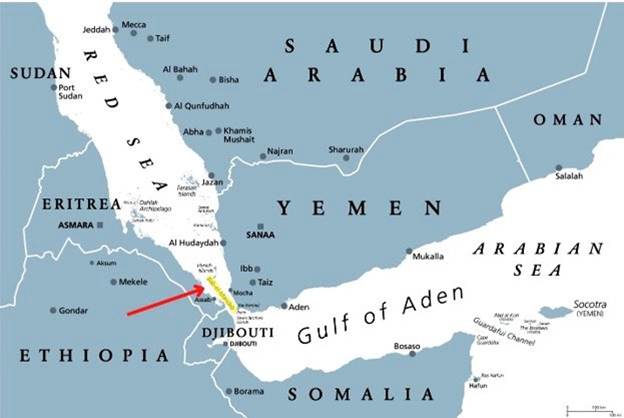
Static Background
Strait of Hormuz
- Connects Persian Gulf → Arabian Sea; handles ~20% of global oil trade.
- Controlled/influenced by Iran → critical chokepoint for global energy security.
Bab-el-Mandeb Strait
- Connects Red Sea → Gulf of Aden → Indian Ocean.
- Vital for Europe–Asia trade (via Suez Canal); key oil and container shipping route.
Chokepoints in Global Trade
- Narrow maritime passages where disruption can halt global trade flows, spike prices, and trigger geopolitical crises.
Key Developments & Facts
Iran’s Strategic Signalling
- Iran warned of opening “multiple fronts”, including Bab-el-Mandeb, if attacked by US/Israel.
- Indicates escalation from regional to trans-regional maritime conflict.
Existing Disruption at Hormuz
- Iran already delaying/blocking shipments, affecting ~20% global oil supply flow.
- Triggered global oil price spikes and shipping disruptions.
Bab-el-Mandeb Threat
- Handles significant oil + container traffic between Europe and Asia.
- Disruption would compound Hormuz crisis, affecting both energy + trade supply chains.
Role of Non-State Actors
- Houthis (Yemen, Iran-aligned) likely to target ships in Red Sea.
- Expands conflict geography → hybrid warfare (state + proxy actors).
Kharg Island Factor
- Major Iranian oil export hub → strategic target for US.
- Any attack could escalate energy warfare dynamics.
Analytical Overview
International Relations
- Demonstrates geopolitics of chokepoints → control over sea lanes = strategic leverage.
- Iran using asymmetric strategy to counter US–Israel military superiority.
Economic Dimension
- Disruption at Hormuz + Bab-el-Mandeb → global oil shock → inflation + recession risks.
- Shipping rerouting (via Cape of Good Hope) increases cost, time, insurance premiums.
Energy Security (India Focus)
- India imports ~85% crude oil, heavily dependent on Gulf routes.
- Threat to chokepoints directly impacts fuel prices, CAD, inflation.
Security Dimension
- Rise of maritime insecurity + proxy warfare (Houthis attacks).
- Highlights importance of naval dominance and sea lane security (SLOCs).
Global Governance
- Tests effectiveness of international maritime law (UNCLOS) and collective security mechanisms.
Implications for India
Strategic
- India must balance relations with US, Israel, Iran, Gulf countries.
- Reinforces importance of multi-alignment in West Asia.
Economic
- Oil price surge → inflation, rupee depreciation, fiscal pressure.
- Impact on trade routes via Red Sea (Europe-bound exports).
Security
- Threat to Indian ships, diaspora in Gulf, and energy supplies.
- Necessitates naval deployment (Mission-based deployments in IOR).
Challenges
- Simultaneous disruption of two chokepoints (Hormuz + Bab-el-Mandeb).
- Escalation into regional war involving proxies.
- Weak global coordination for maritime security enforcement.
- Rising energy price volatility and supply shocks.
Way Forward
- Strengthen strategic petroleum reserves (SPR) for shock absorption.
- Diversify energy imports (Russia, US, renewables).
- Enhance Indian Navy presence in IOR + Red Sea.
- Promote diplomatic de-escalation via multilateral forums (UN, I2U2, BRICS).
- Develop alternate trade routes (INSTC, Chabahar Port).
Prelims Pointers
- Hormuz → Persian Gulf outlet (~20% oil trade).
- Bab-el-Mandeb → Red Sea–Indian Ocean link.
- Houthis → Yemen-based Iran-backed group.
- Kharg Island → Iran’s key oil export terminal.
Govt asks RBI to target retail inflation at 4% till Mar 2031
Why in News?
- Government retained 4% CPI inflation target (±2%) for 2026–2031, reaffirming India’s Flexible Inflation Targeting (FIT) framework amid global uncertainty and domestic macroeconomic challenges.
Relevance
GS III (Economy)
- Monetary policy and inflation targeting
- Role of MPC and RBI
- Inflation-growth trade-off
GS II (Governance)
- Institutional framework of RBI and policy accountability
- Government–RBI coordination
Practice Question
- Discuss the challenges in maintaining a 4% inflation target in a developing economy like India.(250 Words)
Static Background
What is Inflation Targeting (IT)?
- Monetary policy framework where central bank targets a specific inflation rate using tools like repo rate, CRR, OMO to ensure price stability.
What is Flexible Inflation Targeting (FIT)?
- Allows central bank to balance inflation control with growth concerns, tolerating short-term deviations to avoid harming output and employment.
Legal Basis
- Section 45ZA, RBI Act (1934): Government sets inflation target in consultation with RBI every 5 years.
Key Indicators
- Headline CPI: Measures overall inflation (food + fuel + core); official policy anchor in India.
- Core Inflation: Excludes food and fuel; reflects underlying demand conditions (important debate in policy circles).
Key Features of India’s FIT Framework
Target & Band
- Inflation target: 4%, tolerance band: 2%–6% → ensures flexibility + credibility.
Institutional Mechanism
- Monetary Policy Committee (MPC) (6 members) decides repo rate to achieve target.
- Meets at least 4 times annually.
Accountability Clause
- If inflation breaches band for 3 consecutive quarters, RBI must submit report explaining reasons and corrective steps.
Performance of FIT (2016–2025)
Inflation Trends
- Average inflation declined to ~4.9% (post-FIT) vs 6.8% (pre-FIT) → improved macro stability.
- Inflation remained within band ~75% of time, except pandemic and Ukraine war shocks.
Pattern
- Hump-shaped trend:
- 2016–19: Stable (~4%)
- 2020–22: Elevated (pandemic + supply shocks)
- 2023–25: Moderation again
Recent Data
- CPI inflation: 3.21% (Feb 2026) → within target, indicating policy success.
Analytical Overview
Economic Dimension
- Anchors inflation expectations, reducing uncertainty → promotes investment and growth.
- Helps maintain macroeconomic stability (CAD, fiscal deficit, currency stability).
Governance / Institutional
- Enhances monetary policy transparency and credibility via rule-based framework.
- MPC reduces discretionary policymaking, ensuring institutional accountability.
Financial Stability
- Stable inflation → protects purchasing power, reduces volatility in interest rates and exchange rate.
Global Context
- FIT widely adopted since New Zealand (1990); India aligned with global best practices.
Key Debates / Issues
Headline vs Core Inflation
- High food weight in CPI (~45%) → supply shocks distort inflation signal.
- Debate: whether core inflation should guide policy instead.
Growth vs Inflation Trade-off
- Tight policy may slow growth and increase unemployment.
- Article insight: “Inflation falls, but unemployment may not” → policy dilemma.
Optimal Target Level
- Question: Is 4% too low for a fast-growing economy?
- Some argue for higher target (4–6%) to allow growth flexibility.
External Vulnerabilities
- Imported inflation (oil prices, global shocks) limits RBI’s control over inflation outcomes.
Challenges
- Over-reliance on monetary policy for supply-side inflation (food, fuel).
- Limited coordination with fiscal policy.
- High food inflation volatility weakens policy transmission.
- Transmission lags: repo rate changes take time to affect economy.
- Risk of policy rigidity in dynamic global environment.
Way Forward
- Improve food supply chains, storage, logistics to manage food inflation structurally.
- Strengthen monetary-fiscal coordination for holistic macro management.
- Enhance inflation measurement (new CPI base 2024) for accuracy.
- Use communication strategy (forward guidance) to anchor expectations.
- Explore flexible tolerance band adjustments based on evolving economy.
Prelims Pointers
- FIT introduced in 2016 (Urjit Patel Committee).
- Target: 4% ± 2% (2–6%).
- Policy anchor: Headline CPI (base year 2024).
- Accountability trigger: 3 consecutive quarters breach.
- MPC has 6 members (3 RBI + 3 Government nominees).


