
Content
- Grameen Credit Score (GCS)
- Emergency Cardiac Care in India
- Motor Accident Compensation Crisis (MACT)
- Artificial Water Harvesting Structures in India in 11 Years
- Extracellular RNA (exRNA)
- Balirajgarh Excavation (ASI)
- LPG vs LNG & India’s Energy Vulnerability
- Artemis II & New Lunar Exploration Phase
Grameen Credit Score (GCS)
Why in News?
- Government has developed Grameen Credit Score (GCS) post Union Budget 2025–26, urging banks to adopt it as default rural credit assessment tool.
- RBI regulatory changes (15-day reporting; weekly by July 2026) and PSL revisions are enabling real-time, inclusive rural credit evaluation through GCS.
Relevance
- GS III (Economy)
- Financial inclusion, rural credit deepening, fintech
- GS II (Governance)
- Digital Public Infrastructure, RBI regulation, PSL
Practice Question
Q1.“Grameen Credit Score marks a paradigm shift from collateral-based to data-driven rural credit assessment.”Examine its potential and limitations. (250 words)
Overview
- GCS is a rural-specific credit scoring framework designed for farmers, SHGs, MSMEs using behavioural, transactional, and welfare-linked financial data.
- Introduced in Budget 2025–26, led by PSBs with CICs (CIBIL, Experian), ensuring institutional coordination and standardisation of rural credit metrics.
- Targets “credit invisible” population (~160 million individuals) lacking formal borrowing history, addressing structural exclusion from formal banking channels.
- Phase I uses agri-loans, KCC, PSL data; upcoming phases integrate utility bills, DBT receipts, UPI transactions, and scheme enrolment.
- Incorporates SVAMITVA land mapping data, allowing property records to act as proxy collateral, improving creditworthiness of landholding rural households.
- Supports new ₹5 lakh micro-enterprise credit card scheme (2025) where GCS acts as primary eligibility metric for rural entrepreneurs.
- Enables cash-flow based lending, capturing seasonal agricultural incomes rather than fixed monthly income models used in conventional scoring systems.
- Integrated with India Post network (1.5 lakh post offices) for last-mile verification and physical outreach in digitally underserved regions.
- Leverages Digital Public Infrastructure (Aadhaar, UPI, Jan Dhan) to build digital financial footprints for rural households.
- Evidence-based impact: Villages with high UPI penetration saw 42% rise in women enterprises and 53% fall in informal borrowing (NPCI/Emerald 2025).
Static Background
Credit Information Ecosystem
- Credit scores assess repayment behaviour and default risk, traditionally based on formal credit history, disadvantaging informal rural borrowers.
- India has 4 CICs (CIBIL, Experian, Equifax, CRIF High Mark) regulated under CIC Act, 2005; GCS builds a rural-specific layer over these systems.
Rural Credit Structure & Gaps
- NABARD Rural Economic Conditions Survey (Dec 2025):
- 58.3% rural households access formal credit (up from 48.7% in 2024).
- Still 20–30% borrowing from informal sources, indicating persistent last-mile exclusion.
- Structural issues: lack of collateral, tenancy without land titles, seasonal incomes, high transaction costs.
Financial Inclusion Ecosystem
- PMJDY (500+ million accounts), MUDRA loans (>₹20 lakh crore), SHG-Bank linkage (largest globally) expanded access but credit deepening remains limited.
- GCS complements these by shifting from account access → credit access → credit quality.
Alternative Data & DPI Integration
- Welfare Data as Income Proxy: PM-Kisan transfers, state DBT schemes used to estimate income stability and repayment capacity.
- Digital Transactions: UPI usage patterns incorporated; higher transaction density correlates with improved creditworthiness assessment.
- Utility Payment Records: Electricity, water, mobile recharges used as proxies for financial discipline and repayment behaviour.
- Peer Group Data: SHG/JLG repayment records used to assess social collateral and collective credit discipline.
Regulatory & Policy Backing (2025–26)
- RBI mandated 15-day credit reporting (Jan 2025), moving to weekly reporting by July 2026, enabling near real-time credit score updates.
- Priority Sector Lending (PSL) revision (April 2025) increased loan limit to ₹2 lakh for women/SHGs, incentivising GCS adoption.
- Introduction of Data Quality Index (DQI) by RBI to ensure accuracy and reliability of rural credit data reported by banks.
Comparative Snapshot: Conventional Score vs GCS
- Conventional scores rely on formal loan/credit card history, excluding informal rural borrowers with no prior records.
- GCS incorporates alternative data (UPI, DBT, utilities, SHG records), expanding credit eligibility beyond traditional financial footprints.
- Conventional models emphasise collateral/asset backing, whereas GCS focuses on cash-flow and seasonal income patterns.
- GCS includes field-level verification via India Post, unlike purely digital verification in conventional credit scoring systems.
Challenges / Criticisms
- Data Quality Risks: Inaccurate or incomplete rural data may distort scores; hence RBI introduced DQI framework to monitor reporting quality.
- Algorithmic Bias: Models may penalise borrowers for context-specific events (e.g., drought-induced payment delays), leading to exclusion.
- Digital Divide: Limited smartphone/internet penetration may reduce effectiveness of DPI-based data capture in remote regions.
- Privacy Concerns: Integration of welfare and utility data raises issues under Digital Personal Data Protection Act, 2023.
- Institutional Capacity: Banks and CICs require technological upgrades for real-time data processing and interoperability.
Way Forward
- Develop context-aware algorithms incorporating climate shocks, crop cycles, and regional income variability to avoid exclusion errors.
- Strengthen consent-based data sharing via Account Aggregator framework, ensuring privacy and user control over financial data.
- Expand SVAMITVA coverage and land digitisation to improve collateral proxies for rural borrowers.
- Scale up financial literacy programmes via SHGs, NRLM, Panchayats to build trust and improve responsible borrowing behaviour.
- Enhance DPI penetration (internet, UPI, mobile access) to ensure comprehensive and inclusive data capture.
- Promote fintech innovation and public-private partnerships to refine rural credit analytics and reduce cost of lending.
Prelims Pointers
- GCS announced in Union Budget 2025–26 for rural credit scoring.
- Uses alternative data (UPI, DBT, utilities, SHG records).
- Linked with SVAMITVA scheme and India Post network.
- RBI introduced 15-day reporting (2025) → weekly reporting (2026).
- NABARD (Dec 2025): 58.3% formal credit access; 20–30% informal borrowing persists.
Emergency Cardiac Care in India
Why in News?
- Evidence highlights systemic delays in emergency cardiac care, with patients reaching treatment centres 5–6 hours post-symptom onset, causing preventable deaths.
- Despite schemes like AB-PMJAY, gaps in infrastructure, affordability, and timely response continue to undermine cardiac survival outcomes.
Relevance
- GS II (Health Governance)
- Public health infrastructure, Ayushman Bharat
- GS III (Social Sector)
- Healthcare access, affordability, human capital
Practice Question
Q1.“Time-sensitive healthcare delivery remains a major challenge in India’s health system.”Examine in the context of emergency cardiac care. (250 words)
Overview
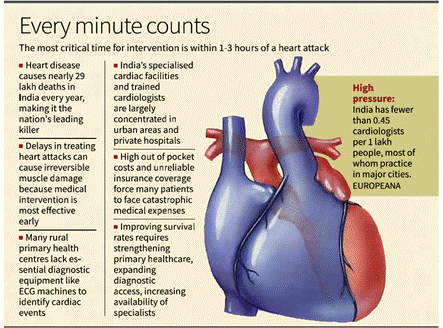
- Cardiovascular diseases cause 28.6 lakh deaths annually, making them India’s leading cause of mortality with earlier onset (45–55 years) than global averages.
- Critical concept: “Time is muscle”—delays in restoring blood flow lead to irreversible cardiac damage and increased mortality risk.
- Global standard: ECG within 10 minutes, angioplasty within 90 minutes (door-to-balloon time); Indian reality averages 300–360 minutes delay, extending to 12 hours in hilly regions.
- Survival exceeds 90% if treated within 1 hour, but every 30-minute delay increases 1-year mortality by 7.5% (Indian Heart Journal, 2025).
- Only 11% patients reach appropriate facility within 1 hour (Faridabad study, 2023) due to lack of awareness, transport, and misdiagnosis at first contact points.
- Rural PHCs often lack ECG machines (<25% functional availability) despite National Essential Diagnostic List mandate.
- India has ~2,500 cath labs, with 70% concentrated in 5 states and ~90% in private sector, creating rural “cardiac care deserts.”
- Severe human resource gap: ~5,500 cardiologists (≈0.45 per 100,000 population), heavily urban-centric, limiting emergency response capacity.
- Patients face high out-of-pocket expenditure (₹1.5–3.5 lakh per procedure); nearly 50% households incur catastrophic health expenditure.
- Despite Ayushman Bharat (AB-PMJAY), reimbursement gaps and private hospital refusal reduce effective financial protection.
Static Background
Cardiac Emergency Care Basics
- Heart attack (Acute Myocardial Infarction) occurs due to blockage of coronary arteries, requiring immediate restoration of blood flow via angioplasty or thrombolysis.
- Key timelines: Golden Hour (first 60 minutes) and 1–3 hour critical window determine survival and long-term cardiac function.
Health System Structure
- Primary Health Centres (PHCs) → first contact, but lack diagnostics.
- Community/District Hospitals → limited specialists and infrastructure.
- Tertiary Hospitals → cath labs and cardiologists, mostly urban/private.
Policy Context
- Ayushman Bharat (PMJAY) aims to provide ₹5 lakh health cover, but implementation gaps persist.
- National Essential Diagnostic List mandates ECG availability at PHC level, yet compliance remains poor.
Key Structural Gaps Identified
- Pre-hospital delay due to low symptom awareness, poor ambulance networks, and geographic barriers in rural/hilly regions.
- Diagnostic gap at PHC level due to absence of ECG machines and trained personnel for interpretation.
- Treatment infrastructure gap with uneven distribution of cath labs and cardiologists across states.
- Underutilisation of thrombolysis due to fear among non-specialist doctors and lack of protocol-based decision systems.
- Financial barriers despite insurance schemes, leading to delayed or forgone treatment.
Innovative Solution: Hub-and-Spoke Model
- Spokes (PHCs/CHCs) equipped with portable ECG devices and trained nurses for first-level diagnosis.
- Hub (district/private hospitals) provides real-time ECG interpretation via telemedicine platforms.
- Enables early thrombolysis (Tenecteplase) at peripheral centres if angioplasty facility is >2 hours away.
- Proven impact: STEMI Karnataka & Tamil Nadu TAEI reduced treatment delays by ~40%, improving survival outcomes.
- Integration with digital platforms and AI-based ECG interpretation enhances scalability and cost-efficiency.
Challenges / Criticisms
- Geographic inequality: Remote and hilly regions face extreme delays due to terrain and poor connectivity.
- Digital divide limits effectiveness of telemedicine-based solutions in low-connectivity regions.
- Human resource shortages in cardiology and emergency care weaken last-mile implementation.
- Insurance inefficiencies: Denial of treatment or informal payments reduce trust in public schemes.
- Protocol gaps: Lack of standardised emergency response systems across states leads to inconsistent care delivery.
- Behavioural barriers: Low awareness and cultural hesitation delay decision to seek immediate care.
Way Forward
- Ensure universal ECG availability at PHC level with AI-enabled interpretation to overcome specialist shortage.
- Scale up hub-and-spoke cardiac networks nationally, integrating telemedicine and emergency transport systems.
- Strengthen ambulance infrastructure (108 services) with GPS tracking and cardiac care protocols.
- Expand public cath lab infrastructure in underserved districts to reduce geographic disparities.
- Reform AB-PMJAY reimbursement rates and enforcement mechanisms to ensure private sector participation.
- Promote mass awareness campaigns on heart attack symptoms and urgency (like “Act FAST” campaigns).
- Integrate cardiac care into Health and Wellness Centres (HWCs) under Ayushman Bharat for preventive and early detection strategies.
Prelims Pointers
- Door-to-balloon time: <90 minutes (global standard).
- Golden hour: first 60 minutes critical for survival.
- India: 28.6 lakh annual CVD deaths.
- ~2,500 cath labs; 90% private sector.
- <25% rural PHCs have ECG facilities.
- 50% households face catastrophic expenditure in cardiac care.
Motor Accident Compensation Crisis (MACT)
Why in News?
- Report by Crashfree India highlights ₹96,000+ crore compensation pending in MACTs with over 10.7 lakh claims, exposing systemic gaps in legal awareness and post-crash response.
- Supreme Court (2024) flagged negligible claims in hit-and-run cases, indicating failure of compensation mechanisms despite legal provisions.
Relevance
- GS II (Polity & Governance)
- Access to justice, quasi-judicial bodies
- GS III (Internal Security)
- Road safety, accident management
Practice Question
Q1.“Delay in motor accident compensation undermines its role as a social security mechanism.”
Critically analyze. (250 words)
Overview
- India faces a dual crisis of pendency and awareness, with 10.73 lakh pending MACT cases (2025–26) involving ~₹96,257 crore, rising to ~₹1.05 lakh crore with accruals.
- Nearly 25% cases pending over 5 years, effectively denying timely justice and pushing affected families into debt traps.
- 70% low-income and 63% high-income households unaware of compensation rights (World Bank, 2021), indicating systemic communication failure.
- Hit-and-run paradox: Despite ~70,000 annual cases, <0.5% claim utilisation, reflecting poor awareness of Solatium Scheme managed by General Insurance Council.
- Compensation under MV Act (2019): ₹2 lakh (death), ₹50,000 (grievous injury), yet access remains minimal due to procedural and awareness gaps.
- Emergence of “unregulated intermediaries” charging 20–40% commission, exploiting victims due to absence of institutional legal support.
- District Legal Services Authorities (DLSAs) underutilised; only ~12% victims aware of free legal aid (NALSA Survey, 2025).
- Police stations and hospitals—the first contact points—lack structured legal awareness systems, failing to inform victims of rights and procedures.
- e-DAR portal digitises accident reporting but fails to integrate victim-facing communication, limiting its effectiveness in claim initiation.
- Average settlement time 3.5–5 years, leading to prolonged financial insecurity for families dependent on compensation.
Static Background
Legal Framework
- Governed by Motor Vehicles Act, 1988 (amended 2019), providing statutory right to compensation via MACTs.
- MACTs are quasi-judicial bodies for speedy adjudication of accident compensation claims.
- Solatium Scheme provides compensation in hit-and-run cases, funded through General Insurance Council.
Institutional Mechanisms
- District Legal Services Authorities (DLSAs) under Legal Services Authorities Act, 1987 provide free legal aid to vulnerable sections.
- e-DAR (Electronic Detailed Accident Report) system aims to digitise FIR, insurance, and claim processes to reduce delays.
Social Protection Context
- Road accidents cause significant economic shocks, often pushing families into poverty due to sudden income loss and medical expenses.
- Compensation is intended as social security mechanism, not merely legal remedy.
Key Structural Issues
- Awareness deficit: No mandatory system to inform victims about compensation rights at police stations or hospitals.
- Procedural delays: Overburdened MACTs, adjournments, and documentation complexities increase pendency.
- Institutional vacuum: Weak integration between police, hospitals, insurers, and legal aid authorities.
- Exploitation risk: Informal intermediaries dominate due to lack of accessible formal assistance.
- Digital gap: e-DAR lacks last-mile connectivity and victim-centric interface.
- Equity concern: Poor households disproportionately affected due to low awareness and high dependence on compensation.
Challenges / Criticisms
- Justice delayed = justice denied: 5-year pendency nullifies purpose of compensation as immediate relief mechanism.
- Fragmented governance: Lack of coordination between MoRTH, judiciary, insurance sector, and legal services institutions.
- Implementation deficit: Strong legal provisions exist but weak enforcement and outreach mechanisms.
- Urban bias in legal aid: DLSA services concentrated in cities, leaving rural victims dependent on informal networks.
- Insurance sector inefficiencies: Delays in claim verification and settlement contribute to backlog.
Way Forward
- Mandate “Compensation Rights Form” at FIR stage, ensuring victims receive clear, multilingual information on claim procedures.
- Establish legal help desks with para-legal volunteers in trauma centres and district hospitals for immediate assistance.
- Implement fast-track MACT procedures (6-month resolution) for clear-liability cases to reduce pendency.
- Strengthen e-DAR integration with SMS/IVR alerts, automatically informing victims about compensation eligibility and process.
- Expand outreach and capacity of DLSAs, ensuring proactive engagement rather than passive availability.
- Regulate or formalise intermediary ecosystem to prevent exploitation while ensuring assistance.
- Introduce performance metrics for MACTs and insurance companies to reduce delays and improve accountability.
Prelims Pointers
- MACT established under Motor Vehicles Act, 1988.
- Solatium Scheme covers hit-and-run compensation (₹2 lakh death, ₹50,000 injury).
- e-DAR portal digitises accident reporting and claim processing.
- NALSA oversees free legal aid through DLSAs.
- Pending claims: 10.73 lakh+; ₹96,000 crore+ (2025–26).
Artificial water harvesting structures in India in 11 years
Why in News?
- Prime Minister highlighted creation of ~50 lakh water harvesting structures and 70,000 Amrit Sarovars over 11 years, signalling shift toward decentralised water management.
- Statement comes amid early summer heatwaves (2026) and rising groundwater stress, reinforcing urgency of conservation-based strategies.
Relevance
- GS I (Geography)
- Water resources, groundwater crisis
- GS III (Environment)
- Water conservation, climate resilience
Practice Question
Q1.“Decentralised water harvesting is key to addressing India’s groundwater crisis.”Discuss with reference to recent initiatives. (250 words)
Overview
- India has created ~50 lakh decentralised water harvesting structures (2015–2026) including check dams, farm ponds, recharge shafts to enhance groundwater recharge.
- Under Mission Amrit Sarovar (2022–), over 70,000 lakes developed/rejuvenated, exceeding target of 75 per district, focusing on ecological restoration and community assets.
- Complementary initiative “Catch the Rain” promotes localised water conservation with slogan “where it falls, when it falls,” strengthening seasonal preparedness.
- These initiatives reflect a paradigm shift from large dam-centric model to decentralised, community-led water governance.
- Groundwater remains critical: ~60% irrigation and 85% drinking water depend on it, making recharge-focused interventions essential.
- Nearly 14% of groundwater blocks classified as ‘over-exploited/critical’ (2023); these initiatives aim to reverse this trend.
- Amrit Sarovars are geo-tagged and monitored digitally, improving transparency, accountability, and maintenance tracking.
- Standardised design: minimum 1 acre area, ~10,000 cubic metre capacity, ensuring functional storage and recharge potential.
- Social dimension: Sarovars act as community spaces (plantation, recreation, flag hoisting), enhancing local ownership and sustainability.
Static Background
Water Stress in India
- India hosts 18% population but only 4% freshwater resources, making it water-stressed.
- Per capita water availability declined from 5,177 m³ (1951) to ~1,486 m³ (2021), approaching water-scarcity threshold.
Groundwater Crisis
- India is largest groundwater extractor globally, accounting for ~25% of global extraction.
- Over-extraction driven by subsidised electricity, MSP-driven cropping patterns, and lack of regulation.
Decentralised Water Management
- Emphasises local storage, recharge, watershed management, aligning with Gandhian principle of “local self-sufficiency in resources.”
- Key mechanisms: check dams (slow runoff), farm ponds (store rainwater), recharge shafts (aquifer replenishment).
Significance / Impact
- Enhances water security by increasing groundwater recharge and reducing dependency on erratic monsoons.
- Supports climate resilience, mitigating drought risks and stabilising agricultural productivity.
- Promotes community participation and behavioural change, key for sustainable resource management.
- Reduces flood-drought cycle intensity by improving local water retention and reducing runoff losses.
- Strengthens rural livelihoods through improved irrigation availability and allied activities (fisheries, plantations).
Challenges / Criticisms
- Maintenance deficit: Many structures face siltation and neglect, reducing long-term effectiveness.
- Uneven regional impact: High-performing states vs lagging regions due to governance and capacity differences.
- Quality concerns: Rapid construction may compromise design standards and recharge efficiency.
- Data gaps: Limited scientific assessment of actual groundwater recharge impact at basin level.
- Institutional fragmentation: Multiple ministries (Jal Shakti, Rural Development, Agriculture) with weak convergence.
- Behavioural inertia: Continued over-extraction undermines conservation gains.
Way Forward
- Institutionalise annual desilting and maintenance audits with community participation and MGNREGA convergence.
- Strengthen aquifer mapping (NAQUIM) and data-driven planning to align structures with hydrogeological realities.
- Promote water budgeting at Panchayat level, linking usage with recharge capacity.
- Integrate conservation efforts with crop diversification and micro-irrigation (PMKSY) to reduce demand-side pressure.
- Enhance real-time monitoring using remote sensing and GIS dashboards for impact evaluation.
- Encourage community ownership through Water User Associations (WUAs) and local governance institutions.
Prelims Pointers
- Mission Amrit Sarovar (2022): 75 water bodies per district target.
- Jal Sanchay Abhiyan: Focus on decentralised water harvesting structures.
- Catch the Rain campaign: Seasonal conservation initiative.
- Groundwater dependency: ~60% irrigation, ~85% drinking water.
- Over-exploited blocks: ~14% (CGWB classification).
Extracellular RNA (exRNA)
Why in News?
- A 2026 study (journal Clean Water) shows exRNA persists in disinfected drinking water, enabling identification of bacterial survival strategies post-disinfection.
- Opens scope for next-generation disinfectants and advances in non-invasive diagnostics (liquid biopsy).
Relevance
- GS III (Science & Tech)
- Biotechnology, genomics, diagnostics
- GS III (Environment)
- Water quality monitoring
Practice Question
Q1.“Extracellular RNA has the potential to revolutionize diagnostics and environmental monitoring.”Discuss its applications and challenges. (250 words)
Overview
- exRNA refers to RNA molecules present outside cells, found in fluids like blood, saliva, urine, cerebrospinal fluid, and even treated water.
- Earlier belief: RNA degrades rapidly outside cells; new evidence shows cells actively export RNA in protective vesicles, enabling stability and signalling.
- exRNA acts as a long-distance communication tool, transferring genetic instructions that regulate immune response, tissue repair, and development.
- Study shows exRNA remains detectable even after bacterial death, acting as a “molecular snapshot” of pre-death activity.
- Unlike DNA (which shows identity), exRNA reveals functional state—what genes were active under stress conditions.
- Enables mapping bacterial stress responses (heat-shock proteins, efflux pumps) under disinfectant exposure.
- Helps design synergistic disinfection strategies combining multiple methods (e.g., chlorine + UV) to block survival pathways.
- exRNA stability ensured via extracellular vesicles (EVs) and protein binding, preventing enzymatic degradation.
- Has dual role: beneficial (immune signalling) and harmful (cancer metastasis via gene signalling).
Static Background
RNA Basics
- RNA (Ribonucleic Acid) is involved in protein synthesis and gene regulation (mRNA, tRNA, rRNA, microRNA).
- Traditionally considered intracellular molecule, degraded quickly outside due to ribonucleases.
Extracellular Vesicles (EVs)
- Membrane-bound particles secreted by cells carrying RNA, proteins, lipids, enabling intercellular communication.
- Includes exosomes and microvesicles, crucial for transport and protection of exRNA.
Applications / Significance
- Water Treatment Innovation: exRNA analysis enables precision disinfection, targeting bacterial resistance pathways rather than generic killing.
- Public Health Surveillance: Detects microbial stress and resistance in water systems, improving safety standards.
- Medical Diagnostics (Liquid Biopsy):
- Cancer: Early detection through RNA signatures before tumour visibility.
- Cardiology: microRNAs act as early indicators of cardiac stress, more sensitive than traditional biomarkers like troponin.
- Neurology: Tracks diseases like Alzheimer’s via cerebrospinal fluid RNA markers.
- Therapeutics: Potential to use synthetic exRNA for gene therapy, enabling targeted activation/suppression of genes.
- Precision Medicine: Enables personalised disease monitoring using non-invasive sampling techniques.
Challenges / Risks
- Stability vs contamination: Persistence in water raises concerns about unintended biological signalling or environmental impacts.
- Technological complexity: Requires advanced sequencing and bioinformatics, limiting scalability in developing regions.
- Regulatory gaps: Lack of guidelines on use of exRNA in diagnostics and therapeutics.
- Ethical concerns: Genetic information profiling via liquid biopsy raises privacy and data protection issues.
- Cancer risk: exRNA-mediated signalling can promote metastasis (seed and soil hypothesis).
Way Forward
- Integrate exRNA-based monitoring in water quality frameworks for real-time microbial risk assessment.
- Promote R&D in RNA therapeutics and diagnostics under initiatives like Biotechnology Industry Research Assistance Council (BIRAC).
- Develop standardised protocols for exRNA sequencing and interpretation for clinical and environmental use.
- Strengthen bioethics and data governance frameworks for genetic data handling.
- Encourage interdisciplinary research (microbiology + genomics + public health) for scalable applications.
Prelims Pointers
- exRNA = RNA outside cells, transported via extracellular vesicles.
- Found in body fluids and environment (including water).
- Used in liquid biopsy (non-invasive diagnostics).
- Reveals functional activity of cells (unlike DNA).
Balirajgarh Excavation (ASI)
Why in News?
- Archaeological Survey of India (ASI) has launched large-scale excavation (March 2026) at Balirajgarh, Bihar, aiming to establish earliest habitation layers and verify links with ancient Videha Kingdom.
- Use of modern technologies (satellite mapping, scientific trenching) marks a shift toward evidence-based archaeology to bridge mythological and historical narratives.
Relevance
- GS I (History & Culture)
- Archaeology, early urbanisation, NBPW culture
- GS I (Art & Culture)
- Heritage conservation, tourism
Practice Question
Q1.“Archaeological excavations play a crucial role in bridging the gap between textual traditions and material history.”Discuss with reference to Balirajgarh. (250 words)
Overview
- Balirajgarh (Madhubani, Bihar) is a 176-acre fortified archaeological mound, one of the largest in eastern India, declared protected site in 1938.
- Excavations aim to reach “virgin soil” (undisturbed base layer) to determine earliest human settlement, potentially dating back to Iron Age (1000–800 BCE).
- Site shows continuous habitation across 5 major phases: Mauryan (NBPW), Sunga, Kushan, Gupta, and Pala periods, indicating long-term urban continuity.
- Presence of Northern Black Polished Ware (NBPW) suggests advanced urban culture during Mauryan era, associated with early historic cities.
- Massive brick fortifications indicate strategic administrative/military significance, possibly as gateway to ancient Mithila region.
- Artefacts recovered: punch-marked coins, terracotta figurines, copper objects, beads, bone tools, reflecting economic, cultural, and technological sophistication.
- Objective includes validating link with Videha Kingdom (Janaka’s kingdom in Vedic/Upanishadic texts), integrating archaeology with textual traditions.
- ASI deploying ~20 scientific trenches, supported by satellite imagery and mapping to overcome earlier challenges like high water table.
- Planned on-site museum (modelled on Patna Museum) to promote heritage tourism and regional economic development.
Static Background
Videha Kingdom & Mithila
- Ancient kingdom of Videha (c. 1000–600 BCE) located in north Bihar, associated with King Janaka and philosophical traditions of Upanishads.
- Mithila region known for early urbanisation, philosophical schools (Nyaya, Vedanta), and cultural continuity.
Archaeological Indicators
- NBPW (700–200 BCE) signifies urbanisation, trade networks, and state formation in early historic India.
- Fortified settlements indicate state control, administrative hubs, and strategic importance.
Dynastic Layers
- Mauryan: Political integration, urban growth.
- Sunga–Kushan: Regional consolidation, trade expansion.
- Gupta: Cultural and economic “Golden Age”.
- Pala: Buddhist influence and regional power centre.
Significance
- Potential to push back chronology of urban settlement in eastern India, filling gap between Vedic texts and archaeological evidence.
- Strengthens understanding of Second Urbanisation (600 BCE onwards) and earlier proto-urban phases.
- Provides evidence for continuity of civilisation, rather than isolated cultural phases.
- Enhances cultural diplomacy and heritage tourism, similar to Nalanda and Bodh Gaya models.
- Supports integration of mythology with material evidence, important for reconstructing ancient Indian history.
Challenges / Criticisms
- Myth-history overlap: Risk of over-attributing archaeological findings to epic traditions without conclusive evidence.
- Environmental constraints: High water table and soil conditions complicate excavation and preservation.
- Funding and continuity issues may affect long-term excavation and conservation efforts.
- Site management challenges: Risk of encroachment, looting, and inadequate conservation post-excavation.
- Interpretation bias: Need for multidisciplinary validation (archaeology, carbon dating, textual correlation).
Way Forward
- Use advanced dating techniques (C14, thermoluminescence) to establish precise chronology of habitation layers.
- Promote interdisciplinary research (archaeology + history + geology + remote sensing) for holistic interpretation.
- Develop Balirajgarh as heritage circuit integrated with Mithila art, culture, and tourism infrastructure.
- Ensure community participation and site protection mechanisms to prevent degradation and encroachment.
- Digitise findings through 3D mapping and open-access archives for global academic collaboration.
Prelims Pointers
- Balirajgarh: 176-acre fortified site in Madhubani, Bihar.
- Associated with Videha Kingdom (Iron Age).
- Evidence of NBPW culture.
- Continuous habitation across Mauryan, Sunga, Kushan, Gupta, Pala periods.
- ASI uses satellite mapping + trench excavation.
LPG vs LNG & India’s Energy Vulnerability
Why in News?
- Closure of Strait of Hormuz (2026) disrupted India’s energy imports, severely affecting LPG (household fuel) and LNG (industrial fuel) supplies.
- Government pushing PNG transition policy to manage shortages and prioritise rural energy security.
Relevance
- GS III (Economy)
- Energy security, import dependence
- GS III (Environment)
- Clean energy transition
- GS II (IR)
- Geopolitics of energy (Hormuz)
Practice Question
Q1.“India’s energy security remains vulnerable to geopolitical chokepoints.”Discuss with reference to LPG and LNG supply disruptions. (250 words)
Overview
- LPG (Liquefied Petroleum Gas) is propane–butane mix, derived from crude refining; LNG (Liquefied Natural Gas) is methane-rich natural gas liquefied at -160°C.
- India is 3rd largest LPG consumer (31.3 million tonnes) and 6th largest producer (12.7 million tonnes) globally.
- LPG has 60% import dependency, with ~90% imports via Hormuz, causing ~54% supply disruption after closure.
- LNG has ~50% import dependency, but only ~30% effective supply hit, due to diversified sourcing and domestic production.
- LPG is primary cooking fuel for ~33 crore households, while PNG (natural gas) covers only ~1.5 crore households.
- LNG supports fertiliser plants, power generation, petrochemicals, making it critical for industrial economy.
- LPG storage limited (~25 days), increasing vulnerability; LNG requires cryogenic infrastructure and regasification terminals.
Core Differences
- LPG liquefies under moderate pressure, easy to store in cylinders; LNG requires cryogenic cooling (-160°C), making storage energy-intensive.
- LPG volume reduces to 1/260th, LNG to 1/600th, making LNG more efficient for long-distance transport.
- LPG distributed via cylinders (road-based logistics); LNG transported via cryogenic ships and pipelines (PNG/CNG).
- LPG is heavier than air (higher explosion risk); LNG (natural gas) is lighter than air (disperses quickly, safer).
Impact of Hormuz Crisis
- LPG crisis affects household energy security, with price rise (~₹60 per cylinder) due to Brent crude surge ($120–130/barrel).
- LNG disruption impacts fertiliser production, power supply, and industrial output, potentially affecting inflation and growth.
- LPG disruption more severe due to higher dependency + limited substitutes in rural areas.
- LNG relatively resilient due to pipeline networks and partial domestic production (35.6 BCM).
Policy Response: LPG → PNG Transition
- Government mandated switch to PNG in pipeline-connected urban areas, discontinuing LPG supply if not adopted.
- Objective: Reallocate LPG to rural/remote regions, where pipeline infrastructure is absent.
- Priority allocation:
- 100% supply to PNG households and CNG transport
- ~80% supply to industries/commercial users
- Reflects shift toward urban gas-based economy and efficient resource allocation.
Significance
- Highlights India’s energy security vulnerability to geopolitical chokepoints (Hormuz).
- Reinforces need for fuel diversification and infrastructure expansion (pipelines, storage).
- Demonstrates transition from portable fuels (LPG) → network-based fuels (PNG/LNG) in urban areas.
- Aligns with clean energy goals, as natural gas is a transition fuel (lower emissions than coal/oil).
Challenges / Criticisms
- Infrastructure constraints: PNG requires extensive pipeline networks; rural areas remain excluded.
- Equity concerns: Forced transition may burden urban consumers with installation costs.
- Import dependence persists: Both LPG and LNG heavily reliant on West Asia.
- Storage limitations: Inadequate strategic reserves for LPG and LNG increase vulnerability.
- Policy rigidity: Mandating PNG may face resistance due to consumer preference and logistical issues.
Way Forward
- Diversify import sources beyond Gulf (e.g., US, Russia, Africa) to reduce chokepoint dependency.
- Expand strategic LPG and LNG storage capacity to cushion short-term shocks.
- Accelerate National Gas Grid expansion for wider PNG/CNG coverage.
- Promote renewable alternatives (biogas, green hydrogen, solar cooking) to reduce fossil fuel dependence.
- Strengthen energy diplomacy and long-term contracts for supply stability.
- Encourage demand-side efficiency and behavioural change to reduce consumption pressure.
Prelims Pointers
- LPG = propane + butane; LNG = methane.
- LNG liquefaction at -160°C; LPG under moderate pressure.
- LPG heavier than air; LNG lighter than air.
- Strait of Hormuz = critical global energy chokepoint.
- India: 60% LPG import dependence; ~50% LNG import dependence.
Artemis II & New Lunar Exploration Phase
Why in News?
- NASA preparing for Artemis II (2026)—first crewed lunar mission since 1972, marking transition from exploration to permanent human presence on Moon.
- Announcement of long-term lunar roadmap including base establishment and nuclear propulsion signals next phase of space competition.
Relevance
- GS III (Science & Tech)
- Space technology, ISRU, propulsion
- GS II (IR)
- Space geopolitics, global competition
Practice Question
Q1.“Artemis programme marks a shift from exploration to sustained human presence in space.”
Analyze its significance. (250 words)
Overview
- Artemis programme aims to establish sustainable human presence on Moon, shifting objective from “flags and footprints” (Apollo) to long-term habitation.
- Artemis II: 4 astronauts, ~10-day lunar flyby mission, testing life-support and deep-space systems before landing missions.
- Launch vehicle: Space Launch System (SLS) with ~8.8 million pounds thrust (15% more than Saturn V), enabling deep-space missions.
- NASA targeting biannual lunar missions (every 6 months) to build logistics chain for sustained presence.
- Focus on Lunar South Pole due to presence of water ice, critical for oxygen, fuel (hydrogen), and life support.
- Plan includes Lunar Gateway (orbital station) + Base Camp on surface, enabling continuous astronaut presence similar to ISS.
- Requires In-Situ Resource Utilisation (ISRU)—using lunar soil (regolith) to extract water, oxygen, and fuel.
- Marks shift from exploration → infrastructure building → deep space launchpad (Mars, asteroids).
Static Background
Apollo vs Artemis
- Apollo (1969–72): Short-term missions, 12 astronauts landed, no sustained presence.
- Artemis (2022–): Long-term habitation model, integration of robotics, private sector, and international partners.
International Space Station (ISS)
- Operational since ~2000, at ~400 km altitude, continuously inhabited for ~25 years.
- Demonstrated human survival in space, microgravity experiments, but limited to Low Earth Orbit (LEO).
- Scheduled retirement by 2030, transitioning toward lunar and private space stations.
Technological & Strategic Innovations
- ISRU (Living off the land): Extracting water/oxygen from lunar regolith reduces dependence on Earth-based supplies.
- Nuclear Thermal Propulsion (NTP):
- Twice as efficient as chemical rockets.
- Reduces Mars travel time from 9 months → 4–6 months, lowering radiation risks.
- Cryogenic fuel storage and logistics chains critical for sustained missions.
- Integration of AI, robotics, and autonomous systems for habitat construction and resource extraction.
Global Space Competition
- USA (NASA): Artemis + Gateway + Base Camp, aiming permanent presence by 2030s.
- China (CNSA): International Lunar Research Station (ILRS), crewed landing target ~2029.
- India (ISRO): Post-Chandrayaan success, targeting human spaceflight (Gaganyaan) and future lunar missions.
- Japan (JAXA) & Europe: Key collaborators in lunar logistics and rover development.
- Emergence of multi-polar space race, unlike US-USSR bipolar competition of Cold War.
Role of Private Sector (Space Economy)
- Space economy valued at >$600 billion globally, driving innovation and cost reduction.
- SpaceX (Starship): Human Landing System (HLS) for Artemis missions.
- Blue Origin, Intuitive Machines: Cargo delivery under Commercial Lunar Payload Services (CLPS).
- Shift from state-led → public-private partnership model in space exploration.
Significance
- Moon as strategic launchpad for Mars and deep-space missions, reducing cost and energy requirements.
- Enhances scientific research (lunar geology, space biology) and technological advancements.
- Drives space economy growth, including mining (helium-3, rare earths), tourism, and manufacturing.
- Strengthens geopolitical influence and technological leadership in emerging domain of space.
Challenges / Criticisms
- High cost and sustainability concerns of long-term lunar missions.
- Space militarisation risks due to strategic competition among nations.
- Technological uncertainties in ISRU, radiation shielding, and long-duration human survival.
- Governance gaps: Outer Space Treaty lacks clarity on resource extraction and ownership.
- Environmental concerns: Space debris and lunar ecological disturbance.
Way Forward
- Develop international governance framework for lunar resource utilisation under UN mechanisms.
- Strengthen global collaboration (Artemis Accords, ILRS partnerships) to avoid conflict.
- Invest in advanced propulsion (nuclear, electric) and life-support technologies.
- Encourage private sector innovation with regulatory oversight for sustainable space economy.
- India should accelerate Gaganyaan, lunar missions, and BAS (space station) to remain competitive.
Prelims Pointers
- Artemis II: First crewed lunar mission since Apollo.
- SLS: Most powerful rocket (~8.8 million pounds thrust).
- ISS altitude: ~400 km; Moon distance: ~400,000 km.
- ISRU: Use of local resources (water ice → fuel/oxygen).
- Lunar South Pole: Water ice presence.


