
Content
- A Decentralised Solution for Waste Crisis: Solid Waste Management Rules, 2026
- One Case One Data (OCOD) and ‘Su Sahay’: Digital Transformation of India’s Judiciary
- VB-G RAM G: Replacement of MGNREGA and Its Implications
- International Big Cat Alliance (IBCA) and China’s Likely Non-Participation
- India’s Foreign Exchange Challenge and the PM’s Call for Economic Austerity
- India’s First Hung Assembly (1952 Madras) and Constitutional Lessons on Government Formation
- Climate Terms Explained: From Western Disturbances to El Niño
A decentralised solution for waste crisis
Why in News?
- The Solid Waste Management Rules, 2026, notified under the Environment (Protection) Act, 1986, came into force on 1 April 2026, replacing the 2016 Rules. They expand obligations for municipalities and Gram Panchayats to improve segregation, recycling, and scientific disposal of waste.
Relevance
- GS Paper II – Federalism, Local Governance, Cooperative Federalism.
- GS Paper III – Environment, Pollution, Circular Economy.
Practice Question
- “The effectiveness of environmental regulation depends on balancing national standards with local autonomy.” Examine in the context of the Solid Waste Management Rules, 2026. (250 words)
Issue in Brief
- The Rules aim to strengthen source segregation, regulate bulk waste generators, remediate legacy dumpsites, and promote digital monitoring. While environmentally necessary, critics argue that excessive centralisation and insufficient fiscal support may undermine implementation and convert waste governance into a compliance-driven rather than outcome-driven exercise.
Static Background
India’s Waste Challenge
- India generates over 1.7 lakh tonnes of municipal solid waste per day, with a substantial share still dumped in open landfills. These sites emit methane, cause fires, contaminate groundwater through leachate, and worsen urban flooding by clogging drainage channels.
Constitutional Position
- Public health, sanitation, and local government are primarily State subjects. The 73rd and 74th Constitutional Amendments assign waste-management responsibilities to Panchayats and Municipalities, reflecting the principle that sanitation is fundamentally a local governance function.
Article 253 and EPA, 1986
- The Environment (Protection) Act, 1986, enacted after the 1972 Stockholm Conference, derives authority from Article 253, allowing Parliament to implement international obligations. This permits national environmental standards but does not justify operational micromanagement of State and local functions.
Key Features of the Rules
- Mandatory multi-stream source segregation, obligations for bulk waste generators, expansion of Material Recovery Facilities (MRFs), time-bound legacy dumpsite remediation, and centralised reporting through the Central Pollution Control Board (CPCB) portal are the core pillars of the 2026 framework.
Constitutional and Governance Analysis
Principle of Subsidiarity
- Waste management depends on household behaviour, street-level collection, local land availability, and recycling markets. Under subsidiarity, such functions should be performed by the lowest competent level, with higher tiers providing support rather than replacing local decision-making.
Knowledge Problem
- F. A. Hayek argued that effective governance relies on contextual knowledge unavailable to distant authorities. A uniform design from New Delhi cannot account for the realities of Himalayan towns, coastal villages, island settlements, and tribal hamlets.
Learning by Doing
- Kenneth Arrow emphasized that institutions build capacity through experimentation and feedback. When States merely implement centrally designed templates, their technical and administrative competence stagnates instead of improving.
Significance of the Rules
Environmental Benefits
- Effective segregation and processing can sharply reduce landfill fires, methane emissions, and open burning, while improving recycling and conserving natural resources. These outcomes directly support India’s commitments under climate and biodiversity agreements.
Public Health Gains
- Scientific waste management reduces exposure to disease vectors, toxic smoke, and contaminated groundwater, improving health outcomes especially for low-income communities living near dumpsites and informal disposal sites.
Circular Economy
- By treating waste as a resource, the Rules can expand recycling industries, formalise waste-picker livelihoods, and reduce dependence on virgin materials, supporting sustainable production and employment generation.
Challenges
Over-Centralisation
- Detailed procedural prescriptions leave limited room for State-specific adaptation. States and local bodies risk becoming implementing agents rather than autonomous institutions capable of tailoring waste systems to geography, demography, and administrative capacity.
Weak Rural Capacity
- Most Gram Panchayats lack engineers, vehicles, trained staff, and digital infrastructure. Imposing sophisticated reporting and MRF-based systems without institutional support may lead to symbolic rather than substantive compliance.
Unfunded Mandates
- Expanded duties without predictable and formula-based fiscal transfers create underfunded obligations. Local bodies may resort to inflated reporting, selective compliance, or non-enforcement due to resource constraints.
Dashboard Governance
- Excessive emphasis on uploading reports to the CPCB portal may encourage bureaucratic paperwork. Officials may spend more time feeding dashboards than improving collection efficiency, segregation, and processing outcomes.
One-Size-Fits-All Design
- A waste-management model suitable for a large metropolis like Mumbai may be impractical in fragile hill towns, flood-prone coastal Panchayats, or low-density tribal settlements with high transportation costs.
Democratic Deficit
- Waste management succeeds only when citizens participate. Limited involvement of Gram Sabhas, ward committees, and municipal councils weakens behavioural change and reduces public accountability.
Judicialisation Risk
- Persistent implementation gaps may trigger court-monitored litigation, turning environmental reform into a prolonged cycle of affidavits and judicial directions rather than administrative problem-solving.
Way Forward
National Floor, Not National Blueprint
- The Union should set minimum environmental standards while allowing States to design context-specific regulatory and operational models based on evidence and local realities.
Formula-Based Fiscal Support
- Dedicated and predictable grants should fund vehicles, segregation infrastructure, staff, and scientific processing, especially for fiscally weaker municipalities and Panchayats.
Shared Federal Data Platform
- The CPCB portal should function as a collaborative platform, enabling States and local bodies to customise indicators, access raw data, and publish ward-level information in local languages.
Strengthen Local Democracy
- Regular waste-management reports should be placed before municipal councils, ward committees, and Gram Sabhas to enhance transparency and citizen oversight.
Capacity Building
- States should establish district and block-level technical support units, train sanitation staff, and create professional municipal cadres for environmental services.
Integrate Informal Waste Workers
- Waste pickers should be recognised through cooperatives, safety equipment, and municipal contracts, converting informal recycling networks into a formal component of the circular economy.
Outcome-Oriented Monitoring
- Performance assessment should prioritise segregation rates, landfill diversion, user satisfaction, and environmental quality rather than mere submission of reports.
Prelims Pointers
- The Rules are framed under the Environment (Protection) Act, 1986.
- The Act is linked to Article 253 of the Constitution.
- CPCB is the principal national monitoring body.
- Local governments derive authority from the 73rd and 74th Constitutional Amendments.
Mains Enrichment
Introduction Options
- “Waste management is fundamentally a local governance challenge that requires national standards but decentralised implementation.”
- “Environmental regulation succeeds when institutional design reflects federalism, subsidiarity, and adequate fiscal support.”
Conclusion Frameworks
- “Cleaner cities and villages will emerge not from centralised paperwork, but from empowered States, capable local bodies, and informed citizens.”
- “In environmental governance, decentralisation converts regulatory ambition into durable public outcomes.”
SC launches ‘One Case One Data’ and ‘Su Sahay’ chatbot
Why in News?
- In May 2026, Justice Surya Kant announced two major digital initiatives: One Case One Data (OCOD) and Su Sahay, an AI-powered chatbot integrated with the Supreme Court website to improve judicial administration and citizen access.
Relevance
- GS Paper II – Judiciary, e-Governance, Access to Justice.
- GS Paper III – Artificial Intelligence, Digital Public Infrastructure.
Practice Question
- “Digital transformation of the judiciary can improve access to justice, but it must be guided by principles of privacy, accountability, and inclusiveness.” Discuss with reference to One Case One Data and Su Sahay. (250 words)
Issue in Brief
- The judiciary is creating a unified digital ecosystem linking courts from the taluk level to the Supreme Court. The objective is to ensure that each case carries a single, interoperable digital identity and that litigants can access procedural assistance through AI-enabled interfaces.
Static Background
Constitutional Basis
- Article 21 guarantees the right to life and personal liberty, which the Supreme Court has interpreted to include meaningful and timely access to justice.
- Article 39A directs the State to ensure equal justice and provide legal aid so that economic or social disadvantages do not deny access to courts.
Previous Digital Initiatives
- The e-Committee of the Supreme Court of India has implemented the e-Courts Mission Mode Project, virtual hearings, e-filing, National Judicial Data Grid, and digital case management tools.
National Judicial Data Grid (NJDG)
- National Judicial Data Grid provides real-time data on case pendency and disposal across courts, but data fragmentation and inconsistent formats have limited full interoperability.
What is One Case One Data (OCOD)?
- One Case One Data is a unified judicial data architecture under which every case will have a single, consistent digital record across all judicial levels, reducing duplication and enabling seamless information flow between subordinate courts, High Courts, and the Supreme Court.
Key Features of OCOD
Single Digital Identity
- Each case will carry one standardised data profile, ensuring that pleadings, orders, and procedural history remain consistent as the matter moves across different forums and appellate stages.
End-to-End Integration
- Courts from taluk courts to the Supreme Court will operate on interconnected databases, creating a unified national judicial information ecosystem.
Standardised Data Architecture
- Common data fields and formats will improve accuracy, searchability, and interoperability across jurisdictions.
Real-Time Updating
- Changes made at any judicial level will be reflected across the system, reducing discrepancies and delays in information transmission.
What is Su Sahay?
- Su Sahay is an AI-powered chatbot integrated with the Supreme Court website to guide litigants on filing procedures, case status, listings, and court-related services, thereby simplifying interaction with the judicial system.
Significance of the Initiatives
Improved Access to Justice
- Litigants, especially those without legal sophistication, can obtain instant procedural guidance, reducing informational barriers and enhancing the practical realization of Article 39A.
Greater Efficiency
- Unified records reduce repetitive data entry, administrative duplication, and errors, allowing court staff and judges to focus more on adjudication.
Enhanced Transparency
- Standardised and accessible case information improves public trust and enables more accurate monitoring of pendency and performance.
Better Policy Planning
- Reliable national data can help identify bottlenecks, allocate judicial resources, and design evidence-based reforms.
Foundation for AI Tools
- Structured and interoperable data create the basis for future analytical tools in scheduling, research, and workflow optimisation.
Role in Digital Public Infrastructure
- OCOD can evolve into a judicial component of India’s digital public infrastructure, similar in spirit to platforms such as Unified Payments Interface, enabling scalable and interoperable public service delivery.
Challenges
Data Privacy and Security
- Sensitive judicial records require robust encryption, access controls, and cybersecurity safeguards to prevent breaches and unauthorised use.
Algorithmic Bias
- AI tools must remain advisory and transparent, avoiding misleading outputs or discriminatory patterns.
Digital Divide
- Rural litigants, senior citizens, and those lacking digital literacy may still require assisted access and physical facilitation.
Interoperability Issues
- Different software systems and procedural practices across States may complicate standardisation.
Institutional Resistance
- Successful adoption requires training, process redesign, and acceptance by judges, lawyers, and court staff.
Accuracy and Reliability
- AI-generated responses must be regularly audited to prevent incorrect procedural guidance.
Ethical and Legal Dimensions
Human Oversight
- Judicial decision-making must remain entirely under human control; AI should only assist administrative and informational tasks.
Accountability
- Clear protocols are needed to determine responsibility for erroneous or incomplete chatbot guidance.
Confidentiality
- Sensitive information relating to family disputes, juveniles, and sealed proceedings must be protected.
Way Forward
Robust Data Governance
- Establish clear rules on data ownership, retention, anonymisation, and access permissions.
Multilingual Access
- Su Sahay should support all major Indian languages to improve inclusiveness.
Assisted Digital Services
- E-seva centres and legal aid clinics should help citizens use digital judicial services.
Periodic AI Audits
- Independent audits should assess accuracy, bias, and security of AI systems.
Capacity Building
- Continuous training for judges, registry staff, and lawyers is essential for effective adoption.
Open Standards
- Use interoperable and standardised data formats to ensure seamless integration across all courts.
Prelims Pointers
- Article 39A relates to equal justice and legal aid.
- NJDG is the national judicial data platform.
- The e-Committee of the Supreme Court drives judicial digitisation.
- Su Sahay is an AI-based litigant assistance chatbot.
Mains Enrichment
Introduction Options
- “Access to justice in the digital age depends as much on information architecture as on constitutional guarantees.”
- “Technology can democratise justice when designed to assist citizens while preserving judicial independence.”
Conclusion Frameworks
- “OCOD and Su Sahay can transform courts from paper-bound institutions into citizen-centric service systems.”
- “The true promise of judicial technology lies in making justice more accessible, transparent, and efficient without compromising fairness.”
VB-G RAM G to take effect on July 1
Why in News?
- The Union Government notified that from 1 July 2026, all rules, notifications, schemes, orders and guidelines under MGNREGA, 2005 will stand repealed and replaced by VB-G RAM G, signalling a major restructuring of rural employment policy.
Relevance
- GS Paper II – Welfare Schemes, Federalism, Social Justice.
- GS Paper III – Inclusive Growth, Rural Economy.
Practice Question
- “The replacement of MGNREGA by VB-G RAM G reflects a shift from a rights-based employment guarantee to a mission-mode approach. Examine its implications for rural livelihoods, federalism, and social justice.” (250 words)
Issue in Brief
- The new law replaces the rights-based and demand-driven architecture of Mahatma Gandhi National Rural Employment Guarantee Scheme with a restructured employment and livelihood mission, increasing the legal guarantee from 100 days to 125 days, but altering financing and operational design.
Background: Evolution of Rural Employment Guarantee
MGNREGA, 2005
- Enacted under the UPA government, MGNREGA provided a statutory guarantee of 100 days of wage employment to every rural household willing to undertake unskilled manual work.
- It was a landmark rights-based legislation, making wage employment a legal entitlement rather than a discretionary government programme.
Core Principles of MGNREGA
- Demand-driven employment.
- Time-bound provision of work.
- Unemployment allowance if work was not provided.
- Full wage cost borne by the Centre.
- Social audits and gram sabha oversight.
Key Features of VB-G RAM G
Enhanced Employment Guarantee
- The annual employment guarantee has been raised from 100 days to 125 days, potentially increasing income support and labour absorption during rural distress.
Changed Cost Sharing Pattern
- Wage and programme expenditure will now follow a 60:40 Centre–State sharing ratio, replacing the earlier arrangement where the Centre bore 100% of the wage bill.
Continuity of Worker Rights
- Existing safeguards such as written or oral work applications and unemployment compensation for failure to provide work are retained.
Digital Verification
- Attendance will continue through the National Mobile Monitoring System (NMMS), requiring geo-tagged and app-based attendance.
Transition Arrangements
- Existing job cards with verified e-KYC will remain valid until new Gramin Rozgar Guarantee cards are issued.
Blackout Period
- States may notify a 60-day blackout period during peak agricultural seasons to ensure labour availability for sowing and harvesting.
Important Data
- 11.58 crore registered workers (45.4%) had not completed e-KYC as of 7 May 2026.
- 0.95 crore active workers (9.5%) also remained without e-KYC verification.
- Employment guarantee increased to 125 days.
- Centre–State expenditure sharing shifted to 60:40.
Constitutional and Legal Dimensions
Article 21
- The right to livelihood, recognised by the Supreme Court, underpins public employment guarantees as instruments of socio-economic justice.
Article 41
- Directs the State to provide public assistance in cases of unemployment and old age, subject to economic capacity.
Article 243G
- Empowers Panchayats to implement economic development and social justice programmes, including employment generation.
Governance Significance
Shift from Entitlement to Mission Mode
- MGNREGA functioned as a legal right enforceable by workers, whereas VB-G RAM G appears more programme-oriented, with greater executive discretion over budget and implementation.
Greater Role for States
- States will now bear a larger fiscal burden, increasing ownership but also potentially straining poorer States.
Digital Governance
- E-KYC, NMMS attendance, and digital job cards strengthen monitoring and reduce leakages, but may exclude vulnerable workers.
Economic Implications
Positive Outcomes
- 125 guaranteed workdays can boost rural purchasing power and stabilise incomes during agricultural slack periods.
- Rural infrastructure creation through labour-intensive works may generate multiplier effects in agriculture and allied sectors.
Fiscal Concerns
- Shifting to 60:40 funding could reduce States’ willingness to generate employment if budgetary resources are constrained.
Bargaining Power
- Blackout periods may weaken labour negotiating strength by forcing workers into low-paid farm work during peak seasons.
Social Impact
Livelihood Security
- The programme remains a crucial safety net for landless labourers, women, Scheduled Castes, Scheduled Tribes, and migrants.
Women’s Participation
- Like MGNREGA, the new framework can continue promoting female labour-force participation and financial inclusion.
Risk of Digital Exclusion
- Workers lacking smartphones, biometric access, or stable internet connectivity may face barriers to enrolment and attendance.
Federalism Concerns
Unclear Normative Budget Formula
- The government has not disclosed objective criteria for allocating funds among States, raising concerns about transparency and equity.
Uneven State Capacity
- Better-resourced States may implement the programme effectively, while fiscally weaker States could face funding and administrative constraints.
Cooperative Federalism
- Successful implementation requires genuine consultation, predictable fund flows, and flexibility for State-specific priorities.
Major Challenges
Loss of Rights-Based Character
- Replacing a demand-driven legal guarantee with a centrally designed mission may dilute workers’ ability to claim employment as an enforceable entitlement.
Fiscal Burden on States
- Poorer States with high unemployment may struggle to provide their 40% share, reducing actual employment generation.
E-KYC Bottlenecks
- With 45.4% of registered workers still lacking e-KYC, transition risks excluding millions of vulnerable labourers.
Digital Infrastructure Gaps
- NMMS attendance depends on smartphones and internet connectivity, creating operational difficulties in remote rural areas.
Blackout Period Provision
- Temporary suspension of work for up to 60 days may undermine labour rights and reduce income security.
Lack of Transparency
- Absence of a published budget-allocation formula may enable arbitrary or politically influenced fund distribution.
Way Forward
Preserve Legal Entitlements
- The right to demand work and receive unemployment allowance must remain enforceable through accessible grievance mechanisms.
Publish Allocation Formula
- A transparent normative budget formula based on poverty, distress, and past utilisation should guide inter-State allocations.
Protect Vulnerable Workers
- Employment should not be denied for incomplete e-KYC; offline and assisted verification must continue.
Reconsider Blackout Periods
- Any suspension of work should be narrowly tailored and subject to gram sabha approval.
Ensure Timely Fund Release
- Predictable transfers from the Centre are essential to maintain worker confidence and avoid wage delays.
Strengthen Social Audits
- Independent audits and community oversight should remain central to accountability.
Build State Capacity
- Technical and financial support should be provided to States and Panchayats for smooth implementation.
Comparison: MGNREGA vs VB-G RAM G
| Feature | MGNREGA | VB-G RAM G |
| Employment Guarantee | 100 days | 125 days |
| Wage Funding | 100% Centre | 60:40 Centre–State |
| Nature | Rights-based | Mission-oriented |
| Attendance | Manual/NMMS | NMMS continued |
| Blackout Period | Not provided | Up to 60 days |
| Digital Compliance | Limited | Expanded e-KYC |
Prelims Pointers
- MGNREGA was enacted in 2005.
- New mission becomes operational on 1 July 2026.
- Employment guarantee increased to 125 days.
- Funding pattern changed to 60:40.
- Attendance recorded via NMMS.
- States may declare a 60-day blackout period.
Mains Enrichment
Introduction Options
- “India’s rural employment guarantee has moved from a rights-based welfare statute to a mission-mode development framework.”
- “The challenge is to modernise rural employment without weakening the legal entitlements of the poor.”
Conclusion Frameworks
- “VB-G RAM G can deepen rural livelihood security only if transparency, federal fairness, and workers’ rights remain central.”
- “Reform should enhance efficiency while preserving the constitutional commitment to social justice and dignified work.”
China may not join alliance on conservation of big cats
Why in News?
- International Big Cat Alliance will hold its first summit from 1–3 June 2026 in New Delhi, where the proposed Delhi Declaration is expected to set a global roadmap for conserving the world’s seven big cat species.
- Senior officials indicated that China is unlikely to join IBCA, despite being invited, due to its limited wild tiger population and possible strategic reservations.
Relevance
GS Paper II – International Relations, India’s Environmental Diplomacy.
GS Paper III – Environment, Biodiversity Conservation.
Practice Question
- “Discuss the significance of the International Big Cat Alliance (IBCA) as an instrument of both biodiversity conservation and India’s environmental diplomacy.” (250 words)
What is the International Big Cat Alliance (IBCA)?
- Launched by Narendra Modi in 2023, IBCA is a multilateral platform for countries that host, or historically hosted, at least one of the seven big cat species.
- The seven big cats are: Tiger, Lion, Leopard, Snow Leopard, Cheetah, Jaguar, and Puma.
- As of 2026, IBCA includes 24 member countries, 3 observer countries, and multiple range countries, with participation expected from 95 countries at the inaugural summit.
Why China May Not Join ?
Limited Wild Tiger Population
- Independent assessments estimate China has only 50–70 wild Amur (Siberian) tigers, largely confined to its northeastern border with Russia, reducing its direct conservation stake in tiger recovery.
Strategic and Political Considerations
- China may prefer existing bilateral and regional conservation mechanisms over joining an India-led institution that enhances New Delhi’s environmental diplomacy and soft-power leadership.
Institutional Overlap
- China already participates in global biodiversity platforms under the Convention on Biological Diversity and may view IBCA as a redundant or politically symbolic arrangement.
Significance of China’s Absence
Limited Ecological Impact
- China’s current contribution to wild tiger conservation is geographically concentrated, so non-membership does not significantly weaken global coordination for the larger Bengal tiger range in South and Southeast Asia.
Diplomatic Symbolism
- Non-participation underscores how geopolitical competition can influence cooperation even in relatively non-contentious areas such as wildlife conservation.
Scope for Future Engagement
- Since IBCA is voluntary and imposes no financial obligations, China can still join later if strategic circumstances evolve.
India’s Leadership in Big Cat Conservation
Global Tiger Success
- India hosts 3,167 wild tigers (2022), accounting for nearly 75% of the world’s tiger population, making it the global epicentre of tiger conservation.
Project Tiger
- Project Tiger created a robust protected-area network and is widely regarded as one of the world’s most successful species recovery programmes.
Project Cheetah
- Kuno National Park has become the centrepiece of Project Cheetah, with animals translocated from Namibia, South Africa, and Botswana.
Objectives of IBCA
Conservation Cooperation
- Promote habitat restoration, anti-poaching strategies, scientific monitoring, and wildlife corridor development across transboundary landscapes.
Research and Capacity Building
- Facilitate knowledge sharing, technological innovation, and training among conservation scientists, forest officials, and communities.
Financing and Partnerships
- Mobilise support from governments, multilateral institutions, corporations, and civil society for long-term conservation funding.
Landscape-Based Approach
- Protect ecosystems rather than isolated species, recognising that conserving apex predators safeguards entire trophic structures.
Delhi Declaration (Expected Outcomes)
- Adoption of the first global declaration dedicated exclusively to big cat conservation.
- Commitment to stronger transboundary cooperation and harmonised monitoring standards.
- Promotion of the theme: “Save Big Cats, Save Humanity, Save Ecosystems.”
Ecological Importance of Big Cats
Keystone Species
- Big cats regulate herbivore populations and maintain ecosystem balance, preventing overgrazing and biodiversity collapse.
Umbrella Species
- Conserving large carnivores protects extensive habitats that also sustain birds, pollinators, and countless lesser-known species.
Climate Co-Benefits
- Big cat landscapes, including forests and grasslands, function as significant carbon sinks and water-security zones.
Challenges in Big Cat Conservation
Habitat Fragmentation
- Infrastructure expansion, mining, and urbanisation disrupt corridors and isolate populations, increasing genetic vulnerability.
Human-Wildlife Conflict
- Livestock depredation and occasional attacks provoke retaliatory killings and erode local support for conservation.
Illegal Wildlife Trade
- Demand for skins, bones, and body parts sustains transnational trafficking networks.
Climate Change
- Melting Himalayan habitats threaten snow leopards, while changing rainfall affects prey availability.
Geopolitical Constraints
- Cross-border cooperation is often constrained by political mistrust and security concerns.
India’s Strategic Gains from IBCA
Environmental Diplomacy
- Positions India as a leader in global biodiversity governance, complementing initiatives such as the International Solar Alliance.
Soft Power
- Showcases India’s conservation achievements and strengthens ties with Asia, Africa, and Latin America.
South-South Cooperation
- Provides a platform for sharing low-cost, field-tested conservation models with developing countries.
Way Forward
Institutional Strengthening
- Establish a dedicated secretariat, scientific advisory panel, and sustainable funding mechanism.
Expand Membership
- Continue outreach to China and other key range countries to broaden ecological and diplomatic legitimacy.
Community-Centric Conservation
- Integrate local livelihoods, eco-tourism, and compensation systems into conservation planning.
Technology Integration
- Use AI, camera traps, satellite imagery, and eDNA for monitoring populations and habitats.
Link with Global Biodiversity Goals
- Align IBCA with the Kunming-Montreal Global Biodiversity Framework and SDGs 13 and 15.
Prelims Pointers
- IBCA was launched in 2023 by India.
- First summit: 1–3 June 2026, New Delhi.
- Seven big cats include puma and jaguar, which are absent from Asia.
- India hosts 3,167 wild tigers (2022).
- China’s wild tiger population is estimated at 50–70 Amur tigers.
Mains Enrichment
Introduction Options
- “The International Big Cat Alliance reflects India’s transition from a conservation success story to a global biodiversity leader.”
- “In the Anthropocene, conserving apex predators is inseparable from securing ecological resilience.”
Conclusion Frameworks
- “IBCA demonstrates that ecological stewardship can also serve as a powerful instrument of strategic diplomacy.”
- “Protecting big cats is not merely about saving species; it is about preserving the ecosystems that sustain humanity.”
India’s Foreign Exchange Challenge and the PM’s Call for Economic Austerity
Why in News?
- Narendra Modi urged citizens to reduce purchases of gold, fuel, edible oils, and non-essential foreign travel to conserve foreign exchange amid elevated crude prices and geopolitical tensions in West Asia.
- Reserve Bank of India data show foreign exchange reserves declined from a record $728.5 billion (February 2026) to around $690.7 billion (May 2026) as the RBI intervened to support the rupee.
Relevance
GS Paper III – Indian Economy, Balance of Payments, Current Account Deficit, Forex Reserves.
Practice Question
- “Reducing imports can ease short-term pressure on India’s foreign exchange reserves, but long-term stability depends on structural reforms. Discuss.” (250 words)
What is Foreign Exchange (Forex)?
- Foreign exchange reserves are holdings of foreign currencies, gold, Special Drawing Rights (SDRs), and reserve assets maintained by the RBI to finance imports, stabilise the rupee, and enhance macroeconomic resilience.
- They act as a buffer against external shocks such as oil-price spikes, capital outflows, and global financial crises.
Balance of Payments (BoP): Basic Framework
Current Account Deficit (CAD)
- Occurs when imports of goods and services exceed exports. India typically runs a CAD because of dependence on imports of crude oil, gold, electronics, fertilisers, and edible oils.
Capital Account Surplus (CAS)
- Arises when foreign investment inflows, loans, and remittances exceed outward investment and capital outflows.
Overall Balance of Payments
- When CAS exceeds CAD, the BoP is in surplus and forex reserves rise. If CAD and capital outflows dominate, reserves decline and the rupee faces depreciation pressure.
Why India’s Forex Position Is Under Pressure ?
Crude Oil Dependence
- India imports around 80–85% of its crude oil requirements, making the economy highly vulnerable to disruptions in West Asia and global energy-price shocks.
Gold Imports
- India imports roughly 90% of its gold demand, with gold imports reaching nearly $72 billion in 2025–26, significantly widening the trade deficit.
Capital Outflows
- Weak foreign portfolio and direct investment flows have reduced the capital account surplus, limiting offsetting inflows.
Rupee Depreciation
- A weaker rupee increases the domestic cost of imported commodities, reinforcing inflation and worsening the trade balance.
PM’s Suggested Measures
Reduce Gold Purchases
- Curtailing discretionary gold consumption lowers demand for imported bullion and eases pressure on the current account.
Work From Home and Public Transport
- Lower fuel use reduces imported crude consumption and saves foreign exchange.
Cut Edible Oil Consumption
- India imports a large share of edible oils; reduced demand improves both health and external balances.
Use of Indigenous Goods
- Promoting “Made in India” products substitutes imports and supports domestic industry.
Reduce Chemical Fertiliser Use
- Less dependence on imported fertiliser and feedstock can moderate the import bill.
Economic Logic Behind the Appeal
- India can improve its external position either by reducing demand for dollars (lower imports) or earning more dollars (higher exports and investment inflows).
- The Prime Minister’s appeal primarily targets the first strategy—temporary import compression.
Potential Benefits
Immediate Relief to Current Account
- Reduced consumption of imported goods can narrow the CAD and reduce pressure on the rupee.
Conservation of Forex Reserves
- Lower import demand reduces the need for RBI intervention and preserves reserves.
Inflation Moderation
- A more stable rupee helps contain imported inflation, especially in fuel and fertilisers.
Strategic Self-Reliance
- Encourages domestic production and resilience against global supply disruptions.
Limitations and Risks
Growth Slowdown
- Gold, travel, transport, and retail sectors may suffer weaker demand, reducing employment and consumption-led growth.
Investment Disincentives
- Foreign investors may be less attracted to an economy experiencing subdued domestic demand.
Structural Import Dependence
- Imports such as crude oil, semiconductor equipment, and fertiliser feedstock cannot be replaced quickly.
Temporary Impact
- Consumption cuts offer short-term relief but do not address productivity and competitiveness deficits.
Structural Drivers of India’s External Vulnerability
Low Export Competitiveness
- Manufacturing exports remain constrained by logistics costs, regulatory complexity, and scale limitations.
Energy Dependence
- Heavy reliance on imported fossil fuels leaves the economy exposed to geopolitical shocks.
Limited Domestic Value Addition
- Dependence on imported intermediate goods restricts self-reliance.
Policy Distortions
- Subsidy structures, such as over-subsidisation of urea, create inefficient resource use.
Constitutional and Governance Dimensions
Article 38
- Directs the State to secure a social order promoting welfare, which includes macroeconomic stability.
Article 39(b)
- Encourages equitable distribution of material resources for the common good.
Economic Nationalism and Responsible Citizenship
- Public participation in conserving scarce national resources aligns with the constitutional duty to promote collective welfare.
Sectoral Implications
Gold and Jewellery
- Short-term reduction in jewellery demand may affect firms such as Titan Company and other organised jewellers.
Oil Marketing and Transport
- Reduced fuel use may lower import dependence and emissions.
Agriculture
- Balanced fertiliser use and natural farming can improve soil health, but abrupt transitions may affect productivity.
Tourism
- Domestic tourism could gain if international travel declines.
Challenges
Behavioural Inertia
- Gold remains deeply embedded in Indian savings and cultural traditions, limiting the impact of appeals.
Energy Substitution Constraints
- EV adoption and public transport expansion require time and infrastructure.
Limited Import Elasticity
- Essential imports cannot be compressed without affecting production and welfare.
Coordination Challenge
- Success requires simultaneous action by households, firms, and governments.
Way Forward
Boost Export Competitiveness
- Improve logistics, reduce regulatory burden, and support high-value manufacturing under Make in India.
Attract Stable Capital Inflows
- Strengthen ease of doing business, contract enforcement, and policy predictability.
Accelerate Energy Transition
- Expand renewables, electric mobility, ethanol blending, and strategic petroleum reserves.
Rationalise Subsidies
- Correct distortions in fertiliser and energy pricing to promote efficient resource use.
Promote Financial Alternatives to Gold
- Expand sovereign gold bonds and formal savings instruments.
Build Domestic Supply Chains
- Reduce dependence on imports in critical sectors such as electronics, semiconductors, and fertilisers.
Prelims Pointers
- Current Account Deficit (CAD): Imports exceed exports.
- Capital Account Surplus (CAS): Foreign capital inflows exceed outflows.
- BoP Surplus: Overall foreign exchange inflows exceed outflows.
- India imports 80–85% of crude oil and 90% of gold demand.
- Forex reserves are maintained by the RBI.
Mains Enrichment
Introduction Options
- “Foreign exchange reserves are the first line of defence against external shocks and currency instability.”
- “India’s external vulnerability reflects structural import dependence rather than merely temporary consumption patterns.”
Conclusion Frameworks
- “Import restraint may offer short-term relief, but durable forex stability requires export competitiveness and productivity growth.”
- “Economic resilience rests not on austerity alone, but on stronger domestic capabilities and globally competitive production.”
India’s First Hung Assembly (1952 Madras) and Constitutional Lessons on Government Formation
Why in News?
- The formation of the government in Tamil Nadu in 2026 after a fractured verdict has revived interest in India’s first hung Assembly, which occurred in the erstwhile Madras State following the 1951–52 elections.
- The episode culminated in C. Rajagopalachari becoming Chief Minister despite not being an elected MLA, setting an important constitutional precedent.
Relevance
GS Paper II – Polity and Governance, Governor’s Discretion, Constitutional Morality, Centre–State Relations.
Practice Question
- “The 1952 Madras Assembly episode illustrates both the flexibility and the vulnerabilities of India’s parliamentary system. Discuss in the context of the Governor’s role in government formation.” (250 words)
What is a Hung Assembly?
- A hung Assembly arises when no political party or pre-poll alliance secures a majority in the Legislative Assembly, requiring coalition-building or external support to form a government.
- In such cases, the Governor must determine which leader is most likely to command majority support on the floor of the House.
The 1952 Madras Assembly Election
Electoral Outcome
- The first general elections to the Madras Assembly were held in January 1952 for 375 seats, making it one of the largest State Assemblies in post-independence India.
- The Indian National Congress won 152 seats, well short of the majority mark.
- Communist Party of India emerged as the second-largest force, while independents won 63 seats.
Political Context
- Congress suffered due to a food crisis, anti-incumbency, and the growing influence of leftist and regional leaders, particularly in Telugu-speaking regions.
Constitutional Crisis and Governor’s Dilemma
- T. Prakasam claimed support from a coalition of 166 MLAs, though the support was not formally verified.
- Congress leaders, including K. Kamaraj, insisted that the single largest party should form the government.
- Governor Krishnakumarsinhji Bhavsinhji referred the matter to Rajendra Prasad.
Emergence of Rajaji as Consensus Candidate
- Congress leaders concluded that only C. Rajagopalachari had sufficient stature to command legislative support and prevent instability.
- Jawaharlal Nehru preferred an elected government and was initially reluctant to appoint a non-elected individual as Chief Minister.
Constitutional Innovation: Nomination to Legislative Council
- Rajaji declined to contest an election but agreed to serve if nominated to the State Legislative Council (Upper House).
- After nomination, he was sworn in as Chief Minister in April 1952, with support from independents and smaller parties.
- This ensured that a stable government could be formed without immediate elections or President’s Rule.
Constitutional Basis
Article 164(1)
- The Chief Minister is appointed by the Governor, and the Constitution does not require that the appointee be an elected MLA at the time of appointment.
Article 164(4)
- A minister who is not a member of the Legislature can remain in office for six months, during which membership must be secured.
Legislative Council Route
- Membership can be obtained either through election to the Assembly or nomination/election to the Legislative Council where it exists.
Nehru’s Constitutional Concerns
- Nehru believed the arrangement could set an unhealthy precedent by enabling non-elected individuals to assume executive office.
- President Rajendra Prasad reportedly viewed the move as inconsistent with the spirit, if not the letter, of constitutional democracy.
Significance of the 1952 Madras Episode
First Test of Parliamentary Democracy
- It demonstrated how India’s new Constitution could manage fractured mandates through conventions rather than rigid rules.
Establishment of Governor’s Discretion
- Confirmed that the Governor could appoint a leader capable of commanding majority support, even if not immediately elected.
Emphasis on Stability
- The overriding consideration was to form a government that could survive a floor test and ensure continuity of administration.
Comparison with Contemporary Practice
- The 1952 precedent anticipated modern practices in hung Assemblies, where coalition-building and letters of support determine government formation.
- Subsequent controversies in Goa (2017), Karnataka (2018), Maharashtra (2019), and Tamil Nadu (2026) continue to test gubernatorial impartiality.
Commissions and Judicial Guidance
Sarkaria Commission (1988)
- Recommended priority to pre-poll alliances, followed by the single largest party with support, and then post-poll coalitions.
Punchhi Commission (2010)
- Reaffirmed the same order and stressed transparent and objective decision-making by Governors.
Supreme Court
- In S. R. Bommai v. Union of India, the Court held that majority must be tested on the floor of the House.
Governance and Ethical Dimensions
Constitutional Morality
- Public office should reflect democratic legitimacy, transparency, and respect for the electorate’s mandate.
Conventions Matter
- Parliamentary systems rely not only on legal provisions but also on norms of restraint and good faith.
Federal Balance
- Governors must act as neutral constitutional heads rather than as agents of the Union government.
Challenges in Hung Assemblies
Ambiguity in Constitutional Text
- The Constitution provides discretion but does not codify a detailed order of preference.
Potential for Partisanship
- Governors may selectively interpret conventions to favour particular parties.
Judicial Delays
- Litigation often occurs after governments are formed, reducing timely corrective action.
Way Forward
Codify Conventions
- Adopt a constitutional or statutory schedule incorporating Sarkaria and Punchhi Commission recommendations.
Mandatory Time-Bound Floor Test
- Majority should be tested within 24–48 hours wherever competing claims arise.
Transparent Decision-Making
- Governors should publish written reasons for inviting a particular leader.
Strengthen Constitutional Morality
- Training and conventions should emphasise impartiality and democratic legitimacy.
Prelims Pointers
- India’s first hung Assembly occurred in Madras State in 1952.
- C. Rajagopalachari became Chief Minister without initially being an elected MLA.
- Article 164(4) allows non-legislators to remain ministers for six months.
- K. Kamaraj supported Congress’s claim to form the government.
Mains Enrichment
Introduction Options
- “The 1952 Madras Assembly crisis was the first constitutional test of India’s ability to manage fractured mandates.”
- “Hung Assemblies reveal the importance of conventions and constitutional morality in parliamentary democracy.”
Conclusion Frameworks
- “The Rajaji precedent underscores that legality must be complemented by democratic legitimacy and transparent conventions.”
- “Stable governments in hung Assemblies depend less on discretion and more on constitutional morality and floor-tested majority.”
From Western Disturbances to El Niño: Brief guide to climate terms this summer
Why in News?
- India is entering a summer marked by compounding climate extremes — unseasonal rainfall from Western Disturbances, possible monsoon weakness due to El Niño, severe heat waves, and dangerously high wet-bulb temperatures.
- These meteorological phenomena directly affect agriculture, water security, disaster management, public health, and economic productivity, making them highly relevant for UPSC Prelims and Mains.
Relevance
GS Paper I – Geography, Climatology.
GS Paper III – Environment, Disaster Management, Agriculture.
Practice Question
- “Explain the significance of El Niño, Western Disturbances, and wet-bulb temperature in shaping India’s climate vulnerability and policy response.” (250 words)
Western Disturbances (WDs)
What Are They?
- Western Disturbances are eastward-moving extra-tropical cyclones originating over the Mediterranean region, West Asia, and areas around Iran and Afghanistan, carrying moisture into the Indian subcontinent.
- They are embedded in the Subtropical Westerly Jet Stream (STWJ), a high-altitude west-to-east air current that is strongest during the winter and early spring months.
Impact on India
- WDs bring winter rain and snowfall to Northwest India and the Himalayas, crucial for rabi crops such as wheat, mustard, and barley.
- Increasingly, stronger WDs are causing unseasonal rainfall, hailstorms, and lightning, damaging crops and intensifying urban flooding in northern States.
El Niño Southern Oscillation (ENSO)
What Is ENSO?
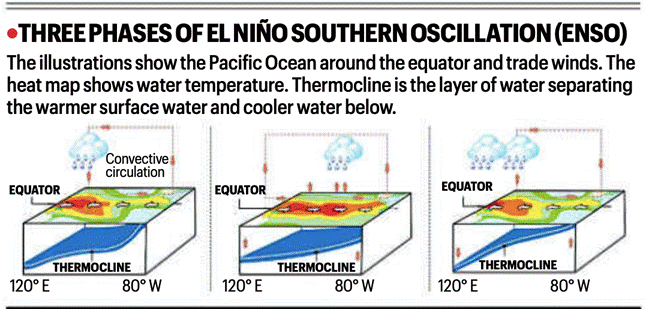
- ENSO is a coupled ocean-atmosphere phenomenon involving periodic changes in sea surface temperatures (SSTs) and atmospheric pressure over the equatorial Pacific Ocean.
- It has three phases: El Niño (warming), La Niña (cooling), and Neutral, recurring at intervals of 2–7 years.
El Niño and India
- During El Niño, eastern Pacific waters warm abnormally, weakening trade winds and reducing moisture transport toward India.
- Historically, many El Niño years are associated with deficient monsoons, agricultural stress, lower hydropower generation, and food inflation.
La Niña and India
- La Niña strengthens trade winds and generally supports an above-normal monsoon, though excessive rainfall may trigger floods and landslides.
Important Exceptions
- ENSO influences but does not fully determine monsoon performance; factors such as the Indian Ocean Dipole (IOD) and Eurasian snow cover also matter.
Heat Wave
IMD Definition
- India Meteorological Department declares a heat wave when maximum temperature reaches at least 40°C in plains or 30°C in hilly regions and remains 4.5°C to 6.4°C above normal.
- A severe heat wave is declared when temperatures exceed 6.4°C above normal or the actual maximum crosses 47°C.
Impacts
- Heat waves cause dehydration, heat stroke, crop loss, livestock mortality, and productivity decline, especially among outdoor workers and vulnerable populations.
Climate Change Link
- The Intergovernmental Panel on Climate Change notes that climate change is increasing the frequency, intensity, and duration of extreme heat events globally.
Wet-Bulb Temperature
Meaning
- Wet-bulb temperature combines air temperature and humidity to measure how effectively sweat can evaporate and cool the human body.
- It represents the lowest temperature achievable through evaporation and is a better indicator of physiological heat stress than ordinary temperature.
Critical Threshold
- Sustained exposure to 35°C wet-bulb temperature can be fatal, even for healthy individuals resting in shade with access to water.
Relevance for India
- Coastal and humid regions such as Kerala, Odisha, and West Bengal face heightened risks because high humidity severely limits the body’s natural cooling mechanism.
“Feels Like” or Apparent Temperature
What It Indicates ?
- The apparent temperature adjusts actual temperature by accounting for humidity, wind speed, and solar radiation to reflect how hot conditions feel to humans.
- A humid 38°C day may feel like 45°C or higher, creating greater health risks than dry heat at the same measured temperature.
Example
- Dry heat in Delhi may be more tolerable than the humid heat of Palakkad, where evaporation of sweat is significantly reduced.
Related Climate Concepts
Indian Ocean Dipole (IOD)
- The positive IOD can offset some adverse effects of El Niño by enhancing moisture flow toward India and improving monsoon rainfall.
Jet Streams
- The STWJ drives Western Disturbances, while the TEJ supports the southwest monsoon during summer.
Ocean Warming
- Rising sea-surface temperatures increase atmospheric moisture, making extreme rainfall and humid heat more intense.
Significance for India
Agriculture
- Nearly 50% of India’s net sown area remains rain-fed, making ENSO-related monsoon variability critical for crop output and farm incomes.
Economy
- A poor monsoon can raise food inflation, reduce rural demand, and slow GDP growth through agriculture and allied sectors.
Public Health
- Heat waves and high wet-bulb temperatures disproportionately affect the elderly, children, informal workers, and low-income households.
Disaster Management
- Unseasonal rain, lightning, floods, and landslides require improved early warning and local preparedness systems.
Government Measures
Heat Action Plans
- More than 20 States and Union Territories have prepared heat action plans to guide early warnings, cooling centres, and medical response.
National Disaster Management Authority
- National Disaster Management Authority issues guidelines for heat-wave preparedness and community awareness.
IMD Forecasting
- India Meteorological Department provides district-level forecasts and impact-based alerts for weather extremes.
Mission Mausam
- The Government’s weather modernisation initiative aims to improve forecasting through advanced radars, satellites, and artificial intelligence tools.
Challenges
Forecast Uncertainty
- ENSO impacts vary depending on timing, intensity, and interactions with IOD and local atmospheric conditions, complicating seasonal prediction.
Urban Heat Islands
- Concrete surfaces, loss of green cover, and waste heat from vehicles intensify temperatures in cities by 2–5°C.
Limited Last-Mile Awareness
- Vulnerable populations often lack timely access to weather warnings, cooling facilities, and healthcare support.
Climate Inequality
- Poor households face greater exposure and have fewer resources for adaptation, including cooling, water access, and insurance.
Way Forward
Climate-Resilient Agriculture
- Promote drought-tolerant seeds, micro-irrigation, crop diversification, and weather-indexed insurance to reduce ENSO-related agricultural losses.
Heat-Resilient Urban Planning
- Expand urban forests, cool roofs, reflective materials, and water bodies to moderate local temperatures.
Strengthen Early Warning Systems
- Integrate IMD forecasts with local health, labour, and disaster agencies for targeted action.
Public Health Preparedness
- Establish hydration points, modified work hours, and community cooling shelters during severe heat events.
Global Climate Action
- Accelerate mitigation under the Paris Agreement to reduce long-term climate risks.
Prelims Pointers
- Western Disturbances originate near the Mediterranean and travel eastward.
- ENSO has three phases: El Niño, La Niña, and Neutral.
- El Niño is generally associated with weaker Indian monsoons.
- 35°C wet-bulb temperature is considered potentially lethal.
- Heat wave threshold in plains begins at 40°C.
Mains Enrichment
Introduction Options
- “Climate extremes in India are increasingly shaped by interactions between global ocean-atmosphere systems and local vulnerabilities.”
- “Weather phenomena such as ENSO and Western Disturbances have direct implications for India’s food, water, and health security.”
Conclusion Frameworks
- “Building climate resilience requires accurate forecasting, adaptive governance, and community-centred preparedness.”
- “Understanding atmospheric processes is essential for converting weather science into effective public policy.”


