
Content
- DoT Order to Pre-Install Sanchar Saathi App
- Why There Is No Peace in Ukraine
- Why the Special Intensive Revision (SIR) Needs Complete Digitisation
- Only 20% of Candidates Accepted PM Internship Scheme Offers
- WHO Issues First Global Guidelines on GLP-1 Weight-Loss Drugs
- How the River Kosi’s Shifting Course Exposes the Perils of Embankments
DoT Order to Pre-Install Sanchar Saathi App
Why Is It in the News?
- DoT issued a mandatory order directing all smartphone manufacturers to pre-install the Sanchar Saathi app on every device sold in India.
- Triggered political backlash (Opposition leaders calling it unilateral, undemocratic).
- Digital rights activists raised concerns over privacy, informed consent, and surveillance.
- Experts warned that pre-installed, non-removable apps can access OS-level permissions, creating potential pathways for malware/spying.
Relevance
GS-II: Governance
- Executive overreach vs citizen rights; informed consent; digital governance ethics.
- Accountability gaps: absence of statutory backing for mandatory apps.
- Public consultation deficits in tech regulation.
GS-II: Polity (Fundamental Rights)
- Right to Privacy (Puttaswamy test: legality–necessity–proportionality).
- Surveillance concerns, metadata collection, state intrusion.
GS-III: Cybersecurity
- Risk of system apps with OS-level permissions.
- Threat surface expansion; malware vector risks; IMEI–identity linking.
What is Sanchar Saathi?
- Launched by DoT in 2023 as a web portal, later upgraded to a mobile app.
- Objective: Counter telecom fraud, enable blocking of stolen devices, verify IMEI authenticity.
- Key functions:
- Report fraudulent calls/number misuse.
- Check IMEI genuineness via CEIR.
- Request blocking/unblocking of stolen/ lost phones.
- Monitor numbers linked to a single identity (TAFCOP component).
What Does the New DoT Mandate Require?
- Pre-installation on all new smartphones sold in India.
- Likely non-removable, as most pre-loaded system apps are integrated into OEM firmware.
- No public consultation before mandating.
- Not backed by a specific Act of Parliament.
Why Did Government Push It? (Official Rationale)
- Sharp rise in online fraud, “digital arrest” scams, impersonation and cross-border cybercrime.
- Increase in IMEI spoofing, sale of fake devices.
- App-based services like WhatsApp/Telegram can function even when SIM credentials change → traceability gap.
- Aim: strengthen device-SIM-identity link and support real-time cybercrime response.
Concerns Raised (Governance, Legal, Technical)
A. Governance Concerns
- Absence of consultation with industry/citizens.
- Mandatory installation contradicts the principle of informed consent.
- Risks of normalising state-pushed software on personal devices.
B. Legal and Constitutional Concerns
- Must pass Puttaswamy (2017) tests:
- Legality: no explicit law authorising such surveillance-enabling installations.
- Necessity: alternatives available (portal/SMS verification).
- Proportionality: intrusive, continuous access to device metadata possible.
- Could blur lines between regulation and surveillance.
C. Technical & Cybersecurity Concerns
- Pre-installed apps often gain OS-level privileges (system apps).
- Users often cannot uninstall them → persistent capability.
- As cybersecurity expert Anand Venkatanarayanan noted:
- Once an app has system-level access, an over-the-air update can give it deeper permissions.
- Creates a potential single point of failure if app is compromised.
- Government becomes a potential malware vector—a major red flag.
D. Risks of Abuse
- Potential for continuous digital supervision (CPI-M MP John Brittas).
- Could enable mass metadata collection across millions of devices.
- History of spyware allegations (Pegasus) intensifies distrust.
- Manufacturer pushback: compromises secure OS architecture (Apple’s protest expected).
Broader Implications
- Expands executive authority without legislative scrutiny.
- Sets precedent: government apps may be forced on all devices in future.
- Could impact India’s reputation on digital rights and data protection.
- Could weaken India’s cybersecurity posture if exploited by threat actors.
International Practices
- Democratic countries rarely mandate pre-installed government apps.
- Exceptions:
- South Korea’s disaster alert apps (voluntary install, not system apps).
- Covid apps globally were voluntary (UK, EU, Japan).
- India’s approach resembles state-led firmware intervention, not standard global regulation.
Critical Overview
Strengths (Limited but Relevant)
- Helps combat rising telecom fraud.
- Facilitates faster IMEI tracking.
- Streamlines reporting of stolen devices.
Major Weaknesses
- Disproportionate → security benefits achievable without deep device intrusion.
- Undermines autonomy and informed consent.
- High systemic cybersecurity risk.
- Weak accountability → no statutory oversight.
- Diminishes trust in government technology.
Way Forward
- Shift from mandatory to opt-in installation.
- Run Sanchar Saathi as a service layer, not firmware layer.
- Enact a statutory framework defining digital surveillance limits.
- Conduct third-party security audits, open-source app code.
- Keep IMEI–SIM linkage at the telecom backend, not user device.
- Launch transparent public consultation with industry, civil society.
Conclusion
The DoT’s move stems from a genuine rise in cybercrime but adopts a legally weak, technologically intrusive, and governance-deficient route.
Mandatory pre-installation transforms a user’s smartphone into a potential instrument of persistent digital oversight. The policy must be redesigned along principles of proportionality, transparency, and privacy-by-design.
Why is there no peace in Ukraine?
Why Is It in the News?
- New U.S. (Trump administration)–led peace plan for the Russia–Ukraine war has been circulated to stakeholders.
- The plan is far less favourable to Ukraine than the 2022 Istanbul framework.
- Comes amid Ukrainian battlefield setbacks (Pokrovsk, Kupiansk), Western fatigue, domestic corruption scandals, and Trump’s shift in U.S. policy.
- Marks a major turning point: Ukraine is weaker, Russia stronger, and Western alignment fractured.
Relevance
GS-II: International Relations
- Power shifts in Russia–Ukraine conflict; failure of 2022 Istanbul process.
- Changing US foreign policy under Trump; “Reverse Kissinger” realignment attempt.
- Europe’s strategic autonomy gaps & NATO credibility questions.
GS-I/World History
- Territorial annexation, violation of post-1945 norms; coercive peace frameworks.
GS-II: Global Governance
- Erosion of international law due to legitimising territorial conquest.
- UN diplomacy limitations; great-power politics shaping peace frameworks.
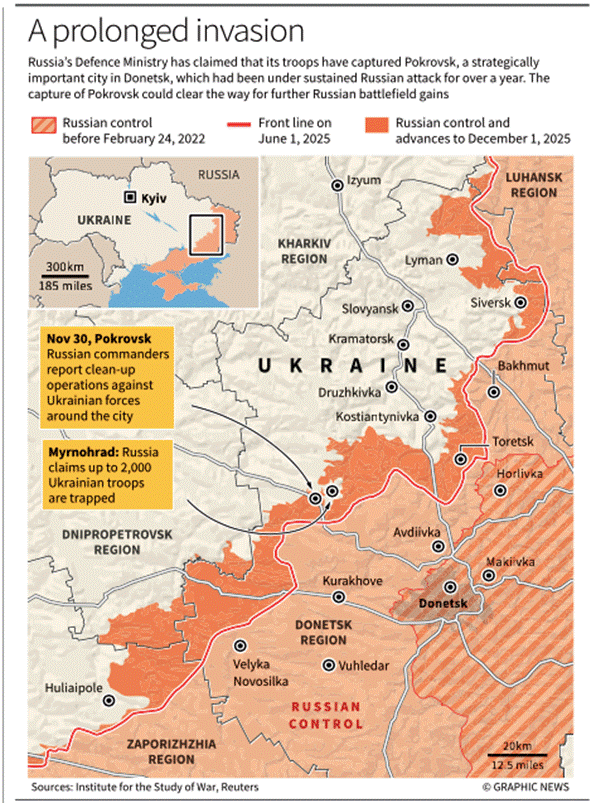
Timeline of Peace Attempts (2022–2025)
A. Early 2022: Belarus → Turkey Talks
- Days after Russia invaded (Feb 2022), both sides opened negotiations in Belarus.
- Russian troops pushed towards Kharkiv and Kherson, aiming for a quick victory.
B. March 2022 Istanbul Talks
- Mediated by Turkey; first serious diplomatic breakthrough.
- Ukraine indicated willingness to:
- Renounce NATO membership,
- Recognise Russian as an official language,
- Accept neutrality under multilateral security guarantees.
- Russia signalled readiness to:
- Withdraw to pre-Feb 24, 2022 lines, keeping Crimea and parts of Donetsk/Luhansk.
- Fiona Hill & Angela Stent (Foreign Affairs, 2022):
- Both sides reached a tentative interim settlement outline.
C. Collapse of the Istanbul Process
- Western powers hesitant to offer hard security guarantees to Ukraine.
- Boris Johnson reportedly urged Kyiv to continue fighting.
- Zelenskyy grew confident after Russia withdrew from Kyiv–Chernihiv.
- Result: Ukraine resumed war → later expelled Russian forces from Kharkiv and Kherson (late 2022).
- Russia retaliated by:
- Annexing four more regions (Sept 2022),
- Launching partial mobilisation,
- Settling into a long-war strategy.
Shift in Strategic Landscape (2023–2025)
A. Military
- 2023 Ukrainian counter-offensive failed decisively → military option closed.
- Russia adapted to sanctions, stabilised economy, and improved defence lines.
- By 2024–25: Russia regained initiative → capture of Pokrovsk marks major advance.
B. Political
- Zelenskyy extended term under martial law; recent corruption scandals eroded legitimacy.
- U.S. under Biden: “support as long as it takes”.
- U.S. under Trump:
- Views war as lost,
- Shifts burden to Europe,
- Seeks potential reset with Russia, including a “Reverse Kissinger” (tilting Russia away from China).
Trump’s 28-Point Peace Plan: Key Features
A. Territorial Settlement (Favors Russia)
- Crimea, Luhansk, Donetsk recognised as “de facto Russian”.
- Ukraine must withdraw from Donetsk (Russia currently controls ~80%).
- Contact lines in Kherson and Zaporizhzhia frozen → Russia keeps captured areas.
- Other seized territories outside annexed oblasts returned by Russia.
B. Military Terms
- Ukraine must cap military strength at 600,000 personnel.
- Demilitarised buffer areas likely around the frontline.
C. NATO Issue (Core Russian Demand)
- Ukraine must constitutionally renounce NATO membership.
- NATO must legally commit that Ukraine will never be admitted.
- Ukraine can join the EU.
D. Security Guarantees
- Separate 3-point draft proposes NATO-style assurances for 10 years, renewable.
- Significant Russian attack treated as threat to transatlantic security.
E. Sanctions & Russia’s Reintegration
- Russia to be reintegrated into global economy.
- Sanctions can be lifted; Russia could rejoin G8.
- Long-term U.S.–Russia economic cooperation (conditional).
- Russia to enact legal non-aggression commitments.
Why Is the Plan Considered Pro-Russia?
- Ukraine loses ~20% of its pre-2014 territory permanently.
- NATO door shut irreversibly.
- Russia’s gains legitimised; its losses not fully reversed.
- Security guarantees for Ukraine remain vague.
- Russia receives economic reintegration even without full withdrawal.
- U.S. role shifts from active military supporter to mediator with Russia.
Zelenskyy’s Dilemma
If he accepts:
- Effectively admits Russian victory.
- Major political blow at home → backlash from military, nationalist groups.
- Legitimacy crisis given expired term + corruption scandals.
- Loss of territory becomes permanent.
If he rejects:
- U.S. may withdraw support, further isolating Ukraine.
- Risk of losing more territory in prolonged war.
- Europe alone cannot sustain Ukraine financially/militarily.
Europe’s Position
- Germany, France, U.K. vow continued support but lack U.S.-scale capability.
- European unity under strain due to energy, defence readiness, budget fatigue.
- Europe fears Trump’s plan may entrench Russian strategic advantages.
Ground Reality (Dec 2025)
A. Russia
- Controls:
- All of Crimea,
- All of Luhansk,
- ~80% of Donetsk,
- Significant parts of Kherson & Zaporizhzhia,
- Slowly advancing in Kharkiv region.
- War economy stabilised; military industrial production revived.
B. Ukraine
- Facing power outages due to strikes on grid.
- Economic collapse prevented only through Western aid.
- Morale eroding; no feasible path to offensive victory.
Why Istanbul Moment Cannot Return ?
- 2022: Russia was on back foot → willing for concessions.
- 2025: Russia has battlefield momentum + geopolitical leverage.
- Ukraine now negotiating from weakness, not parity.
- Trump plan reflects changed power balance, not diplomatic creativity.
Implications for Global Politics
A. U.S.–Russia–China Triangle
- Trump may pursue Reverse Kissinger:
- Draw Russia away from China to weaken Beijing.
- Success uncertain due to deep Russia-China alignment.
B. NATO Credibility
- Forcing Ukraine to give up NATO path may weaken NATO’s moral authority.
- Sets precedent that military pressure can force Western concessions.
C. International Law
- Legitimising territorial conquest undermines post-1945 rules.
Conclusion
- Peace efforts collapsed in 2022 due to Western hesitation and Ukrainian optimism.
- Strategic balance shifted sharply in Russia’s favour over 2023–25.
- Trump plan formalises Ukraine’s territorial losses and neutrality.
- Ukraine in 2025 faces its toughest moment: military setbacks + political crisis + U.S. pressure.
- The new plan is a coercive peace, not a negotiated settlement.
Why the SIR needs to be completely digitised
What is Special Intensive Revision (SIR)?
- Periodic exercise by the Election Commission to update, correct, and verify electoral rolls.
- Traditionally meant to remove dead/shifted voters, include new voters, and correct errors.
- Requires accurate foundational records for reliability.
Relevance
GS-II: Governance
- Electoral roll integrity; administrative capacity; citizen–state interaction.
- Digital governance failures due to legacy datasets.
GS-II: Polity – Elections
- Role of Election Commission; BLO functioning; voter rights protection.
- Challenges to free, fair, and inclusive elections due to faulty rolls.
GS-III: Technology in Governance
- Need for structured, searchable databases; Aadhaar/PAN integration with safeguards.
- Digital workflow vs paper-based systems; reducing human error.
Why This Issue Is in News?
- SIR 2.0 depends on legacy voter rolls (2002–04) created manually on paper.
- India’s advanced digital systems (ECINet, Aadhaar-based verification, online EF system) are not fully used.
- Result: widespread errors, non-searchable data, mass deletions, voter panic, and operational delays.
Core Problem: Weak Foundation
- “Garbage in, garbage out” rule: flawed base data = flawed electoral rolls, no matter the procedure.
- 2002–04 rolls have:
- Manual entries, handwritten, high spelling variation.
- No standardised metadata or searchable fields.
- Missing EPICs, house numbers, surnames, gender/age inconsistencies.
- Zero digitisation quality control.
Evidence of Failure in Legacy Rolls
- Random audits reveal anomalies:
- Entries implying polygamy (two wives with same husband name).
- Incomplete names like “Rakesh”, “Vir”, “Sahgal/Sangal” mismatched spellings.
- Missing EPIC numbers, addresses, and house numbers.
- Author (IIT/DRDO/IITK professor) scanned thousands of entries and couldn’t find his own record despite voting for decades.
- Non-searchable PDFs make identification practically impossible.
Systemic Regression: Why SIR 2.0 Fails
- Falls back to paper-era workflow:
- BLOs collect paper forms → later digitised manually → verified again → digitally uploaded.
- Massive delays: Over 50% of Uttar Pradesh’s EFs undigitised (EC statement, Nov 27).
- Low digital skills among BLOs: errors, delays, inconsistent formats.
- Voters forced to:
- Bring paper photos.
- Submit duplicate proofs.
- Make multiple visits.
ECINet vs Legacy SIR: Stark Underutilisation
ECINet Capabilities (Modern System)
- One-billion–record searchable database.
- Searchable by name, mobile, EPIC, DOB, address, relatives.
- Duplicate detection, Aadhaar linking, auto-verification.
- Online EF filing, constituency locator, grievance tracking.
Legacy SIR Reality
- Non-searchable PDFs.
- Manual forms, manual corrections.
- Broken search interface → “error” or “no details found”.
- EC disclaims ownership: “rolls published exactly as received from CEOs”.
Key Administrative Issues
- EC expects voters to remember where they voted in 2002–04, unrealistic after 20 years.
- EPIC cards from those years not archived; voters relied on scrap slips.
- BLOs often demand unnecessary documents (birth certificate, extra address proof) contrary to EC guidelines.
- For voters deleted from rolls:
- Online Form 6 forces them to declare as first-time voters, introducing further distortions.
- Approval requirements for minor corrections via Form 8 are restrictive and slow.
Consequences
- Millions cannot locate or verify their names.
- Errors propagate through the system because the foundational dataset is unverified.
- Panic among citizens, overload on BLOs, political tensions during elections.
- Months-long disruption instead of a clean-up.
What Should Have Been Done ?
- Digital-only workflow, eliminating paper forms entirely.
- Deploy mobile kiosks with trained personnel for citizens lacking digital skills.
- Build searchable databases for legacy rolls before initiating SIR.
- Integrate Aadhaar (with safeguards), PAN, local body records via API checks.
- Uniform standards for names, addresses, metadata.
Transformation Blueprint: Fully Digital SIR 2026
a) Complete Digitisation
- Convert all State/UT rolls (2002–04 included) into English-searchable structured datasets.
- Regional scripts kept as display only, not for search logic.
b) Data Integration
- Merge legacy data with reliable datasets:
- Aadhaar
- Income Tax/PAN
- Driving licence
- Local body property records
- Automated consistency checks.
c) Voter Classification
- Stable-address voters.
- Frequent movers.
- Citizenship/immigration ambiguity cases.
d) Online EF Submission
- 100% online workflows (mobile + web).
- Kiosks for rural/elderly users.
- Dedicated trained digital staff.
e) Digitise All Post-Submission Steps
- Document verification, approval, objections, final roll publication – all within ECINet.
- Real-time tracking of corrections/deletions.
Benefits of a Fully Digital System
- Eliminates legacy errors permanently.
- Single national database → consistent, verifiable, auditable.
- Faster approvals, real-time grievance handling.
- Massive reduction in human errors and BLO overload.
- Ensures transparency, trust, and electoral integrity.
The Way Ahead
- Digital SIR is not optional — essential for a credible democratic process.
- Most reforms are immediately implementable; only deep integration may extend beyond SIR 2.0.
- Once digitised, future revisions become simple annual updates, not massive crisis-driven exercises.
- SIR 2026 must become a technology-led trust revolution, not a paper-driven crisis.
Only 20% of candidates accepted PM Internship Scheme offers: data
What is the PM Internship Scheme?
- A national-scale internship programme announced in Union Budget 2024.
- Objective: Provide 1 crore internships in five years in top Indian companies.
- Designed to bridge: industry–academia gap, employability skills, and early career exposure for youth.
- Implemented via Ministry of Corporate Affairs; companies post internships on a central portal.
Relevance
GS-II: Governance
- Scheme design flaws; weak policy feedback loops; centre–industry coordination gaps.
- Budget utilisation issues; outcome vs output mismatch.
GS-III: Economy
- Labour market dynamics; employability and skilling ecosystem.
- Youth job-preparedness and industry-academia mismatch.
GS-II: Social Sector Development
- Youth aspirations; access barriers; regional disparities.
- Internship quality norms; role clarity; stipend adequacy.
Why is it in News?
- Data presented in Parliament shows low acceptance and high dropout rates.
- Despite exceeding target of 1.25 lakh internship offers for the pilot, only 20% of candidates accepted across two rounds.
- Nearly 20% of those who accepted quit mid-way, raising concerns about scheme design, workplace quality, and alignment with youth expectations.
Pilot Scale & Targets
- Pilot launched in October 2024, target: 1.25 lakh internships in one year.
- Total internships posted (Round 1 + Round 2): 2.45 lakh+ opportunities.
Key Numbers (Two Rounds Combined)
- 1.65 lakh offers made by companies.
- 33,300 offers accepted → Acceptance rate: 20.2%.
- 6,618 candidates left prematurely → Dropout rate: 19.9% among accepted candidates.
Round-wise Performance
Round 1
- Opportunities posted: 1.27 lakh.
- Applications: 6.21 lakh.
- Offers made: 82,000.
- Accepted: 8,700 (10.6% acceptance).
- Dropouts: 4,565 → More than 50% of interns quit mid-way.
Round 2 (January onwards)
- Opportunities posted: 1.18 lakh.
- Applications: 4.55 lakh.
- Offers made: 83,000+.
- Accepted: 24,600 (30% acceptance).
- Dropouts: 2,053 → 8.3% quit rate.
Youth Response: Why Only 20% Acceptance?
- Data indicates candidates declined offers due to:
- Location mismatch (internships far from home; low stipends insufficient to support relocation).
- Unsuitable roles (low-skilled tasks, perceived lack of value).
- Long durations incompatible with academic calendars/exams.
- Many internships may not align with career aspirations or sector preferences.
High Dropout Rates: Key Reasons
- Poor role clarity and limited learning outcomes.
- Inadequate mentorship, long work hours, or project irrelevance.
- Stipend-quality mismatch: opportunity cost remains high for many students.
- Mismatch between expectations (skill-building) and reality (routine administrative tasks).
- Better opportunities elsewhere (private platforms/placements).
Utilisation of Funds
- Original pilot budget: ₹840 crore.
- Revised allocation (FY 2024–25): ₹380 crore.
- Actual utilisation so far: ₹73.72 crore.
- Low utilisation reflects low participation and operational delays.
Structural Challenges in PMIS
- Geographical concentration of opportunities in large metros; rural/remote candidates unable to relocate.
- Sector skew: many roles posted in sales, operations, basic admin; fewer in high-skill domains.
- Insufficient company participation from top-tier firms.
- Lack of flexibility in internship timings and duration.
- Portal-based recruitment lacks personalised matching, career guidance, or screening support.
Implications
- Indicates a misalignment between scheme design and youth aspirations.
- Calls into question feasibility of reaching the target of 1 crore internships.
- Poor internship experience could undermine employability goals.
- High dropout → signals issues in internship quality, company readiness, or monitoring.
- Low acceptance → reflects need for stronger incentives for both companies and interns.
Required Reforms
- Stipend rationalisation based on city tiers and living cost.
- Remote/hybrid internship options to expand reach.
- Sector diversification: tech, digital, green economy, EV, logistics, AI, MSMEs.
- Academic integration: credit-linked internships through universities.
- Quality assurance framework: standardised projects, mentorship norms, feedback loop.
- Improved matching algorithm on the portal to align skills–roles–location.
- Performance-based incentives for companies ensuring high-quality mentorship.
Conclusion
- The pilot achieved numbers in terms of offers, not uptake.
- The bottleneck is not supply but acceptance and retention.
- For the scheme to succeed at national scale:
- Roles must be meaningful.
- Stipends must be realistic.
- Duration must be flexible.
- Companies must be accountable.
- Without addressing these structural issues, scaling to 1 crore internships in 5 years is unlikely.
GLP-1 drugs
Why is it in News?
- On 1 December 2025, the World Health Organization (WHO) issued its first global guidelines on the use of GLP-1 (Glucagon-Like Peptide-1) weight-loss drugs for treating adult obesity.
- WHO formally recognised GLP-1 therapies as effective, but issued conditional recommendations due to limited long-term data, high costs, and global inequity in access.
- The decision has major implications for public health, global obesity economics, and equitable access to new metabolic drugs.
Relevance
GS-II: Health
- WHO’s first global obesity-drug guidelines; global obesity governance.
- Integration of pharmacotherapy with behavioural interventions.
GS-III: Science & Tech
- GLP-1 mechanism; metabolic diseases; long-term safety questions.
- Supply-demand imbalance; counterfeit risks.
GS-II: Equity & Public Policy
- High cost; insurance gaps; unequal access in LMICs.
- Role of generics, price caps, regulated distribution.
What Are GLP-1 Drugs?
- GLP-1 = Glucagon-Like Peptide-1, a hormone produced in the gut.
- Functions:
- Stimulates insulin secretion.
- Slows gastric emptying.
- Reduces appetite and cravings.
- Improves metabolic markers (glucose, lipids).
- Designed originally for type-2 diabetes → later found to cause significant weight loss.
Examples of GLP-1 Drugs
- Semaglutide (Ozempic, Wegovy)
- Liraglutide (Saxenda)
- Tirzepatide (Mounjaro; dual GLP-1/GIP agonist, highly effective)
Why GLP-1 Matters Globally
- Obesity ≠ lifestyle problem; it is a chronic metabolic disease.
- GLP-1 drugs represent the first major breakthrough since bariatric surgery.
Impact
- Weight loss: ~15–22% depending on drug.
- Reduced risk of:
- Type-2 diabetes
- Cardiovascular events
- Certain cancers
- Severe infectious disease outcomes
- Economic angle: Obesity may cost $3 trillion annually by 2030.
- GLP-1 drugs could reduce this burden if made accessible.
Key Elements of WHO’s New Guidelines
Conditional Recommendation
- Use GLP-1 drugs for adults with obesity, except pregnant women.
- Conditional because:
- Limited long-term safety data.
- Unknown effects after drug discontinuation.
- Extremely high cost and equity barriers.
Must Accompany Behavioural Interventions
- Drugs cannot be used alone.
- Diet modification + physical activity + counselling remain essential.
- GLP-1 → only when lifestyle interventions fail or when obesity is severe.
Equity as Central Principle
- WHO stresses:
- Tax-funded or insurance-backed programmes.
- Avoiding two-tier systems where only the rich can access treatments.
- Need for affordable generics in developing countries.
Why WHO Issued Guidelines Now ?
- Rapid worldwide adoption of drugs like Ozempic/Wegovy.
- Sharp rise of off-label use and medical tourism.
- Multiple countries witnessing shortages due to demand.
- Need for global standards on:
- Who should use the drugs.
- How to integrate them into national obesity programmes.
- Ensuring safe and monitored usage.
Concerns Acknowledged by WHO
High Cost
- GLP-1 drugs cost ₹20,000–₹30,000/month in India (imported brands).
- Remains unaffordable for most low-middle-income populations.
- Insurance coverage extremely limited.
Limited Long-Term Data
- Weight regain after stopping is common.
- Safety beyond 5–10 years still unclear.
- Issues of gastrointestinal side effects (nausea, vomiting, inflammation).
Supply-Demand Problems
- High demand has led to shortages even in countries like US & UK.
- Could divert supply away from diabetics who need them clinically.
India-Specific Issues
Cost Barrier
- Experts say affordability is the biggest obstacle.
- Need for:
- Generic manufacturing
- Government price caps
- Wider insurance coverage
Misuse Risks
- Rising trend of:
- Off-label use for cosmetic weight loss
- Unmonitored consumption
- Counterfeit injectables
Guidance by Indian Experts
- Anoop Mishra: Need insurance coverage + generics for real impact.
- V. Mohan: GLP-1 is not a magic injection; diet + exercise remain primary.
Why GLP-1 Is a Global Public Health Turning Point ?
- Obesity now affects 1 in 8 people worldwide.
- Conventional lifestyle treatment works only for 10–15% long-term.
- GLP-1 therapies offer:
- Clinically significant weight reduction
- Improvements in metabolic syndrome
- Reduced long-term healthcare expenditure
GLP-1 + Equity: Core Challenge
- Without systemic action:
- Rich countries and wealthy individuals dominate access.
- LMICs (like India) face supply and affordability barriers.
- WHO stresses that GLP-1 must not become a luxury therapy.
Policies Needed Globally
- Public insurance coverage
- Regulation of prices
- Support for local manufacturing
- Integration into national obesity guidelines
- Continued investment in prevention and lifestyle interventions
Conclusion
- WHO’s recognition is a major milestone in global obesity management.
- GLP-1 drugs are effective and transformative but:
- Not a standalone solution
- Not universally accessible
- Not yet proven long-term
- The guidelines emphasise:
- Safety
- Equity
- Integrated care
- For India and other LMICs, affordability and insurance coverage will determine real-world impact.
How the river Kosi’s shifting course exposes the perils of embankments
Why is it in News?
- Recent analysis highlights repeated breaches of Kosi embankments (latest in 2024), reviving debate on whether embankments worsen floods instead of preventing them.
- New studies and expert committees point to 120 km westward shift of the Kosi in 250 years due to sedimentation and engineering interventions.
- NDA’s “Flood to Fortune” promise and the Kosi-Mechi river-linking project have brought embankment policy back into political and ecological focus.
Relevance
GS-I: Geography
- River morphology; meandering rivers; sediment load; avulsion dynamics.
- Himalayan rivers’ hydrology and shifting channels.
GS-III: Disaster Management
- Embankment breaches increasing flood intensity; risk amplification.
- Structural vs non-structural flood mitigation approaches.
GS-III: Environment
- Human interventions altering natural river behaviour.
- Siltation, upstream catchment changes, climate variability impacts.
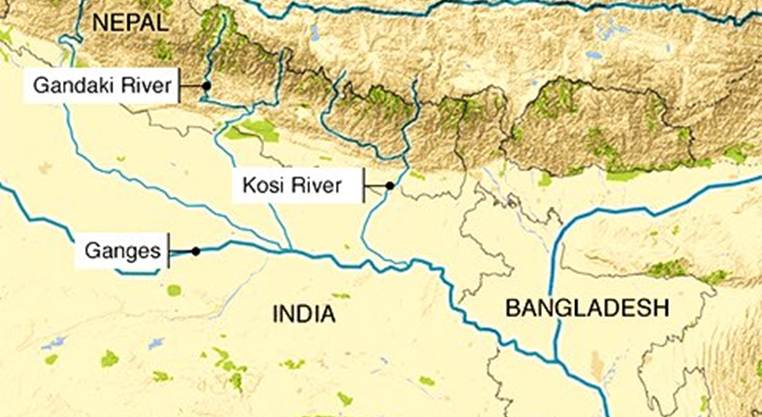
Understanding the Kosi River
- Origin: Tibet & Nepal; joins Ganga in Bihar.
- Called Sapta Kosi due to seven tributaries.
- Highly dynamic, one of world’s most sediment-loaded rivers.
- Known as “River of Sorrow” due to catastrophic floods and course shifts.
- Has shifted course ~120 km west over the last 250 years (People’s Commission on Kosi Basin).
Why Kosi Causes Extreme Flood Vulnerability ?
- High sediment load → riverbed aggradation.
- Dynamic course → frequent channel shifts.
- Low-gradient plains → sluggish flow, high inundation.
- Monsoon-fed system → sudden surge in discharge.
- Flood peaks: ~6 lakh cusecs (2024 flood).
Embankments: Intended Role
- Artificial levees to contain floodwaters.
- Aim: protect settlements, stabilize agriculture, allow development.
- Built extensively since 1950s in Bihar and Assam.
Issues with Embankments
Increased Siltation
- Embankments trap silt inside the confined channel → riverbed rises continually.
- Over time, river flows at a higher elevation than surrounding land, making breaches catastrophic.
- G.R. Garg Committee (1951) warned embankments are risky for silt-heavy rivers.
Frequent Breaches
- Kosi breached embankments in 1963, 1968, 1971, 1980, 1984, 1987, 1991, 2008, 2024.
- Breaches create sudden, unpredictable inundation over vast areas.
Water Logging Outside Embankments
- Poor drainage → stagnant water in villages trapped between embankments.
- Creates chronic flooding even without major river spillage.
Loss of Ecological Function
- Rivers lose:
- natural drainage roles
- floodplain recharge
- sediment redistribution
- wetland replenishment
- Leads to biodiversity loss and groundwater decline.
Short-term protection, long-term vulnerability
- Embankments need continuous raising as silt accumulates.
- High maintenance costs; frequent failures.
- “False sense of security” leads to unsafe development in floodplains.
Impact on Agriculture
- Deposition of coarse silt/sand during breaches (seen in Assam & Kosi belt).
- Loss of fertile topsoil → agrarian distress.
Himalayan Context: Why East is More Vulnerable
- Eastern Himalayan rivers (Kosi, Brahmaputra): affluent rivers
- precipitation increases downstream
- high sediment → higher breach probability
- geologically weak terrain → landslides, river shifts
- Western Himalayan rivers: influent rivers
- rainfall decreases downstream
- more stable → embankments relatively safer
Key Expert Views
- E. Somanathan: Embankments initially help but later turn dangerous due to rising riverbed; recommends floodplain-based resilience and removal where feasible.
- Rahul Yaduka: Embankments serve development aims but cause waterlogging; suggests improving palaeochannels for natural water distribution.
- Bindhy W. Pandey: Embankments unsuitable for eastern Himalayan rivers; require strict monitoring & rehabilitation if used.
- Mahendra Yadav (Kosi Nav Nirman Manch): Advocates “living with floods” + rehabilitating people outside embankments.
Case Study: 2008 Kosi Catastrophe
- Breach at Kusaha (Nepal).
- Deaths: 400+
- People affected: 33 lakh
- Caused by silt accumulation, embankment ageing, and altered flow due to barrage.
Kosi–Mechi River-Linking Debate
Government’s Argument
- Provide irrigation to Mahananda basin.
- Promote fisheries and agriculture.
- NDA’s “Flood to Fortune” political pitch.
Expert Counterpoints
- Kosi peak flow: ~6 lakh cusecs
- Diversion through project: 5,247 cusecs → negligible impact on flood moderation.
- Linking won’t reduce flood peaks; may worsen siltation and cross-basin flooding.
Economic Concerns
- Embankments require rising annual expenditure.
- Bihar’s embankment-related spending has increased multiple times since 1950s.
- High budget consumption with low resilience gain.
Global Lessons
United States
- Actively removing embankments in many basins.
- Allowing controlled flooding to restore:
- floodplains
- wetlands
- ecosystem integrity
- Result: milder floods, better ecological recovery.
Alternatives & Way Forward
1. Living with Floods
- Restore natural floodplains.
- Zoned habitation.
- Seasonal cropping patterns aligned with flood cycles.
2. Reviving Palaeochannels
- Use abandoned channels to redistribute floodwaters.
- Reduce pressure on main embankment.
3. River Basin Governance
- Basin-wide planning
- Cross-border coordination with Nepal
- Sediment management strategy
4. Early Warning & Evacuation
- Training communities inside embankment belts.
- Improving forecasting systems.
5. Scientific Desiltation
- Targeted removal at critical nodes.
- Must be ecology-sensitive; avoid indiscriminate sand mining.


