
Content
- Startup India @10 — Highest Annual Spike in Start-up Registrations
- Expert Panel Sets Norms for Religious Structures in Wildlife Sanctuaries
- Nobel Prize Debate — Politicisation and Symbolism of the Nobel Peace Prize
- Kaziranga Elevated Corridor — Eco-Sensitive Infrastructure to Reduce Wildlife Mortality
- Land Is Power — Women’s Land Rights and Agrarian Gender Inequality in India
- Drowning in Its Home — Sangai (Dancing Deer) and the Collapse of Floating Wetlands
Startup India @10 — Highest Annual Spike in Start-up
Why in News ?
- Prime Minister Narendra Modi stated that ~44,000 start-ups were registered in 2025, the highest annual addition since the launch of Startup India.
- Statement made during the 10th anniversary of the Startup India Mission.
- India now positioned as the 3rd largest start-up ecosystem globally.
Relevance
GS II – Governance
- Government policies for entrepreneurship promotion.
- Role of DPIIT, regulatory reforms, ease of doing business.
- Centre–State competition in start-up ecosystems.
GS III – Economy
- Start-ups as drivers of:
- Job creation.
- Innovation-led growth.
- Capital market deepening (IPOs).
- MSME–start-up linkage in value chains.
- Shift from factor-led to innovation-led growth.
Startup India: Core Basics
- Launch date: 16 January 2016.
- Nodal Ministry: Ministry of Commerce & Industry (DPIIT).
- Core objectives:
- Foster innovation.
- Promote entrepreneurship.
- Enable investment-led growth.
- Key instruments:
- Start-up recognition by DPIIT.
- Fund of Funds for Start-ups (FFS).
- Tax exemptions & compliance easing.
Key Data & Evidence
- 2025:
- ~44,000 new start-ups registered (highest single-year jump).
- Ecosystem position:
- India = 3rd largest globally (after US & China).
- Trend highlighted:
- Start-ups → Unicorns → IPOs → Job creation.
- Registration ≠ success; but reflects pipeline depth.
Economic Dimension
- Growth engine:
- Start-ups driving:
- Job creation.
- Capital formation.
- Productivity gains.
- Start-ups driving:
- Structural shift:
- From factor-led growth → innovation-led growth.
- Capital markets linkage:
- Rising start-up IPOs deepen domestic capital markets.
- MSME–Start-up continuum:
- Start-ups complement MSMEs in value chains.
Governance & Administrative Dimension
- Regulatory reforms:
- Self-certification under labour & environmental laws.
- Faster incorporation & IPR facilitation.
- Digital public infrastructure:
- Aadhaar, UPI, ONDC enabling low-cost scaling.
- Centre–State role:
- States competing via start-up policies, incubators.
Social Dimension
- Democratisation of entrepreneurship:
- Growth beyond metros into Tier-2/Tier-3 cities.
- Youth dividend utilisation:
- Converts job-seekers into job-creators.
- Women entrepreneurship:
- Rising share, but still underrepresented in funding.
Technology & Innovation Dimension
- Strong presence in:
- FinTech, EdTech, HealthTech, SaaS, Climate-tech.
- Leveraging:
- AI, data analytics, digital platforms.
- Start-ups as drivers of:
- Indigenous innovation.
- Atmanirbhar Bharat goals.
Challenges
- Quality vs quantity:
- High registrations, but survival rates vary.
- Funding concentration:
- Venture capital skewed towards few sectors & cities.
- Regulatory uncertainty:
- Taxation (angel tax legacy issues).
- Compliance burden for scaling firms.
- Job quality concerns:
- Informal, gig-based employment dominance.
Way Forward
- Next phase: Startup India 2.0
- Focus on deep-tech & manufacturing start-ups.
- Credit diversification
- Beyond VC: development finance, patient capital.
- Inclusive entrepreneurship
- Women, SC/ST, rural & agri-start-ups.
- Outcome-based support
- Survival, scale, exports—not just registrations.
- Regulatory predictability
- Stable tax & compliance regime for scale-ups.
Prelims Pointers
- Startup India launched in 2016, not post-COVID.
- DPIIT recognises start-ups (not NITI Aayog).
- Fund of Funds ≠ direct equity funding.
- Unicorn = private firm valued at $1 billion+.
Expert Panel Sets Norms for Religious Structures in Wildlife Sanctuaries
Why in News ?
- The Standing Committee of the National Board for Wildlife (SCNBWL) has framed guidelines on diversion/regularisation of forest land for religious structures inside Protected Areas (PAs).
- Triggered by the Balaram–Ambaji Wildlife Sanctuary (Gujarat) case, where diversion of forest land for temples was proposed and later revoked.
- Raises critical issues of encroachment vs faith, forest rights settlement, and precedent-setting in wildlife governance.
Relevance
GS II – Polity & Governance
- Balance between Fundamental Rights (Article 25) and DPSPs (Article 48A).
- Role of statutory bodies: NBWL / SCNBWL.
- Rule-based governance vs discretionary clearances.
GS III – Environment & Biodiversity
- Wildlife (Protection) Act, 1972.
- Forest (Conservation) Act, 1980.
- Protected Areas governance and encroachment control.
Background & Case Context
- Balaram–Ambaji Wildlife Sanctuary hosts two temples claimed to be “historical”.
- July 2024: SCNBWL initially cleared 0.35 ha forest land use for a religious trust.
- October 2024: Clearance revoked after it was found that:
- Rights of the Trust were not recorded in forest settlement records.
- December 2025: Draft normative guidelines presented to SCNBWL to avoid ad-hoc decisions in future.
Core Guidelines
- General Principle:
- Any construction or expansion on forest land after 1980 = encroachment.
- Exceptional Window:
- Only if:
- State issues a reasoned, documented order, and
- Justifies regularisation on exceptional grounds.
- Such cases to be referred to the Environment Ministry for case-by-case scrutiny.
- Only if:
- Key cut-off year: 1980 (linked to Forest (Conservation) Act).
Constitutional & Legal Dimension
- Forest (Conservation) Act, 1980:
- Central approval mandatory for diversion of forest land.
- Post-1980 non-forestry use is presumptively illegal.
- Wildlife (Protection) Act, 1972:
- Strong protection regime for National Parks & Sanctuaries.
- Infrastructure allowed only if non-detrimental to wildlife.
- Article 25 (Freedom of Religion):
- Subject to public order, morality, health, and other fundamental rights.
- Does not override environmental laws.
- Article 48A & 51A(g):
- State and citizen duty to protect environment and wildlife.
Governance & Administrative Dimension
- Problem exposed:
- Many sanctuaries still have unsettled forest rights and claims.
- Poor-quality forest settlement records create ambiguity.
- Risk of precedent:
- Regularising one religious structure may open floodgates across PAs.
- Institutional response:
- Shift from case-by-case discretion → rule-based SOP.
- Role of SCNBWL:
- Apex technical-cum-policy filter to balance conservation vs development/faith.
Social & Ethical Dimension
- Faith vs Ecology dilemma:
- Religious sentiments are socially powerful but ecologically footprint-heavy.
- Ethical concern:
- Selective accommodation of religion risks normalising encroachment.
- Equity issue:
- If faith-based claims allowed, why deny other community or livelihood claims?
Environmental & Wildlife Dimension
- Protected Areas are:
- Inviolate cores for biodiversity.
- Highly sensitive to fragmentation, noise, footfall, waste.
- Religious infrastructure often leads to:
- Roads, shops, accommodation, pilgrim influx → secondary impacts.
- Guidelines aim to:
- Prevent “incremental degradation” of sanctuaries.
Challenges
- Implementation gap:
- States may still push proposals citing “historical existence”.
- Data deficiency:
- Lack of authentic records on pre-1980 structures.
- Political pressure:
- Religious institutions have high mobilisation capacity.
- Forest Rights Act overlap:
- Unsettled FRA claims complicate decision-making.
Way Forward
- Strict adherence to 1980 cut-off as non-negotiable baseline.
- Time-bound settlement of forest rights under FRA before considering any diversion.
- Independent ecological impact assessment even for “small” religious uses.
- No new construction principle:
- Only maintenance of genuinely pre-1980, legally recorded structures.
- National SOP:
- Uniform criteria to avoid State-level arbitrariness.
- Public communication:
- Clarify that conservation is not anti-faith, but pro-intergenerational equity.
Prelims Pointers
- SCNBWL ≠ NBWL (NBWL is chaired by PM; SCNBWL handles clearances).
- Forest (Conservation) Act operative year: 1980.
- Post-1980 forest constructions = encroachments (default rule).
- Religious freedom is not absolute.
Nobel Prize with Special Focus on the Nobel Peace Prize
Why is it in News?
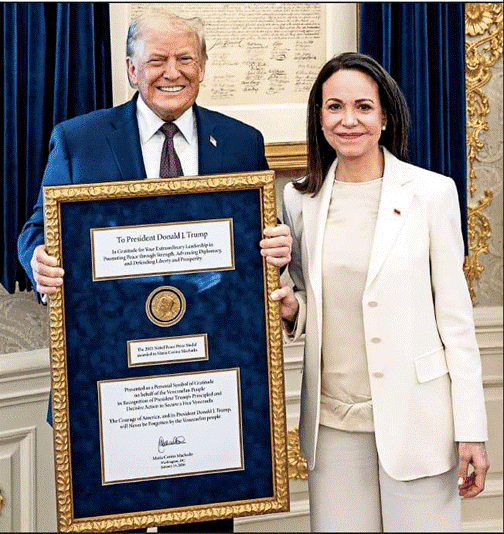
- María Corina Machado publicly presented her Nobel Peace Prize medal to Donald Trump during a recent meeting in the US.
- The act was described as a symbolic gesture of gratitude for Trump’s past support to Venezuela’s opposition and democratic cause.
- This has triggered debate because:
- Nobel medals are personal property of laureates and can legally be gifted or sold under the statutes of the Norwegian Nobel Committee.
- However, transferring a Peace Prize medal to a political leader raises questions about politicisation of the Nobel Peace Prize.
- The episode has revived wider discussion on:
- Whether the Nobel Peace Prize is being used as a political signal rather than a purely humanitarian recognition.
- The distinction between symbolic diplomacy vs institutional neutrality of global awards.
Relevance
GS Paper I – World History / Society
- Global institutions and moral authority.
- Evolution of international recognition systems.
GS Paper II – International Relations
- Soft power and norm-setting in global politics.
- Awards as instruments of diplomatic signalling.
- Institutional neutrality vs political messaging.
Nobel Prize: Core Basics
- Instituted by the will of Alfred Nobel (1895).
- First awarded: 1901.
- Original categories:
- Physics
- Chemistry
- Physiology/Medicine
- Literature
- Peace
- Economics added later (1968) → Not part of original Nobel will.
Nobel Peace Prize: Unique Institutional Design
- Awarded by Norwegian Nobel Committee.
- Ceremony held in Oslo, not Stockholm.
- Rationale:
- Norway–Sweden union context at the time of Nobel’s will.
- Unlike other Nobel Prizes:
- Awarded to individuals or organisations.
- Can be given for political processes, activism, conflict resolution, humanitarian work.
Eligibility, Nomination & Decision Process
- Who can nominate?
- National parliamentarians, ministers.
- University professors (relevant fields).
- Previous laureates.
- International courts & organisations.
- Key point:
- Nomination ≠ endorsement.
- Hundreds nominated annually; only one laureate selected.
- Deliberations are confidential for 50 years.
Ownership of the Nobel Medal
- Nobel medal, diploma, and prize money:
- Become personal property of the laureate.
- Nobel statutes:
- Do not prohibit selling, donating, or auctioning medals.
- Important examples:
- Dmitry Muratov:
- Auctioned Peace Prize medal (2022).
- Proceeds (~USD 103.5 million) donated for Ukrainian children affected by war.
- Carlos Saavedra Lamas:
- Medal sold in 2014.
- Dmitry Muratov:
- Insight:
- Moral authority lies in use of prize, not physical possession.
Political Dimension of the Nobel Peace Prize
- Peace Prize often reflects contemporary global conflicts and moral priorities.
- Frequently criticised for:
- Western normative bias.
- Awarding aspirational peace rather than achieved peace.
- Examples often debated in UPSC interviews:
- Awards during ongoing conflicts.
- Recognition of political opposition figures.
- However:
- Nobel Committee defends Peace Prize as a norm-setting instrument, not merely retrospective reward.
International Relations Dimension
- Peace Prize as:
- Soft power instrument.
- Moral signalling mechanism in global politics.
- Can:
- Legitimize political movements.
- Increase diplomatic pressure on regimes.
- Sometimes causes:
- Diplomatic discomfort.
- Accusations of interference in domestic affairs.
Economic & Institutional Aspect
- Prize money:
- Approx. 10 million Swedish Krona (value may vary annually).
- Nobel Foundation:
- Manages endowment.
- Prize money independent of medal ownership.
Challenges
- Politicisation
- Perception of ideological selectivity.
- Premature awards
- Given before outcomes are secured.
- Eurocentric norms
- Global South under-representation historically.
- Symbol vs substance
- Media focus on personalities rather than peace outcomes.
Way Forward
- Greater transparency post 50-year disclosure.
- Broader inclusion of:
- Grassroots peacebuilders.
- Community-level conflict resolution.
- Balanced recognition:
- Combine moral courage with demonstrable outcomes.
- Reinforce Peace Prize as:
- Instrument of conscience, not geopolitics.
Prelims Pointers
- Peace Prize awarded in Norway, others in Sweden.
- Economics Prize ≠ original Nobel category.
- Medal ownership lies with laureate.
- Nobel deliberations sealed for 50 years.
Kaziranga Elevated Corridor — Curbing Wildlife Mortality through Eco-Sensitive Infrastructure
Why in News ?
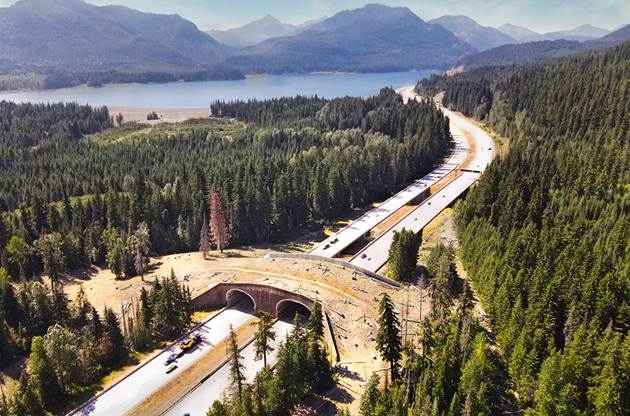
- Prime Minister laid the foundation stone of a 34.5-km elevated corridor along/through Kaziranga National Park.
- Objective: Reduce animal deaths caused by heavy traffic on NH-715 (formerly NH-37), especially during Brahmaputra floods.
Relevance
GS III – Environment
- Human–wildlife conflict mitigation.
- Wildlife corridors and ecological connectivity.
- Conservation in flood-prone ecosystems.
GS III – Infrastructure
- Sustainable infrastructure.
- Disaster-resilient transport planning.
- Integrating ecology into highway design.
Project Snapshot
- Length: 34.5 km (elevated corridor).
- Cost: ~₹6,950 crore.
- Route: NH-715 connecting Kaziranga–Eastern Assam–Guwahati.
- Ecological linkage:
- Kaziranga floodplains ↔ Karbi Anglong hills.
- Complementary works:
- Widening of 30.22 km existing roads.
- 2 km long flyovers near Bokakhat & Jakhalabandha.
Ecological & Environmental Dimension
- Flood-driven migration:
- Annual Brahmaputra floods submerge low-lying grasslands.
- Wildlife (rhinos, elephants, deer, predators) migrate to higher grounds of Karbi Anglong plateau.
- Barrier effect of highways:
- NH-715 cuts across natural corridors.
- High vehicle speed = major mortality driver.
- Scientific evidence:
- Wildlife Institute of India study:
- 2016–17: 63 animals killed on NH-715 in one year.
- Included apex predator (Indian leopard).
- Wildlife Institute of India study:
- Elevated corridor benefit:
- Restores horizontal ecological connectivity.
- Minimises surface-level human–wildlife interaction.
Governance & Administrative Dimension
- Shift in infrastructure paradigm:
- From “road through forest” → “road over wildlife landscape”.
- Inter-agency coordination:
- MoRTH + Assam Govt + Forest Dept + WII inputs.
- Eco-sensitive zone (ESZ) logic:
- Corridor aligns with ESZ norms without halting development.
- Challenge:
- Construction-phase disturbance in a sensitive zone.
Economic Dimension
- Trade-off resolution:
- Maintains Assam’s key arterial connectivity to Guwahati.
- Avoids economic losses from:
- Traffic disruptions during floods.
- Wildlife-vehicle collisions.
- Cost-effectiveness:
- High upfront cost but long-term savings in:
- Wildlife loss.
- Accident compensation.
- Road maintenance due to flood damage.
- High upfront cost but long-term savings in:
Social & Ethical Dimension
- Ethics of coexistence:
- Acknowledges wildlife movement as a right, not a nuisance.
- Local livelihoods:
- Reduced road closures benefit tourism & transport workers.
- Cultural value:
- Kaziranga symbolises India’s conservation ethic (one-horned rhino).
Security & Strategic Dimension
- NH-715 is a strategic connectivity route in eastern Assam.
- Ensures:
- All-weather movement.
- Disaster-resilient infrastructure in flood-prone terrain.
Challenges
- Construction impacts:
- Noise, vibration, light pollution.
- Speed management:
- Elevated roads can encourage overspeeding if not regulated.
- Habitat compression risk:
- If feeder roads & urbanisation expand unchecked.
- Monitoring gap:
- Need for post-construction ecological audits.
Way Forward
- Design & engineering
- Wildlife-friendly pillars spacing.
- Natural vegetation underpasses.
- Traffic regulation
- Strict speed limits.
- AI-enabled animal detection & warning systems.
- Construction safeguards
- Seasonal work restrictions during peak migration.
- Noise & light mitigation protocols.
- Replication
- Scale model to:
- Nilgiris–Bandipur.
- Pench–Kanha.
- Eastern Ghats corridors.
- Scale model to:
- Institutionalisation
- Make WII ecological clearance mandatory for highways in protected landscapes.
Prelims Pointers
- NH-715 (old NH-37) skirts Kaziranga NP.
- Kaziranga = UNESCO World Heritage Site.
- Karbi Anglong = key highland refuge during floods.
- Elevated corridors ≠ underpasses; both are wildlife mitigation tools.
Kaziranga National Park
- Location: Golaghat & Nagaon districts, Assam; south bank of the Brahmaputra River.
- Status:
- Declared National Park (1974).
- UNESCO World Heritage Site (1985).
- Tiger Reserve (2006) under Project Tiger.
- Global Significance:
- Hosts ~2/3rd of the world’s population of the One-horned Indian Rhinoceros (Rhinoceros unicornis).
- Biodiversity Profile:
- “Big Five” of Kaziranga: Rhino, Tiger, Elephant, Wild Water Buffalo, Swamp Deer.
- High tiger density (among the highest globally).
Land is Power — Women’s Land Rights in India
Why in News ?
- Recent field-based reportage from Uttarakhand highlights feminisation of agriculture without feminisation of land ownership.
- Despite constitutional and legal reforms, women cultivators remain invisible in land records, excluding them from schemes like PM-KISAN Samman Nidhi.
- Reinforces long-standing academic evidence (Bina Agarwal) on land as the core determinant of women’s power, security, and autonomy.
Relevance
GS I – Indian Society
- Gender inequality in agrarian structures.
- Feminisation of agriculture.
GS II – Governance & Social Justice
- Implementation gaps in welfare schemes (PM-KISAN, KCC).
- Land as a State subject; federal challenges.
- Women empowerment through asset ownership.
Core Problem Statement
- Women do most agricultural work but do not own land → No legal farmer status → No scheme access → Economic disempowerment.
Constitutional & Legal Dimension
- Constitutional backing
- Article 14: Equality before law.
- Article 15(3): Affirmative action for women.
- Article 39(b), (c): Equitable distribution of material resources.
- Statutory framework
- Hindu Succession Act, 1956: First recognition of women’s inheritance.
- 2005 Amendment:
- Daughters = coparceners by birth (ancestral property incl. agricultural land).
- Applies irrespective of marital status.
- Key gap
- De jure equality ≠ de facto ownership.
- Land largely transferred to women only as widows, not as daughters.
Governance & Administrative Dimension
- Land records & farmer identity
- Ownership-based definition of “farmer” excludes women cultivators.
- Digitisation (DILRMP) replicates patriarchal ownership patterns.
- Scheme access failure
- PM-KISAN, KCC, crop insurance → land title mandatory.
- Result: Women submit affidavits instead of enjoying rights.
- Federal issue
- Land = State subject → uneven implementation across states.
Economic Dimension
- Productivity & credit
- No land title → no collateral → no formal credit.
- Zero/near-zero women Kisan Credit Cards in many hill districts.
- Macroeconomic loss
- FAO estimate (generic): Equal access to productive resources could raise farm output significantly.
- Migration link
- Male out-migration → women manage farms → “managerial feminisation without asset control.”
Social & Ethical Dimension
- Patriarchal norms
- Daughters “given away” at marriage → denied inheritance.
- Social pressure to relinquish legal share.
- Intra-household power
- Land ownership:
- Enhances bargaining power.
- Reduces domestic violence risk (Bina Agarwal’s findings).
- Land ownership:
- Intersectionality
- Dalit, Adivasi women face:
- Poor land quality.
- No demarcation, water, or extension support.
- Dalit, Adivasi women face:
Environmental & Sustainability Dimension
- Women land managers:
- Preserve forests, soil fertility, biodiversity.
- Promote mixed cropping, organic manure.
- Link to SDGs
- SDG 1 (No Poverty), SDG 5 (Gender Equality), SDG 15 (Life on Land).
Data & Evidence
- National Family Health Survey
- Women owning land alone:
- ~7% (2014–15) → ~8% (2019–21).
- Joint ownership:
- ~21% → ~23%.
- Women owning land alone:
- PM-KISAN (Rajya Sabha, Dec 2024):
- ~87 million beneficiaries.
- <20 million women (~2–3 out of 10).
- Uttarakhand: ~16% women beneficiaries.
- UN Women
- Even where women do >75% farm work, ownership remains male-dominated.
Challenges
- Implementation deficit
- Laws exist; enforcement weak.
- Institutional apathy
- Revenue officials resist joint/matrilineal titles.
- Awareness gap
- Women unaware of location/utility of allotted land.
- Design flaw
- Land titles without irrigation, extension, or market access = symbolic empowerment.
Way Forward
- Land record reforms
- Mandatory joint spousal titles in all government land transfers.
- Scheme redesign
- PM-KISAN, KCC eligibility based on cultivation + management, not just ownership.
- Administrative nudges
- Stamp duty rebates for women land registration (best practices from states).
- Institutional support
- Boundary demarcation, water access, extension services post-allotment.
- Normative change
- Panchayat-led awareness on daughters’ inheritance rights.
- Tribal areas
- Effective implementation of forest & community land rights with women as primary title holders.
Drowning in its Home — Sangai (Dancing Deer) & Collapse of Floating Wetlands
Why in News ?
- Recent ecological assessments warn that the Sangai (Dancing Deer) is approaching an extinction-level event due to collapse of floating meadows (phumdis) in Manipur.
- Wildlife Institute of India (2022–23) conservation plan reports critically low wild population and severe habitat fragmentation.
- Raises questions on wetland governance, hydropower–ecology conflict, and species-specific conservation failures.
Relevance
GS III – Environment & Biodiversity
- Endangered species conservation.
- Wetland ecology (Ramsar sites).
- Protected Area management failures.
GS I – Geography (India)
- Loktak Lake.
- Floating wetlands (phumdis).
Species Profile
- Common name: Sangai / Dancing Deer
- Scientific name: Rucervus eldii eldii
- IUCN status: Endangered
- State animal: Manipur
- Habitat specificity: Only wild population confined to floating meadows of Keibul Lamjao National Park
- Unique feature:
- Brow tine on forehead (males).
- Delicate gait over floating vegetation → “dancing” illusion.
Geographical & Ecological Context
- Located in Imphal Valley, south of Loktak Lake.
- Keibul Lamjao NP:
- World’s only floating national park.
- Ramsar Convention site (Wetland of International Importance).
- Core ecological unit: Phumdis
- Floating mats of vegetation + organic matter.
- Must be ≥1 metre thick to support adult Sangai (90–115 kg).
Population Status & Data
- Declared extinct: 1951 → rediscovered later.
- Apparent recovery till 1984, followed by decline.
- WII (2022–23) findings:
- ~64 individuals in the wild.
- ~200 in captivity (zoos across India).
- Earlier census (2016) showing 260 individuals now believed to be inflated / methodologically weak.
- Habitat squeezed to ~10 sq km → severe crowding.
Key Threats
1. Habitat Collapse (Primary Driver)
- Phumdis thinning & fragmentation due to:
- Altered hydrology.
- Pollution load.
- Observed impact:
- 2023 census: 2 Sangai + 4 hog deer carcasses recovered → probable drowning.
2. Hydropower–Wetland Conflict
- 1983 downstream multipurpose hydroelectric project:
- Causes monsoon backflow into Loktak–Keibul system.
- Leads to:
- Erosion of phumdis.
- Delay in regeneration of floating mats.
- Altered nutrient cycles.
3. Pollution & Urban Pressure
- Untreated sewage from towns enters lake.
- Excess nutrients → disrupt endemic plant species anchoring phumdis.
4. Genetic & Demographic Risks
- Inbreeding depression due to:
- Extremely small effective population.
- Habitat confinement.
- Results:
- Reduced fertility.
- Higher disease susceptibility.
- Lower long-term viability.
5. Institutional Gaps
- Ramsar status without effective wetland hydrological management.
- Fragmented responsibility: wildlife, water resources, power departments.
Governance & Policy Dimension
- Protected Area ≠ Protected Ecosystem
- Focus on species protection, neglect of ecosystem processes.
- Lack of environmental flow norms for Loktak basin.
- Absence of integrated lake–river–wetland authority.
Environmental & Climate Dimension
- Phumdis are climate-sensitive:
- Changing rainfall patterns amplify hydrological stress.
- Loss of floating wetlands:
- Carbon sequestration declines.
- Biodiversity collapse (hog deer, fish, birds affected).
Security & Cultural Dimension
- Sangai = cultural keystone species of Manipur:
- Embedded in dance, art, sports ethos, and identity.
- Biodiversity loss risks:
- Cultural alienation.
- Local resistance to conservation if livelihoods ignored.
Way Forward
Ecological Measures
- Restore minimum phumdi thickness through:
- Controlled water levels.
- Nutrient balance restoration.
- Native vegetation regeneration programs.
Hydrological Governance
- Enforce environmental flow regime downstream of hydropower project.
- Seasonal water-level modulation aligned with phumdi regeneration cycle.
Genetic Conservation
- Scientific metapopulation strategy:
- Carefully managed translocations.
- Genetic exchange between captive and wild populations (where viable).
Institutional Reform
- Loktak–Keibul Integrated Wetland Authority:
- Wildlife + Water + Urban governance convergence.
- Community-based wetland stewardship with local fishers.
Monitoring & Science
- Annual independent population audits using modern methods (camera traps, genetic sampling).
- Long-term ecological research station at Keibul Lamjao.
Prelims Pointers
- Keibul Lamjao NP = only floating national park in the world.
- Sangai subspecies = Rucervus eldii eldii.
- Phumdis must be ≥1 m thick to support Sangai.
- Loktak Lake = Ramsar site + hydropower-linked wetland.


