
Content
- A decisive mandate
- Overdue upgrade
A decisive mandate
Source : The Hindu
Why in News?
- BNP wins 2/3rd+ majority in Jatiya Sangsad, forming first elected government after August 2024 regime change, creating scope for institutional reset, economic revival, and foreign-policy recalibration including India ties.
- Jamaat-e-Islami ~75 seats yet outside power core indicates electorate preference for centrist governance, moderating religious politics and enabling pragmatic regional cooperation with India and BIMSTEC partners.
Relevance
GS 2 – International Relations
- India–Bangladesh relations under Neighbourhood First, Act East, SAGAR, with focus on connectivity, security, and Bay of Bengal geopolitics.
- Role of political stability in neighbourhood for India’s security, trade, and regional leadership.
- Subregionalism via BIMSTEC, BBIN, and limits of SAARC.
Practice Question
- Discuss the strategic, economic, and security significance of Bangladesh for India. How can India recalibrate ties after recent political changes in Dhaka?(250 Words)
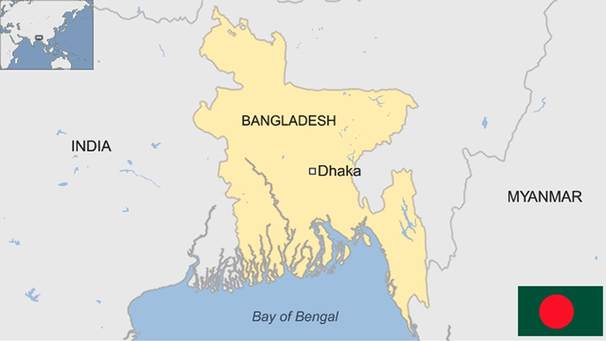
Political & Institutional Dimensions
Domestic Political Reset
- First elected government after ~18 months of interim rule must restore constitutional normalcy, judicial credibility, and Election Commission autonomy to stabilise Bangladesh’s competitive democracy.
- ‘July Charter’ referendum backing caretaker government and proportional upper house signals demand for power diffusion, potentially reducing winner-takes-all politics that earlier strained India–Bangladesh continuity.
- Political reconciliation matters as voter turnout reportedly below past averages, reflecting partial opposition disengagement and need for inclusive legitimacy-building.
Indian Investments & Development Projects in Bangladesh
Lines of Credit (LoC) – Scale of Commitment
- India has extended ~US$8 billion+ LoCs to Bangladesh since 2010, making Bangladesh India’s largest LoC recipient globally, reflecting priority in neighbourhood development diplomacy.
- These LoCs cover roads, railways, ports, shipping, power, and defence, strengthening Bangladesh’s infrastructure base while integrating regional supply chains.
Connectivity Projects
Railways
- India financed restoration/modernisation of key rail links like Akhaura–Agartala rail link, enhancing Northeast connectivity and reducing transit time between Tripura and mainland India by hundreds of kilometres.
- Revival of Chilahati–Haldibari and other pre-1965 rail routes strengthens historical connectivity and boosts bilateral trade logistics.
Ports & Shipping
- Access to Chattogram and Mongla ports for Indian cargo to Northeast reduces logistics cost by 30–40% (estimated) and supports subregional value chains.
- India supported port infrastructure upgrades under LoCs, improving Bangladesh’s maritime capacity in Bay of Bengal.
Roads & Inland Waterways
- Multiple road and bridge projects financed by India enhance BBIN connectivity; inland water transit under PIWTT protocol routes reduces carbon footprint and freight costs.
India & Bangladesh: Common International Memberships
Global Institutions
- United Nations (UN) – Both active in UNGA, Peacekeeping, and global governance.
- IMF & World Bank – Development finance, macroeconomic support, poverty reduction.
- WTO – Coordinate on food security and S&DT for developing countries.
- WHO – Cooperation on UHC, vaccines, and disease surveillance.
Regional Groupings
- SAARC – South Asian cooperation forum (limited but relevant).
- BIMSTEC – Key for Bay of Bengal connectivity, energy, security.
- IORA – Maritime security and blue economy in Indian Ocean.
- BBIN Initiative – Subregional connectivity and power trade.
- Commonwealth – Governance, legal, and education cooperation.
Economic & Climate Platforms
- ADB & AIIB – Infrastructure and connectivity funding.
- International Solar Alliance (ISA) – Solar energy cooperation.
- CDRI – Disaster-resilient infrastructure.
- UNFCCC/Paris Agreement – Climate action and adaptation.
Strategic / Security Dimensions
Border Management
- India–Bangladesh border: 4,096 km, India’s longest land boundary; effective cooperation since 2010s reduced Northeast insurgent camps and improved coordinated patrols between BSF and BGB.
- Border districts influence security of 5 Indian States (WB, Assam, Meghalaya, Tripura, Mizoram); stability in Bangladesh directly affects migration, trafficking, and smuggling patterns.
Counter-Radicalisation
- Bangladesh earlier demonstrated success against extremist groups (post-2016 crackdowns); continuity vital as instability can spill into India’s sensitive Siliguri Corridor and Northeast.
Economic Dimensions
Trade & Investment
- Bilateral trade ~US$18–20 billion annually, making Bangladesh India’s largest South Asian trade partner; India enjoys surplus but Bangladesh is major apparel exporter to Indian market.
- Bangladesh is India’s largest development partner in neighbourhood, with US$8+ billion LoCs extended for roads, rail, ports, and infrastructure since 2010.
Connectivity
- 5 rail links operational, coastal shipping agreement since 2015, and use of Chattogram & Mongla ports for Indian cargo to Northeast reduce logistics cost and time.
- BBIN Motor Vehicles framework (though pending full implementation) can transform subregional trade flows across eastern South Asia.
Energy Cooperation
- India exports ~1,160 MW electricity to Bangladesh via cross-border grids, making Bangladesh India’s largest power export destination; supports Bangladesh’s energy security.
Geopolitical Dimensions
- Bangladesh sits at Bay of Bengal crossroads linking SAGAR, Act East, and Indo-Pacific strategies; its ports and sea lanes influence eastern Indian Ocean trade security.
- China is Bangladesh’s largest trading partner and key infrastructure financier; balancing Chinese presence requires India to compete via delivery speed and market access.
- U.S. and EU remain top export destinations for Bangladeshi garments (over 80% RMG exports), shaping Dhaka’s diversified foreign policy.
Social / People-to-People Dimensions
- India issues ~1.5–2 million visas annually to Bangladeshis (pre-pandemic levels)—highest for any country—showing deep education, medical, and tourism linkages.
- Cultural affinity rooted in 1971 Liberation War legacy, shared Bengali heritage, and cross-border families; erosion of trust harms long-term diplomacy.
- Ensuring safety of Hindu minorities (~8% of Bangladesh population) and protection of Indian missions are critical confidence measures.
Key Challenges
- Handling status of former leadership figures abroad involves legal-extradition norms, diplomatic sensitivities, and domestic political optics on both sides.
- Trade imbalance perceptions in Bangladesh and non-tariff barriers can create economic friction.
- Border incidents and migration rhetoric periodically inflame public opinion, constraining policymakers.
Way Forward
- Institutionalise annual PM-level and 2+2 dialogue, insulating ties from regime changes.
- Fast-track CEPA-style trade agreement, addressing tariffs, standards, and services.
- Expand grid connectivity, renewables, and LNG trade for mutual energy transition goals.
- Promote border haats (currently ~12 operational) to formalise local trade and build goodwill.
- Deepen BIMSTEC and BBIN to anchor ties in regional frameworks beyond bilateral politics.
Overdue upgrade
Source : The Hindu
Why is it in News?
- MoSPI launched new CPI series with base year 2024, using HCES 2023–24, replacing 2012 base after 12 years, capturing post-pandemic consumption shifts, welfare expansion, and digitalisation-driven structural transformation.
- Food & beverages weight cut to 36.75% from 45.86%, plus inclusion of 12 online marketplaces and digital services, aiming to reduce volatility and improve CPI’s policy relevance for RBI and fiscal authorities.
Relevance
GS 3 – Indian Economy
- Inflation measurement, monetary policy framework, and macroeconomic stability.
- Role of data quality in policymaking and fiscal planning.
Practice Question
- Examine how the new CPI series (Base 2024) can improve the effectiveness of India’s inflation targeting framework. Also highlight associated challenges.(250 Words)
CPI in Indian Economy
What is CPI?
- Consumer Price Index measures retail inflation by tracking price changes in representative basket of goods and services, compiled monthly by NSO across ~1,100+ markets covering rural and urban India.
- CPI reflects cost-of-living changes, directly affecting real wages, household purchasing power, poverty estimation, and indexation of salaries, pensions, and social protection transfers in government programmes.
CPI and Monetary Policy
- Under Flexible Inflation Targeting (2016), RBI targets 4% CPI inflation with ±2% band, making CPI the nominal anchor for monetary policy credibility and macroeconomic stability.
- Six-member MPC uses CPI trends to adjust repo rate, influencing lending rates, EMIs, investment decisions, capital flows, and exchange-rate expectations in inflation-sensitive economy like India.
Key Features of New CPI Series
Updated Consumption Weights
- Food weight reduced to 36.75%, reflecting declining food share as incomes rise, urbanisation expands, and PMGKAY free foodgrain scheme covering ~80 crore people lowers market food expenditure.
- Higher weights for health, education, transport, recreation, consistent with services contributing ~55–60% of India’s GVA, signalling shift toward aspirational and human-capital-oriented consumption.
Expanded and Modern Basket
- Basket now includes OTT platforms, digital payments-related services, online retail consumption, reflecting India’s rapid digital adoption with 800M+ internet users and booming e-commerce market.
- Greater item coverage reduces substitution bias and improves representativeness, aligning CPI with actual urban middle-class and emerging rural consumption diversification.
Improved Price Collection
- Price data now collected from wider geographical markets and 12 online platforms, capturing real-time transaction prices, discounts, and dynamic pricing trends increasingly shaping retail inflation.
- Online inclusion reflects India’s e-commerce GMV growth exceeding $75–80 billion annually, making digital marketplaces significant price discovery channels.
Economic Rationale
Why Base Year Revision Matters ?
- Old weights cause measurement bias, as outdated baskets overstate or understate inflation when consumption patterns evolve due to income growth, policy changes, or technological progress.
- ILO and IMF recommend rebasing every 5 years, ensuring comparability, credibility, and alignment with System of National Accounts standards used globally.
Macroeconomic Implications
Monetary Policy Impact
- Lower food weight reduces CPI sensitivity to monsoon shocks, perishables, and supply bottlenecks, which earlier caused sharp but temporary spikes misleading policy signals.
- More stable headline CPI helps RBI avoid over-tightening during transient food inflation, improving growth-inflation balance and monetary transmission.
Fiscal Policy Impact
- CPI-linked components like DA and DR, revised biannually for millions of government employees and pensioners, become less volatile, improving fiscal predictability and expenditure planning.
- Stable CPI aids realistic revenue projections, subsidy planning, and inflation-indexed bond calculations, strengthening fiscal discipline.
Inflation Expectations & Stability
- Well-measured CPI anchors expectations of households and firms, influencing wage contracts and price-setting; unanchored expectations historically linked to inflation persistence in emerging economies.
- Credible inflation data enhances investor confidence, sovereign ratings outlook, and macroeconomic stability perceptions.
Data & Evidence
- As per Engel’s Law, share of income spent on food declines with rising income; India’s per capita income nearly doubled in last decade, justifying lower food weight.
- Services’ share in GVA exceeds 55%, and private final consumption increasingly service-oriented, validating higher services weight in CPI.
Challenges / Gaps
- Absence of official back-series restricts historical comparison, inflation modelling, and research continuity, unlike GDP revisions where back-series usually provided.
- Rapid innovation in digital economy may make new items obsolete quickly, risking future measurement lag.
- National CPI may mask state-level inflation divergence, relevant for federal fiscal transfers and welfare targeting.
Way Forward
- Institutionalise automatic 5-year rebasing cycle linked to HCES rounds, avoiding long gaps like 2012–2024 period.
- Publish full back-series for transparency and analytical note explaining methodological shifts.
- Use scanner data, GST data, and digital payments data for high-frequency inflation tracking like advanced economies.
- Strengthen state statistical capacity for granular regional inflation indices.
CPI vs WPI
| Dimension | CPI (Consumer Price Index) | WPI (Wholesale Price Index) |
| Meaning | Measures average change in retail prices of goods and services consumed by households, reflecting cost of living and purchasing power changes faced by consumers. | Measures average change in wholesale prices of goods at bulk level before retail stage, reflecting producer-side price movements in supply chain. |
| Compiled by | NSO under Ministry of Statistics & Programme Implementation (MoSPI) compiles and releases CPI data monthly using nationwide price collection from rural and urban markets. | Office of Economic Adviser (OEA), DPIIT, Ministry of Commerce & Industry compiles WPI using wholesale market price quotations. |
| Base Year (latest) | 2024 (new series) replacing 2012, derived from HCES 2023–24 to reflect current consumption patterns. | 2011–12 is current base year; revision overdue compared to international best practice. |
| Price Level Captured | Retail prices paid by final consumers including taxes, transport margins, and retail mark-ups. | First point of bulk sale prices, excluding retail margins; closer to producer prices. |
| Coverage | Includes goods and services, covering food, fuel, housing, health, education, transport, recreation, and digital services. | Covers only goods, no services included; major categories: Primary Articles, Fuel & Power, Manufactured Products. |
| Objective | Reflects cost of living and inflation faced by households, used for indexation, welfare adjustments, and macro policy. | Tracks producer inflation, input cost pressures, and pipeline price trends in economy. |
| Policy Relevance | Official inflation anchor for RBI’s monetary policy under Flexible Inflation Targeting (4% ±2%). | Used for analytical and policy inputs, but not RBI’s inflation target indicator. |
| Weight Structure | Weights based on household consumption expenditure; food weight now 36.75%, services weight rising with structural shift. | Weights based on value of output/turnover in wholesale markets; manufactured goods hold highest weight (~64%). |
| Inflation Volatility | More sensitive to food and fuel price shocks, though new series reduces excess volatility. | Often more volatile due to commodity price swings but may not reflect consumer experience. |
| Use in Indexation | Used for DA/DR revisions, wage indexation, poverty lines, and social sector adjustments. | Not typically used for wage or pension indexation. |
| Representation of Economy | Better captures service-led, consumption-driven economy, aligned with India’s demand structure. | Skewed toward industrial and commodity sectors, less reflective of service economy dominance. |
| International Practice | Globally, CPI is primary inflation metric for monetary policy and cost-of-living comparisons. | Many countries have moved to Producer Price Index (PPI) instead of WPI for supply-side tracking. |
| Frequency | Released monthly with rural, urban, and combined indices. | Released monthly. |


