
Why is it in News?
- December 2025: India and Oman signed a Comprehensive Economic Partnership Agreement (CEPA) in Muscat.
- Marks:
- India’s second CEPA in West Asia after UAE
- A strategic response to:
- Rising global trade protectionism (US tariffs, EU CBAM-type measures)
- India’s need to de-risk supply chains away from China
Basics: What is a CEPA?
- A deep, comprehensive trade agreement, broader than a Free Trade Agreement (FTA).
- Covers:
- Trade in goods
- Trade in services
- Investment
- Mobility of professionals
- Customs cooperation, standards, dispute settlement
- India’s existing CEPAs:
- UAE, Australia (ECTA), Japan, South Korea, now Oman
Key Provisions of India–Oman CEPA
1. Market Access – Goods
Oman → India
- 98.08% of tariff lines made duty-free
- Covers 99.38% of India’s exports to Oman
- One of the most liberal tariff concessions Oman has offered globally
India → Oman
- Liberalisation of 77.79% of tariff lines
- Covers 94.81% of India’s imports from Oman
2. Trade in Services (High Relevance for India)
- Enhanced market access for Indian service providers in:
- IT & IT-enabled services
- Engineering & consultancy
- Healthcare
- Education & training
- Mobility provisions:
- Easier movement of Indian professionals
- Recognition of qualifications through Mutual Recognition Agreements (MRAs) (to be operationalised)
- Sector-specific gains:
- Nursing quotas in some categories raised from 20% to 50%
3. Investment & Business Facilitation
- Predictable and transparent investment regime
- Protection against arbitrary regulatory measures
- Encourages:
- Indian investment in Omani ports, logistics, hydrocarbons, renewables
- Omani sovereign investment in Indian infrastructure and manufacturing
India–Oman Trade Snapshot (Data-driven)
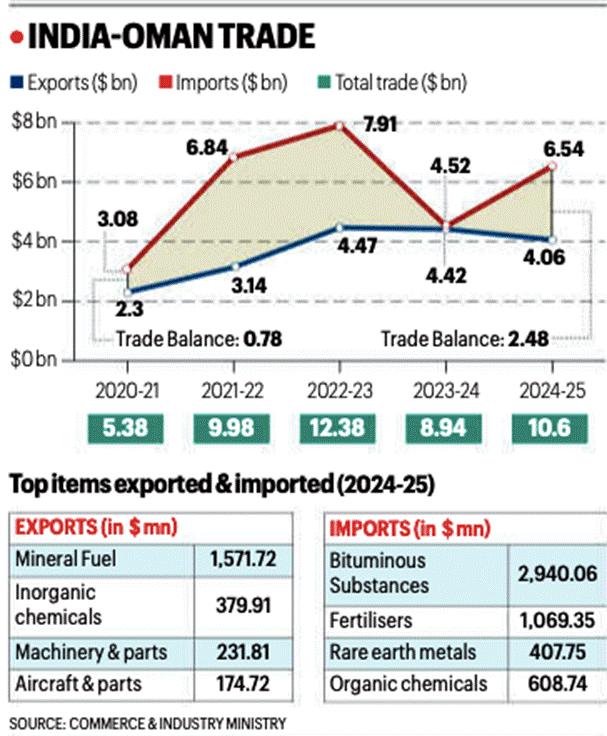
- Total bilateral trade (2024–25): ~USD 10.6 billion
- India’s exports to Oman:
- USD 4.06 billion
- 0.93% of India’s total exports
- India’s imports from Oman:
- USD 6.5 billion
- 0.91% of India’s total imports
- India runs a trade deficit, largely due to energy imports
- CEPA aims to narrow the deficit through export expansion
Composition of Trade (2024–25)
India’s Key Exports
- Machinery & mechanical appliances
- Inorganic and organic chemicals
- Aircraft parts
- Plastics, textiles, jewellery
- Mineral fuels (re-exports) Export basket is manufacturing-intensive, aligned with Make in India
India’s Key Imports
- Crude oil & LNG-related products
- Bituminous substances
- Fertilisers
- Iron ore and minerals
Strategic Significance for India
1. Economic Significance
- Boosts exports of:
- Engineering goods
- Pharmaceuticals
- Automobiles & auto components
- Textiles and food products
- Reduces tariff disadvantage vis-à-vis:
- China
- ASEAN exporters
- Facilitates India’s integration into Gulf and global value chains
2. Strategic & Geopolitical Significance
- Oman’s geostrategic location:
- At the mouth of the Strait of Hormuz
- Gateway to West Asia, East Africa, and Europe
- Strengthens India’s:
- West Asia outreach
- Maritime security interests
- Complements India’s engagement with:
- GCC
- I2U2
- Indo-Pacific trade diversification
3. Energy Security Dimension
- Oman is a key supplier of:
- Crude oil
- LNG
- CEPA deepens long-term energy partnerships
- New cooperation avenues:
- Green hydrogen
- Petrochemicals
- Renewables and energy storage
- Energy transition technologies
4. Labour & Diaspora Dimension
- Large Indian workforce in Oman
- CEPA improves:
- Job security
- Professional mobility
- Services export earnings
- Supports India’s human capital export strategy
Why Oman Matters in India’s West Asia Strategy ?
1. Trade & Logistics Hub
- Ports such as Duqm, Sohar, Salalah:
- Less congested alternatives to Gulf hubs
- Gateways to Africa and Mediterranean markets
- Supports India’s hub-and-spoke trade model
2. Supply Chain De-risking
- Oman offers:
- Political stability
- Neutral foreign policy
- Strong maritime connectivity
- Helps India reduce dependence on:
- China-centric value chains
- Protectionist Western markets
3. West Asia Reset
- Shifts India’s engagement from:
- Energy-only and diaspora-centric ties
- Towards:
- Trade–investment–technology partnership
- Complements UAE CEPA:
- UAE as financial/re-export hub
- Oman as logistics and gateway hub
- Together, anchor India’s western maritime arc
Concerns & Challenges
- Trade volumes still modest relative to potential
- Persistent trade imbalance
- Risks for Indian MSMEs:
- Limited awareness
- Compliance and certification costs
- Non-tariff barriers
- Services gains depend on:
- Effective implementation of mobility provisions
Way Forward
- Establish CEPA utilisation cells for exporters and MSMEs
- Fast-track:
- Mutual Recognition Agreements (MRAs)
- Skill and qualification recognition
- Use Oman as:
- A platform, not merely a destination market
- Integrate CEPA with:
- Make in India
- PM Gati Shakti
- India–Middle East–Europe Economic Corridor (IMEC)


