
Why in News ?
- Researchers at IISc Bengaluru, led by Dr. Ambarish Ghosh, are developing medical nanobots capable of navigating through blood, tissues, and cells to deliver high-precision, minimally invasive cancer therapy.
- The work recently received the 2025 Tata Transformation Prize, highlighting its translational potential in next-generation cancer care.
Relevance
GS-III | Science & Technology, Biotechnology & Robotics
- Medical nanorobotics, precision oncology, translational research
GS-II | Health & Innovation Policy
- Affordable care, regulatory approval, ethical-safety considerations
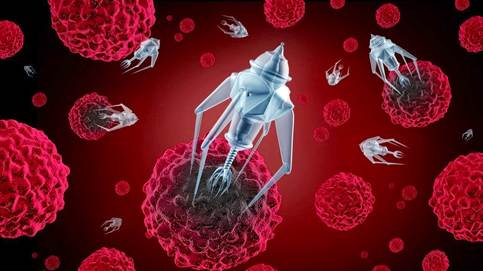
What are Medical Nanobots?
- Microscopic robotic devices engineered at the nano/micro-scale.
- Designed to swim or move inside the body, guided by magnetic fields or other stimuli.
- Can be functionalised with drugs, biomolecules, or nano-heaters to perform targeted therapeutic actions.
How These Nanobots Work?
- Inspired by bacterial flagella / helical propellers → move through tissue and fluids.
- Controlled externally via magnetic navigation systems.
- Can:
- Deliver drugs directly to tumour sites
- Generate localised heat (hyperthermia) to kill cancer cells
- Act as MRI-visible beacons for precision tracking
- Aim: Maximum tumour kill with minimal damage to healthy tissue.
Why They Matter ?
- Targeted therapy → reduces side-effects vs systemic chemotherapy.
- Minimally invasive → avoids large incisions or radiation spread.
- Precision medicine enabler → integrates imaging + navigation + therapy.
- Potentially lower long-term treatment costs and better survival outcomes.
Challenges & Risks
- Biocompatibility and immune response
- Safety clearance & regulatory approval
- Scalability, cost, and clinician adoption
- Need for long-term toxicity and clearance data.


